

How Do Core Web Vitals Impact AI Citations? Complete Guide for 2025
Discover how Core Web Vitals affect your visibility in AI-powered search engines like ChatGPT, Perplexity, and Google Gemini. Learn the technical metrics that i...
10 min read
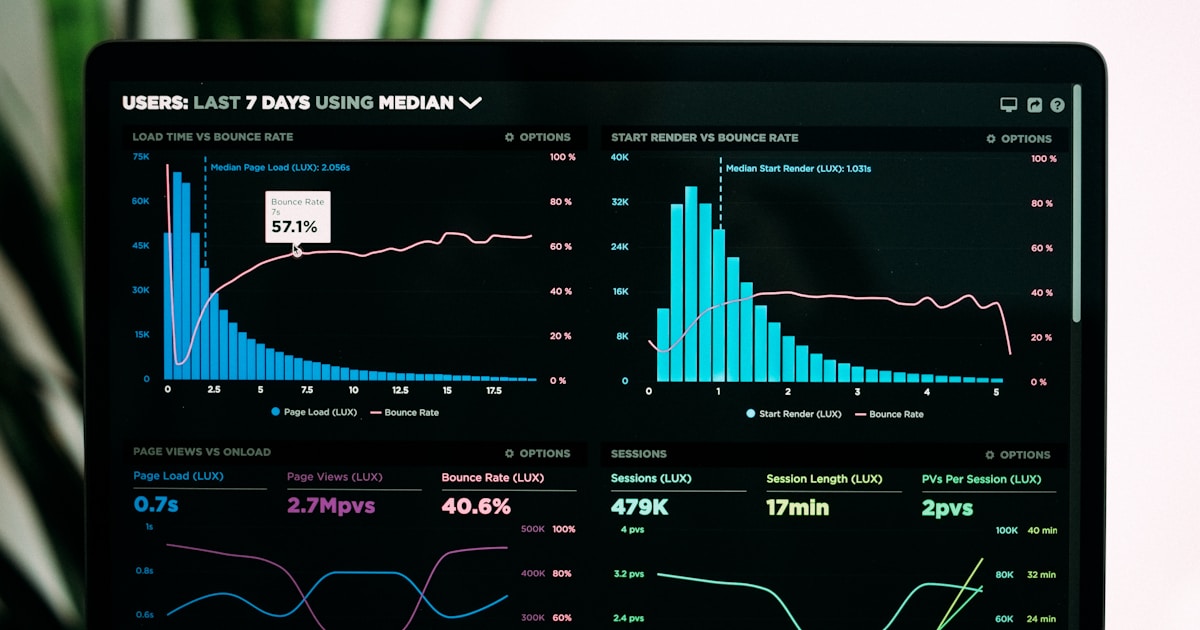
Core Web Vitals are Google’s set of three key performance metrics that measure real-world user experience across loading performance, interactivity, and visual stability. These metrics—Largest Contentful Paint (LCP), Interaction to Next Paint (INP), and Cumulative Layout Shift (CLS)—are integral to Google’s search ranking algorithm and directly impact website visibility in AI-powered search results.
Core Web Vitals are Google's set of three key performance metrics that measure real-world user experience across loading performance, interactivity, and visual stability. These metrics—Largest Contentful Paint (LCP), Interaction to Next Paint (INP), and Cumulative Layout Shift (CLS)—are integral to Google's search ranking algorithm and directly impact website visibility in AI-powered search results.
Core Web Vitals are a set of three quantifiable performance metrics defined by Google that measure real-world user experience across three critical dimensions: loading performance, interactivity, and visual stability. Introduced in 2020 as part of Google’s Web Vitals initiative, these metrics have become fundamental to how Google Search evaluates page experience and determine search ranking positions. The three Core Web Vitals are Largest Contentful Paint (LCP), Interaction to Next Paint (INP), and Cumulative Layout Shift (CLS). These metrics are not theoretical measurements but are based on actual user behavior data collected from millions of real-world page visits, making them highly representative of genuine user experience. Understanding and optimizing Core Web Vitals has become essential for website owners, developers, and digital marketers seeking to maintain competitive search visibility and provide superior user experiences.
Google first introduced Core Web Vitals in May 2020 as a response to the growing recognition that traditional performance metrics alone did not adequately capture user experience. Initially, the three metrics were Largest Contentful Paint (LCP), First Input Delay (FID), and Cumulative Layout Shift (CLS). However, recognizing that FID did not comprehensively measure responsiveness across all user interactions, Google announced in May 2023 that Interaction to Next Paint (INP) would replace FID as a Core Web Vital, with the transition completing on March 12, 2024. This evolution demonstrates Google’s commitment to continuously refining its metrics to better reflect actual user experience. The shift from FID to INP was significant because INP evaluates the latency of all user interactions throughout a page’s entire lifespan, not just the first interaction, providing a more holistic view of page responsiveness. Since their introduction, Core Web Vitals have become increasingly important as Google integrated them into its search ranking algorithm, making them a critical factor in SEO strategy and digital marketing success.
Largest Contentful Paint (LCP) measures how quickly the largest visible content element on a webpage loads and becomes visible to users. This metric captures the loading performance dimension of user experience by tracking when the largest image, video, or text block appears on the screen. Google recommends that LCP should occur within 2.5 seconds of when a user initiates a page load to provide a good user experience. The performance thresholds for LCP are: Good (≤2.5 seconds), Needs Improvement (2.5-4 seconds), and Poor (>4 seconds). Poor LCP performance is typically caused by four primary factors: slow server response times, large unoptimized resource files, client-side rendering delays, and render-blocking JavaScript and CSS. Optimizing LCP often involves implementing techniques such as upgrading server infrastructure, compressing and optimizing images, implementing lazy loading, and deferring non-critical JavaScript execution. The importance of LCP cannot be overstated, as research shows that if page load times increase from 1 to 3 seconds, bounce rates increase by 32%, and if sites take 6 seconds to load, bounce rates increase by 106%.
Interaction to Next Paint (INP) measures the responsiveness of a webpage by evaluating the latency between when a user interacts with the page (through clicks, taps, or keyboard input) and when the browser displays the visual response to that interaction. Unlike its predecessor First Input Delay (FID), which only measured the first interaction, INP considers all interactions throughout the user’s visit and uses the longest interaction latency as the final score. Google recommends that INP should be less than 200 milliseconds to provide a good user experience. The performance thresholds for INP are: Good (≤200ms), Needs Improvement (200-500ms), and Poor (>500ms). Poor INP performance is primarily caused by heavy JavaScript execution that prevents the browser from processing user input promptly. The browser becomes blocked while parsing and executing large amounts of JavaScript associated with webpage functionality, causing delays in responding to user interactions. Improving INP requires strategies such as code splitting, reducing JavaScript bundle sizes, implementing web workers for background processing, and optimizing event handlers to execute more efficiently.
Cumulative Layout Shift (CLS) measures the visual stability of a webpage by quantifying the unexpected movement of layout elements during the entire lifespan of a user’s visit. A layout shift occurs whenever a visible element changes position from one rendered frame to the next without user input. Google recommends maintaining a CLS score of 0.1 or less to provide a good user experience. The performance thresholds for CLS are: Good (≤0.1), Needs Improvement (0.1-0.25), and Poor (>0.25). Even seemingly minor layout shifts can significantly degrade user experience; for example, a user attempting to click a “Remove from Cart” button might accidentally click “Submit Order” if an advertisement suddenly appears and shifts the layout. Common causes of poor CLS include images and embedded content without specified dimensions, advertisements and iframes without reserved space, dynamically injected content, and web fonts that cause text reflow. Optimizing CLS involves specifying dimensions for all images and embedded content, reserving space for ads and dynamic content, using font-display properties to minimize text reflow, and avoiding layout-shifting animations.
| Metric | Measures | Good Threshold | Needs Improvement | Poor Threshold | User Impact |
|---|---|---|---|---|---|
| LCP (Largest Contentful Paint) | Loading Performance | ≤2.5 seconds | 2.5-4 seconds | >4 seconds | Perceived page speed and initial load experience |
| INP (Interaction to Next Paint) | Responsiveness | ≤200ms | 200-500ms | >500ms | Responsiveness to user clicks, taps, and keyboard input |
| CLS (Cumulative Layout Shift) | Visual Stability | ≤0.1 | 0.1-0.25 | >0.25 | Unexpected element movement and accidental clicks |
| TTFB (Time to First Byte) | Server Response | ≤600ms | 600-1800ms | >1800ms | Initial server responsiveness (supporting metric) |
| FCP (First Contentful Paint) | First Content Render | ≤1.8 seconds | 1.8-3 seconds | >3 seconds | When first content appears (supporting metric) |
| TBT (Total Blocking Time) | Main Thread Blocking | ≤200ms | 200-600ms | >600ms | JavaScript execution blocking user input (supporting metric) |
Core Web Vitals have become integral to Google’s search ranking algorithm, though it is important to understand that they are one of many ranking factors. Google has clarified that while Core Web Vitals influence rankings, content quality remains the primary ranking factor. However, when two pages have similar content quality, the page with better Core Web Vitals scores will typically rank higher. This relationship has made Core Web Vitals optimization a critical component of modern SEO strategy. The integration of Core Web Vitals into ranking algorithms reflects Google’s broader philosophy of rewarding websites that prioritize user experience. By making page experience a ranking factor, Google incentivizes website owners to invest in performance optimization, ultimately improving the overall quality of search results. Additionally, Core Web Vitals data is prominently displayed in Google Search Console, providing site owners with actionable insights into their performance and specific recommendations for improvement. The visibility of Core Web Vitals in search tools has elevated their importance in the minds of digital marketers and developers, making them a standard metric for evaluating website health and performance.
Google provides multiple tools and resources for measuring and monitoring Core Web Vitals, each serving different purposes in the optimization workflow. The Core Web Vitals report in Google Search Console displays real-world field data collected from actual users visiting your website, grouped by device type (mobile and desktop) and organized by performance status (Poor, Needs Improvement, Good). This field data is sourced from the Chrome User Experience Report (CrUX), which aggregates anonymized performance data from millions of Chrome users. PageSpeed Insights provides both field data and lab data for individual URLs, offering specific recommendations for improvement. Chrome Lighthouse, an open-source tool built into Chrome DevTools, provides detailed lab testing and performance audits. Third-party monitoring platforms like Dynatrace, DebugBear, and Vercel offer continuous monitoring, historical trend analysis, and advanced alerting capabilities. Understanding the difference between field data and lab data is crucial: field data represents real user experiences and is more representative of actual performance, while lab data provides controlled testing environments useful for debugging specific issues. Most experts recommend prioritizing field data from Search Console as the primary metric, while using lab data tools for identifying and testing specific optimizations.
Current data reveals significant variation in Core Web Vitals performance across the web. As of 2024-2025, approximately 40-51% of websites pass all three Core Web Vitals thresholds, representing substantial improvement from 2020 when only a small percentage of websites met these standards. However, this also means that nearly half of all websites still fail to meet Google’s performance standards. Mobile websites generally perform worse than desktop versions, with mobile pass rates typically 5-15 percentage points lower than desktop. Industry analysis shows that well-maintained commercial websites and major brands achieve significantly higher pass rates, often exceeding 70%, while smaller websites and those with limited technical resources struggle more with optimization. CLS is often the easiest metric to pass, while LCP and INP present greater challenges for many websites. The distribution of performance issues varies by industry, with e-commerce sites often struggling with LCP due to large product images, while content-heavy sites frequently face INP challenges from extensive JavaScript implementations. These statistics underscore the ongoing importance of Core Web Vitals optimization as a competitive differentiator in search rankings and user experience.
The emergence of AI-powered search engines like ChatGPT, Perplexity, Google AI Overviews, and Claude has introduced new dimensions to the importance of Core Web Vitals. These AI systems prioritize citing authoritative, fast-loading, and reliable sources when generating responses to user queries. Websites with strong Core Web Vitals scores are more likely to be crawled, indexed, and cited by AI systems because they demonstrate technical excellence and user-centric design. Google’s AI Overviews, which appear at the top of search results, preferentially cite pages with good Core Web Vitals scores, making optimization essential for visibility in this new search format. Monitoring platforms like AmICited track how your domain and specific URLs appear in AI-generated responses across multiple AI search engines, providing insights into your AI search visibility. This represents a significant evolution in how Core Web Vitals impact digital visibility: they now influence not only traditional Google Search rankings but also your brand’s presence in AI-powered search results. Organizations seeking to maintain competitive visibility must therefore optimize Core Web Vitals as part of a comprehensive strategy that addresses both traditional search and emerging AI search channels.
Effective Core Web Vitals optimization requires a systematic approach that addresses the root causes of poor performance. For LCP optimization, prioritize image optimization through compression and modern formats like WebP, implement lazy loading for below-the-fold content, upgrade server infrastructure or use Content Delivery Networks (CDNs) to reduce server response times, and defer non-critical JavaScript and CSS. For INP optimization, analyze and reduce JavaScript bundle sizes through code splitting, implement web workers for background processing, optimize event handlers and callbacks, and consider using performance monitoring tools to identify bottlenecks. For CLS optimization, always specify dimensions for images and embedded content, reserve space for advertisements and dynamic content, use font-display properties to control font loading behavior, and avoid layout-shifting animations. Additionally, establish a continuous monitoring process using Google Search Console and other tools to track performance over time, set performance budgets to prevent regressions, and prioritize fixing issues affecting the most important pages first. Many organizations find it helpful to establish Core Web Vitals as a key performance indicator (KPI) and include optimization targets in development workflows and deployment processes.
Core Web Vitals will continue to evolve as Google refines its understanding of user experience and as web technologies advance. Google has indicated that it regularly reviews and updates Core Web Vitals based on research and user feedback, suggesting that additional metrics may be added or existing metrics may be refined in the future. The integration of Core Web Vitals into AI search systems represents a significant shift in how these metrics influence digital visibility, extending their importance beyond traditional search rankings. As AI-powered search becomes increasingly prevalent, the relationship between Core Web Vitals and AI search visibility will likely strengthen, making optimization even more critical for maintaining brand authority and discoverability. Organizations that proactively optimize Core Web Vitals today will be better positioned to maintain visibility across both traditional and emerging search channels. Furthermore, the emphasis on Core Web Vitals reflects a broader industry trend toward user-centric design and performance optimization, suggesting that these metrics will remain central to web development best practices for years to come. The convergence of SEO, user experience, and AI search visibility makes Core Web Vitals optimization a strategic imperative for any organization seeking to maintain competitive advantage in digital markets.
The three Core Web Vitals are: Largest Contentful Paint (LCP) measuring loading performance with a good threshold of 2.5 seconds or less, Interaction to Next Paint (INP) measuring responsiveness with a good threshold of 200 milliseconds or less, and Cumulative Layout Shift (CLS) measuring visual stability with a good threshold of 0.1 or less. Each metric has three performance categories: Good, Needs Improvement, and Poor, with specific numerical thresholds defining each category.
Core Web Vitals are part of Google's page experience signals that influence search rankings, though content quality remains the primary ranking factor. Websites with good Core Web Vitals scores tend to rank higher than those with poor scores when other factors are equal. Additionally, Core Web Vitals data appears in Google Search Console and PageSpeed Insights, helping site owners identify and fix performance issues that affect user experience and search visibility.
Interaction to Next Paint (INP) officially replaced First Input Delay (FID) as a Core Web Vital on March 12, 2024. INP provides a more comprehensive measure of responsiveness by evaluating the latency of all user interactions throughout a page's lifespan, rather than just the first interaction. This change reflects Google's commitment to measuring real-world user experience more accurately.
You can measure Core Web Vitals using Google Search Console's Core Web Vitals report, which shows real-world field data from actual users. Additional tools include PageSpeed Insights for individual URL testing, Chrome Lighthouse for local testing, and various third-party monitoring platforms. These tools provide both field data (real user measurements) and lab data (controlled testing environments) to help identify performance issues.
As of 2024-2025, approximately 40-51% of websites pass all three Core Web Vitals thresholds, with mobile sites generally performing worse than desktop versions. This represents significant improvement from 2020 when only a small percentage of websites met these standards. The variation depends on industry, with well-maintained commercial sites typically achieving higher pass rates than average websites.
Core Web Vitals are increasingly important for AI search visibility because AI systems like ChatGPT, Perplexity, and Google AI Overviews prioritize citing authoritative, fast-loading sources. Websites with strong Core Web Vitals scores are more likely to be crawled, indexed, and cited by AI systems. Monitoring platforms like AmICited track how your domain appears in AI responses, making Core Web Vitals optimization essential for maintaining visibility across both traditional search and AI-powered search engines.
Poor LCP is typically caused by slow server response times, large unoptimized images, and render-blocking JavaScript. Poor INP results from heavy JavaScript execution that blocks user interactions. Poor CLS is caused by images and ads without specified dimensions, dynamically injected content, and web fonts that cause layout shifts. Addressing these root causes through optimization techniques like image compression, code splitting, and lazy loading can significantly improve Core Web Vitals scores.
Start tracking how AI chatbots mention your brand across ChatGPT, Perplexity, and other platforms. Get actionable insights to improve your AI presence.
Discover how Core Web Vitals affect your visibility in AI-powered search engines like ChatGPT, Perplexity, and Google Gemini. Learn the technical metrics that i...
Largest Contentful Paint (LCP) is a Core Web Vital measuring when the largest page element renders. Learn how LCP impacts SEO, user experience, and conversion r...
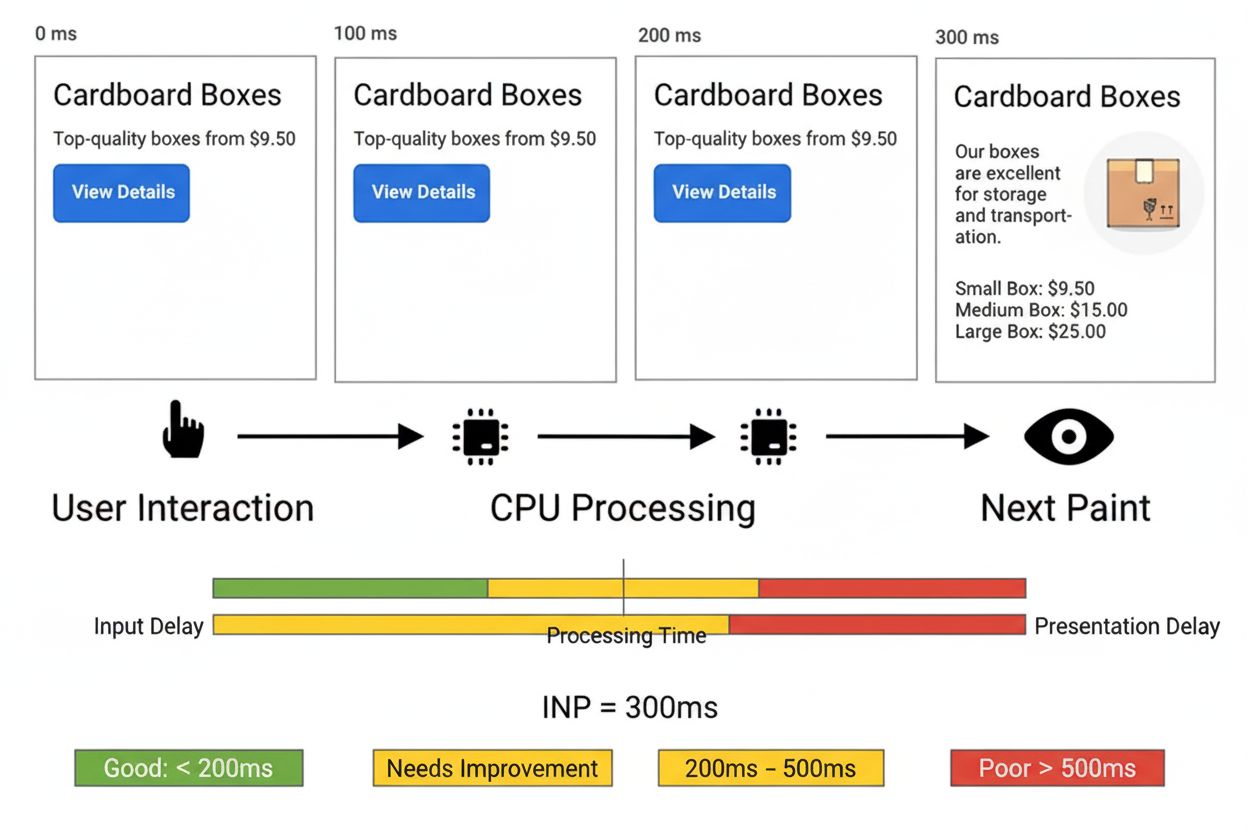
Learn about Interaction to Next Paint (INP), the Core Web Vitals metric measuring page responsiveness. Understand how INP works, why it replaced FID, and how to...
Cookie Consent
We use cookies to enhance your browsing experience and analyze our traffic. See our privacy policy.