
Stock Image
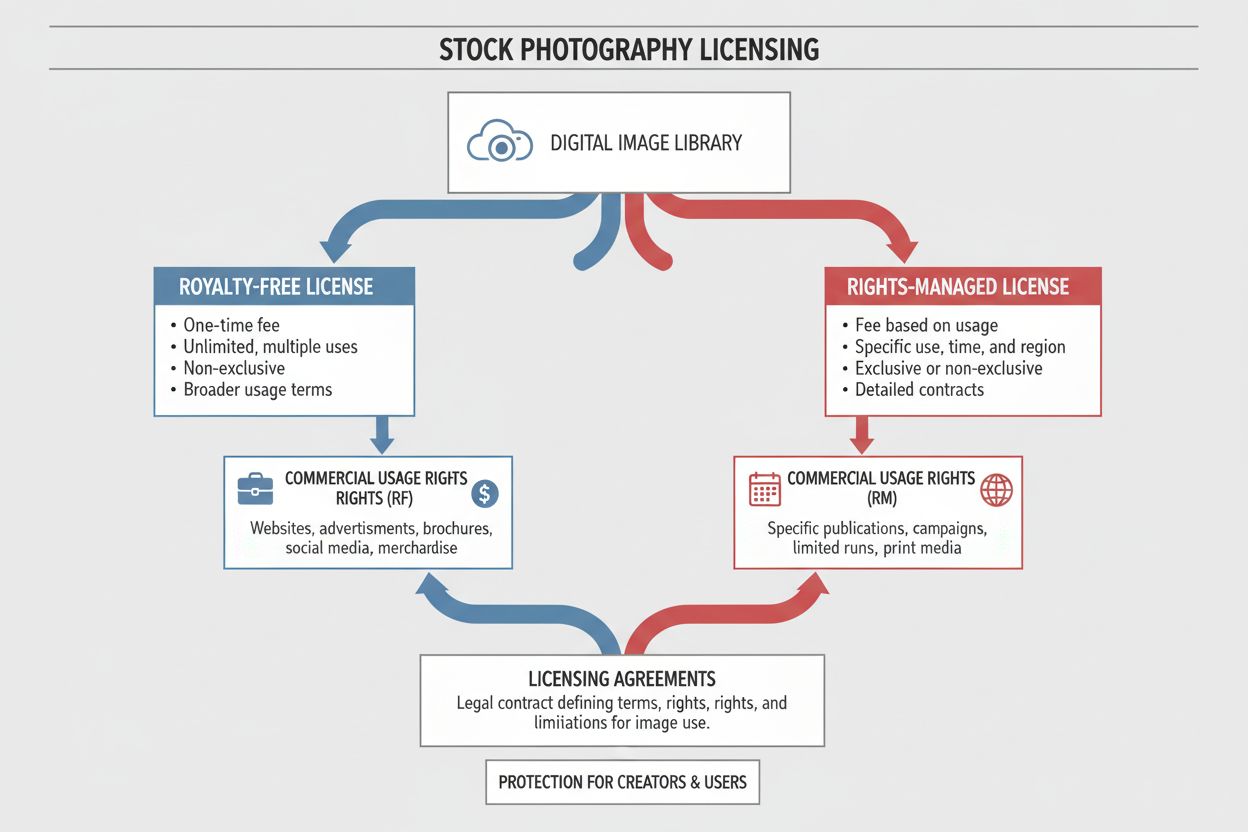
Comprehensive definition of stock images and licensed pre-made photographs. Learn about royalty-free vs rights-managed licensing, platforms, and usage rights fo...
9 min read
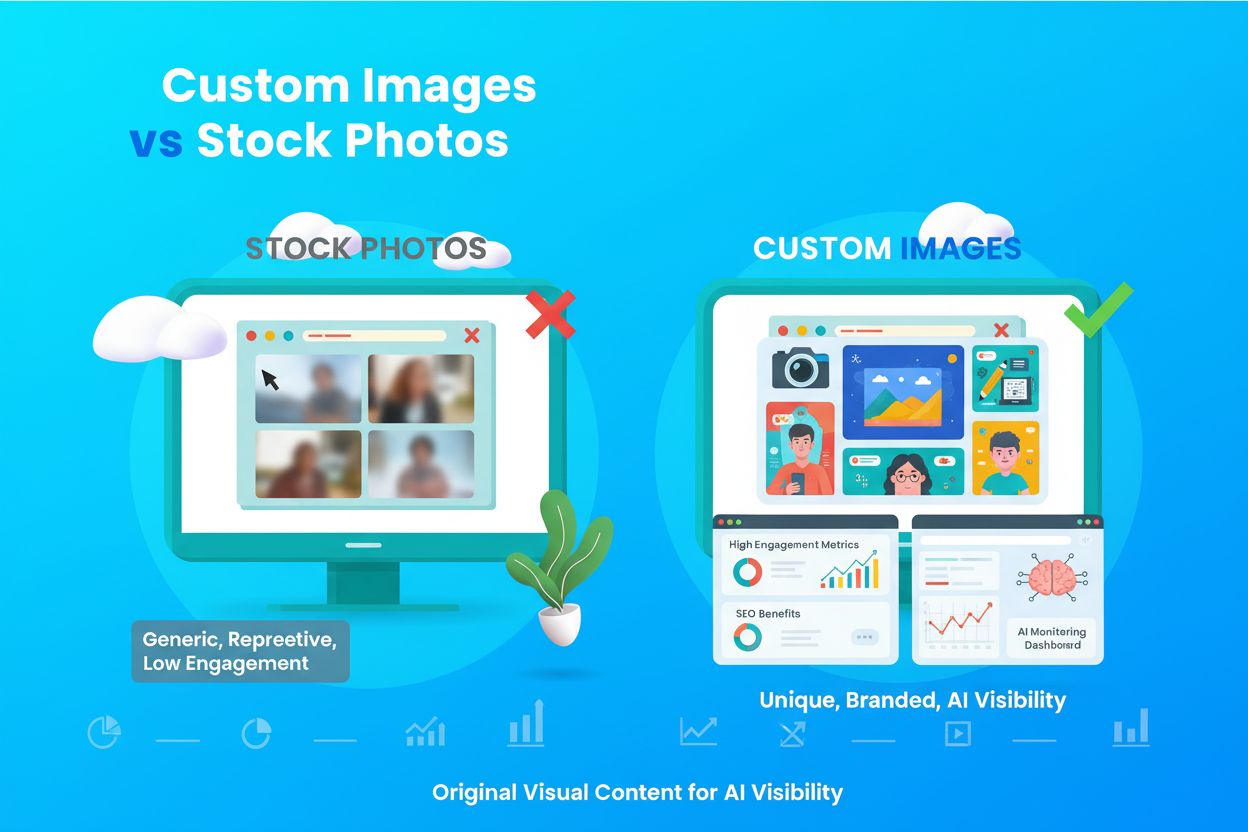
Custom images are original, unique visual assets created specifically for a brand or organization, designed to communicate authentic brand identity and messaging. Unlike stock photos, custom images are tailored to exact specifications, providing distinctive visual content that enhances brand differentiation, improves SEO performance, and increases visibility in AI-generated responses across platforms like ChatGPT, Perplexity, and Google AI Overviews.
Custom images are original, unique visual assets created specifically for a brand or organization, designed to communicate authentic brand identity and messaging. Unlike stock photos, custom images are tailored to exact specifications, providing distinctive visual content that enhances brand differentiation, improves SEO performance, and increases visibility in AI-generated responses across platforms like ChatGPT, Perplexity, and Google AI Overviews.
Custom images are original, unique visual assets created specifically for a brand, organization, or marketing campaign rather than sourced from generic stock photo libraries. These original visual content pieces are designed, photographed, illustrated, or produced to align precisely with a brand’s identity, messaging, and strategic objectives. Unlike stock photos that are available for purchase or download by multiple businesses, custom images are bespoke visual assets that communicate authentic brand stories and differentiate organizations from competitors. In the context of digital marketing, SEO, and AI search visibility, custom images serve as powerful tools for establishing brand authority, improving search engine rankings, and increasing the likelihood of citations in AI-generated responses across platforms like ChatGPT, Perplexity, Google AI Overviews, and Claude. The creation of custom images involves deliberate planning, professional execution, and strategic optimization to ensure they deliver measurable business value across all digital touchpoints.
The shift toward original visual content has accelerated dramatically as digital marketing has evolved and AI systems have become central to how consumers discover information. Historically, businesses relied heavily on stock photography due to its affordability and accessibility, with the global stock images market valued at approximately $6.2 billion in 2022. However, as search engines and AI platforms have become more sophisticated in evaluating content quality and authenticity, the strategic importance of custom visual assets has increased substantially. Research from Backlinko reveals that blog posts with images receive 94% more views than those without, and studies by Marketing Experiments found that websites using real, custom photos achieve nearly 35% higher conversion rates compared to those using stock imagery. This performance gap reflects a fundamental shift in how audiences perceive and engage with visual content. Additionally, 88% of consumers now prioritize authenticity when deciding which brands to support, making original visual content not just a marketing preference but a business necessity. The rise of AI-driven search and content discovery has further elevated the importance of custom images, as these systems increasingly prioritize original, authoritative content when generating responses and citations.
| Attribute | Custom Images | Stock Photos | AI-Generated Visuals |
|---|---|---|---|
| Originality & Uniqueness | Completely unique, brand-specific | Generic, used by multiple brands | Novel but potentially impersonal |
| Brand Differentiation | Excellent—stands out from competitors | Poor—competitors use same images | Moderate—lacks authentic brand voice |
| SEO Performance | High—signals originality to Google | Low—overused, limited SEO value | Emerging—Google still evaluating |
| AI Citation Likelihood | Very High—demonstrates authority | Low—AI prefers original sources | Moderate—depends on quality |
| Customizability | Complete control over every element | Limited—pre-existing compositions | High but lacks brand specificity |
| Cost | Higher upfront investment | Low to moderate | Low to moderate |
| Time to Produce | Weeks to months | Minutes to hours | Minutes |
| Emotional Connection | Strong—authentic and relatable | Weak—generic and impersonal | Variable—depends on execution |
| Copyright Risk | Minimal—you own the content | Moderate to High—licensing issues | Moderate—usage rights unclear |
| Scalability | Challenging—requires ongoing production | Excellent—millions available instantly | Excellent—unlimited generation |
| Brand Consistency | Excellent—controlled visual identity | Poor—inconsistent across brands | Good—can maintain style guidelines |
| AI Monitoring Trackability | Excellent—unique fingerprints | Poor—duplicated across web | Moderate—harder to distinguish |
Original visual content has become a cornerstone of effective digital marketing strategies because it directly addresses the fundamental challenge of brand differentiation in crowded digital markets. When multiple competitors use identical stock photos, consumers struggle to distinguish between brands, and search engines cannot identify unique, authoritative content. Custom images solve this problem by creating distinctive visual assets that communicate brand personality, values, and expertise. According to research from StudioNow, custom visual content strengthens brand identity, makes websites stand out, and is significantly more appealing to target audiences than generic stock photography. The strategic value extends beyond aesthetics—custom images improve user engagement metrics, increase time-on-page, reduce bounce rates, and ultimately drive higher conversion rates. For businesses operating in competitive markets, the investment in custom visual content often yields measurable returns through improved search rankings, increased social media engagement, and enhanced brand recall. Furthermore, original visual assets create opportunities for content repurposing across multiple channels, from blog posts and social media to email marketing and paid advertising, maximizing the return on creative investment.
Custom images play a critical role in modern SEO strategy because search engines like Google have become increasingly sophisticated in evaluating image quality, relevance, and originality. When websites incorporate original, high-quality images, Google’s algorithms recognize these as signals of content quality and expertise, rewarding such pages with improved rankings. Research from Inspired Marketing Design demonstrates that unique images signal originality to search engines, which prioritize high-quality and relevant content with better rankings. The SEO benefits of custom images extend beyond ranking improvements—they also enhance user experience metrics that Google considers when evaluating page quality. Pages with well-optimized custom images experience faster load times (when properly scaled), lower bounce rates, and higher engagement, all of which contribute to improved search visibility. Additionally, custom images enable superior optimization of metadata elements including file names, alt text, and image descriptions, allowing marketers to incorporate target keywords and provide context that helps search engines understand page content. For businesses targeting image search results, custom photography offers particular advantages, as original images are more likely to appear in Google Images results and drive qualified traffic back to websites.
The emergence of AI search engines and generative AI platforms has introduced a new dimension to visual content strategy—AI visibility and citation tracking. Unlike traditional search engines that rank pages, AI systems like ChatGPT, Perplexity, and Google AI Overviews generate responses by synthesizing information from multiple sources and explicitly citing those sources. This creates a critical distinction between brand mentions (when AI systems reference your brand in response text) and citations (when AI systems link to your website as an authoritative source). According to Conductor’s research on AI visibility, the gap between mentions and citations reveals a strategic content opportunity. If your brand is frequently mentioned but rarely cited, it signals that AI systems recognize your brand but don’t trust your content enough to use it as a source. Custom images help close this gap by demonstrating authority and originality—AI systems prioritize original, high-quality visual content when selecting sources to cite. Brands that invest in distinctive custom imagery are more likely to earn citations in AI-generated responses, driving valuable referral traffic and establishing authority in their categories. This makes custom image creation not just a traditional marketing tactic but a critical component of Generative Engine Optimization (GEO) strategy.
Original visual content serves as a foundational element of brand authority building, particularly in the context of AI-driven discovery and monitoring. AI systems evaluate brand authority by analyzing the consistency, quality, and originality of information across authoritative sources. When brands maintain a distinctive visual identity through custom images, they create recognizable, consistent brand signals that AI systems can identify and trust. This consistency across multiple authoritative channels—industry publications, professional associations, news sources, and branded properties—reinforces brand authority in ways that generic stock photos cannot. According to Meltwater’s research on AI brand monitoring, brands that invest in authoritative presence across multiple channels dominate AI-mediated discovery for years. Custom images contribute to this authority by demonstrating that a brand invests in professional, original content rather than relying on shortcuts like stock photography. Furthermore, custom visual assets enable brands to participate in industry conversations more authentically, whether through original product photography, behind-the-scenes imagery, or custom illustrations that communicate expertise. This authentic visual presence makes brands more likely to be cited by AI systems when users seek information, recommendations, or comparisons within the brand’s category.
Developing an effective custom image strategy requires systematic planning and execution across multiple dimensions. First, brands should establish clear visual guidelines that define style, color palettes, composition principles, and brand elements that should appear consistently across all custom imagery. These guidelines ensure that custom images reinforce brand identity rather than creating visual confusion. Second, brands should prioritize original visual content creation in areas that directly support business objectives—product photography, team/culture imagery, case study visuals, and industry-specific illustrations that demonstrate expertise. Rather than attempting to create custom images for every piece of content, strategic prioritization ensures resources are allocated to high-impact opportunities. Third, brands should invest in professional execution, whether through hiring experienced photographers, working with design agencies, or developing in-house creative capabilities. The quality of custom images directly impacts their effectiveness in building brand authority and earning AI citations. Fourth, custom images should be optimized for both traditional search and AI visibility through proper file naming, alt text, image descriptions, and schema markup. Finally, brands should establish measurement frameworks to track the performance of custom images through engagement metrics, conversion rates, AI citation tracking, and competitive benchmarking.
The strategic importance of custom images and original visual content will continue to increase as AI systems become more central to how consumers discover information and make purchasing decisions. As AI platforms evolve, they are developing more sophisticated methods for evaluating content quality, originality, and authority—all factors that favor custom imagery over stock photos. The rise of visual AI monitoring and brand tracking tools like AmICited reflects this shift, enabling brands to measure how their visual content appears in AI-generated responses and track citations across multiple platforms. Looking forward, brands that have invested in distinctive, high-quality custom imagery will have significant competitive advantages in AI search visibility and citation frequency. Additionally, as AI systems become better at understanding visual context and brand identity, the ability to maintain consistent, recognizable visual branding through custom images will become increasingly important for establishing authority and earning trust from both human audiences and AI systems. The integration of custom image strategy with broader Generative Engine Optimization (GEO) efforts will become standard practice, with marketing teams measuring the ROI of visual content investments through AI citation tracking and referral traffic attribution. Furthermore, as concerns about AI-generated content authenticity grow, original, human-created custom images will become increasingly valued as signals of genuine brand presence and authority in digital ecosystems.
Custom images signal originality to search engines like Google, which rewards unique, high-quality content with better rankings. According to research, websites using original photos receive 94% more views than those using stock images. Stock photos are often overused and recognized by Google's algorithms, reducing their SEO impact. Custom images also allow for better optimization of file names, alt text, and metadata, improving image search visibility and overall page relevance for target keywords.
AI systems like ChatGPT and Perplexity prioritize authoritative, original content when generating responses. Custom images demonstrate brand authenticity and authority, making AI platforms more likely to cite your content as a source. When AI systems cite your website, they drive valuable referral traffic and establish your brand as a trusted authority. Tracking mentions versus citations reveals content gaps—if your brand is mentioned but not cited, it signals that AI systems don't trust your visual content enough to use it as a source.
Custom images provide authenticity, complete customizability, and emotional connectivity with audiences. They strengthen brand identity, differentiate you from competitors using generic stock photos, and improve conversion rates by up to 35% compared to stock imagery. Custom visuals also build consumer trust—88% of consumers value authenticity when deciding which brands to support. Additionally, custom images enable better storytelling, improve user engagement metrics, and provide superior SEO and AI visibility compared to stock alternatives.
Custom images are critical for brand monitoring platforms like AmICited that track how brands appear in AI responses. Original visual content helps establish consistent brand representation across AI platforms, making it easier to monitor brand mentions and citations. When brands use distinctive custom images, they create unique visual fingerprints that AI monitoring tools can track more effectively. This enables better measurement of brand visibility, competitive positioning, and the effectiveness of content strategies in AI-driven discovery channels.
Custom images are essential for authentic brand storytelling because they communicate your brand's unique narrative and values. Stock photos cannot convey personalized brand stories effectively since they lack context and specificity. Custom visuals allow you to showcase your company culture, products, and services in ways that resonate emotionally with your target audience. Consistent custom imagery across all touchpoints reinforces brand identity and creates memorable experiences that build deeper customer relationships and loyalty.
To optimize custom images for AI search, businesses should include relevant keywords in file names, alt text, and image descriptions. Ensure images are properly scaled for fast load times and mobile compatibility. Use schema markup to provide structured data about images. Create original, high-quality visuals that demonstrate expertise and authority in your industry. Maintain consistency in visual branding across all platforms. Document the context and purpose of each image to help AI systems understand its relevance to your content and brand positioning.
Brands should track engagement metrics including time-on-page, click-through rates, and social shares for pages featuring custom images. Monitor conversion rates comparing pages with custom images versus stock photos. Track AI citations and mentions using tools like AmICited to measure visibility in AI-generated responses. Analyze image-specific SEO metrics including image search impressions and click-through rates. Measure brand sentiment and perception changes after implementing custom visual content. Compare these metrics against competitor performance to assess competitive positioning and identify content opportunities.
Start tracking how AI chatbots mention your brand across ChatGPT, Perplexity, and other platforms. Get actionable insights to improve your AI presence.
Comprehensive definition of stock images and licensed pre-made photographs. Learn about royalty-free vs rights-managed licensing, platforms, and usage rights fo...
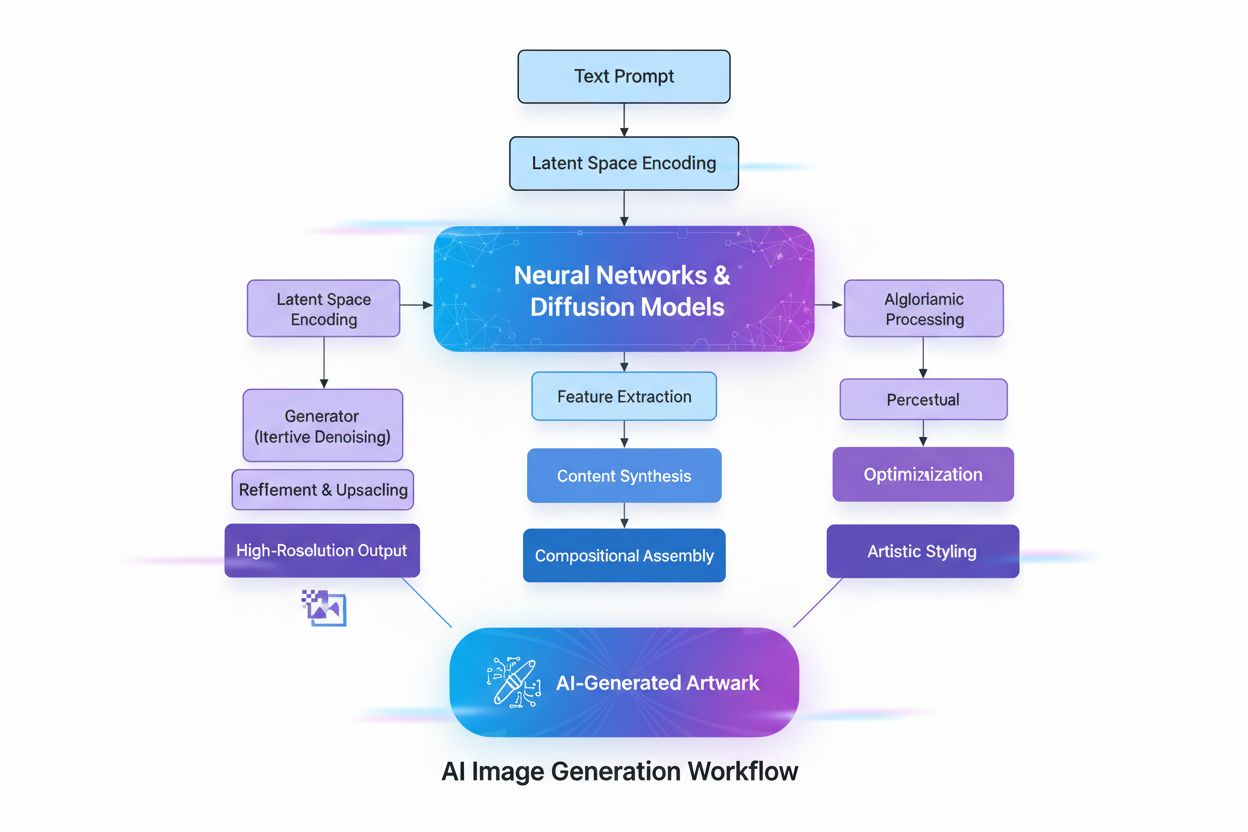
Learn what AI-generated images are, how they're created using diffusion models and neural networks, their applications in marketing and design, and the ethical ...

Learn what a featured image is, why it matters for SEO and social media, and how to optimize featured images for maximum engagement and visibility across platfo...
Cookie Consent
We use cookies to enhance your browsing experience and analyze our traffic. See our privacy policy.