
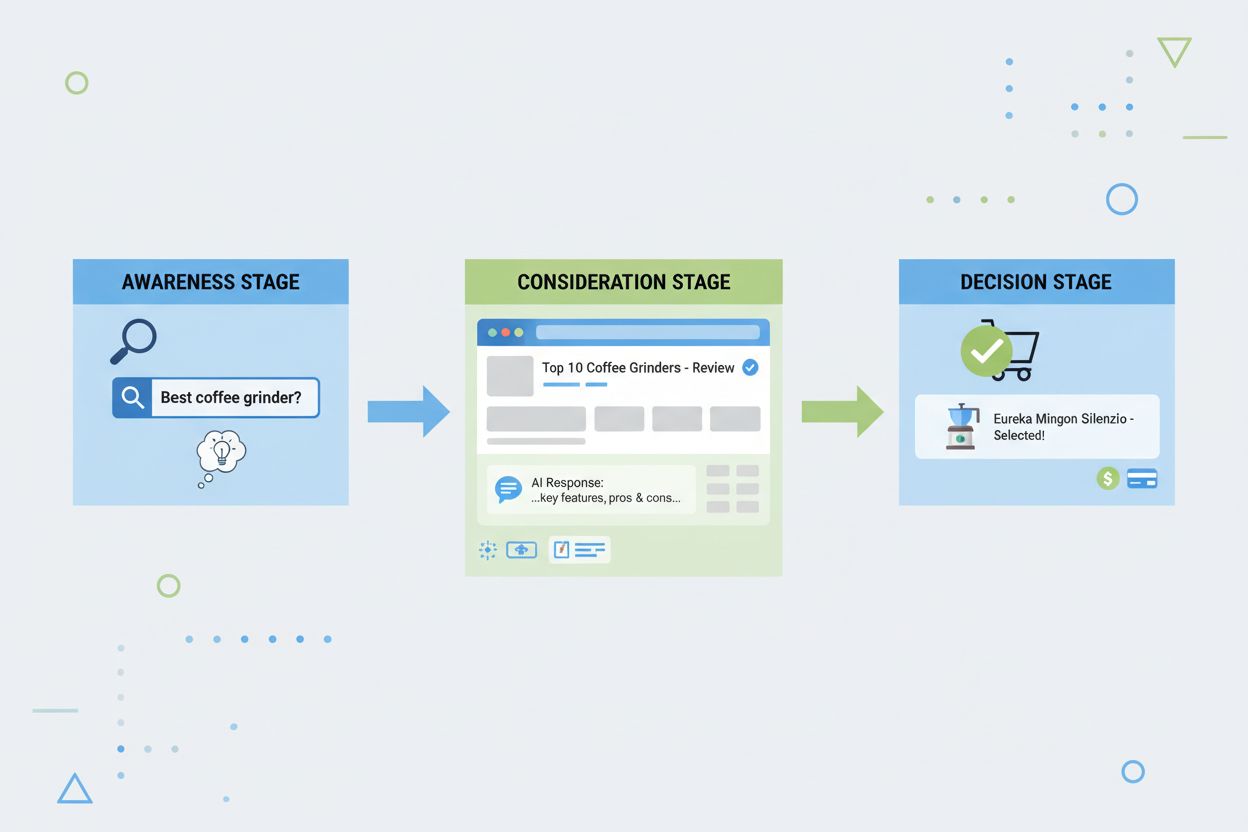
Search Journey
Learn what a search journey is, how users navigate through awareness, consideration, and decision stages, and why monitoring search journeys matters for brand v...
15 min read
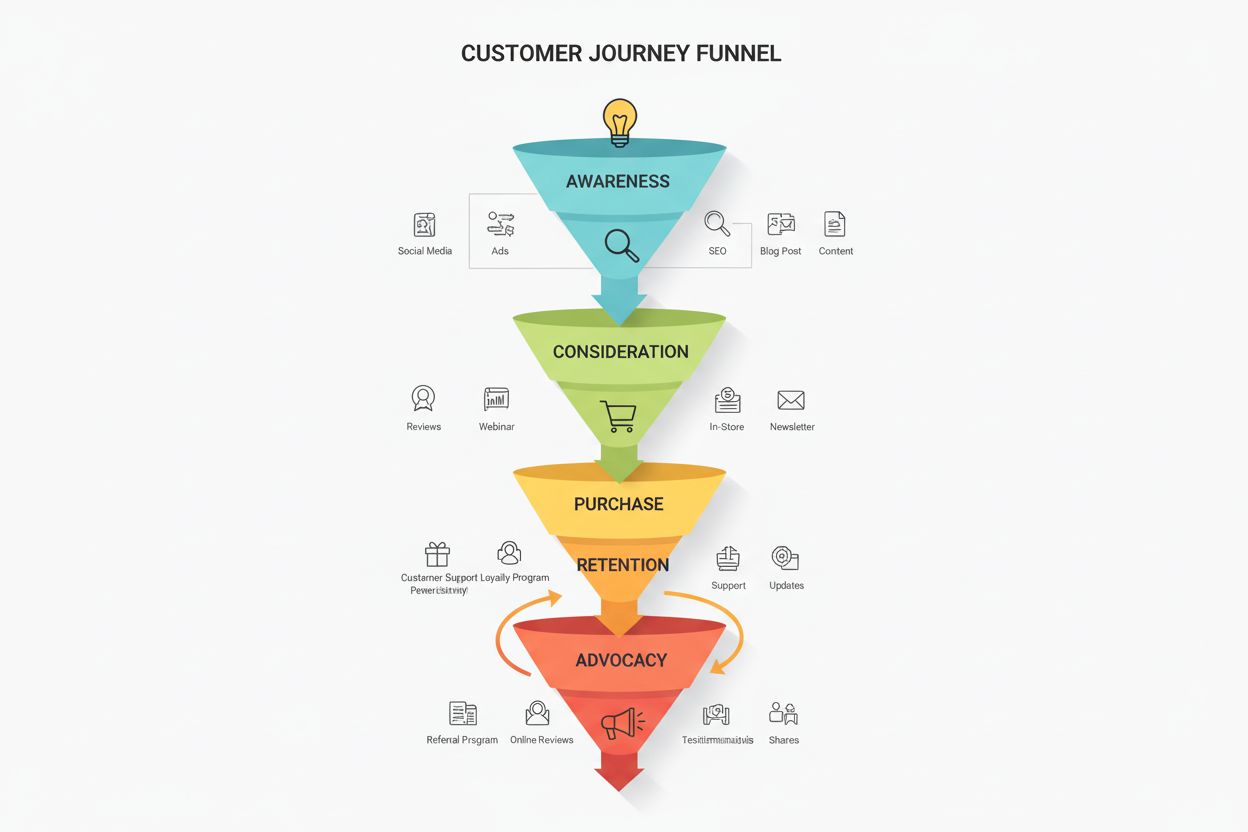
The customer journey is the complete path a customer takes from initial awareness of a brand through purchase and beyond, encompassing all touchpoints and interactions across multiple channels. It represents the entire customer lifecycle, including awareness, consideration, decision, retention, and advocacy stages, and is critical for understanding how to optimize customer experience and drive business growth.
The customer journey is the complete path a customer takes from initial awareness of a brand through purchase and beyond, encompassing all touchpoints and interactions across multiple channels. It represents the entire customer lifecycle, including awareness, consideration, decision, retention, and advocacy stages, and is critical for understanding how to optimize customer experience and drive business growth.
The customer journey is the complete path a customer takes from their initial awareness of a brand through purchase and beyond, encompassing all interactions, touchpoints, and experiences across multiple channels and platforms. It represents the entire customer lifecycle, including five distinct stages: awareness, consideration, purchase/decision, retention/loyalty, and advocacy. The customer journey is not always linear—customers may move between stages, revisit earlier phases, or take different paths depending on their individual needs, preferences, and circumstances. Understanding and optimizing the customer journey has become essential for modern businesses seeking to improve customer experience, increase conversion rates, and build long-term customer loyalty and advocacy.
The customer journey is typically divided into five interconnected stages, each representing a critical phase in the customer lifecycle. The awareness stage occurs when potential customers first discover your brand through various channels such as paid advertisements, organic search results, social media, word-of-mouth recommendations, or industry events. During this passive or active discovery phase, prospects may not yet understand their specific needs or how your solution addresses them. The consideration stage begins once customers are aware of your brand and actively research whether your offerings meet their needs, comparing your products or services against competitors, reading reviews, and seeking recommendations from trusted sources. The purchase or decision stage is when customers have gathered sufficient information and are ready to make a buying decision, moving from prospect to customer. The retention or loyalty stage focuses on keeping customers engaged and satisfied after purchase, encouraging repeat purchases and building long-term relationships through excellent customer service and ongoing value delivery. Finally, the advocacy stage represents customers who have had exceptional experiences and voluntarily recommend your brand to others, effectively becoming brand ambassadors who drive new customer acquisition through word-of-mouth and referrals.
Customer journey touchpoints are the specific moments and channels where customers interact with your brand throughout their journey. These touchpoints can be online, offline, or in-person and include websites, mobile applications, email communications, social media platforms, phone calls, physical retail locations, customer service interactions, product packaging, and direct mail. According to research from DataGuard, touchpoints significantly shape how customers perceive your brand, influence their purchasing decisions, and determine their overall satisfaction and loyalty. Each touchpoint presents an opportunity to deliver value, address customer concerns, and reinforce your brand’s positioning. The quality and consistency of experiences across all touchpoints directly impact customer satisfaction, with 70% of customers expecting seamless transitions and consistent messaging across channels. Organizations that excel at managing touchpoints create omnichannel experiences where customers can move fluidly between channels without losing context or experiencing friction, resulting in higher conversion rates and improved customer lifetime value.
| Stage | Customer Status | Primary Goal | Key Touchpoints | Content Type | Success Metric |
|---|---|---|---|---|---|
| Awareness | Prospect/Unknown | Discover brand existence | Ads, Search, Social Media, Events | Blog posts, Infographics, Videos | Impressions, Reach, Brand Recall |
| Consideration | Prospect/Known | Evaluate options | Website, Reviews, Email, Case Studies | Comparison guides, Testimonials, Whitepapers | Engagement, Time on Site, Click-through Rate |
| Purchase | Prospect/Ready | Make buying decision | Pricing page, Demo, Sales call, Checkout | Product demos, Pricing info, Limited offers | Conversion rate, Sales |
| Retention | Customer | Maintain satisfaction | Email, Support, App, Community | Newsletters, How-to guides, Support resources | Repeat purchase rate, Customer satisfaction |
| Advocacy | Loyal Customer | Recommend brand | Referral programs, Social sharing, Reviews | User-generated content, Testimonials, Referral incentives | Referral rate, Net Promoter Score (NPS) |
Organizations that prioritize customer journey optimization experience significant competitive advantages and measurable business outcomes. According to Forrester research, customer-obsessed organizations reported 41% faster revenue growth compared to non-customer-obsessed organizations, and 51% better customer retention rates. The financial stakes are substantial—poor customer experiences generate $3.7 trillion in sales risk for businesses globally, while 73% of consumers will switch to a competitor after multiple bad experiences. Conversely, 75% of customers will spend more on brands that offer good customer experiences, and 87% of consumers trust companies more when they provide excellent customer service. Additionally, 85% of customers go out of their way to switch to companies with better customer service, demonstrating that journey optimization directly influences market share and revenue. These statistics underscore why investment in understanding and optimizing the customer journey has become a strategic imperative for businesses across all industries and company sizes.
Personalization has emerged as a critical differentiator in customer journey optimization, with 76% of customers expecting personalized experiences tailored to their individual preferences and behaviors. Brands that excel at personalization are 71% more likely to report improved customer loyalty, and 62% of consumers prefer personalized recommendations over generic suggestions. Modern artificial intelligence and machine learning technologies enable unprecedented levels of personalization across the entire customer journey. According to HubSpot data, 81% of CRM leaders believe AI will resolve the majority of support tickets by 2025, and 86% report that AI helps make customer interactions feel more personalized. AI-powered systems can analyze vast amounts of customer data to predict behavior, identify optimal timing for communications, recommend relevant products or services, and deliver customized content at each journey stage. Furthermore, 70% of CX leaders believe generative AI is making every digital customer interaction more efficient, while 75% of consumers who have interacted with generative AI believe it will completely change how they interact with companies within the next two years. This convergence of personalization and AI technology is fundamentally reshaping how businesses engage customers throughout their journeys.
Effective customer journey management requires robust measurement and analysis of key performance indicators at each stage. The most important metrics to track include conversion rates (the percentage of customers moving from one stage to the next), drop-off rates (the percentage abandoning the journey at specific points), customer acquisition cost (CAC), customer lifetime value (CLV), Net Promoter Score (NPS), and customer satisfaction (CSAT). According to HubSpot research, the two most important CX metrics to track are CSAT and retention (both at 31%), followed by response time (29%). Understanding funnel drop-off rates is particularly important—research shows approximately 38% drop-off from awareness to consideration, and 29% from consideration to purchase, indicating where optimization efforts should be concentrated. Additionally, 55% of service and support leaders plan to invest in customer journey analytics to drive more sales, recognizing that data-driven insights enable more effective resource allocation and targeted interventions. Organizations should implement comprehensive analytics platforms that track customer behavior across all touchpoints, enabling real-time identification of bottlenecks and opportunities for improvement.
In today’s AI-driven landscape, brand visibility within AI-generated responses has become a critical component of the customer journey, particularly during the awareness and consideration stages. Platforms like AmICited enable businesses to monitor how their brand appears in responses from major AI systems including ChatGPT, Perplexity, Google AI Overviews, and Claude. When customers use AI tools to research products, services, or solutions, they encounter AI-generated recommendations and citations that significantly influence their purchasing decisions. By tracking brand mentions and citations across these AI platforms, organizations gain visibility into how AI systems reference their company during critical customer research phases. This monitoring capability is essential because AI recommendations can either enhance or diminish brand visibility during the consideration stage, directly impacting customer awareness and purchase intent. Understanding how your brand is positioned within AI responses allows you to optimize your content strategy, improve your online presence, and ensure accurate representation of your offerings in AI-generated summaries and recommendations that customers rely on during their decision-making process.
The customer journey continues to evolve rapidly as technology advances, consumer expectations shift, and new channels emerge for brand interaction. The integration of artificial intelligence and automation is fundamentally transforming how businesses engage customers, with 90% of CX Trendsetters believing that AI will resolve 8 in 10 issues without human intervention within the next few years. Voice-based interactions are becoming increasingly important, with 60% of consumers wanting companies to adopt advanced voice AI technologies, and 67% of consumers eager to use personal AI assistants for tasks like handling customer service issues. The customer journey is also becoming increasingly omnichannel and seamless, with 62% of customers expecting experiences to flow naturally between physical and digital spaces. Additionally, data privacy and security are becoming more central to the customer journey, with 80% of CX leaders believing customers may feel violated if they don’t understand how businesses use their data. Organizations must balance personalization with privacy, transparency with efficiency, and automation with human touch to create customer journeys that meet evolving expectations. The future customer journey will likely be characterized by greater AI integration, enhanced personalization, improved omnichannel experiences, stronger privacy protections, and more sophisticated measurement and optimization capabilities that enable businesses to deliver exceptional experiences at scale.
The five primary stages are: (1) Awareness—when customers first discover your brand through ads, search, or word-of-mouth; (2) Consideration—when they research and evaluate your offerings against competitors; (3) Purchase/Decision—when they make the buying decision; (4) Retention/Loyalty—when you maintain engagement and encourage repeat purchases; and (5) Advocacy—when satisfied customers recommend your brand to others. Each stage involves distinct customer behaviors and requires tailored marketing strategies to move prospects forward.
Customer journey mapping helps businesses understand every interaction point between customers and their brand, identify pain points, optimize touchpoints, and improve overall customer experience. According to Gartner, over 55% of service and support leaders plan to invest in customer journey analytics to drive more sales. By visualizing the complete journey, companies can allocate resources more effectively, reduce customer drop-off rates, and increase conversion rates and lifetime value.
Touchpoints are specific moments of interaction between a customer and your brand throughout their journey. These include websites, social media, email, phone calls, in-person meetings, physical stores, and customer service interactions. According to research, customers expect seamless experiences across all touchpoints, with 70% expecting anyone they interact with to have full context of their situation. Optimizing these touchpoints is essential for creating consistent, personalized experiences that drive loyalty.
While both follow the same five-stage framework, B2B journeys typically involve multiple decision-makers and longer consideration periods, requiring formal content like whitepapers and case studies. B2C journeys are usually shorter with single decision-makers and emphasize social media and emotional appeals. B2B relies more on email marketing and industry events, while B2C leverages social media advertising and influencer partnerships. However, referrals and word-of-mouth remain critical across both models.
AI enables real-time personalization, predictive analytics, and automated customer interactions across the journey. According to HubSpot data, 81% of CRM leaders believe AI will be responsible for resolving the majority of support tickets by 2025, and 86% say AI helps make customer interactions feel more personalized. AI-powered tools can analyze customer behavior patterns, identify churn risks, recommend next-best actions, and deliver tailored content at each stage, significantly improving conversion rates and customer satisfaction.
Brands can use AI monitoring platforms like AmICited to track how their brand appears in AI-generated responses across ChatGPT, Perplexity, Google AI Overviews, and Claude. These tools help monitor brand mentions, citations, and recommendations within AI responses, providing insights into how AI systems reference your company during customer research phases. This is particularly important during the awareness and consideration stages when customers use AI to discover and evaluate brands.
According to Ruler Analytics, the average conversion rate across all industries is 2.9%, though this varies significantly by industry and stage. The awareness-to-consideration drop-off rate is approximately 38%, while consideration-to-purchase drop-off is around 29%. Understanding these benchmarks helps businesses identify where customers are abandoning the journey and implement targeted strategies to improve conversion rates at each critical stage.
Personalization is critical—76% of customers expect personalized experiences, and brands excelling at personalization are 71% more likely to report improved customer loyalty. Personalized recommendations are preferred by 62% of consumers over generic ones, and 77% of business leaders believe deeper personalization leads to better customer retention. Implementing data-driven personalization across all journey stages significantly increases engagement, conversion rates, and customer lifetime value.
Start tracking how AI chatbots mention your brand across ChatGPT, Perplexity, and other platforms. Get actionable insights to improve your AI presence.
Learn what a search journey is, how users navigate through awareness, consideration, and decision stages, and why monitoring search journeys matters for brand v...

Explore how AI search transforms the buyer journey across ChatGPT, Perplexity, and Google AI. Learn the stages, platform differences, and strategies for visibil...
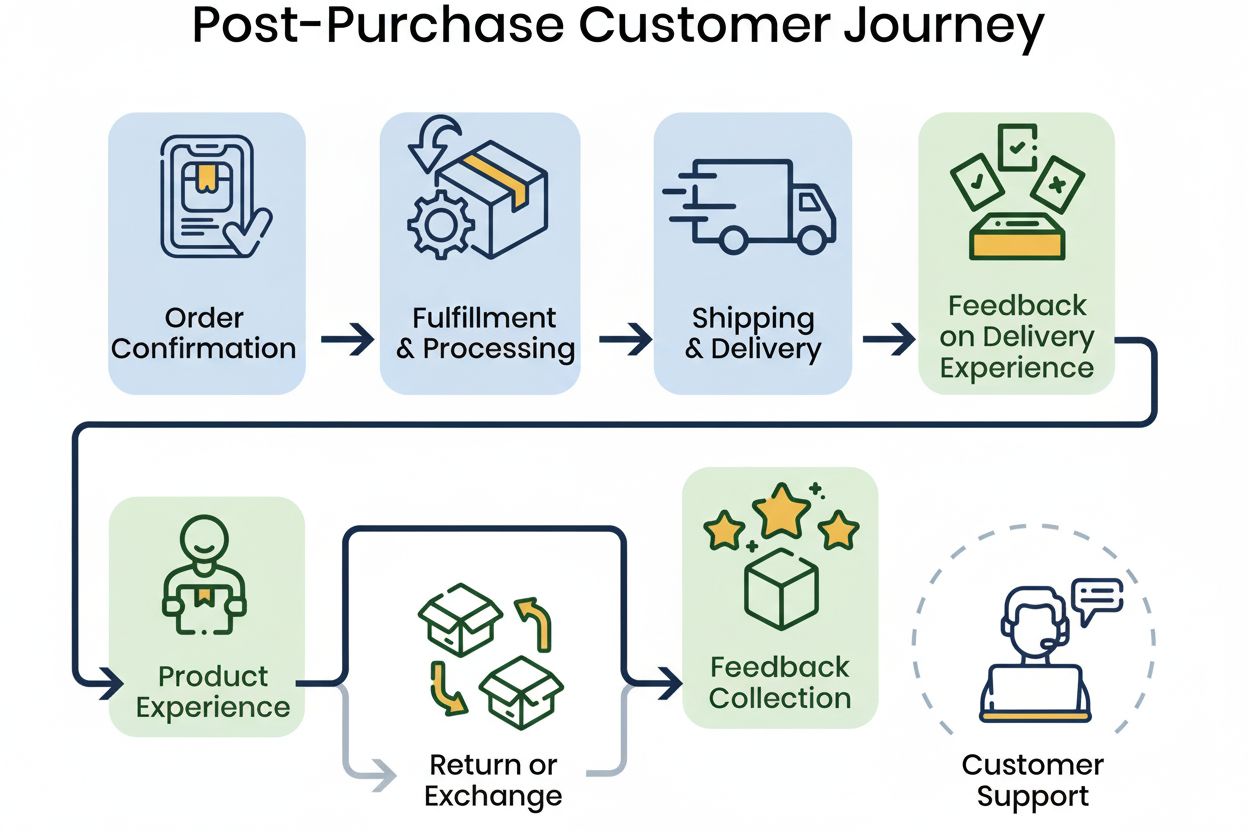
Learn what the post-purchase phase is, why it matters for customer retention and loyalty, and how to optimize every touchpoint after conversion to drive repeat ...
Cookie Consent
We use cookies to enhance your browsing experience and analyze our traffic. See our privacy policy.