

Comparison Phase
Learn what the comparison phase is in consumer decision-making. Understand how buyers evaluate alternatives, compare features, and make informed purchasing deci...
13 min read
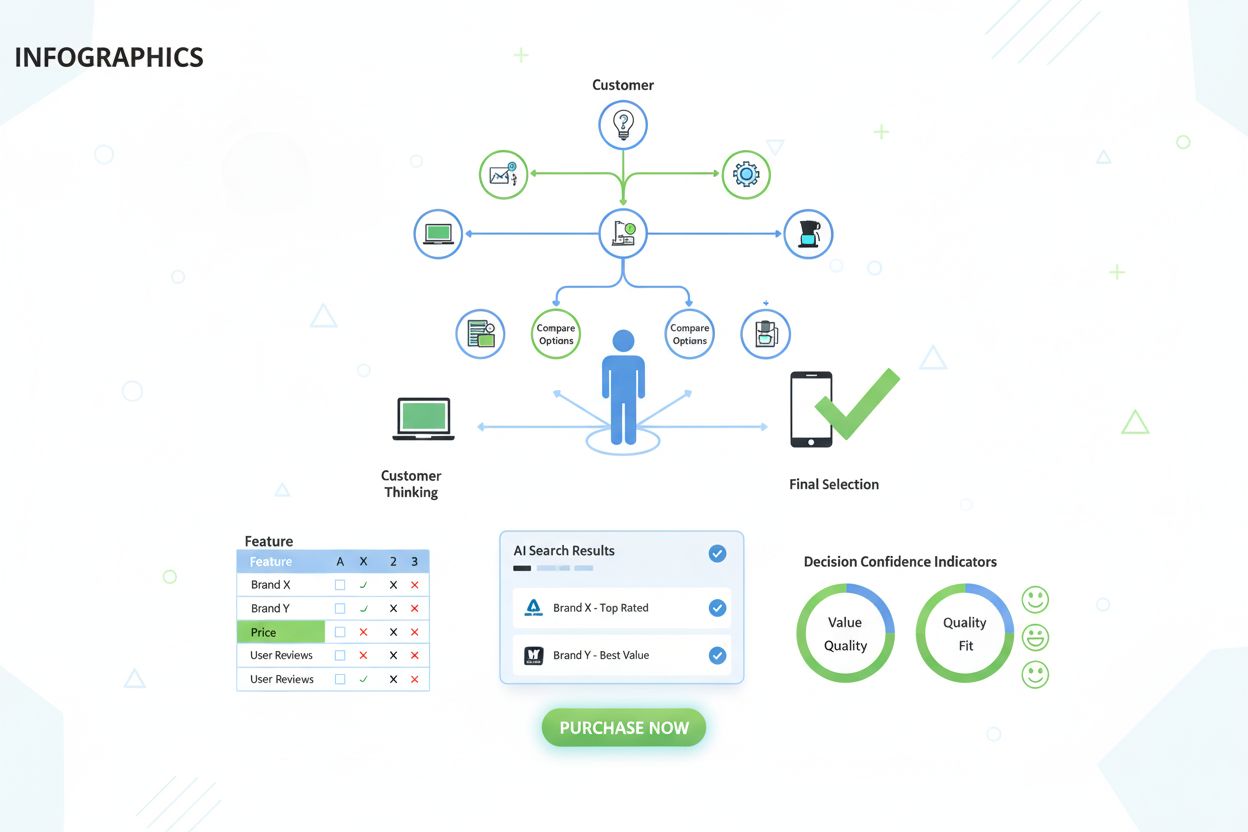
The decision phase is the critical stage in the consumer buying journey where customers make their final purchase choice after evaluating alternatives. This stage represents the conversion moment when a buyer commits to purchasing a specific product or service, often influenced by brand visibility in AI search results, social proof, and competitive positioning.
The decision phase is the critical stage in the consumer buying journey where customers make their final purchase choice after evaluating alternatives. This stage represents the conversion moment when a buyer commits to purchasing a specific product or service, often influenced by brand visibility in AI search results, social proof, and competitive positioning.
The decision phase is the fourth and most critical stage in the consumer buying journey where customers make their final purchase commitment after evaluating available alternatives. This stage represents the conversion moment—the point at which a buyer transitions from consideration to action, selecting a specific product or service and completing the purchase. The decision phase is where all previous marketing efforts culminate, and where brand visibility, trust signals, and competitive positioning directly influence whether a customer completes the transaction or abandons their cart. In today’s AI-driven landscape, the decision phase has become increasingly complex, as customers often consult AI search engines like ChatGPT, Perplexity, and Google AI Overviews for final validation before committing to their purchase. Understanding and optimizing the decision phase is essential for businesses seeking to maximize conversion rates and reduce cart abandonment.
The concept of the decision phase emerged from foundational consumer behavior research, particularly John Dewey’s five-stage buying decision model introduced in 1910. This framework has evolved significantly over the past century, with contemporary models like the Engel-Kollat-Blackwell (EKB) model and insights from marketing experts such as Philip Kotler building upon Dewey’s original work. The decision phase specifically addresses the moment when consumers transform their intentions into concrete actions—moving from mental deliberation to financial commitment. Historically, this stage was influenced primarily by in-store experiences, salesperson interactions, and word-of-mouth recommendations. However, the digital revolution has fundamentally transformed the decision phase, introducing new variables such as online reviews, e-commerce checkout optimization, and most recently, AI-powered search results. According to McKinsey research, approximately 50% of consumers now intentionally seek out AI-powered search engines during their buying journey, with a majority stating that AI search is their top choice for product discovery and validation. This shift means that brand visibility during the decision phase is no longer limited to traditional search engines or retail environments—it now extends to conversational AI platforms where customers seek final recommendations and reassurance before making their purchase.
The decision phase has undergone a seismic transformation in recent years, driven by the proliferation of generative AI tools and the changing behavior of consumers. Historically, customers in the decision phase relied on Google searches, customer reviews on dedicated platforms, and direct vendor websites to make their final choices. Today, the landscape is dramatically different. Research reveals that many B2B and B2C buyers now turn to ChatGPT, Perplexity, Claude, and Google AI Overviews as their primary decision-making tools during the final choice stage. These AI systems synthesize information from across the web and provide personalized recommendations, effectively becoming the “new front door” to commerce. For brands, this represents both an opportunity and a challenge. If your brand is prominently featured in AI-generated responses during the decision phase, you gain a significant competitive advantage. Conversely, if competitors dominate these AI conversations, you risk losing customers at the moment they’re most ready to buy. This evolution underscores why AI visibility monitoring has become critical for modern businesses seeking to influence the decision phase.
| Stage | Primary Focus | Customer Mindset | Key Activities | Brand Opportunity |
|---|---|---|---|---|
| Problem Recognition | Identifying needs | “I have a problem” | Internal/external stimuli trigger awareness | Build brand awareness through content marketing |
| Information Search | Gathering data | “What are my options?” | Research online, read reviews, seek recommendations | Optimize SEO, create educational content |
| Evaluation of Alternatives | Comparing options | “Which is best for me?” | Compare features, prices, reviews, competitor analysis | Highlight unique value proposition, social proof |
| Decision Phase | Making final choice | “I’m ready to buy” | Select product, overcome final objections, complete purchase | Optimize checkout, display trust signals, ensure AI visibility |
| Post-Purchase Evaluation | Assessing satisfaction | “Did I make the right choice?” | Reflect on purchase, consider repeat buying, leave reviews | Encourage feedback, build loyalty, create advocates |
The decision phase operates through a complex interplay of psychological, technological, and commercial factors. From a technical standpoint, the decision phase is where conversion optimization becomes paramount. This includes optimizing website load times, ensuring mobile responsiveness, streamlining checkout processes, and implementing security measures that build customer confidence. The checkout experience is particularly critical—research shows that every additional step in the checkout process increases cart abandonment by approximately 5-10%. Beyond the website itself, the decision phase now involves monitoring and optimizing brand presence across multiple digital touchpoints. This includes ensuring your brand appears favorably in AI search results, maintaining positive ratings on review platforms like G2 and Capterra, and securing prominent placement in comparison tools that customers consult during their final decision-making moments. Additionally, businesses must implement retargeting campaigns that reach customers who have shown purchase intent but haven’t yet converted, using targeted messaging that addresses final objections and reinforces value propositions. The technical infrastructure supporting the decision phase also includes marketing automation platforms that deliver personalized emails, customer relationship management (CRM) systems that track buyer behavior, and analytics tools that measure conversion metrics in real-time.
The decision phase represents the culmination of all marketing investments and directly impacts a company’s bottom line. According to research from Epsilon and HubSpot, customers who receive targeted support during the decision phase are 50% more likely to make a purchase and spend an average of 138% more than those who don’t. This stage is where marketing qualified leads (MQLs) convert into actual revenue, making it the most valuable stage in the entire buying journey from a financial perspective. The business impact of optimizing the decision phase extends beyond immediate sales. A well-executed decision phase experience creates brand advocates who are more likely to leave positive reviews, recommend your product to others, and become repeat customers. Conversely, a poor decision phase experience—characterized by confusing checkout processes, lack of trust signals, or absence from AI search results—can result in significant revenue loss. For e-commerce businesses specifically, the decision phase is where cart abandonment occurs, representing lost revenue that could have been captured with better optimization. Industry data shows that the average cart abandonment rate is approximately 70%, meaning that seven out of every ten customers who reach the decision phase don’t complete their purchase. By focusing on decision phase optimization, businesses can recover a portion of this abandoned revenue and significantly improve their overall conversion rates and profitability.
In the modern landscape, the decision phase extends beyond traditional e-commerce websites to include AI search engines and large language models (LLMs). When customers are in the decision phase, they increasingly consult platforms like ChatGPT, Perplexity, Google AI Overviews, and Claude to validate their choices or seek final recommendations. This represents a fundamental shift in how the decision phase operates. Brands that understand this shift and optimize their presence across these platforms gain a significant competitive advantage. For instance, if a customer is deciding between three software solutions and asks ChatGPT for a recommendation, the AI’s response will be heavily influenced by the information it has been trained on—including your website content, customer reviews, case studies, and mentions across the web. If your brand is prominently featured in these AI responses with positive sentiment, it can tip the decision in your favor. Conversely, if competitors dominate these AI conversations, you may lose the sale at the critical moment. This is why AI visibility monitoring has become essential for businesses. Platforms like AmICited track how brands appear in AI search results, allowing companies to understand their visibility during the decision phase and identify opportunities to improve their positioning. By monitoring these AI mentions, businesses can ensure they’re not missing critical opportunities to influence customers during their final choice stage.
While the decision phase technically concludes when a customer completes their purchase, the experience during this stage has significant implications for post-purchase behavior. Research on cognitive dissonance reveals that even after making a purchase, customers experience moments of doubt and second-guessing. This phenomenon is particularly pronounced during high-value purchases or when customers have multiple similar options to choose from. Smart businesses recognize that the decision phase doesn’t truly end at checkout—it extends into the immediate post-purchase period. This is why many successful companies implement post-purchase email sequences that reinforce the customer’s decision, highlight the benefits they’ll experience, and provide reassurance that they made the right choice. These emails often include welcome messages, setup guides, and early success stories from similar customers. By addressing cognitive dissonance proactively, businesses can transform satisfied customers into brand advocates who leave positive reviews, recommend the product to others, and become repeat customers. This extended decision phase experience is particularly important in the context of AI monitoring, as satisfied customers are more likely to leave positive reviews and recommendations that will influence future customers’ decisions when they consult AI search engines.
The decision phase is poised for continued evolution as technology advances and consumer behavior shifts. Several emerging trends are likely to shape how the decision phase operates in the coming years. First, AI-driven personalization will become increasingly sophisticated, with businesses using machine learning algorithms to deliver hyper-personalized product recommendations and pricing during the decision phase. Second, voice commerce and conversational shopping will likely grow, with customers making purchase decisions through voice assistants and chatbots rather than traditional websites. Third, augmented reality (AR) and virtual reality (VR) technologies will enable customers to experience products more immersively during the decision phase, reducing uncertainty and improving conversion rates. Fourth, blockchain technology and decentralized identity verification may introduce new trust mechanisms that influence the decision phase. Finally, and most significantly for brands, AI search dominance will continue to expand, making AI visibility monitoring and optimization increasingly critical. As more consumers rely on AI tools like ChatGPT and Perplexity during their decision phase, brands that fail to optimize their presence in these platforms risk losing market share to competitors who do. This underscores the strategic importance of platforms like AmICited that track brand mentions and sentiment across AI search engines, enabling businesses to understand and optimize their decision phase visibility in real-time. The future decision phase will likely be characterized by greater integration of AI, more sophisticated personalization, and a continued blurring of the lines between research, evaluation, and purchase stages as customers move fluidly between these phases using AI-powered tools.
Effective decision phase management requires robust measurement and continuous optimization. Key performance indicators (KPIs) that businesses should track during the decision phase include conversion rate (the percentage of visitors who complete a purchase), cart abandonment rate (the percentage of customers who add items to their cart but don’t complete checkout), average order value (the average amount spent per transaction), cost per conversion (the marketing spend required to generate one sale), and sales cycle length (the time from initial contact to purchase). Additionally, businesses should monitor brand mentions in AI search results, competitor comparison rates, and customer satisfaction scores during the decision phase. These metrics provide insights into how effectively a business is influencing customers during their final choice stage. Beyond quantitative metrics, qualitative feedback is equally important. Conducting win/loss analysis—examining why customers chose your product versus competitors’ products—provides valuable insights into decision phase dynamics. Similarly, analyzing customer support inquiries during the decision phase can reveal common objections or concerns that, if addressed proactively, could improve conversion rates. By combining quantitative metrics with qualitative insights, businesses can develop a comprehensive understanding of their decision phase performance and identify specific opportunities for optimization. This data-driven approach to decision phase management enables businesses to allocate marketing resources more effectively, improve conversion rates, and ultimately increase revenue and profitability.
+++
The evaluation of alternatives stage occurs when customers are comparing multiple options and weighing their pros and cons. The decision phase is the final stage that follows, where the customer has narrowed their choices and commits to purchasing a specific product. While evaluation is about comparison, the decision phase is about commitment and action. In the decision phase, customers move from consideration to conversion, making the actual purchase.
Brand visibility in AI search results like ChatGPT, Perplexity, and Google AI Overviews significantly influences the decision phase. When customers are in their final decision stage, they often consult AI tools for last-minute validation or recommendations. If your brand appears prominently in these AI responses with positive mentions, it can tip the scales in your favor. According to recent data, 50% of consumers now intentionally use AI-powered search engines during their buying journey, making AI visibility critical during the decision phase.
Social proof is one of the most powerful influencers during the decision phase. Customer reviews, testimonials, ratings, and user-generated content provide third-party validation that reduces purchase anxiety. Research shows that 93% of consumers say reading reviews is crucial to their decision process. During the decision phase, potential buyers rely heavily on what other customers have experienced, making social proof a decisive factor in converting browsers into buyers.
Optimizing the checkout experience during the decision phase involves reducing friction and building trust. Key strategies include displaying customer reviews and ratings on checkout pages, offering multiple payment options, providing transparent pricing with no hidden fees, enabling guest checkout, and using trust signals like security badges. Studies show that simplifying the checkout process can reduce cart abandonment by up to 35%, directly improving conversion rates during this critical stage.
Cognitive dissonance is the mental discomfort customers experience when their purchase decision conflicts with competing thoughts or doubts. During the decision phase, even committed buyers may experience last-minute hesitation about whether they made the right choice. This can lead to cart abandonment or post-purchase regret. Addressing cognitive dissonance through reassurance, social proof, and clear value communication helps customers move confidently through the decision phase and complete their purchase.
In B2C purchases, the decision phase is often faster and more emotionally driven, with individual buyers making quick choices based on price, convenience, and personal preference. B2B decision phases are typically longer and involve multiple stakeholders, requiring more detailed information, ROI calculations, and risk assessment. B2B buyers often need approval from decision-makers and may require case studies, technical documentation, and vendor comparisons before committing. However, both require strong brand visibility and trust signals during this critical stage.
Key metrics to track during the decision phase include conversion rate, cart abandonment rate, average order value, cost per conversion, sales cycle length, and win/loss analysis. Additionally, businesses should monitor brand mentions in AI search results, competitor comparison rates, and customer satisfaction scores. Tracking these metrics helps identify bottlenecks in the decision phase and reveals opportunities to optimize the purchasing experience and improve overall conversion performance.
Start tracking how AI chatbots mention your brand across ChatGPT, Perplexity, and other platforms. Get actionable insights to improve your AI presence.
Learn what the comparison phase is in consumer decision-making. Understand how buyers evaluate alternatives, compare features, and make informed purchasing deci...

Master AI consideration phase optimization with strategies for content structure, E-E-A-T signals, and topical authority. Learn how to become the authoritative ...
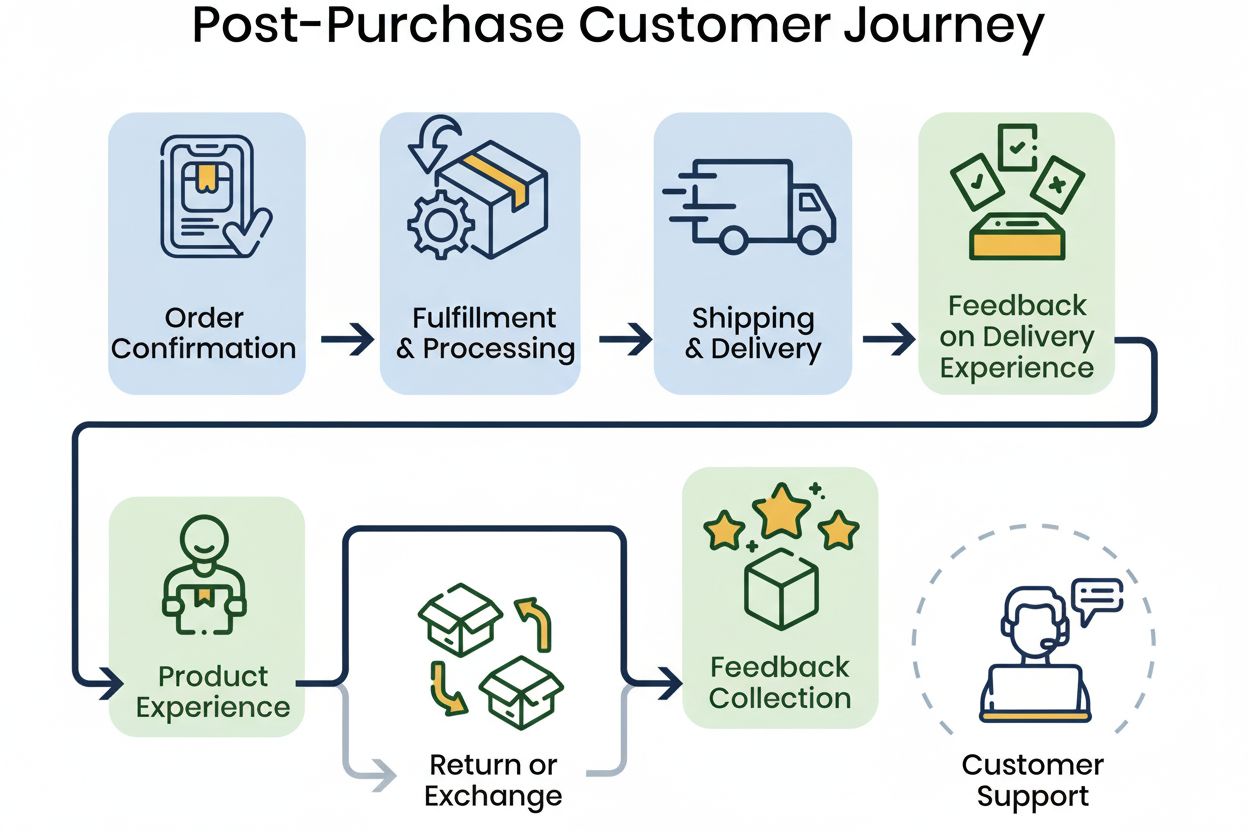
Learn what the post-purchase phase is, why it matters for customer retention and loyalty, and how to optimize every touchpoint after conversion to drive repeat ...