

Digital PR for AI
Learn how Digital PR for AI works to generate citations from ChatGPT, Perplexity, and Google AI Overviews. Discover strategies for entity optimization, structur...
7 min read
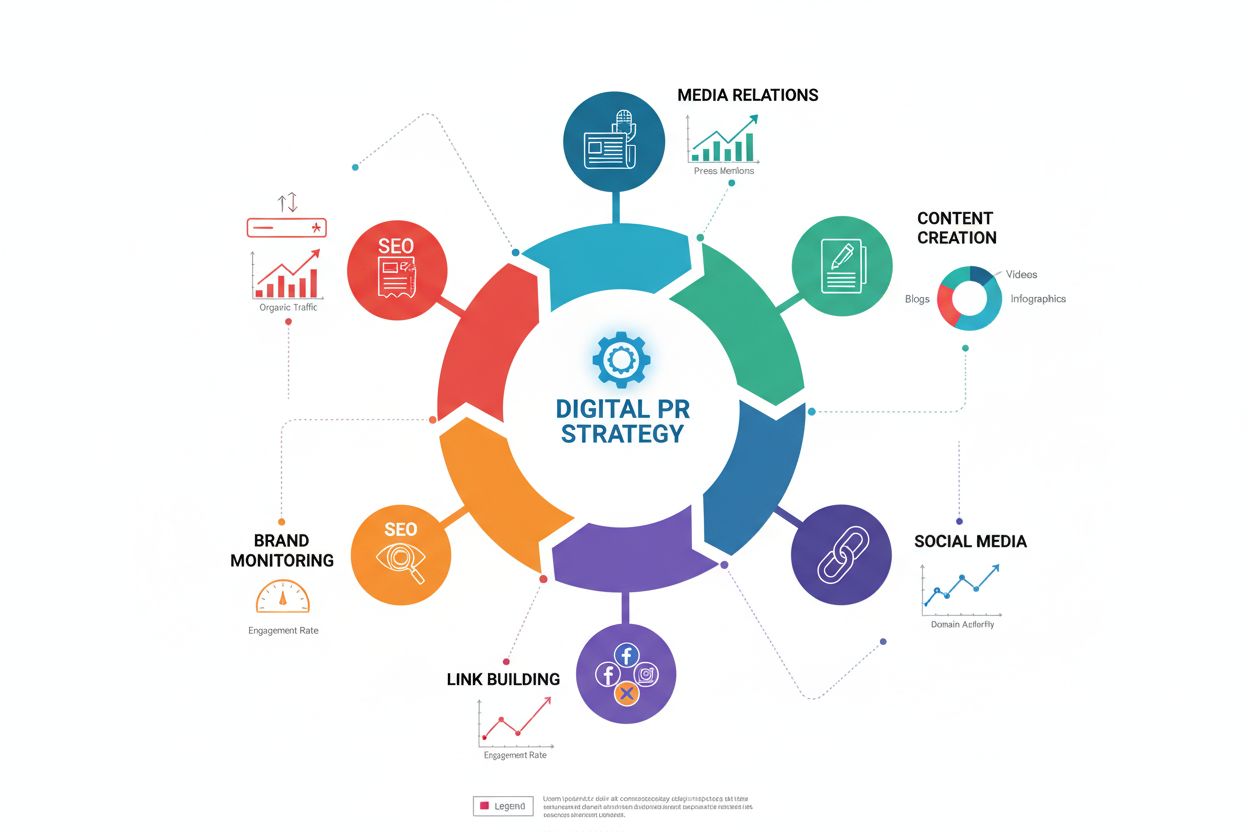
Digital PR is the strategic use of online, trusted, independent third-party media outlets and platforms to build brand reputation, increase visibility, and earn high-authority backlinks that positively influence search engine rankings and audience perception. It combines traditional public relations principles with digital channels including social media, online publications, blogs, and news websites to achieve measurable business outcomes.
Digital PR is the strategic use of online, trusted, independent third-party media outlets and platforms to build brand reputation, increase visibility, and earn high-authority backlinks that positively influence search engine rankings and audience perception. It combines traditional public relations principles with digital channels including social media, online publications, blogs, and news websites to achieve measurable business outcomes.
Digital PR is the strategic use of online, trusted, independent third-party media outlets and platforms to build and enhance a brand’s reputation, increase online visibility, and earn high-authority backlinks that positively influence search engine rankings. Unlike traditional public relations, which relies on broadcast media and print publications, Digital PR leverages digital channels including news websites, blogs, social media platforms, online publications, and industry-specific outlets to reach target audiences while simultaneously achieving measurable business outcomes. The discipline combines core PR principles—relationship building, storytelling, and media outreach—with digital marketing objectives such as search engine optimization, traffic generation, and brand awareness. Digital PR is fundamentally about using trusted third parties to amplify brand messaging, which distinguishes it from paid advertising or owned media channels where brands control the narrative directly.
The emergence of Digital PR represents a significant shift in how organizations manage their public image and online presence. Historically, public relations professionals focused exclusively on securing coverage in newspapers, magazines, television broadcasts, and radio stations—channels with limited reach and difficult-to-measure impact. As audiences migrated online beginning in the early 2000s, PR professionals faced a critical challenge: traditional media channels were losing relevance while digital platforms fragmented audience attention across countless websites, blogs, and social networks. This media fragmentation forced the PR industry to evolve, creating Digital PR as a discipline that could reach dispersed audiences across multiple online channels simultaneously.
The transformation accelerated with the rise of search engines as primary information discovery tools. By the mid-2000s, SEO professionals recognized that backlinks from authoritative websites significantly influenced search rankings. This convergence of PR expertise and SEO knowledge created Digital PR as we know it today—a discipline that earns media coverage while simultaneously building the backlink profile necessary for search engine visibility. According to 2024 research, 67.5% of companies believe link-building has a substantial impact on SERP rankings, validating the strategic importance of Digital PR in modern marketing. The discipline has matured significantly, with specialized agencies, dedicated professionals, and sophisticated measurement frameworks now standard across the industry.
Digital PR encompasses multiple interconnected activities that work together to build brand authority and online visibility. The primary components include media relations and journalist outreach, where PR professionals build relationships with journalists and editors to secure coverage in relevant publications. Content creation and storytelling form the foundation—compelling narratives, data-driven insights, and newsworthy angles that journalists want to cover. Link building through earned media remains central, with the goal of securing backlinks from high-authority publications that signal credibility to search engines. Social media engagement and amplification extends the reach of Digital PR campaigns, allowing brands to distribute content and engage directly with audiences. Brand monitoring and reputation management ensure organizations understand how they’re perceived online and can respond to emerging issues. Finally, SEO optimization ensures that Digital PR efforts are aligned with search visibility goals, incorporating keyword research and technical considerations into campaign planning.
The strategic framework of Digital PR requires understanding where target audiences consume information online. Research shows that 59% of UK adults use the BBC website for news, while in the US, local TV news (28%) and Fox News (27%) lead. On social media, Facebook remains the most popular news source with 30-31% of adults in both countries using it for news updates, though TikTok has grown dramatically from 1% to 11% of UK adults between 2020 and 2024. This audience intelligence directly informs Digital PR strategy, determining which publications, platforms, and journalists to target for maximum impact.
| Aspect | Digital PR | Traditional PR | Owned Media |
|---|---|---|---|
| Primary Channels | Online publications, blogs, social media, news websites | Print, TV, radio, magazines | Company website, blog, social channels |
| Audience Reach | Targeted, fragmented across multiple platforms | Broad, concentrated in specific media | Direct, limited to existing followers |
| Credibility Source | Third-party editorial endorsement | Third-party media authority | Brand self-promotion |
| Measurability | Highly measurable (traffic, rankings, conversions) | Difficult to measure directly | Fully measurable |
| Cost Structure | Variable ($300-$2,000+ per link) | Fixed media placement costs | Minimal ongoing costs |
| SEO Impact | Direct (backlinks, brand mentions, EEAT signals) | Indirect or none | Limited (internal linking only) |
| Timeline | 2-12 weeks for coverage | 4-8 weeks for placement | Immediate |
| Control Level | Low (editorial discretion) | Low (editorial discretion) | High (complete control) |
| Relationship Building | Essential with journalists | Important with media contacts | Not applicable |
| ROI Tracking | Referral traffic, rankings, conversions | Brand awareness, impressions | Engagement metrics |
Digital PR operates through a systematic process of identifying newsworthy angles, building relationships with journalists, and pitching compelling stories that result in media coverage. The process begins with research and ideation, where PR professionals analyze industry trends, competitor activities, and audience interests to identify story angles that journalists will find compelling. Data-driven campaigns represent the most popular approach, accounting for 42.3% of all Digital PR campaigns in 2023-24, because journalists recognize data as inherently newsworthy and credible. Once a story angle is developed, PR professionals conduct journalist research to identify the most relevant reporters and editors—83% of Digital PR professionals use media databases like Muck Rack to find the right contacts.
The pitch process is critical to Digital PR success. Research shows that subject relevance is the most important factor (33% of professionals), followed by customization to the individual journalist (20%) and existing relationships (20%). Effective pitches are kept to 300 words or less (92% preference), with subject lines containing 4-8 words and including buzzwords that increase open rates by 12%. The optimal send time is Tuesday before noon (53% preference), with follow-up emails sent 3-6 days later. Once coverage is secured, the backlink and brand mention become assets that improve search visibility. According to 2024 data, the average Digital PR backlink has a Domain Rating of 61, with 20.62% of backlinks falling in the DR 70-79 range—significantly higher authority than other link-building methods.
The relationship between Digital PR and search engine optimization is fundamental to modern Digital PR strategy. Backlinks from high-authority publications serve as “votes of confidence” that signal to search engines that a website is trustworthy and authoritative. Research from Backlinko analyzing 11.8 million Google search results found that websites ranking first in search results have approximately 3.8 times more backlinks than those in positions 2-10. More dramatically, 95% of all pages on Google have zero backlinks, and 92.3% of the top 100 ranking domains have at least one backlink, demonstrating the critical importance of link building through Digital PR.
Beyond backlinks, Digital PR builds EEAT signals that Google uses to evaluate website quality. In December 2022, Google added “Experience” to its existing “Expertise, Authority, and Trustworthiness” framework, making EEAT a critical ranking factor. Brand mentions in authoritative editorial publications—even without links—contribute to EEAT signals. Google’s former chief of search quality Udi Manber confirmed that “the context in which you engage online, and how people talk about you online, actually can impact what you rank for.” This means that positive coverage in reputable publications improves how search engines perceive your brand, independent of the backlink itself. Additionally, Digital PR drives branded search traffic, which improves click-through rates from search results. When users see a brand mentioned in multiple authoritative sources, they’re more likely to recognize and click on that brand in search results, signaling to Google that the result is relevant and valuable.
Different Digital PR campaign types serve different strategic objectives and perform with varying effectiveness across industries. Data-driven campaigns remain the most popular, representing 42.3% of all campaigns, because they provide journalists with concrete, newsworthy information. These campaigns typically involve original research, surveys, or analysis that generates unique insights. Survey-based campaigns account for 19.3% of campaigns and work well for gathering audience opinions and generating discussion. Infographics represent 10.7% of campaigns and excel at making complex information visually digestible. Expert comment pieces (8%) position company executives as thought leaders, while mapped studies (18.2%) work particularly well in science and environmental sectors.
Sentiment analysis of Digital PR coverage reveals important insights about campaign effectiveness. Analysis of over 370,000 digital PR articles found that 48.5% contained positive sentiment, with 22.4% negative and 29.1% neutral. Expert comment pieces showed the highest positive sentiment at 63.7%, followed by AI-reimagined pieces (53%) and infographics (51%). However, mapped studies showed the highest negative sentiment at 41.7%, likely because they often address environmental or social issues. Industry matters significantly—fashion and style articles showed 85.1% positive sentiment, while crime and law articles showed 79.8% negative sentiment. Understanding these patterns helps PR professionals select campaign types aligned with their brand positioning and audience expectations.
Modern Digital PR relies on specialized tools and platforms that enable professionals to identify journalists, track coverage, and measure campaign impact. Media databases like Muck Rack, Cision, and Agility are used by 83% of Digital PR professionals to identify and research journalists. Google Search Console is the most popular measurement tool (25% of professionals), followed by Semrush (21%) and Ahrefs (15%), reflecting the strong connection between Digital PR and SEO measurement. Spreadsheets remain the most common platform for storing media lists (68%), though dedicated PR software like Muck Rack is used by 64% of professionals.
Digital PR professionals require diverse skill sets to succeed in the discipline. Content creation and storytelling are fundamental—the ability to identify compelling narratives and communicate them effectively. SEO knowledge is increasingly essential, as PR professionals must understand how their work impacts search visibility. Media relations and relationship building remain core skills, requiring persistence, professionalism, and genuine interest in journalists’ beats and interests. Analytical thinking is critical for measuring campaign success and making data-driven decisions. Social media management skills help amplify Digital PR campaigns across platforms. The most successful Digital PR professionals combine traditional PR expertise with digital marketing knowledge, understanding both how to secure media coverage and how that coverage impacts business metrics like traffic, rankings, and conversions.
Artificial intelligence is transforming Digital PR in multiple ways, from campaign ideation to measurement and real-time response. AI-powered monitoring tools like Brandwatch and Hootsuite Insights track brand mentions, sentiment, and emerging trends across digital channels, enabling PR professionals to identify opportunities and respond to issues rapidly. AI content analysis helps identify which topics, angles, and formats resonate most with journalists and audiences, informing future campaign strategy. Predictive analytics powered by AI can forecast which story angles are most likely to generate coverage, helping PR professionals prioritize efforts.
However, AI integration in Digital PR requires careful oversight and human judgment. AI trained on biased data can produce inaccurate sentiment analysis or misinterpret journalist preferences. The most effective Digital PR strategies combine AI-powered insights with human expertise—using AI to identify patterns and opportunities while relying on experienced professionals to build relationships, craft compelling narratives, and make strategic decisions. Additionally, AI monitoring tools are becoming essential for tracking brand visibility in AI-generated responses across platforms like ChatGPT, Perplexity, Google AI Overviews, and Claude. As AI systems increasingly serve as information sources, ensuring your brand appears in AI-generated content becomes as important as traditional search visibility.
Digital PR continues to evolve rapidly, driven by changes in media consumption, search engine algorithms, and technology. The global Digital PR service market was valued at $12.3 billion in 2023 and is projected to reach $25.4 billion by 2032, representing 106.5% growth at a compound annual growth rate of 8.3%. This growth reflects increasing recognition of Digital PR’s value in building brand authority and driving measurable business outcomes. Search trends confirm growing interest—searches for “digital PR” have increased 418.8% in the US since 2005, while “link building” searches have grown 275.3%, indicating sustained and growing demand for Digital PR expertise.
Future Digital PR strategies will increasingly focus on AI visibility and monitoring, as AI systems become primary information sources for many users. Brands will need to ensure their Digital PR efforts result in citations and mentions within AI-generated responses, not just traditional search results. Authenticity and relationship-building will become even more critical as journalists face information overload and increasingly value genuine relationships with PR professionals who understand their beats and provide valuable story ideas. Data-driven campaigns will continue to dominate, but the sophistication of data analysis and visualization will increase, requiring PR professionals to develop stronger analytical capabilities. Integration across channels—combining Digital PR with SEO, content marketing, social media, and paid media—will become standard practice, with successful brands treating Digital PR as a core component of comprehensive digital strategy rather than an isolated tactic.
Traditional PR focuses on broadcast media like television, radio, and print publications to build brand awareness through direct messaging. Digital PR, by contrast, leverages online channels including websites, social media, blogs, and news outlets to reach audiences while simultaneously improving SEO performance through earned backlinks. Digital PR is more measurable, allowing brands to track specific metrics like referral traffic, keyword rankings, and domain authority improvements, whereas traditional PR relies on more subjective measures like media impressions and circulation numbers.
Digital PR improves search engine rankings through multiple mechanisms. First, earning backlinks from high-authority publications signals credibility to search engines, with the average Digital PR backlink having a Domain Rating of 61 according to 2024 data. Second, brand mentions in authoritative publications build EEAT (Experience, Expertise, Authority, and Trustworthiness) signals that Google uses to evaluate website quality. Third, increased brand awareness from Digital PR campaigns drives more branded search queries, which improves click-through rates from search results. Studies show that websites ranking first in search results have approximately 3.8 times more backlinks than those in positions 2-10.
Data-driven campaigns are the most popular Digital PR approach, accounting for 42.3% of campaigns analyzed in 2023-24, with Australia leading at 57%. Survey-based campaigns represent 19.3% of campaigns, while infographics account for 10.7%. Expert comment pieces and mapped studies comprise 8% and 18.2% respectively. AI-reimagined campaigns remain emerging, representing only 0.4% of campaigns. The effectiveness varies by industry—data studies perform best for business and economy sectors, while mapped studies excel in science-related coverage.
Effective Digital PR pitching requires several key elements: 33% of professionals cite subject relevance as most important, followed by customization (20%) and existing relationships (20%). The most effective channel is individual 1:1 email outreach (89% of professionals), significantly more effective than mass emails or social media (18% each). Pitches should be kept to 300 words or less (92% preference), with subject lines containing 4-8 words and including buzzwords like celebrity names or events (12% higher open rates). Tuesday before noon is the optimal send time (53% preference), with follow-up emails sent 3-6 days later (54% of professionals).
Key Digital PR metrics include traffic increase (22.5% of specialists use this as primary KPI), ranking improvements (19%), referral traffic (13%), and sales conversions (13%). For link quality, Domain Rating or Domain Authority is the most popular metric (33.5% of specialists), followed by site traffic (30%). Additional important metrics include the number of backlinks acquired, unique referring domains, and sentiment analysis of coverage. Tools like Google Analytics, Google Search Console, Semrush, and Ahrefs help track these metrics comprehensively.
Digital PR costs vary significantly based on link authority and placement quality. Low-authority links average around $300 per link, while high-authority contextual backlinks range from $500 to $2,000 per link. Monthly spending varies widely: 35.5% of companies spend less than $5,000 monthly, 46.5% spend $5,000-$10,000, and 18% spend over $10,000. Budget allocation differs between brands and agencies—39% of agencies plan to increase spending compared to 33% of brands, while 23% of brands plan to decrease budgets.
AI is increasingly important in Digital PR for monitoring brand sentiment, tracking mentions across platforms, and analyzing campaign performance at scale. Tools like Brandwatch and Hootsuite Insights use AI to monitor public sentiment and enable rapid response to customer feedback. AI helps identify emerging trends and topics relevant to target audiences, allowing PR professionals to create timely, newsworthy content. However, careful oversight is essential—AI trained on biased data can produce inaccurate responses. AI also supports content creation, journalist identification, and predictive analytics for campaign success, though human expertise remains critical for strategy and relationship building.
Start tracking how AI chatbots mention your brand across ChatGPT, Perplexity, and other platforms. Get actionable insights to improve your AI presence.
Learn how Digital PR for AI works to generate citations from ChatGPT, Perplexity, and Google AI Overviews. Discover strategies for entity optimization, structur...

Learn how digital PR impacts AI search visibility. Discover why earned media, brand mentions, and thought leadership are critical for appearing in ChatGPT, Perp...
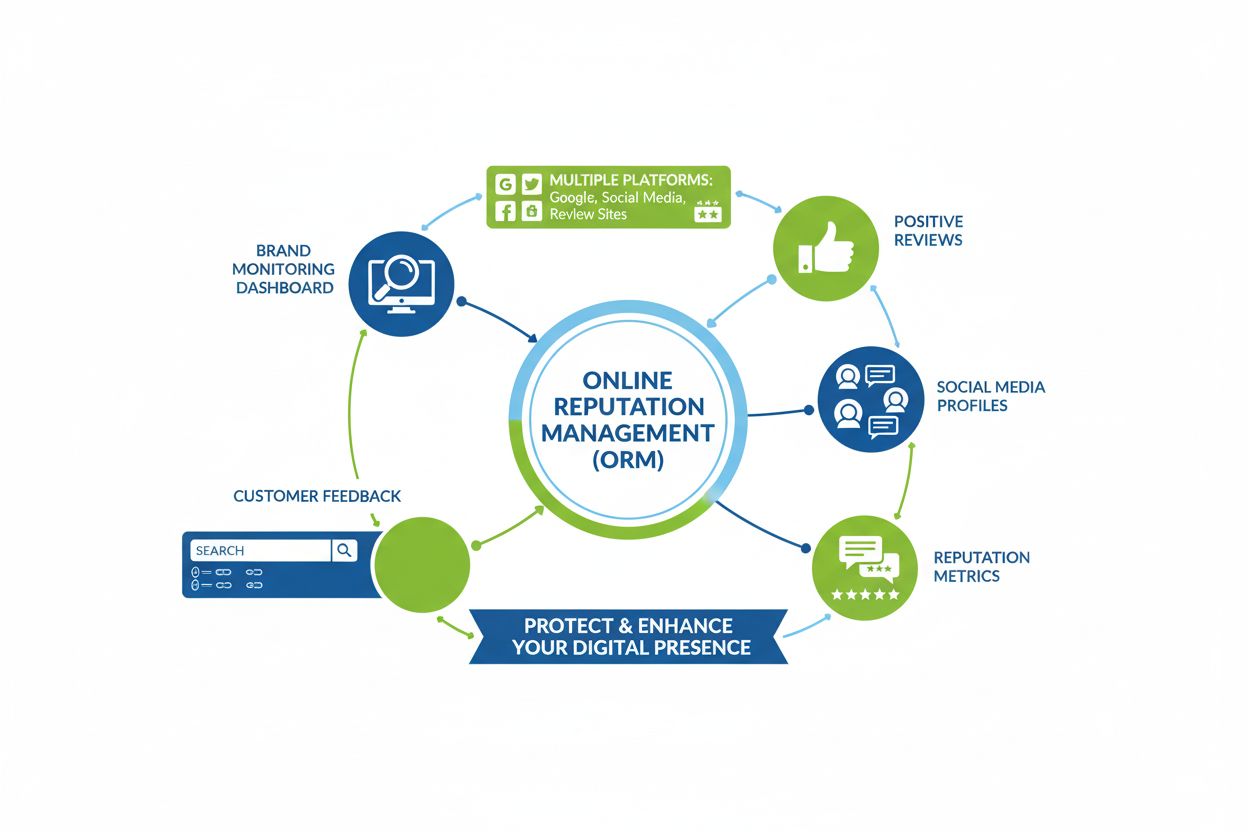
Learn what Online Reputation Management (ORM) is, how it works, and why it's critical for brand perception. Discover ORM strategies, tools, and best practices f...
Cookie Consent
We use cookies to enhance your browsing experience and analyze our traffic. See our privacy policy.