

Does Digital PR Help with AI Search? Complete Guide to GEO Strategy
Learn how digital PR impacts AI search visibility. Discover why earned media, brand mentions, and thought leadership are critical for appearing in ChatGPT, Perp...
7 min read

Media outreach strategies specifically designed to generate coverage that AI systems cite. Digital PR for AI targets algorithmic systems like ChatGPT, Perplexity, and Google AI Overviews by optimizing content for entity recognition, semantic relevance, and structured data signals. Unlike traditional PR focused on journalist relationships, Digital PR for AI emphasizes data-driven assets, expert commentary, and technical implementation to maximize visibility in AI-generated answers.
Media outreach strategies specifically designed to generate coverage that AI systems cite. Digital PR for AI targets algorithmic systems like ChatGPT, Perplexity, and Google AI Overviews by optimizing content for entity recognition, semantic relevance, and structured data signals. Unlike traditional PR focused on journalist relationships, Digital PR for AI emphasizes data-driven assets, expert commentary, and technical implementation to maximize visibility in AI-generated answers.
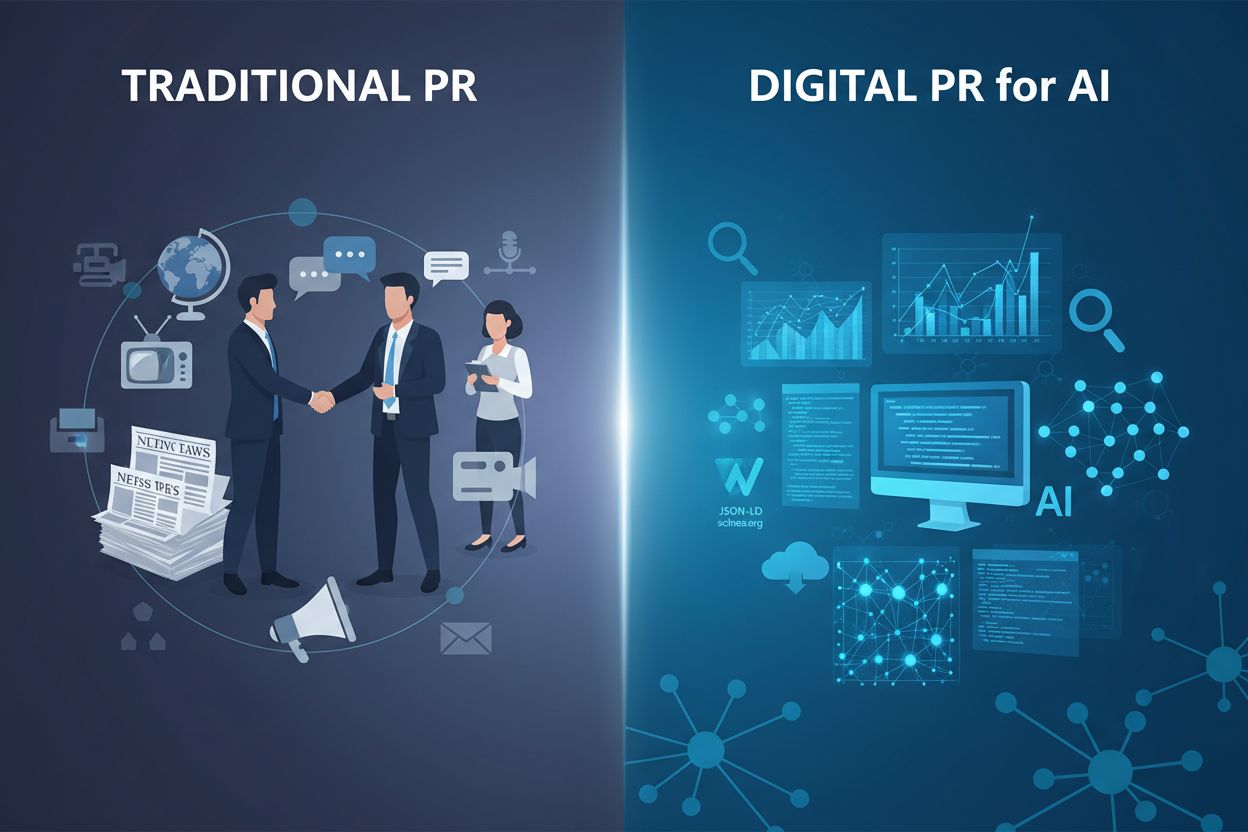
Digital PR for AI represents a fundamental shift in how organizations build visibility and credibility in the age of large language models and AI-powered search systems. Unlike traditional PR, which focuses on earning media coverage through journalists and publications, Digital PR for AI targets the algorithmic systems that power ChatGPT, Perplexity, Google AI Overviews, and similar platforms. Research shows that 95% of AI citations originate from PR-driven content, meaning strategic outreach directly influences how AI systems cite and reference your organization. This distinction matters because AI systems don’t read news the way humans do—they evaluate sources through retrieval mechanisms, semantic relevance, and structured data signals that traditional PR rarely optimizes for. As AI becomes the primary interface through which audiences discover information, Digital PR for AI has evolved from a nice-to-have tactic into a critical component of modern visibility strategy.

AI systems use Retrieval Augmented Generation (RAG) to find and cite sources, a process fundamentally different from how search engines rank pages. When you ask ChatGPT or Perplexity a question, the system retrieves relevant documents from its training data and indexed sources, then uses entity recognition and semantic relevance scoring to determine which sources best answer your query. Research reveals a 0.65 correlation between Google page 1 rankings and LLM mentions, suggesting that while traditional SEO helps, it’s not the primary driver of AI citations. Traditional backlinks—the cornerstone of SEO—show weak correlation with AI visibility, meaning a page can rank well in Google but rarely appear in AI responses. Instead, AI systems prioritize sources that demonstrate clear expertise, contain structured data, and provide comprehensive answers to specific questions. The presence of metadata, schema markup, and semantic clarity becomes exponentially more important than link authority in the AI era.
| Factor | Traditional SEO | AI Citation Visibility |
|---|---|---|
| Primary Signal | Backlinks | Entity Recognition |
| Content Type | Keyword-optimized | Structured, factual |
| Authority Signal | Domain authority | Semantic relevance |
| Citation Likelihood | Page 1 ranking | PR-driven coverage |
| Data Importance | Secondary | Primary |
Each major AI platform exhibits distinct source preferences that require tailored strategies. ChatGPT shows a strong preference for Wikipedia (7.8% of citations), reflecting its training on authoritative encyclopedic content, while Google AI Overviews takes a more balanced approach across diverse sources with Reddit appearing in only 2.2% of citations. Perplexity, by contrast, embraces community-driven content with Reddit representing 6.6% of its citations—a significant difference that reflects its real-time indexing approach. These variations matter because a source strategy optimized for ChatGPT visibility may underperform on Perplexity, and vice versa. Understanding platform-specific preferences allows you to allocate resources strategically and tailor content formats to each system’s evaluation criteria.
Top sources by platform:
Effective Digital PR for AI rests on seven interconnected strategies that work together to maximize AI visibility. First, focus on the right topics—those with genuine search volume in AI systems and alignment with your expertise. Second, build data-led assets that provide original research, proprietary datasets, or comprehensive analyses that AI systems can cite as authoritative sources. Research shows 99.4% of successful AI PR campaigns feature data-driven content, and 96.5% incorporate expert commentary from recognized authorities in their field. Third, secure placement in high-authority publications that AI systems trust and index regularly. Fourth, reinforce your message on your own website with comprehensive, well-structured content that serves as the canonical source. Fifth, keep assets evergreen—avoid time-sensitive angles that lose relevance quickly, as AI systems may cite your content months or years after publication. Sixth, treat AI visibility as a longer arc rather than a one-off campaign; consistent presence across multiple platforms compounds over time. Data demonstrates that data-driven content receives 51% more traffic and generates 34% more backlinks compared to opinion-based content, creating a virtuous cycle of visibility.
Creating content that AI systems can easily discover and cite requires implementing specific technical standards that signal quality and authority. Implement NewsArticle schema markup using JSON-LD format to clearly identify your content as journalistic material, which AI systems recognize as authoritative. Add FAQPage schema for content that answers common questions, as this structure helps AI systems extract relevant information for direct answers. Format content for scannability using clear headings, bullet points, and short paragraphs that allow AI systems to quickly identify key information. Include methodology documentation for any data points or research findings—AI systems evaluate source credibility partly through transparency about how conclusions were reached. Avoid unverified AI-generated drafts in your press assets; AI systems can often detect AI-written content and may deprioritize it in favor of human-authored material. Research indicates that 73% of URLs cited by AI systems include basic Article schema, demonstrating the importance of structured data implementation.
{
  "@context": "https://schema.org",
  "@type": "NewsArticle",
  "headline": "Your Article Headline",
  "description": "Brief description of the article",
  "image": "https://example.com/image.jpg",
  "datePublished": "2024-01-15T08:00:00Z",
  "dateModified": "2024-01-15T09:00:00Z",
  "author": {
    "@type": "Person",
    "name": "Author Name",
    "url": "https://example.com/author"
  },
  "publisher": {
    "@type": "Organization",
    "name": "Publication Name",
    "logo": {
      "@type": "ImageObject",
      "url": "https://example.com/logo.jpg"
    }
  }
}
AI systems rely on entity recognition and knowledge graphs to understand relationships between concepts, organizations, and people. Claim and optimize your Google Knowledge Panel to establish your organization as a recognized entity in AI systems’ knowledge bases. Use sameAs properties in your schema markup to link your website to verified profiles (LinkedIn, Crunchbase, Wikipedia) that reinforce entity identity. Create Person schema for key executives and thought leaders, as AI systems often cite individuals as sources of expertise and commentary. Implement semantic keyword clustering by grouping related terms and concepts throughout your content, helping AI systems understand the full scope of your expertise. Track entity recognition using tools that monitor how AI systems identify and reference your organization across different contexts. Organizations that invest in entity optimization see 40-60% increases in citation rates over six months, as AI systems become more confident in their ability to accurately identify and reference your content.
Measuring success in Digital PR for AI requires establishing baselines and tracking metrics that connect AI visibility to business outcomes. Establish baseline metrics before launching campaigns by documenting current AI citation rates, branded search volume, and website traffic from AI-referred sources. Track AI Overview appearances in Google Search by monitoring whether your content appears in featured snippets and AI-generated overviews for target keywords. Monitor citation rates across platforms using tools that track mentions in ChatGPT, Perplexity, and Google AI responses. Connect AI visibility to business outcomes by measuring how AI citations correlate with website traffic, lead generation, and customer acquisition. Use branded search as a proxy metric—one company saw a 40% increase in branded searches after achieving AI citations, indicating that AI visibility drives awareness and consideration. Measure conversion rates from AI-referred traffic to understand the quality of visitors coming through AI systems versus traditional search.
| Metric | Baseline | Target | Measurement Method |
|---|---|---|---|
| AI Citation Rate | Track mentions across 3 platforms | +50% increase | AmICited.com, manual monitoring |
| AI Overview Appearances | Current featured snippet count | +30% increase | Google Search Console, manual checks |
| Branded Search Volume | Current monthly volume | +40% increase | Google Analytics, Search Console |
| AI-Referred Traffic | Current monthly visitors | +25% increase | Google Analytics (UTM tracking) |
| Conversion Rate | Current baseline | Match or exceed organic | Analytics conversion tracking |
Traditional PR and Digital PR for AI serve different purposes and require distinct skill sets and strategies. Traditional PR focuses on earning coverage in publications that humans read, building brand awareness through journalist relationships and media placements that drive traffic and credibility signals. Digital PR for AI targets algorithmic systems, optimizing for how AI retrieves, evaluates, and cites sources—a process that requires technical implementation, data-driven content, and platform-specific strategies. While traditional PR remains valuable for brand building and thought leadership, it no longer guarantees visibility in the AI systems that increasingly mediate information discovery.
AmICited.com serves as the essential monitoring solution for tracking AI citations across ChatGPT, Perplexity, Google AI Overviews, and other major platforms, providing the visibility and measurement framework that Digital PR for AI demands. Rather than replacing traditional PR, Digital PR for AI complements it by ensuring your organization remains visible and credible in the AI-powered information landscape that now shapes how audiences discover and evaluate your expertise.
Traditional PR focuses on earning journalist coverage and building media relationships to drive brand awareness. Digital PR for AI targets algorithmic systems by optimizing content for entity recognition, semantic relevance, and structured data. While traditional PR remains valuable, Digital PR for AI is essential for visibility in AI-powered search systems that now mediate how audiences discover information.
Each platform has different source preferences: ChatGPT favors Wikipedia and authoritative sources (7.8%), Google AI Overviews uses balanced sources including Reddit (2.2%), and Perplexity emphasizes community content with Reddit at 6.6%. A multi-platform strategy works best, but you can prioritize based on where your target audience searches most frequently.
Entity optimization and schema implementation take 2-4 weeks to complete. First citations typically appear within 30-60 days of publishing optimized content. Significant visibility increases usually require 3-6 months of consistent effort across multiple campaigns and platforms.
Not necessarily, but it depends on your team's technical capability. If you lack expertise in schema implementation, entity modeling, or AI citation tracking, an agency can accelerate results. Many companies find that specialized agencies deliver faster ROI than in-house teams learning these tactics for the first time.
Digital PR for AI is measured through AI citation rates, AI Overview appearances in Search Console, and entity recognition in LLM outputs. Traditional PR metrics like media impressions and earned media value are less relevant. The key is connecting AI visibility metrics to business outcomes like branded search volume and conversion rates.
Not optimally. AI-ready press releases require structured data, clear factual statements, and entity optimization that traditional press releases don't prioritize. A hybrid approach works best: create AI-optimized versions with schema markup and data-driven content, while maintaining narrative elements that appeal to journalists.
Data is critical for AI visibility. Research shows 99.4% of successful AI PR campaigns feature data-driven content, and data-led assets generate 51% more traffic and 34% more backlinks than opinion-based content. AI systems heavily weight factual, verifiable data with clear methodology documentation.
AmICited monitors how often your brand is cited across ChatGPT, Perplexity, Google AI Overviews, and other AI systems. This data helps you measure the effectiveness of your Digital PR efforts, identify which topics and platforms drive the most citations, and optimize your strategy based on real performance data.
Track how often your brand is cited across ChatGPT, Perplexity, Google AI Overviews, and other AI systems. Get real-time insights into your AI visibility and measure the impact of your Digital PR efforts.
Learn how digital PR impacts AI search visibility. Discover why earned media, brand mentions, and thought leadership are critical for appearing in ChatGPT, Perp...
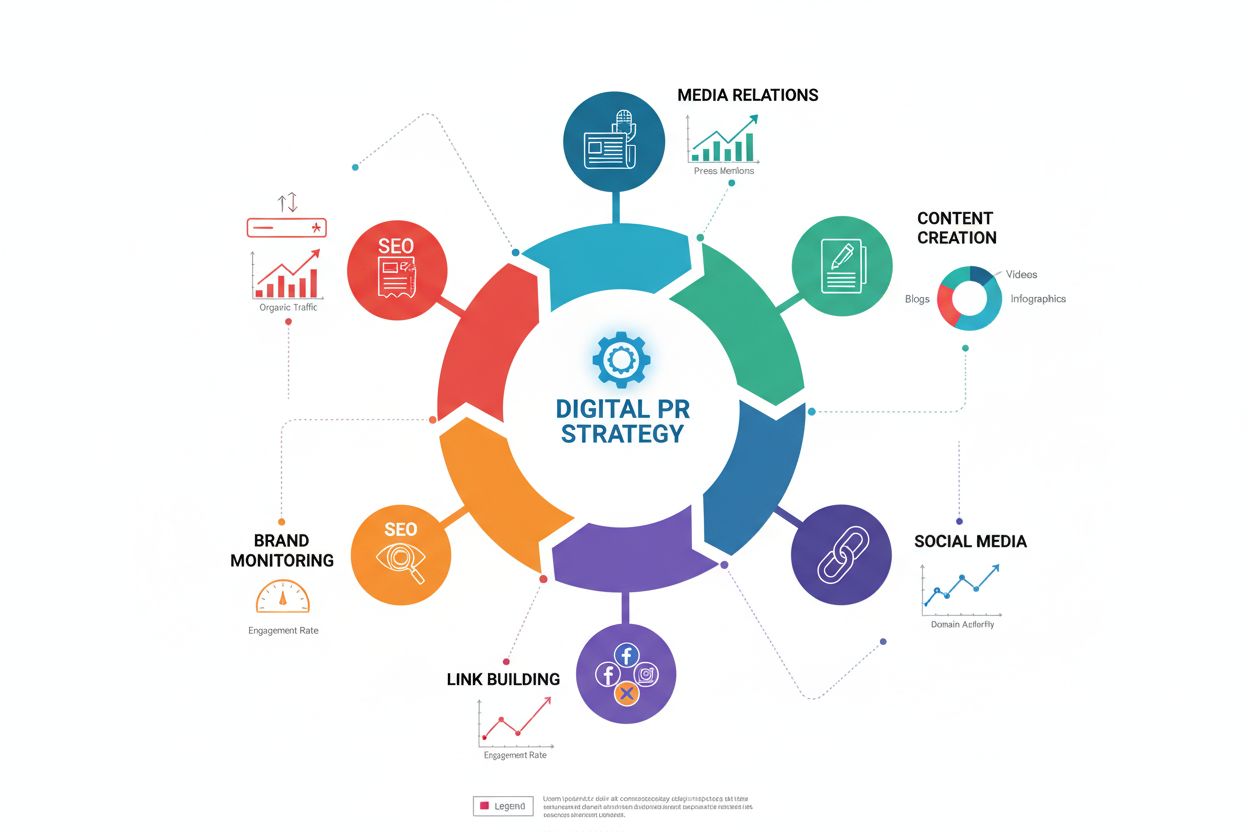
Digital PR is the strategic use of online media and trusted third parties to build brand reputation and visibility. Learn how digital PR strategies drive SEO, b...
Community discussion on how digital PR affects AI visibility. Real experiences from PR professionals and marketers analyzing the impact of press coverage on AI ...