
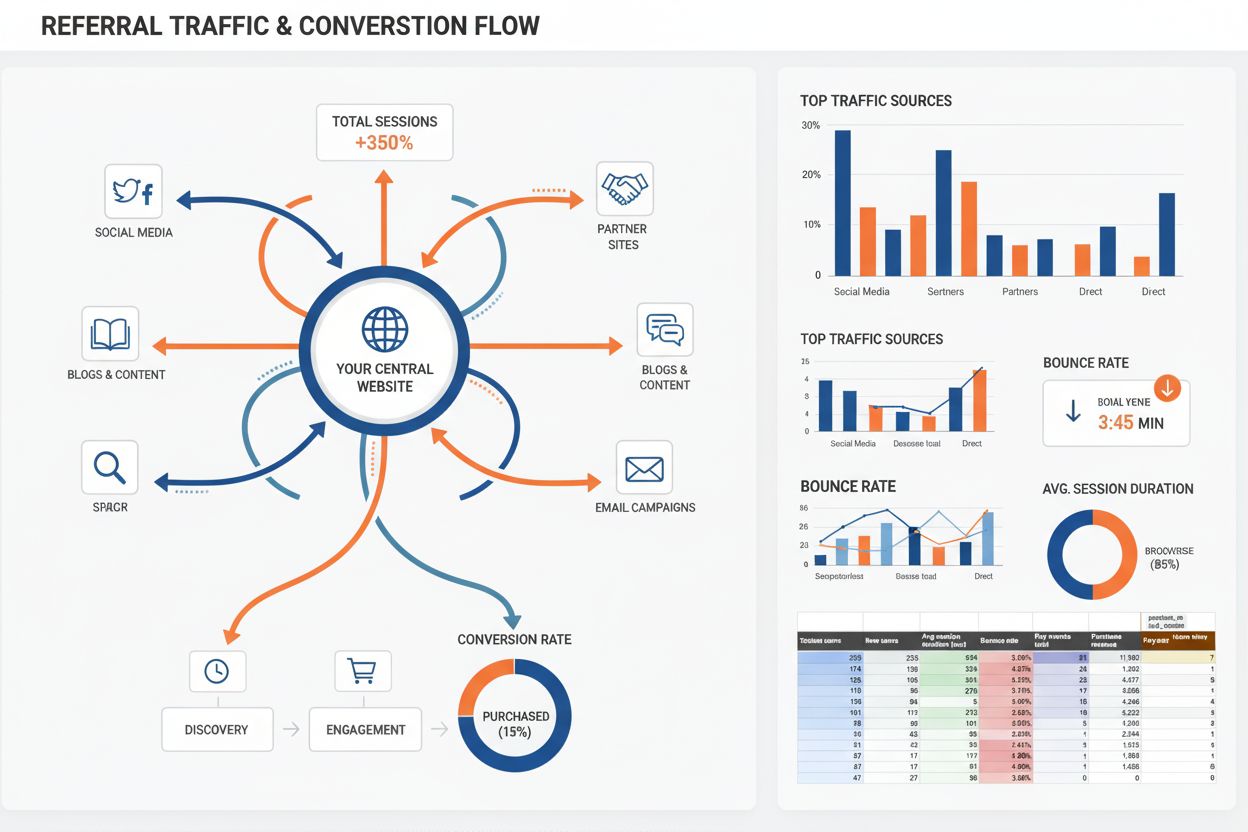
Referral Traffic
Referral traffic definition: visitors from external websites. Learn how referral traffic works, its importance for SEO, conversion rates, and strategies to incr...
10 min read
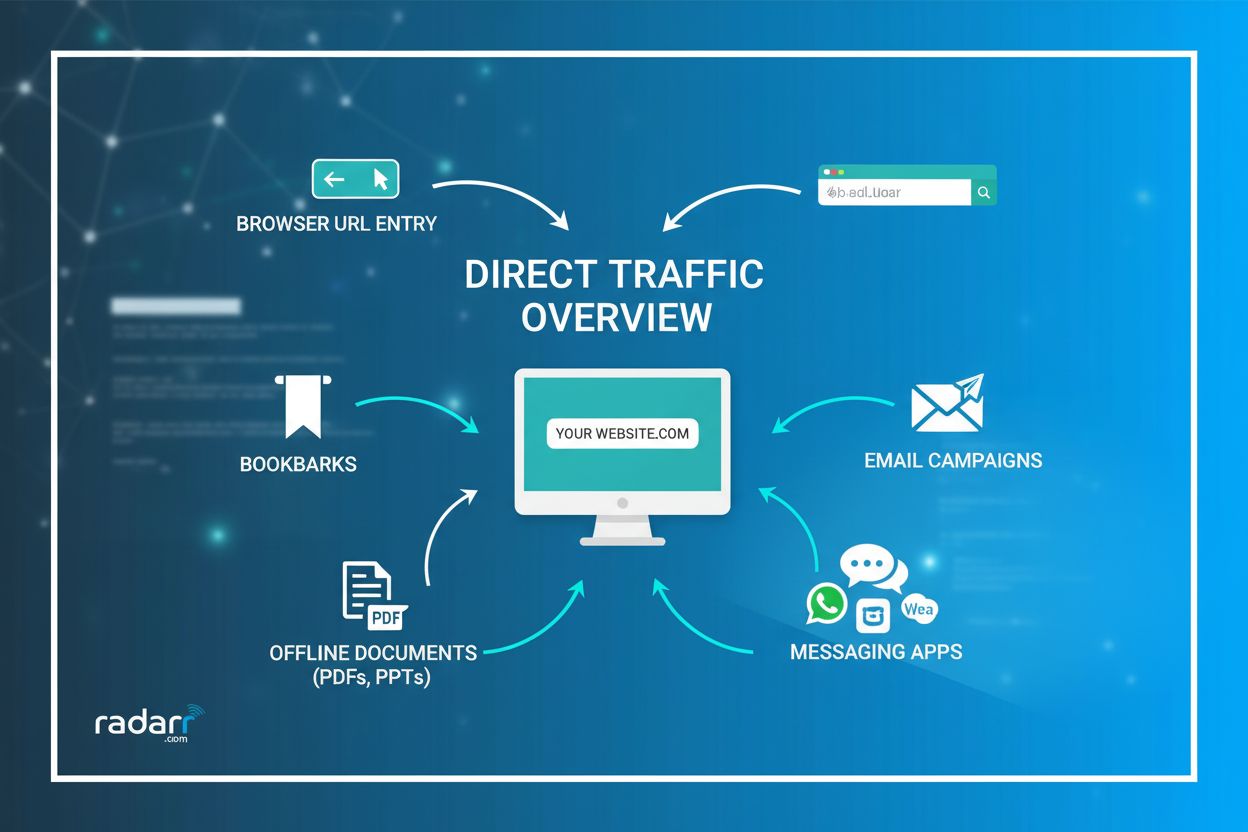
Direct traffic refers to website visitors who arrive without an identifiable referral source, typically by typing the URL directly into their browser, using bookmarks, or accessing the site through untracked channels like dark social and offline documents. It accounts for approximately 22% of total website visits and represents both legitimate brand awareness and misattributed traffic from sources that fail to pass referral information.
Direct traffic refers to website visitors who arrive without an identifiable referral source, typically by typing the URL directly into their browser, using bookmarks, or accessing the site through untracked channels like dark social and offline documents. It accounts for approximately 22% of total website visits and represents both legitimate brand awareness and misattributed traffic from sources that fail to pass referral information.
Direct traffic is a classification of website visits where the referral source cannot be identified or tracked by analytics systems. These are visitors who arrive at your website without a clear, measurable origin point—meaning analytics tools cannot determine how they found you. The most straightforward example is when a user types your website URL directly into their browser address bar or clicks on a previously bookmarked link. However, the reality of direct traffic is far more complex than this simple definition suggests. In modern web analytics, particularly in Google Analytics, direct traffic is labeled as “(direct) / (none)” and represents a significant portion of overall website traffic. According to recent data from 2024-2025, direct traffic accounts for approximately 22% of total website visits across all websites, making it the second-largest traffic source after organic search. Understanding what constitutes direct traffic is crucial for marketers, website owners, and businesses relying on accurate data to make informed decisions about their digital strategies and content optimization efforts.
The challenge with direct traffic lies in distinguishing between legitimate direct visits and traffic that is simply misattributed due to technical limitations or privacy measures. When a user bookmarks your site and returns weeks later, that’s genuine direct traffic—they remembered your brand and came back intentionally. However, when a user clicks a link shared in a private WhatsApp conversation, that traffic also appears as direct in your analytics, even though it originated from a social recommendation. This distinction matters significantly because it affects how you understand your audience behavior and the effectiveness of your marketing channels. The referrer header, which tells analytics systems where a visitor came from, is stripped or not passed in numerous scenarios. HTTPS to HTTP transitions, for example, prevent referral information from being transmitted due to security protocols. Similarly, when users access your site through certain email clients like Outlook or Thunderbird, the referrer data is often lost. Mobile devices present another layer of complexity—research has shown that mobile browsers are significantly more likely to fail to pass referrer information compared to desktop browsers, contributing to inflated direct traffic numbers on mobile-heavy websites.
One of the most significant contributors to direct traffic is a phenomenon known as dark social, a term coined by journalist Alexis C. Madrigal in 2012. Dark social refers to content sharing that occurs through private channels where referral information is not captured by standard analytics tools. This includes sharing links via WhatsApp, Facebook Messenger, Slack, Discord, email, SMS, and other private messaging platforms. The scale of dark social is staggering—research from SparkToro and other sources indicates that 75% of Facebook Messenger visits have no referral information, and similar patterns exist across TikTok, WhatsApp, and Discord. According to a 2016 study cited by multiple analytics sources, dark social accounted for approximately 84% of all consumer outbound sharing, yet this massive volume of traffic goes largely untracked and unattributed. When someone shares your article in a group chat or sends a link to a friend via email, that visitor arrives at your site with no referral data, and analytics systems classify it as direct traffic. This misattribution creates a significant blind spot in understanding how your content actually spreads and which recommendations drive the most valuable traffic. For brands and content creators, this means that the true reach and impact of their content is substantially underestimated by traditional analytics.
Direct traffic originates from multiple sources, some legitimate and others representing tracking failures or privacy measures. Bookmarks represent genuine direct traffic—when users save your site and return later, they’re demonstrating brand loyalty and intent. Typed URLs are another legitimate source, where users remember your domain and enter it directly into their browser. However, many direct traffic sources are actually misattributed traffic from identifiable channels. Email marketing campaigns frequently appear as direct traffic when they lack proper UTM parameters (Urchin Tracking Module tags that identify campaign sources). Offline documents like PDFs, Word files, and PowerPoint presentations often contain links to websites, but clicks from these documents cannot be tracked by web analytics since they exist outside the internet. Broken redirect chains and improper redirects can strip referral information, causing traffic to be classified as direct. Ad blockers interfere with tracking cookies and referrer headers, resulting in traffic being marked as direct even though it came from a specific source. Mobile app traffic frequently lacks referrer information—when users click links in news apps, social media apps, or other mobile applications, the referral data is often not passed to the destination website. Additionally, HTTPS to HTTP transitions prevent referral information from being transmitted due to browser security protocols, and expired sessions can cause returning visitors to be counted as new direct traffic if their previous session has timed out.
| Traffic Source | Definition | Referral Data | Tracking Difficulty | Typical Percentage | Quality Indicator |
|---|---|---|---|---|---|
| Direct Traffic | Visits without identifiable referral source | None/Unknown | High | 22% | Brand awareness, loyalty |
| Organic Search | Unpaid search engine results | Clear (keyword associated) | Low | 17% | SEO effectiveness |
| Referral Traffic | Clicks from other websites | Clear (source website) | Low | 13% | Link building success |
| Social Media | Clicks from public social posts | Clear (platform identified) | Medium | 16% | Social engagement |
| Dark Social | Private channel sharing (WhatsApp, email, etc.) | None/Stripped | Very High | 15-20% (misattributed as direct) | Authentic recommendations |
| Email Marketing | Clicks from email campaigns | Clear (if tagged with UTM) | Medium | 14% | Email campaign performance |
| Paid Search | Clicks from search ads | Clear (campaign tagged) | Low | 9% | PPC campaign ROI |
| Display Ads | Clicks from banner/visual ads | Clear (campaign tagged) | Low | 12% | Display advertising effectiveness |
Google Analytics and other analytics platforms use specific algorithms to classify traffic sources based on the referrer header and other signals. When a user arrives at your website, the browser typically sends a referrer header indicating where they came from. If this header is missing or empty, analytics systems classify the traffic as “(direct).” However, the absence of a referrer header doesn’t necessarily mean the user typed your URL directly—it could mean the referrer information was stripped by security protocols, privacy settings, or technical limitations. In GA4 (Google Analytics 4), direct traffic is specifically labeled as “(direct) / (none)” in traffic acquisition reports, where “(direct)” indicates the source and “(none)” indicates the medium. This classification system has remained relatively consistent across analytics platforms, but the underlying causes of direct traffic have become increasingly complex. UTM parameters provide a solution for some direct traffic attribution problems—by adding tracking codes to URLs (such as utm_source=email, utm_medium=newsletter), marketers can ensure that traffic from specific campaigns is properly attributed even if the referrer header is stripped. However, UTM parameters only work when they’re properly implemented and when the link structure remains intact throughout redirects and URL shortening services.
Misattributing traffic sources has significant consequences for business decision-making and marketing strategy. When a substantial portion of traffic is classified as direct, it becomes difficult to understand which marketing channels are actually driving visitors and conversions. A company might invest heavily in email marketing, but if those emails lack UTM parameters, the resulting traffic appears as direct, making it impossible to measure the email campaign’s ROI. Similarly, dark social traffic represents some of the most valuable visitor interactions—personal recommendations through messaging apps carry high trust and conversion potential—yet this traffic remains invisible in standard analytics reports. For B2B companies, this misattribution is particularly problematic because business decision-makers often share content through private channels like LinkedIn DMs and email before making purchasing decisions. Research shows that B2B site traffic from organic search fell from 39% to 27% between 2019 and 2024, partly because other traffic sources (including dark social misattributed as direct) have become more significant. For e-commerce and B2C businesses, understanding the true source of traffic is critical for optimizing marketing spend and improving customer acquisition costs. When direct traffic is inflated due to dark social and other misattributed sources, businesses may underestimate the effectiveness of their social media strategies or email marketing campaigns, leading to suboptimal budget allocation.
To improve traffic attribution accuracy, organizations should implement multiple strategies working in concert. UTM parameter implementation is foundational—every marketing link, whether in emails, social media posts, PDFs, or offline materials, should include properly formatted UTM parameters identifying the source, medium, and campaign. URL shorteners with tracking capabilities can help monitor clicks from offline documents and private channels, though they don’t capture all dark social traffic. Ensuring HTTPS across your entire website prevents the loss of referrer information when users navigate from secure to non-secure sites. Proper redirect implementation maintains UTM parameters and referrer information throughout redirect chains, preventing traffic from being misclassified. Advanced analytics platforms that integrate with social media APIs can identify some dark social traffic—for example, platforms like Parse.ly can connect to Twitter’s API to identify private message traffic that would otherwise appear as direct. Filtering internal traffic by IP address removes employee and internal team visits from analytics, clarifying the true picture of external traffic. Custom dimensions and events in GA4 allow for more granular tracking of specific user behaviors and traffic sources. Surveys and feedback mechanisms can directly ask users how they found your site, providing qualitative data to supplement quantitative analytics. Additionally, analyzing landing pages for direct traffic can reveal patterns—if direct traffic consistently lands on specific pages, it may indicate that those pages are bookmarked frequently or that certain marketing channels are driving traffic to those pages.
In the context of AI-powered search and content generation, understanding direct traffic takes on new significance. Platforms like ChatGPT, Perplexity, Google AI Overviews, and Claude are increasingly becoming discovery mechanisms for websites and brands. When these AI systems cite or mention a brand in their responses, users may visit the website directly by typing the URL or through bookmarks, creating direct traffic that appears unattributed in traditional analytics. For companies using AI monitoring platforms like AmICited, tracking direct traffic becomes part of a broader strategy to understand brand visibility across all discovery channels. A spike in direct traffic might correlate with increased mentions in AI responses, but without proper monitoring, this connection remains invisible. Furthermore, as users increasingly rely on AI assistants for recommendations and information, the nature of direct traffic is evolving—more visitors may arrive through AI-recommended links that appear as direct traffic because the AI systems don’t pass referrer information. This shift underscores the importance of comprehensive brand monitoring that goes beyond traditional analytics to capture mentions and citations across AI platforms, search engines, and other discovery mechanisms.
The landscape of direct traffic attribution is evolving rapidly as privacy regulations, browser changes, and user behavior shift. Third-party cookie deprecation and increased privacy protections mean that traditional tracking methods are becoming less reliable, potentially increasing the proportion of traffic classified as direct. Browsers like Safari and Firefox have already implemented privacy features that strip referrer information more aggressively, and Google’s planned elimination of third-party cookies will further complicate attribution. Simultaneously, dark social continues to grow as users increasingly prefer private channels for sharing content, and this trend is unlikely to reverse. The rise of AI-powered search and discovery introduces new attribution challenges—when users find content through AI recommendations, the referral path becomes even more obscured. Forward-thinking organizations are responding by adopting first-party data strategies, building direct relationships with customers through email lists, loyalty programs, and owned communities where traffic attribution is clearer. Privacy-first analytics platforms are emerging to address these challenges, focusing on aggregate insights rather than individual tracking. For brands and marketers, the future requires accepting that perfect attribution may be impossible and instead focusing on understanding overall traffic patterns, user behavior, and brand health through multiple data sources. AI monitoring platforms will become increasingly important as they provide visibility into brand mentions and citations across AI systems, capturing a form of “direct” traffic that traditional analytics cannot measure. Organizations that combine traditional analytics with AI monitoring, dark social tracking, and first-party data collection will have the most complete picture of how users discover and engage with their brands in an increasingly privacy-conscious digital landscape.
Direct traffic represents visits where the referral source is unknown or untracked, while organic traffic comes from search engines like Google or Bing through unpaid search results. Organic traffic has a clear source and is associated with specific keywords, whereas direct traffic lacks referral information. A 2014 Groupon study found that 60% of what appeared as direct traffic was actually organic search traffic that browsers failed to properly attribute, highlighting the complexity of traffic classification.
High direct traffic can result from multiple factors: legitimate direct visits (users typing URLs or using bookmarks), dark social sharing through private messaging apps and email, untagged marketing campaigns lacking UTM parameters, HTTPS to HTTP transitions that strip referral data, clicks from offline documents like PDFs, and mobile device limitations in passing referrer information. According to research, dark social sharing accounts for up to 84% of consumer outbound sharing, yet most of it gets misattributed as direct traffic in analytics tools.
To reduce direct traffic and improve attribution, implement UTM parameters on all marketing links, especially for email campaigns and offline promotions. Use URL shorteners with tracking capabilities, ensure your website uses HTTPS throughout, and set up proper redirects. Additionally, use advanced analytics platforms that integrate with social media APIs to identify dark social traffic. Filtering out internal IP addresses and setting up separate analytics views for different traffic types also helps clarify your data.
Dark social refers to content sharing through private channels like WhatsApp, Facebook Messenger, email, Slack, and SMS that lack digital referral information. This traffic appears as 'direct' in analytics because these private channels don't pass referrer data. Research shows that 75% of Facebook Messenger visits and significant portions of TikTok, Discord, and WhatsApp traffic are marked as direct. Understanding dark social is crucial because it represents a substantial portion of actual content sharing and engagement.
Direct traffic serves as an indicator of brand awareness and user loyalty, as it suggests people know your brand well enough to visit directly. For AI monitoring platforms like AmICited, understanding direct traffic patterns helps identify when brands are mentioned in AI responses without clear attribution sources. High direct traffic can indicate strong brand recognition, but it can also mask important traffic sources that should be tracked separately for accurate campaign attribution and ROI measurement.
A healthy direct traffic percentage is typically around 20-25% of total website visits. According to 2024-2025 data, direct traffic accounts for approximately 22% of total website visits across all sites. However, this benchmark varies significantly by industry, website type, and audience. B2B sites may have different direct traffic patterns than B2C sites, and established brands with strong recognition typically see higher direct traffic percentages than newer websites.
Yes, social media traffic frequently gets miscategorized as direct traffic, particularly through dark social channels. When users share links via private messaging on platforms like Facebook Messenger, Instagram DMs, or LinkedIn DMs, the referral information is often stripped, causing the traffic to appear as direct. Public social media posts typically pass referral data correctly, but private sharing—which represents a significant portion of social engagement—remains largely untracked and misattributed as direct traffic.
Start tracking how AI chatbots mention your brand across ChatGPT, Perplexity, and other platforms. Get actionable insights to improve your AI presence.
Referral traffic definition: visitors from external websites. Learn how referral traffic works, its importance for SEO, conversion rates, and strategies to incr...

Organic traffic definition: unpaid search engine visitors. Learn how organic traffic drives 53% of website traffic, its importance for SEO, conversion rates, an...
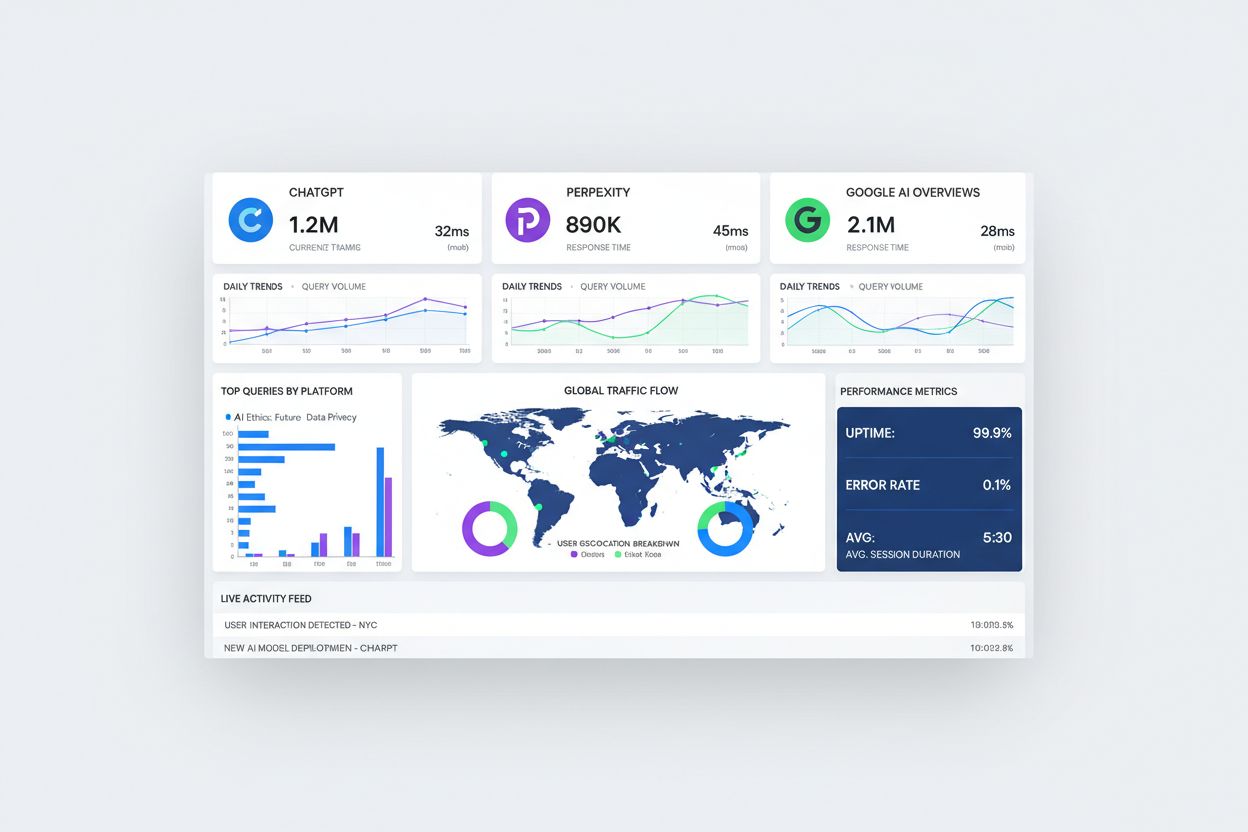
Discover why AI chatbots like ChatGPT and Perplexity are sending traffic that appears as 'direct' in your analytics. Learn how to detect and measure unattribute...