
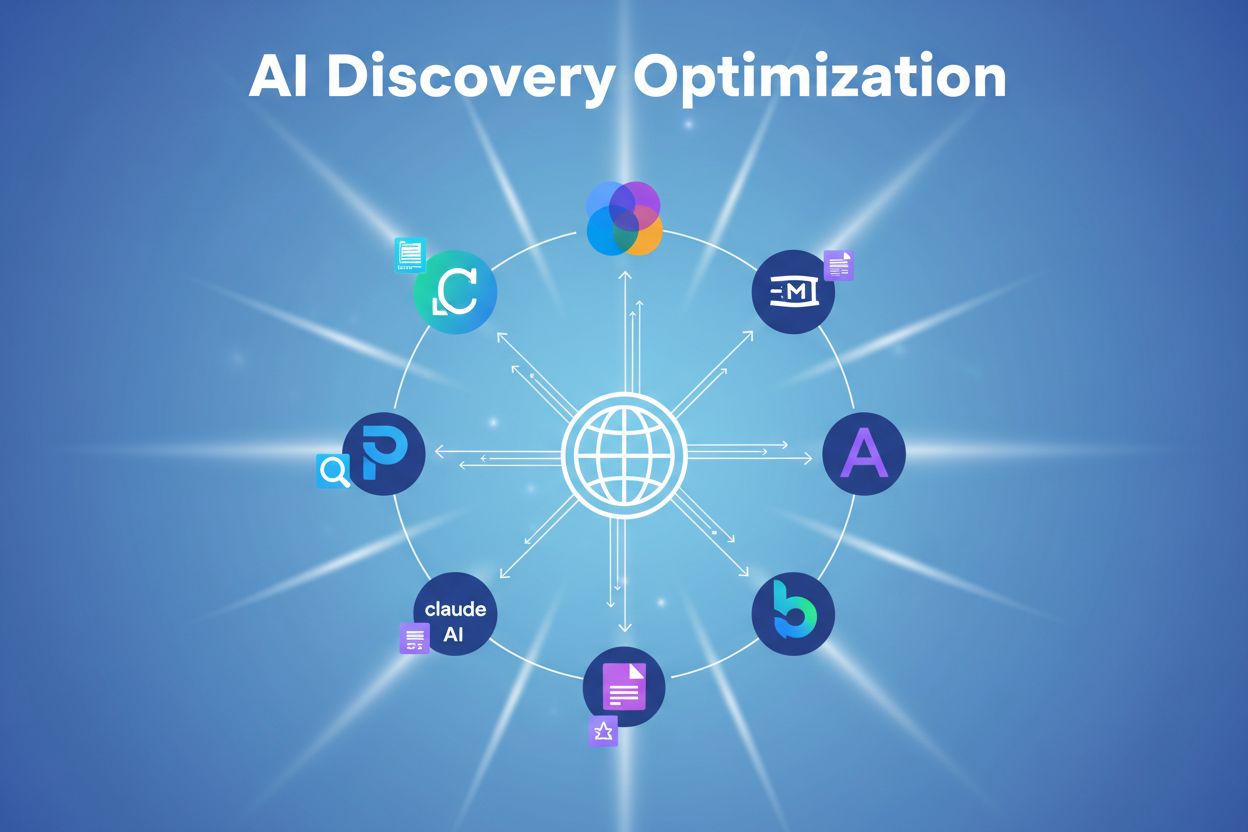
AI Discovery Optimization
Learn how to optimize content for AI discovery. Understand AI crawlers, content structure, and strategies to ensure your brand is found and cited by ChatGPT, Ge...
9 min read
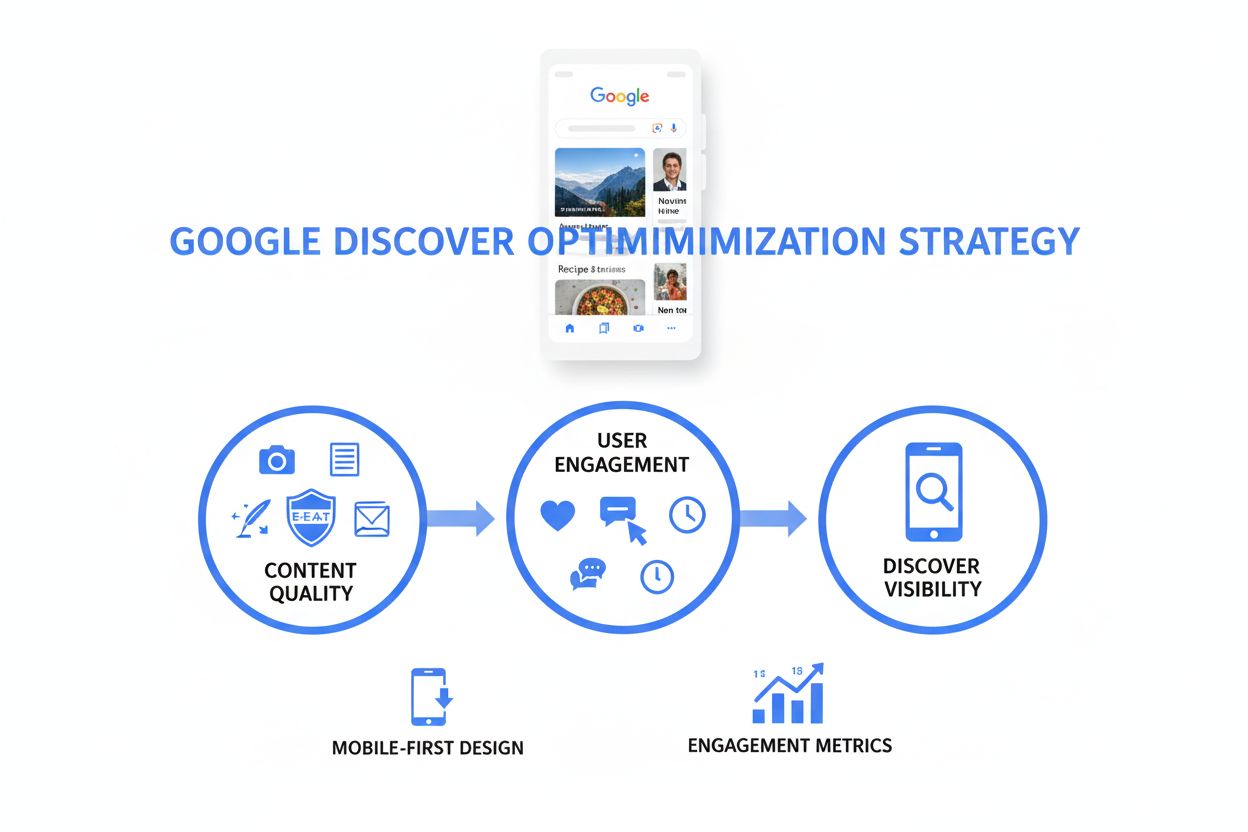
Discover Optimization is the strategic process of optimizing website content and technical elements to increase visibility and traffic from Google Discover, a personalized content feed that recommends articles, videos, and updates based on user interests rather than search queries. Unlike traditional SEO, Discover Optimization focuses on content quality, engagement metrics, E-E-A-T signals, and mobile-first design to improve the likelihood of content appearing in users’ personalized feeds.
Discover Optimization is the strategic process of optimizing website content and technical elements to increase visibility and traffic from Google Discover, a personalized content feed that recommends articles, videos, and updates based on user interests rather than search queries. Unlike traditional SEO, Discover Optimization focuses on content quality, engagement metrics, E-E-A-T signals, and mobile-first design to improve the likelihood of content appearing in users' personalized feeds.
Discover Optimization is the strategic practice of optimizing website content, technical infrastructure, and user engagement signals to increase visibility and traffic from Google Discover, a personalized content feed that recommends articles, videos, and updates based on individual user interests and browsing behavior. Unlike traditional Search Engine Optimization (SEO), which focuses on ranking for specific keywords in search results, Discover Optimization emphasizes content quality, engagement metrics, E-E-A-T signals (Experience, Expertise, Authoritativeness, and Trustworthiness), and mobile-first design to improve the likelihood of content appearing in users’ personalized feeds. The practice recognizes that Google Discover operates on a fundamentally different algorithm than traditional search, prioritizing content that resonates with users’ demonstrated interests rather than matching explicit search queries. For publishers and content creators, mastering Discover Optimization has become increasingly critical, as Discover now accounts for a substantial and growing portion of organic traffic from Google.
Google Discover launched as a mobile-exclusive feature designed to help users discover content they didn’t know they needed, fundamentally shifting how people consume information online. The platform uses artificial intelligence and machine learning to analyze user behavior, including search history, app activity, location data, and interaction patterns, to curate personalized content feeds. This represents a significant departure from the traditional search paradigm where users actively seek information by entering keywords. Instead, Discover proactively pushes relevant content to users based on their demonstrated interests and behavioral signals. The platform has evolved substantially since its introduction, with Google continuously refining its algorithms to better understand user preferences and deliver more relevant recommendations. Recent data demonstrates the platform’s growing importance: Google Discover now accounts for approximately 17% of publishers’ overall traffic, with some major news publishers reporting that two-thirds of their Google traffic originates from Discover rather than traditional search. This shift reflects broader changes in how users consume content, particularly on mobile devices where Discover is exclusively available.
The rise of Discover Optimization reflects a fundamental transformation in digital marketing and content strategy. As traditional search traffic has become increasingly competitive and subject to algorithm volatility, Discover represents a supplemental but increasingly significant traffic channel. Publishers have observed year-over-year increases in Discover traffic, with some sites experiencing growth from 22.8% to 25.7% of total traffic attributed to the platform. This growth is particularly pronounced in the news and media sectors, where Discover has become a primary traffic driver. The strategic importance of Discover Optimization extends beyond simple traffic generation; it influences how content creators approach content strategy, visual design, and audience engagement. Understanding and optimizing for Discover requires a different mindset than traditional SEO, as success depends less on keyword targeting and more on creating genuinely valuable, engaging content that resonates with diverse user interests. For brands and publishers, Discover Optimization has become an essential component of a comprehensive digital visibility strategy, particularly as AI-driven content discovery continues to reshape how users find and consume information online.
| Factor | Google Discover Optimization | Traditional SEO (Search) | AI Search Monitoring |
|---|---|---|---|
| Primary Driver | User interests and engagement metrics | Keyword relevance and search intent | Content quality and brand authority |
| Query Requirement | No—content is proactively recommended | Yes—users enter specific search queries | No—AI systems analyze and recommend |
| Ranking Signals | E-E-A-T, CTR, time on page, freshness | Keywords, backlinks, technical SEO | E-E-A-T, topical authority, citations |
| Visual Importance | Critical—large images (1200px+) required | Important but secondary | Moderate—depends on AI system |
| Mobile Focus | Exclusive to mobile devices | Important but not exclusive | Increasingly mobile-first |
| Content Type | Articles, videos, Web Stories | All indexable content types | Authoritative, cited sources |
| Traffic Predictability | Less predictable, interest-dependent | More predictable, keyword-driven | Variable, AI-dependent |
| Optimization Timeline | Longer, requires engagement building | Medium, keyword-focused efforts | Ongoing, requires monitoring |
| Monitoring Tools | Google Search Console (Discover tab) | Google Search Console, Analytics | AmICited, Profound, Otterly.ai |
Google Discover relies on a sophisticated set of ranking signals that differ significantly from traditional search algorithms. The most critical signal is E-E-A-T, which stands for Experience, Expertise, Authoritativeness, and Trustworthiness. Google’s automated systems prioritize content from sites that demonstrate these qualities across multiple pages and topics. Experience refers to firsthand, real-world familiarity with the subject matter—content written by someone who has actually lived through or practiced what they’re discussing. Expertise encompasses deep knowledge and skill in the content niche, often demonstrated through credentials, certifications, or years of professional experience. Authoritativeness is established through recognition from other trusted sources, including citations, backlinks, and mentions from reputable publications. Trustworthiness is built through accurate, unbiased, and reliable information, supported by proper sourcing and transparent author credentials. Beyond E-E-A-T, engagement metrics play a crucial role in Discover’s algorithm. These include click-through rate (CTR), which measures how often users click on your content when it appears in their feed; time on page, which indicates how long users spend reading or viewing your content; and return visitor rate, which shows whether users come back to your site for more content. Google uses these signals to understand whether content genuinely resonates with users and deserves wider distribution within Discover feeds.
Creating content that succeeds in Google Discover requires a fundamental commitment to quality and user value. The content must address real user needs, provide unique insights, or tell compelling stories that engage readers emotionally and intellectually. Discover Optimization demands that content creators move beyond surface-level information and provide depth, nuance, and actionable value. Timely content that addresses current events or trending topics has a higher probability of appearing in Discover, as does evergreen content that maintains relevance over extended periods. The visual component of Discover Optimization cannot be overstated, as Discover is fundamentally a visually-driven platform. High-quality images are essential, with Google recommending images at least 1200 pixels wide to display properly in the feed. These images should be compelling, relevant, and unique rather than generic stock photos. The primary image associated with your content is often the first element users see, making it critical for attracting clicks. Video content also performs exceptionally well in Discover, particularly when videos are professionally produced, engaging, and directly relevant to the article content. Headlines must be carefully crafted to capture attention without resorting to clickbait tactics, which Google actively penalizes. The headline should accurately reflect the content while being compelling enough to encourage clicks. Misleading or exaggerated headlines that don’t deliver on their promises signal poor quality to Google’s algorithms and reduce the likelihood of Discover visibility.
Mobile optimization is not merely important for Discover Optimization—it is absolutely essential, as Google Discover is exclusively available on mobile devices with no current desktop version. This means every aspect of your website must be optimized for mobile users. Page load speed is critical, as mobile users have limited patience for slow-loading pages. Implementing image optimization, leveraging browser caching, using content delivery networks (CDNs), and minimizing code can significantly improve load times. Responsive design ensures that your website adapts seamlessly to different screen sizes and orientations, providing an excellent user experience regardless of device. Core Web Vitals, which measure loading performance, interactivity, and visual stability, are increasingly important ranking factors that directly impact Discover visibility. Implementing structured data through Schema markup helps Google better understand your content’s context and meaning. While not required for Discover eligibility, proper structured data implementation can improve how your content is categorized and recommended. Internal linking creates a network of related content that helps users discover more of your material and signals content relationships to Google. RSS or Atom feeds allow users to follow your site and receive updates, which Google can use to understand your publishing patterns and content freshness. Some publishers have also found success with Google Web Stories, which are mobile-optimized, visually-rich story formats similar to Instagram Stories that appear in Discover feeds and can drive significant engagement.
Understanding how engagement metrics create a positive feedback loop is essential for Discover Optimization success. When your content appears in Discover and users click on it, Google registers this engagement signal. If users spend significant time on your page, scroll through the content, and interact with it, these signals indicate to Google that your content is valuable and relevant. Google then increases the likelihood of showing your content to similar users with matching interests. As more users engage with your content, the positive signals accumulate, and Google expands your content’s reach within Discover feeds. This creates a virtuous cycle where quality content generates engagement, which generates visibility, which generates more engagement. However, the inverse is also true: if your content appears in Discover but users quickly click away or spend minimal time on the page, Google interprets this as a negative signal and reduces the likelihood of future Discover visibility. This is why click-through rate optimization is so important—your headlines, images, and preview text must accurately represent your content and compel users to click. Once users arrive at your page, the content must deliver on the promise of the headline and preview, keeping users engaged throughout. Strategies to improve engagement include using compelling storytelling, providing unique insights, formatting content for easy scanning with subheadings and bullet points, and including interactive elements like polls, quizzes, or embedded media.
Content freshness is a significant ranking signal for Google Discover, though it operates differently than in traditional search. Discover prioritizes new content that addresses current interests and trending topics, but it also features evergreen content that maintains relevance over time. The key is understanding your audience’s evolving interests and creating content that aligns with those interests at the right moment. Topical relevance means your content should address subjects and questions that users are actively interested in, as indicated by their search behavior, browsing patterns, and interaction history. Tools like Google Trends, Google Search’s autocomplete feature, and related search suggestions can help identify trending topics and user interests. Creating content around these topics when interest is rising increases the likelihood of Discover visibility. However, successful Discover Optimization also requires maintaining a portfolio of high-quality evergreen content that continues to drive traffic over extended periods. The strategy should balance timely, trend-responsive content with foundational, authoritative pieces that serve as long-term traffic sources. Regularly updating older content to maintain accuracy and relevance can extend its lifespan in Discover feeds. Publishers should also consider their content calendar strategically, planning content that aligns with seasonal interests, industry events, and anticipated user needs. This proactive approach to content strategy, combined with responsive optimization based on performance data, creates a sustainable Discover traffic engine.
Effective Discover Optimization requires continuous monitoring and data-driven optimization. Google Search Console provides a dedicated Discover performance report that shows impressions (how many times your content appears in Discover), clicks (how many users click on your content), and click-through rate (CTR). This data is available for content that has appeared in Discover over the last 16 months, provided it meets minimum impression thresholds. Analyzing this data reveals patterns about which content types, topics, and formats perform best in Discover. Publishers should examine whether certain content categories consistently outperform others, whether specific visual styles generate higher CTR, and whether timing affects performance. Google Analytics integration with Search Console data provides additional insights into user behavior after they click from Discover, including bounce rate, pages per session, and conversion metrics. This comprehensive view helps distinguish between content that attracts clicks but doesn’t retain users versus content that drives both engagement and conversions. Testing and experimentation are essential components of Discover Optimization. Publishers should systematically test different headline approaches, image styles, content formats, and publishing times to identify what resonates with their audience. A/B testing headlines, for example, can reveal whether users prefer direct, informative headlines or more curiosity-driven approaches. However, it’s important to note that Discover traffic is inherently less predictable than search traffic, as it depends on user interests, which can shift based on current events, seasonal changes, and evolving preferences. Publishers should view Discover traffic as supplemental to their overall traffic strategy rather than a replacement for search traffic.
The landscape of Discover Optimization continues to evolve as Google refines its algorithms and expands the platform’s capabilities. Google is testing a Follow feature in its Chrome browser that allows users to follow specific websites and receive updates in their Discover feed through RSS or Atom feeds. This development could create new opportunities for publishers to build dedicated audiences and increase engagement signals. The integration of AI and machine learning into Discover’s recommendation engine is becoming increasingly sophisticated, with Google using more nuanced signals to understand user preferences and content quality. This trend suggests that future Discover Optimization will place even greater emphasis on content quality, user experience, and authentic engagement rather than technical tricks or manipulation. The expansion of Google Discover to desktop is also being tested, which could significantly expand the platform’s reach and importance. If desktop Discover becomes widely available, the optimization strategies may need to adapt to accommodate larger screens and different user behaviors. The relationship between Discover Optimization and AI search visibility is becoming increasingly important. As AI systems like ChatGPT, Perplexity, Claude, and Google’s own AI Overviews become more prevalent, the quality signals that help content succeed in Discover—particularly E-E-A-T and engagement metrics—also contribute to visibility in AI-generated responses. This convergence suggests that comprehensive digital visibility strategies should integrate Discover Optimization with broader AI search monitoring and optimization efforts. Platforms like AmICited that track brand mentions across multiple AI systems and discovery channels are becoming essential tools for understanding and optimizing overall digital visibility.
Discover Optimization represents a fundamental shift in how content creators and publishers approach digital visibility. Rather than focusing exclusively on keyword rankings in traditional search results, successful digital strategies now must account for personalized content discovery platforms that prioritize quality, engagement, and user interests. The data clearly demonstrates Discover’s growing importance, with the platform now accounting for a significant and increasing portion of organic traffic for many publishers. Mastering Discover Optimization requires understanding and implementing a comprehensive set of strategies spanning content quality, visual design, technical implementation, and engagement optimization. The practice demands a commitment to creating genuinely valuable content that serves user needs, combined with meticulous attention to mobile optimization, visual presentation, and E-E-A-T signals. Success in Discover Optimization is not achieved through manipulation or shortcuts but through authentic excellence in content creation and user experience. As digital discovery continues to evolve, with AI systems and personalized feeds becoming increasingly central to how users find information, the principles of Discover Optimization will remain relevant and important. Publishers and content creators who invest in understanding and optimizing for Discover, while maintaining awareness of broader AI search visibility through tools like AmICited, will be best positioned to maximize their digital reach and build sustainable, engaged audiences in an increasingly complex digital landscape.
Google Discover is a personalized content feed that proactively recommends content based on user interests and browsing behavior, without requiring keyword searches. Traditional Google Search requires users to enter specific queries to find results. Discover Optimization focuses on content quality and engagement metrics rather than keyword rankings, making it fundamentally different from traditional SEO strategies.
Google Discover traffic has become increasingly significant for publishers. According to recent data, Google Discover now accounts for approximately 17% of publishers' overall traffic, with two-thirds of Google traffic to major news websites coming from Discover rather than traditional search. For some publishers, Discover traffic has increased from 22.8% to 25.7% year-over-year, making it a critical traffic source.
The primary ranking signals for Google Discover include E-E-A-T (Experience, Expertise, Authoritativeness, Trustworthiness), engagement metrics like click-through rate and time on page, high-quality visuals and compelling headlines, technical SEO and mobile optimization, content freshness and topical relevance, and structured data implementation. Unlike traditional search, Discover prioritizes content quality and user engagement over keyword optimization.
No special schema markup is required to appear in Google Discover, as content is automatically eligible if it's indexed by Google and meets Discover's content policies. However, implementing proper structured data helps Google better understand and categorize your content, which can improve your chances of appearing in Discover feeds and being recommended to relevant users.
You can monitor your Google Discover performance using Google Search Console's dedicated Discover performance report. This report shows impressions, clicks, and click-through rate (CTR) for content that has appeared in Discover over the last 16 months. The data helps you identify which content types perform best and understand traffic patterns to optimize your strategy accordingly.
Mobile optimization is essential because Google Discover is exclusively available on mobile devices, with no current desktop version. The platform requires fast load times, responsive design, and mobile-friendly layouts. Since Discover users access content primarily on smartphones, ensuring excellent mobile user experience directly impacts your visibility and engagement metrics in the feed.
E-E-A-T (Experience, Expertise, Authoritativeness, Trustworthiness) is a critical ranking signal for Google Discover. Google's automated systems prioritize content from sites demonstrating these qualities, particularly for YMYL (Your Money or Your Life) topics. Building E-E-A-T through author credentials, trust signals, HTTPS security, and credible sourcing significantly increases the likelihood of your content appearing in Discover feeds.
Yes, Discover Optimization contributes to overall digital visibility that can complement AI search monitoring efforts. As platforms like AmICited track brand mentions across AI systems (ChatGPT, Perplexity, Google AI Overviews, Claude), optimizing for Discover increases your content's quality signals and visibility, which can indirectly support your presence in AI-generated responses and recommendations.
Start tracking how AI chatbots mention your brand across ChatGPT, Perplexity, and other platforms. Get actionable insights to improve your AI presence.
Learn how to optimize content for AI discovery. Understand AI crawlers, content structure, and strategies to ensure your brand is found and cited by ChatGPT, Ge...

Learn what Google Discover is, how this AI-powered personalized content feed works, and how to optimize your content for visibility. Essential for publishers an...
Learn AI Search Optimization strategies to improve brand visibility in ChatGPT, Google AI Overviews, and Perplexity. Optimize content for LLM citation and AI-po...
Cookie Consent
We use cookies to enhance your browsing experience and analyze our traffic. See our privacy policy.