

Perplexity Shop Like a Pro: Complete Optimization Guide
Master Perplexity Shopping with our complete optimization guide. Learn how to set up your store, optimize products, and drive sales through AI-powered shopping ...
12 min read
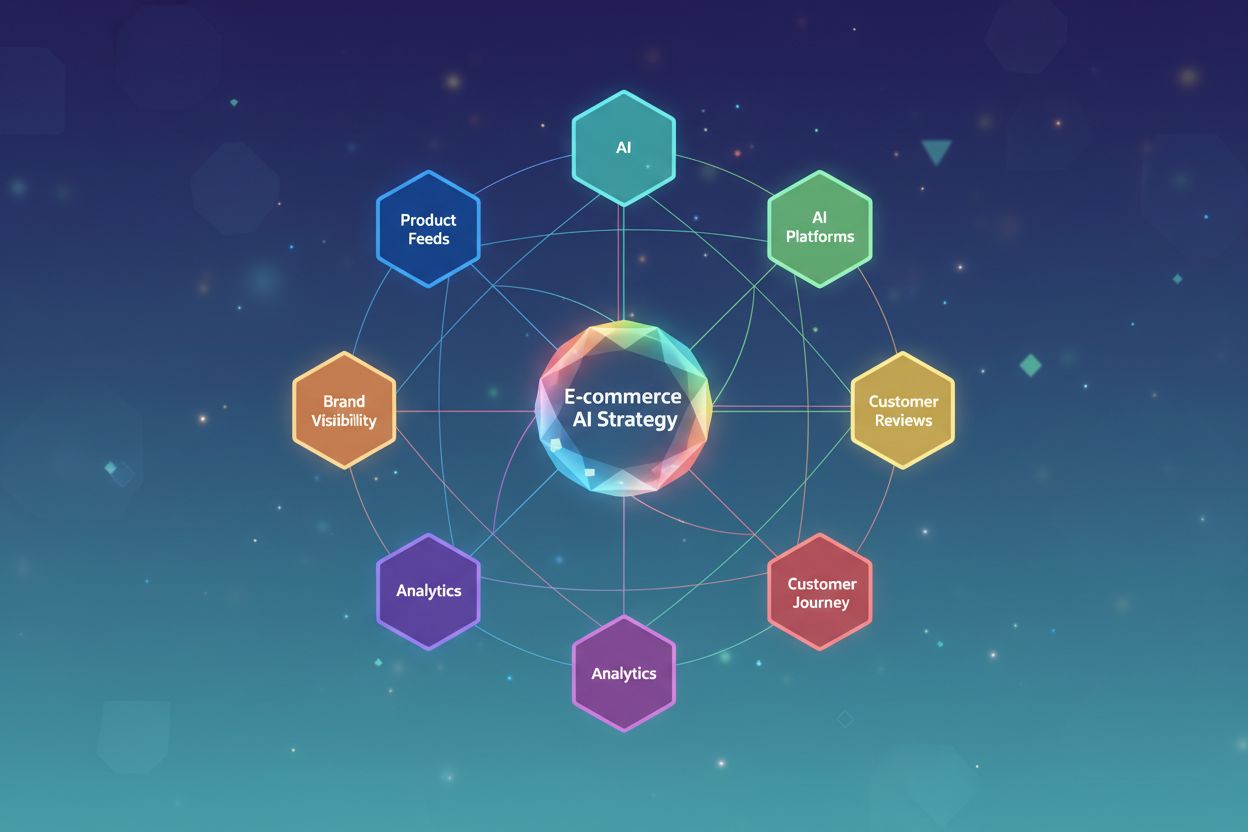
A comprehensive approach to optimizing product and brand visibility across AI shopping platforms like Google AI Mode, ChatGPT Shopping, and Perplexity Pro. It involves product feed optimization, structured data implementation, brand sentiment management, and technical crawlability to ensure e-commerce businesses remain discoverable when consumers use AI assistants for product research and purchasing decisions.
A comprehensive approach to optimizing product and brand visibility across AI shopping platforms like Google AI Mode, ChatGPT Shopping, and Perplexity Pro. It involves product feed optimization, structured data implementation, brand sentiment management, and technical crawlability to ensure e-commerce businesses remain discoverable when consumers use AI assistants for product research and purchasing decisions.
Google AI Mode, ChatGPT Shopping, and Perplexity Pro have fundamentally transformed how consumers discover and purchase products online. Google AI Mode integrates the company’s Shopping Graph—containing over 50 billion product listings—with Gemini AI to deliver personalized product recommendations directly within search results. When users ask shopping-related questions, AI Mode displays curated product carousels alongside detailed comparison articles, allowing shoppers to evaluate options without leaving the search interface. ChatGPT’s shopping features work similarly, providing product recommendations with links to multiple retailers, aggregated reviews from various sources, and AI-generated summaries highlighting key product attributes. Perplexity Pro distinguishes itself by offering direct merchant partnerships, allowing users to complete purchases within the chat interface while enjoying benefits like free shipping through its “Buy with Pro” feature. Each platform uses different algorithms to match products with user intent, but all three prioritize product data quality, brand mentions, and customer reviews as key ranking signals. These AI shopping assistants have become the default starting point for millions of consumers, with ChatGPT alone reaching nearly 800 million weekly active users. For e-commerce businesses, understanding how each platform evaluates and recommends products is essential to maintaining visibility in this new shopping ecosystem.
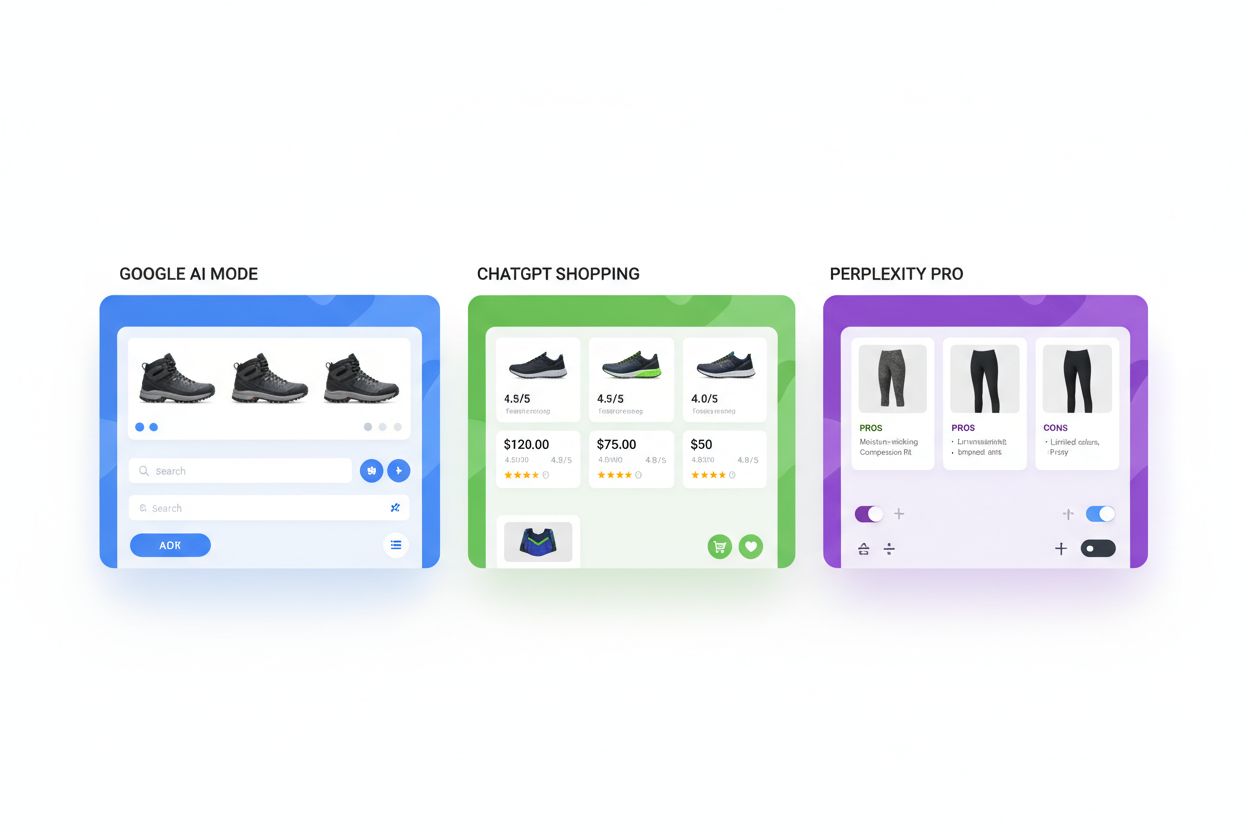
Zero-click searches occur when users receive answers directly on search results pages or AI interfaces without clicking through to a website. According to SparkToro research, over 60% of Google searches now end without a single click, a dramatic shift from traditional search behavior. This trend extends beyond featured snippets and knowledge panels to include AI-generated summaries, shopping carousels, and conversational AI responses that provide complete product information, comparisons, and even purchase options within the platform itself. For e-commerce businesses, this creates both challenges and opportunities: while fewer clicks mean reduced direct website traffic, consistent visibility in AI results builds brand awareness and influences purchase decisions even when transactions occur on AI platforms.
| Aspect | Traditional Search | AI Shopping |
|---|---|---|
| User Journey | Click → Website → Browse → Purchase | Query → AI Recommendation → Purchase (on-platform or redirected) |
| Visibility | Ranking position determines clicks | Brand mentions and sentiment determine recommendations |
| Data Collection | First-party cookies and analytics | Limited direct data; attribution challenges |
| Content Control | Full control over messaging | AI rewrites/summarizes content |
| Competition | Keyword-based ranking | Intent and data quality-based matching |
The shift to zero-click searches means that page-one rankings no longer guarantee traffic, and traditional click-through rates (CTRs) have become less reliable metrics for success. Mobile browsing has accelerated this trend, with over 75% of mobile searches ending without a site visit, as users prefer instant answers to navigating small screens. For merchants, this requires a fundamental shift in strategy: instead of optimizing solely for clicks, businesses must focus on being discoverable, mentioned, and positively reviewed across AI platforms.
Product feeds are the foundation of AI shopping visibility, serving as the primary mechanism through which AI platforms discover, index, and recommend your products. Unlike traditional SEO, where content is crawled from your website, AI shopping platforms rely on structured product data submitted through merchant programs. Google, ChatGPT, and Perplexity each maintain dedicated merchant programs that require businesses to create and maintain product feeds containing detailed product information in standardized formats (JSON, CSV, XML, or TSV).
To maximize visibility in AI shopping results, your product feed must include:
ChatGPT supports 14 distinct categories of product specifications, with optional fields like popularity scores and return rates providing ranking advantages. Perplexity’s merchant program, currently available in the US, allows direct product feed integration with benefits like free shipping for Pro users. Google’s approach integrates product feeds with Google Merchant Center, automatically syncing with AI Mode results. Real-time accuracy is critical—because Google updates billions of product listings hourly, outdated inventory or pricing immediately impacts your competitive position in AI shopping results.
Structured data uses standardized markup languages (primarily JSON-LD) to provide machine-readable information about your products, making it easier for AI systems to understand and extract key details. While product feeds are essential for dedicated merchant programs, structured data on your website helps AI crawlers understand your content during general web indexing. The most important schema types for e-commerce include Product schema (defining product name, price, image, description), Offer schema (specifying pricing and availability), AggregateRating schema (displaying star ratings and review counts), and Review schema (providing individual customer reviews with ratings).
Implementing structured data correctly signals to AI systems that your content is trustworthy and well-organized. For example, a product page with complete Product schema markup allows AI crawlers to instantly extract the product title, price, images, availability status, and customer ratings without parsing unstructured text. This structured approach is particularly valuable for AI systems that need to quickly compare products across multiple websites. JSON-LD implementation is straightforward for most e-commerce platforms—WordPress with WooCommerce and Yoast SEO can add schema automatically, while Shopify requires theme code modifications. Google’s Rich Results Test tool helps verify that your schema implementation is correct and visible to crawlers. Accurate schema markup directly improves your chances of appearing in AI shopping results, as it provides the clean, machine-readable data that AI systems prefer over unstructured content.
AI shopping platforms evaluate brands not just by product quality, but by brand mentions and sentiment across the entire web. When AI systems generate product recommendations, they consider how frequently your brand appears in articles, reviews, social media discussions, and other online sources, as well as whether those mentions are positive, negative, or neutral. A brand mentioned 100 times with 80% positive sentiment will rank higher in AI recommendations than a brand mentioned 50 times with 50% positive sentiment, even if the latter has better individual product ratings.
Sentiment analysis has become a critical ranking factor in AI shopping. Tools like Semrush’s AI Visibility Toolkit and Profound allow businesses to monitor how AI platforms perceive their brand compared to competitors. For example, if AI systems consistently see your brand associated with “fast shipping” and “excellent customer service,” these positive associations will influence product recommendations. Conversely, if negative mentions dominate (complaints about returns, quality issues, or poor customer service), AI systems will deprioritize your products even if they technically meet user requirements. Building positive brand sentiment requires a multi-channel approach: encouraging customer reviews on your website and third-party platforms, generating positive media coverage through PR, engaging authentically on social media (especially Reddit and Quora, which AI systems heavily reference), and addressing negative feedback promptly. Unlike traditional SEO’s focus on backlinks, AI systems can extract meaning from unlinked brand mentions, so even mentions without direct links contribute to your AI visibility. Monitoring your brand sentiment across AI platforms is essential for understanding how your business is perceived and identifying areas for improvement.
Creating content that resonates with AI systems requires a fundamentally different approach than traditional SEO. Conversational language that mirrors how users naturally ask questions is essential—instead of writing “Men’s Athletic Footwear,” use “comfortable running shoes for daily workouts” to match how people actually search in AI chat interfaces. AI systems are trained on conversational data, so content that answers specific, detailed questions performs better than generic product descriptions. For example, instead of listing features, explain use cases: “Perfect for rainy commutes” or “Formal enough for job interviews” helps AI understand when your product is the right choice.
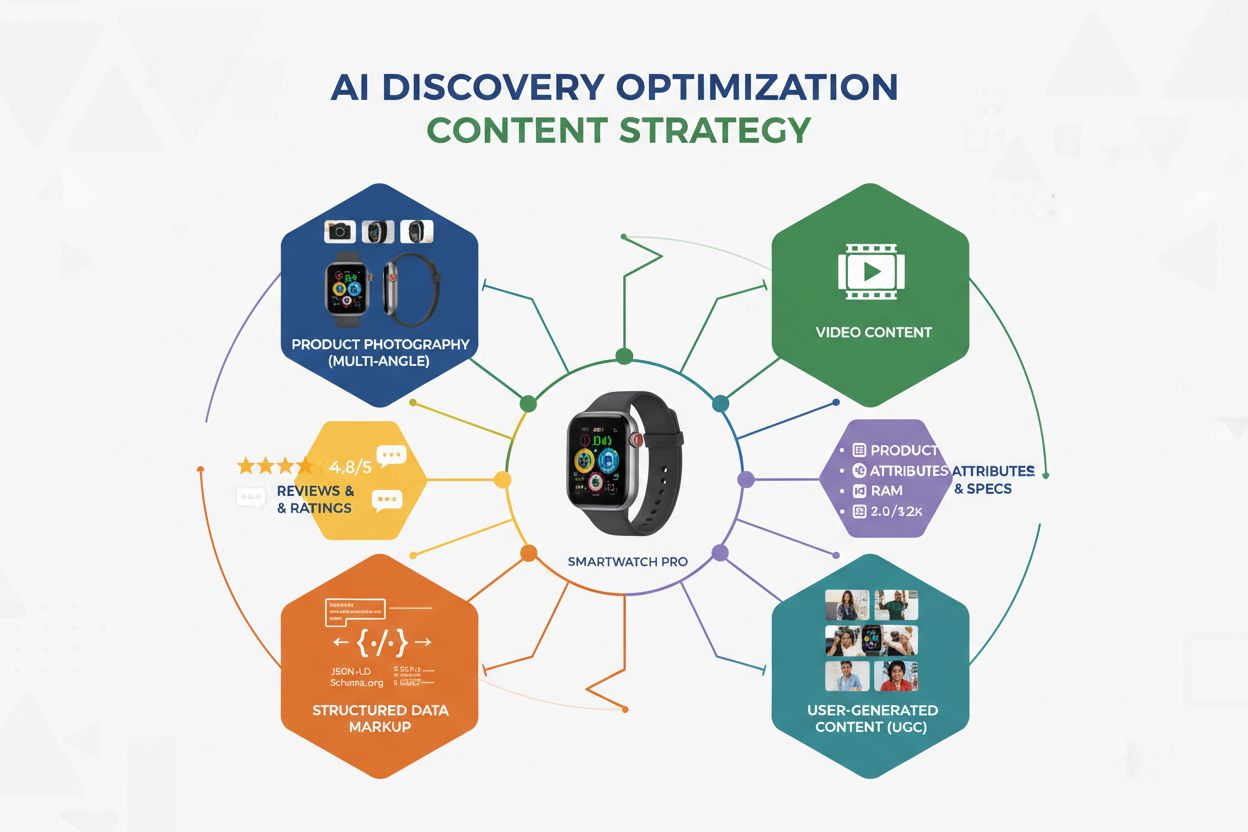
Multimodal content—combining text, images, and video—significantly improves AI visibility. High-quality product images from multiple angles, showing the product in use and highlighting key details, help AI systems validate recommendations and provide richer information to users. Short-form product videos demonstrating features, fit, and use cases appear frequently in AI shopping results, particularly on Perplexity Pro. User-generated content, including customer photos and videos in reviews, provides authentic multimodal content that AI systems value highly. Encouraging customers to leave visual reviews (photos and videos alongside written feedback) creates a multiplier effect—your customers become content creators, expanding your multimodal presence across AI platforms. Product comparison content and buying guides that address common customer questions also perform well, as AI systems frequently cite these resources when helping users make decisions. The goal is to become the most comprehensive, well-documented product in your category, providing AI systems with abundant, high-quality information to draw from when making recommendations.
For AI systems to discover and index your products, they must be able to crawl your website and access your content. Many modern e-commerce sites use JavaScript-heavy frameworks that dynamically load content, which can prevent AI crawlers from seeing important product information. To ensure AI accessibility, you must explicitly allow AI bot access in your robots.txt file by adding “Allow” rules for key AI crawlers:
Additionally, creating an llms.txt file in your domain’s root directory helps guide AI crawlers to your most important content. This markdown file contains links to key pages (product categories, FAQs, return policies, popular products) that you want AI systems to prioritize. While adoption of llms.txt is still evolving, major AI companies including OpenAI, Microsoft, and others are actively crawling and indexing these files, making it a worthwhile optimization. For JavaScript-heavy sites, consider using dynamic rendering or prerendering services that serve fully-loaded HTML to AI crawlers while maintaining interactive experiences for human users. Ensuring that your product pages are fully rendered and accessible to crawlers—not hidden behind login walls or infinite-scroll sections—is fundamental to AI shopping visibility. Technical crawlability is the foundation of AI visibility; without it, even perfectly optimized product data remains undiscovered.
Tracking your brand’s visibility in AI shopping results requires different tools and metrics than traditional SEO. AmICited.com stands out as the leading platform specifically designed for monitoring how AI systems mention and recommend your brand across ChatGPT, Perplexity, Google AI Overviews, and other major AI platforms. AmICited provides detailed insights into where your brand appears in AI responses, how frequently it’s mentioned, and what context surrounds those mentions—information that’s impossible to gather through traditional search analytics.
Beyond AmICited, tools like Profound and Semrush’s AI Visibility Toolkit offer complementary insights into brand perception, sentiment analysis, and competitive positioning within AI systems. These platforms help identify which AI platforms favor your brand, which competitor brands are gaining ground, and what specific attributes or use cases AI systems associate with your products. However, attribution remains challenging in the AI shopping era—when a customer discovers your product in ChatGPT but purchases on your website, traditional analytics may not capture this AI-driven conversion. Search Console reports AI traffic within the overall “Web” search type, but granular attribution by AI platform is limited. To address this gap, implement UTM parameters in links that AI systems might use, track direct traffic spikes correlated with AI mentions, and monitor brand search volume increases following AI visibility improvements. The shift from clicks to visibility requires rethinking success metrics—instead of focusing solely on click-through rates, measure snippet impressions, brand mention frequency, sentiment scores, and AI platform-specific traffic patterns to understand your true AI shopping performance.
Traditional e-commerce SEO focuses on ranking for keywords in search results and driving clicks to your website. AI shopping optimization, by contrast, prioritizes product feed quality, brand mentions, customer sentiment, and structured data to ensure your products appear in AI recommendations. While traditional SEO rewards page-one rankings, AI shopping rewards comprehensive product data, positive brand perception, and high-quality reviews across multiple platforms.
AI shopping platforms use multiple signals to recommend products: product feed data quality and completeness, brand mentions and sentiment across the web, customer reviews and ratings, structured data implementation, and alignment with user intent. Unlike traditional search that matches keywords, AI systems understand context and user needs, recommending products that best solve the customer's specific problem or use case.
The most critical attributes are: descriptive product titles (including brand, type, key features), detailed product descriptions (up to 5,000 characters), high-quality images from multiple angles, accurate real-time pricing, customer reviews and ratings, and comprehensive product specifications (size, color, material, dimensions, care instructions). These attributes help AI systems understand your products and match them to relevant customer queries.
Use dedicated AI visibility monitoring tools like AmICited.com, which tracks how ChatGPT, Perplexity, and Google AI Overviews mention your brand. Additional tools include Profound and Semrush's AI Visibility Toolkit, which provide sentiment analysis and competitive positioning insights. Monitor metrics like brand mention frequency, sentiment scores, and AI platform-specific traffic to understand your AI shopping performance.
Product reviews are critical ranking signals in AI shopping. AI systems heavily weight customer ratings and review sentiment when making recommendations. Products with high ratings (4+ stars) and positive reviews are significantly more likely to be recommended than lower-rated alternatives, even if they have similar features. Encouraging customers to leave detailed, visual reviews (including photos and videos) amplifies this impact.
Product feeds should be updated in real-time or at minimum daily to reflect current inventory and pricing. Because Google updates billions of product listings hourly, outdated information immediately impacts your competitive position. Implement automated feed updates that sync with your inventory management system to ensure accuracy and maintain visibility in AI shopping results.
While the core principles are similar (quality product data, positive sentiment, customer reviews), each platform has unique characteristics. Google AI Mode integrates with Google Merchant Center and Shopping Graph. ChatGPT requires merchant program enrollment and product feed submission. Perplexity offers direct checkout and free shipping benefits for Pro users. Optimize for all three while tailoring your approach to each platform's specific requirements and benefits.
Multimodal content—combining text, images, and video—significantly improves AI visibility. High-quality product photography from multiple angles, demonstration videos, and user-generated content (customer photos and videos in reviews) help AI systems validate recommendations and provide richer information to users. Platforms like Perplexity frequently feature video reviews, making video content increasingly important for AI shopping visibility.
Track how AI platforms like ChatGPT, Perplexity, and Google AI Overviews mention and recommend your products. Get real-time insights into your AI shopping visibility and competitive positioning.
Master Perplexity Shopping with our complete optimization guide. Learn how to set up your store, optimize products, and drive sales through AI-powered shopping ...
Discover how a leading e-commerce brand achieved 3x growth by optimizing for ChatGPT Shopping. Learn the 5 strategies that dominated AI product recommendations ...

Learn how to optimize your e-commerce store for AI shopping assistants like ChatGPT, Google AI Mode, and Perplexity. Discover strategies for product visibility,...