
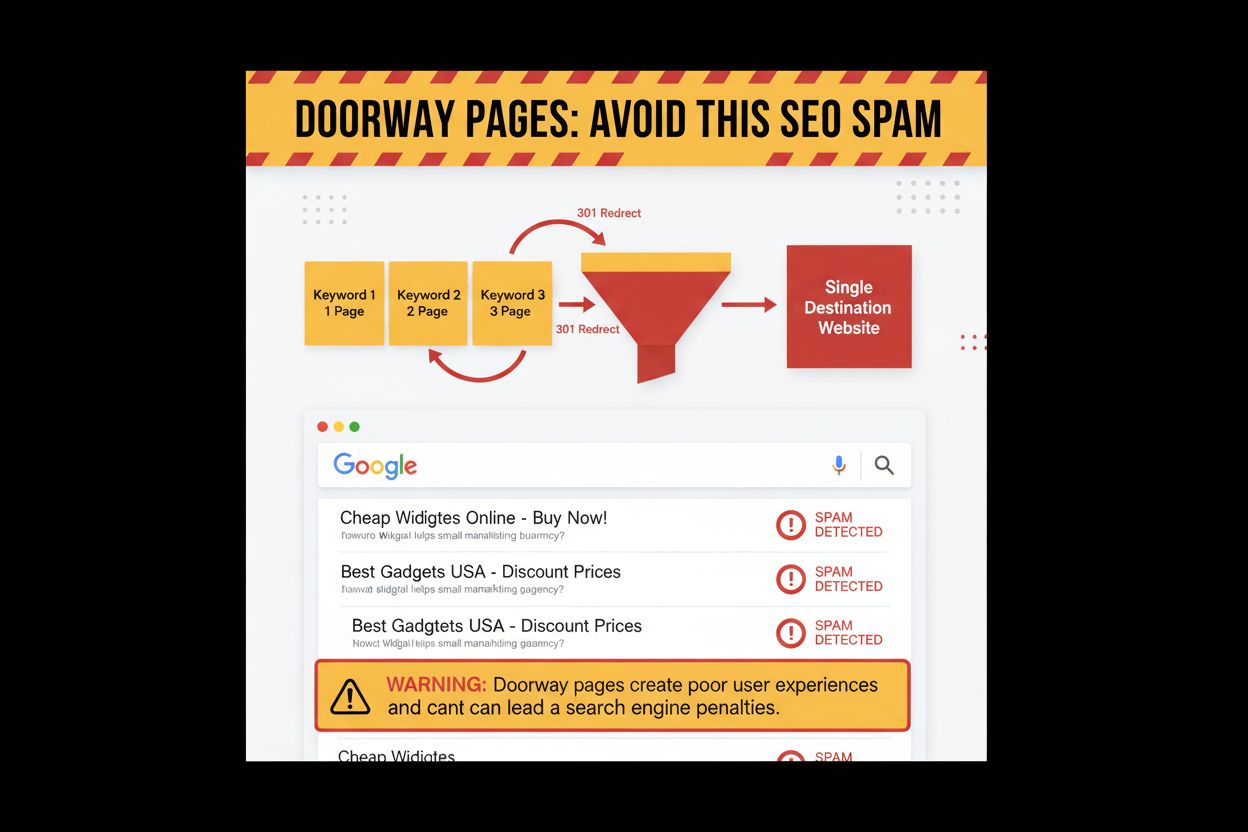
Doorway Page
Learn what doorway pages are, why they harm SEO, how Google detects them, and why they're considered black-hat spam. Includes examples and best practices.
14 min read
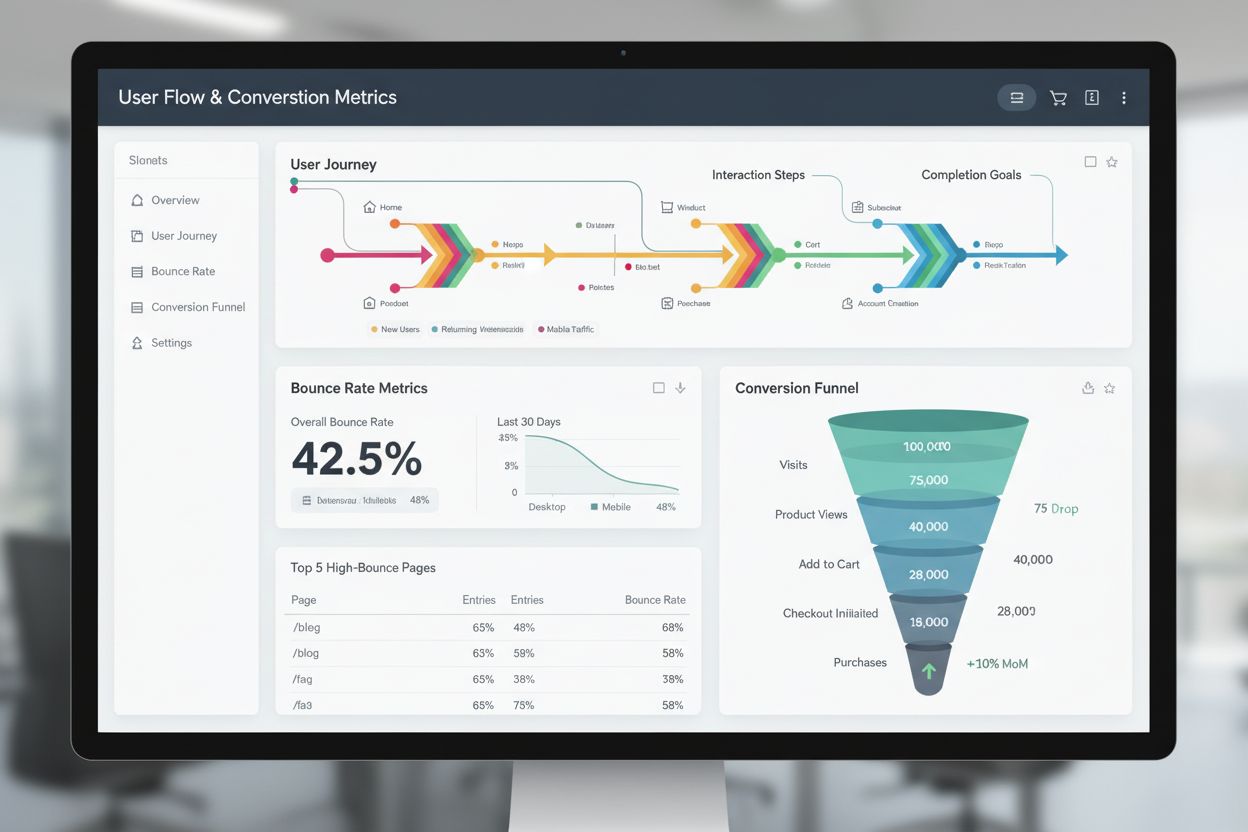
An entry page is the first webpage a user lands on when visiting a website, which can be any page on the site rather than exclusively the homepage. Entry pages are critical for establishing first impressions, influencing user engagement, bounce rates, and overall conversion potential within a user’s session.
An entry page is the first webpage a user lands on when visiting a website, which can be any page on the site rather than exclusively the homepage. Entry pages are critical for establishing first impressions, influencing user engagement, bounce rates, and overall conversion potential within a user's session.
An entry page is the first webpage that a visitor lands on when entering a website, regardless of whether it’s the homepage or any other page on the site. This critical touchpoint serves as the initial interaction between a user and your brand, establishing the foundation for their entire browsing experience. Entry pages can originate from various traffic sources including organic search results, paid advertisements, social media links, email campaigns, or direct navigation. The term is primarily used in website analytics platforms such as Google Analytics, Adobe Analytics, and Matomo to track and measure user behavior from the moment they arrive on your site. Understanding entry pages is fundamental to optimizing user engagement, reducing bounce rates, and improving overall website performance and conversion potential.
The concept of entry pages emerged as web analytics became increasingly sophisticated in the early 2000s. As businesses recognized the importance of tracking user behavior, analytics platforms began distinguishing between different types of pages based on their role in the user journey. Entry pages gained prominence because they represent the critical first impression—a moment that significantly influences whether visitors will continue exploring your site or immediately leave. According to research from Ahrefs and Adobe Analytics, entry pages are not limited to homepages; in fact, studies show that approximately 60-70% of website traffic enters through non-homepage pages, particularly blog posts and product pages that rank well in search results. This shift in understanding has transformed how digital marketers and SEO professionals approach website optimization, moving away from homepage-centric strategies toward comprehensive entry page optimization across all pages.
Entry pages operate within the framework of session tracking in web analytics. When a user arrives at your website, analytics systems record that page as the entry point for that particular session. A session is defined as a continuous period of user activity, typically ending after 30 minutes of inactivity or at midnight. The entry page metric captures which page initiated that session, providing valuable data about user acquisition patterns and initial engagement. In Google Analytics 4, entry pages are tracked through the “Landing Page” dimension, which records the first page viewed in each session. The system simultaneously calculates related metrics such as bounce rate (the percentage of sessions where users leave without further interaction) and engagement rate (the percentage of sessions meeting engagement criteria: lasting over 10 seconds, containing key events, or having 2+ page views). This technical infrastructure allows marketers to identify which pages are most effective at capturing attention and encouraging deeper site exploration.
| Aspect | Entry Page | Landing Page | Homepage | Exit Page |
|---|---|---|---|---|
| Definition | First page visited in a session from any source | Specifically designed page for marketing campaigns | Main page of a website | Last page visited before leaving |
| Purpose | Captures initial user arrival | Drives conversions or specific actions | Provides site overview and navigation | Indicates where users leave |
| Design Focus | Organic, varied content types | Conversion-optimized, single focus | Comprehensive, multi-purpose | Not specifically designed for exits |
| Traffic Source | Any source (organic, paid, social, direct) | Primarily paid ads and campaigns | Direct navigation, bookmarks | All sources |
| Bounce Rate Impact | Directly affects bounce rate | Often has high bounce rates (60-90%) | Typically moderate bounce rates | Not directly measured |
| Optimization Priority | High - first impression | Critical - conversion-focused | High - brand representation | Medium - understand exit reasons |
| Analytics Tracking | Tracked in “Landing Page” dimension | Tracked separately in campaign data | Subset of entry pages | Tracked in “Exit Page” dimension |
| User Intent | Varies by traffic source | Specific to campaign messaging | General site exploration | Departure point |
Entry pages represent a critical business asset because they directly influence key performance indicators across your entire digital ecosystem. Research from Plausible Analytics and HubSpot indicates that approximately 53% of users abandon a website if it takes longer than 3 seconds to load, and this abandonment rate is particularly severe for entry pages where first impressions matter most. The quality of your entry page experience directly correlates with conversion rates, customer acquisition costs, and overall return on investment. For eCommerce businesses, optimized entry pages can reduce bounce rates from 55% to 20-30%, translating to significant revenue increases. Beyond immediate conversions, entry pages influence brand perception, search engine rankings, and increasingly, your visibility in AI-generated search results. When AI systems like ChatGPT, Perplexity, and Google AI Overviews crawl and evaluate websites, they assess entry page quality, relevance, and user engagement signals. This makes entry page optimization essential not only for traditional SEO but also for GEO (Generative Engine Optimization), ensuring your brand appears in AI-powered search responses and recommendations.
Optimizing entry pages requires a multifaceted approach that addresses both user experience and technical performance. The first critical element is page load speed—implementing Content Delivery Networks (CDNs), compressing images, minifying code, and leveraging browser caching can dramatically improve performance. Second, content relevance must align precisely with user intent; if a visitor arrives from a specific search query or advertisement, the page content should immediately address their expectations. Third, mobile optimization is non-negotiable, as over 60% of web traffic now originates from mobile devices. Fourth, clear navigation and visual hierarchy guide users toward desired actions without overwhelming them with choices. Fifth, compelling calls-to-action should be strategically placed to guide users toward the next step in their journey, whether that’s exploring products, signing up for newsletters, or contacting your business. Finally, trust signals such as customer testimonials, security badges, and professional design elements reassure visitors that your site is legitimate and worth their time.
In the context of AI monitoring and brand tracking, entry pages take on additional significance. Platforms like AmICited track how your brand and website content appear across AI search systems, and entry pages are often the first pages that AI systems encounter when crawling your site. When Perplexity, Claude, or Google AI Overviews generate responses that cite your brand or website, they frequently reference entry pages because these pages often contain the most comprehensive and accessible information. Optimizing entry pages for AI visibility involves ensuring they contain clear, factual information, proper schema markup, and well-structured content that AI systems can easily parse and understand. Additionally, entry pages should demonstrate E-E-A-T signals (Expertise, Experience, Authoritativeness, Trustworthiness) that AI systems use to evaluate content quality. By monitoring which of your entry pages appear in AI responses through tools like AmICited, you can identify opportunities to optimize content for better AI discoverability and ensure your brand maintains visibility in the emerging landscape of generative search.
The definition and importance of entry pages are evolving rapidly in response to technological changes and shifting user behaviors. As AI-powered search becomes increasingly prevalent, entry pages will need to be optimized not just for human users but also for AI systems that crawl, evaluate, and cite web content. The rise of voice search and conversational AI means entry pages must be structured to answer specific questions clearly and concisely, as AI systems often extract direct answers from web pages. Additionally, the integration of first-party data and privacy-focused analytics is changing how entry pages are tracked and optimized, with tools moving away from third-party cookies toward more privacy-respecting measurement methods. The concept of entry pages is also expanding beyond traditional websites to include mobile apps, progressive web apps, and other digital touchpoints. Furthermore, as GEO (Generative Engine Optimization) becomes a critical component of digital strategy, entry pages will increasingly be optimized for AI visibility and citation, requiring marketers to understand how AI systems evaluate and recommend content. Organizations that recognize entry pages as strategic assets and invest in their optimization will maintain competitive advantages in both traditional search rankings and emerging AI-powered discovery channels.
An entry page is simply the first page a visitor sees when entering your website from any source, while a landing page is a specifically designed page created for marketing campaigns to encourage particular actions like conversions or sign-ups. A landing page can also be an entry page if it's the first page users encounter, but not all entry pages are landing pages. Entry pages are organic entry points, whereas landing pages are strategically designed conversion-focused pages.
In Google Analytics 4, navigate to Reports > Engagement > Landing Page to view your entry pages. This report displays which pages visitors land on first, sorted by percentage and total visits. You can also customize reports to add engagement rate and bounce rate metrics to better understand how each entry page performs. The data helps identify which pages are most effective at engaging visitors.
A good bounce rate depends on your industry and page type. Content websites typically have bounce rates of 65-90%, while eCommerce sites range from 20-55%. Generally, aiming for 50% or lower across your entire site indicates healthy engagement. However, some pages like informational content or FAQs naturally have higher bounce rates, which isn't necessarily problematic if visitors find what they need.
Entry pages are crucial for brand monitoring because they represent the first touchpoint where users interact with your content. When tracking brand mentions across AI platforms like ChatGPT, Perplexity, and Google AI Overviews, understanding which pages serve as entry points helps optimize content visibility. Optimized entry pages improve the likelihood of your brand being cited and recommended by AI systems, directly impacting your GEO (Generative Engine Optimization) performance.
Reduce bounce rates by ensuring fast page load speeds (under 3 seconds), creating relevant and engaging content that matches user intent, optimizing for mobile devices, maintaining clear navigation, and including compelling calls-to-action. Additionally, ensure your page content aligns with the traffic source messaging—if users arrive from a specific ad or search query, the page should directly address their expectations to encourage further exploration.
Key metrics include bounce rate, engagement rate, average session duration, pages per session, conversion rate, and traffic source. In Google Analytics 4, engagement rate is the inverse of bounce rate and measures sessions lasting over 10 seconds, containing key events, or with 2+ page views. Tracking these metrics by traffic source, device type, and geographic location provides deeper insights into entry page effectiveness.
Yes, absolutely. While homepages are often entry pages, many visitors enter through other pages like blog posts, product pages, or service pages that rank in search results. In fact, studies show that a significant portion of website traffic enters through non-homepage pages. Understanding this distinction helps you optimize all entry pages, not just your homepage, for better user engagement and conversions.
Entry page optimization directly impacts SEO performance and AI visibility because search engines and AI systems evaluate how well pages engage users. Fast-loading, mobile-friendly entry pages with clear value propositions and relevant content are more likely to be ranked higher and cited by AI systems. Optimizing entry pages for user experience, page speed, and content relevance improves both traditional SEO rankings and GEO performance across AI platforms.
Start tracking how AI chatbots mention your brand across ChatGPT, Perplexity, and other platforms. Get actionable insights to improve your AI presence.
Learn what doorway pages are, why they harm SEO, how Google detects them, and why they're considered black-hat spam. Includes examples and best practices.

Learn what a landing page is, how it differs from homepages, and why it's essential for marketing campaigns. Discover best practices for creating high-convertin...
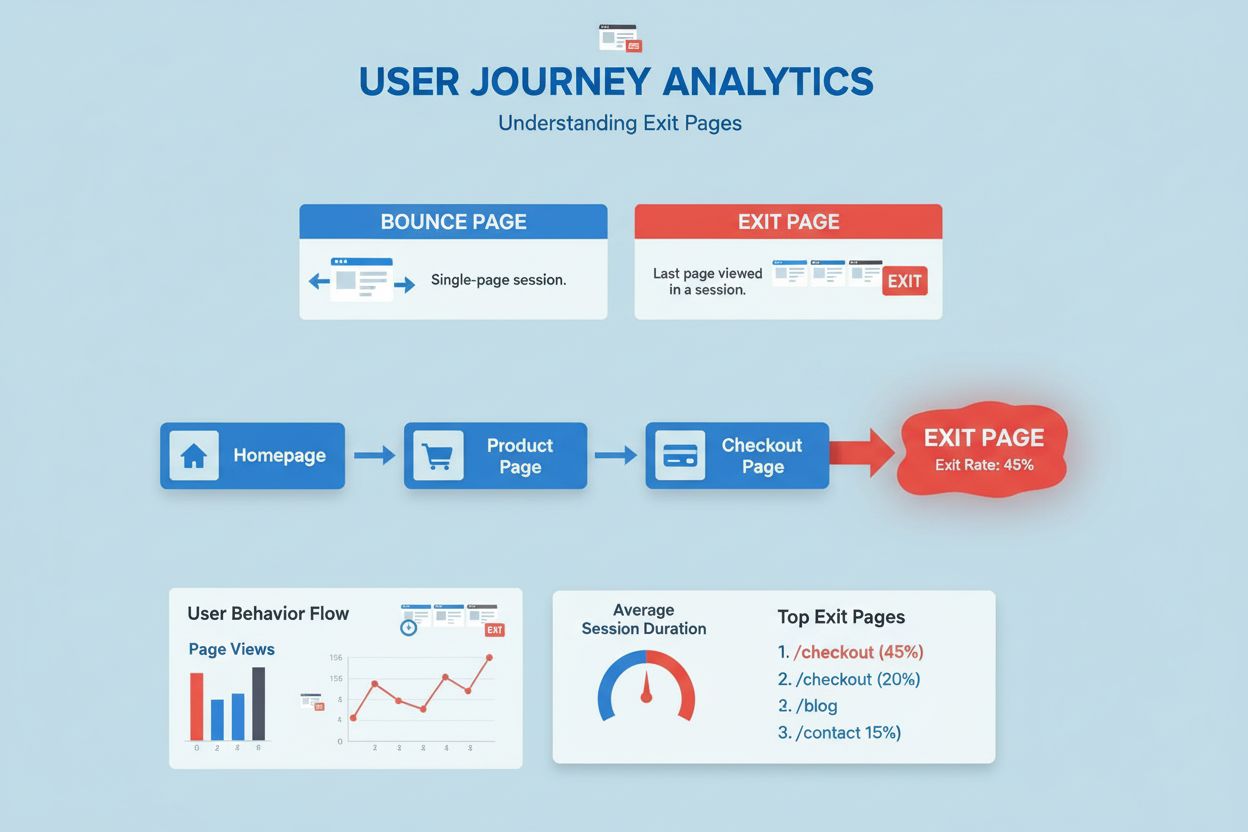
Exit page definition: the last page users view before leaving your site. Learn how exit pages differ from bounce pages, why they matter for conversions, and how...
Cookie Consent
We use cookies to enhance your browsing experience and analyze our traffic. See our privacy policy.