



Entry Product
An entry product is the first item a new customer typically buys from a brand, often a low-cost, low-commitment offering designed to build trust before larger purchases follow. It's distinct from a loss leader in that its purpose isn't just to drive a single sale, but to start a repeat-purchase relationship. Identifying entry products lets a brand see which items actually bring customers in the door and whether those customers stick around.
Definition of Entry Product
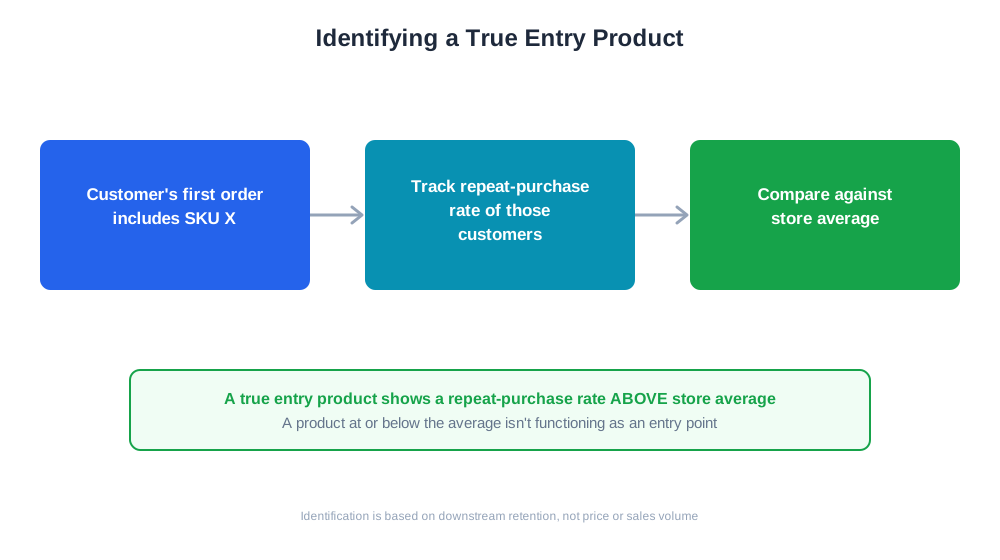
An entry product is the item that most commonly serves as a new customer’s first purchase from a brand. It’s a functional definition rather than a fixed category on a product page — an entry product is identified by looking at actual purchase data and finding which SKUs disproportionately show up as first orders, not by which product a merchant assumes should play that role. Entry products are often, but not always, lower-priced or lower-commitment than the rest of a catalog, since a smaller first purchase reduces the perceived risk of trying an unfamiliar brand. The distinguishing feature of a true entry product isn’t its price point, though — it’s what happens afterward. A product that brings in first-time buyers who never return isn’t functioning as a useful entry point, even if it sells in high volume; a genuine entry product is one whose first-time buyers go on to become repeat customers at a meaningfully higher rate than the store’s average.
How Entry Products Differ from Loss Leaders
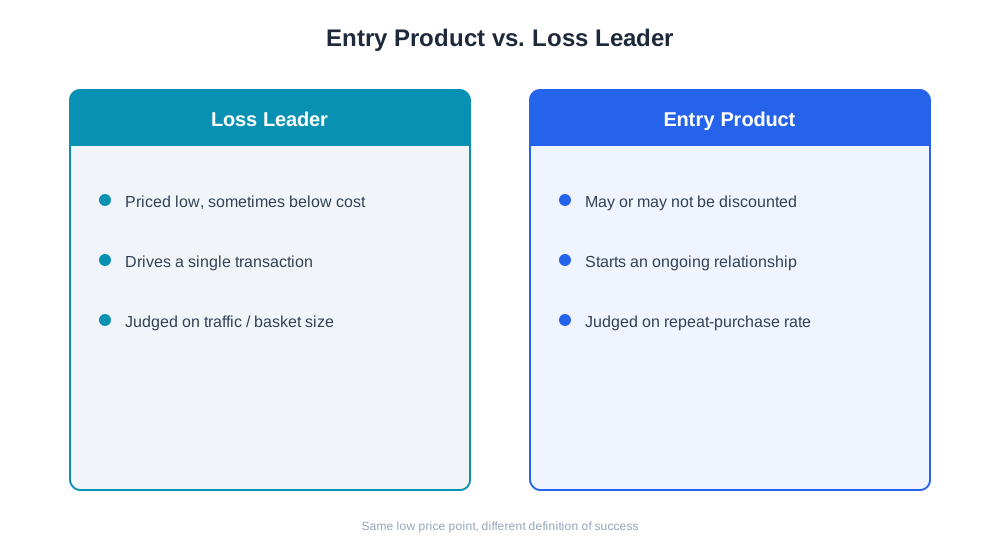
The two concepts overlap but aren’t the same. A loss leader is priced deliberately low, sometimes below cost, to drive a single transaction or store visit, with the retailer accepting little or no margin on that specific sale in exchange for the customer being in the door at all. An entry product doesn’t have to be discounted or unprofitable — it just has to reliably be the item that starts a customer relationship. A mid-priced, well-reviewed product that customers feel confident buying sight-unseen can function as an effective entry product without ever being priced as a loss leader. The practical difference matters for how each is evaluated: a loss leader is judged mainly on whether it drives enough incremental traffic or basket size to offset its thin margin, while an entry product is judged on downstream retention — whether the customers it brings in go on to buy again, and how much they’re worth over time.

Ready to Monitor Your AI Visibility?
Track how AI chatbots mention your brand across ChatGPT, Perplexity, and other platforms.
Why Entry Products Matter for Ecommerce Brands
Not every product in a catalog plays the same role in the customer relationship. Some products are reliably found deep into a loyal customer’s purchase history — a replenishment item, an upsell, a seasonal add-on — while others reliably show up first. Knowing which SKUs fall into that second group lets a merchant make better decisions about where to focus acquisition marketing spend: promoting an entry product to a cold audience is a lower-risk ask than promoting a high-commitment, high-price item to people who’ve never bought from the brand before. It also helps evaluate acquisition channels — if a paid ad campaign is driving purchases of a product that historically has poor repeat rates as an entry point, that channel may be acquiring low-value customers even if the initial conversion rate looks healthy.
Entry Products and AI-Driven Commerce
As AI shopping assistants get better at recommending a “starter” or “best first purchase” from an unfamiliar brand, having accurate entry-product data becomes relevant beyond internal marketing decisions — a brand that knows which of its products reliably lead to strong retention has a clearer answer when asked, in effect, “what should I try first.” AmICited’s eshop_get_entry_products tool is built specifically around this question, analyzing order history to surface which SKUs most often serve as a customer’s first purchase and how those customers’ subsequent purchase behavior compares to the store average, rather than relying on a merchant’s assumption about which product should be doing that job.
Stay Updated on AI Visibility Trends
Get the latest insights on AI mentions, brand monitoring, and optimization strategies.
Best Practices for Identifying and Using Entry Products
- Look at actual first-order data rather than assuming your cheapest or most-advertised product is your true entry point
- Track repeat-purchase rate specifically for customers whose first order included a given SKU, not just overall sales volume of that SKU
- Consider promoting confirmed entry products more heavily in top-of-funnel advertising, since they carry a demonstrated track record of leading to retention
- Re-evaluate entry products periodically — catalog changes, pricing changes, and shifting customer preferences can shift which products play this role over time