
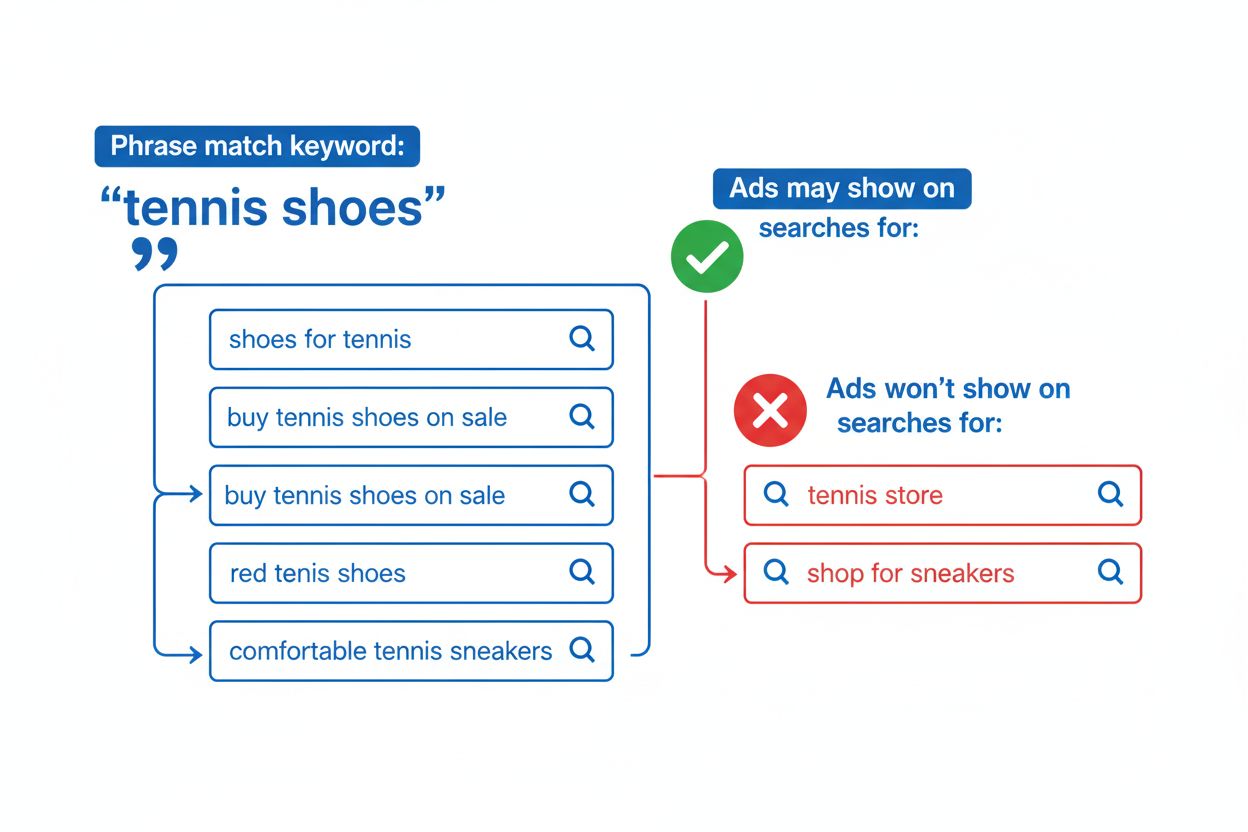
Phrase Match
Phrase match is a Google Ads keyword matching type that displays ads for searches containing your phrase in order. Learn how it works, benefits, and best practi...
15 min read
Exact match is a search query matching method that displays results only when a search query precisely matches a specified keyword or phrase, including close variants with the same meaning or intent. It represents the most restrictive and precise keyword match type available in search advertising and SEO, ensuring ads and content appear only for highly relevant searches.
Exact match is a search query matching method that displays results only when a search query precisely matches a specified keyword or phrase, including close variants with the same meaning or intent. It represents the most restrictive and precise keyword match type available in search advertising and SEO, ensuring ads and content appear only for highly relevant searches.
Exact match is a search query matching method that displays results only when a search query precisely matches a specified keyword or phrase, including close variants with the same meaning or intent. In the context of search advertising and search engine optimization, exact match represents the most restrictive and precise keyword match type available, ensuring that ads and organic content appear only for highly relevant searches. According to Google Ads documentation, exact match gives advertisers “the most control over who views your ad, but reaches fewer searches than both phrase and broad match.” The term originated from Google AdWords keyword match types and has become fundamental to both paid search campaigns and organic search strategy. Understanding exact match is essential for brands monitoring their visibility across AI search platforms like ChatGPT, Perplexity, Google AI Overviews, and Claude, where precise phrase matching helps track authentic brand mentions and citations.
The concept of exact match emerged with the early development of search advertising, particularly through Google AdWords, which introduced keyword match types to help advertisers control ad visibility. Initially, exact match was strictly literal—a search query had to match the keyword character-for-character for an ad to display. However, this rigid approach proved limiting as search algorithms evolved and user behavior became more complex. In 2017, Google introduced close variants, a pivotal update that allowed exact match keywords to match searches with misspellings, singular and plural forms, word stemming, abbreviations, and accents. This change recognized that users often make minor errors or use variations when searching, yet their intent remains the same. The 2018 expansion of close variants introduced semantic similarity, enabling exact match keywords to match queries with fundamentally the same meaning but using different words—for example, “running shoes” could match “jogging sneakers.” These evolutionary changes reflect Google’s increasing sophistication in understanding natural language processing and user intent, making exact match more flexible while maintaining its core principle of precision and relevance.
Exact match operates through sophisticated algorithmic matching that goes beyond simple string comparison. When an advertiser sets a keyword with exact match syntax (using square brackets like [red shoes] in Google Ads), the system analyzes the search query and determines whether it meets the exact match criteria. The matching process considers multiple factors: the literal keyword terms, their sequence, the meaning and intent behind the search, and approved close variants. Google’s algorithm examines whether a search query has “the same meaning or same intent” as the keyword, which is more nuanced than simple word-for-word matching. For instance, if an advertiser uses the exact match keyword [tennis shoes], the system might match searches for “tennis shoe” (singular), “tennis shoes” (plural), “tennis shoe for men,” or even “athletic footwear for tennis” if the algorithm determines the intent is identical. The system also applies stemming, which recognizes that “run,” “running,” and “runs” are variations of the same root word. Additionally, exact match now includes functional word variations—words like “and,” “or,” “but,” and prepositions can be added, removed, or reordered without breaking the match, as long as the core meaning remains intact. This sophisticated approach ensures that exact match balances precision with practical usability in real-world search scenarios.
| Aspect | Exact Match | Phrase Match | Broad Match |
|---|---|---|---|
| Precision Level | Highest (most restrictive) | Medium (balanced) | Lowest (most flexible) |
| Reach | Limited to specific queries | Moderate reach with variations | Widest reach across related terms |
| Click-Through Rate (CTR) | ~21.6% (highest) | ~15-18% (moderate) | ~8-12% (lower) |
| Return on Ad Spend (ROAS) | ~415% (highest) | ~250-300% (moderate) | ~150-200% (lower) |
| Cost Per Click (CPC) | Lower (less competition) | Medium | Higher (more competition) |
| Query Matching | Exact phrase + close variants | Phrase + additional words | Related terms, synonyms, variations |
| Example Keyword | [running shoes] | “running shoes” | running shoes |
| Matching Queries | “running shoes,” “running shoe,” “shoes for running” | “best running shoes,” “running shoes for men” | “athletic footwear,” “jogging sneakers,” “sports shoes” |
| Best For | Brand protection, niche targeting | Balanced campaigns | Broad awareness, discovery |
| Management Effort | High (requires many keywords) | Medium | Low (fewer keywords needed) |
The business impact of exact match extends across multiple dimensions of digital marketing and brand management. For paid search advertising, exact match delivers superior performance metrics—studies consistently show that exact match campaigns achieve approximately 415% return on ad spend compared to broader match types, with click-through rates around 21.6%. This superior performance translates directly to cost efficiency; advertisers spend less per click while attracting higher-quality traffic more likely to convert. In organic search, exact match principles influence how content ranks for specific queries; while Google’s algorithm considers semantic meaning rather than exact phrase matching, content that includes the exact phrase still benefits from relevance signals. For brand protection, exact match is invaluable—companies can identify when competitors bid on their exact brand name or when their brand appears in specific contexts. In the emerging landscape of AI search monitoring, exact match becomes critical for tracking brand mentions across platforms like Perplexity and ChatGPT. Organizations using tools like AmICited can monitor exact brand mentions to understand how AI systems cite their content, ensuring accurate representation and identifying opportunities for improved visibility. The precision of exact match also helps companies detect unauthorized or inaccurate mentions, allowing them to take corrective action when necessary.
As artificial intelligence reshapes search behavior, exact match takes on new significance in Generative Engine Optimization (GEO) and AI search visibility. Unlike traditional search engines where exact match keywords trigger ads, AI search platforms like ChatGPT, Perplexity, Google AI Overviews, and Claude generate responses based on training data and user queries, making exact match monitoring more about tracking authentic citations and mentions. When users search for exact phrases in AI platforms, they’re often seeking precise information—for example, searching for an exact product name or specific brand phrase. This behavior makes exact match tracking essential for understanding how AI systems reference and cite brands, domains, and content. Research indicates that over 78% of enterprises now use AI-driven content monitoring tools to track their brand visibility across multiple platforms. Exact match monitoring helps organizations identify when their specific brand terms, domain names, or product phrases appear in AI-generated responses, providing insights into their AI search presence. This is particularly important because AI systems may cite sources differently than traditional search engines, and exact match tracking helps ensure accurate attribution. Additionally, exact match data helps companies understand which specific brand phrases and keywords are most frequently referenced by AI systems, informing content strategy and optimization efforts for better AI visibility.
Different search and advertising platforms implement exact match with varying degrees of flexibility and precision. Google Ads offers the most sophisticated exact match implementation, with close variants and semantic matching built into the algorithm, allowing advertisers to reach users with the same search intent even if they use slightly different wording. Amazon Advertising uses exact match for Sponsored Products, requiring search terms to match the keyword sequence precisely, though it includes plurals and excludes certain function words. Microsoft Advertising (Bing Ads) implements exact match similarly to Google, with close variants and semantic matching capabilities. For organic search, exact match principles apply differently across platforms—Google’s algorithm considers semantic meaning and user intent rather than exact phrase matching, though including exact phrases still provides relevance signals. In AI search platforms like Perplexity and ChatGPT, exact match doesn’t apply in the traditional advertising sense, but monitoring exact brand mentions helps track how these systems cite and reference content. Google AI Overviews (formerly SGE) blend traditional search with AI-generated summaries, making exact match tracking important for understanding when and how brands appear in AI-generated snippets. Claude and other AI assistants don’t have traditional advertising, but exact match monitoring helps organizations track how their brand and content are referenced in AI responses. Understanding these platform-specific nuances is essential for implementing effective exact match strategies across the diverse search and AI landscape.
The future of exact match is being shaped by several converging trends in search technology and artificial intelligence. As machine learning algorithms become more sophisticated, exact match will likely continue evolving toward greater semantic understanding, potentially matching queries based on deeper contextual meaning rather than surface-level phrase similarity. The rise of voice search and conversational AI is already influencing how exact match functions—users speaking naturally to voice assistants use different phrasing than typed searches, requiring exact match systems to understand intent across varied linguistic expressions. The integration of large language models into search platforms is fundamentally changing how search works, with implications for exact match relevance and application. Google’s shift toward AI-powered Search and Performance Max campaigns suggests a future where broad match with Smart Bidding may become the default, with exact match serving specialized purposes like brand protection and niche targeting. However, exact match will remain valuable for organizations requiring precise control, particularly in brand monitoring and AI search visibility tracking. The emergence of Generative Engine Optimization as a discipline means exact match will play an increasingly important role in tracking how AI systems cite and reference brands, domains, and content. As AI search platforms mature, exact match monitoring will become standard practice for enterprises seeking to understand their visibility in AI-generated responses. Additionally, the development of more sophisticated AI monitoring tools like AmICited will enable organizations to track exact brand mentions across multiple AI platforms simultaneously, providing comprehensive visibility into how their brand appears in AI search results. The convergence of traditional search, AI search, and brand monitoring suggests that exact match will evolve from a simple keyword matching tool into a comprehensive visibility and citation tracking mechanism essential for modern digital strategy.
Exact match represents a fundamental concept in search advertising, SEO, and increasingly, in AI search monitoring and brand visibility tracking. As the most precise keyword match type available, exact match delivers superior performance metrics—approximately 415% return on ad spend and 21.6% click-through rates—making it invaluable for campaigns requiring high relevance and conversion focus. The evolution of exact match from simple string matching to sophisticated semantic understanding reflects the broader evolution of search technology, with close variants and semantic matching now enabling exact match to capture user intent across varied linguistic expressions. For organizations monitoring their brand visibility across AI platforms like ChatGPT, Perplexity, Google AI Overviews, and Claude, exact match tracking provides essential insights into how their brand is cited and referenced in AI-generated responses. Understanding exact match principles—including its advantages for precision and control, limitations in reach, and platform-specific implementations—is essential for developing effective search strategies in both traditional and AI search contexts. As the search landscape continues to evolve with increasing AI integration, exact match will remain a critical tool for brand protection, niche targeting, and understanding visibility in AI search results. Organizations leveraging exact match strategically, combined with complementary match types and AI monitoring tools, position themselves to maximize search visibility, control ad spend efficiently, and maintain accurate brand representation across the diverse search ecosystem.
Exact match displays ads only for searches that precisely match the keyword or have the same meaning and intent, offering the highest precision with approximately 21.6% click-through rates and 415% return on ad spend. Phrase match allows ads to appear for searches containing the specified phrase with additional words before or after it, providing broader reach while maintaining relevance. Exact match gives advertisers more control over targeting but reaches fewer searches, while phrase match balances precision with expanded audience reach.
Google's exact match algorithm now includes close variants such as misspellings, singular and plural forms, word stemming (like 'floor' and 'flooring'), abbreviations, and accents. For example, an exact match keyword 'running shoes' can match searches for 'running shoe' or 'runnin shoes' with misspellings. Since 2018, Google expanded exact match to include semantically similar queries, meaning 'running shoes' could match 'jogging sneakers' if they share the same intent. This evolution makes exact match more flexible while maintaining high relevance and precision.
Exact match is critical for brand monitoring because it allows organizations to track precise mentions of their brand name, domain, or specific product phrases across AI platforms like ChatGPT, Perplexity, and Google AI Overviews. By monitoring exact match queries, brands can identify when their specific brand terms appear in AI-generated responses and measure their visibility accurately. This precision helps companies understand their AI search presence, detect unauthorized mentions, and ensure their brand appears in the most relevant AI contexts.
Exact match keywords provide several key advantages: they offer the highest precision and control over ad placement, ensuring ads appear only for highly relevant searches; they typically generate higher quality traffic with better conversion rates; they reduce wasted ad spend on irrelevant clicks; and they often result in lower cost-per-click due to reduced competition. Studies show exact match delivers approximately 415% return on ad spend compared to broader match types. Additionally, exact match is ideal for protecting brand keywords and targeting niche markets where specificity is crucial.
The primary limitation of exact match is its restricted reach—by focusing only on highly specific queries, advertisers may miss valuable variations and related searches that indicate purchase intent. Exact match requires more extensive keyword list management to capture all relevant variations, which can be time-consuming and inefficient for large campaigns. Additionally, exact match provides little flexibility for capturing synonyms or alternative phrasings, potentially excluding high-intent long-tail queries. This restrictive nature means advertisers using only exact match may experience lower overall traffic volume compared to broader match types.
Exact match has undergone significant evolution since its introduction in Google AdWords. In 2017, Google introduced close variants, allowing exact match to include misspellings and word variations while maintaining precision. The 2018 expansion added semantic similarity, enabling exact match keywords to match queries with the same meaning but different wording. Recent updates have refined how exact match interacts with AI-powered search features and Performance Max campaigns. Google now prioritizes broad match with Smart Bidding for AI-driven campaigns, though exact match remains valuable for specific targeting scenarios and brand protection strategies.
Organizations can use exact match monitoring to track their brand name, domain URL, and specific product phrases as they appear in AI-generated responses across platforms like Perplexity, ChatGPT, and Google AI Overviews. By setting up exact match alerts for branded terms, companies can receive notifications when their specific brand is mentioned in AI responses, helping them understand their AI search visibility and presence. This approach is particularly valuable for AmICited users who need to monitor precise brand mentions and track how AI systems cite or reference their content and domain.
Start tracking how AI chatbots mention your brand across ChatGPT, Perplexity, and other platforms. Get actionable insights to improve your AI presence.
Phrase match is a Google Ads keyword matching type that displays ads for searches containing your phrase in order. Learn how it works, benefits, and best practi...
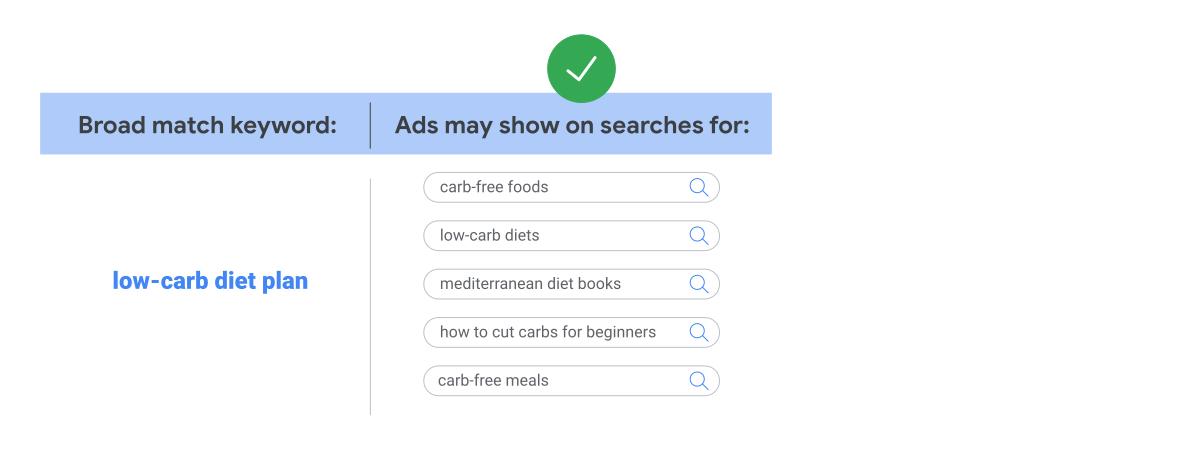
Learn what broad match is in Google Ads and PPC advertising. Understand how broad match keywords work, compare it to exact and phrase match, and discover best p...
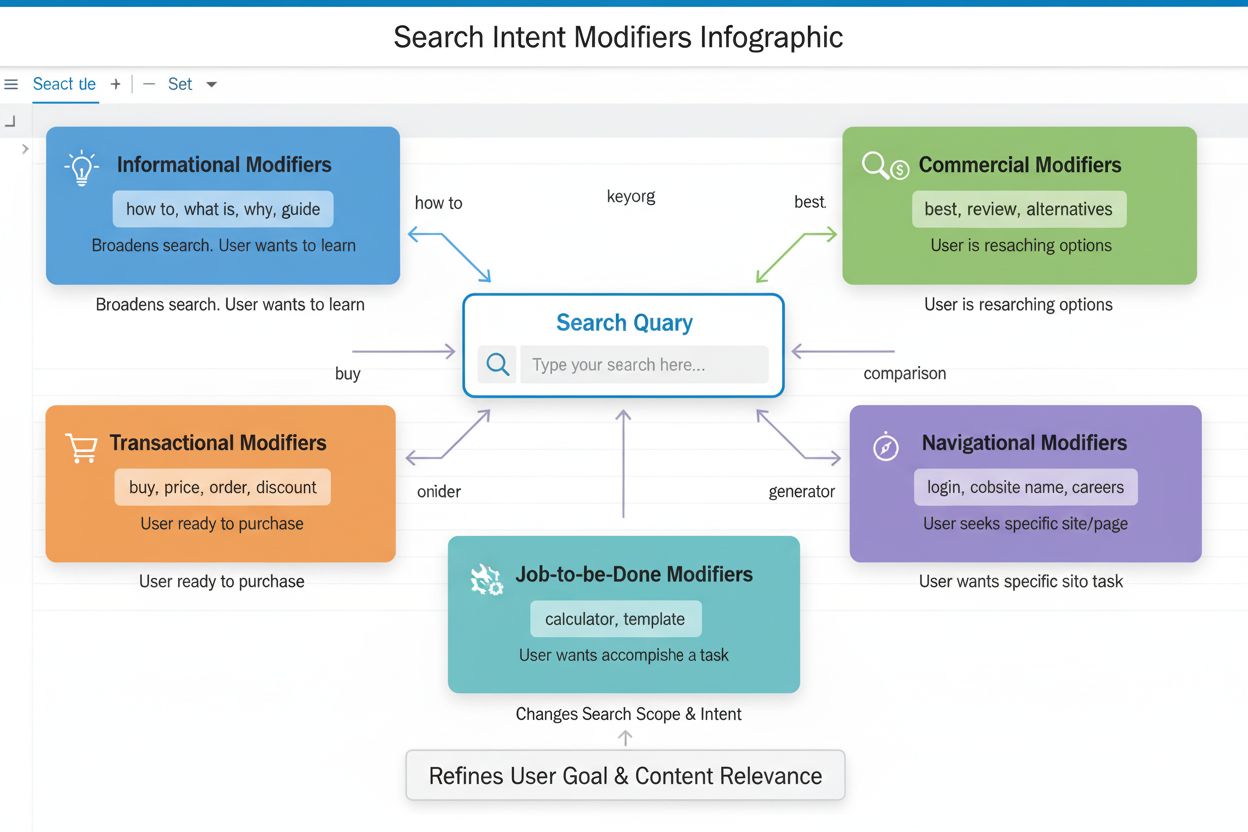
Learn what search modifiers are, how they change search intent and scope, and why they matter for SEO, AI monitoring, and brand visibility across search platfor...