
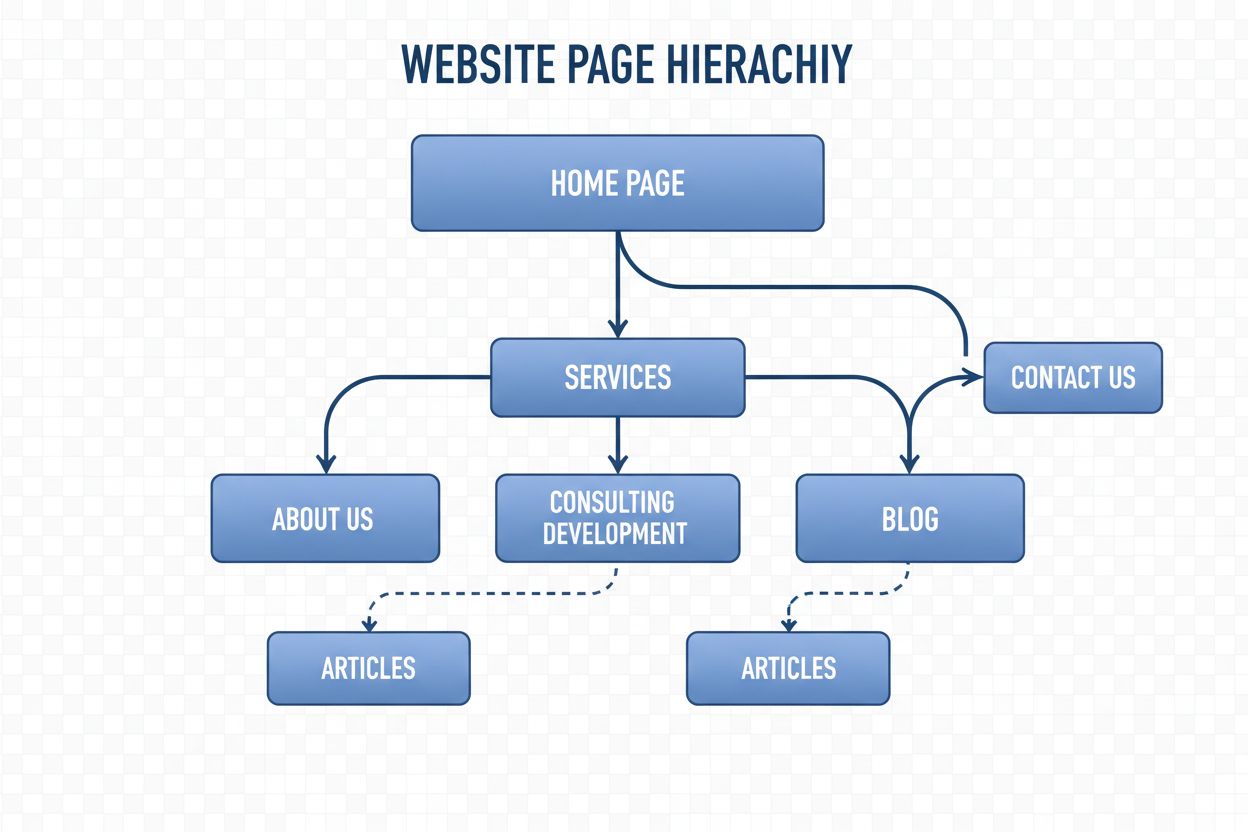
Navigation Structure
Navigation structure is the system organizing website pages and links to guide users and AI crawlers. Learn how it affects SEO, user experience, and AI indexing...
8 min read

Faceted navigation is a website filtering system that allows users to refine and narrow search results or product listings by applying multiple criteria (facets) such as price, brand, size, color, and ratings. It enables customers to discover products more efficiently by progressively filtering through product attributes, significantly improving user experience and conversion rates on ecommerce sites.
Faceted navigation is a website filtering system that allows users to refine and narrow search results or product listings by applying multiple criteria (facets) such as price, brand, size, color, and ratings. It enables customers to discover products more efficiently by progressively filtering through product attributes, significantly improving user experience and conversion rates on ecommerce sites.
Faceted navigation is a sophisticated filtering system that enables users to refine and narrow product listings or search results by applying multiple criteria simultaneously. Each criterion, known as a facet, represents a specific product attribute such as price, brand, size, color, material, rating, or any other relevant characteristic. Rather than forcing customers to browse through hundreds or thousands of products, faceted navigation allows them to progressively filter results until they find exactly what they’re looking for. This system has become a fundamental component of modern ecommerce platforms, with research from the Nielsen Norman Group confirming that ecommerce sites without faceted navigation are now the exception rather than the rule. The primary purpose of faceted navigation is to bridge the gap between what customers are searching for and the vast product catalogs available on ecommerce sites, creating a more intuitive and efficient shopping experience that directly impacts conversion rates and customer satisfaction.
The concept of faceted navigation emerged from information science and library science, where researchers developed methods to help users navigate large, complex information systems. In the early 2000s, as ecommerce platforms began to scale with thousands of products, the need for sophisticated filtering mechanisms became apparent. Amazon pioneered the widespread adoption of faceted navigation in ecommerce, implementing it prominently on their product pages and demonstrating its effectiveness in improving user experience. The Nielsen Norman Group’s research from 2000 to 2017 documented the dramatic improvement in search success rates on ecommerce sites, rising from 64% in 2000 to 92% by 2017, with faceted navigation playing a crucial role in this improvement. Today, faceted navigation has evolved beyond simple filtering to incorporate AI-powered recommendations, dynamic facet ordering based on user behavior, and personalized filter suggestions. According to research from Algolia, conversion rates through site search can be up to 50% higher than average browsing, and faceted navigation significantly amplifies this effect. The technology continues to evolve with machine learning algorithms that automatically determine which facets to display, in what order, and how to optimize them for maximum conversion rates and user satisfaction.
Faceted navigation operates through a multi-step process that begins with product metadata enrichment. Each product in an ecommerce catalog must be tagged with relevant attributes—these tags become the foundation for all filtering options. When a customer visits a category page or executes a search query, the system analyzes the results and intelligently determines which facets are most relevant to display. For example, if a customer searches for “running shoes,” the system recognizes that the top results predominantly feature athletic brands, specific shoe types, and particular size ranges, so it prioritizes these facets in the filter panel. As customers apply filters, the system dynamically updates both the product results and the available facet options in real-time. This is typically accomplished through one of several technical approaches: URL parameters (where filter selections are appended to the URL like ?brand=Nike&size=10), URL hashes (using # to preserve shareability without creating duplicate content), or AJAX (which updates results without changing the URL). The most sophisticated implementations use machine learning algorithms to analyze user behavior patterns, determining which facets drive the most conversions, which filter combinations are most popular, and how to optimize facet ordering for different customer segments. This data-driven approach ensures that faceted navigation continuously improves based on actual user interactions rather than static assumptions about customer preferences.
| Aspect | Faceted Navigation | Simple Filters | Faceted Search | Category-Only Navigation |
|---|---|---|---|---|
| Number of Filters | Multiple simultaneous filters | Single filter at a time | Multiple filters with AI suggestions | No filters, category-based only |
| Intelligence Level | Static or AI-optimized | Basic, predefined | Highly intelligent, query-aware | None |
| User Control | High - customers choose combinations | Limited - one choice at a time | High - AI suggests relevant options | Very limited - browse only |
| Search Success Rate | 85-92% | 60-70% | 90%+ | 50-60% |
| Conversion Impact | +25-40% vs. no filters | +10-15% vs. no filters | +35-50% vs. no filters | Baseline |
| Implementation Complexity | Medium | Low | High | Very Low |
| SEO Challenges | Moderate (duplicate content) | Low | High (many URL variations) | None |
| Best For | Large catalogs (1000+ products) | Small catalogs (100-500 products) | Enterprise ecommerce | Niche stores |
| Mobile Optimization | Requires collapsible design | Easy to implement | Requires smart collapsing | Simple |
| Typical Location | Category pages, search results | Category pages only | Search results primarily | Homepage, main menu |
Faceted navigation dramatically improves the customer shopping experience by reducing decision fatigue and search time. When customers enter an ecommerce site with a general idea of what they want—such as “women’s running shoes”—they face a potentially overwhelming number of options. Without faceted navigation, they must manually scroll through hundreds of products, comparing specifications and prices individually. With faceted navigation, they can instantly narrow results by applying relevant filters: selecting their shoe size, preferred brand, desired price range, and color preference. This progressive refinement transforms the shopping experience from frustrating to empowering. Research demonstrates that customers who use faceted navigation spend less time on product discovery and feel more confident in their purchase decisions. The Nielsen Norman Group’s research showed that 27% of search failures on ecommerce sites were caused by customers’ inability to locate suitable items, even when matching products existed. Faceted navigation directly addresses this problem by making product discovery intuitive and efficient. Additionally, faceted navigation exposes customers to product variations they might not have considered, such as alternative brands or price points, effectively increasing the average order value and customer lifetime value. The system also provides valuable social proof through rating filters, allowing customers to quickly identify highly-rated products and build confidence in their purchases.
While faceted navigation provides exceptional user experience benefits, it presents significant SEO challenges that require careful management. The primary issue is duplicate content creation: when customers apply different filter combinations, the system generates multiple URLs with nearly identical content. For example, a product category page at /shoes/running/ might generate variations like /shoes/running/?brand=Nike&size=10, /shoes/running/?size=10&brand=Nike, and countless other combinations. Search engines struggle to determine which version is the “canonical” or preferred page, potentially diluting ranking signals across multiple URLs. This leads to keyword cannibalization, where similar pages compete for the same search terms, weakening the overall ranking power of your site. The second major challenge is crawl budget waste: search engines allocate a finite amount of resources to crawling each website. Faceted navigation can create millions of potential URLs, causing search engine bots to spend excessive time crawling low-value faceted pages instead of important content pages. This is particularly problematic for sites with large product catalogs, where facet combinations can theoretically create an infinite number of URLs. The third issue is diluted link equity: internal links are distributed across all these faceted variations, spreading the authority and ranking power that should be concentrated on primary category pages. According to research from seoClarity, sites with poorly implemented faceted navigation can have 39 non-indexable URLs for every indexable URL, representing tremendous crawl budget waste. These challenges don’t mean you should avoid faceted navigation—rather, they require strategic implementation using canonical tags, robots.txt rules, nofollow attributes, or AJAX-based solutions to prevent SEO damage.
Successful faceted navigation implementation requires balancing user experience with technical SEO considerations. First, carefully select which facets to display based on actual customer search behavior and product attributes. Use analytics tools and keyword research to identify which filters customers actively use and which combinations drive conversions. The most effective facets are those that genuinely help customers narrow down options: price ranges, brand names, sizes, colors, and ratings. Avoid creating facets for attributes that don’t meaningfully differentiate products or that customers don’t search for. Second, optimize facet display and ordering by showing the most relevant filters prominently and collapsing less important ones. Research shows that customers are more likely to apply filters when they’re immediately visible and logically organized. On mobile devices, all facets should default to collapsed to preserve screen space. Third, implement smart facet management by ensuring that selecting a filter never results in zero products—if a combination would return no results, disable that filter option to prevent customer frustration. Fourth, use clear, customer-friendly terminology for facet names and values. Avoid internal jargon or creative product line names; instead, use the language your customers actually use when searching. Fifth, display product counts for each filter option so customers understand how many products match each criterion. This transparency helps customers make informed filtering decisions and prevents them from applying too many filters that result in limited options. Finally, ensure real-time filter updates so results refresh immediately when customers apply or remove filters, creating a responsive and satisfying user experience.
Protecting your site’s SEO while maintaining faceted navigation requires implementing one or more mitigation strategies. The most common approach is using canonical tags, which tell search engines that multiple faceted URLs are variations of a single preferred page. For example, all faceted variations of /shoes/running/ would include a canonical tag pointing to the base category page. This consolidates ranking signals and prevents duplicate content issues, though it doesn’t solve crawl budget waste. A second strategy is implementing nofollow attributes on internal facet links, signaling to search engines that these links are less important and shouldn’t be crawled. This reduces crawl budget waste but doesn’t prevent indexing if external links point to faceted pages. Third, you can use robots.txt disallow rules to prevent search engines from crawling specific faceted URL patterns. For example, you might disallow all URLs containing ?filter= parameters. However, search engines may still index these pages if they’re linked from external sources. Fourth, AJAX-based implementation prevents URL changes when filters are applied, eliminating the creation of multiple URLs entirely. This is the most elegant solution but requires more technical sophistication. Fifth, for high-demand facet combinations with genuine search volume, you can create static sub-category pages that are properly optimized and indexed, while keeping other facet combinations non-indexed. This approach captures long-tail search traffic while avoiding SEO penalties. The best strategy depends on your site’s size, product catalog complexity, and technical capabilities.
Effective faceted navigation requires selecting the right mix of facets that genuinely help customers find products. Universal facets that apply across most ecommerce categories include price range (allowing customers to set minimum and maximum budgets), brand (helping customers find preferred manufacturers), and ratings/reviews (leveraging social proof to build confidence). These facets should be included in virtually every ecommerce implementation. Category-specific facets vary by product type: for apparel, include size, color, material, and fit; for electronics, include specifications like processor speed, storage capacity, and screen size; for furniture, include dimensions, material, and style. Thematic facets represent a more advanced approach, grouping products by use case, occasion, or lifestyle rather than technical specifications. For example, a clothing retailer might include facets like “Casual,” “Professional,” “Athletic,” or “Party,” allowing customers to shop by their intended use rather than product type. Research from the Baymard Institute emphasizes that thematic facets significantly reduce site abandonment and improve conversion rates because they align with how customers actually think about shopping. Dynamic facets that change based on search context are increasingly common in AI-powered ecommerce platforms. These systems analyze the search query and product results to determine which facets are most relevant, automatically adjusting the filter panel for each search. This approach provides superior user experience because customers see only the facets that matter for their specific search, reducing cognitive load and decision fatigue.
Different ecommerce platforms offer varying levels of faceted navigation support and customization options. Shopify, one of the most popular ecommerce platforms, provides built-in faceted navigation through its Search & Discovery app, allowing merchants to configure filters without coding. Magento offers extensive customization through filterable attributes, enabling merchants to specify which product attributes become facets and how they’re displayed. Salesforce Commerce Cloud provides a sophisticated faceted search engine with options to set default facets, create ordered facet lists for specific collections, and customize facet behavior for different search contexts. WooCommerce, the WordPress ecommerce plugin, requires additional plugins or custom development to implement advanced faceted navigation but offers flexibility for customization. For enterprise implementations, platforms like Algolia, Constructor, and Prefixbox provide specialized product discovery solutions with AI-powered faceted navigation that automatically optimizes facet selection, ordering, and display based on user behavior and conversion data. When selecting a platform or solution, consider factors such as: the size of your product catalog, the technical complexity you’re willing to manage, your budget for implementation and maintenance, the level of customization required, and whether you need AI-powered optimization. Smaller stores with 100-500 products may find basic platform features sufficient, while larger retailers with thousands of products benefit from specialized product discovery platforms that provide advanced analytics, A/B testing capabilities, and machine learning-driven optimization.
Faceted navigation significantly impacts how your products appear in AI-powered search systems and product discovery platforms. As AI search engines like Perplexity, ChatGPT, and Google AI Overviews become increasingly important for product discovery, the way your products are indexed and presented through faceted navigation affects your visibility in these systems. Well-implemented faceted navigation improves your site’s crawlability and indexability, making it easier for AI systems to understand your product catalog structure and attributes. This enhanced understanding translates to better product recommendations and more accurate product appearances in AI search results. For platforms like AmICited that monitor brand and domain appearances in AI responses, faceted navigation plays a crucial role in determining how frequently and prominently your products appear. When your faceted navigation is properly structured with clear metadata and logical filtering options, AI systems can more easily extract product information, specifications, and attributes, increasing the likelihood of your products being cited or recommended in AI-generated responses. Additionally, faceted navigation improves user engagement metrics—lower bounce rates, longer session durations, and higher conversion rates—which are signals that AI systems use to evaluate site quality and relevance. By optimizing your faceted navigation for both user experience and search engine visibility, you’re simultaneously improving your visibility across traditional search engines, ecommerce platforms, and emerging AI search systems.
Faceted navigation continues to evolve with emerging technologies and changing user expectations. The most significant trend is the integration of machine learning and AI into faceted navigation systems. Modern implementations use algorithms that analyze user behavior patterns to automatically determine optimal facet selection, ordering, and display. These systems learn which facet combinations drive conversions, which filters customers use most frequently, and how to personalize the facet experience for different customer segments. Another emerging trend is visual faceted navigation, where filter options include images or visual representations rather than just text. For example, a clothing retailer might display color facets as actual color swatches, or a furniture store might show style facets with representative images. This approach reduces cognitive load and improves the shopping experience, particularly on mobile devices. Voice-activated faceted navigation is beginning to emerge as voice commerce grows, allowing customers to apply filters through natural language commands like “show me blue running shoes under $100.” Personalization is becoming increasingly sophisticated, with faceted navigation systems adapting filter options based on individual customer preferences, purchase history, and browsing behavior. Mobile-first design continues to drive innovation in faceted navigation, with new interaction patterns like swipeable filter panels, collapsible sections, and gesture-based filtering. Additionally, integration with social commerce is creating new faceted navigation opportunities, where customers can filter products by social proof metrics like influencer recommendations or peer ratings. As ecommerce continues to evolve and customer expectations rise, faceted navigation will remain a critical component of product discovery, but its implementation will become increasingly sophisticated, personalized, and AI-driven.
Faceted navigation refers to filtering options displayed on category pages, while faceted search applies to search results pages. Both use the same underlying principle of allowing users to filter by multiple attributes, but faceted search is more dynamic and context-aware, automatically suggesting relevant filters based on the search query and results returned. Faceted navigation is typically static and predefined for each category.
Faceted navigation reduces the time customers spend searching for products by allowing them to quickly narrow down options to exactly what they need. Research shows that conversion rates through site search can be up to 50% higher than average browsing, and faceted navigation significantly enhances this effect. By presenting relevant filters upfront, customers feel more in control and confident in their purchase decisions, leading to higher conversion rates and lower cart abandonment.
Faceted navigation creates three primary SEO issues: duplicate content (multiple URLs with similar content), diluted link equity (internal links spread across many faceted variations), and wasted crawl budget (search engines spending resources crawling low-value faceted pages). These issues can negatively impact your site's overall SEO performance if not properly managed through canonical tags, robots.txt rules, or nofollow attributes.
You should only index faceted pages that have genuine search demand and sufficient unique content. Use keyword research tools to identify long-tail queries that match your faceted pages, and only index pages with 3-5+ products and meaningful content. Pages with zero results or minimal product counts should not be indexed, as they provide no value to users or search engines and waste crawl budget.
Best practices include: displaying facets vertically on the left sidebar, collapsing less relevant facets by default, showing product counts for each filter option, allowing multi-selection of filters, using clear and customer-friendly terminology, and ensuring filters update results in real-time. Mobile implementations should default to collapsed facets to optimize screen space, and you should never display facets that result in zero products.
Implement one or more of these strategies: use nofollow attributes on internal facet links, add disallow rules in robots.txt for faceted URLs, implement canonical tags pointing to parent category pages, use AJAX to prevent URL changes when filters are applied, or create static sub-category pages for high-demand facet combinations. The best approach depends on your site architecture and the search demand for specific faceted combinations.
Include universal facets like price range, brand, and ratings that apply across most categories. Add category-specific facets like size, color, material, or technical specifications relevant to your products. Consider thematic facets like seasonal offers, style preferences, or use cases. Always base facet selection on actual customer search behavior and ensure each facet provides genuine value in helping customers find products they're looking for.
Faceted navigation impacts how your products appear in search results and category pages, which affects your brand's visibility in ecommerce environments. When properly implemented, it improves user experience and conversion rates, increasing your brand's prominence. For platforms like AmICited that monitor brand mentions in AI responses, understanding faceted navigation helps optimize how your products are discovered and presented, ensuring better visibility across ecommerce search systems and AI-powered product discovery tools.
Start tracking how AI chatbots mention your brand across ChatGPT, Perplexity, and other platforms. Get actionable insights to improve your AI presence.
Navigation structure is the system organizing website pages and links to guide users and AI crawlers. Learn how it affects SEO, user experience, and AI indexing...
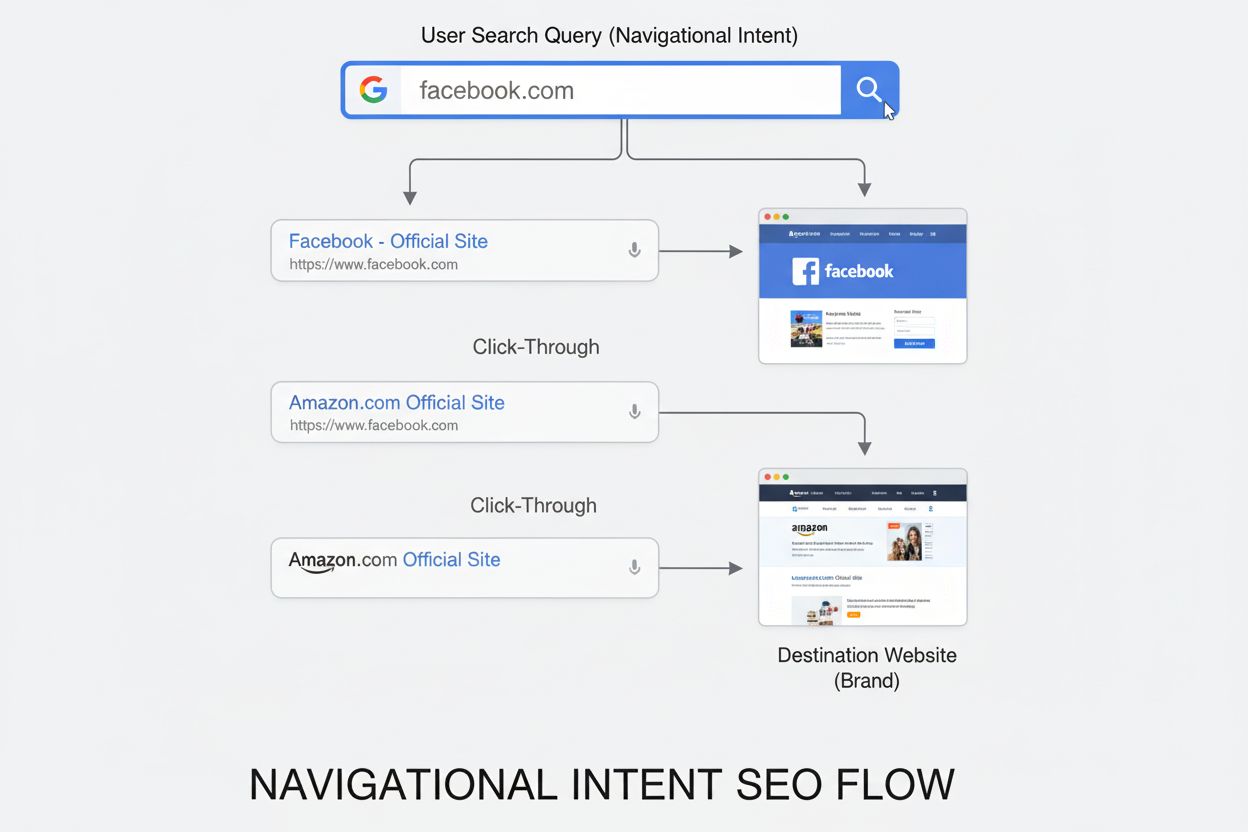
Navigational intent is when users search for specific websites or brands. Learn how it differs from other search intents and why it matters for AI brand monitor...

Discover how website navigation structure impacts AI crawler accessibility, content discovery, and your brand's visibility in AI-powered search engines and answ...
Cookie Consent
We use cookies to enhance your browsing experience and analyze our traffic. See our privacy policy.