
Branded Search Volume and AI Visibility: The Connection Explained
Discover how branded search volume directly correlates with AI visibility. Learn to measure brand signals in LLMs and optimize for AI-driven discovery with acti...
8 min read
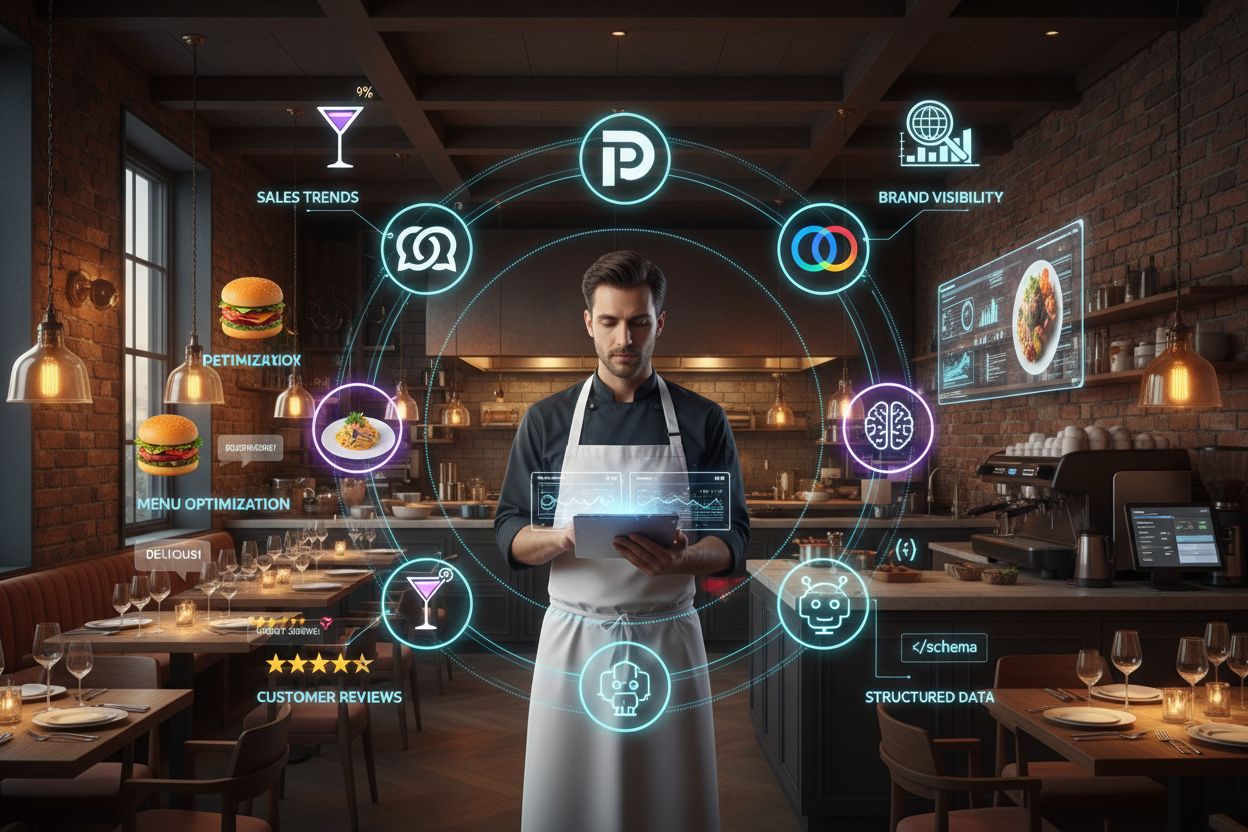
Restaurant, food brand, and CPG visibility optimization in AI culinary queries. A strategic approach to ensuring food businesses are discovered, cited, and recommended by AI-powered search tools like ChatGPT, Perplexity, and Google AI Overviews through structured data, authentic reviews, and conversational brand presence.
Restaurant, food brand, and CPG visibility optimization in AI culinary queries. A strategic approach to ensuring food businesses are discovered, cited, and recommended by AI-powered search tools like ChatGPT, Perplexity, and Google AI Overviews through structured data, authentic reviews, and conversational brand presence.
The restaurant and food industry is experiencing a fundamental transformation in how consumers discover dining options and food products. While 20% of U.S. diners already use AI tools like ChatGPT, Perplexity, and Gemini to research restaurants, this statistic represents just the beginning of a broader behavioral shift. Gartner predicts a 50% decrease in traditional organic search traffic by 2028 as consumers increasingly embrace generative AI for discovery. The emergence of “Zero-Click” discovery means that nearly 60% of searches now end without users ever visiting a website, as AI provides direct answers within the chat interface itself. For food brands and restaurants, this fundamentally changes the competitive landscape—the goal is no longer simply to rank on Google Maps or appear in search results, but to become the trusted recommendation spoken by the AI agent. Unlike traditional search engines that return lists of links for users to evaluate, AI search tools synthesize information from multiple sources and deliver a single, conversational recommendation. This shift requires restaurant operators and CPG brands to rethink their entire visibility strategy, moving from keyword optimization to what Francesca Tabor calls “conversational discovery”—ensuring your brand is cited and recommended within AI conversations rather than just indexed by search algorithms.
One of the most critical challenges food brands face in AI search is a phenomenon called “Abstraction Bias,” which occurs when AI models favor broad, generic concepts over specific brand names because the brand fails to provide sufficient “verifiable information density.” When an AI cannot distinguish your specific offering from the general category, your brand becomes invisible in the conversational discovery layer, losing the opportunity to be recommended. The classic example is the “Tomato Sauce Failure”: a grocery listing that simply states “Tomato sauce. Organic. 500g.” lacks the semantic richness that AI models require to make specific recommendations. Without flavor descriptions, origin stories, usage cues, or contextual information, AI models like Amazon Rufus cannot associate the product with specific intents like “best sauce for a Tuscan lasagna” or “premium organic option for health-conscious cooks.” The same principle applies to restaurants—if your digital footprint merely says “Italian Restaurant,” you disappear into abstraction; if it says “Roman-style trattoria specializing in Cacio e Pepe for quiet date nights,” you provide the semantic richness that AI requires to make a specific, personalized recommendation. This challenge is illustrated by what Francesca Tabor calls the “Article Paradox”: the furniture brand Article ranks #9 on Google for specific queries but #1 on ChatGPT and Gemini because traditional search prioritizes backlinks and keywords, while AI models prioritize social proof, sentiment consistency, and clear positioning. The lesson for food brands is that you might rank lower on a Google Search Result Page (SERP) but dominate AI answers if your “Validation Layer”—reviews on Reddit, Yelp, and social media—is dense, positive, and specific.
| Ranking Factor | Traditional Search (Google) | AI Models (ChatGPT, Gemini) |
|---|---|---|
| Primary Signal | Backlinks, keywords, domain authority | Semantic richness, social proof, sentiment |
| Information Source | Website content, meta tags, structured data | Diverse web sources: reviews, forums, social media, Wikipedia |
| Ranking Logic | Algorithmic matching to keywords | Contextual understanding and verification |
| Brand Visibility | Determined by SEO optimization | Determined by information density and credibility |
| Citation Importance | Links matter most | Mentions and verified reviews matter most |
To ensure your restaurant or food brand is cited and recommended by AI agents, you must understand and optimize across the AI Visibility Funnel, which consists of three distinct layers that work together to build credibility and visibility in AI systems. Each layer serves a specific function in how AI models evaluate and recommend brands:
Authority Layer (Wikipedia & Authoritative Sources): For established restaurant groups and food brands, a neutral, well-sourced Wikipedia entry provides the “ground truth” for large language models, driving up to 43% of citations in low-intent queries. Wikipedia entries signal legitimacy and provide AI systems with verified, neutral information that they can confidently cite. This layer is particularly important for established brands and restaurant groups that have achieved sufficient notability to warrant encyclopedia coverage.
Validation Layer (Reddit, Reviews & Social Proof): This layer is where consumer trust is built and verified. 55% of consumers trust AI summaries because they aggregate human experiences, and AI models heavily weigh Reddit discussions (accounting for 12-15% of citations) to verify whether a brand is “authentic” or “overhyped.” Customer reviews on Yelp, Google, TripAdvisor, and social media platforms provide the social proof that AI agents use to validate recommendations. Restaurants and food brands should actively encourage customers to leave detailed, specific reviews that describe their experience in ways that AI can parse and cite.
Technical Layer (Schema Markup & Structured Data): Use structured data (JSON-LD) to explicitly translate your menu, hours, location, pricing, and product attributes into code that AI can parse instantly. This reduces the risk of “hallucinations” regarding your operating hours, menu items, or product specifications. Schema markup tells AI systems exactly what information is available and how to interpret it, making your data machine-readable and more likely to be cited accurately in AI responses.
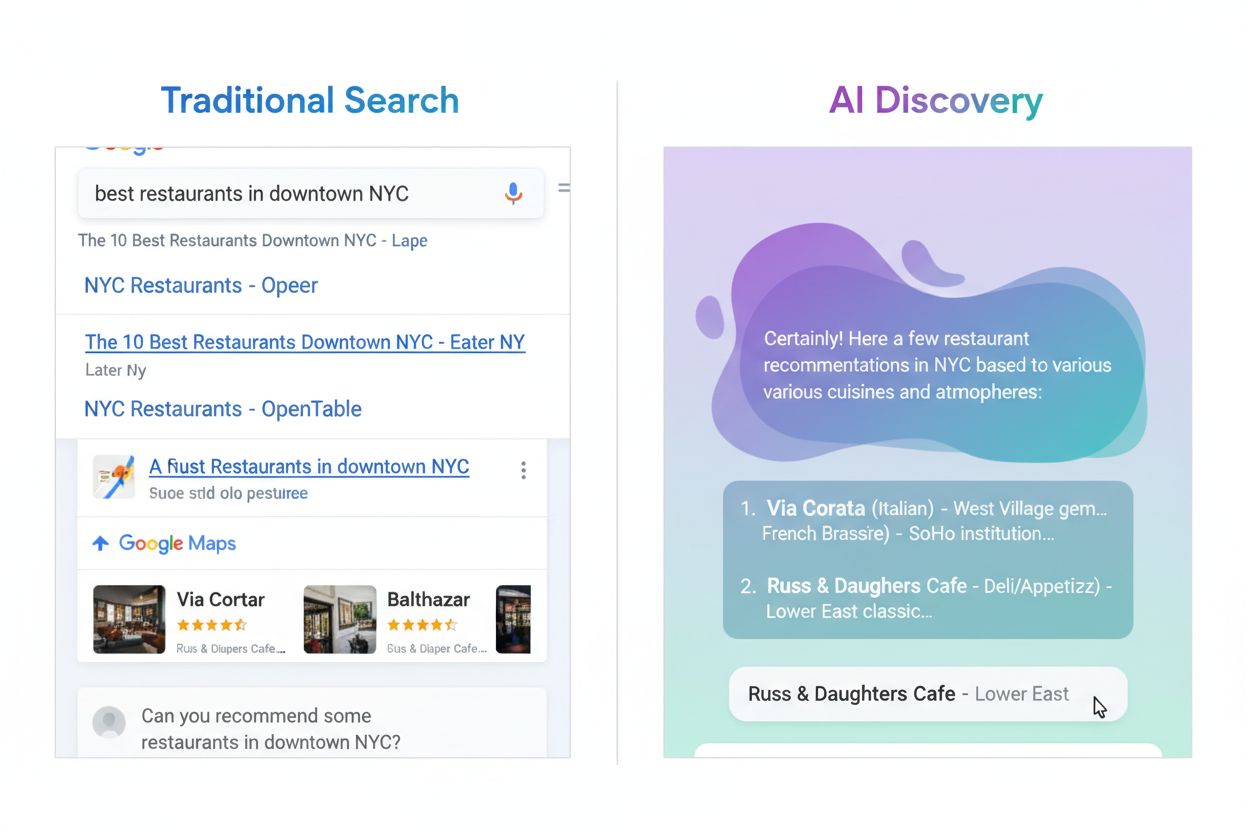
To reverse “brand-silent” AI answers where your restaurant or food product isn’t mentioned, you must move from traditional keyword optimization to what industry experts call “Subjective Product Needs” (SPN) optimization. AI agents look for five key facets when vetting recommendations, and your digital presence must explicitly address each one. Subjective Properties require you to describe the sensory and atmospheric qualities of your offering—words like “cozy,” “zesty,” “crispy,” “aromatic,” or “intimate” help AI understand the qualitative experience you provide. Activity Suitability means defining the use case explicitly: “best for business lunches,” “ideal for late-night bites,” “perfect for quick takeout,” or “designed for leisurely dining.” Event Relevance links your restaurant or product to specific occasions—“anniversary dinner,” “family celebration,” “casual weeknight meal,” or “special date night.” Dietary and Preference Alignment ensures your offerings are discoverable by those with specific needs: “gluten-free pasta options,” “vegan-friendly menu,” “keto-compliant dishes,” or “allergen-free preparation.” The tactical fix is Q&A Seeding: don’t wait for diners to ask questions on review platforms; proactively populate your FAQ schema and digital profiles with anticipated questions and answers. By asking and answering questions like “Is this restaurant suitable for large groups?” or “Are there gluten-free options for the pasta?”, you teach the AI exactly who your establishment is for, allowing it to pull those answers directly into chat responses and recommendations.
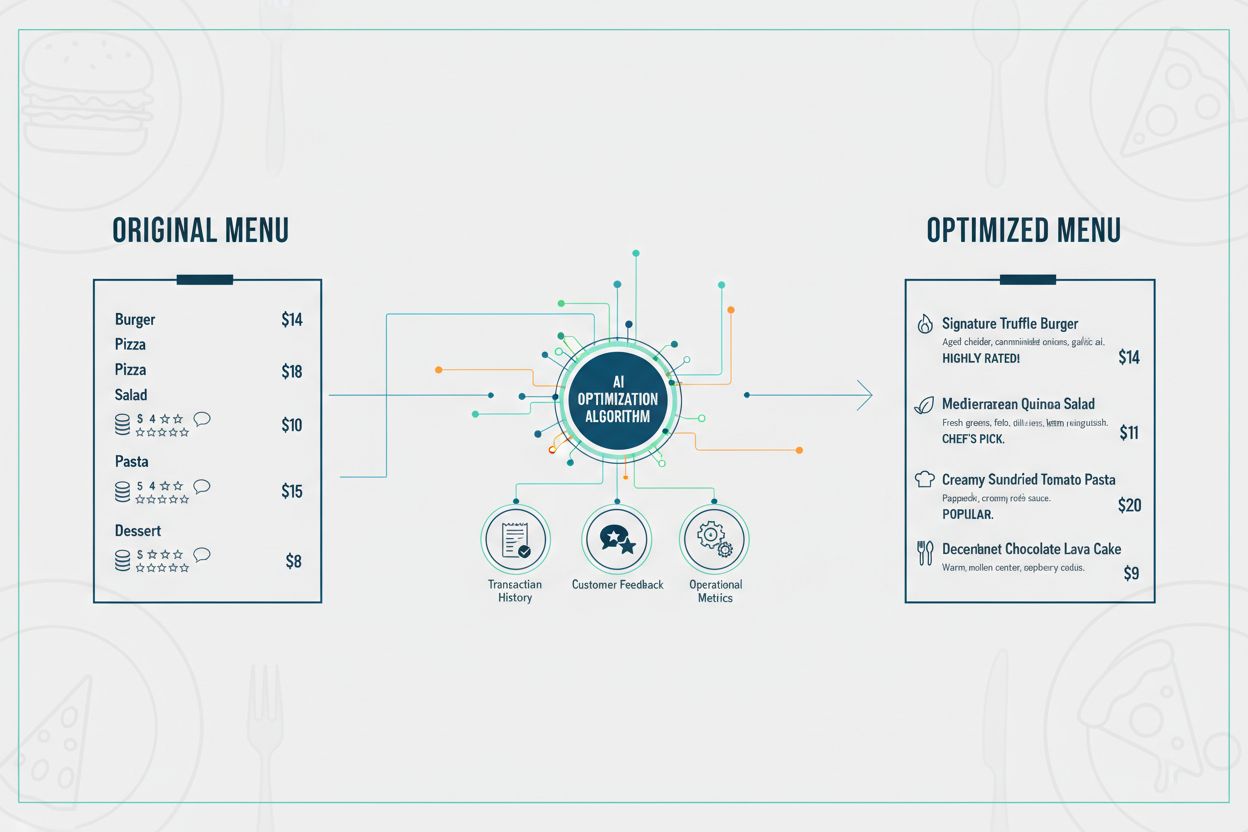
AI menu optimization is the process of structuring and enriching your menu data so that AI systems can understand, parse, and recommend your specific dishes and products in conversational contexts. Research shows that 89% of restaurants lack properly optimized menu data, missing critical opportunities to appear in AI recommendations. The foundation of menu optimization is structured data—using schema.org markup to translate your menu items into machine-readable format that includes not just names and prices, but rich attributes like ingredients, allergens, dietary classifications, flavor profiles, and preparation methods. When you implement proper schema markup for your menu, you’re essentially creating a bridge between human-readable descriptions and machine-readable data that AI systems can parse, understand, and cite. For example, instead of just listing “Pasta Carbonara - $18,” structured data allows you to specify: ingredients (eggs, guanciale, pecorino, black pepper), dietary tags (contains eggs, contains pork), flavor profile (savory, creamy, umami), and preparation method (traditional Roman style). This richness of information is exactly what AI algorithms need to match your dishes to specific user intents—when someone asks ChatGPT “What’s the best authentic carbonara near me?” or “I want a creamy pasta dish that’s not too heavy,” your restaurant becomes discoverable because the AI can understand and match your menu attributes to the query. The connection between menu optimization and AI search visibility is direct: restaurants that implement comprehensive schema markup for their menus see significantly higher citation rates in AI-generated recommendations, as the AI has verified, structured information to cite rather than relying on unstructured text that might be misinterpreted.
The consumer packaged goods (CPG) industry is experiencing a seismic shift from the traditional search-and-rank paradigm to an AI-agent-driven recommendation model. For decades, CPG brands competed by optimizing for search engine rankings—investing heavily in SEO, paid search, and content marketing to appear at the top of Google results. Today, that strategy is becoming obsolete as AI agents like ChatGPT, Gemini, and emerging shopping assistants (Amazon Rufus, Walmart Sparky) become the primary interface for product discovery. In this new landscape, trust is the new currency, and brands must earn recommendations through verified data, transparent information, and authentic presence across the platforms where AI agents gather information. Brands like Oatly exemplify this shift by providing transparent product-level sustainability disclosures, public Q&A sections that mirror conversational AI interactions, and fact-based educational content that makes it easy for AI agents to parse and accurately explain their products. Similarly, Glossier has built a conversational brand presence by maintaining strong engagement on Reddit and beauty forums where real customers share authentic experiences—making the brand more “discoverable” through conversational AI because it’s part of the training data and cited as credible. Sephora has already begun integrating AI-driven product recommendation tools that blend editorial and sponsored content, providing a model for how native paid placements can work ethically in AI environments. The strategic imperative for CPG brands is to shift from fighting for search rankings to building conversational presence—ensuring your brand is mentioned, cited, and recommended by AI agents through verified reviews, transparent product data, educational content, and authentic community engagement. Additionally, brands should invest in direct-to-consumer (DTC) capabilities, as AI agents may increasingly bypass traditional marketplaces and enable direct transactions, making it critical to own the fulfillment and customer relationship.
Implementing an effective Food & Beverage AI strategy requires a structured, multi-channel approach that addresses data requirements, channel-specific optimization, measurement, and governance. First, audit your data infrastructure: ensure that all critical information—menus, hours, locations, product attributes, reviews, and brand descriptions—is accurate, consistent, and accessible across all platforms where AI systems gather information (Google Business Profile, Yelp, TripAdvisor, your website, social media, and industry-specific platforms). Second, implement channel-specific optimization: different AI systems (ChatGPT, Perplexity, Google AI Overviews, Amazon Rufus) have different training data sources and ranking factors, so your strategy should address each channel’s unique requirements. For example, ChatGPT heavily weights Reddit and published content, while Google AI Overviews prioritize Google-owned properties and structured data. Third, establish measurement frameworks that track your visibility across AI platforms—tools like AmICited.com enable real-time monitoring of brand citations across ChatGPT, Perplexity, and Google AI Overviews, allowing you to measure the impact of your optimization efforts and identify gaps. Fourth, implement governance and ethics protocols: as AI becomes more central to discovery, ensure that your data is accurate, your claims are verifiable, and your practices comply with emerging AI transparency standards. Finally, establish ROI metrics that connect AI visibility to business outcomes—early adopters in the food and beverage space are seeing 3-5% increases in sales from improved AI visibility, with 2-4% margin improvements from reduced customer acquisition costs as AI-driven discovery becomes more efficient than paid advertising.
As food brands and restaurants navigate the complexities of AI visibility, real-time monitoring becomes essential to understanding your competitive position and measuring the impact of your optimization efforts. AmICited.com serves as a dedicated monitoring platform specifically designed for food and beverage brands, enabling you to track how your restaurant or product is cited across the major AI search platforms—ChatGPT, Perplexity, Google AI Overviews, and emerging AI agents. Rather than manually searching for your brand across different AI systems, AmICited.com provides automated, continuous monitoring that alerts you when your brand is mentioned, cited, or recommended, allowing you to understand exactly how AI systems are representing your offerings. The platform enables competitive benchmarking, showing you how your visibility compares to competitors and identifying which AI platforms are most important for your category—critical intelligence for prioritizing your optimization efforts. By integrating AmICited.com into your AI strategy, you gain visibility into which of your menu items, products, or brand attributes are being cited most frequently, which AI platforms drive the most recommendations, and where gaps exist in your visibility. This data-driven approach transforms AI visibility from a theoretical concern into a measurable, manageable business metric, allowing you to optimize your strategy based on real performance data rather than assumptions. For restaurant operators and CPG brands serious about thriving in the AI-driven discovery landscape, AmICited.com provides the monitoring infrastructure necessary to track progress, identify opportunities, and demonstrate ROI from your AI visibility investments.
Traditional SEO focuses on keywords and backlinks for Google rankings. AI visibility requires rich, structured data, verified reviews, and presence on trusted sources like Wikipedia and Reddit that AI models use for training and recommendations. While traditional SEO optimizes for search algorithms, AI visibility optimizes for conversational discovery where AI agents cite your brand as a trusted recommendation.
Small restaurants can win by providing detailed, authentic information about their unique offerings, building strong review presence on trusted platforms, and optimizing their menu with clear descriptions and dietary information that AI systems can easily understand and recommend. Authenticity and specificity matter more than size—a small restaurant with rich, verified information often outranks larger chains with generic descriptions.
Abstraction Bias occurs when AI models can't distinguish your specific brand from generic categories because you lack detailed, verifiable information. For example, saying 'Italian restaurant' gets lost, but 'Roman-style trattoria specializing in Cacio e Pepe for quiet date nights' provides the semantic richness AI needs. This bias means generic descriptions make your brand invisible in AI recommendations.
Menu optimization uses AI algorithms to structure and describe dishes in ways that match how people search and what AI systems can understand. This includes clear ingredient lists, dietary tags, preparation methods, and contextual descriptions that help AI recommend your specific dishes. When your menu is properly structured with schema markup, AI systems can parse it accurately and cite your restaurant in relevant recommendations.
AI models heavily weight authentic user discussions on Reddit and social platforms (12-15% of citations) to verify if a brand is trustworthy and authentic. Building genuine community presence and encouraging authentic reviews significantly boosts AI visibility. Reddit discussions are particularly important because they represent unfiltered, authentic consumer opinions that AI systems trust.
CPG brands should invest in structured product data, transparent ingredient disclosures, verified reviews, sustainability certifications, and conversational content that educates consumers. They should also build direct-to-consumer capabilities and consider proprietary AI agents for brand engagement. The shift is from fighting for search rankings to earning recommendations through trust and transparency.
Key metrics include: share of impressions in AI results, inclusion in curated lists, average order value from AI-recommended items, menu click-through rates, and customer satisfaction scores. Also track operational metrics like ticket times and refund rates. Tools like AmICited.com provide real-time monitoring of brand citations across ChatGPT, Perplexity, and Google AI Overviews.
AmICited.com tracks how your restaurant or food brand is mentioned and cited across AI platforms like ChatGPT, Perplexity, and Google AI Overviews. It provides real-time monitoring, competitive benchmarking, and insights to optimize your AI visibility strategy. The platform helps you understand exactly how AI systems are representing your offerings and where to focus optimization efforts.
Track how your restaurant or food product is cited across ChatGPT, Perplexity, and Google AI Overviews. Get real-time insights into your AI visibility and competitive positioning.
Discover how branded search volume directly correlates with AI visibility. Learn to measure brand signals in LLMs and optimize for AI-driven discovery with acti...

Explore AI Visibility Futures - forward-looking analysis of emerging trends in AI-driven brand discovery. Learn how brands will be discovered by AI systems and ...

Discover the real business costs of ignoring AI search monitoring. Learn how brands lose visibility, market share, and customer discovery when they don't track ...