
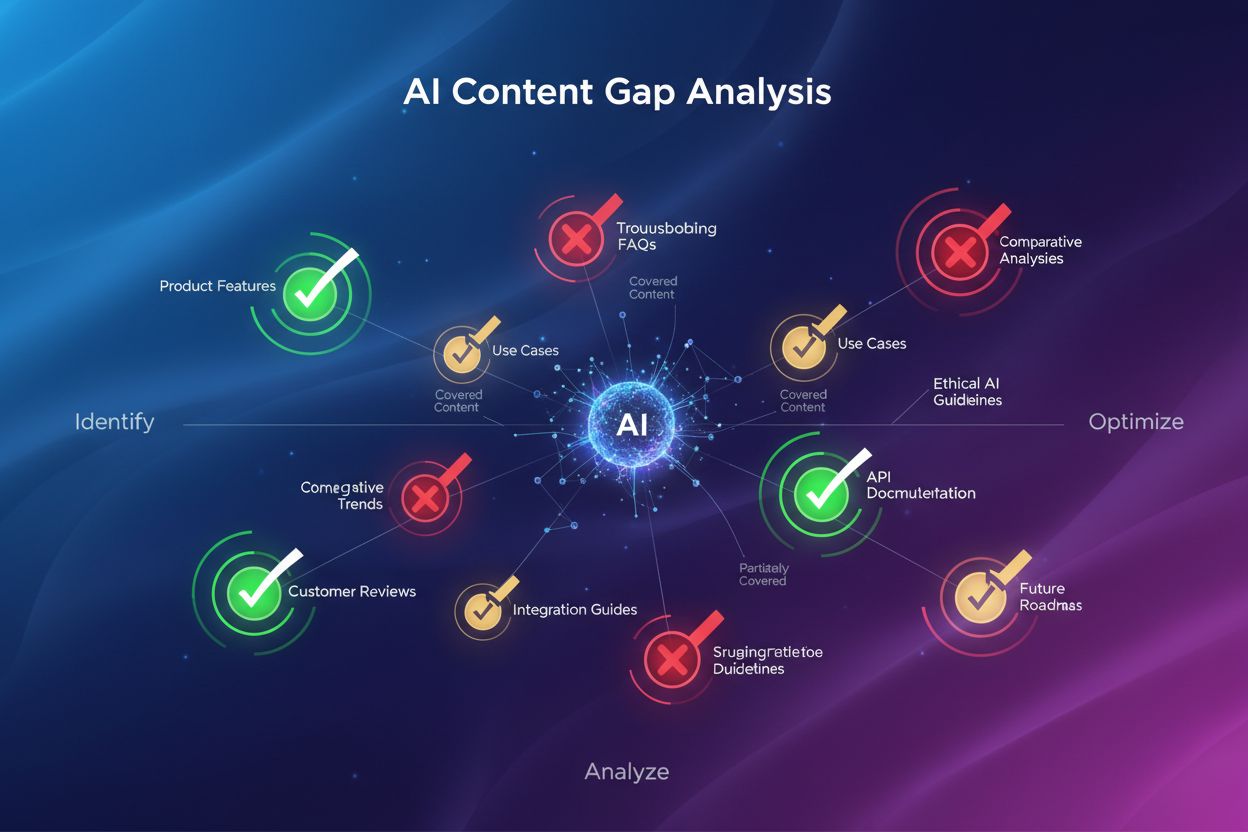
AI Content Gap Analysis
Learn what AI Content Gap Analysis is and how to identify content gaps to improve your visibility in AI Overviews, ChatGPT, and generative search engines. Disco...
9 min read
Gap analysis is the strategic process of identifying and evaluating missing content pieces, keywords, and topics that competitors rank for but your website does not, revealing opportunities to improve visibility in both traditional search and AI-driven platforms like ChatGPT, Perplexity, and Google AI Overviews.
Gap analysis is the strategic process of identifying and evaluating missing content pieces, keywords, and topics that competitors rank for but your website does not, revealing opportunities to improve visibility in both traditional search and AI-driven platforms like ChatGPT, Perplexity, and Google AI Overviews.
Gap analysis is the strategic process of identifying and evaluating the difference between your current content and the content your audience is searching for or that competitors are ranking for. It involves a systematic comparison of your website’s keyword coverage, topic depth, and content formats against both competitor offerings and actual audience search behavior. The primary goal is to uncover missing content opportunities—topics, keywords, and questions that your target audience is actively searching for but that your website does not adequately address. This methodology has become essential not only for traditional search engine optimization (SEO) but also for generative engine optimization (GEO), as brands must now ensure visibility across AI-powered search platforms like ChatGPT, Perplexity, Google AI Overviews, and Claude. By identifying these gaps, organizations can develop a more comprehensive content strategy that meets users at multiple touchpoints throughout their research journey.
The concept of gap analysis originated in business strategy and organizational development, where it was used to evaluate the difference between an organization’s current performance and its desired future state. In the context of digital marketing and SEO, gap analysis evolved as practitioners recognized that competitor keyword research could reveal untapped market opportunities. The methodology gained significant traction in the early 2010s as SEO professionals realized that analyzing competitor content strategies provided faster, more efficient pathways to identifying high-value keywords than traditional keyword research alone. According to industry research, over 78% of enterprises now use competitive intelligence tools to inform their content strategies, with gap analysis being one of the most frequently cited methodologies. The rise of AI-powered search has further elevated the importance of gap analysis, as brands must now track not only where they rank in Google but also where they appear—or fail to appear—in AI-generated responses. This dual-layer visibility challenge has made gap analysis an indispensable component of modern content strategy, particularly for organizations seeking to maintain brand authority across both traditional and generative search environments.
A comprehensive gap analysis typically examines three primary dimensions: keyword gaps, topic gaps, and format gaps. Keyword gaps represent specific search terms that competitors rank for but your site does not, often representing high-intent queries with clear commercial or informational value. Topic gaps are broader conceptual areas where competitors have published comprehensive content but your site lacks coverage, such as entire product categories, use cases, or industry verticals. Format gaps identify content types—such as videos, infographics, interactive tools, or detailed guides—that competitors use effectively but your site underutilizes. Additionally, modern gap analysis increasingly examines AI visibility gaps, which identify topics and prompts where competitors appear in LLM responses but your brand does not. Understanding these distinct gap types allows marketers to prioritize their content creation efforts strategically. For instance, a keyword gap might be quick to fill with a single blog post, while a topic gap might require a comprehensive pillar page and multiple supporting articles. Format gaps often require resource investment but can yield significant competitive advantages if your competitors haven’t yet adopted emerging content formats.
| Methodology | Primary Focus | Scope | Time Investment | Best For |
|---|---|---|---|---|
| Gap Analysis | Missing keywords and topics vs. competitors | Competitive comparison | 30 minutes to 2 hours | Identifying quick wins and strategic opportunities |
| Content Audit | Performance of existing content | Internal evaluation only | 4-8 hours | Improving underperforming pages and removing thin content |
| Keyword Research | Search volume and difficulty of keywords | Audience search behavior | 2-4 hours | Building comprehensive keyword lists from scratch |
| Competitor Analysis | Overall competitor strategy and positioning | Broad competitive landscape | 4-6 hours | Understanding market positioning and differentiation |
| SERP Analysis | Top-ranking content for specific keywords | Individual keyword level | 30 minutes per keyword | Understanding search intent and content requirements |
| AI Visibility Audit | Brand mentions in LLM responses | AI platform coverage | 1-2 hours | Tracking GEO visibility and citation opportunities |
Conducting an effective gap analysis requires a structured, multi-step approach that combines quantitative data analysis with qualitative assessment. The first step involves competitor identification, where you select 2-5 primary competitors—not necessarily your direct business competitors, but rather sites that rank for keywords you want to target. Using tools like Semrush, Ahrefs, or seoClarity, you extract the complete keyword rankings for each competitor domain. The second step is keyword comparison, where you identify keywords that competitors rank for in positions 1-20 but your site either doesn’t rank for or ranks significantly lower. This comparison reveals the “missing” keywords that represent immediate opportunities. The third step involves search intent analysis, where you examine the top-ranking pages for each gap keyword to understand what type of content Google and users expect. This might reveal that a keyword requires a comprehensive guide rather than a short blog post, or that it demands expert credentials and citations. The fourth step is audience validation, where you cross-reference gap keywords with actual audience search behavior using tools like Google Search Console, Google Trends, and social listening platforms to confirm that these gaps represent genuine audience demand rather than niche queries. Finally, the prioritization phase uses metrics like search volume, keyword difficulty, commercial intent, and alignment with your business goals to rank opportunities by potential impact and feasibility.
Gap analysis directly influences content strategy ROI by ensuring that content creation efforts target high-value opportunities rather than speculative topics. Research from seoClarity demonstrates that organizations identifying and closing content gaps can recover 100+ million visits annually when gaps represent hundreds of thousands of missing keywords. For example, in a real-world case study, CarMax identified over 500,000 keyword gaps against a single competitor, representing approximately 114 million lost traffic opportunities. By systematically addressing these gaps through targeted content creation, organizations can expect measurable improvements in organic traffic, search visibility, and ultimately, conversions. The strategic value extends beyond immediate traffic gains; closing content gaps strengthens topical authority by ensuring comprehensive coverage of subject areas, which signals expertise to both search engines and AI systems. Additionally, gap analysis informs content calendar prioritization, helping teams focus on topics that will have the greatest business impact rather than spreading resources across less valuable opportunities. For organizations operating in competitive industries, gap analysis often reveals that competitors have identified and capitalized on emerging search trends before they become obvious, allowing proactive organizations to leapfrog competition by addressing these gaps first.
The emergence of generative AI search has introduced a new dimension to gap analysis that extends beyond traditional keyword rankings. While traditional gap analysis focuses on Google SERP positions, GEO gap analysis examines where your brand appears—or fails to appear—in AI-generated responses across platforms like ChatGPT, Perplexity, Google AI Overviews, and Claude. This requires analyzing not just keywords but LLM prompts—the natural language questions users ask AI systems. Tools like Semrush’s AI Visibility Toolkit and seoClarity’s Clarity ArcAI now provide visibility into which prompts mention your competitors but not your brand, revealing critical GEO gaps. For instance, a healthcare provider might discover that competitors appear in AI responses to prompts about “managing diabetes” but their content doesn’t, despite having relevant expertise. Closing this gap requires not just creating content but ensuring it’s structured in ways that AI systems can easily extract and cite. This often means incorporating schema markup, clear definitions, expert credentials, and cited statistics that LLMs can reference. The intersection of traditional SEO gap analysis and GEO gap analysis creates a more comprehensive opportunity map, as some keywords may have low search volume in Google but high visibility in AI responses, or vice versa. Organizations must now conduct dual-layer gap analysis to ensure they’re visible across both search paradigms.
Effective gap analysis implementation follows a structured workflow that balances speed with thoroughness. The quick analysis approach (30 minutes) involves selecting one content vertical, identifying 2-3 key competitors, and using platform tools to extract missing keywords, then prioritizing the top 10-15 opportunities for immediate action. This approach works well for organizations with limited resources or those seeking quick wins. The comprehensive analysis approach (4-8 hours) involves deeper competitor research, audience validation through multiple data sources, and detailed prioritization frameworks that consider search volume, difficulty, intent, and business alignment. Most organizations benefit from a hybrid approach: conducting quick analyses monthly to identify emerging opportunities and performing comprehensive analyses quarterly to reassess the competitive landscape. A critical best practice is continuous monitoring, as competitors constantly publish new content and search trends evolve. Setting up automated alerts for competitor content publication and regularly tracking your own ranking progress against identified gaps ensures that your gap analysis remains actionable rather than becoming outdated. Additionally, successful organizations document their gap analysis findings in a centralized content roadmap that guides editorial calendars and resource allocation. This documentation also enables measurement of success, as you can track how many identified gaps you’ve closed and correlate that with traffic and ranking improvements.
Gap analysis is evolving rapidly in response to the dual emergence of generative AI search and increasingly sophisticated competitive intelligence tools. The future of gap analysis will likely involve AI-powered analysis automation, where machine learning algorithms automatically identify not just keyword gaps but also content quality gaps, sentiment gaps, and expertise gaps by analyzing competitor content at scale. We’re already seeing early versions of this with tools that use AI to analyze competitor content and suggest specific improvements needed to outrank them. Another emerging trend is intent-based gap analysis, which goes beyond keyword matching to understand the underlying user intent and satisfaction level with existing content, identifying gaps where current content fails to fully satisfy user needs. The integration of first-party data into gap analysis is also accelerating, as organizations combine search data with customer behavior data, support ticket analysis, and user feedback to identify gaps that represent genuine customer pain points rather than just search volume. Additionally, as AI search platforms mature and diversify, gap analysis will increasingly require multi-platform tracking, where organizations monitor their visibility across Google, Bing, ChatGPT, Perplexity, Claude, and emerging AI search platforms simultaneously. The concept of dynamic gap analysis is also emerging, where organizations continuously monitor and update their gap analysis rather than conducting it as a periodic exercise, enabling real-time content strategy adjustments. Finally, the integration of brand monitoring and citation tracking into gap analysis workflows will become standard, as organizations recognize that appearing in AI responses is as important as ranking in Google, making tools like AmICited essential components of modern gap analysis infrastructure.
While a content audit reviews all existing content on your site to assess performance and relevance, gap analysis specifically compares your content against competitors and audience search behavior to identify missing topics and keywords. A content audit evaluates what you have; gap analysis reveals what you're missing. Both are complementary strategies that work together to strengthen your overall content strategy and improve visibility across search engines and AI platforms.
Gap analysis identifies topics and keywords that appear in AI-generated responses but your content doesn't address. By creating content around these missing topics, you increase the likelihood that AI systems like ChatGPT, Claude, and Perplexity will cite your brand in their responses. This directly improves your visibility in generative engine optimization (GEO) and helps your content appear in AI overviews and answer summaries.
Key metrics include search volume for missing keywords, keyword difficulty scores, competitor ranking positions, estimated traffic potential, and commercial intent. Additionally, track how often competitors appear in AI responses for specific prompts and topics. These metrics help prioritize which gaps to fill first based on potential business impact and achievability.
Industry best practices recommend conducting gap analysis at least quarterly, though highly competitive industries may benefit from monthly reviews. As your competitors continuously publish new content and AI search evolves, regular gap analysis ensures you stay ahead of emerging opportunities. Many organizations perform quick 30-minute gap analyses monthly and comprehensive audits quarterly.
Yes, gap analysis is highly effective for local SEO. By analyzing local competitors' content and identifying location-specific keywords and topics they rank for, you can create localized content that captures local search traffic. This includes identifying missing local guides, service pages, and community-focused content that competitors have published but you haven't.
Leading tools include Semrush, Ahrefs, seoClarity, Moz, and Hike SEO, which offer dedicated gap analysis features. These platforms allow you to compare your domain against multiple competitors, identify missing keywords, and track ranking opportunities. For AI search gap analysis, tools like Semrush's AI Visibility Toolkit and seoClarity's Clarity ArcAI provide insights into LLM visibility gaps.
Prioritize gaps based on search volume, keyword difficulty, commercial intent, and alignment with your business goals. Focus first on high-volume, low-difficulty keywords that match your expertise. Additionally, prioritize topics that appear frequently in AI responses but lack your brand's perspective. Quick wins—topics you can rank for quickly—should be addressed before more competitive, long-term opportunities.
Start tracking how AI chatbots mention your brand across ChatGPT, Perplexity, and other platforms. Get actionable insights to improve your AI presence.
Learn what AI Content Gap Analysis is and how to identify content gaps to improve your visibility in AI Overviews, ChatGPT, and generative search engines. Disco...

Learn how to identify content gaps for AI search engines like ChatGPT and Perplexity. Discover methods to analyze LLM visibility, find missing topics, and optim...
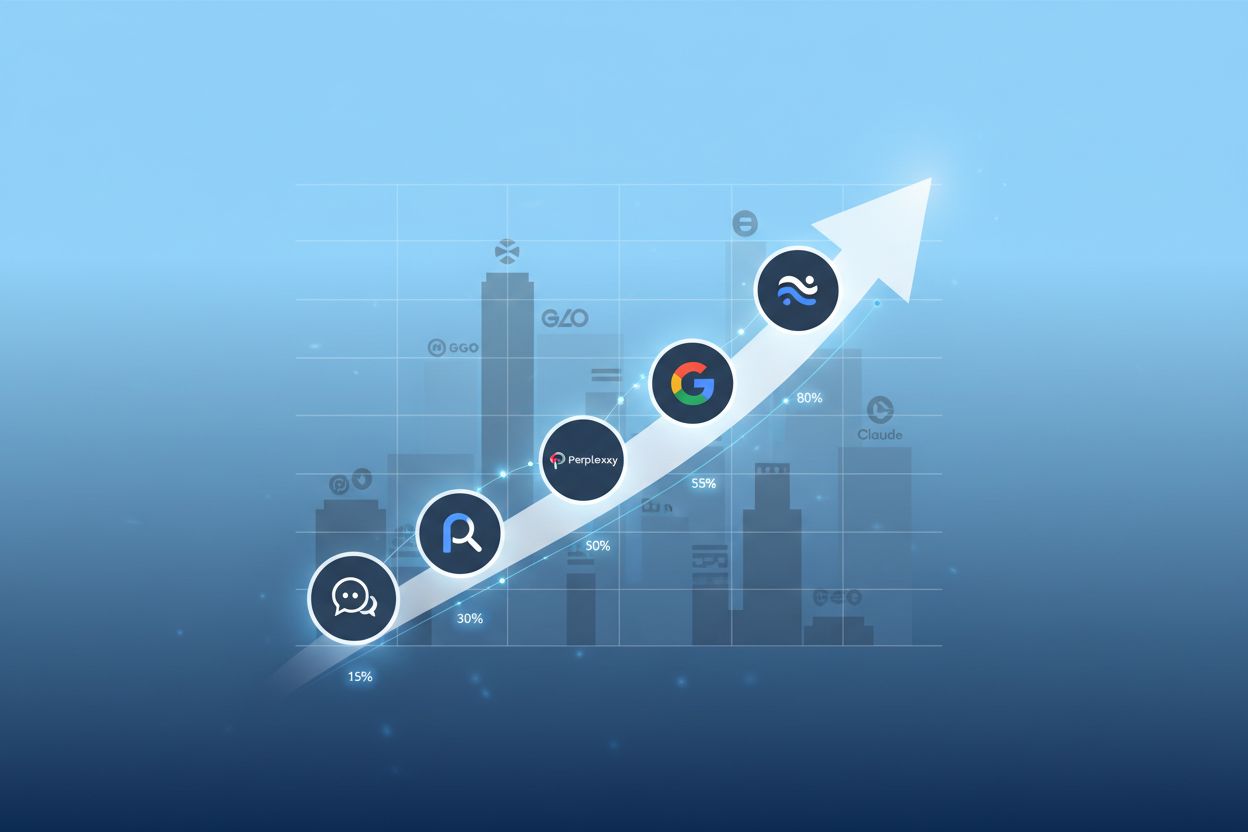
Learn what an AI positioning gap is, why it matters for your brand, and how to identify and close visibility gaps between your brand and competitors in AI-gener...
Cookie Consent
We use cookies to enhance your browsing experience and analyze our traffic. See our privacy policy.