



Gross Merchandise Value (GMV)
Gross Merchandise Value (GMV) is the total dollar value of goods sold through a platform or store over a given period, before deducting fees, returns, discounts, or costs. It's a top-line volume metric commonly used by marketplaces and multi-vendor platforms to describe overall sales scale, distinct from actual revenue or profit.
Definition of Gross Merchandise Value (GMV)
Gross Merchandise Value, commonly abbreviated GMV, is the total dollar value of all goods sold through a platform, marketplace, or store over a given period, calculated before deducting platform fees, commissions, returns, or discounts. It’s a volume metric, not a profitability metric — a marketplace reporting $50 million in annual GMV might keep only a small percentage of that as actual revenue, with the rest passing through to third-party sellers whose products were sold on the platform. GMV is most relevant for marketplaces and multi-vendor platforms, where a meaningful gap exists between the total value of transactions and the amount the platform itself actually earns.
How GMV Is Calculated
The basic formula is:
GMV = Total Units Sold × Average Sale Price (summed across all sellers or listings on the platform)
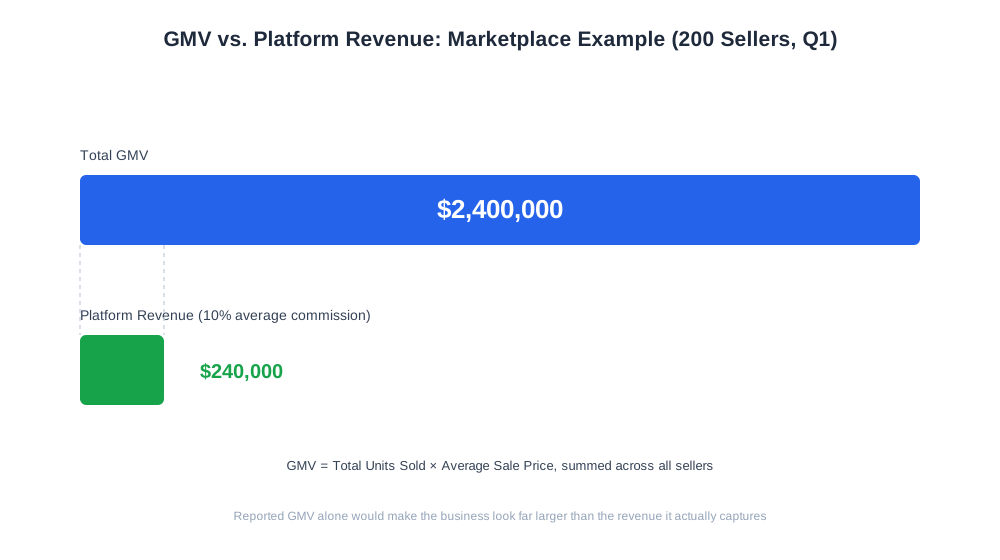
Worked example: an online marketplace hosts 200 independent sellers. Over a quarter, those sellers collectively sold goods worth $2.4 million at the listed sale price. The marketplace charges an average 10% commission on each sale.
GMV = $2.4 million Platform Revenue = $2.4 million × 10% = $240,000
The marketplace’s actual revenue is a fraction of its reported GMV, and its profit margin is calculated against that $240,000 revenue figure, not the full $2.4 million. Reporting GMV alone, without revenue and take-rate context, would make the business look far larger in dollar terms than the portion it actually captures.
Some businesses further distinguish gross GMV (all completed transactions, including ones later cancelled or refunded) from net GMV (adjusted downward for cancellations and returns), since gross GMV without that adjustment can overstate actual platform activity.

Ready to Monitor Your AI Visibility?
Track how AI chatbots mention your brand across ChatGPT, Perplexity, and other platforms.
Why GMV Matters for E-commerce Brands
GMV is primarily useful as a scale and growth-trajectory indicator, particularly for marketplaces still building out their seller base and transaction volume. Investors and partners often look at GMV growth as an early sign of platform traction, since it reflects overall demand flowing through the marketplace even before the platform has optimized its take rate or monetization strategy.
For single-brand direct-to-consumer stores — where there’s no third-party seller taking a cut — GMV and revenue are typically close to the same figure, which is why the metric is used far less in that context. It becomes genuinely useful once a business model involves multiple sellers, vendors, or a marketplace structure where separating total transaction value from the platform’s own take is necessary to understand the underlying economics.
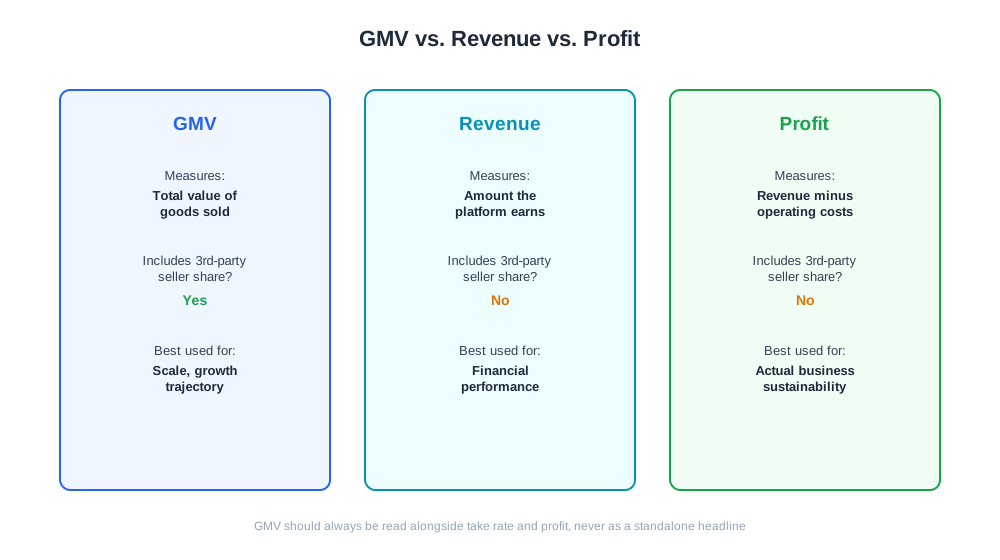
GMV vs. Revenue vs. Profit
| Metric | What It Measures | Includes Third-Party Seller Share? | Best Used For |
|---|---|---|---|
| GMV | Total value of goods sold | Yes | Platform scale, growth trajectory |
| Revenue | Amount the platform actually earns (commission, fees, or direct sales) | No | Financial performance, valuation |
| Profit | Revenue minus all operating costs | No | Actual business sustainability |
Stay Updated on AI Visibility Trends
Get the latest insights on AI mentions, brand monitoring, and optimization strategies.
GMV and AI-Driven Commerce
As AI shopping assistants and agentic commerce tools increasingly transact on behalf of shoppers across multiple marketplaces, GMV becomes a useful lens for understanding how much transaction volume is actually flowing through AI-mediated channels versus direct site visits. A marketplace seller whose products are frequently surfaced by an AI shopping assistant like Perplexity Shopping or Amazon Rufus may see GMV growth attributable specifically to that channel, distinct from organic or paid traffic — information worth tracking separately as AI-driven discovery becomes a larger share of overall commerce.
For sellers operating on marketplaces, understanding true profitability behind GMV figures matters more than the top-line number itself. AmICited’s eshop_get_kpis tool reports revenue, margin, and order-level performance for connected stores, giving marketplace sellers a way to see how their GMV contribution translates into actual take-home profit once fees, returns, and costs are accounted for — a more actionable view than GMV alone provides.
Best Practices for Using GMV
- Always report GMV alongside take rate and actual revenue, never as a standalone growth headline
- Distinguish gross GMV from net GMV (adjusted for cancellations and returns) when reporting to stakeholders
- Use GMV growth to evaluate platform scale and seller adoption, not as a proxy for profitability
- For marketplace sellers, track individual product or category GMV alongside margin to identify which listings are genuinely profitable, not just high-volume
- Avoid comparing GMV figures across businesses with very different take-rate structures without normalizing for that difference
Common GMV Mistakes
A common mistake is presenting GMV growth as if it were revenue growth, which can materially mislead stakeholders unfamiliar with the distinction — a marketplace can double its GMV while its actual revenue barely moves, if take rate stays flat or seller incentives eat into the platform’s cut. Another frequent issue is reporting gross GMV without adjusting for cancellations and returns, inflating the figure with transactions that never actually completed. Some marketplace operators chase GMV growth through heavy seller incentives or unsustainable discounting, growing the top-line number while actual platform profitability deteriorates — a pattern that can look like success on a GMV chart while masking real financial strain. It’s also common for smaller multi-vendor platforms to compare their GMV directly against much larger marketplaces without accounting for vastly different take-rate structures, drawing conclusions that don’t actually hold once the comparison is normalized. Finally, single-brand stores sometimes adopt GMV terminology from marketplace reporting without needing to, since for a direct-to-consumer business without third-party sellers, revenue is typically the more meaningful and already equivalent figure.