

Google Algorithm Update
Learn what Google Algorithm Updates are, how they work, and their impact on SEO. Understand core updates, spam updates, and ranking changes.
13 min read

Google’s Helpful Content Update is an algorithm system designed to prioritize people-first content in search results by identifying and demoting low-quality, unhelpful content created primarily for search engines rather than users. Launched in August 2022 and integrated into Google’s core ranking algorithm in March 2024, this update uses machine learning to reward original, expert-written content that satisfies user intent and provides genuine value.
Google's Helpful Content Update is an algorithm system designed to prioritize people-first content in search results by identifying and demoting low-quality, unhelpful content created primarily for search engines rather than users. Launched in August 2022 and integrated into Google's core ranking algorithm in March 2024, this update uses machine learning to reward original, expert-written content that satisfies user intent and provides genuine value.
The Helpful Content Update is Google’s algorithm system designed to prioritize people-first content in search results by identifying and demoting low-quality, unhelpful material created primarily for search engines rather than users. Launched in August 2022 and formally integrated into Google’s core ranking algorithm in March 2024, this update represents a fundamental shift in how Google evaluates and ranks web content. Rather than focusing on individual ranking factors like keywords or backlinks, the Helpful Content Update applies a site-wide classifier that assesses the overall quality and helpfulness of all content on a domain. Using advanced machine learning, Google’s systems automatically identify content that appears to have little value, low added-value, or is otherwise not particularly helpful to searchers. The update is not a manual action or spam penalty but rather a continuous, automated signal that runs alongside all other ranking factors to ensure users encounter genuinely useful, original content created by people with real expertise.
The Helpful Content Update emerged from Google’s long-standing commitment to rewarding quality content, but it represents a significant escalation in how aggressively Google addresses the problem of low-quality, search-engine-optimized material. The initial launch in August 2022 targeted English-language searches globally, with Google announcing plans to expand to other languages. This timing was strategic—by 2022, the proliferation of AI-generated content, content farms, and mass-produced articles had become increasingly problematic for search quality. According to industry reports, approximately 40% of unhelpful content was successfully removed from search results following the initial rollout. The update evolved significantly when Google announced in March 2024 that it would formally integrate the Helpful Content Update into its core ranking algorithm, making it a permanent, continuous signal rather than a periodic update. This integration resulted in even more dramatic improvements, with Google reporting a 45% reduction in unhelpful and low-quality content in search results—exceeding the initial 40% reduction estimate. The evolution from a standalone update to a core algorithm component demonstrates Google’s commitment to making content quality a fundamental ranking principle.
Understanding the distinction between people-first content and search-engine-first content is essential to grasping the Helpful Content Update’s impact. People-first content is created primarily to help and satisfy users, with SEO best practices applied secondarily. This content demonstrates first-hand expertise, provides original insights, maintains a clear site purpose, and leaves readers feeling they’ve learned enough to achieve their goals. Creators of people-first content focus on their existing or intended audience and ensure their material provides genuine value. Conversely, search-engine-first content is created primarily to attract organic traffic from search engines, with user satisfaction as a secondary concern. This includes mass-produced content on numerous topics, extensively automated articles, content that merely summarizes others’ work without adding value, and material covering trending topics without genuine expertise. Google’s research shows that content created primarily for search engine traffic is strongly correlated with content that searchers find unsatisfying. The Helpful Content Update’s core mission is to identify and demote search-engine-first content while rewarding people-first material. This represents a philosophical shift in SEO—rather than optimizing for algorithms, creators must optimize for genuine user satisfaction while applying SEO best practices as a supporting layer.
| Characteristic | Helpful Content (Rewarded) | Unhelpful Content (Demoted) |
|---|---|---|
| Primary Purpose | Created for people and existing audience | Created primarily for search engine traffic |
| Expertise | Demonstrates first-hand expertise and depth of knowledge | Written by authors without real expertise in the topic |
| Originality | Provides original insights, research, or analysis | Merely summarizes or replicates others’ content |
| Production Method | Carefully crafted by knowledgeable creators | Mass-produced or extensively automated |
| Topic Selection | Aligned with site focus and audience interests | Covers trending topics or unrelated niches for traffic |
| User Satisfaction | Leaves readers feeling satisfied and informed | Leaves readers needing to search elsewhere for better information |
| Content Scope | Comprehensive, substantial coverage of topics | Thin, surface-level, or incomplete information |
| Site Consistency | Maintains clear primary purpose and focus | Scattered content across many unrelated topics |
| Quality Signals | High E-E-A-T (Experience, Expertise, Authoritativeness, Trustworthiness) | Low E-E-A-T signals; lacks credibility markers |
| Update Impact | Improved rankings and visibility | Significant ranking declines across entire domain |
The Helpful Content Update operates through a sophisticated, continuous machine-learning classifier that runs automatically without manual intervention. Unlike traditional Google algorithm updates that roll out over specific periods, this system runs perpetually, monitoring both newly-launched sites and existing ones. Google’s classifier uses a site-wide signal approach, meaning it evaluates the overall quality and helpfulness of all content on a domain rather than assessing individual pages in isolation. When Google’s systems determine that a site has substantial amounts of unhelpful content, the entire domain may experience reduced visibility in search results, even if some individual pages are high-quality. This is a critical distinction from previous updates—a single high-quality article cannot overcome a site-wide classification of unhelpful content. However, the signal is weighted; sites with larger quantities of unhelpful content experience stronger negative effects than those with smaller amounts. Importantly, some people-first content on sites classified as having unhelpful content can still rank well if other signals identify that specific content as helpful and relevant to a query. The classifier is entirely automated and uses machine learning models trained to identify patterns distinguishing genuinely helpful content from material with little value or low added-value. This is not a manual action or spam action in Google’s traditional sense but rather a new ranking signal among many that Google evaluates.
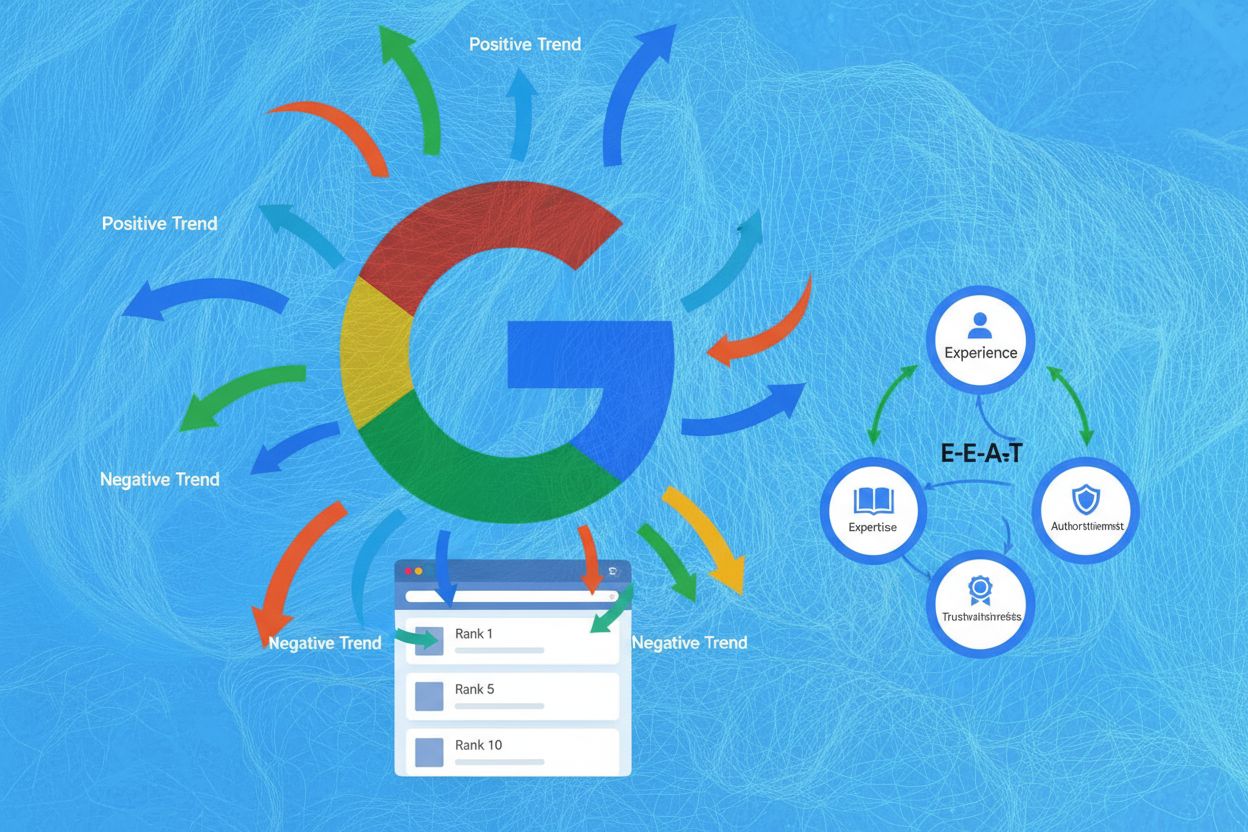
The E-E-A-T framework—standing for Experience, Expertise, Authoritativeness, and Trustworthiness—is fundamentally aligned with the Helpful Content Update’s objectives. Google added the “E” for Experience to its original E-A-T framework in December 2022, recognizing that content demonstrating first-hand experience with a topic is particularly valuable. The Helpful Content Update’s machine-learning systems are designed to identify content with strong E-E-A-T signals and reward it accordingly. Experience refers to the creator’s direct, hands-on knowledge of a topic—for example, having actually used a product, visited a location, or practiced a profession. Expertise involves demonstrating deep, specialized knowledge through comprehensive, well-researched content. Authoritativeness means the creator and site are recognized as credible sources within their field, often evidenced through bylines, author bios, and site reputation. Trustworthiness is perhaps the most critical element, encompassing transparency, accuracy, security, and user confidence. Google’s systems give even more weight to E-E-A-T signals for YMYL (Your Money or Your Life) topics—content that could significantly impact health, financial stability, safety, or societal well-being. For these sensitive topics, demonstrating strong E-E-A-T is not optional but essential for ranking success. Content creators can strengthen their E-E-A-T signals by clearly indicating authorship, providing author bios with relevant credentials, citing authoritative sources, maintaining accurate information, and building site reputation through consistent quality.
The Helpful Content Update has had dramatically different impacts across various content categories and industries. Educational content has experienced significant disruption, particularly sites that aggregated basic information without adding original insights. Many educational platforms saw ranking declines unless they could demonstrate genuine expertise and original teaching methodologies. Product review sites faced particular scrutiny, as Google’s systems became adept at identifying reviews written by people who had never actually used the products being reviewed. Sites that maintained authentic, hands-on review processes generally maintained or improved rankings. News and journalism sites with original reporting and editorial expertise generally performed well, while sites that merely republished wire service content or aggregated news without analysis experienced declines. Health and wellness content saw intense scrutiny due to YMYL considerations, with sites lacking medical credentials or peer-reviewed sources facing significant ranking challenges. Affiliate marketing sites that provided genuine value through comprehensive comparisons and honest assessments generally maintained visibility, while thin affiliate content created solely for commission opportunities was heavily demoted. Technology and software review sites that demonstrated hands-on testing and real-world usage generally thrived. E-commerce product descriptions that were original and detailed performed better than generic, templated descriptions. The common thread across all categories: sites that invested in genuine expertise, original content creation, and user satisfaction generally maintained or improved rankings, while those relying on automation, aggregation, and search-engine optimization tactics experienced significant declines.
Google’s guidance identifies specific warning signs that content may be classified as unhelpful by the algorithm. Mass production across many topics is a major red flag—if a site publishes extensive content on numerous unrelated subjects in hopes that some will rank well, this signals a search-engine-first approach. Extensive automation used to produce content on many topics is explicitly flagged as problematic, particularly when combined with lack of human review or expertise. Summarization without added value is another critical warning sign; if content merely repackages what others have said without providing original insights, analysis, or perspective, it fails to meet the helpful content standard. Trending topic coverage without expertise is particularly problematic—writing about trending topics simply because they’re popular, rather than because you have genuine expertise or an existing audience interested in that topic, signals misaligned priorities. Unfulfilled promises are flagged as unhelpful; content that promises to answer questions that actually have no answer (such as confirming unannounced product release dates) is explicitly identified as problematic. Keyword-driven word count obsession is another warning sign; writing to hit specific word counts because you’ve heard Google prefers certain lengths, rather than writing comprehensively to satisfy user intent, indicates search-engine-first thinking. Lack of clear site purpose is problematic; sites that scatter content across many unrelated topics without a coherent focus are more likely to be classified as having unhelpful content overall. Outdated content presented as fresh through date manipulation is flagged as deceptive. Excessive automation without human expertise in content creation, particularly when combined with other warning signs, strongly suggests unhelpful content.
Sites negatively impacted by the Helpful Content Update can recover, but recovery requires sustained, genuine effort rather than quick fixes. Content auditing is the essential first step—systematically reviewing all content to identify material that is thin, outdated, inaccurate, or created without genuine expertise. Strategic removal of unhelpful content is often more effective than attempting to improve it; Google explicitly states that removing unhelpful content could help rankings of remaining content. Expertise demonstration should be strengthened across the site through clear author bios, credentials, and bylines that establish credibility. Original content creation focused on providing unique value, insights, and perspectives should become the priority. User-centric approach means genuinely understanding your audience’s needs and creating content that satisfies those needs rather than targeting keywords. E-E-A-T strengthening involves building site authority through consistent quality, accurate information, transparent sourcing, and security measures. Long-term commitment is essential; Google’s classifier runs continuously, and recovery may take months as the system determines that unhelpful content has not returned. Sites should focus on building sustainable, quality-focused content strategies rather than attempting to game the algorithm. Monitoring and measurement through Google Search Console, analytics, and ranking tracking helps identify which recovery efforts are most effective. The most successful recovery strategies involve fundamental shifts in content strategy—moving from volume-based, keyword-driven approaches to quality-focused, expertise-driven content creation.
The Helpful Content Update has profound implications for Generative Engine Optimization (GEO) and how content appears in AI-powered search results from platforms like Perplexity, ChatGPT, Google AI Overviews, and Claude. As AI systems increasingly power search experiences, they rely heavily on identifying and citing authoritative, helpful sources. Content that ranks well under the Helpful Content Update—original, expert-written, people-first material—is more likely to be cited by AI systems as authoritative sources. Conversely, thin, auto-generated, or low-quality content is less likely to be selected for AI citations. This creates a powerful alignment: the same content strategies that succeed in traditional Google Search also tend to succeed in AI-powered search results. AmICited, an AI prompts monitoring platform, helps content creators and brands track where their content appears in AI responses across multiple platforms. Understanding how your content performs in both traditional search and AI-powered search is increasingly critical. The Helpful Content Update essentially establishes quality standards that benefit both traditional search and AI search—content that genuinely helps people is more likely to be discovered, ranked, and cited across all search modalities. This represents a fundamental shift in content strategy; creators must now optimize for genuine helpfulness rather than algorithmic manipulation, knowing that this approach benefits visibility across all search channels.
The Helpful Content Update represents not a temporary initiative but a fundamental, permanent shift in how Google evaluates and ranks content. Google has indicated that rather than announcing future “helpful content updates,” the system will continue to evolve as a core component of its ranking algorithm, with continuous refinements and improvements. AI-generated content will likely remain a focus area, with Google’s systems becoming increasingly sophisticated at distinguishing between AI content created with human expertise and oversight versus AI content created primarily for search traffic. Personalization and context may play increasing roles, with Google potentially refining how it evaluates helpfulness based on user intent, expertise level, and context. Real-time evaluation will likely become more sophisticated, with Google’s systems potentially evaluating content quality signals more dynamically. International expansion will continue, with the helpful content classifier expanding to more languages and regions. Integration with other signals will deepen, with E-E-A-T, page experience, and other quality signals becoming increasingly intertwined with the helpful content classifier. Creator education will likely expand, with Google providing more detailed guidance on creating people-first content. The strategic implication for content creators is clear: the era of search-engine-first content optimization is ending. The future belongs to creators who genuinely understand their audiences, develop real expertise, create original content, and prioritize user satisfaction above all else. Organizations that make this strategic shift now will be well-positioned for success as Google’s algorithms continue to evolve toward rewarding authentic, helpful, people-first content.
The Helpful Content Update is Google's algorithm system designed to reward content created primarily for people rather than search engines. It was first launched in August 2022 as a site-wide signal and was formally integrated into Google's core ranking algorithm in March 2024. This update uses machine learning to identify and demote unhelpful, low-quality content while promoting original, expert-written material that provides genuine value to users.
Unlike traditional algorithm updates that evaluate individual pages, the Helpful Content Update applies a site-wide classifier that assesses the overall quality and helpfulness of all content on a domain. If Google determines a site has substantial amounts of unhelpful content, the entire site may be negatively impacted, including high-quality pages. This is an automated, continuous process using machine learning rather than a manual action or spam penalty.
People-first content is material created primarily to help and satisfy users rather than manipulate search engine rankings. According to Google, people-first content demonstrates first-hand expertise, provides original value, has a clear purpose, and leaves readers feeling satisfied they've learned enough to achieve their goals. It contrasts with search-engine-first content created mainly to attract organic traffic through keyword targeting and automation.
E-E-A-T stands for Experience, Expertise, Authoritativeness, and Trustworthiness—a framework Google uses to evaluate content quality. The Helpful Content Update strongly aligns with E-E-A-T principles, rewarding content that demonstrates these qualities. Google's systems give extra weight to E-E-A-T signals for YMYL (Your Money or Your Life) topics that could impact health, finances, or safety. Content with strong E-E-A-T is more likely to rank well under this update.
The update targets content that is mass-produced, auto-generated, or created with extensive automation; content that merely summarizes others' work without adding value; articles covering trending topics without genuine expertise; content promising answers to questions with no real answer; and pages created primarily to attract search traffic rather than serve an existing audience. Sites with substantial amounts of such content experience broader ranking declines.
Google's classifier runs continuously and may apply the signal to identified sites over a period of months. Recovery depends on removing unhelpful content and maintaining people-first content long-term. As Google's systems determine that unhelpful content has not returned, the classification will no longer apply. However, recovery is not immediate and requires sustained effort to demonstrate a genuine shift toward quality, user-focused content.
In March 2024, Google formally integrated the Helpful Content Update into its core ranking algorithm, making it a permanent, continuous ranking signal rather than a periodic update. This integration resulted in a 45% reduction in unhelpful and low-quality content in search results. The update now runs alongside all other ranking factors, meaning Google continuously evaluates content quality and adjusts rankings in real-time based on helpfulness signals.
Creators should focus on demonstrating first-hand expertise, creating original content that adds genuine value, maintaining a clear site purpose, and ensuring readers feel satisfied after consuming their content. They should avoid extensive automation, keyword stuffing, and creating content on unfamiliar topics solely for traffic. Following Google's E-E-A-T guidelines, being transparent about authorship, and regularly auditing content for quality are essential practices for success.
Start tracking how AI chatbots mention your brand across ChatGPT, Perplexity, and other platforms. Get actionable insights to improve your AI presence.
Learn what Google Algorithm Updates are, how they work, and their impact on SEO. Understand core updates, spam updates, and ranking changes.
Learn what a Google Core Update is, how it affects website rankings, the difference between core and algorithm updates, and strategies for recovery and long-ter...
Discover how algorithm updates impact AI search visibility across ChatGPT, Perplexity, Google AI Overviews, and Claude. Learn ranking factors and optimization s...
Cookie Consent
We use cookies to enhance your browsing experience and analyze our traffic. See our privacy policy.