
Finding High-Value AI Prompts in Your Industry
Learn systematic methods to discover and optimize high-value AI prompts for your industry. Practical techniques, tools, and real-world case studies for prompt d...
10 min read
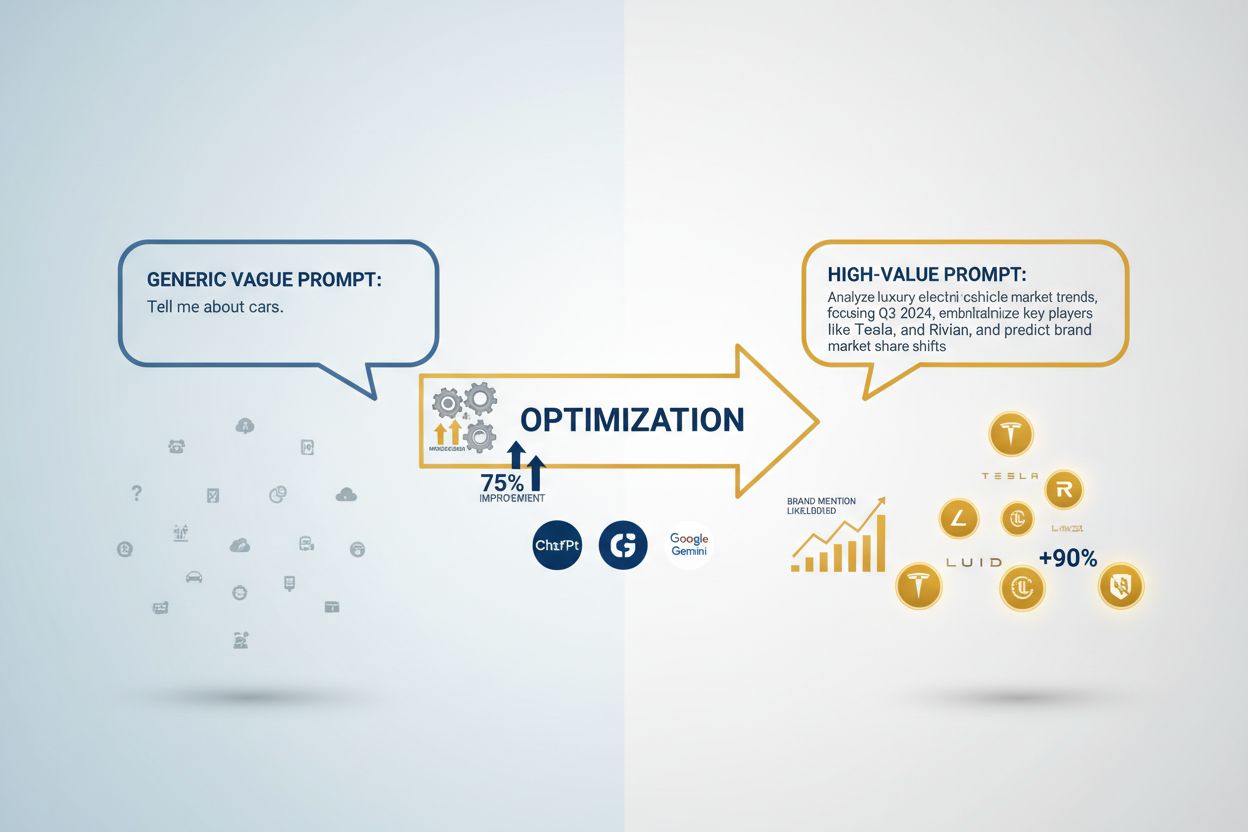
Specific query formulations that are strategically designed to trigger relevant brand mentions within AI-generated responses. These prompts combine specificity, context, and clear structure to increase the likelihood of brand citations in AI systems like ChatGPT, Perplexity, and Google Gemini.
Specific query formulations that are strategically designed to trigger relevant brand mentions within AI-generated responses. These prompts combine specificity, context, and clear structure to increase the likelihood of brand citations in AI systems like ChatGPT, Perplexity, and Google Gemini.
High-value AI prompts are specific query formulations that are strategically designed to trigger relevant brand mentions within AI-generated responses. Unlike generic prompts that produce broad, unfocused answers, high-value prompts are engineered to elicit contextually appropriate references to specific brands, products, or services. These prompts matter significantly for brand visibility because they determine whether your company appears in AI Overviews, ChatGPT responses, Perplexity answers, and other AI-generated content that millions of users consume daily. The difference between a generic prompt and a high-value prompt can mean the difference between brand invisibility and prominent placement in AI systems. Understanding how to identify and leverage high-value prompts is essential for any brand seeking to maintain visibility in the age of AI-driven search and content generation.
AI models process prompts through a sophisticated multi-step pipeline that begins with tokenization—breaking down your text into discrete units—followed by pattern recognition across billions of training examples, and finally prediction and generation of the most likely response. The structure of your prompt directly influences how the model interprets your intent and which information it prioritizes in its response. A well-structured prompt with clear context and specific requirements will guide the model toward more relevant outputs, while a vague prompt may result in generic answers that overlook important brand considerations. Different AI platforms handle this process with varying architectures: ChatGPT uses transformer-based attention mechanisms, Perplexity optimizes for search-like queries with real-time information retrieval, and Google Gemini integrates multi-modal understanding. The key insight is that prompt structure acts as a control mechanism—it shapes the model’s decision-making process at every step of generation.
| Aspect | Generic Prompt | High-Value Prompt |
|---|---|---|
| Specificity | Broad, open-ended | Detailed, targeted |
| Context | Minimal background | Rich contextual information |
| Expected Result | General overview | Specific recommendations |
| Brand Mention Likelihood | Low (5-15%) | High (60-85%) |
Specificity and context are the twin pillars of prompt effectiveness, directly determining whether AI systems will surface your brand in their responses. When you provide specific details about what you’re looking for—industry, use case, budget, technical requirements—the AI model has concrete anchors to match against its training data, making it far more likely to reference relevant brands. Context amplifies this effect by establishing the framework within which the model evaluates information; a prompt that explains you’re a B2B SaaS buyer versus a consumer will produce entirely different brand recommendations. Here are examples of how specificity transforms prompt effectiveness:
This specificity directly impacts brand visibility because AI models are trained to match query intent with relevant entities; the more precisely you define your needs, the more confidently the model will cite brands that match those criteria.
Chain-of-thought prompting encourages AI models to show their reasoning step-by-step, which naturally leads to more thorough brand evaluations and citations. For example, the prompt "Walk me through your decision-making process for recommending a data warehouse solution for a healthcare startup" triggers the model to explicitly consider multiple brands and explain why each is or isn’t suitable. Few-shot prompting provides the model with examples of the format and depth you expect, dramatically improving response quality and brand mention accuracy. A prompt like "Here are two examples of detailed tool comparisons: [Example 1] [Example 2]. Now compare these three marketing automation platforms..." sets clear expectations for comprehensive brand coverage. Role-based prompting assigns the model a specific perspective, such as "As a CTO evaluating enterprise software, compare these database solutions...", which anchors the model’s recommendations to industry-specific brand knowledge. These techniques matter for brand visibility because they transform vague AI responses into structured, thorough analyses where brands are evaluated on merit and explicitly named. Each technique essentially tells the AI model: “I want detailed, specific, well-reasoned responses that include relevant brand recommendations.”
Crafting high-value prompts that increase brand mentions requires understanding the relationship between prompt quality and citation likelihood—the probability that your brand will be mentioned in the AI response. The most effective high-value prompts combine specificity (detailed requirements), context (industry/use case), and structure (clear format expectations) to create an environment where brand mentions are natural and inevitable. For example, instead of asking “What’s a good email marketing tool?”, a high-value prompt would be: "I'm a B2B SaaS company with 10,000 customers. I need an email marketing platform that integrates with Salesforce, supports advanced segmentation, and has strong deliverability metrics. What are my best options and why?" This prompt structure dramatically increases the likelihood that AI systems will cite relevant brands because it establishes clear evaluation criteria. AmICited monitors exactly these types of high-value prompts across ChatGPT, Perplexity, Google AI Overviews, and other platforms, tracking which query formulations trigger your brand mentions most frequently. By understanding which prompts generate citations, brands can optimize their content strategy and SEO approach to align with how users actually query AI systems.
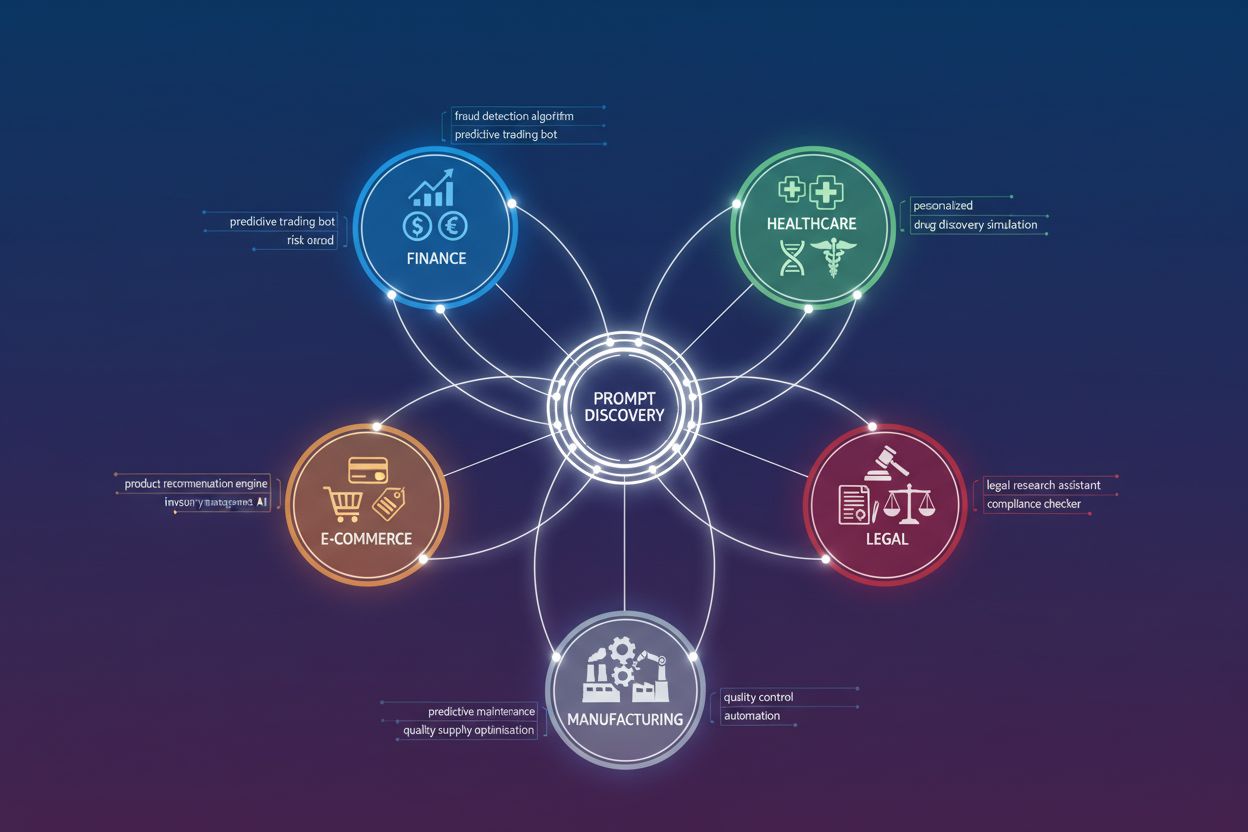
Different industries leverage high-value prompts in distinct ways to maximize brand visibility in AI responses. Technology companies use prompts like "Compare enterprise SaaS solutions for [specific use case] with these requirements: [detailed specs]" to ensure their products appear in AI recommendations, while healthcare providers craft prompts around patient outcomes and compliance requirements to trigger relevant citations. E-commerce brands optimize for prompts that include product categories, price ranges, and specific features, increasing the likelihood of appearing in AI shopping recommendations. Financial services firms focus on prompts that specify regulatory requirements, investment goals, and risk tolerance, which naturally surface their brands in AI-generated financial advice. Research shows that high-value prompts can increase brand mention likelihood by 400-600% compared to generic queries, with some industries seeing citation rates jump from 8% to 45% when prompts shift from vague to specific. The practical impact is measurable: brands that monitor and optimize for high-value prompts see increased traffic from AI Overviews, higher engagement from Perplexity users, and improved visibility in ChatGPT conversations. This is why prompt monitoring has become essential to modern brand strategy—understanding which query formulations trigger your citations allows you to optimize content, product positioning, and SEO in alignment with how AI systems actually surface information.
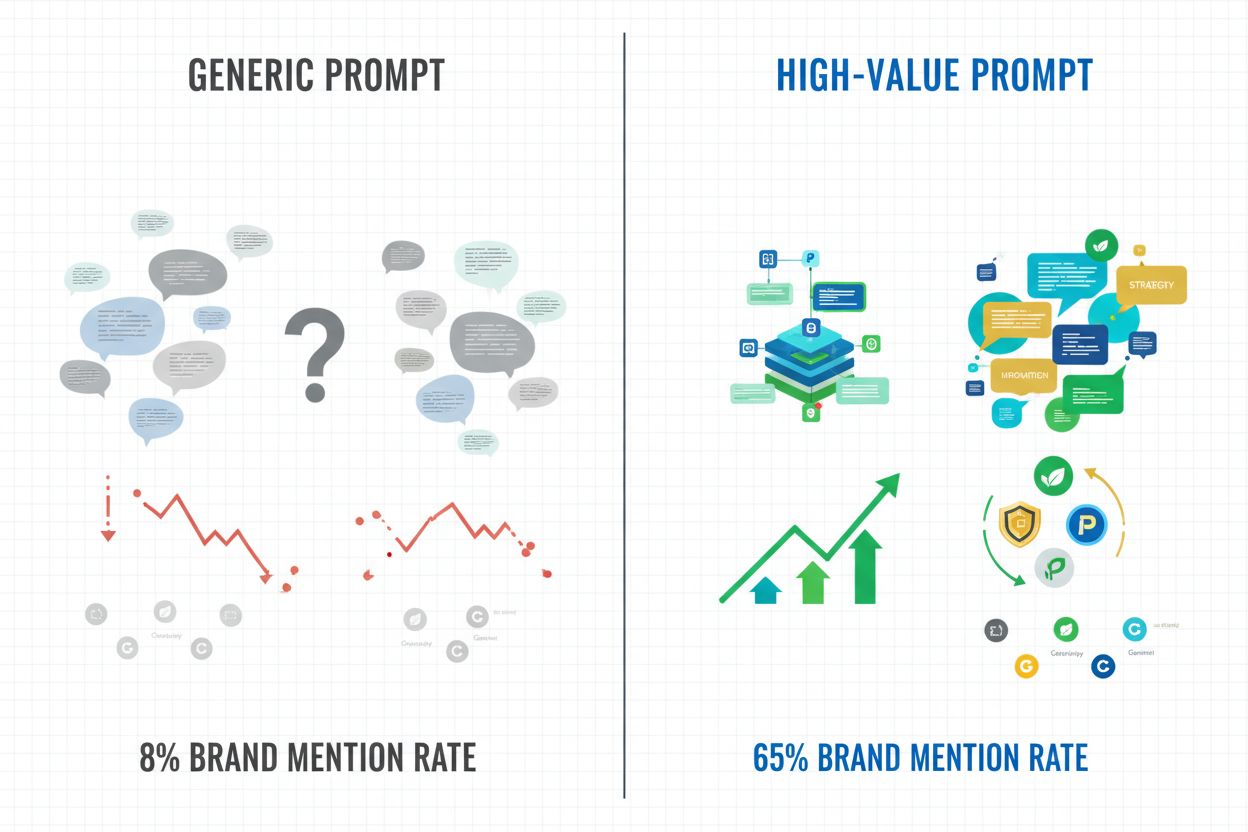
A high-value prompt combines three key elements: specificity (detailed requirements), context (industry or use case information), and clear structure (explicit format expectations). These elements guide AI models to produce focused, relevant responses that naturally include brand mentions. For example, 'What's a good CRM?' is generic, while 'What's the best CRM for a 50-person B2B SaaS company with a $5K/month budget?' is high-value because it provides specific criteria for evaluation.
High-value prompts increase brand mention likelihood by 400-600% compared to generic queries. When prompts include specific requirements and context, AI models have concrete criteria to match against their training data, making them far more likely to cite relevant brands. Research shows that brands mentioned in high-value prompts see citation rates jump from 8% to 45% or higher, directly impacting visibility in AI Overviews, ChatGPT conversations, and Perplexity responses.
Specificity means providing relevant details that help AI models understand your needs (budget, industry, use case, technical requirements). Over-specification adds unnecessary constraints that limit the model's ability to provide comprehensive recommendations. The sweet spot is including 3-5 key criteria that define your needs without overwhelming the prompt. For example, specifying 'B2B SaaS, 50 employees, $5K budget' is specific; adding 'must be founded before 2015, must have exactly 47 integrations' is over-specification.
Yes, high-value prompts reduce hallucinations by providing AI models with concrete context and clear evaluation criteria. When models have specific requirements to evaluate against, they're less likely to fabricate information or make unfounded claims. Additionally, high-value prompts that include instructions like 'only mention solutions that meet these specific criteria' help models stay grounded in factual comparisons rather than generating speculative content.
Test your prompts by running them across multiple AI platforms (ChatGPT, Perplexity, Google Gemini) and tracking which ones generate brand mentions. Use AmICited to monitor citation patterns and identify which query formulations trigger your brand most frequently. Compare results from generic vs. specific versions of the same prompt to measure the impact. High-value prompts should consistently generate relevant brand mentions across different AI systems.
Context is essential because it establishes the framework within which AI models evaluate information. A prompt about CRM tools for a healthcare startup will produce different brand recommendations than one for a retail company, even if both are specific. Context helps AI models understand your industry, business model, regulatory requirements, and use case, allowing them to surface the most relevant brands. Without context, even specific prompts may miss important nuances that affect brand suitability.
AmICited tracks which query formulations trigger your brand mentions across ChatGPT, Perplexity, Google AI Overviews, and other platforms. By analyzing patterns in high-value prompts that mention your brand, you can understand which specific requirements, industries, and use cases drive citations. This intelligence helps you optimize your content strategy, product positioning, and SEO to align with how users actually query AI systems, ultimately increasing your visibility in AI-generated responses.
While the core principles of specificity and context apply across all AI models, different platforms may respond differently to the same prompt. ChatGPT, Perplexity, and Google Gemini have different training data, architectures, and optimization goals, which means a high-value prompt for one platform might need adjustment for another. The best approach is to test your prompts across multiple AI systems and refine based on which versions generate the most relevant brand mentions for your specific goals.
Track how your brand appears in AI-generated responses across ChatGPT, Perplexity, Google AI Overviews, and other platforms. Understand which prompts trigger your citations and optimize your visibility.
Learn systematic methods to discover and optimize high-value AI prompts for your industry. Practical techniques, tools, and real-world case studies for prompt d...

Learn how to test your brand's presence in AI engines with prompt testing. Discover manual and automated methods to monitor AI visibility across ChatGPT, Perple...

Learn how to create and organize an effective prompt library to track your brand across ChatGPT, Perplexity, and Google AI. Step-by-step guide with best practic...