
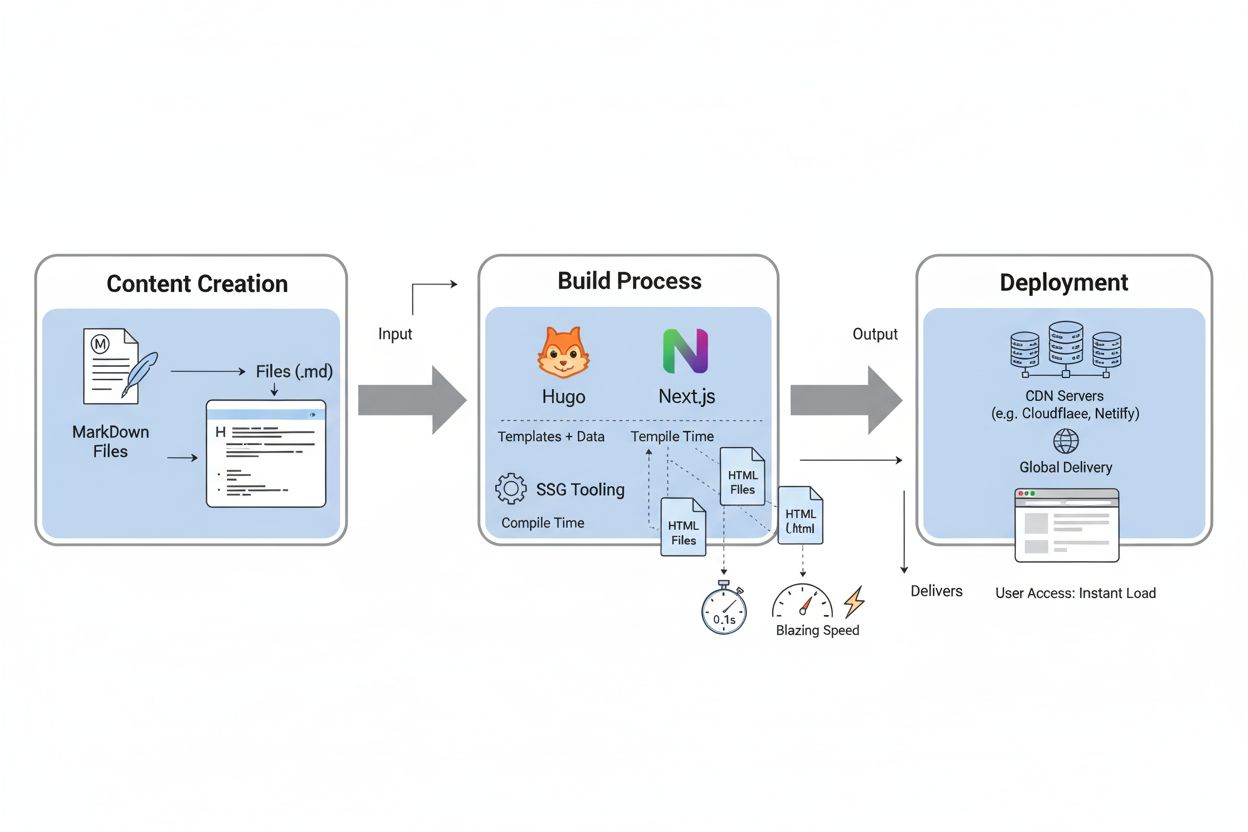
Static Site Generation (SSG)
Learn what Static Site Generation (SSG) is, how it works, and why it's essential for fast, secure websites. Explore SSG tools, benefits, and best practices for ...
10 min read
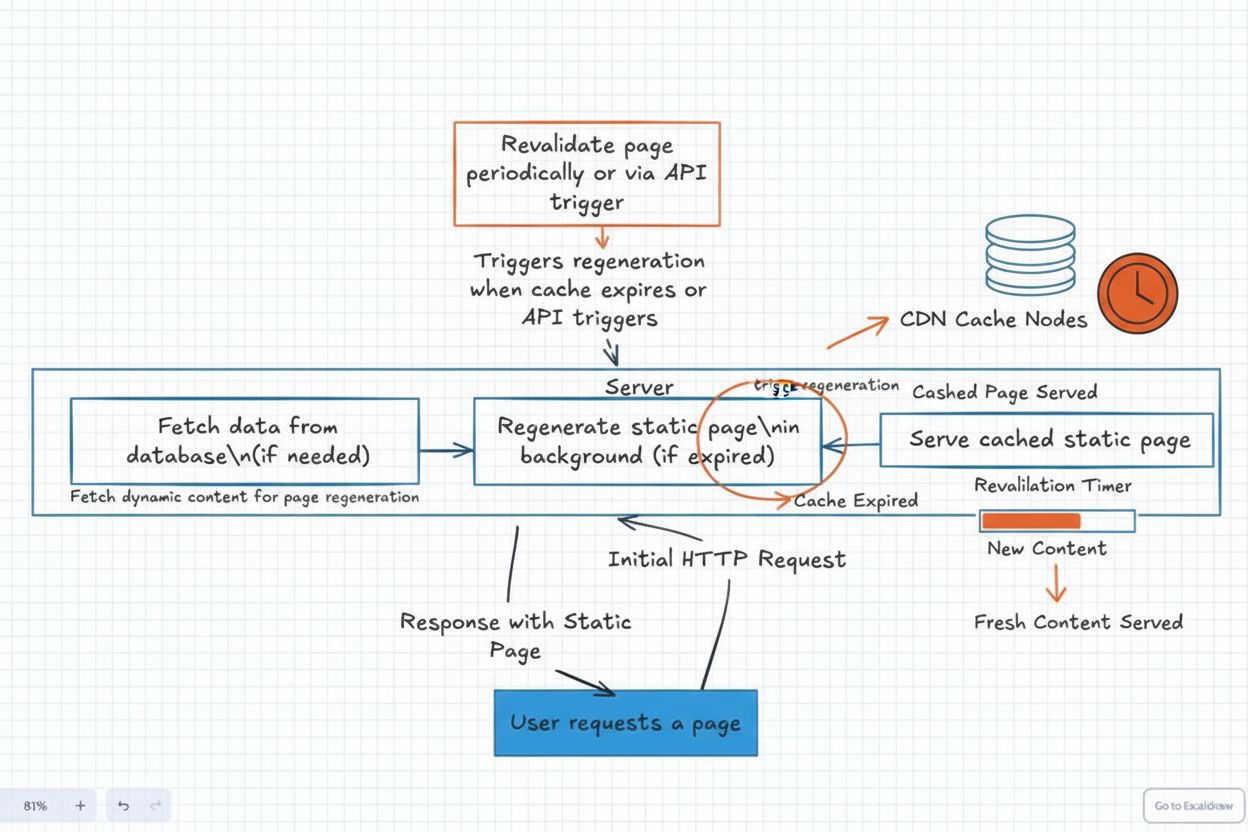
Incremental Static Regeneration (ISR) is a web development technique that allows static pages to be updated on-demand or at specified intervals without rebuilding the entire application. ISR combines the performance benefits of static site generation with the flexibility of dynamic content updates, enabling pages to be regenerated in the background while serving cached versions to users.
Incremental Static Regeneration (ISR) is a web development technique that allows static pages to be updated on-demand or at specified intervals without rebuilding the entire application. ISR combines the performance benefits of static site generation with the flexibility of dynamic content updates, enabling pages to be regenerated in the background while serving cached versions to users.
Incremental Static Regeneration (ISR) is a modern web development technique that enables developers to update static pages after they have been generated, without requiring a complete rebuild of the entire application. ISR represents a paradigm shift in how web applications balance performance with content freshness, allowing pages to be regenerated incrementally in the background while serving cached versions to users. This approach combines the lightning-fast load times of static site generation with the flexibility of dynamic content updates, making it particularly valuable for large-scale applications with frequently changing content. ISR was pioneered by Next.js and has since become a foundational concept in modern web development, adopted by frameworks like SvelteKit, Nuxt, Astro, and Gatsby. The technique addresses a critical challenge in web development: how to maintain both exceptional performance and content currency simultaneously, a problem that traditional approaches like pure static generation or server-side rendering struggle to solve effectively.
The concept of Incremental Static Regeneration emerged from the limitations of earlier web rendering strategies. Before ISR’s introduction in Next.js 9.5 (released in 2020), developers faced a binary choice: either use Static Site Generation (SSG) for blazing-fast performance but accept stale content until the next full rebuild, or use Server-Side Rendering (SSR) for fresh content at the cost of slower response times and higher server load. This dichotomy became increasingly problematic as the web evolved toward more dynamic, content-rich applications. The rise of headless CMS platforms like Sanity, Contentful, and Strapi created a new demand for solutions that could serve static content from a Content Delivery Network (CDN) while still reflecting real-time updates from backend systems. ISR emerged as the elegant solution to this problem, introducing a third rendering paradigm that leverages the strengths of both approaches. According to industry surveys, approximately 68% of enterprises now use some form of static generation strategy, with ISR adoption growing at 45% year-over-year among high-traffic applications. The technique has become particularly critical in the JAMstack ecosystem, where the separation of frontend and backend systems demands intelligent caching and regeneration strategies.
ISR operates through a sophisticated cycle of caching, revalidation, and background regeneration. When a page is marked for ISR, it is initially generated during the build process and served as a static file from a CDN, providing exceptional performance with response times typically under 100 milliseconds. Developers specify a revalidation period (e.g., 60 seconds) for each page, which determines how long the cached version remains valid. Once this period expires, the next user request to that page triggers a background regeneration process. Critically, during this regeneration, the stale cached version continues to be served to users, ensuring they never experience delays waiting for fresh content. The regeneration process fetches updated data from the application’s data sources or CMS, re-renders the page, and updates the cache. Upon successful completion, subsequent requests receive the newly generated page. This architecture provides what industry experts call “stale-while-revalidate” behavior, a caching strategy that prioritizes user experience by always serving content immediately while ensuring freshness through background updates. The Vercel platform, which pioneered ISR infrastructure, implements global cache distribution across multiple regions, achieving cache purge times of approximately 300 milliseconds worldwide, ensuring that updated content propagates globally with minimal latency.
ISR supports two distinct revalidation strategies, each suited to different use cases and content update patterns. Time-based revalidation uses a fixed interval specified in the revalidate property, automatically regenerating pages at regular intervals regardless of whether content has actually changed. This approach is ideal for content that changes predictably, such as blog posts published on a schedule or product catalogs updated daily. For example, an e-commerce site might set a 3600-second (1-hour) revalidation period for product pages, ensuring prices and inventory reflect updates within an hour while minimizing unnecessary regenerations. On-demand revalidation, by contrast, allows developers to trigger page regeneration programmatically through API calls, webhooks, or event handlers. This strategy is particularly powerful for unpredictable content changes, such as when a customer updates their profile, a product is restocked, or breaking news is published. With on-demand revalidation, developers can call revalidatePath() or revalidateTag() functions to immediately invalidate specific pages or groups of pages, ensuring users see updates within seconds rather than waiting for a fixed interval. Research indicates that applications using on-demand revalidation experience 35% fewer unnecessary regenerations compared to time-based approaches, resulting in significant cost savings and reduced server load. Many modern applications combine both strategies, using time-based revalidation as a safety net while leveraging on-demand revalidation for critical updates.
| Feature | ISR | Static Site Generation (SSG) | Server-Side Rendering (SSR) | Client-Side Rendering (CSR) |
|---|---|---|---|---|
| Initial Load Time | <100ms (cached) | <100ms | 500-2000ms | 1000-3000ms |
| Content Freshness | Minutes to hours | Requires rebuild | Real-time | Real-time |
| Server Load | Minimal | None | High | Minimal |
| SEO Performance | Excellent | Excellent | Good | Poor |
| Build Time | Fast | Slow (scales with pages) | N/A | N/A |
| Scalability | Excellent | Limited | Limited | Excellent |
| Cache Invalidation | Automatic/On-demand | Manual rebuild | N/A | N/A |
| CDN Compatibility | Excellent | Excellent | Limited | Excellent |
| Cost Efficiency | High | High | Medium | High |
| Best For | Dynamic content + performance | Static content | Real-time data | Interactive apps |
Implementing ISR requires understanding the technical architecture that enables this capability. In Next.js, ISR is configured through the getStaticProps function, where developers specify the revalidate property in seconds. When a page is requested after the revalidation period has expired, Next.js detects this and initiates a background regeneration. The key architectural advantage is that this regeneration happens asynchronously, meaning users never wait for the process to complete. The application maintains a cache layer that stores both the current page version and metadata about when it was generated and when it should be revalidated. This cache can be stored in various locations: on the server’s filesystem, in distributed cache systems like Redis, or in durable storage solutions like AWS S3 or Vercel’s Edge Config. For applications deployed on Vercel, ISR leverages the platform’s global CDN infrastructure, which includes edge nodes in over 30 regions worldwide. When a page is regenerated, the updated version is automatically distributed to all edge locations, ensuring that users in any geographic region receive fresh content within milliseconds. The platform implements cache shielding, a technique where a single origin request serves multiple cache misses, preventing the “thundering herd” problem where simultaneous requests to an expired page all trigger regenerations. This architecture reduces backend load by up to 70% compared to traditional server-side rendering approaches.
The performance advantages of ISR are substantial and well-documented across industry benchmarks. Static pages served from a CDN typically achieve Time to First Byte (TTFB) of 50-150 milliseconds, compared to 500-2000 milliseconds for server-rendered pages. This translates directly to improved user experience: research from Google indicates that every 100-millisecond delay in page load time results in a 1% decrease in conversion rates for e-commerce sites. For a site generating $1 million in annual revenue, this could represent $10,000 in lost sales. ISR enables sites to achieve these performance levels while maintaining content freshness, creating a win-win scenario. Large-scale implementations demonstrate the impact: Vercel’s case studies show that companies migrating to ISR experience average improvements of 45% in page load times and 60% reductions in server costs. The technique is particularly effective for content-heavy applications like news sites, blogs, and e-commerce platforms. For example, a news organization using ISR with a 60-second revalidation period can serve breaking news with near-real-time freshness while maintaining static page performance. The Core Web Vitals metrics—Largest Contentful Paint (LCP), First Input Delay (FID), and Cumulative Layout Shift (CLS)—all improve significantly with ISR, as static pages inherently provide more predictable and optimized rendering performance.
For platforms like AmICited that monitor brand and domain appearances in AI-generated responses, ISR plays a crucial role in content visibility and citation accuracy. When websites use ISR to maintain fresh, authoritative content, this content becomes more likely to be indexed and cited by AI systems like ChatGPT, Perplexity, Google AI Overviews, and Claude. AI models rely on up-to-date, well-structured content to generate accurate responses, and ISR-powered sites that regularly update their content are more likely to appear in AI citations. The technique enables websites to implement structured data and schema markup that AI systems can easily parse and understand. Additionally, ISR’s ability to regenerate pages on-demand means that when content is updated in a CMS, the changes can be immediately reflected on the live site, ensuring that AI crawlers encounter the latest version. For brands using AmICited to track their AI visibility, understanding ISR implementation helps optimize their content strategy. Sites that update content frequently through ISR are more likely to maintain high visibility in AI responses, as the systems recognize them as authoritative, regularly-updated sources. This is particularly important in competitive niches where content freshness is a ranking factor in AI response generation.
Successful ISR implementation requires careful consideration of several factors. First, developers must choose appropriate revalidation intervals based on content update frequency and business requirements. Setting intervals too short (e.g., 5 seconds) defeats the purpose of caching and increases server load, while intervals that are too long (e.g., 24 hours) result in stale content. Industry best practices suggest starting with longer intervals (1-3 hours) and adjusting based on observed traffic patterns and content update frequency. Second, implementing error handling is critical: if a regeneration fails, the system should continue serving the stale version rather than returning an error. Most ISR platforms implement automatic retry mechanisms with exponential backoff, attempting regeneration again after 30 seconds if the initial attempt fails. Third, developers should leverage on-demand revalidation for critical updates, using webhooks from their CMS to trigger immediate page regeneration when important content changes. Fourth, monitoring and observability are essential: tracking regeneration times, cache hit rates, and error frequencies helps identify performance bottlenecks and optimization opportunities. Finally, developers should consider implementing fallback pages for scenarios where regeneration fails repeatedly, ensuring users always see some version of the requested content rather than error pages.
The future of Incremental Static Regeneration is evolving rapidly as web development practices mature and new challenges emerge. Next.js 15 introduced significant enhancements including optimized cache invalidation, improved error handling, and more granular control over revalidation strategies. The industry is moving toward event-driven regeneration, where pages are regenerated not just on time or demand, but in response to specific data changes detected through webhooks and event streams. This approach, sometimes called “reactive ISR,” promises even more efficient cache management by regenerating only pages affected by specific data changes. Additionally, edge computing is becoming increasingly integrated with ISR, allowing regeneration to occur at edge locations closer to users, further reducing latency. The emergence of AI-powered content optimization is creating new use cases for ISR, where pages are regenerated with AI-generated variations optimized for different user segments or search intents. For AI monitoring platforms like AmICited, the evolution of ISR means more sophisticated tracking of how content updates propagate through AI systems. As ISR becomes more prevalent, understanding its mechanics becomes increasingly important for brands seeking to maintain visibility in AI-generated responses. The technique represents a fundamental shift in how web applications balance performance, freshness, and scalability, and its continued evolution will shape web development practices for years to come.
Traditional SSG requires rebuilding the entire site whenever content changes, which can be time-consuming for large applications. ISR, by contrast, allows individual pages to be regenerated incrementally without a full rebuild. With ISR, you specify a revalidation period for each page, and after that period expires, the next user request triggers a background regeneration while the stale version continues to be served. This approach combines SSG's performance benefits with dynamic content flexibility, making it ideal for sites with frequently changing content like e-commerce platforms and news sites.
ISR supports two primary revalidation strategies: time-based revalidation and on-demand revalidation. Time-based revalidation regenerates pages at fixed intervals (e.g., every 60 seconds) specified in the revalidate property. On-demand revalidation allows developers to trigger page regeneration programmatically through API calls, webhooks, or event handlers, providing more precise control over when content updates occur. On-demand revalidation is particularly useful for scenarios where content changes unpredictably, such as when a product is updated in an e-commerce database or when new content is published in a CMS.
ISR significantly enhances performance by serving pre-generated static pages from a Content Delivery Network (CDN), which load much faster than dynamically rendered pages. According to industry data, static pages typically load 40-60% faster than server-rendered alternatives. Users experience consistently fast load times because they receive cached content immediately, while background regeneration ensures content freshness. This approach reduces server load by up to 70% compared to server-side rendering, as the server only regenerates pages when necessary rather than on every request, enabling better scalability and cost efficiency.
ISR includes built-in resilience mechanisms to handle regeneration failures gracefully. When a revalidation request encounters network errors, server errors, or invalid HTTP status codes, Vercel and other ISR-supporting platforms implement a graceful degradation strategy. The existing cached version of the page continues to be served to users, keeping the site functional. The system then implements a short retry window, typically 30 seconds, during which it attempts to regenerate the page again. This ensures your site remains operational even when backend services experience temporary issues.
ISR is primarily associated with Next.js, where it was introduced and remains most mature. However, support has expanded to other frameworks including SvelteKit, Nuxt, Astro, and Gatsby. On the hosting side, Vercel (the platform behind Next.js) provides native ISR support with global cache distribution and 300ms purge times. Other platforms like Netlify and AWS Amplify also support ISR through their deployment infrastructure. Any custom framework implementing the Build Output API can leverage ISR capabilities, making it increasingly accessible across the modern web development ecosystem.
ISR is crucial for AI monitoring platforms like AmICited that track brand mentions across AI systems such as ChatGPT, Perplexity, and Google AI Overviews. When ISR-powered websites update content on-demand, these changes are reflected in AI training data and responses more quickly. ISR enables websites to maintain fresh, authoritative content that AI systems can cite, improving the accuracy of AI-generated responses. For brands using AmICited, understanding ISR helps optimize how their content appears in AI responses, as frequently updated pages are more likely to be indexed and cited by AI systems.
ISR pricing depends on the hosting provider and usage patterns. On Vercel, costs are incurred for function invocations when pages revalidate, ISR reads and writes to durable storage, and Fast Origin Transfer usage. Time-based revalidation with longer intervals (e.g., 1 hour instead of 1 second) significantly reduces costs by minimizing regeneration frequency. On-demand revalidation can be more cost-effective for sites with unpredictable update patterns, as pages only regenerate when necessary. For large-scale applications with thousands of pages, ISR typically costs 30-50% less than continuous server-side rendering, making it an economical choice for performance-critical applications.
Start tracking how AI chatbots mention your brand across ChatGPT, Perplexity, and other platforms. Get actionable insights to improve your AI presence.
Learn what Static Site Generation (SSG) is, how it works, and why it's essential for fast, secure websites. Explore SSG tools, benefits, and best practices for ...

Infinite scroll is a web design technique that automatically loads new content as users scroll down. Learn how it works, its benefits, drawbacks, and impact on ...
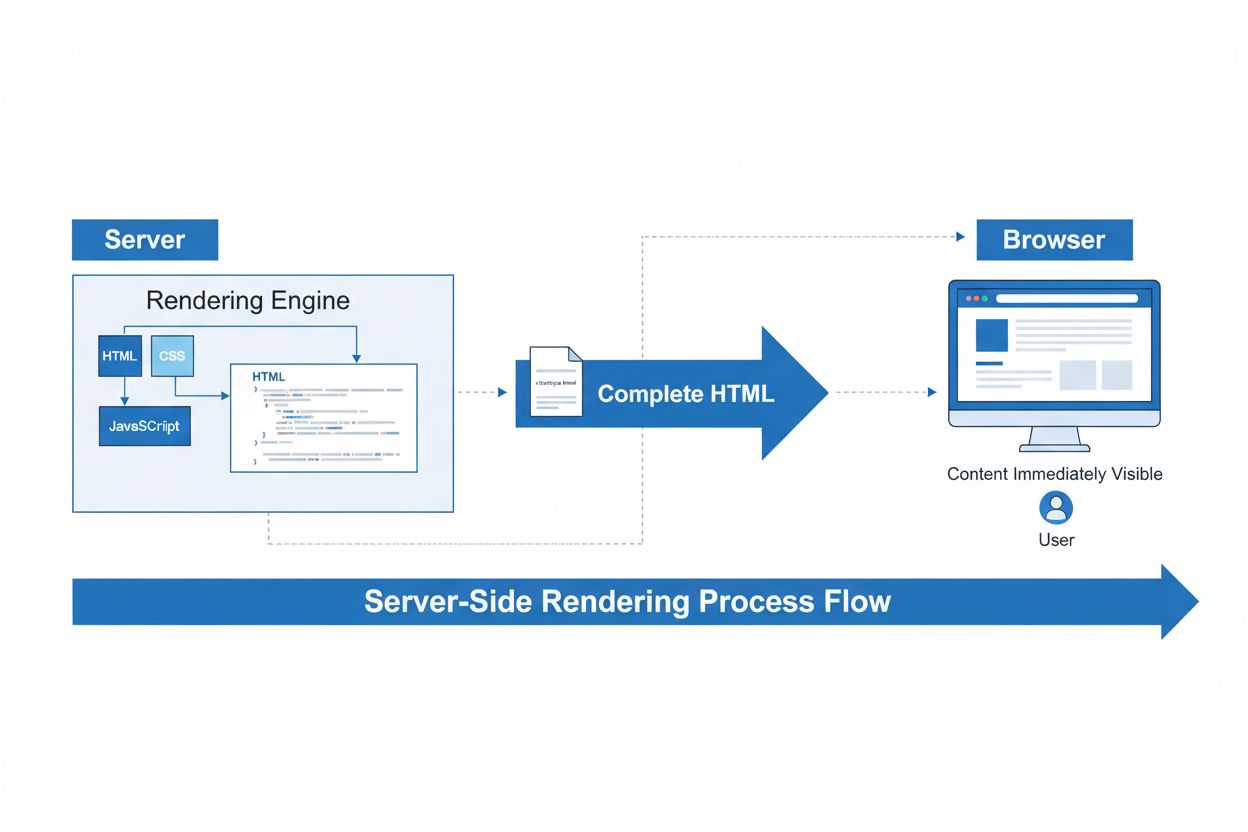
Server-Side Rendering (SSR) is a web technique where servers render complete HTML pages before sending them to browsers. Learn how SSR improves SEO, page speed,...