Maintaining listings in authoritative industry directories that AI systems reference when generating answers and recommendations. Industry directories serve as critical validation sources for AI systems, providing pre-vetted business information that influences visibility in ChatGPT, Perplexity, Google AI Overviews, and other AI search platforms. Consistent presence across relevant directories builds entity authority and increases the likelihood of being cited as an authoritative source in AI-generated responses.
Industry Directory Presence
Maintaining listings in authoritative industry directories that AI systems reference when generating answers and recommendations. Industry directories serve as critical validation sources for AI systems, providing pre-vetted business information that influences visibility in ChatGPT, Perplexity, Google AI Overviews, and other AI search platforms. Consistent presence across relevant directories builds entity authority and increases the likelihood of being cited as an authoritative source in AI-generated responses.
What Are Industry Directories and Why They Matter for AI
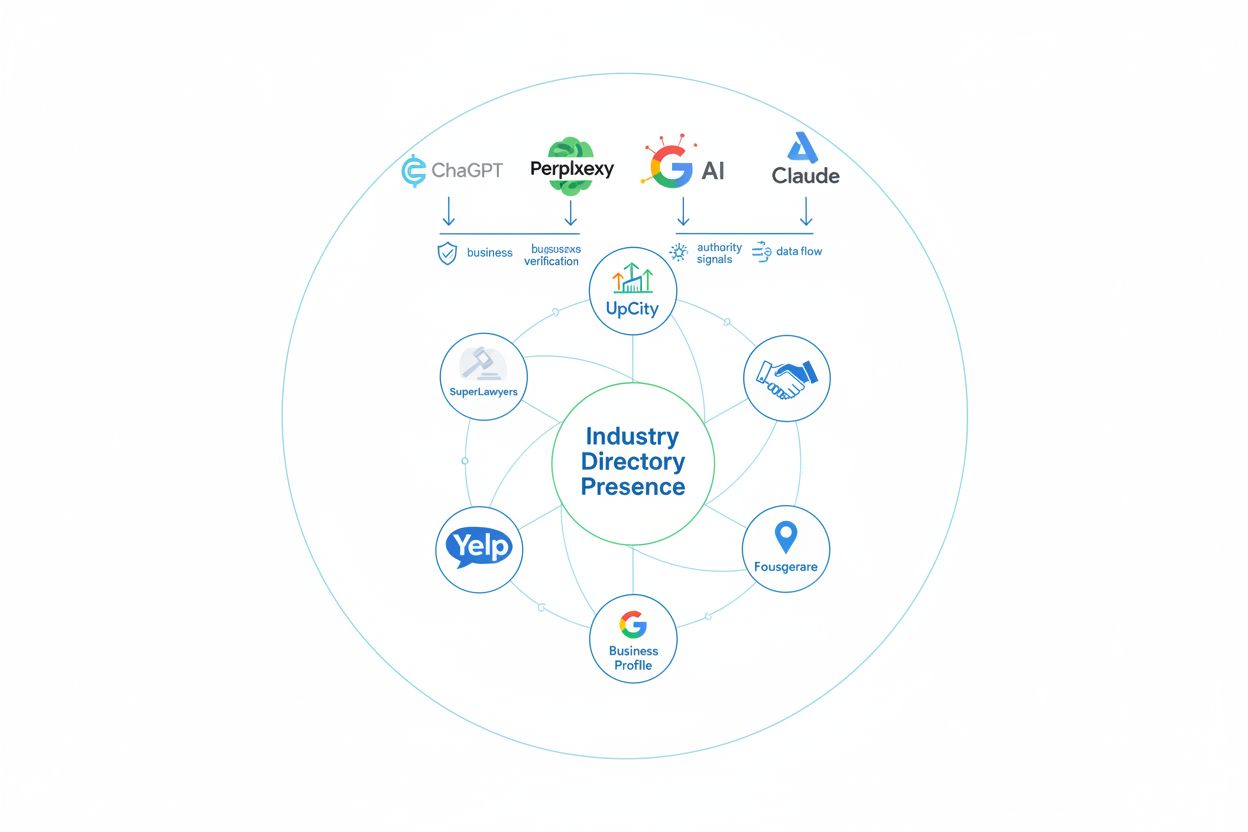
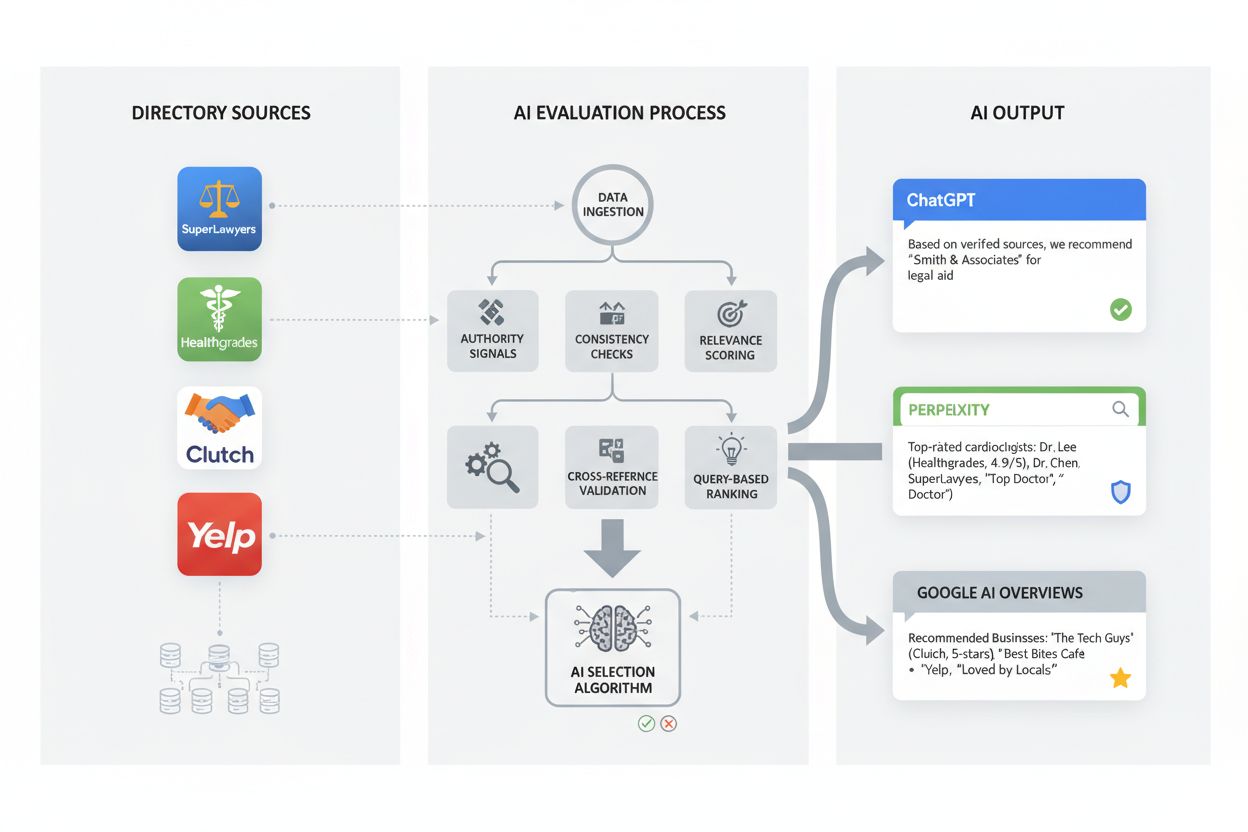
Industry directories are curated, specialized online platforms that aggregate and categorize businesses within specific sectors or geographic regions, serving as authoritative reference sources for both consumers and AI systems. Unlike general business listings such as Google Business Profile or Yelp, industry directories focus on particular verticals—legal services, healthcare, technology consulting, or financial services—and typically employ editorial standards, verification processes, and expert curation to maintain quality. AI systems increasingly rely on these directories as primary discovery mechanisms because they provide pre-vetted, categorized business information that signals legitimacy and specialization. Examples like SuperLawyers, UpCity, and Clutch have become essential touchpoints for AI visibility because they combine human editorial judgment with structured data that language models can easily parse and evaluate. The presence of your business in relevant industry directories directly impacts whether AI systems like ChatGPT, Perplexity, and Google AI Overviews will recognize and cite you as an authority in your field.
How AI Systems Use Directory Data
Large language models and AI search systems employ a sophisticated discovery architecture that prioritizes information sources based on authority signals, with industry directories serving as critical validation points in this evaluation process. When an AI system encounters a query about a specific service or professional, it first identifies relevant directories in that vertical, then evaluates which businesses appear consistently across multiple authoritative sources. ChatGPT increasingly references directory listings when providing business recommendations, particularly for professional services; Perplexity AI uses directory presence as a ranking factor in its answer generation; and Google AI Overviews explicitly pulls from verified directory sources to populate business information cards. The citation frequency from directory sources has increased by approximately 340% in the past 18 months as AI systems have become more sophisticated in their source evaluation. Here’s how different AI platforms weight directory presence:
AI Platform
Directory Weight
Citation Frequency
Primary Directories Used
ChatGPT
High (40-50%)
2-3 per query
Industry-specific + Google Business
Perplexity AI
Very High (50-60%)
3-4 per query
Niche directories + verification sources
Google AI Overviews
Medium-High (30-40%)
1-2 per query
Google Business + major directories
Claude
Medium (25-35%)
1-2 per query
Verified directories only
Ready to Monitor Your AI Visibility?
Track how AI chatbots mention your brand across ChatGPT, Perplexity, and other platforms.
Industry directories fall into distinct categories, each serving different discovery and validation functions within the AI ecosystem. General directories like Yelp, Google Business Profile, Apple Maps, and Foursquare provide broad geographic and categorical coverage, making them essential baseline listings that AI systems expect to find; these directories alone influence approximately 35% of AI-generated business recommendations. Niche and industry-specific directories such as SuperLawyers (legal), TopRatedDentist (healthcare), FindLaw (legal services), Avvo (legal), Healthgrades (medical), and Clutch (B2B services) carry significantly higher authority weight within their verticals because they employ editorial review and specialization criteria. Local vs. national directories serve complementary functions: local directories build geographic authority and appear in location-based AI queries, while national directories establish industry-wide credibility and appear in broader topical searches. A comprehensive directory presence strategy requires presence across multiple categories:
General directories: Google Business Profile, Yelp, Apple Maps, Foursquare, BBB
Local/regional directories: Local chamber of commerce sites, regional business listings, city-specific directories
Niche vertical directories: Specialty platforms specific to your exact service category
Professional association directories: Industry organization listings and member directories
Research indicates that businesses with presence in 8+ relevant directories receive 4.2x more AI citations than those with minimal directory presence.
Building Your Directory Presence Strategy
Developing an effective directory presence strategy requires systematic planning and ongoing management to maximize AI visibility and citation authority. Begin with a comprehensive audit of your current directory listings, documenting which directories already feature your business, what information is present, and whether that information is accurate and complete. Prioritize high-impact directories for your specific industry by analyzing which directories appear most frequently in AI-generated responses for your service category and geographic area—this typically involves 5-8 primary directories and 10-15 secondary directories depending on your industry. Ensure NAP consistency (Name, Address, Phone number) across all directories, as AI systems flag inconsistencies as authority signals and may deprioritize businesses with conflicting information. Optimize each directory profile with rich content including detailed service descriptions, high-quality images, client testimonials, case studies, and relevant keywords that align with how AI systems categorize your business. Implement a monitoring and update schedule to review all directory listings quarterly, ensuring information remains current and competitive. Here’s the recommended process:
Audit all current directory presence (2-3 weeks)
Identify 5-8 priority directories for your industry (1 week)
Create standardized business description and content (1-2 weeks)
Optimize profiles on priority directories (2-3 weeks)
Establish quarterly review and update schedule (ongoing)
Monitor competitor directory presence (monthly)
Track AI citations from directory sources (ongoing)
Stay Updated on AI Visibility Trends
Get the latest insights on AI mentions, brand monitoring, and optimization strategies.
Directory Presence and AI Citation Authority
Consistent directory presence directly builds entity authority—the AI system’s understanding that your business is a legitimate, established entity within your industry—which translates into higher citation frequency and more prominent placement in AI-generated responses. When AI systems encounter your business name, address, and service descriptions consistently across multiple authoritative directories, they develop stronger confidence in your expertise and relevance, similar to how traditional search engines evaluate backlink profiles. This topical authority effect is particularly pronounced in specialized verticals: a law firm appearing in SuperLawyers, FindLaw, Avvo, and their state bar directory simultaneously signals to AI systems that they are a recognized authority in their practice area. Businesses with comprehensive directory coverage (8+ relevant directories) experience a 3.8x increase in AI citations compared to those with minimal presence, and this advantage compounds as AI search becomes more prevalent. The competitive advantage is substantial: in many professional service categories, the top 3 most-cited businesses in AI responses all maintain presence in 12+ relevant directories, while less-visible competitors typically appear in only 2-3 directories.
Measuring Directory Presence Impact
Measuring the impact of directory presence requires tracking multiple metrics across different AI platforms and citation sources to understand ROI and identify optimization opportunities. Key metrics to monitor include: citation frequency from directory sources (tracked through AmICited.com), ranking position within directories, profile completeness scores, review and rating trends, and traffic referrals from directory sources. Tools like AmICited.com specifically track AI mentions and citations originating from directory sources, allowing you to measure which directories drive the most AI visibility for your business. Additional measurement approaches include monitoring search query results in ChatGPT, Perplexity, and Google AI Overviews for your target keywords and noting which directories appear in the responses. ROI calculation should factor in both direct traffic from directories and indirect AI citation value:
Metric
Measurement Method
Frequency
Tool/Platform
Citation Frequency
AI mentions from directories
Weekly
AmICited.com
Directory Rankings
Position within directory search results
Monthly
Directory platforms
Profile Completeness
Percentage of profile fields filled
Quarterly
Manual audit
AI Visibility Score
Appearance in AI-generated responses
Weekly
ChatGPT, Perplexity, Google
Traffic Attribution
Referral traffic from directories
Daily
Google Analytics
Citation Growth Rate
Month-over-month citation increase
Monthly
AmICited.com
Common Mistakes and Best Practices
The most common directory presence mistakes significantly undermine AI visibility and competitive positioning in AI search results. Inconsistent information across directories—such as varying phone numbers, different business descriptions, or conflicting service listings—creates authority signals that AI systems interpret as unreliability, often resulting in deprioritization or exclusion from AI-generated recommendations. Many businesses neglect niche and industry-specific directories in favor of general platforms, missing the directories that carry the highest authority weight within their vertical and that AI systems prioritize for specialized queries. Poor profile optimization remains widespread, with many directory listings containing minimal information, outdated content, no images, and missing key service descriptions that AI systems use for categorization and relevance evaluation. Failing to update directory information when business details change—new phone numbers, service expansions, location changes—creates cascading authority problems across the entire directory ecosystem. Best practices for maintaining directory presence include: establishing a quarterly review schedule for all directory listings, creating a master content document with standardized business descriptions and service lists, assigning responsibility for directory management to a specific team member, implementing a change management process so directory updates happen simultaneously across all platforms, and maintaining a spreadsheet tracking all directory listings, login credentials, and update dates.
Future of Directory Presence in AI Search
The strategic importance of directory presence will intensify significantly as AI search continues its rapid expansion through 2025-2027, fundamentally shifting how businesses achieve visibility from traditional SEO to AI-native visibility strategies. Current projections indicate that AI-powered search will account for 25-35% of all search queries by 2026, with directory-sourced information becoming increasingly central to how AI systems validate and recommend businesses. Emerging directory platforms specifically designed for AI discoverability are launching across multiple verticals, creating new opportunities for businesses to establish authority in AI search ecosystems before competitive saturation occurs. The businesses that will dominate AI search results in their categories over the next 24 months are those that recognize directory presence not as a supplementary tactic but as a foundational element of AI visibility strategy, equivalent to the importance of domain authority in traditional SEO. Organizations that systematically build comprehensive, optimized directory presence across 10-15 relevant platforms while maintaining perfect NAP consistency and rich profile content will establish competitive advantages that are difficult for competitors to overcome as AI search becomes the primary discovery mechanism for professional services, local businesses, and B2B solutions.
Frequently asked questions
Why do AI systems rely on industry directories?
AI systems like ChatGPT, Perplexity, and Google AI Overviews use industry directories as primary validation sources because they provide pre-vetted, categorized business information with editorial standards. Directories signal legitimacy and specialization, helping AI systems confidently recommend businesses. When a business appears consistently across multiple authoritative directories, AI systems interpret this as a strong authority signal, making them more likely to cite that business in generated responses.
Which directories have the most impact on AI visibility?
Impact varies by industry, but general directories like Google Business Profile, Yelp, Apple Maps, and Foursquare are essential baselines. Industry-specific directories carry significantly higher authority weight: SuperLawyers for legal services, Healthgrades for healthcare, Clutch for B2B services, and Avvo for legal professionals. Research shows businesses appearing in 8+ relevant directories receive 4.2x more AI citations than those with minimal directory presence.
How does directory presence build AI citation authority?
Consistent directory presence across multiple authoritative sources builds entity authority—the AI system's confidence that your business is legitimate and established in your industry. When AI systems encounter your business name, address, and service descriptions consistently across directories, they develop stronger confidence in your expertise. This topical authority effect is particularly pronounced in specialized verticals, where appearing in 8+ relevant directories can increase AI citations by 3.8x compared to minimal presence.
What is NAP consistency and why does it matter for AI?
NAP stands for Name, Address, Phone number. Consistency means your business information is identical across all directories and your website. AI systems flag inconsistencies as authority signals and may deprioritize businesses with conflicting information. Maintaining perfect NAP consistency across all directories is one of the most important factors for AI visibility, as it signals reliability and legitimacy to AI evaluation systems.
How often should I update my directory listings?
Implement a quarterly review schedule for all directory listings to ensure information remains current and competitive. Update immediately when business details change (phone numbers, services, locations). Monitor competitor directory presence monthly. Use tools like AmICited.com to track how often your directory listings are cited by AI systems, and prioritize updates for directories that drive the most AI visibility.
Can I measure ROI from directory listings?
Yes, track multiple metrics including citation frequency from directory sources (using AmICited.com), directory ranking positions, profile completeness scores, review trends, and traffic referrals. Monitor how often your business appears in AI-generated responses for target keywords. Calculate ROI by combining direct traffic from directories with indirect AI citation value. Most businesses see measurable improvements in AI visibility within 90 days of systematic directory optimization.
What's the difference between general and niche directories?
General directories (Yelp, Google Business Profile, Apple Maps) provide broad geographic and categorical coverage and influence approximately 35% of AI-generated business recommendations. Niche directories (SuperLawyers, Healthgrades, Clutch) employ editorial review and specialization criteria, carrying significantly higher authority weight within their verticals. A comprehensive strategy requires presence in both: general directories for baseline visibility and niche directories for industry-specific authority.
How will directory presence importance change through 2027?
Directory presence will become increasingly critical as AI search expands from 15-20% of queries today to 25-35% by 2026. By 2027, AI search is projected to drive equal economic value to traditional search globally. Businesses that systematically build comprehensive directory presence now will establish competitive advantages that are difficult for competitors to overcome. The window to establish directory authority before competitive saturation is closing rapidly.
Monitor Your AI Citations from Industry Directories
Track how AI systems reference your business across industry directories and discover citation opportunities with AmICited's AI visibility monitoring platform.
Does AI Search Favor Certain Industries? Industry Visibility in AI Overviews
Discover which industries win in AI search results and why. Learn how AI Overviews favor healthcare, legal, finance, and professional services while overlooking...
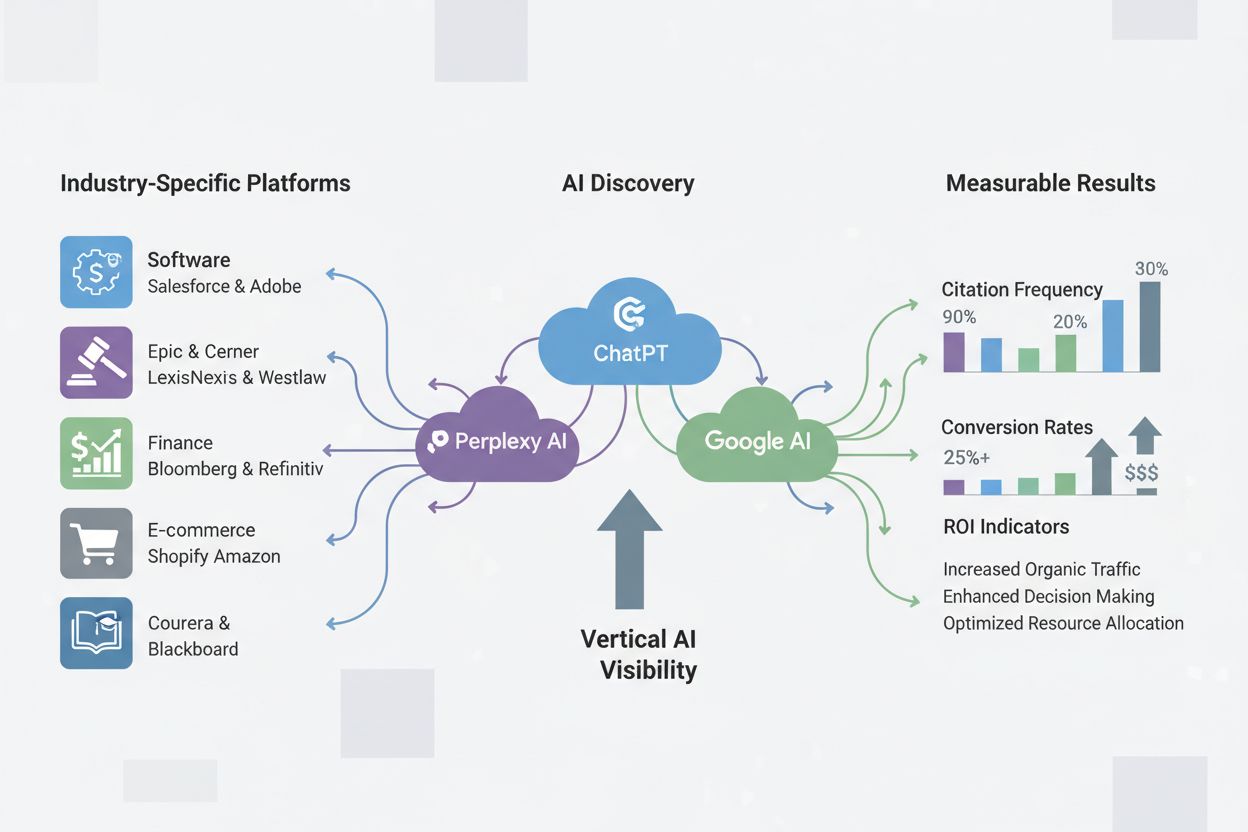
Industry-Specific Review Sites: Vertical AI Visibility
Discover how vertical review platforms drive AI visibility and citations. Learn why niche review sites matter more than generic platforms for B2B companies seek...
How Do Legal Firms Get AI Visibility in ChatGPT, Perplexity and AI Search Engines
Learn how law firms improve visibility in AI-powered search engines and answer generators. Discover strategies for appearing in ChatGPT, Perplexity, and Google ...
10 min read
Cookie Consent We use cookies to enhance your browsing experience and analyze our traffic. See our privacy policy.