
External Linking
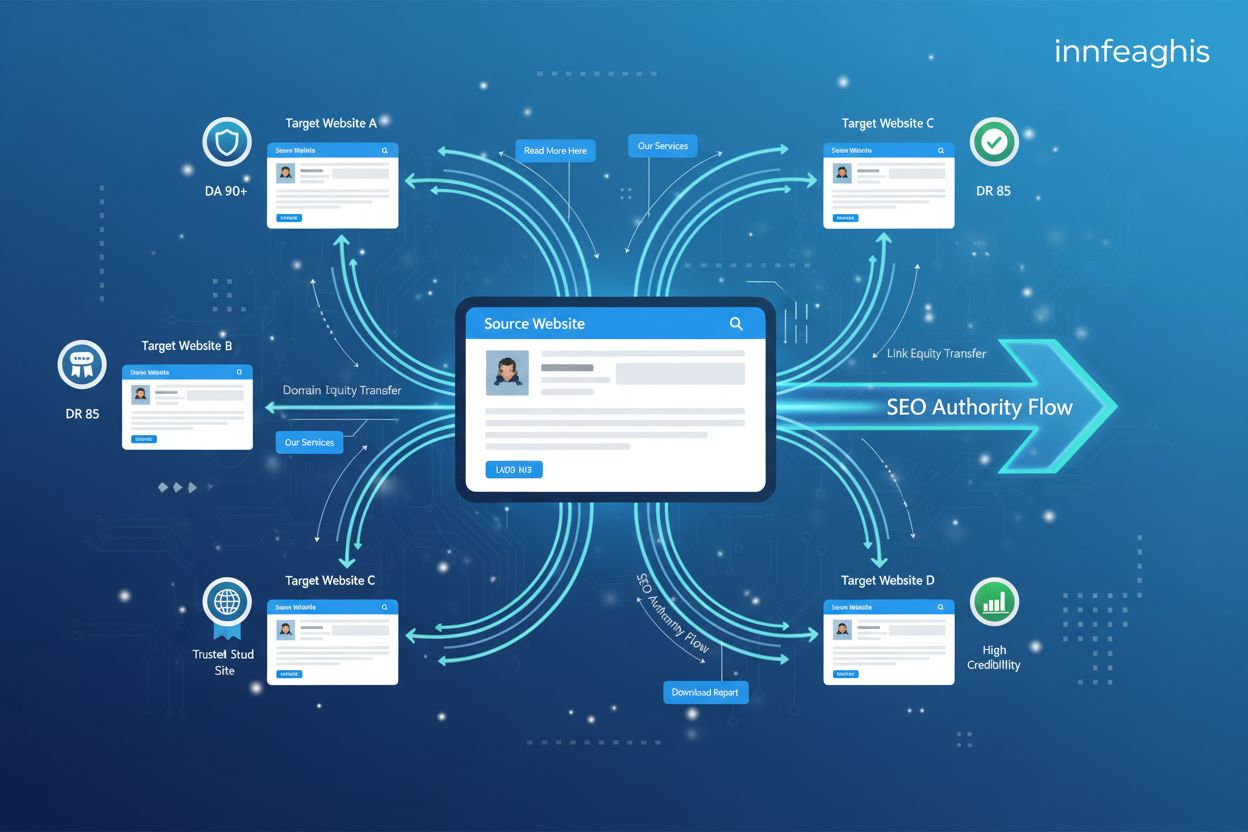
External linking explained: hyperlinks to other websites that improve credibility, user experience, and SEO. Learn best practices for outbound links and their r...
10 min read
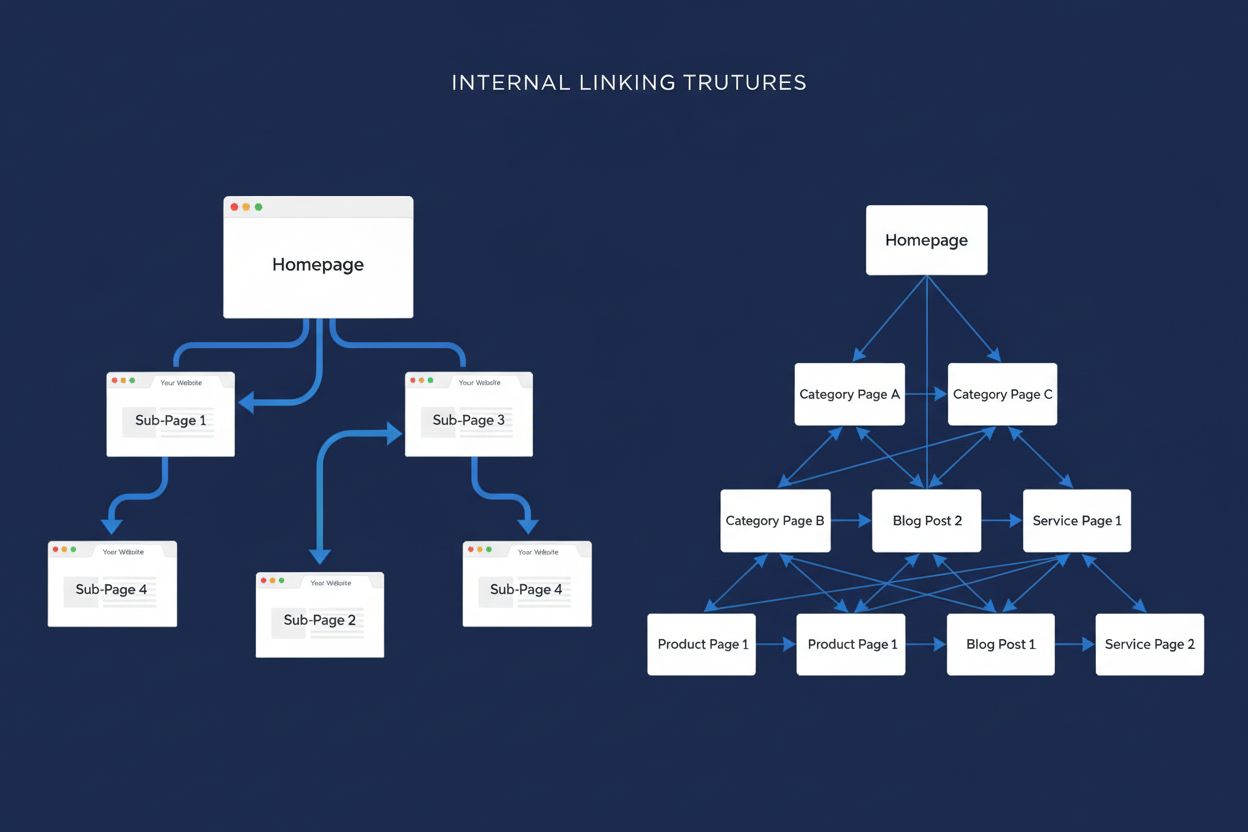
Internal linking refers to hyperlinks that connect one page on a website to another page on the same domain. These links help search engines discover and understand site structure while guiding users to relevant content, making them essential for both SEO and user experience.
Internal linking refers to hyperlinks that connect one page on a website to another page on the same domain. These links help search engines discover and understand site structure while guiding users to relevant content, making them essential for both SEO and user experience.
Internal linking refers to hyperlinks that connect one page on a website to another page on the same domain. Unlike external links that point to different websites, internal links keep users and search engine crawlers within your own site’s ecosystem. These links serve as the connective tissue of your website, creating pathways that guide both human visitors and automated crawlers through your content. According to Google’s official documentation, internal links are essential for helping search engines find, index, and understand all pages on your site. They also play a critical role in establishing your site’s information hierarchy and distributing link equity—the ranking power that flows through your website’s pages.
The importance of internal linking extends beyond simple navigation. When you strategically link from high-authority pages to important content, you’re essentially voting for those pages’ relevance and importance. This practice has become increasingly vital as search engines and AI systems evolve, requiring websites to demonstrate clear topical relationships and content organization. Research from leading SEO authorities like Backlinko and Yoast confirms that websites with well-planned internal linking strategies consistently outrank competitors with poor linking structures.
The concept of internal linking emerged alongside the early development of the web itself, as hyperlinks became the fundamental mechanism for connecting information. However, its strategic importance for search engine optimization only became widely recognized in the early 2000s when Google’s PageRank algorithm demonstrated that link structure directly influenced rankings. Over the past two decades, internal linking has evolved from a simple navigation tool into a sophisticated SEO strategy that impacts crawlability, authority distribution, and user engagement.
Today, internal linking is recognized as one of the “biggest things you can do on a website,” according to Google’s own Search Advocate John Mueller. The practice has become even more critical with the rise of AI-driven search platforms. As generative engines like ChatGPT, Perplexity, and Google AI Overviews become primary discovery channels, internal linking helps these systems understand your content’s context and relationships. Studies show that approximately 59% of SEO experts believe link-based signals will have an even larger impact on rankings in coming years, with internal linking playing an increasingly central role in both traditional SEO and emerging Generative Engine Optimization (GEO) strategies.
The evolution of internal linking reflects broader changes in how search works. Early SEO focused primarily on external backlinks, but modern search engines recognize that a well-structured internal linking strategy is equally important. This shift has made internal linking a cornerstone of technical SEO, content strategy, and user experience optimization. Websites that implement strategic internal linking see measurable improvements in crawl efficiency, indexation rates, and ultimately, search visibility.
| Aspect | Internal Linking | External Linking | Backlinks | Navigation Menu |
|---|---|---|---|---|
| Definition | Links between pages on the same domain | Links pointing to different domains | Incoming links from other websites | Structural links in site navigation |
| Primary Purpose | Distribute authority, improve crawlability, guide users | Establish credibility, cite sources | Build domain authority, establish trust | Help users find key sections |
| SEO Impact | Moderate to high (distributes existing authority) | High (brings external authority) | Very high (primary ranking factor) | Moderate (structural importance) |
| User Experience | Guides to related content, reduces bounce rate | Provides external context and sources | Not directly visible to users | Essential for site navigation |
| Anchor Text Control | Full control (your own site) | Limited control (depends on linking site) | No control (external sites decide) | Standardized and consistent |
| Crawl Depth Effect | Reduces crawl depth for linked pages | Increases crawl depth | Improves overall crawlability | Establishes site hierarchy |
| AI Search Relevance | High (shows topical relationships) | Moderate (provides context) | High (establishes authority) | Moderate (structural signal) |
| Implementation Effort | Medium (requires planning and maintenance) | Low to medium (reactive) | High (requires outreach) | Low (usually automated) |
Internal linking operates through standard HTML anchor elements (<a> tags) with href attributes pointing to URLs on the same domain. When a search engine crawler encounters an internal link, it follows that link to discover new pages and understand the relationship between content. The crawler records the link in its index and uses it to calculate how authority flows through your site. This process is fundamental to how search engines map your website’s structure and determine which pages are most important.
The mechanics of internal linking involve several key components working together. First, the anchor text—the visible, clickable text of the link—provides context about the destination page. Search engines analyze this text to understand what the linked page is about, using it as a ranking signal for specific keywords. Second, the link source (the page containing the link) passes some of its authority to the destination page. Pages with higher authority, like your homepage, pass more value when they link to other pages. Third, the link destination receives this authority boost, which can improve its ranking potential.
The concept of link equity or “link juice” is central to understanding internal linking. When your homepage—typically your site’s most authoritative page—links to a product page, some of that authority flows to the product page. This is why strategic internal linking from high-authority pages to important content is so effective. However, this authority is distributed across all links on a page, so a page with 50 internal links passes less authority per link than a page with 10 links. This principle guides best practices around limiting the number of links per page.
Internal linking also affects crawl efficiency and crawl budget—the amount of resources search engines allocate to crawling your site. A well-structured internal linking strategy with clear hierarchy and logical connections reduces crawl depth (the number of clicks from the homepage to reach a page). Pages closer to the homepage are crawled more frequently and thoroughly. By strategically linking to important pages, you ensure they’re discovered and indexed quickly, even if they’re buried deep in your site’s architecture.
Implementing an effective internal linking strategy requires careful planning and ongoing optimization. The foundation is understanding your site’s architecture and identifying which pages are most important for your business goals. These “pillar” or cornerstone pages should receive the most internal link attention, as they represent your core offerings or expertise areas. From these pillar pages, you create a network of supporting content that links back to the pillars, creating what’s known as a “hub-and-spoke” or “content cluster” model.
The content cluster approach to internal linking has become increasingly popular because it aligns with how both search engines and AI systems understand topical authority. You create one comprehensive pillar page targeting a broad topic (e.g., “SEO strategy”), then create multiple cluster pages targeting related subtopics (e.g., “keyword research,” “on-page SEO,” “technical SEO”). Each cluster page links back to the pillar page with keyword-rich anchor text, and the pillar page links out to all cluster pages. This structure signals to search engines that your site comprehensively covers the topic, improving your chances of ranking for the main keyword and related variations.
Contextual internal linking—links placed naturally within your content—carries more weight than structural links in navigation menus. When you link from one blog post to another relevant post within the body text, you’re providing genuine value to readers while signaling topical relationships to search engines. This type of internal linking is particularly important for AI systems, which analyze content context to understand relationships between topics. Research shows that pages with contextual internal links have 30-40% higher visibility in AI-generated answers compared to pages without such links.
The placement of internal links matters significantly. Links placed higher on a page, particularly in the first section or early paragraphs, tend to be more effective for both user engagement and SEO. However, this doesn’t mean forcing irrelevant links into your introduction. The key is ensuring that early links are genuinely relevant and helpful to readers. Studies indicate that strategic internal link placement reduces bounce rates and increases dwell time—metrics that signal content quality to search engines and AI systems alike.
One of the most powerful aspects of internal linking is its ability to distribute link equity throughout your website. Your homepage typically accumulates the most backlinks from external sources, making it your site’s most authoritative page. Through strategic internal linking, you can channel this authority to pages that need it most. For example, if you’re launching a new product page that has no external backlinks, linking to it from your homepage and other high-authority pages gives it an immediate authority boost.
This principle of link equity distribution is why many SEO professionals audit their internal linking structure regularly. Tools like Google Search Console, Screaming Frog, and Semrush can reveal which pages are receiving the most internal link attention. Often, you’ll find that low-priority pages like your privacy policy or contact page receive excessive internal links simply because they’re in your site’s navigation. Meanwhile, important content pages receive few internal links. By rebalancing your internal linking strategy, you can redirect authority to pages that drive business value.
The concept of link equity also explains why you shouldn’t use nofollow tags on internal links. When you add rel="nofollow" to an internal link, you’re telling search engines not to pass authority through that link. This is appropriate for external links you don’t trust or user-generated content, but it undermines your internal linking strategy when applied to your own pages. Some website owners accidentally apply nofollow to internal links through poorly configured plugins, inadvertently blocking authority flow throughout their site.
Search engines discover new pages primarily through internal links. When Googlebot crawls your homepage, it follows the internal links it finds to discover other pages. Those pages may contain additional internal links leading to even more pages. This cascading discovery process is how search engines map your entire website. Without adequate internal linking, pages can become “orphaned”—unreachable by search engine crawlers—and never get indexed.
Crawl depth is a critical metric related to internal linking. It refers to how many clicks it takes to reach a page from your homepage. A page that’s one click away from the homepage has a crawl depth of 1, while a page requiring three clicks has a crawl depth of 3. Search engines prioritize crawling pages with lower crawl depth, so important pages should be accessible within 2-3 clicks from the homepage. Strategic internal linking reduces crawl depth for important pages, ensuring they’re discovered and indexed quickly.
For large websites with thousands of pages, internal linking becomes even more critical. Search engines have limited crawl budgets—they won’t crawl every page on every site every day. By creating a logical internal linking structure with clear hierarchy, you help search engines prioritize which pages to crawl. Pages with more internal links pointing to them are crawled more frequently. This is why many large e-commerce sites use strategic internal linking to ensure their most important product pages are crawled and indexed regularly.
The relationship between internal linking and indexation extends to new content. When you publish a new page, adding internal links to it from existing pages dramatically speeds up its discovery and indexation. Rather than waiting for search engines to randomly find your new page, you’re actively guiding them to it. This is why best practice recommends adding internal links to new content from relevant existing pages within 24-48 hours of publication.
As AI-driven search platforms become increasingly important for brand discovery, internal linking takes on new significance. Generative engines like ChatGPT, Perplexity, and Google AI Overviews analyze your site’s structure to understand topical relationships and content organization. A well-structured internal linking strategy helps these systems comprehend your expertise and authority in specific areas. When your internal links clearly connect related content with descriptive anchor text, AI systems can better understand what your site is about and when to reference your content in their responses.
Research on Generative Engine Optimization (GEO) reveals that internal linking contributes to how AI systems perceive your brand’s topical authority. When multiple pages on your site link to a central pillar page using consistent, keyword-rich anchor text, AI systems recognize that page as authoritative on that topic. This structured approach to internal linking is particularly valuable for AI visibility because these systems rely heavily on semantic relationships and content organization to determine which sources to cite.
The impact of internal linking on AI visibility extends to how your content appears in AI-generated answers. Pages with strong internal linking from relevant contextual sources are more likely to be cited by AI systems. Additionally, the descriptive anchor text used in internal links helps AI systems understand the specific context in which your content is relevant. For example, if multiple pages link to your “email marketing ROI” article using that exact phrase as anchor text, AI systems will strongly associate your content with that topic and cite it when users ask about email marketing ROI.
Effective internal linking requires a strategic approach that balances SEO benefits with user experience. The first step is conducting a content audit to identify your most important pages—those that drive business value or represent your core expertise. These pages should be your linking targets, receiving internal links from multiple relevant pages throughout your site. Next, map out your site’s information architecture, identifying how pages relate to each other thematically. This helps you create a logical internal linking structure that makes sense to both users and search engines.
When creating internal links, use descriptive anchor text that accurately describes the destination page. Avoid generic phrases like “click here” or “read more.” Instead, use specific, keyword-relevant text that gives users and search engines context about what they’ll find. For example, instead of “learn more about SEO,” use “comprehensive guide to internal linking for SEO.” This specificity helps search engines understand what the linked page is about and improves its ranking potential for those keywords. However, avoid keyword stuffing in anchor text—it should read naturally and make sense within the sentence.
Maintain consistency in your internal linking strategy by establishing guidelines for your team. Decide how many internal links per page is appropriate for your content type, which pages should receive the most linking attention, and what anchor text style you’ll use. Document these guidelines so that all content creators follow the same approach. This consistency helps search engines and AI systems understand your site’s structure more clearly. Additionally, regularly audit your internal linking to identify gaps—pages that should be linked but aren’t, or pages receiving excessive internal link attention that could be redirected.
The evolution of search technology continues to reshape how internal linking functions and its importance in overall SEO strategy. As AI systems become more sophisticated, they’re developing better ways to understand content relationships and topical authority. This means that well-structured internal linking will become even more critical for demonstrating expertise and authority to both traditional search engines and generative AI platforms. The future likely holds more emphasis on semantic relationships between content, making internal linking strategy more about creating meaningful connections than simply distributing link equity.
Emerging research suggests that AI systems may eventually develop their own signals for understanding content relationships, potentially reducing the direct importance of internal linking for ranking purposes. However, this doesn’t mean internal linking will become less important—it will simply evolve. Internal linking will continue to be essential for user experience, crawlability, and helping AI systems understand your site’s structure and expertise. The key difference is that future internal linking strategies may focus more on creating genuinely useful navigation paths and semantic connections rather than purely optimizing for link equity distribution.
The integration of internal linking with other SEO and GEO strategies will likely become more sophisticated. We’re already seeing this with the rise of content clusters and topical authority models, which rely heavily on strategic internal linking. As search engines and AI systems continue to evolve, the websites that succeed will be those that implement internal linking as part of a holistic content strategy—one that prioritizes user experience, topical depth, and clear information architecture. The future of internal linking is not about doing more of it, but about doing it more strategically and meaningfully.
Internal links connect pages within the same domain, while external links point to pages on different domains. Internal links help distribute authority within your site and improve navigation, whereas external links establish credibility by citing authoritative sources. Both are important for SEO, but they serve different purposes in your overall strategy.
There's no strict limit, but Google can crawl hundreds of links per page. Practically speaking, limiting internal links to around 100 or fewer per page provides better user experience and SEO benefits. Quality matters more than quantity—focus on linking to relevant pages with descriptive anchor text rather than maximizing link count.
Yes, internal linking significantly impacts SEO rankings. Strategic internal links distribute link equity (ranking power) throughout your site, help search engines understand page hierarchy and relationships, and improve crawlability. Pages with more internal links pointing to them are often viewed as more important and tend to rank higher in search results.
Anchor text is the visible, clickable text of a link. It tells both users and search engines what the linked page is about. Using descriptive, keyword-relevant anchor text helps Google understand the context and topic of the destination page, improving its ranking potential for those keywords. Avoid generic text like 'click here' in favor of specific, descriptive phrases.
Internal linking helps AI systems understand your site's structure, topic relationships, and content hierarchy. Well-organized internal links create semantic connections that generative AI tools use to comprehend your expertise and authority. This structured approach improves how AI platforms like ChatGPT and Google AI Overviews cite and reference your content in their responses.
The main types include navigational links (in menus and headers), contextual links (within content body), footer links (to legal or important pages), and sidebar links (related posts or widgets). Each serves a different purpose—navigational links help users find key sections, contextual links provide topical relevance, and footer/sidebar links support overall site structure and accessibility.
Audit your site using tools like Google Search Console, Screaming Frog, or Semrush to identify pages with few or no internal links. Look for pages ranking for related keywords that could benefit from linking to each other. Also review your content for places where you mention topics covered elsewhere on your site—these are natural opportunities to add contextual internal links.
Generally, no. Internal links should use standard dofollow links to pass authority throughout your site. Nofollow is typically reserved for external links you don't trust or user-generated content. Using nofollow on internal links prevents link equity from flowing to important pages and undermines your internal linking strategy's effectiveness.
Start tracking how AI chatbots mention your brand across ChatGPT, Perplexity, and other platforms. Get actionable insights to improve your AI presence.
External linking explained: hyperlinks to other websites that improve credibility, user experience, and SEO. Learn best practices for outbound links and their r...

Learn how internal linking strategy affects AI citations in ChatGPT, Perplexity, and Google AI Overviews. Discover how to structure internal links for better AI...
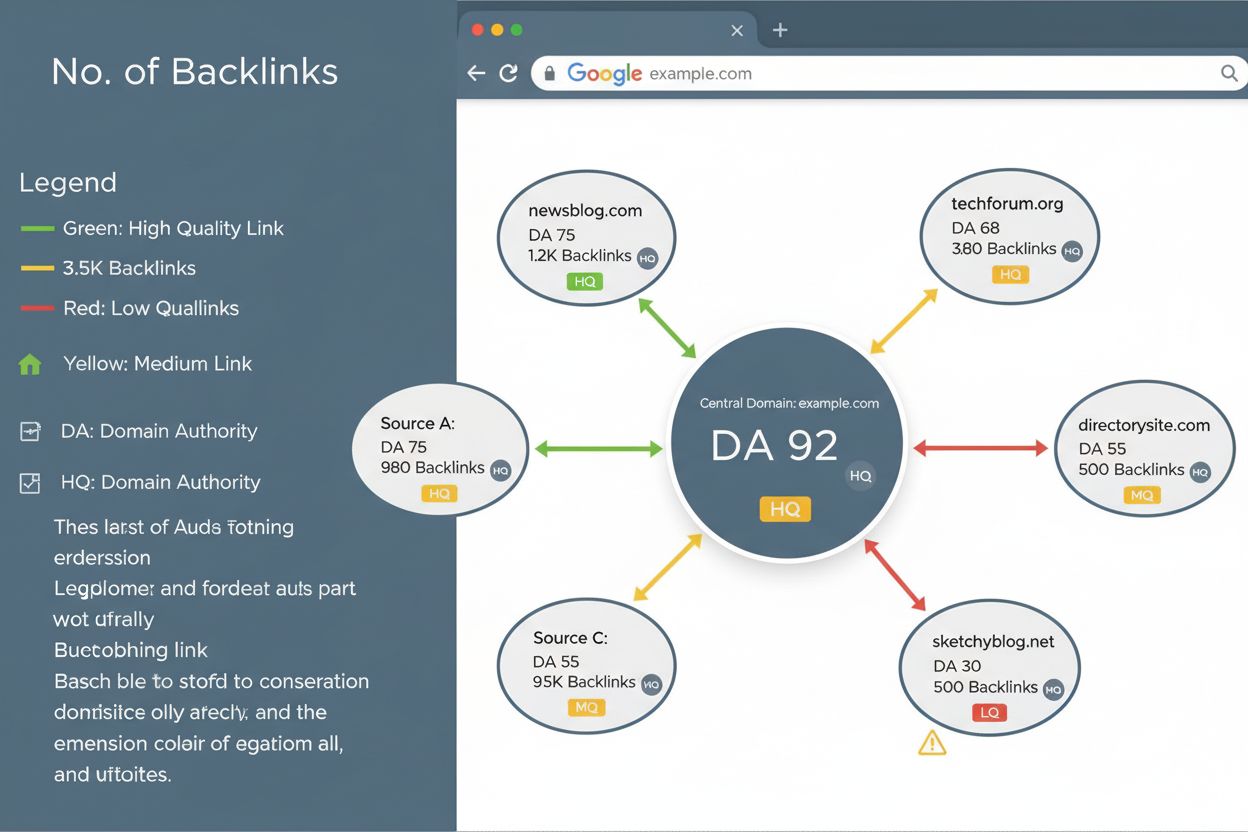
Learn what a link profile is, how it impacts SEO rankings, and why monitoring backlink quality, diversity, and domain authority is essential for website visibil...
Cookie Consent
We use cookies to enhance your browsing experience and analyze our traffic. See our privacy policy.