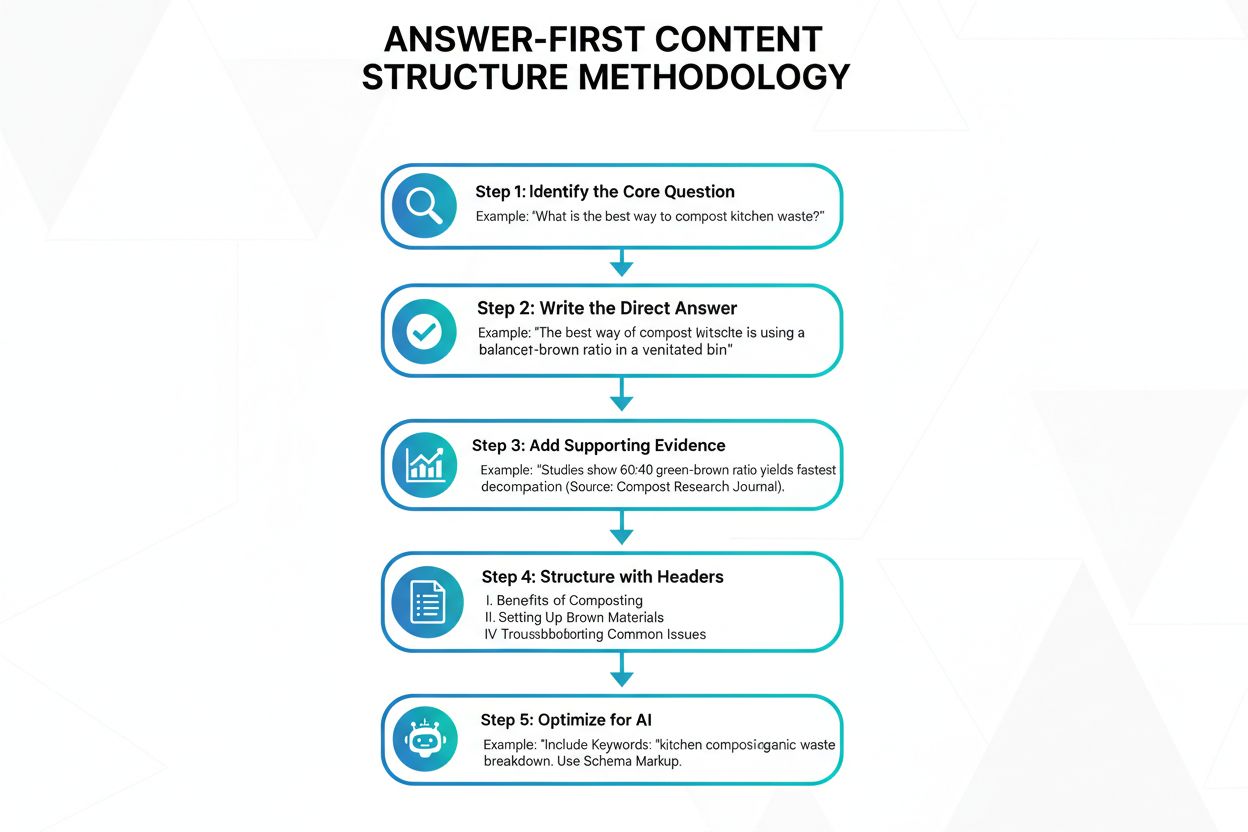
Definition of Interview Content - Q&A Format with Subjects
Interview content in Q&A format is a structured content presentation that features direct questions posed by an interviewer and corresponding answers from a subject, presented in an edited dialogue format. This format prioritizes clarity, readability, and direct communication, making it an effective method for sharing expert insights, thought leadership, and authoritative information. Unlike narrative-driven feature stories, Q&A interview content strips away editorial storytelling to present information in a straightforward, easily scannable structure. The format has become increasingly important in the digital content landscape because it aligns perfectly with how AI systems extract and cite information, making it a critical component of modern content marketing strategies. According to recent data, interviews rank as the third most popular content format used by marketers, following short-form video (29.18%) and images (28.95%), demonstrating the significant role of interview content in contemporary marketing strategies.
Context and Background of Interview Content
The Q&A interview format has deep roots in journalism and publishing, where it emerged as a practical solution for presenting expert perspectives without extensive narrative framing. Historically, publications like The New York Times, Harvard Business Review, and industry-specific magazines have used Q&A formats to feature thought leaders, executives, and subject matter experts. The format gained particular prominence in the digital era because it addresses a fundamental challenge: how to present complex information in a way that is both authoritative and accessible. Structured interviews have been extensively researched in academic contexts, particularly in hiring and research methodologies, where studies show they produce more reliable and predictive results than unstructured conversations. Google’s research on structured interviewing found that structured interviews are more predictive of job performance than unstructured interviews, and this principle extends to content marketing—structured Q&A content is more predictable in its ability to communicate expertise and build authority. The rise of AI-driven content discovery has further elevated the importance of Q&A formats because these systems can more easily parse, understand, and cite clearly structured dialogue than they can extract insights from narrative prose.
Ready to Monitor Your AI Visibility?
Track how AI chatbots mention your brand across ChatGPT, Perplexity, and other platforms.
How Interview Content in Q&A Format Works
Interview content creation follows a systematic process that begins long before the actual conversation takes place. The first critical step involves research and question development, where the interviewer studies the subject’s background, recent work, and industry context to craft meaningful, open-ended questions. Research from Google’s hiring practices reveals that well-crafted interview questions should include an initial prompt along with predetermined follow-up questions, designed to elicit detailed responses that reveal the subject’s thinking process and expertise. During the actual interview, the conversation is typically recorded or transcribed in real-time, capturing the full dialogue. The editing phase is where the raw transcript transforms into polished content—this involves removing filler words, organizing responses for logical flow, and ensuring the subject’s voice remains authentic while improving readability. According to best practices documented by professional PR organizations, formatting consistency is essential, with many publications using bold Q: and A: labels to clearly distinguish questions from answers. The final product includes an introductory paragraph that establishes the subject’s credentials and relevance, the Q&A dialogue itself, and often a concluding paragraph that ties the interview to broader industry implications or actionable insights.
Comparison Table: Interview Content Formats and Structures
| Format Type | Structure | Best For | AI Citation Potential | Engagement Level | Production Time |
|---|
| Q&A Interview | Direct questions and answers with minimal narrative | Expert insights, thought leadership, authority building | Very High | High (easy to scan) | Moderate |
| Feature Story | Narrative-driven with embedded quotes and anecdotes | Human-interest stories, brand storytelling | Medium | High (emotional connection) | High |
| Panel Discussion | Multiple experts responding to same questions | Diverse perspectives, comprehensive coverage | Medium-High | Medium (longer format) | High |
| Podcast Interview | Conversational, long-form audio dialogue | Deep dives, personality-driven content | Medium | Medium (requires listening) | Moderate |
| Video Interview | Visual dialogue with on-screen presence | Personal connection, visual storytelling | Medium | High (visual engagement) | High |
| Email Q&A | Brief questions with concise answers | Quick tips, rapid-fire insights | Low-Medium | Low (limited depth) | Low |
| Live Chat Interview | Real-time dialogue with audience interaction | Community engagement, immediacy | Low-Medium | Medium (interactive) | Low |
Stay Updated on AI Visibility Trends
Get the latest insights on AI mentions, brand monitoring, and optimization strategies.
The technical implementation of Q&A interview content requires attention to several formatting elements that enhance both readability and AI extractability. The most effective Q&A content uses consistent visual hierarchy, typically employing bold or larger fonts for questions to distinguish them from answers. Research from content strategy experts indicates that clear formatting reduces cognitive load for readers and makes content more scannable, which increases engagement metrics. When implementing Q&A content on websites or in content management systems like HUGO CMS, the structure should include semantic HTML markup that clearly identifies questions and answers as distinct elements. This markup helps AI systems understand the content structure and extract information more accurately. Many organizations use FAQ schema markup (structured data) to further enhance AI discoverability, though recent research shows that FAQ schema is now limited to government and health sites in some search contexts. Nevertheless, the underlying principle remains valid: clearly structured, semantically marked-up Q&A content is more likely to be cited by AI systems because it presents information in a format that aligns with how these systems process and retrieve information. The inclusion of specific data points, statistics, and expert credentials within the Q&A format further enhances AI citation potential, as these elements serve as anchors that AI systems can reference and attribute.
Business Impact and Marketing Effectiveness
Interview content delivers measurable business value across multiple dimensions of content marketing strategy. The format’s effectiveness stems from its ability to simultaneously serve multiple marketing objectives: establishing authority, building trust, generating backlinks, and improving search visibility. Research on content marketing ROI demonstrates that interview content contributes to revenue generation through multiple pathways—it attracts qualified traffic through search engines, generates leads through gated interview content, and influences purchasing decisions by showcasing expert perspectives. According to interview call marketing statistics, 67% of employed Americans say job interviews influence their decision to accept jobs, and this principle extends to content marketing: interview content influences purchasing decisions by providing social proof and expert validation. The format is particularly effective for B2B marketing, where decision-makers expect to engage with thought leadership and expert perspectives. Companies investing in thought leadership content, which frequently takes the form of expert interviews, see measurable improvements in brand perception and market positioning. Additionally, interview content generates higher engagement rates than many other content formats because it presents information in a conversational, accessible manner that resonates with audiences seeking authentic expert perspectives rather than polished marketing messages.
Interview Content and AI Citation Authority
In the emerging landscape of AI-driven search and content discovery, interview content in Q&A format has become strategically important for brand visibility. AI systems like ChatGPT, Perplexity, Google AI Overviews, and Claude increasingly cite interview content when answering user queries, particularly when the interview features recognized experts or industry leaders. The structured nature of Q&A content makes it inherently more citable because AI systems can easily identify the source, the expert being quoted, and the specific statements being made. This is fundamentally different from narrative content, where AI systems must parse prose to extract relevant information and attribute it correctly. Research on AI citation patterns shows that clearly attributed expert statements in Q&A format are cited more frequently than similar information embedded in narrative prose. For organizations using AI monitoring platforms like AmICited, interview content represents a high-value asset because it is more likely to generate trackable citations across multiple AI platforms. The visibility of interview content in AI responses directly correlates with brand awareness and authority building in the AI-driven search landscape, making it a critical component of modern GEO (Generative Engine Optimization) strategies.
Platform-Specific Considerations for Interview Content
Different platforms and distribution channels require specific adaptations of interview content while maintaining the core Q&A structure. Social media platforms like LinkedIn and Twitter benefit from short-form Q&A excerpts that highlight the most compelling exchanges from longer interviews, with links driving traffic to the full content. Email marketing platforms can feature curated Q&A segments that provide value to subscribers while encouraging clicks to the full interview. Podcast platforms can repurpose interview content by extracting key Q&A exchanges and presenting them as show notes or transcripts, improving discoverability through search. Video platforms like YouTube benefit from timestamped Q&A segments that allow viewers to jump to specific questions of interest. For content management systems like HUGO, interview content should be structured with clear metadata including the subject’s name, credentials, publication date, and relevant topic tags to enhance both human readability and AI discoverability. SEO optimization of interview content requires strategic keyword placement within questions and answers, as well as internal linking to related content that provides additional context. The mobile experience is particularly important for Q&A content, as the format’s scannable nature makes it ideal for mobile readers who prefer quick, digestible information over long-form prose.
Key Elements and Best Practices for Interview Content
- Open-ended questions that encourage detailed responses and reveal subject expertise
- Logical question sequencing that creates natural conversation flow without abrupt topic transitions
- Consistent formatting using bold Q: and A: labels or other visual distinctions for clarity
- Minimal editing that removes filler words while preserving the subject’s authentic voice and personality
- Introductory context that establishes the subject’s credentials, relevance, and why their perspective matters
- Specific data points and statistics that provide concrete evidence and enhance AI extractability
- Clear subject attribution with full name, title, organization, and relevant credentials
- Concluding paragraph that ties the interview to broader industry implications or actionable takeaways
- Metadata optimization including publication date, topic tags, and subject expertise categories
- Internal linking to related content that provides additional context and improves SEO performance
- Mobile-friendly formatting that maintains readability and scannability on smaller screens
- Schema markup implementation to enhance AI discoverability and search engine understanding
Evolution and Future of Interview Content in AI-Driven Landscapes
The definition and strategic importance of interview content is evolving rapidly in response to the rise of generative AI and AI-driven search. Historically, interview content was primarily valued for its ability to build authority and generate engagement with human audiences. Today, AI citation visibility has become an equally important consideration, fundamentally changing how organizations approach interview content strategy. The future of interview content will likely involve greater emphasis on structured data and semantic markup to enhance AI extractability, as organizations recognize that AI systems are increasingly the primary discovery mechanism for content. We can expect to see more strategic use of interview content in GEO strategies, where organizations deliberately create interview content featuring recognized experts specifically to improve visibility in AI-generated responses. The integration of interview content with AI monitoring platforms will become standard practice, allowing organizations to track where their interview content appears in AI responses and measure the ROI of their interview content investments. Additionally, AI-assisted interview preparation and editing will likely become more common, with organizations using AI tools to help craft better questions, transcribe interviews more accurately, and optimize content for AI citation. The convergence of interview content with thought leadership strategies will intensify, as organizations recognize that expert interviews are one of the most effective ways to build authority in AI-driven search landscapes. Finally, we can anticipate greater emphasis on interview content authenticity and verification, as AI systems and users become more sophisticated about distinguishing genuine expert perspectives from manufactured thought leadership.
Strategic Implementation for Maximum Impact
Organizations seeking to maximize the impact of interview content should adopt a comprehensive strategy that addresses both traditional content marketing objectives and emerging AI citation considerations. This begins with strategic subject selection, choosing experts whose perspectives are genuinely valuable to your target audience and whose names carry authority in their respective fields. The interview preparation phase should include extensive research to craft questions that elicit specific, quotable insights rather than generic responses. During the editing and formatting phase, organizations should prioritize clarity and structure, using consistent formatting and semantic markup to enhance both human readability and AI extractability. Distribution strategy should include multiple channels—owned media like your website, earned media through industry publications, and social media amplification—to maximize reach and citation potential. Measurement and monitoring should track both traditional metrics like engagement and traffic, as well as emerging metrics like AI citation frequency and visibility in AI-generated responses. Organizations using AI monitoring platforms can measure the direct impact of their interview content on brand visibility in AI responses, providing clear ROI data that justifies continued investment in this content format. Finally, continuous optimization based on performance data will help organizations refine their interview content strategy over time, focusing on subjects, topics, and formats that generate the highest engagement and citation rates.