
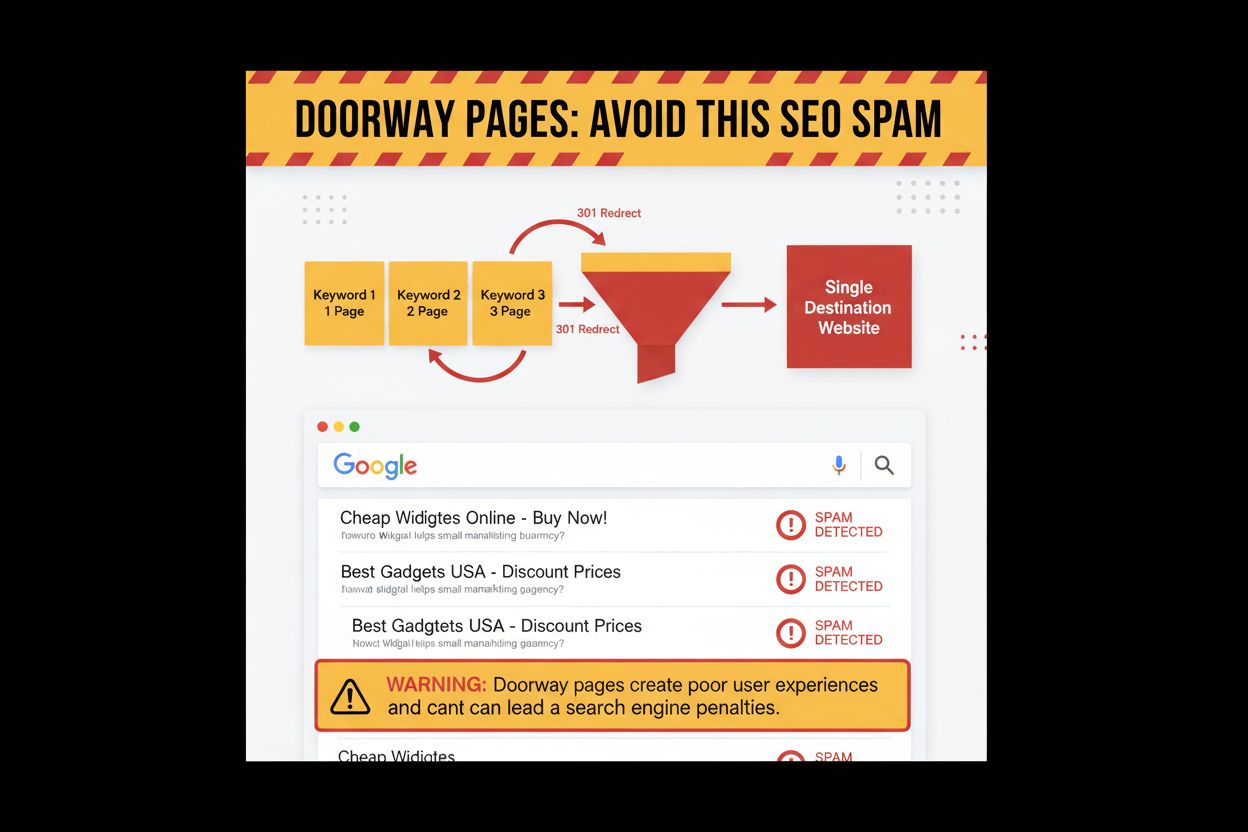
Doorway Page
Learn what doorway pages are, why they harm SEO, how Google detects them, and why they're considered black-hat spam. Includes examples and best practices.
14 min read
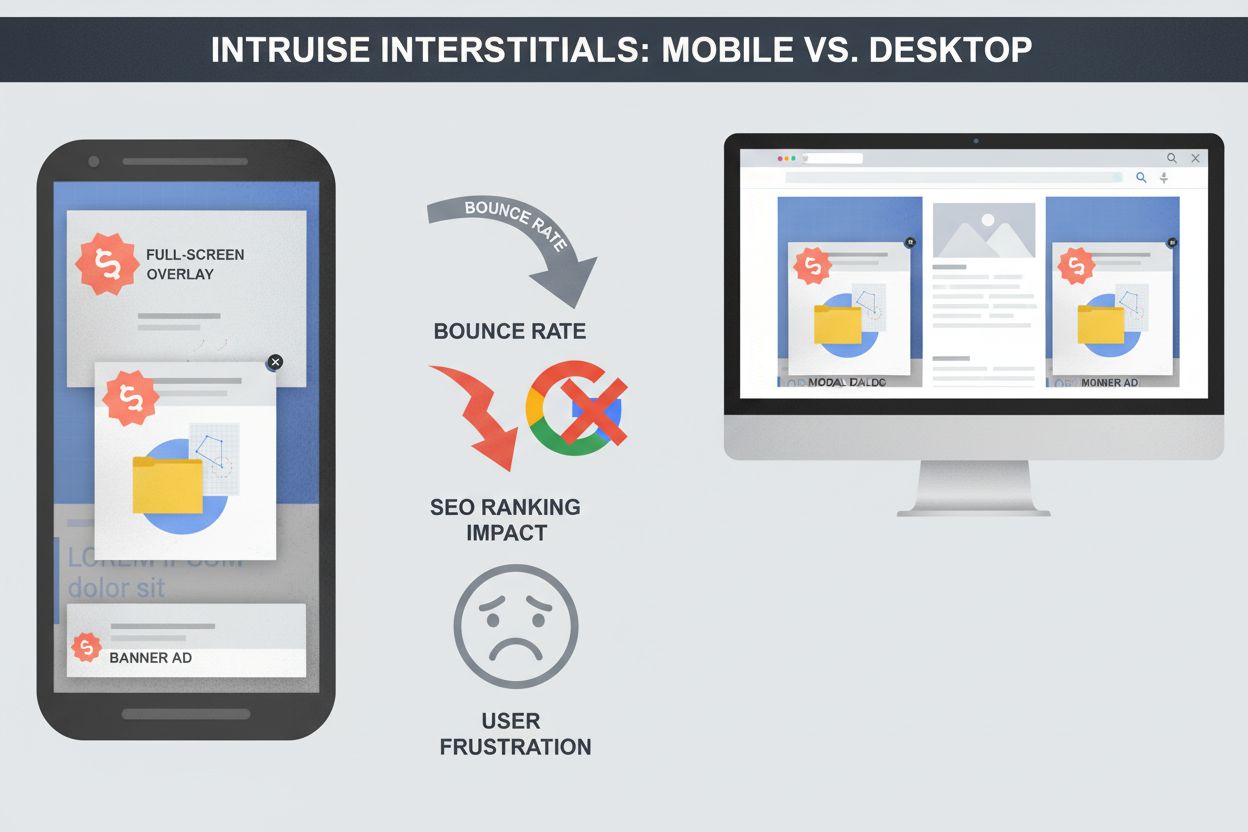
Intrusive interstitials are disruptive page elements such as pop-ups, overlays, or full-screen dialogs that obstruct users’ view of main content, typically for promotional purposes. Google penalizes websites using intrusive interstitials as a negative ranking factor, particularly on mobile devices where screen space is limited.
Intrusive interstitials are disruptive page elements such as pop-ups, overlays, or full-screen dialogs that obstruct users' view of main content, typically for promotional purposes. Google penalizes websites using intrusive interstitials as a negative ranking factor, particularly on mobile devices where screen space is limited.
Intrusive interstitials are disruptive page elements—such as pop-ups, overlays, or full-screen dialogs—that obstruct users’ view of main content, typically for promotional, advertising, or lead generation purposes. According to Google’s official definition, intrusive interstitials and dialogs are page elements that obstruct users’ view of the content, usually for promotional purposes. These elements can appear immediately upon page load, during content browsing, or as standalone overlays that require user dismissal before accessing primary content. The term “intrusive” specifically refers to the degree of disruption caused to the user experience, distinguishing these elements from contextual, non-intrusive dialogs like cookie consent banners or age verification prompts. Intrusive interstitials are particularly problematic on mobile devices, where limited screen space amplifies their disruptive nature. Understanding this distinction is critical for website owners, digital marketers, and SEO professionals, as Google has explicitly penalized intrusive interstitials as a negative ranking factor since January 2017, making them a significant concern for search visibility and organic traffic performance.
In August 2016, Google announced that mobile interstitials would become a negative ranking factor, with the algorithm update officially taking effect in January 2017. This announcement marked a watershed moment in web design philosophy, signaling Google’s commitment to prioritizing user experience over aggressive monetization practices. The search giant specifically identified three categories of interstitials that would trigger penalties: pop-ups covering main content immediately after page navigation from search results, standalone interstitials requiring dismissal before content access, and layouts where above-the-fold portions resemble interstitials with original content inlined underneath. This update was part of Google’s broader mobile-first indexing initiative, which fundamentally shifted how the search engine evaluates and ranks websites. According to John Mueller, Google’s Senior Search Analyst, the company’s stance has remained consistent: intrusive interstitials are considered a page experience factor that negatively impacts rankings. However, Mueller clarified that interstitials shown between user actions—such as between game levels in a mobile app or after users have engaged with content—are not penalized. This nuanced approach reflects Google’s recognition that some interstitials serve legitimate purposes while others purely disrupt user experience for commercial gain.
The relationship between intrusive interstitials and user experience is direct and measurable. Research demonstrates that approximately 60% of users would abandon a website due to intrusive interstitials, making them one of the most significant barriers to user retention. When users encounter full-screen pop-ups or overlays immediately upon landing on a page, they experience frustration that often translates into immediate departure. This behavior directly impacts critical engagement metrics: bounce rates increase significantly, session duration decreases, and pages-per-session metrics decline. The psychological impact of intrusive interstitials extends beyond immediate abandonment; users who encounter aggressive pop-ups are less likely to return to the website in future visits, even through organic search channels. Mobile users are particularly sensitive to intrusive interstitials because smartphone screens provide limited real estate, making overlays feel more aggressive and space-consuming than on desktop. Studies indicate that 70% of users are receptive to well-designed, contextual pop-ups that don’t disrupt their browsing experience, suggesting that the problem lies not with pop-ups themselves but with their implementation. This distinction is crucial for marketers seeking to balance lead generation and monetization objectives with user satisfaction and retention goals.
| Characteristic | Intrusive Interstitials | Non-Intrusive Alternatives | Google Penalty Status |
|---|---|---|---|
| Timing | Appears immediately on page load | Appears after user engagement or contextually | Penalized vs. Acceptable |
| Screen Coverage | Full-screen or near-full overlay | Banners, slide-ins, or inline elements | Penalized vs. Acceptable |
| User Action Required | Mandatory dismissal before content access | Optional or contextual interaction | Penalized vs. Acceptable |
| Mobile Experience | Severely disrupts limited screen space | Minimal impact on mobile usability | Penalized vs. Acceptable |
| Examples | Full-page pop-ups, standalone overlays | Cookie consent, age verification, exit-intent | Penalized vs. Acceptable |
| Conversion Impact | Higher short-term conversions, high abandonment | Moderate conversions, better retention | Penalized vs. Acceptable |
| SEO Impact | Negative ranking factor, lower visibility | No penalty, maintains search performance | Penalized vs. Acceptable |
| User Perception | Frustrating, deceptive, aggressive | Helpful, necessary, non-disruptive | Penalized vs. Acceptable |
Intrusive interstitials directly degrade Core Web Vitals, Google’s key metrics for measuring user experience and page performance. The three primary Core Web Vitals—Largest Contentful Paint (LCP), First Input Delay (FID), and Cumulative Layout Shift (CLS)—are all negatively affected by intrusive interstitials. LCP measures the time required for the largest content element to become visible; when interstitials overlay content immediately upon page load, they delay the rendering of primary content, increasing LCP scores and signaling poor performance to Google’s ranking algorithm. First Input Delay measures the responsiveness of a page to user interaction; intrusive interstitials that are difficult to dismiss or require multiple clicks increase FID by consuming processing resources and delaying user input responsiveness. Cumulative Layout Shift quantifies unexpected visual changes during page load; interstitials that appear suddenly and shift page layout cause high CLS scores, indicating a poor visual stability experience. These metrics are not merely technical measurements; they directly influence search rankings through Google’s Page Experience algorithm, which aggregates Core Web Vitals with existing signals including mobile-friendliness, HTTPS security, and safe browsing status. Websites with poor Core Web Vitals scores experience reduced visibility in search results, particularly on mobile devices where mobile-first indexing prioritizes the mobile version of content for ranking and indexing decisions.
The SEO impact of intrusive interstitials extends beyond technical metrics to directly influence search visibility and organic traffic. Google’s algorithm treats intrusive interstitials as a negative ranking factor, meaning websites employing them face potential penalties in search engine results pages (SERPs). This penalty is not uniform across all pages; Google specifically targets pages where interstitials appear immediately upon navigation from search results, as these directly contradict the user’s search intent. When a user clicks a search result expecting to find specific content and instead encounters a full-screen pop-up, Google interprets this as a poor match between search result and landing page experience. Over time, pages with intrusive interstitials experience lower click-through rates from search results, reduced organic traffic, and diminished visibility in competitive search queries. The penalty mechanism operates through multiple channels: reduced ranking positions, lower inclusion in featured snippets, and decreased likelihood of appearing in Google Discover. For websites relying heavily on organic search traffic, the cumulative impact of intrusive interstitials can be substantial. Industry data shows that websites addressing intrusive interstitial issues often experience ranking improvements within weeks of implementation, demonstrating the direct relationship between user experience optimization and search performance. This relationship is particularly pronounced for mobile search, where mobile-first indexing means Google primarily evaluates the mobile version of content for ranking purposes.
Mobile-first indexing fundamentally changed how Google evaluates websites, making mobile user experience the primary ranking factor. Since Google now crawls and indexes the mobile version of websites first, intrusive interstitials on mobile devices carry disproportionate weight in ranking decisions. Mobile screens typically measure 5-6 inches diagonally, making full-screen interstitials consume 80-100% of available screen space, compared to 20-30% on desktop displays. This disparity means that intrusive interstitials have a more severe impact on mobile rankings than desktop rankings. Additionally, the rise of AI-powered search platforms like ChatGPT, Perplexity, Google AI Overviews, and Claude introduces new considerations for website visibility. These AI systems crawl and analyze web content to generate responses, and intrusive interstitials can impede their ability to understand and extract relevant information from pages. When AI crawlers encounter interstitials that obscure content, they may struggle to index the primary content, reducing the likelihood that a website appears in AI-generated responses. For brands and publishers using AI monitoring platforms like AmICited to track their appearance in AI search results, addressing intrusive interstitials becomes essential for maintaining visibility across both traditional search and emerging AI search channels. The convergence of mobile-first indexing and AI search means that user experience optimization through interstitial removal benefits multiple discovery channels simultaneously.
Google’s penalty framework distinguishes between interstitials that trigger penalties and those that are exempt. Penalized interstitials include full-screen pop-ups appearing immediately after page navigation from search results, standalone interstitials requiring dismissal before content access, and layouts where above-the-fold portions resemble interstitials with original content inlined underneath. These categories represent the most aggressive forms of content obstruction. Non-penalized interstitials include cookie consent banners required by privacy regulations, age verification dialogs for age-restricted content, login screens for gated or subscription content, and app install banners provided by browsers like Safari and Chrome. The distinction hinges on whether the interstitial serves a legitimate, user-beneficial purpose or primarily serves the website’s commercial interests. Mandatory interstitials—those required by law or regulation—receive exemption from penalties, though Google recommends best practices even for these elements. For example, age-gated content should overlay the interstitial on top of content rather than redirecting to a separate page, allowing Google to index underlying content. This nuanced framework reflects Google’s philosophy that not all interstitials are inherently problematic; rather, the problem lies with intrusive implementations that prioritize monetization over user experience.
Implementing best practices for interstitial management requires balancing marketing objectives with user experience and SEO performance. The most effective approach involves replacing full-screen interstitials with alternative formats that achieve marketing goals without triggering Google penalties. Exit-intent pop-ups represent one of the most effective alternatives; these appear when users move their cursor toward the browser’s close button, capturing attention at the moment of departure rather than disrupting initial content engagement. Inline forms embedded within content flow allow lead capture without page obstruction, maintaining content accessibility while providing conversion opportunities. Persistent headers and footers with calls-to-action remain visible throughout the user’s session without obscuring primary content. Slide-in notifications appearing at page edges provide visibility without full-screen coverage. For websites requiring interstitials, design principles should emphasize minimal screen coverage, clear and accessible close buttons, and contextual relevance to user intent. Interstitials should appear after users have engaged with content, not immediately upon page load. Frequency capping—limiting how often interstitials appear to the same user—prevents user frustration and abandonment. Testing and measurement through A/B testing, heatmaps, and user feedback enable data-driven optimization of interstitial implementation. Tools like Google’s Mobile-Friendly Test, Hotjar heatmaps, and Google Search Console provide insights into interstitial impact on user experience and search performance.
The timing of interstitial display fundamentally determines whether Google considers it intrusive. According to John Mueller’s guidance, interstitials shown between user actions—such as between game levels in mobile apps or after users have engaged with content—are not penalized. This principle extends to web experiences: interstitials appearing after users have spent time on a page, scrolled through content, or completed an action are perceived as less intrusive than those appearing immediately upon page load. Delay mechanisms can be implemented to show interstitials only after users have engaged with content for a specified duration, typically 15-30 seconds. This approach allows users to access and interact with primary content before encountering promotional elements. Scroll-triggered interstitials appear only after users have scrolled to a certain point on the page, ensuring they’ve engaged with content before encountering interruptions. Click-triggered interstitials appear after users have clicked specific elements, maintaining contextual relevance. For lead generation, exit-intent technology uses mouse tracking to detect when users are about to leave and displays interstitials at that moment, capturing attention without disrupting initial browsing. Contextual interstitials appear based on user behavior, page content, or referral source, ensuring relevance and reducing perceived intrusiveness. These implementation strategies demonstrate that effective interstitial use requires sophisticated timing and contextual awareness rather than aggressive, immediate display.
The landscape of intrusive interstitials continues to evolve as user expectations shift and technology advances. Google’s commitment to user experience as a ranking factor shows no signs of diminishing; if anything, the search engine is likely to become more stringent in penalizing aggressive advertising practices. The rise of AI-powered search introduces new considerations for content accessibility and crawlability. As platforms like ChatGPT, Perplexity, and Google AI Overviews become increasingly important discovery channels, websites must ensure that interstitials don’t impede AI systems’ ability to understand and extract content. This multi-channel visibility requirement means that optimizing for traditional search and AI search simultaneously demands cleaner, less obstructed content presentation. Privacy regulations like GDPR and CCPA have normalized certain types of interstitials—specifically cookie consent banners—making them increasingly common. However, even these necessary interstitials are subject to best practice guidelines; Google recommends minimizing their visual impact and ensuring they don’t redirect users to separate pages. The future likely holds more sophisticated contextual interstitial technologies that use machine learning to determine optimal timing and presentation based on individual user behavior, device type, and content context. Publishers and marketers who embrace this evolution—moving from aggressive, one-size-fits-all interstitials to intelligent, contextual alternatives—will maintain competitive advantages in both search visibility and user engagement. The convergence of SEO best practices, user experience optimization, and AI search visibility suggests that the most successful websites will be those that view interstitial management not as a constraint but as an opportunity to demonstrate respect for user experience and build sustainable, long-term audience relationships.
Intrusive interstitials completely block or significantly obstruct access to main content immediately upon page load, while non-intrusive interstitials appear contextually during user interaction or after content engagement. Google distinguishes between the two based on timing and user experience impact. Non-intrusive examples include cookie consent banners, age verification dialogs, and login screens for gated content. The key differentiator is whether users can access primary content without unnecessary delays or frustration.
Intrusive interstitials negatively impact Core Web Vitals metrics including Largest Contentful Paint (LCP), First Input Delay (FID), and Cumulative Layout Shift (CLS). These metrics are part of Google's Page Experience algorithm, which directly influences search rankings. When interstitials delay content rendering or cause unexpected layout shifts, they signal poor user experience to Google's ranking system. This can result in lower visibility in search engine results pages (SERPs), reduced organic traffic, and diminished click-through rates from search results.
Research indicates that approximately 60% of users would leave a website due to intrusive interstitials, making them a significant barrier to user retention. Additionally, studies show that 70% of users are receptive to well-designed, contextual pop-ups that don't disrupt their browsing experience. This data underscores the importance of balancing marketing objectives with user experience. Websites that implement intrusive interstitials often experience higher bounce rates and lower engagement metrics, directly impacting conversion potential.
Google announced in August 2016 that mobile interstitials would become a negative ranking factor, with the algorithm update taking effect in January 2017. This marked a significant shift in Google's approach to prioritizing user experience over aggressive advertising practices. The penalty specifically targeted full-screen pop-ups, standalone interstitials requiring dismissal before content access, and layouts where above-the-fold content resembled interstitials. This update reinforced Google's commitment to mobile-first indexing and user-centric web design principles.
Effective alternatives include exit-intent pop-ups that appear when users are about to leave, inline forms embedded within content flow, persistent headers or footers with calls-to-action, slide-in notifications at page edges, and contextual banners that occupy minimal screen space. Exit-intent pop-ups are particularly effective because they capture attention after users have engaged with content, reducing the perception of intrusion. These alternatives maintain marketing effectiveness while preserving user experience and SEO performance, allowing businesses to achieve conversion goals without triggering Google penalties.
Use Google's Mobile-Friendly Test tool to identify mobile usability issues, manually browse your site on mobile and desktop devices to spot disruptive elements, and leverage heatmap tools like Hotjar or CrazyEgg to understand user behavior around pop-ups. Google Search Console provides alerts for page experience issues, including interstitial-related penalties. Additionally, conduct user testing with real visitors to gather qualitative feedback about perceived intrusiveness. Regular audits ensure compliance with Google's guidelines and help maintain optimal user experience across all devices.
Yes, interstitial ads remain effective for monetization when implemented strategically. Industry data shows interstitial ads command higher CPM rates ($4.80 in 2024) compared to banner ads ($2.80), and they achieve 2-5% click-through rates versus 0.5-1% for banners. However, the key is timing and context. Interstitials shown between user actions or after content engagement don't trigger Google penalties while maintaining strong performance metrics. Publishers must balance revenue optimization with user experience and SEO considerations, using contextual placement and frequency capping to maximize both monetization and search visibility.
Start tracking how AI chatbots mention your brand across ChatGPT, Perplexity, and other platforms. Get actionable insights to improve your AI presence.
Learn what doorway pages are, why they harm SEO, how Google detects them, and why they're considered black-hat spam. Includes examples and best practices.
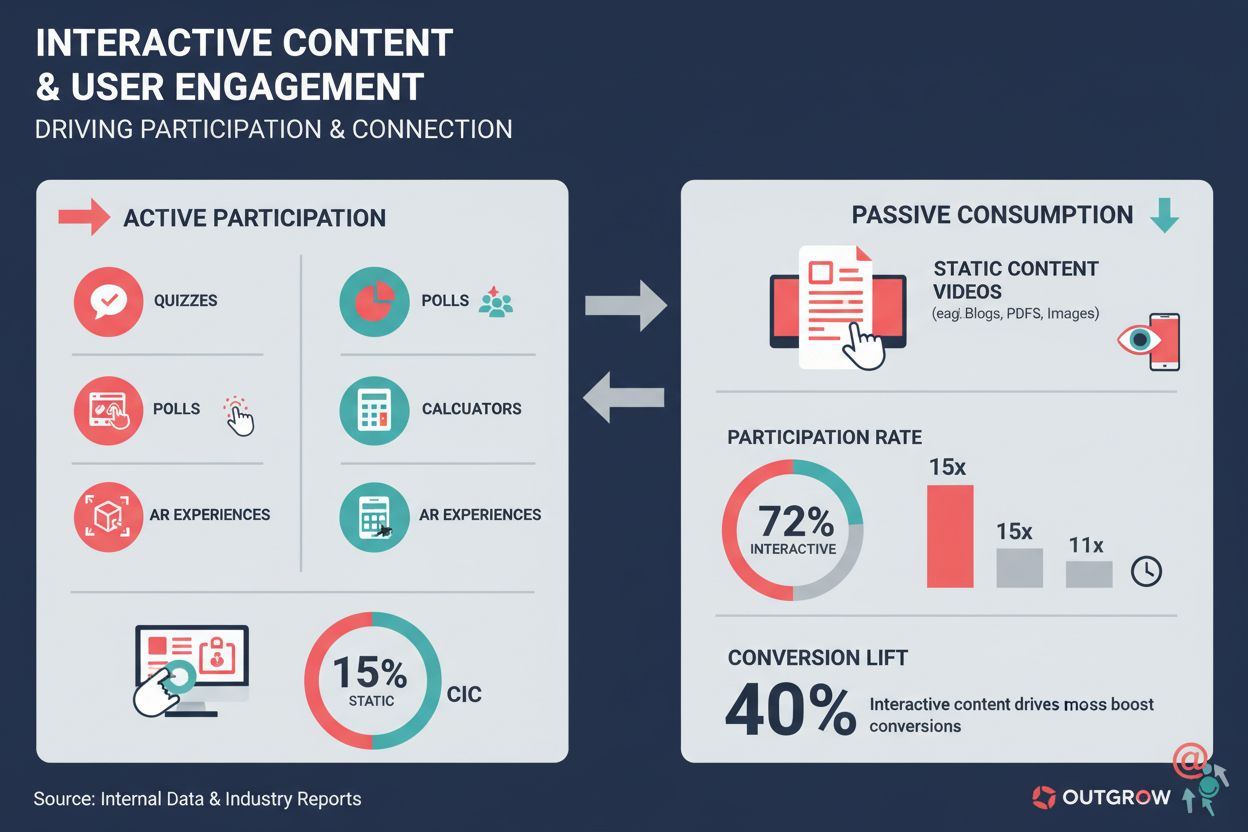
Interactive content requires user participation to engage audiences actively. Learn how quizzes, polls, calculators, and AR experiences drive engagement, conver...
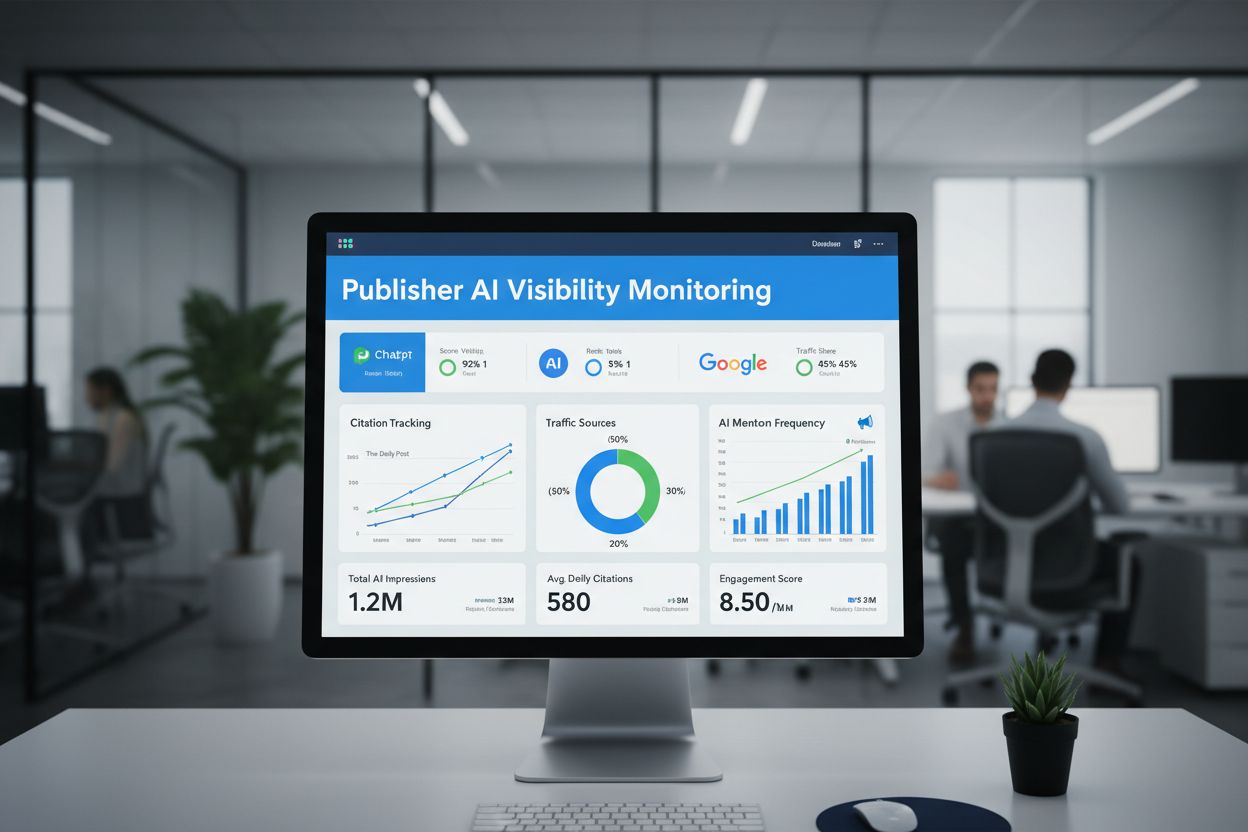
Learn what Publisher AI Visibility is and discover strategies for media companies and publishers to maintain traffic despite AI summaries. Explore GEO optimizat...
Cookie Consent
We use cookies to enhance your browsing experience and analyze our traffic. See our privacy policy.