

How Do I Research AI Search Queries?
Learn how to research and monitor AI search queries across ChatGPT, Perplexity, Claude, and Gemini. Discover methods to track brand mentions and optimize for AI...
9 min read
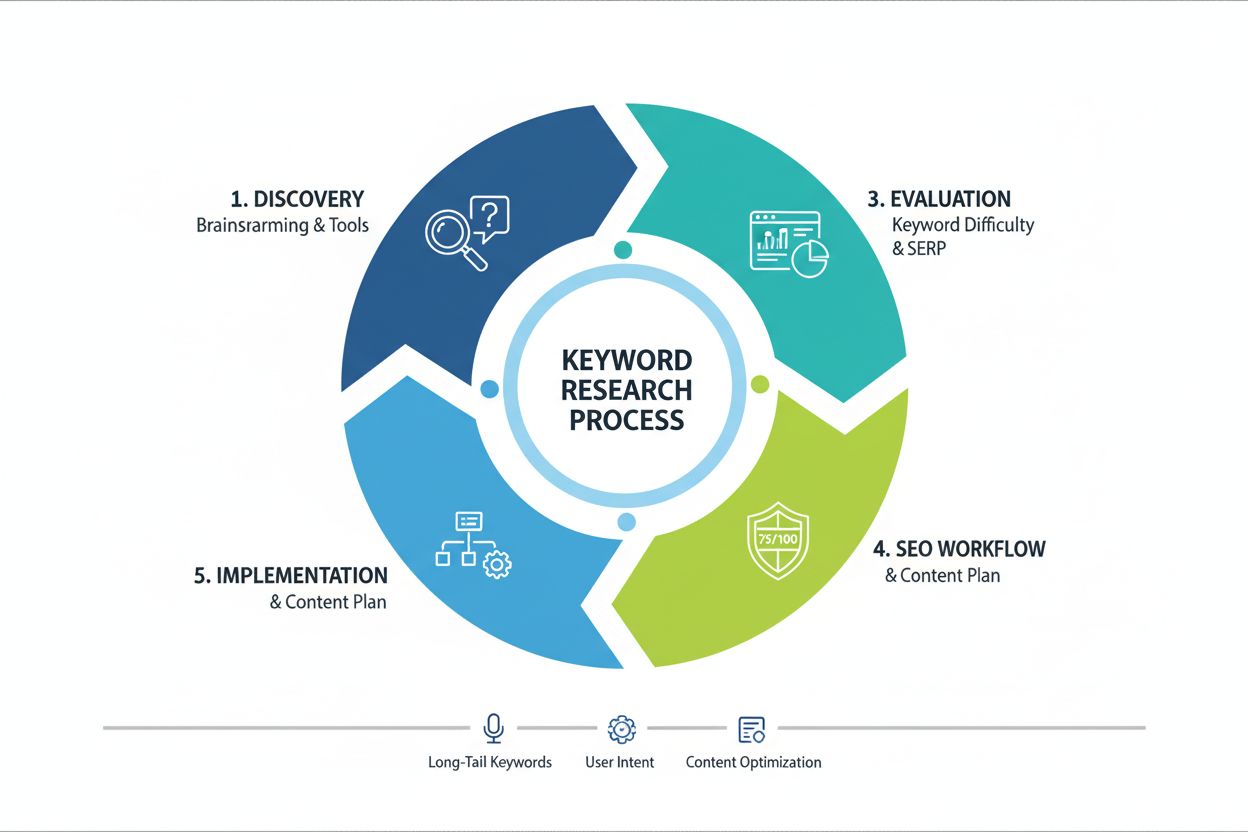
Keyword research is the systematic process of identifying, analyzing, and selecting the specific words and phrases that people search for online to find information, products, or services. It involves understanding search volume, competition level, user intent, and relevance to strategically target high-value search terms that drive qualified traffic to websites and improve visibility across search engines and AI platforms.
Keyword research is the systematic process of identifying, analyzing, and selecting the specific words and phrases that people search for online to find information, products, or services. It involves understanding search volume, competition level, user intent, and relevance to strategically target high-value search terms that drive qualified traffic to websites and improve visibility across search engines and AI platforms.
Keyword research is the foundational process of identifying, analyzing, and selecting the specific words and phrases that people use when searching for information, products, or services on the internet. It serves as the critical bridge between what your audience is actively searching for and the content you create to meet those needs. This systematic approach involves evaluating multiple data points—including search volume, keyword difficulty, search intent, and relevance—to determine which terms offer the greatest opportunity for visibility and business impact. In today’s multi-platform search environment, keyword research extends beyond traditional search engines to include AI-powered platforms like ChatGPT, Perplexity, Google AI Overviews, and Claude, where understanding keyword relevance directly influences whether your content gets cited as an authoritative source.
Keyword research emerged as a formal discipline in the early 2000s when search engine optimization became recognized as a critical marketing function. Initially, the practice was relatively straightforward—marketers would identify high-volume keywords and attempt to rank for them with minimal consideration for user intent or content quality. However, as search algorithms evolved, particularly with Google’s introduction of semantic search and machine learning updates, keyword research transformed into a more sophisticated, data-driven discipline. According to recent industry data, 91% of marketers reported that SEO improved their website performance in 2024, with keyword research serving as the foundational element of successful SEO strategies. The emergence of AI search engines has further evolved the practice, requiring marketers to understand not just traditional search ranking factors but also how AI systems evaluate content relevance, authority, and citation worthiness. This evolution reflects a broader shift from keyword-centric optimization to user-intent-centric content strategy.
Effective keyword research encompasses several interconnected elements that work together to identify valuable search opportunities. Search volume measures the average number of monthly searches for a given keyword, providing insight into demand and potential traffic. Keyword difficulty (KD) quantifies how challenging it is to rank for a particular term, typically on a scale of 0-100, with higher scores indicating more competitive keywords dominated by established websites. Search intent categorizes queries into four primary types: informational (seeking knowledge), navigational (looking for a specific website), commercial (comparing options), and transactional (ready to purchase). Relevance ensures that selected keywords align with your business offerings, target audience, and content capabilities. Additionally, long-tail keywords—longer, more specific phrases typically containing three or more words—often provide superior conversion rates despite lower search volumes. Understanding these elements allows marketers to move beyond vanity metrics and focus on keywords that deliver genuine business value.
| Aspect | Short-Tail Keywords | Long-Tail Keywords | Branded Keywords | Competitor Keywords |
|---|---|---|---|---|
| Search Volume | Very High (10K+/month) | Low to Moderate (100-1K/month) | Variable | Variable |
| Competition Level | Extremely High | Low to Moderate | Low | High |
| Conversion Intent | Low (broad interest) | High (specific need) | Very High (intent to buy) | Medium (research phase) |
| Ranking Difficulty | 70-100 | 10-40 | 0-30 | 40-80 |
| Best Use Case | Brand awareness, traffic volume | Qualified leads, niche targeting | Customer retention, loyalty | Market analysis, gap identification |
| Example | “shoes” | “best running shoes for marathon training” | “Nike Air Max” | “Adidas running shoe reviews” |
| Time to Rank | 6-12+ months | 1-3 months | Immediate (brand owned) | 3-6 months |
The keyword research process begins with brainstorming and seed keyword identification, where you define your business goals, target audience personas, and initial keyword ideas based on your industry expertise. This foundational step involves understanding your unique selling propositions and the specific problems your products or services solve. Next, you expand your keyword list using specialized tools like Google Keyword Planner, SEMrush, Ahrefs, Moz Keyword Explorer, or Ubersuggest, which provide data on search volume, difficulty, and related keywords. The third phase involves evaluating and filtering keywords based on your predetermined criteria—typically prioritizing terms with reasonable search volume (minimum 100 monthly searches), manageable difficulty scores, and clear alignment with your business objectives. Following evaluation, you analyze search intent by examining the top-ranking results for your target keywords, understanding what type of content Google and AI systems currently favor for those queries. The final steps include mapping keywords to content and monitoring performance through tools like Google Search Console and Google Analytics, allowing you to track rankings, traffic, and conversions over time.
Understanding search intent has become increasingly critical in modern keyword research, particularly as AI systems prioritize content that genuinely satisfies user needs. When a user searches for “how to fix a leaky faucet,” they’re seeking instructional content, not product pages. Conversely, someone searching “buy stainless steel kitchen faucet online” demonstrates transactional intent and expects e-commerce results. Misaligning your content with search intent wastes resources and frustrates users, resulting in high bounce rates and poor rankings. AI search engines like Perplexity and Google AI Overviews are particularly sophisticated at evaluating whether content matches user intent, making this alignment essential for AI citation. Research indicates that 50% of all searches are expected to be voice-based by 2025, which further emphasizes the importance of understanding conversational intent and natural language patterns. By analyzing the top-ranking results for your target keywords, you can reverse-engineer what Google and AI systems consider the ideal response format—whether that’s a listicle, how-to guide, comparison article, or product review. This intent-driven approach ensures your content not only ranks well but also delivers genuine value to your audience.
Modern keyword research relies on a sophisticated ecosystem of tools, each providing unique insights into search behavior and competitive landscape. Google Keyword Planner, integrated with Google Ads, offers free access to search volume data and keyword suggestions directly from Google’s search index. SEMrush provides comprehensive keyword analysis including search volume, difficulty, cost-per-click, and competitor keyword tracking across multiple search engines. Ahrefs excels at competitive analysis, showing which keywords competitors rank for and their estimated traffic. Moz Keyword Explorer combines search volume data with difficulty metrics and opportunity scores to help prioritize keywords. Ubersuggest offers an affordable alternative with keyword suggestions, content ideas, and backlink analysis. Beyond these traditional tools, Google Trends reveals seasonal patterns and emerging keyword trends, while Google Search Console provides real-world data on which keywords drive traffic to your existing website. For AI search optimization, platforms like AmICited track how your brand and content appear in AI-generated responses across ChatGPT, Perplexity, Google AI Overviews, and Claude, providing insights into which keywords and topics drive AI citations. Selecting the right combination of tools depends on your budget, team size, and specific research objectives.
Long-tail keywords represent one of the most underutilized opportunities in keyword research, particularly for websites competing against established brands. These longer, more specific phrases typically contain three or more words and address niche audience segments with clear, defined needs. While individual long-tail keywords may generate only 50-500 monthly searches compared to thousands for short-tail equivalents, their collective volume is substantial—research shows that long-tail searches account for the majority of total search volume across the internet. More importantly, long-tail keywords demonstrate significantly higher conversion rates because they indicate stronger purchase intent and more specific user needs. For example, someone searching “affordable waterproof hiking boots for women with wide feet” is far more likely to convert than someone searching simply “boots.” Long-tail keywords also face substantially lower competition, making them achievable ranking targets for newer websites or those with limited domain authority. The strategy of targeting long-tail keywords first, then gradually expanding to broader terms as your domain authority grows, has proven highly effective for sustainable SEO growth. Tools like Google Suggest (the autocomplete feature), Google Trends, and the “People Also Ask” section in search results are excellent sources for discovering long-tail keyword opportunities that your competitors may have overlooked.
Competitive keyword analysis provides invaluable intelligence about your market landscape and identifies opportunities your competitors may have missed. By analyzing which keywords your competitors rank for, you can discover high-value terms you haven’t yet targeted and understand the competitive intensity of different keyword categories. Tools like SEMrush and Ahrefs allow you to input competitor domains and see their entire keyword portfolio, including estimated monthly traffic and ranking positions. This analysis reveals several strategic opportunities: keyword gaps (terms your competitors rank for that you don’t), low-hanging fruit (keywords where competitors rank but with weak content you could outrank), and emerging opportunities (new keywords gaining search volume that competitors haven’t yet optimized for). However, competitive analysis should inform rather than dictate your strategy—blindly copying competitor keywords without considering your unique value proposition and audience needs is a common mistake. Instead, use competitive insights to validate keyword opportunities and understand the content formats and depth required to rank. Additionally, analyzing competitor content quality, structure, and comprehensiveness helps you understand what “winning” looks like for your target keywords, enabling you to create superior content that satisfies both users and search algorithms.
The emergence of AI search engines has fundamentally changed how keyword research impacts brand visibility and content discovery. Unlike traditional search engines that return a list of ranked results, AI systems like ChatGPT, Perplexity, and Google AI Overviews generate synthesized answers that cite specific sources. This shift means that keyword research must now account for how AI systems evaluate content relevance, authority, and citation worthiness. AI platforms analyze keyword relevance in the context of topical authority—whether your website comprehensively covers a subject area—rather than just keyword density or placement. Brands that conduct thorough keyword research and create authoritative, comprehensive content on specific topics are more likely to be cited as sources in AI-generated responses. AmICited and similar AI monitoring platforms enable marketers to track which keywords and topics drive AI citations, providing data-driven insights into how keyword research translates to visibility in AI search. This represents a significant evolution from traditional SEO metrics, where rankings and click-through rates were primary success indicators. Understanding which keywords drive AI citations allows you to refine your keyword strategy, prioritize content creation around high-impact topics, and maintain competitive advantage as AI search becomes increasingly prevalent. Research indicates that over 58% of American Google searches and 60% of EU searches result in zero clicks, suggesting that AI-generated answers are capturing significant search demand, making AI visibility optimization essential for modern keyword research strategy.
The future of keyword research will be shaped by the continued evolution of AI search engines and changing user expectations around search experiences. As AI systems become more sophisticated at understanding context, intent, and topical authority, traditional keyword metrics like search volume and difficulty may become less predictive of ranking success. Instead, keyword research will increasingly focus on topical authority—the depth and breadth of content you create around specific subject areas—and citation worthiness, which measures how likely AI systems are to cite your content as an authoritative source. The rise of conversational search and voice search will require keyword research to account for natural language patterns and question-based queries rather than just keyword phrases. Additionally, as AI platforms like Perplexity and Claude gain market share, keyword research will need to address optimization across multiple AI platforms simultaneously, each with different ranking algorithms and citation preferences. The integration of real-time data and trending topics into keyword research will become increasingly important, allowing marketers to capitalize on emerging search demand before competitors. Furthermore, the distinction between SEO and content marketing will continue to blur, with keyword research becoming less about finding high-volume terms and more about identifying topics that establish your brand as a thought leader and trusted authority. Organizations that adapt their keyword research practices to account for AI search visibility, topical authority, and multi-platform optimization will maintain competitive advantage as the search landscape continues to evolve.
Short-tail keywords are broad, generic terms with high search volume but intense competition (e.g., 'shoes'), while long-tail keywords are specific, multi-word phrases with lower search volume but higher conversion intent (e.g., 'best running shoes for flat feet'). Long-tail keywords typically have lower difficulty scores and attract more qualified traffic, making them valuable for websites seeking sustainable, targeted growth. Research shows that long-tail keywords collectively account for the majority of search volume across the internet.
As AI search engines like ChatGPT, Perplexity, and Google AI Overviews become more prevalent, keyword research has evolved to include understanding how these platforms surface content. AI systems analyze keyword relevance, content quality, and topical authority to determine which sources to cite. By conducting thorough keyword research aligned with user intent, you increase the likelihood that your content will be cited as an authoritative source in AI-generated responses, directly impacting your brand's visibility in this emerging search landscape.
The three primary metrics are search volume (monthly searches), keyword difficulty (competition level), and search intent (what users want to accomplish). Additionally, consider business value—whether the keyword aligns with your products or services and has conversion potential. Tools like SEMrush, Ahrefs, and Google Keyword Planner provide these metrics, but the ideal keyword balances reasonable search volume, manageable difficulty, and clear alignment with your business goals and audience needs.
Keyword research should be an ongoing process, not a one-time task. Search trends, user behavior, and industry developments change constantly. Review your keyword strategy quarterly or semi-annually, monitor ranking performance using Google Search Console, and adapt to emerging trends using tools like Google Trends. Staying current with keyword shifts ensures your content remains relevant and competitive, particularly as AI search platforms introduce new ranking factors and user expectations evolve.
Search intent refers to the underlying goal behind a user's search query—whether they want information (informational intent), to visit a specific website (navigational intent), to make a purchase (transactional intent), or to compare options (commercial intent). Matching your content to search intent is critical because Google and AI systems prioritize results that satisfy user expectations. Creating content that aligns with intent improves rankings, user experience, and conversion rates, making it a cornerstone of effective keyword research strategy.
Ranking for high-difficulty keywords as a new website is extremely challenging due to domain authority and competition from established sites. Instead, focus on long-tail keywords with lower difficulty scores, build topical authority in your niche, create high-quality content, and gradually work toward more competitive terms. This approach, called the 'long-tail strategy,' allows new websites to gain initial traffic and authority before competing for broader, more difficult keywords over time.
Keyword research informs every aspect of content strategy by revealing what topics your audience cares about, what questions they ask, and what language they use. It helps you prioritize content creation efforts, identify content gaps, and align your editorial calendar with user demand. By mapping keywords to different stages of the buyer's journey—awareness, consideration, and decision—you can create targeted content that attracts prospects at each stage, ultimately driving more qualified leads and conversions.
Start tracking how AI chatbots mention your brand across ChatGPT, Perplexity, and other platforms. Get actionable insights to improve your AI presence.
Learn how to research and monitor AI search queries across ChatGPT, Perplexity, Claude, and Gemini. Discover methods to track brand mentions and optimize for AI...
Search volume measures how many times keywords are searched monthly. Learn how to use search volume data for keyword research, SEO strategy, and understanding u...
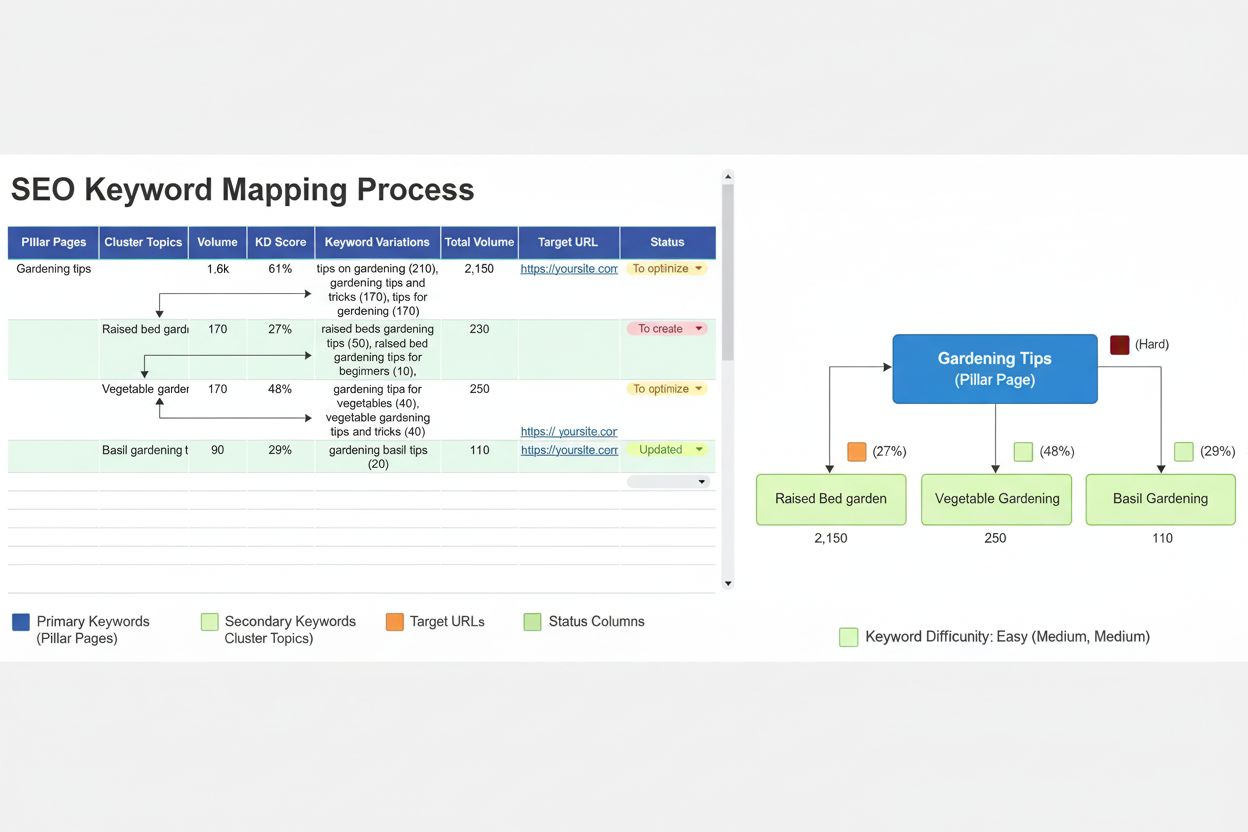
Learn keyword mapping: the process of assigning target keywords to website pages. Discover how to prevent cannibalization, optimize site structure, and improve ...
Cookie Consent
We use cookies to enhance your browsing experience and analyze our traffic. See our privacy policy.