

How Knowledge Panels Affect AI Citations and Brand Visibility
Learn how knowledge panels impact AI citations across ChatGPT, Perplexity, and Gemini. Discover why knowledge panel optimization is essential for AI search visi...
11 min read
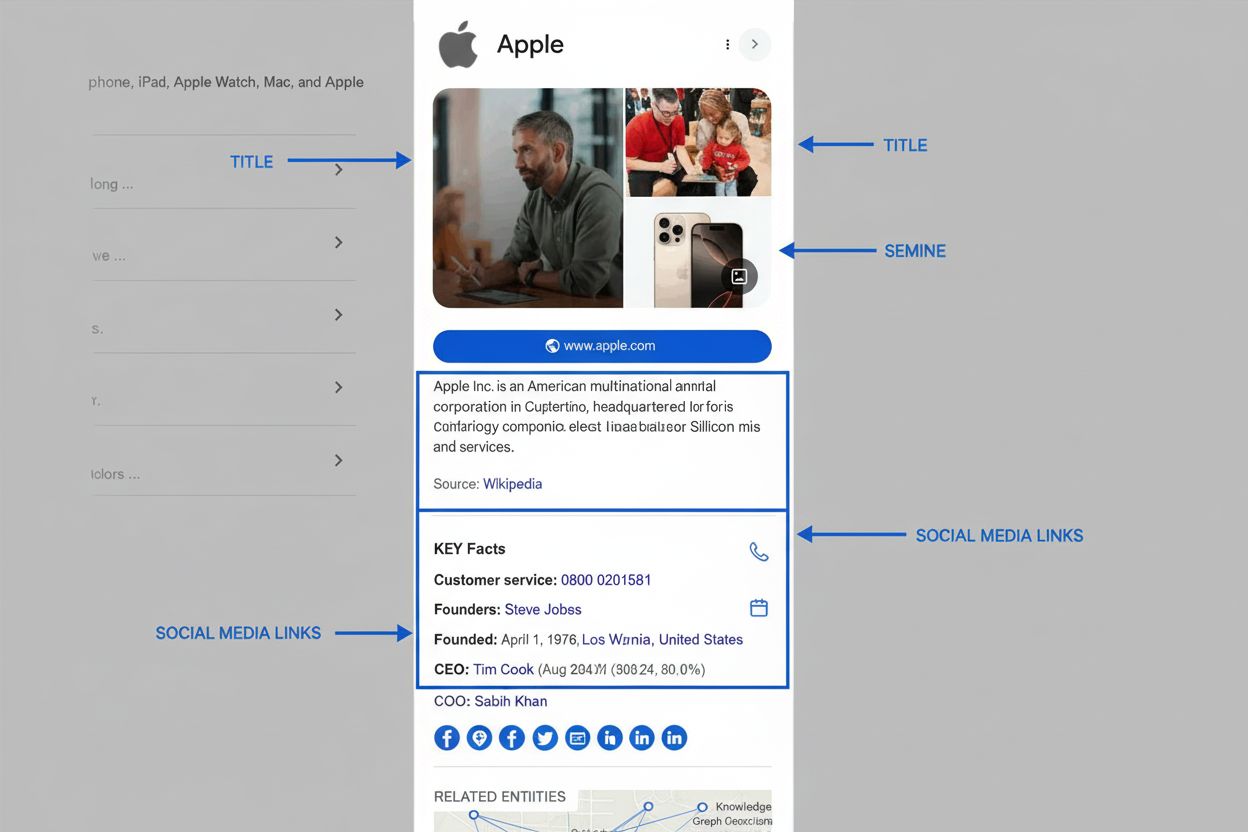
A Knowledge Panel is an information box that appears in Google Search results displaying structured, verified facts about entities such as people, businesses, organizations, events, or creative works. It pulls data from Google’s Knowledge Graph to provide users with quick, authoritative answers without requiring them to click through to external websites.
A Knowledge Panel is an information box that appears in Google Search results displaying structured, verified facts about entities such as people, businesses, organizations, events, or creative works. It pulls data from Google's Knowledge Graph to provide users with quick, authoritative answers without requiring them to click through to external websites.
A Knowledge Panel is an information box that appears prominently in Google Search results, typically on the right side of desktop searches or at the top of mobile results, displaying structured, verified facts about a specific entity. The entity can be a person, business, organization, location, event, creative work, or any other recognizable subject that Google’s algorithms have identified as notable and worthy of a dedicated information summary. The Knowledge Panel serves as a quick-reference card that provides users with essential information without requiring them to click through to external websites, fundamentally changing how information is discovered and consumed in search results. This feature represents a significant shift in search behavior, as it prioritizes immediate, authoritative answers over traditional organic search results, making it one of the most valuable real estate positions on the search engine results page.
The Knowledge Panel concept emerged from Google’s broader initiative to understand and organize information about entities across the web. Introduced alongside the Knowledge Graph in 2012, Knowledge Panels were designed to help users quickly access verified information about topics they search for. The Knowledge Graph itself contains over 500 billion facts about five billion entities, making it one of the most comprehensive databases of structured information ever created. Google’s investment in Knowledge Panels reflects a fundamental shift in search philosophy—from keyword matching to entity understanding. According to research, approximately 78% of branded searches now trigger some form of Knowledge Panel or related entity box, demonstrating the widespread adoption and importance of this feature. The evolution of Knowledge Panels has accelerated in recent years, particularly with the rise of AI-powered search and the need for AI systems to access verified, structured entity data. This evolution is directly relevant to AI monitoring and brand visibility across platforms like ChatGPT, Perplexity, Google AI Overviews, and Claude, which increasingly rely on Knowledge Panels as authoritative sources when generating responses about entities.
Knowledge Panels operate through a sophisticated system that combines algorithmic detection, data aggregation, and verification mechanisms. When a user searches for an entity name or related query, Google’s algorithm determines whether a Knowledge Panel should be displayed based on several factors: search intent, entity notability, data availability, and user experience considerations. The system pulls information from Google’s Knowledge Graph, which continuously ingests data from hundreds of sources including Wikipedia, Wikidata, official websites with structured data (schema markup), licensed data providers, social media profiles, and third-party databases. The Knowledge Panel template is then dynamically populated with the most relevant and popular information for that specific entity type. For example, a Knowledge Panel for a musician might emphasize discography and streaming links, while a Knowledge Panel for a company might highlight founding date, headquarters, and stock price. The information displayed is not static—Google’s algorithms continuously update Knowledge Panels based on new information discovered across the web, user feedback, and changes suggested by verified entity owners. This dynamic nature means that Knowledge Panels serve as living documents that evolve as entities themselves evolve, making them particularly valuable for tracking how entities are perceived and represented in search.
| Feature | Knowledge Panel | Google Business Profile | Featured Snippet | AI Overview |
|---|---|---|---|---|
| Creation Method | Automatically generated by Google | Manually created by business owner | Algorithmically extracted from web content | AI-generated summary from multiple sources |
| Data Source | Knowledge Graph, Wikipedia, structured data | Business owner input, customer reviews | Website content, articles | Web search results, Knowledge Graph |
| Primary Purpose | Entity information summary | Local business visibility | Answer to specific query | Comprehensive AI-generated response |
| Appearance | Right side (desktop) or top (mobile) | Google Maps, local search results | Top of organic results | Integrated into search results |
| Control Level | Limited (suggest edits only) | Full owner control | No direct control | No direct control |
| Entity Types | People, companies, events, places, creative works | Local businesses primarily | Any topic with extractable answers | Any searchable topic |
| Click-Through Impact | High (prime real estate) | Very high (drives foot traffic) | Medium (competes with organic results) | Variable (may reduce clicks) |
| Relevance to AI Monitoring | Critical (cited by AI systems) | Limited (local focus) | Moderate (used as source) | Critical (direct AI output) |
Knowledge Panels have become strategically critical for brands and entities because they represent a form of search visibility that is independent of traditional organic ranking factors. Unlike organic search results, which fluctuate based on algorithm updates and competitive dynamics, a Knowledge Panel provides stable, prominent visibility once an entity achieves sufficient authority. This stability is particularly valuable in competitive markets where ranking for primary keywords is difficult. Additionally, Knowledge Panels serve as a trust signal—Google’s decision to display a Knowledge Panel for an entity is essentially an endorsement of that entity’s notability and credibility. Research indicates that entities with Knowledge Panels experience significantly higher click-through rates compared to those without, as users are more likely to engage with information presented in this authoritative format. The Knowledge Panel also controls valuable real estate on the search results page, potentially pushing competitor content further down or off the visible area. For businesses, this means that a Knowledge Panel can drive substantial traffic to their website, social media profiles, and other digital properties through the direct links displayed in the panel. The strategic value extends beyond traditional search—Knowledge Panels are increasingly important for voice search, as voice assistants like Google Assistant (being phased out for Gemini) and other AI systems often use Knowledge Panel data as the primary source for spoken responses to factual queries.
The emergence of AI search engines and AI Overviews has fundamentally changed the importance of Knowledge Panels for brand visibility. Platforms like ChatGPT, Perplexity, Google AI Overviews, and Claude increasingly reference or cite information from Knowledge Panels when generating responses about entities. This is because Knowledge Panels represent verified, structured data that AI systems can trust and cite as authoritative sources. When an AI system encounters a query about an entity, it often looks for a Knowledge Panel as a primary source of truth, making the presence and accuracy of your Knowledge Panel critical for controlling your brand narrative in AI responses. Research from AmICited and similar AI monitoring platforms shows that entities with comprehensive, well-maintained Knowledge Panels are cited more frequently in AI-generated responses across multiple platforms. This creates a new dimension of brand monitoring that goes beyond traditional search engine optimization—it’s about ensuring your entity is properly represented in the AI systems that increasingly mediate how information is discovered and consumed. The implications are significant: a poorly maintained or inaccurate Knowledge Panel can result in AI systems spreading misinformation about your entity, while a well-optimized Knowledge Panel can ensure consistent, positive representation across all AI platforms.
The process of acquiring a Knowledge Panel begins with establishing a strong online presence across multiple authoritative sources. Google’s algorithm looks for consistent, verified information about an entity across the web—this includes mentions on news sites, industry publications, Wikipedia, Wikidata, social media profiles, and official websites. The first step is to ensure that your entity information is consistent across all platforms: your name, logo, description, and contact details should be identical across your website, Google My Business profile, social media accounts, and directory listings. Inconsistencies signal to Google that your entity may not be well-established or trustworthy, reducing the likelihood of a Knowledge Panel. The second step is to implement structured data (schema markup) on your website, which helps Google understand the context and details of your entity in machine-readable format. This is particularly important for providing Google with specific information like founding date, founder names, headquarters location, and other key facts that might appear in a Knowledge Panel. The third step is to build authority through high-quality backlinks and mentions on authoritative websites. This signals to Google that your entity is notable and worthy of a Knowledge Panel. Once you have established sufficient authority, you can claim your Knowledge Panel by searching for your entity name on Google, finding the panel (if it exists), and clicking the “Claim this knowledge panel” link at the bottom. Google will then require you to verify your identity or ownership through a verification process, which may involve logging into associated social media accounts or providing official documentation.
Once you have claimed your Knowledge Panel, the next step is to optimize it to ensure it displays the most relevant and compelling information about your entity. While you cannot directly edit the Knowledge Panel, you can suggest edits to specific elements through the verification interface. Key elements to optimize include your primary image or logo (which should be high-quality and representative of your entity), your description or biography (which should be concise, accurate, and highlight your most important attributes), your social media links (which should point to active, well-maintained profiles), and any other key facts or achievements that define your entity. It’s also important to keep your Wikipedia page (if you have one) and Wikidata entry up-to-date, as these are primary sources that Google uses to populate Knowledge Panels. Additionally, maintaining an active presence on Google’s own platforms—such as YouTube for creators, Google Scholar for academics, or Google News for publishers—can help expand and enrich your Knowledge Panel with additional information and links. The goal is to create a comprehensive digital footprint that gives Google multiple, consistent sources of information about your entity, making it easier for the algorithm to populate and maintain an accurate, detailed Knowledge Panel.
Knowledge Panels typically contain several standard components that are customized based on the entity type. The title is the primary name of the entity, displayed prominently at the top of the panel. Below this is usually a summary or description that provides a brief overview of who or what the entity is. Most Knowledge Panels include a primary image or logo, which serves as a visual identifier for the entity. The key facts section displays important information relevant to the entity type—for a person, this might include birth date, nationality, and profession; for a company, it might include founding date, headquarters, and number of employees; for a location, it might include population, area, and geographic coordinates. Knowledge Panels also typically include links to official websites and social media profiles, allowing users to easily navigate to the entity’s primary digital properties. Many Knowledge Panels include a “People also search for” section that displays related entities, helping users explore related topics. Some Knowledge Panels include special sections tailored to specific entity types—for example, a musician’s Knowledge Panel might include a “Listen” section with links to their music on streaming platforms, while a movie’s Knowledge Panel might include cast information and a trailer. The specific components displayed in any given Knowledge Panel are determined by Google’s algorithm based on what it determines is most relevant and useful for users searching for that entity.
The future of Knowledge Panels is inextricably linked to the evolution of AI search and generative AI systems. As AI becomes increasingly central to how users discover information, Knowledge Panels are evolving from static information boxes into dynamic, AI-integrated features. Google is already experimenting with embedding AI Overviews directly within Knowledge Panels, creating a hybrid experience that combines verified entity information with AI-generated context. This trend suggests that Knowledge Panels will become even more important for brand visibility, as they will serve as the authoritative source that AI systems reference when generating responses. Additionally, as more AI platforms emerge and compete for user attention, the ability to control and optimize your Knowledge Panel across multiple platforms becomes increasingly critical. The concept of brand monitoring is evolving to include tracking not just where your brand appears in search results, but how it is represented and cited in AI-generated responses. Platforms like AmICited are pioneering this new frontier by tracking brand, domain, and URL appearances across AI systems, making it possible for entities to monitor their AI visibility in real-time. Looking forward, we can expect Knowledge Panels to become more interactive, more personalized, and more deeply integrated with AI systems. Entities that invest in building and maintaining comprehensive, accurate Knowledge Panels today will be better positioned to control their narrative in the AI-driven search landscape of tomorrow. The strategic importance of Knowledge Panels will only increase as AI becomes more central to information discovery, making it essential for brands, individuals, and organizations to prioritize Knowledge Panel optimization as part of their broader digital strategy.
The **Knowledge Graph** is Google's underlying database containing hundreds of millions of facts about entities, while a **Knowledge Panel** is the visual box that appears in search results displaying selected information from that database. Think of the Knowledge Graph as the encyclopedia and the Knowledge Panel as the summary card. Not all entities in the Knowledge Graph have visible Knowledge Panels, and conversely, some Knowledge Panels may pull from sources beyond the Knowledge Graph itself.
A **Knowledge Panel** is automatically generated by Google and displays entity-level information (company history, founder, stock price, social links), while a **Google Business Profile** is manually created and managed by business owners to show local business details like address, hours, reviews, and directions. Knowledge Panels appear for branded searches, whereas Business Profiles are optimized for local search visibility and Google Maps integration.
You cannot directly edit a Knowledge Panel, but you can **claim it** through verification and then **suggest edits** to specific elements like your logo, description, social media profiles, or images. Google reviews these suggestions and may approve or deny them based on their verification systems. Changes typically take a few days to several weeks to be implemented, depending on the complexity of the edit.
**Knowledge Panels** can appear for people (celebrities, public figures, professionals), companies and organizations, locations and landmarks, events, creative works (books, movies, music), sports teams and athletes, and many other entity types. The key requirement is that the entity must have sufficient online authority, consistent information across trusted sources, and significant search interest to trigger Google's algorithm to create a panel.
**Knowledge Panels** are increasingly important for **AI search visibility** because platforms like ChatGPT, Perplexity, Google AI Overviews, and Claude often reference or cite information from Knowledge Panels when answering user queries. Having a verified, comprehensive Knowledge Panel signals to AI systems that your entity is authoritative and trustworthy, making it more likely to be cited in AI-generated responses. This is critical for **brand monitoring** and **AI citation tracking** on platforms like AmICited.
Google sources Knowledge Panel information from **Wikipedia and Wikidata**, official websites and structured data (schema markup), licensed data providers (for music, sports, TV), social media profiles, third-party databases like Crunchbase and LinkedIn, government and authoritative organizations, and user feedback from verified entity owners. The combination of these sources helps Google build a comprehensive, accurate profile of each entity.
There is no fixed timeline for earning a **Knowledge Panel**. It depends on how quickly Google recognizes your entity as authoritative through consistent online presence, high-quality backlinks, mentions on trusted sites, structured data implementation, and sufficient search volume. Some entities may trigger a panel within weeks, while others may take months or longer. Building authority is an ongoing process rather than a one-time event.
**Knowledge Panels** are critical for brand reputation because they occupy prime real estate on search results and are often the first impression users get of your entity. They build credibility by showing verified information from trusted sources, they can drive significant click-through rates to your website and social profiles, and they provide a centralized location where you can manage how your brand is perceived. For **AI monitoring**, Knowledge Panels are increasingly cited by generative AI systems, making them essential for controlling your brand narrative across AI platforms.
Start tracking how AI chatbots mention your brand across ChatGPT, Perplexity, and other platforms. Get actionable insights to improve your AI presence.
Learn how knowledge panels impact AI citations across ChatGPT, Perplexity, and Gemini. Discover why knowledge panel optimization is essential for AI search visi...
Discover what knowledge graphs are, how they work, and why they're essential for modern data management, AI applications, and business intelligence.
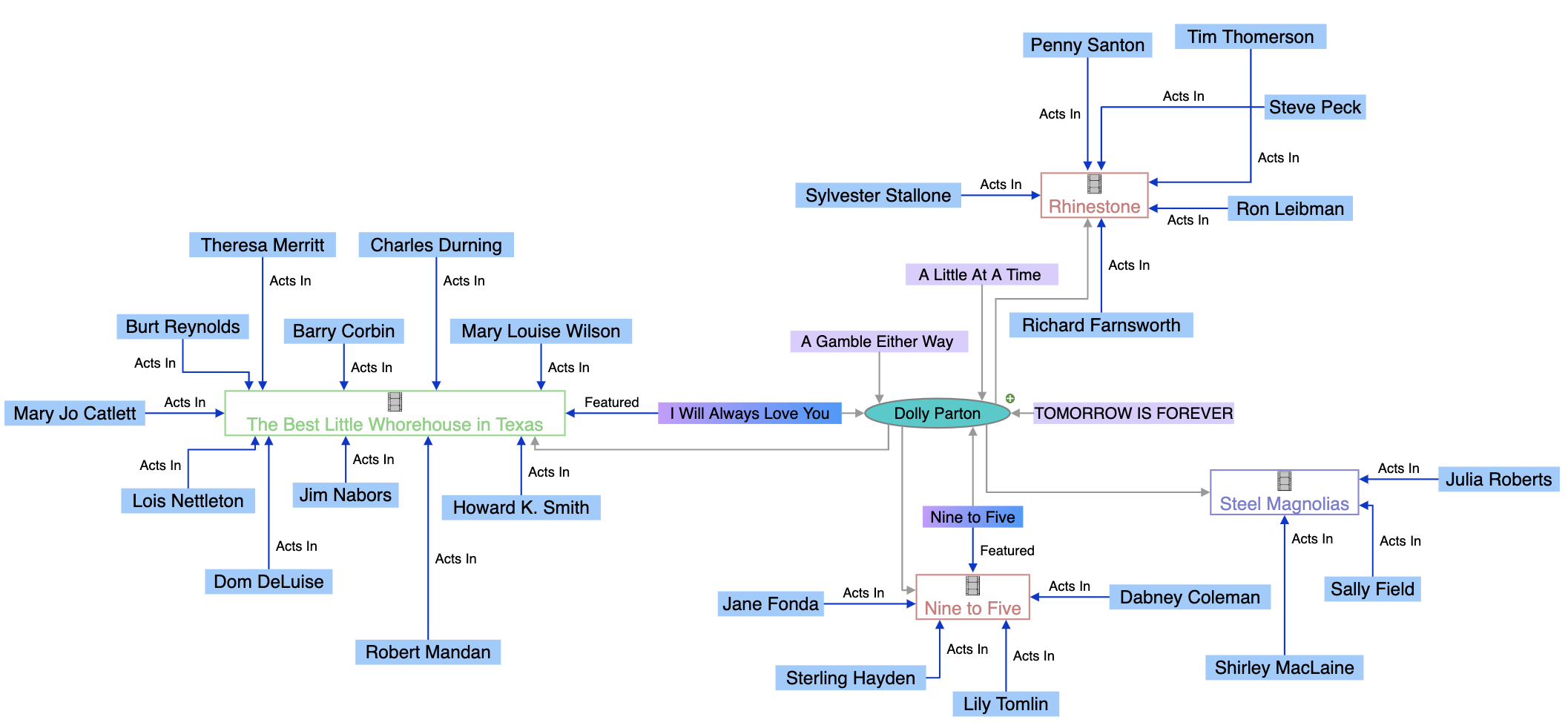
Learn what a knowledge graph is, how search engines use them to understand entity relationships, and why they matter for AI visibility and brand monitoring acro...
Cookie Consent
We use cookies to enhance your browsing experience and analyze our traffic. See our privacy policy.