Definition of Landing Page
A landing page is a standalone web page specifically designed and optimized for a particular marketing campaign or specific purpose. It is the destination where visitors “land” after clicking on a link from various sources such as paid search ads, social media advertisements, email marketing campaigns, or other promotional channels. Unlike traditional website pages that serve multiple purposes and encourage exploration, landing pages are engineered with a single, focused conversion goal in mind—whether that’s capturing leads, driving sales, promoting an event, or encouraging newsletter signups. The fundamental principle behind landing pages is the elimination of distractions; they remove navigation menus, excessive links, and unrelated content that might divert visitor attention away from the primary call-to-action. This laser-focused approach makes landing pages one of the most effective tools in modern digital marketing for converting traffic into measurable business results.
Historical Context and Evolution of Landing Pages
The concept of landing pages emerged in the early 2000s as digital marketing evolved and marketers recognized the need for targeted, campaign-specific destinations. Before landing pages became mainstream, marketers typically directed all traffic—whether from ads, emails, or other sources—to their website homepages. This approach proved inefficient because homepages were designed to serve multiple audiences and purposes, creating friction in the conversion process. As pay-per-click advertising and email marketing matured, marketers discovered that creating dedicated pages for specific campaigns dramatically improved conversion rates and reduced customer acquisition costs. The rise of landing page builders like Unbounce, Leadpages, and Instapage in the 2010s democratized landing page creation, making it accessible to businesses of all sizes without requiring extensive coding knowledge. Today, landing pages have become a cornerstone of conversion rate optimization (CRO) strategies, with research showing that businesses with 40 or more landing pages generate 12 times more leads than those with fewer than five pages. The evolution continues as AI-powered optimization tools and personalization technologies enable marketers to create increasingly sophisticated, data-driven landing pages that adapt to individual visitor behaviors and preferences.
Landing Page vs. Homepage: Key Differences
| Aspect | Landing Page | Homepage |
|---|
| Primary Purpose | Drive specific conversion action for a campaign | Introduce business and provide broad overview |
| Navigation | Minimal or removed; single CTA focus | Extensive navigation; multiple pathways |
| Traffic Source | Paid ads, email, social campaigns | Organic search, direct visits, social profiles |
| Content Focus | Single offer or message | Multiple products, services, company info |
| Call-to-Action | Specific and urgent (e.g., “Sign Up Now”) | Broad and exploratory (e.g., “Learn More”) |
| Domain Structure | Secondary page or subdomain | Root domain (www.yoursite.com
) |
| Conversion Goal | Single, measurable action | Multiple possible actions |
| Design Philosophy | Minimalist, distraction-free | Comprehensive, brand-focused |
| Typical Conversion Rate | 6.6% median (varies by industry) | 2-3% typical range |
| Best Use Case | Campaign-specific promotions | Brand awareness and exploration |
Technical Explanation: How Landing Pages Work
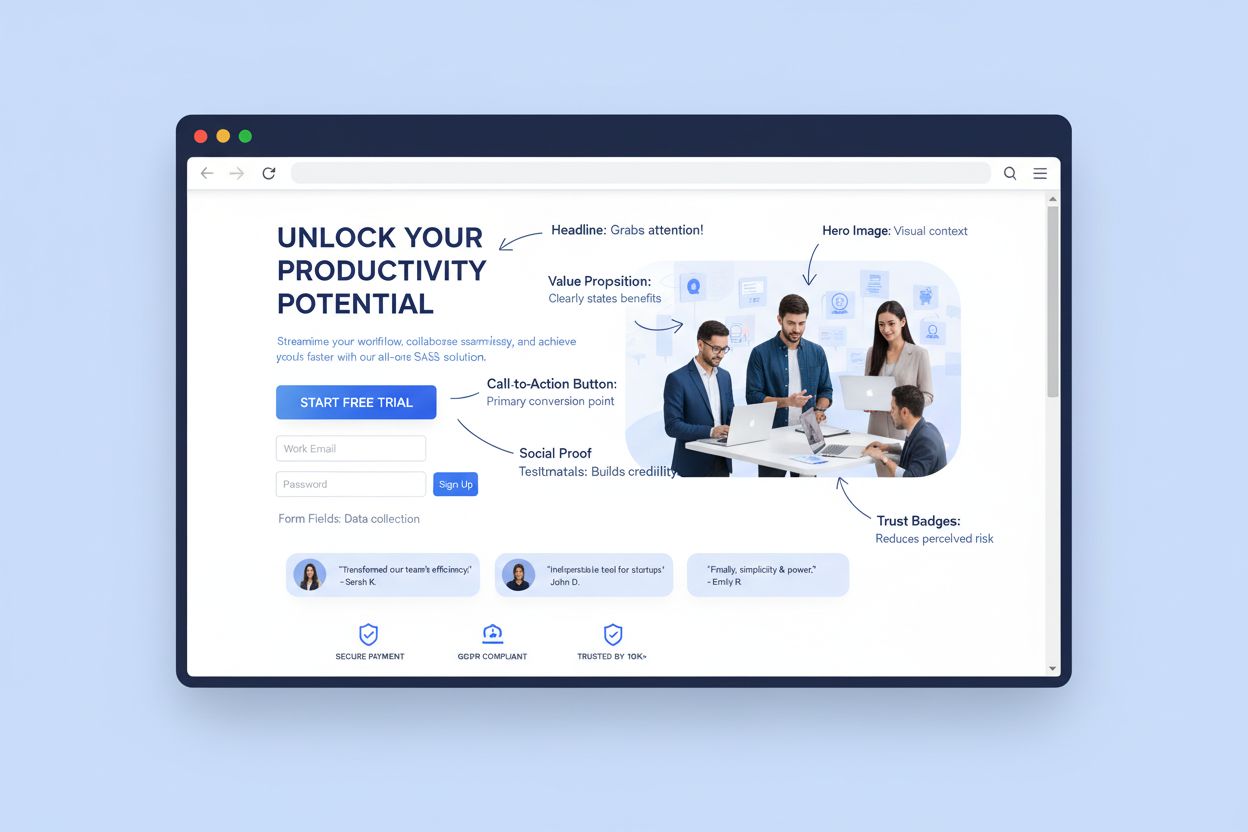
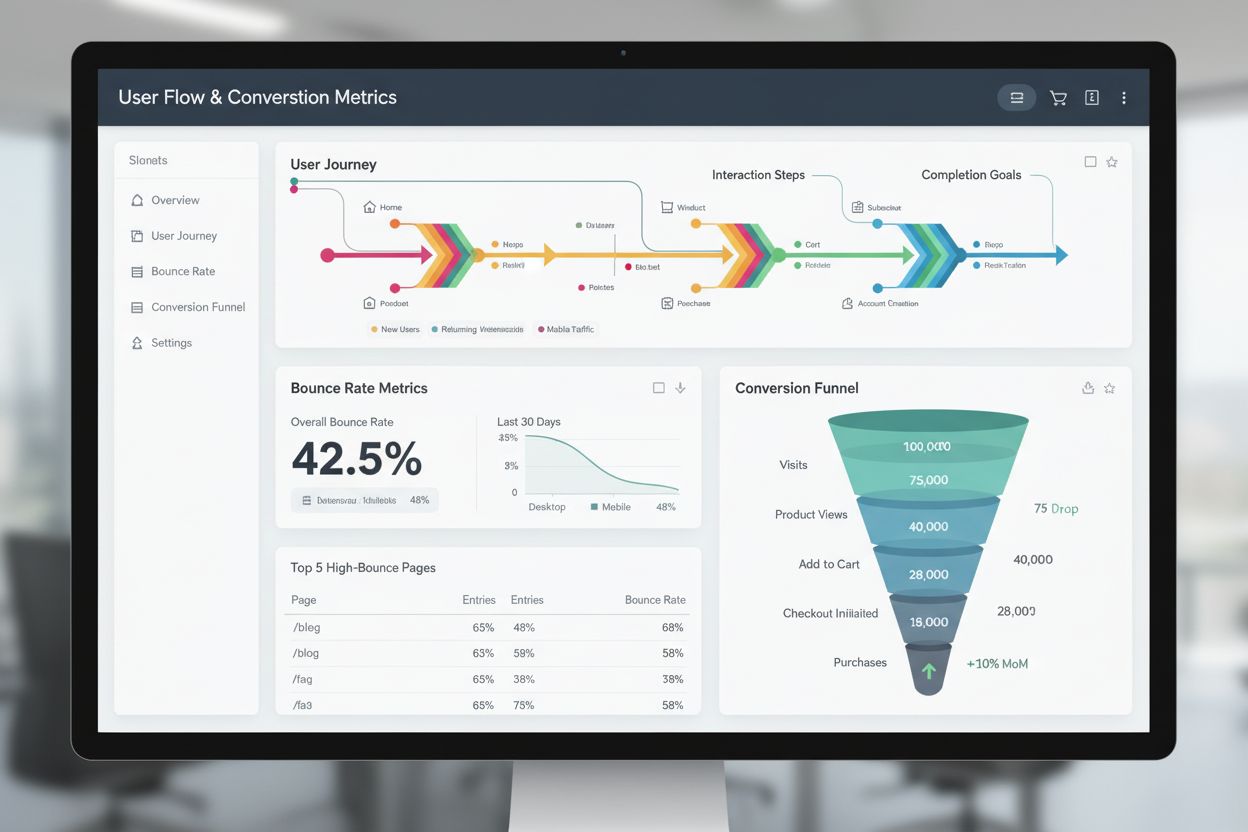
Landing pages function as conversion funnels that guide visitors through a carefully orchestrated user experience designed to minimize friction and maximize action. When a visitor arrives at a landing page, they encounter a strategic sequence of elements: an attention-grabbing headline that immediately communicates the value proposition, supporting copy that addresses visitor pain points and objections, compelling visuals that reinforce the message, and a prominently placed call-to-action button that stands out through contrasting colors and clear, action-oriented language. The technical architecture of effective landing pages incorporates several optimization principles. Page speed is critical—research shows that for every additional second of load time, conversions drop by approximately 12%, and 53% of visitors abandon pages that take more than three seconds to load. Mobile responsiveness is equally essential, as over 50% of landing page traffic typically originates from mobile devices; pages must adapt seamlessly to different screen sizes and touch interactions. Form optimization involves strategic decisions about which fields to include—shorter forms with fewer required fields consistently outperform longer ones because they reduce friction and abandonment rates. Message matching ensures that the landing page copy, visuals, and offer directly align with the ad or email that brought the visitor there, creating a cohesive experience that reinforces the visitor’s initial interest and intent.
Business Impact and Conversion Optimization
The business impact of landing pages is substantial and measurable. According to comprehensive industry research, businesses that create well-optimized landing pages experience up to a 220% boost in conversion rates compared to generic web pages or homepages. The median landing page conversion rate across all industries stands at 6.6%, but this varies significantly by sector—financial services achieves 8.4%, while other industries range from 3% to 10% depending on factors like offer quality, audience targeting precision, and page optimization level. Landing pages directly influence customer acquisition costs (CAC) by improving the efficiency of paid marketing spend. A case study from a performance marketer showed that through A/B testing and optimization, a single landing page redesign achieved a 24% reduction in cost-per-click and a 28% increase in conversion rate from the initial test, with further 66% improvements when the design was applied to other campaign pages. This demonstrates the compounding returns of landing page optimization—small improvements in conversion rates translate to significant cost savings and revenue increases at scale. For companies running multiple campaigns, the cumulative effect is powerful: research indicates that increasing landing pages from 10 to 15 generates a 55% boost in leads, with even larger increases for sites with 40 or more landing pages. Beyond immediate conversions, landing pages serve as valuable data collection points, providing insights into audience preferences, messaging effectiveness, and market demand that inform broader marketing strategy.
Types of Landing Pages and Their Applications
Landing pages fall into two primary categories, each serving distinct marketing objectives. Lead generation landing pages (also called lead capture or squeeze pages) feature a form as the primary call-to-action, collecting visitor information like names, email addresses, and company details in exchange for valuable resources. These pages typically offer something free—an ebook, whitepaper, webinar registration, event invitation, or consultation booking—to incentivize information sharing. Lead gen pages are particularly popular in B2B marketing, professional services, and high-ticket sales environments where building a qualified prospect list is the primary goal. Clickthrough landing pages take visitors directly toward a purchase or signup action, featuring a simple button that advances them into a checkout flow, subscription process, or application. These pages work exceptionally well for ecommerce, SaaS companies, and direct-response campaigns where the goal is immediate conversion rather than lead capture. Variations within these categories include event landing pages that promote conferences, webinars, or workshops with registration forms; product-specific pages that showcase individual offerings with detailed features and benefits; webinar landing pages that build attendance for educational sessions; and sales pages designed to overcome objections and drive immediate purchases. The choice between page types depends on several factors: your campaign objective (lead generation vs. immediate sales), where your audience sits in the buying journey (awareness, consideration, or decision stage), the complexity of your offer, and your overall marketing funnel strategy.
In the context of AI-driven search and content discovery, landing pages have taken on new significance as AI systems like ChatGPT, Perplexity, Google AI Overviews, and Claude increasingly influence how users discover and evaluate products and services. When AI systems generate responses about products, services, or solutions, they may reference or recommend specific landing pages, making AI visibility and citation tracking increasingly important for marketers. Landing pages optimized for AI discovery should incorporate clear, factual information that AI systems can easily extract and cite—including specific value propositions, pricing information, unique features, and customer testimonials. The structure of landing page content matters for AI comprehension; using clear headings, bullet points, and structured data markup helps AI systems understand and accurately represent your offering. As AI systems become primary discovery channels for many users, monitoring where your landing pages appear in AI-generated responses—through platforms like AmICited—provides critical insights into your brand’s visibility in this emerging channel. Landing pages that rank well in traditional search engines and convert effectively for human visitors may not automatically perform well in AI contexts, requiring specific optimization strategies. Understanding how your landing pages are being cited, referenced, or recommended by AI systems helps marketers adjust messaging, improve accuracy of information, and ensure proper attribution in an increasingly AI-mediated digital landscape.
Best Practices for Creating High-Converting Landing Pages
Creating landing pages that consistently convert requires adherence to proven best practices grounded in user psychology and data-driven optimization. Define a clear, singular goal before designing—whether it’s capturing emails, driving purchases, or promoting an event. This focus ensures every element on the page supports that objective. Know your target audience intimately; understand their pain points, motivations, objections, and the specific language they use. Tailor your messaging, visuals, and offer to resonate with their needs rather than creating generic pages. Craft an irresistible offer that provides clear, immediate value—whether that’s a discount, free resource, exclusive access, or time-limited opportunity. The offer should be prominently featured and easy to understand. Design for user experience with clean, intuitive layouts that guide visitors naturally toward the CTA. Use whitespace effectively, maintain visual hierarchy, and ensure forms are as short as possible—each additional field reduces completion rates. Implement strong social proof through customer testimonials, case studies, user reviews, ratings, and trust badges that address common objections and build credibility. Optimize for mobile with responsive design that works seamlessly across all devices and screen sizes. Test continuously through A/B testing of headlines, copy, visuals, CTA button text and color, form fields, and page layout. Even small changes can yield significant conversion improvements. Ensure fast loading times by optimizing images, minimizing code, and leveraging content delivery networks. Maintain message match between your ads and landing page to reinforce visitor intent and improve quality scores in paid advertising platforms.
Essential Elements and Components
- Compelling headline that immediately communicates the value proposition and matches visitor intent
- Clear value proposition explaining what you offer and why it matters to the specific audience
- Focused, benefit-driven copy that addresses pain points and objections without overwhelming visitors
- High-quality visuals including hero images or videos that support the message and build trust
- Prominent call-to-action button with contrasting colors, clear action-oriented language, and strategic placement
- Optimized form requesting only essential information to minimize friction and abandonment
- Social proof elements such as testimonials, case studies, customer logos, and user reviews
- Trust signals including security badges, privacy policy links, money-back guarantees, and certifications
- Mobile-responsive design that adapts seamlessly to all devices and screen sizes
- Fast loading times optimized for performance across all connection speeds
- Clear navigation (or intentional removal of navigation) to keep focus on the conversion goal
- FAQ section addressing common questions and objections that might prevent conversion
Future Evolution and Strategic Outlook
The future of landing pages is being shaped by several converging trends that will fundamentally change how marketers design and optimize these critical conversion tools. Artificial intelligence and machine learning are enabling increasingly sophisticated personalization, where landing pages dynamically adapt their content, visuals, and offers based on individual visitor characteristics, behavior, and predicted likelihood to convert. AI-powered copywriting tools are helping marketers test variations at scale, generating multiple headline and copy options that can be rapidly tested to identify top performers. The rise of voice search and conversational AI is influencing landing page design, requiring clearer, more natural language that aligns with how people speak rather than traditional marketing copy. Privacy-first marketing in a post-cookie world is pushing landing pages toward first-party data collection and contextual targeting rather than reliance on third-party tracking. Interactive and immersive experiences—including video, animations, quizzes, and augmented reality elements—are becoming standard expectations, particularly for younger audiences. The integration of landing pages with AI monitoring platforms like AmICited represents a new frontier, where marketers must optimize not just for human visitors but also for AI systems that discover, evaluate, and recommend landing pages in their generated responses. As AI systems become primary discovery channels, landing pages will need to balance human-centric design with AI-comprehensible structure and content. The convergence of these trends suggests that future landing pages will be increasingly dynamic, personalized, data-driven, and optimized across multiple discovery channels—both human and artificial intelligence-based. Marketers who understand and adapt to these evolving requirements will maintain competitive advantage in an increasingly complex digital landscape where visibility and conversion happen across multiple touchpoints and platforms.