

Link Building
Link building is the process of acquiring backlinks from external websites. Learn strategies, best practices, and how quality links improve SEO rankings and bra...
15 min read

A link farm is a network of websites created and controlled to artificially manipulate search engine rankings by exchanging links among themselves or selling links to external sites. These networks violate search engine guidelines and expose participating websites to severe penalties including ranking loss and de-indexing.
A link farm is a network of websites created and controlled to artificially manipulate search engine rankings by exchanging links among themselves or selling links to external sites. These networks violate search engine guidelines and expose participating websites to severe penalties including ranking loss and de-indexing.
A link farm is a network of websites created and controlled primarily to manipulate search engine rankings through artificial link building. These networks operate by exchanging links among themselves or selling links to external websites, violating search engine guidelines and creating unnatural linking patterns that search engines explicitly prohibit. Link farms are classified as a black-hat SEO tactic because they prioritize ranking manipulation over providing genuine value to users. The fundamental purpose of a link farm is to artificially inflate the perceived authority and relevance of target websites by creating artificial endorsements through hyperlinks, rather than earning links naturally through quality content and legitimate relationships.
Link farming emerged in the early 2000s when search engines like Google relied heavily on backlink quantity as a primary ranking factor. During this era, webmasters discovered that creating networks of interconnected websites could artificially boost rankings by passing “link juice” between sites. The practice became widespread because it was relatively easy to execute and initially effective at manipulating search results. As Google’s algorithms evolved, particularly with the introduction of the PageRank algorithm and subsequent updates, link farms became increasingly susceptible to detection. The practice adapted over time, with operators developing more sophisticated techniques to hide their networks, including using expired domains with existing authority, diversifying hosting providers, and creating content that appeared more legitimate. However, Google’s continuous algorithmic improvements have made link farms progressively less effective and more risky, yet they persist in industries where legitimate link building is challenging, such as gambling, loans, and adult content sectors.
Link farms operate through several distinct structural models, each designed to manipulate search rankings while attempting to evade detection. The most basic structure involves circular interlinking, where multiple websites link to each other in patterns designed to distribute link equity throughout the network. A more sophisticated approach uses a hub-and-spoke model, where numerous satellite sites link exclusively to a central “money site” that the operator is trying to rank. Some link farms employ tiered structures, where primary sites link to secondary sites, which then link to the target site, creating layers of separation to obscure the artificial nature of the linking pattern. The content within link farm websites is typically thin, generic, or computer-generated, existing primarily to justify the presence of outbound links rather than to provide genuine value to readers. Link farm operators often use expired domains that previously had authority and backlinks, leveraging the residual trust these domains carry with search engines. They distribute these domains across multiple hosting providers, registrars, and IP addresses to create the appearance of independent websites. The linking patterns are carefully orchestrated to appear natural, with varying anchor text, link placement, and timing of link additions. However, despite these efforts to hide their artificial nature, the fundamental structure of link farms creates detectable patterns that modern search engine algorithms are specifically designed to identify and devalue.
| Aspect | Link Farm | Private Blog Network (PBN) | Legitimate Link Building |
|---|---|---|---|
| Primary Purpose | Sell links to multiple unrelated sites | Link exclusively to owner’s money site | Earn links through valuable content |
| Ownership Structure | Often public/commercial operation | Privately controlled by single entity | Natural, independent websites |
| Content Quality | Thin, generic, or AI-generated | Low-quality but appears legitimate | High-quality, original, valuable |
| Link Pattern | Circular or indiscriminate linking | Directed to single target site | Contextual, editorially relevant |
| Anchor Text | Over-optimized, keyword-stuffed | Varied but controlled | Natural, conversational |
| Detection Risk | Very high due to obvious patterns | High but more sophisticated | Minimal, follows guidelines |
| Cost | $300-$2,000+ per link | $50-$500+ per link | Varies, often time-intensive |
| Long-term Viability | Unsustainable, high penalty risk | Unsustainable, high penalty risk | Sustainable, builds authority |
| Google Penalty Risk | Severe (manual action likely) | Severe (algorithmic devaluation) | None (complies with guidelines) |
| Recovery Time | Months to years after cleanup | Months to years after cleanup | Ongoing, continuous improvement |
Link farms manipulate search rankings by exploiting the fundamental principle that search engines use backlinks as signals of website authority and relevance. When a website receives links from multiple sources, search engines interpret these links as votes of confidence, suggesting the linked site contains valuable information. Link farms artificially create these “votes” by establishing networks of websites that link to target sites, creating the false impression of widespread endorsement. The manipulation works because search engines must process billions of links and cannot manually verify the legitimacy of each one, relying instead on algorithmic analysis to identify patterns. Link farm operators exploit this by creating networks that appear diverse on the surface—using different domain names, hosting providers, and content topics—while maintaining hidden connections that allow them to control the linking patterns. The artificial links pass link equity (also called “link juice”) from the farm sites to the target site, artificially boosting its perceived authority in search engine calculations. This artificial authority boost can temporarily improve rankings for competitive keywords, which is why link farms remain attractive despite their risks. However, modern search algorithms have become sophisticated enough to detect the unnatural patterns created by link farms, including identical hosting footprints, shared WHOIS information, similar content structures, and coordinated linking patterns that deviate from natural web behavior.
Identifying link farm websites requires examining multiple indicators that reveal their artificial nature. The most obvious red flag is excessive outgoing links on individual pages—legitimate websites link out contextually when relevant, but link farm pages often contain dozens or hundreds of links with no clear editorial purpose. These links frequently point to unrelated topics and commercial sites, creating an unnatural distribution that no genuine website would maintain. Poor website design is another telltale sign; link farms are often built with obvious templates, minimal customization, and little investment in user experience, as their purpose is link distribution rather than serving visitors. The content quality within link farms is characteristically low, featuring generic articles, keyword stuffing, obvious AI-generated text, or content that covers random topics with no coherent focus. Author information on link farm sites is typically anonymous, uses fake profiles with stock photography, or displays no author information at all, contrasting sharply with legitimate publications that showcase their writers. The domain characteristics often reveal link farms, as they frequently use cheap top-level domains like .top, .xyz, or .online rather than established extensions like .com or .org. Anchor text patterns in link farm content are heavily over-optimized, with the same keyword-rich phrases repeated across multiple links, whereas natural linking uses varied, conversational anchor text. Traffic patterns are revealing—link farms typically show sporadic spikes in traffic followed by dramatic drops, indicating algorithmic penalties, whereas legitimate sites show gradual, consistent growth. Tools like Ahrefs, SEMrush, and Moz can reveal the number of linked domains, anchor text distribution, and traffic history, making it easier to identify suspicious sites before accepting links from them.
Google’s detection system for link farms operates on multiple levels, combining algorithmic analysis with human review to identify and penalize manipulative linking schemes. At the algorithmic level, Google processes billions of links daily, applying sophisticated machine learning models that identify patterns inconsistent with natural linking behavior. These algorithms examine factors including the topical relevance between linking and linked sites, the authority and trustworthiness of linking domains, the anchor text distribution across links, and the temporal patterns of link acquisition. When a site receives numerous links from unrelated domains with identical hosting characteristics, shared WHOIS information, or similar content structures, Google’s algorithms flag these patterns as suspicious. The system also analyzes link velocity—the rate at which new links appear—and identifies sudden spikes that deviate from natural growth patterns. Beyond algorithmic detection, Google employs human reviewers who manually investigate flagged sites and can issue manual actions when violations are egregious. Google also accepts spam reports from webmasters who identify suspicious linking networks, providing additional intelligence for detection. When Google identifies link farm participation, it applies penalties ranging from algorithmic devaluation (where the system simply stops counting the manipulative links) to manual actions that can result in partial or site-wide ranking suppression. The most severe penalty is de-indexing, where Google removes the site entirely from search results. Importantly, Google has shifted toward silent penalties in recent years, where the system reduces how much authority flows through suspicious links without issuing explicit notifications, making it harder for violators to know they’ve been caught.
The impact of link farms extends beyond individual websites to affect the entire SEO ecosystem and search result quality. For websites that purchase links from link farms, the consequences are severe and often irreversible. Sites typically experience dramatic ranking drops ranging from 50% to 90% of their previous positions once Google identifies the manipulative links. This ranking loss translates directly to traffic decline, with many businesses losing the majority of their organic search visibility overnight. The financial impact is substantial—businesses that relied on organic search traffic for revenue face immediate income loss, and the cost of recovery (including cleanup, reconsideration requests, and rebuilding legitimate link profiles) often exceeds the initial investment in the link farm scheme. Beyond immediate penalties, websites suffer long-term reputation damage with search engines; even after penalties are lifted, these sites struggle to regain previous rankings because Google’s trust in their authority has been permanently diminished. The broader SEO landscape suffers because link farms degrade search result quality by artificially boosting low-quality or irrelevant websites, making it harder for users to find genuinely authoritative information. This degradation of search quality necessitates continuous algorithmic refinement by Google, diverting resources from other improvements. The prevalence of link farms also creates an unfair competitive advantage for unethical operators in the short term, discouraging legitimate businesses from competing fairly. Industry-wide, link farms contribute to the perception that SEO is inherently manipulative, damaging the credibility of legitimate, ethical SEO practices and making it harder for honest practitioners to build client trust.
Understanding the distinctions between link farms and related concepts is crucial for SEO professionals and website owners. Private Blog Networks (PBNs) are often confused with link farms, but they differ fundamentally in structure and purpose. A PBN is a privately controlled network of websites owned by a single entity that links exclusively to that owner’s target site, whereas a link farm is a public marketplace where multiple parties purchase links. If a PBN operator opens their network to sell links publicly, it technically becomes a link farm. Link exchanges are another related but distinct concept—these involve two websites agreeing to link to each other, which can be legitimate if done sparingly and contextually, but becomes manipulative when done excessively or with unrelated sites. Paid link placement is not inherently a link farm; purchasing a link from a legitimate, high-authority website for editorial placement is a gray-hat tactic that many businesses employ, though Google discourages it. The key distinction is that legitimate paid links come from real websites with genuine audiences and editorial standards, whereas link farm links come from artificial networks created solely for link distribution. Guest posting can also be confused with link farming, but legitimate guest posting involves creating valuable content for established publications in exchange for an author bio link, whereas link farm guest posts are low-quality articles designed primarily to include commercial links. Understanding these distinctions helps website owners avoid accidentally participating in link schemes while pursuing legitimate link-building strategies.
Protecting your website from link farm involvement requires vigilance and understanding of what constitutes a legitimate linking opportunity. When evaluating potential link sources, conduct thorough due diligence by examining the website’s content quality, design professionalism, and organic traffic history using tools like Ahrefs or SEMrush. Legitimate websites should have consistent, high-quality content, professional design, clear author information, and steady organic traffic growth. Be skeptical of unsolicited link offers, especially those promising quick results or using vague language about their linking methods. Legitimate link-building agencies will transparently explain their strategies, show you the specific sites linking to you, and focus on relevance and authority rather than link quantity. Avoid any service offering “guaranteed rankings” or promising results within unrealistic timeframes, as these are hallmarks of black-hat tactics. When building your own links, focus on creating genuinely valuable content that naturally attracts links, building relationships with relevant websites in your industry, and pursuing legitimate guest posting opportunities on established publications. Regularly audit your backlink profile using Google Search Console and third-party tools to identify any suspicious links pointing to your site. If you discover links from link farms, use Google’s Disavow Tool to tell Google you don’t want those links counted. Maintain a healthy skepticism toward any link-building offer that seems too good to be true—in SEO, sustainable results require time, effort, and genuine value creation.
The future of link farm detection is moving toward increasingly sophisticated algorithmic approaches that require less manual intervention. Google’s shift toward machine learning and AI-based detection means that link farms will become progressively harder to operate successfully, as algorithms become better at identifying subtle patterns of manipulation. The rise of topical authority as a ranking factor makes it harder for link farms to be effective, since links from topically irrelevant sites provide less value regardless of their quantity. Google’s emphasis on E-E-A-T signals (Experience, Expertise, Authoritativeness, Trustworthiness) means that links from sites lacking genuine expertise in their claimed niche will be devalued more aggressively. The integration of AI-generated content detection into ranking algorithms will make link farms even more vulnerable, as the thin, AI-generated content that typically fills these sites becomes easier to identify and devalue. Industry trends suggest that link quality will continue to matter far more than quantity, with a single link from a highly relevant, authoritative source outweighing hundreds of links from low-quality sites. The emergence of brand monitoring tools and AI citation tracking platforms like AmICited means that brands can now monitor where they appear in AI-generated responses, creating new accountability for link quality and relevance. As search engines continue to prioritize user experience and content quality, the fundamental economics of link farming become increasingly unfavorable—the cost and effort required to maintain a network that evades detection grows while the benefit of the links diminishes. This trend suggests that link farms will gradually become less prevalent as operators realize the risk-reward calculation no longer favors their business model, though they will likely persist in niche industries where legitimate link building remains challenging.
Link farms are networks of websites created to artificially manipulate search rankings through artificial linking, violating Google’s guidelines and exposing participating sites to severe penalties.
Detection is increasingly sophisticated, with Google using algorithmic analysis of linking patterns, content quality, hosting infrastructure, and temporal patterns to identify and devalue link farm links.
Penalties are severe and often permanent, ranging from algorithmic devaluation to manual actions that can result in ranking loss, traffic decline, and de-indexing.
Link farms differ from legitimate link building in that they prioritize quantity over quality, lack editorial value, and create unnatural linking patterns that deviate from how real websites link.
Avoiding link farms requires due diligence when evaluating link sources, skepticism toward unsolicited offers, and focus on building legitimate links through valuable content and genuine relationships.
The future of link farming is bleak as algorithmic detection improves, topical authority becomes more important, and the cost-benefit analysis increasingly favors legitimate link-building strategies.
Monitoring your backlink profile is essential to identify and disavow any suspicious links that could expose your site to penalties.
While both are manipulative link schemes, the key difference lies in their structure and purpose. A link farm is a public marketplace where websites sell links to anyone willing to pay, with sites linking to each other or external targets indiscriminately. A PBN (Private Blog Network) is a controlled, private network of websites owned by a single entity that links exclusively to their own 'money site.' If a PBN opens to sell links publicly, it becomes a link farm. Both violate Google's guidelines and carry severe penalty risks.
Google uses sophisticated algorithms that analyze billions of links across the web to identify unnatural linking patterns. Detection methods include: analyzing shared hosting infrastructure and WHOIS information, identifying low-quality content surrounding links, tracking sudden spikes in backlinks from unrelated sites, examining anchor text patterns for over-optimization, and monitoring sites for lack of organic traffic despite claimed authority. Google also employs human reviewers for manual verification and accepts spam reports from webmasters who identify suspicious networks.
Penalties range from algorithmic devaluation (where Google simply stops counting the manipulative links) to severe manual actions. Manual penalties can result in partial match penalties affecting specific pages or site-wide penalties that remove your entire website from search results. Even after cleanup and reconsideration requests, sites often struggle to regain previous rankings. The damage to your site's reputation with Google can be permanent, affecting future ranking potential even after penalties are lifted.
While receiving one or two links from a link farm is unlikely to trigger a penalty, accumulating multiple links from link farms can associate your site with link schemes. Google typically targets the source of manipulative links rather than the recipient, but if you have numerous suspicious links pointing to your site, you should audit your backlink profile and use Google's Disavow Tool to tell Google you don't want those links counted.
Key warning signs include: excessive outgoing links on every page with no clear editorial reason, poor website design using obvious templates, anonymous or fake author profiles with stock photography, minimal or nonsensical 'About' pages, generic and poorly written content, sudden spikes in organic traffic followed by dramatic drops, unnatural anchor text patterns with keyword stuffing, and linking to thousands of unrelated domains. Tools like Ahrefs can reveal if a site links to an unusually high number of domains.
Link farm pricing varies significantly based on perceived quality. Low-quality links typically cost around $300, while higher-quality link farm links range from $700 to $2,000 or more. Some link sellers offer bulk packages like '50 links for $500' or '100 links for $1,000.' However, these prices are deceptive because the links provide minimal SEO value and carry substantial penalty risk, making them a poor investment compared to legitimate link-building strategies.
First, audit your complete backlink profile using Google Search Console or tools like Ahrefs and Semrush. Identify all suspicious links from link farms and low-quality sites. Contact webmasters to request link removal where possible. For links you cannot remove, compile a disavow file and submit it through Google Search Console. If you have a manual penalty, submit a reconsideration request explaining the steps you've taken to clean up your backlink profile. Focus on building legitimate, high-quality links going forward through content creation and genuine outreach.
Start tracking how AI chatbots mention your brand across ChatGPT, Perplexity, and other platforms. Get actionable insights to improve your AI presence.
Link building is the process of acquiring backlinks from external websites. Learn strategies, best practices, and how quality links improve SEO rankings and bra...
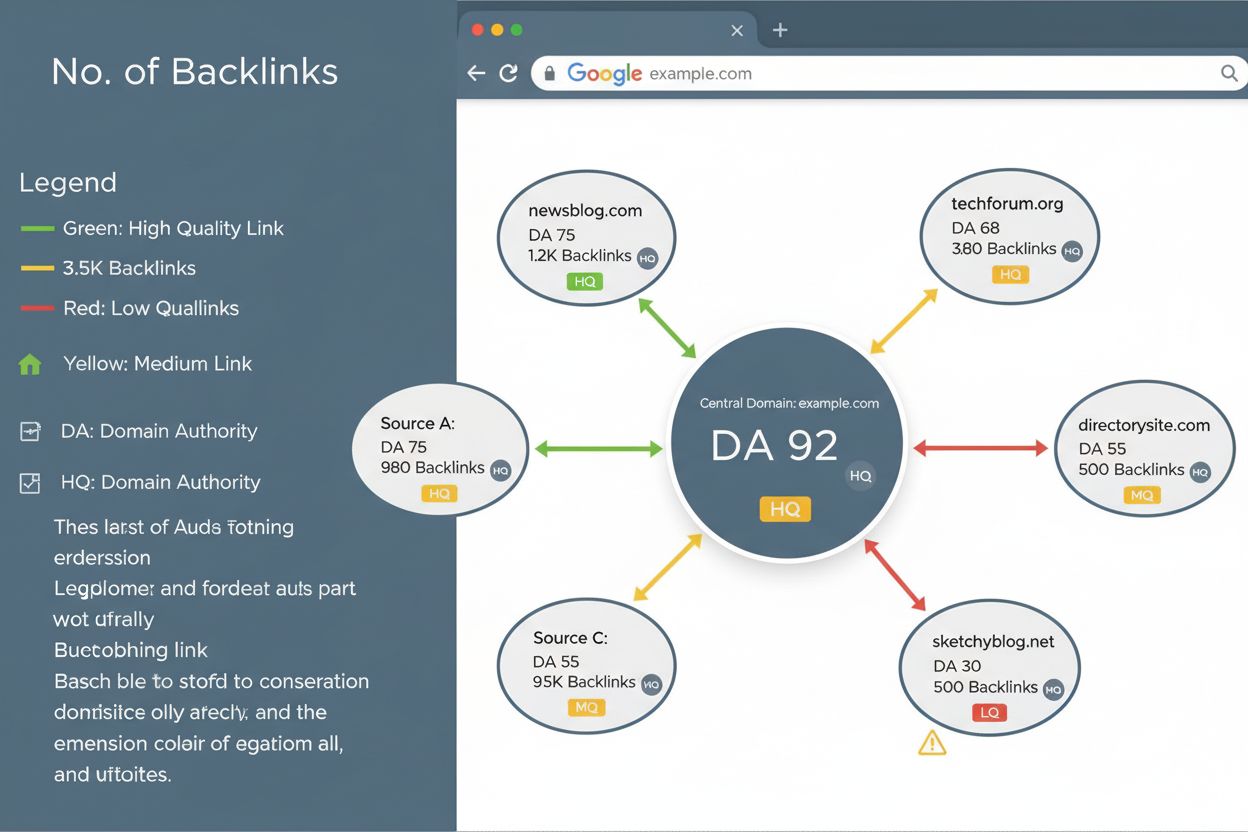
Learn what a link profile is, how it impacts SEO rankings, and why monitoring backlink quality, diversity, and domain authority is essential for website visibil...
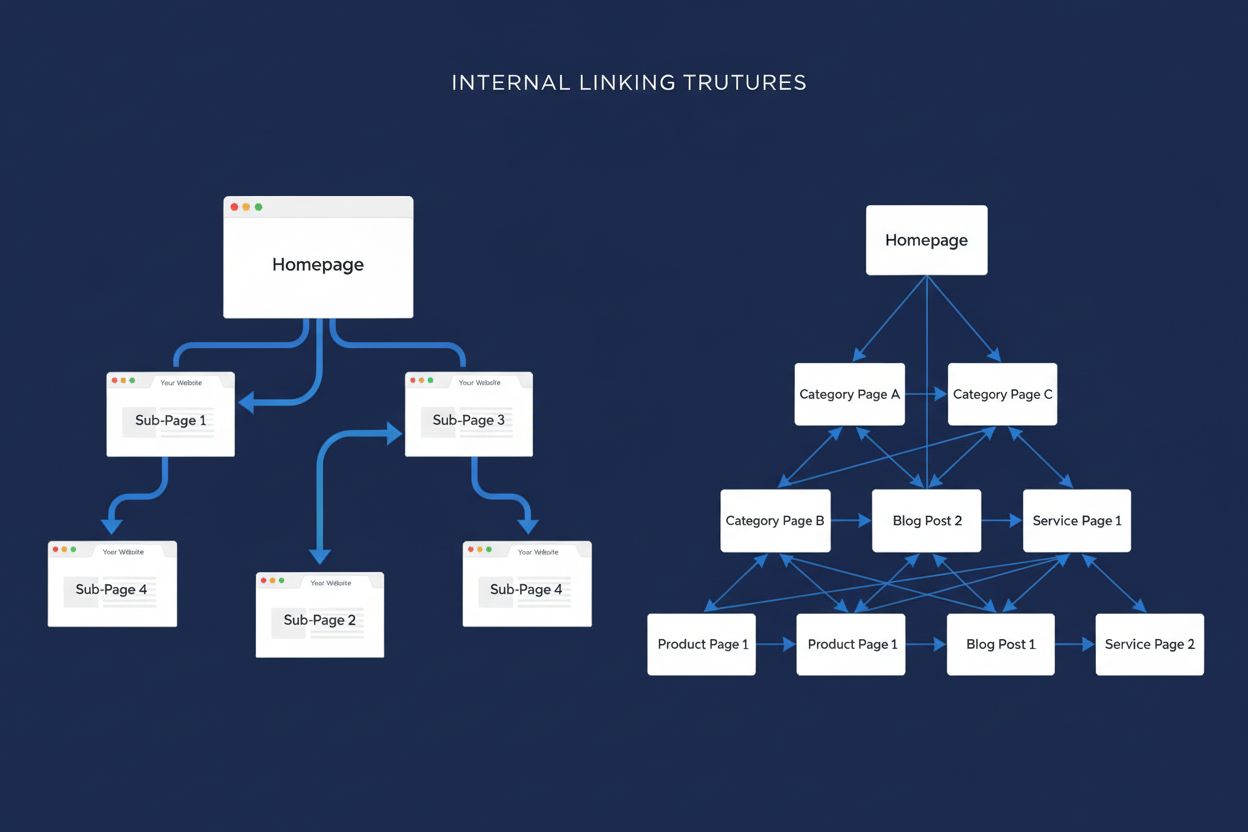
Internal linking connects pages within the same domain to improve crawlability, distribute authority, and enhance user navigation. Learn how strategic internal ...
Cookie Consent
We use cookies to enhance your browsing experience and analyze our traffic. See our privacy policy.