

External Linking
External linking explained: hyperlinks to other websites that improve credibility, user experience, and SEO. Learn best practices for outbound links and their r...
10 min read
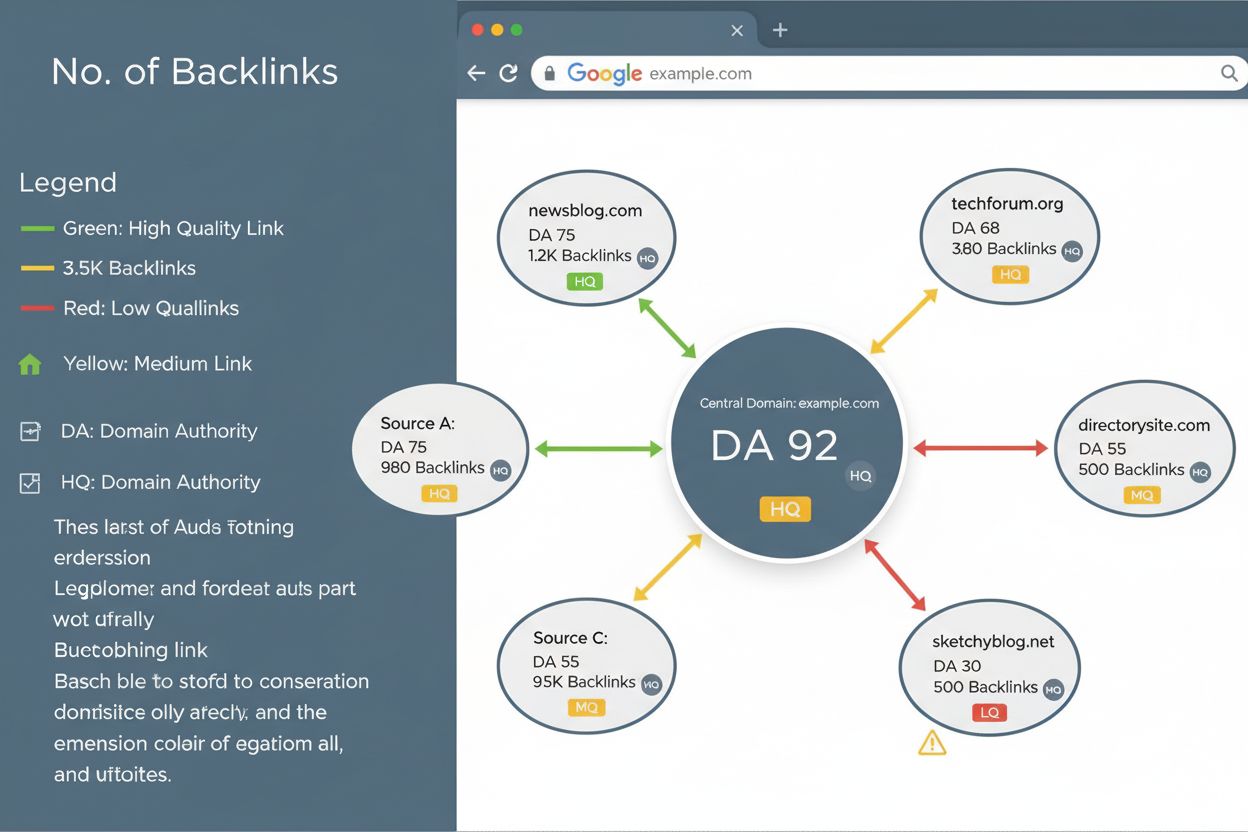
A link profile is the complete collection of all backlinks pointing to a website from external sources. It encompasses the quantity, quality, diversity, and relevance of incoming links, serving as a critical metric for search engine rankings and domain authority assessment.
A link profile is the complete collection of all backlinks pointing to a website from external sources. It encompasses the quantity, quality, diversity, and relevance of incoming links, serving as a critical metric for search engine rankings and domain authority assessment.
A link profile is the comprehensive collection of all backlinks pointing to a website from external sources. It represents the complete network of incoming hyperlinks that other websites have directed toward your domain or specific web pages. More than just a simple count of links, a link profile encompasses the quality, diversity, relevance, and authority of those backlinks, making it one of the most critical metrics in search engine optimization. The term is often used interchangeably with backlink profile, and it serves as a fundamental indicator of a website’s trustworthiness, authority, and credibility in the eyes of search engines like Google, Bing, and other ranking algorithms. Understanding your link profile is essential because it directly influences your website’s ability to rank for target keywords and attract organic traffic from search results.
The concept of link profiles emerged as search engines evolved their ranking algorithms to move beyond simple keyword matching. When Google introduced PageRank in the late 1990s, the company revolutionized SEO by recognizing that backlinks function as “votes of confidence” from other websites. This foundational principle established that websites receiving links from reputable sources should rank higher than those without such endorsements. Over the past two decades, the importance of link profiles has only intensified as search engines have become more sophisticated in evaluating link quality and relevance. Today, link profile analysis is a standard practice among SEO professionals, with specialized tools like Ahrefs, Moz, SEMrush, and Majestic providing detailed insights into backlink composition. According to industry research, approximately 78% of enterprises now use AI-driven content monitoring and link analysis tools to track their backlink profiles and competitive positioning. The evolution of link profile evaluation reflects the broader shift in SEO from quantity-focused tactics to quality-driven strategies that prioritize relevance, authority, and natural link acquisition patterns.
A comprehensive link profile consists of several interconnected elements that collectively determine its strength and impact on search rankings. The total number of backlinks represents the raw count of incoming links, but this metric alone is insufficient for evaluating profile quality. More important is the number of referring domains—the unique websites linking to your site—as this indicates the breadth of your link network. Domain Authority (DA) or Domain Rating (DR) measures the authority of linking websites, with links from high-authority sites carrying significantly more weight than those from low-authority sources. Anchor text refers to the clickable text in hyperlinks, and its diversity and relevance directly impact how search engines understand your content’s topical focus. The link velocity, or rate of new link acquisition, reveals whether your link growth appears natural or suspicious to search engines. Additionally, the distinction between do-follow and no-follow links matters, as do-follow links pass authority while no-follow links do not. Finally, topical relevance ensures that linking websites are related to your industry or content niche, making their endorsement more meaningful to search algorithms.
The distinction between link profile quality and quantity represents one of the most important concepts in modern SEO strategy. While early search engine algorithms rewarded websites with the highest number of backlinks, contemporary ranking systems prioritize quality over quantity. A website with 100 high-quality backlinks from authoritative, relevant sources will typically outrank a website with 1,000 low-quality backlinks from spammy or irrelevant sites. Link quality is determined by factors including the authority of the linking domain, the relevance of the linking page to your content, the placement of the link within the page, and the naturalness of the anchor text. Research from Backlinko demonstrates that websites with strong, diverse link profiles achieve approximately 95% higher search visibility than those with weak profiles. Conversely, a poor-quality link profile filled with links from link farms, paid link schemes, or unrelated websites can trigger Google penalties and cause significant ranking drops. This paradigm shift has made link profile auditing and quality assessment essential components of any serious SEO strategy, as maintaining a healthy profile requires ongoing monitoring and strategic link-building efforts focused on earning links from reputable sources.
| Metric/Tool | Primary Purpose | Key Measurement | Best For |
|---|---|---|---|
| Domain Authority (DA) | Measures overall domain strength | 1-100 scale | Evaluating linking domain quality |
| Domain Rating (DR) | Ahrefs’ authority metric | 1-100 scale | Competitive analysis and link evaluation |
| Trust Flow (TF) | Majestic’s quality indicator | 0-100 scale | Identifying trustworthy link sources |
| Referring Domains | Counts unique linking websites | Total number | Assessing link profile diversity |
| Anchor Text Distribution | Analyzes link text variation | Percentage breakdown | Detecting over-optimization or spam |
| Link Velocity | Tracks rate of new links | Links per month/quarter | Identifying natural vs. artificial growth |
| Spam Score | Identifies potentially harmful links | Percentage risk | Finding toxic links to disavow |
| Topical Relevance | Measures content alignment | Relevance percentage | Ensuring contextual link quality |
Understanding the technical aspects of your link profile requires familiarity with how search engines evaluate and weight different types of backlinks. Do-follow links pass authority and are counted by search engines as ranking signals, while no-follow links tell search engines to ignore the link for ranking purposes. However, no-follow links still provide value through referral traffic and brand visibility. The anchor text used in backlinks serves as a contextual signal about your content’s topic; for example, a link with anchor text “best project management software” signals that your page is relevant to that topic. Search engines analyze anchor text distribution to detect unnatural patterns—if 50% of your anchor text contains your target keyword, it may appear manipulative. Link placement also matters significantly; links embedded within the main content of a page are more valuable than links in footers or sidebars. The page authority of the linking page, not just the domain authority, influences link value. Additionally, search engines consider link context—whether the link appears in a relevant section of content—and link freshness, with recently acquired links sometimes carrying more weight than older links. These technical factors combine to create a comprehensive evaluation of your link profile’s strength and its potential impact on search rankings.
Effective link profile management requires regular monitoring and strategic analysis using specialized SEO tools. Industry leaders recommend conducting comprehensive link profile audits at least quarterly, with more frequent monitoring during active link-building campaigns. When analyzing your link profile, start by examining the referring domain distribution—ideally, you should have links from diverse sources rather than concentrated links from a few domains. Check the anchor text distribution to ensure natural variation; a healthy profile typically shows 40-60% branded anchor text, with the remainder distributed among generic, keyword-rich, and other variations. Evaluate link velocity by tracking new and lost links over time; sudden spikes or drops warrant investigation. Identify toxic links from low-authority, spammy, or irrelevant sources and consider disavowing them through Google Search Console. Analyze topical relevance by reviewing the content and industry focus of linking websites; links from topically relevant sources carry more weight than those from unrelated sites. Compare your link profile with competitor link profiles to identify gaps and opportunities. Finally, monitor your domain authority and spam score trends to ensure your overall profile health is improving. Tools like Ahrefs, Moz Link Explorer, SEMrush, and Majestic provide dashboards that simplify this analysis and alert you to significant changes in your link profile.
The relationship between link profile quality and search engine rankings is well-established and consistently validated by SEO research. Google’s own guidelines acknowledge that links remain one of the top ranking factors, alongside content quality and technical SEO. Websites with strong, diverse link profiles from authoritative sources consistently rank higher for competitive keywords than those with weak profiles. The impact is particularly pronounced in competitive industries where multiple websites target the same keywords; in these scenarios, link profile strength often becomes the deciding factor in ranking position. A study by Backlinko analyzing over 11.8 million Google search results found that the number of referring domains correlated strongly with higher rankings, with top-ranking pages receiving an average of 3.8 times more referring domains than pages ranking in positions 4-10. Furthermore, the quality of referring domains matters more than quantity; a single link from a domain with authority score of 80+ can be worth more than 100 links from low-authority sites. The anchor text used in backlinks also influences rankings, with relevant anchor text helping search engines understand your page’s topic and improving rankings for related keywords. However, over-optimization of anchor text can trigger penalties, making natural, diverse anchor text distribution essential. As search engines continue to refine their algorithms, the importance of maintaining a healthy, high-quality link profile only increases, making it a cornerstone of any sustainable SEO strategy.
Websites that consistently rank at the top of search results share several common characteristics in their link profiles. First, they maintain link diversity across multiple referring domains, avoiding over-reliance on links from a single source. Second, the majority of their backlinks come from high-authority websites within their industry or related niches, demonstrating that reputable sources endorse their content. Third, their anchor text distribution appears natural, with a healthy mix of branded, generic, and keyword-relevant variations. Fourth, their link velocity shows consistent, gradual growth over time rather than sudden spikes that might trigger algorithmic suspicion. Fifth, they maintain a healthy ratio of do-follow to no-follow links, typically showing more do-follow links as their authority increases. Sixth, their topical relevance is strong, with most linking websites operating in related industries or content categories. Seventh, they have minimal toxic links or links from spammy sources, maintaining a low spam score. Finally, they demonstrate link recency, with a steady stream of new, high-quality links being acquired alongside their existing backlink portfolio. These characteristics collectively create a link profile that search engines recognize as authoritative, trustworthy, and deserving of high rankings. Websites aspiring to improve their search visibility should use these characteristics as benchmarks when evaluating and optimizing their own link profiles.
A critical aspect of link profile management involves identifying and removing or disavowing toxic links that could harm your search rankings. Toxic links typically originate from low-authority websites, link farms, paid link schemes, or sites with high spam scores. Search engines like Google have become increasingly sophisticated at detecting and devaluing such links, but they can still negatively impact your rankings if left unaddressed. The process of link profile auditing begins with using specialized tools to analyze all backlinks pointing to your site, categorizing them by authority, relevance, and quality. Tools like Ahrefs’ Backlink Audit feature, Moz’s Link Explorer, and SEMrush’s Backlink Audit automatically flag potentially harmful links based on various risk factors. Once toxic links are identified, you have two options: attempt to contact the website owner and request removal, or use Google’s Disavow Tool to tell search engines to ignore the links. The disavow process should be used cautiously, as disavowing legitimate links can harm your rankings. Best practice involves first attempting to contact website owners for removal, then disavowing only links that cannot be removed and pose a clear risk. Regular auditing—at least quarterly—helps catch toxic links early before they accumulate and damage your link profile. This proactive approach to link profile maintenance is essential for protecting your search rankings and maintaining long-term SEO success.
Link profile diversity refers to the variety and distribution of backlinks across different sources, domains, and link types, and it is a critical indicator of a natural, healthy link profile. Search engines expect websites to receive links from diverse sources rather than concentrated links from a few domains or link types. A diverse link profile includes links from various website types such as blogs, news sites, industry publications, resource pages, directories, and social media platforms. It also includes variation in anchor text, with a mix of branded terms, generic phrases, and keyword-rich variations. Additionally, diversity encompasses the geographic distribution of linking websites, the industry relevance of linking sites, and the balance between do-follow and no-follow links. Websites that artificially concentrate their backlinks in specific areas—such as excessive keyword-rich anchor text or links from a single domain—risk triggering search engine penalties for manipulative link-building practices. Natural link growth occurs when websites earn backlinks through the quality and relevance of their content, without artificial manipulation or paid schemes. This type of growth typically shows gradual increases in referring domains and backlinks over time, with occasional spikes corresponding to content releases or media coverage. Search engines reward natural link growth by giving such websites higher rankings and greater trust. Conversely, unnatural link growth patterns—such as sudden spikes in backlinks from low-quality sources or rapid increases in keyword-rich anchor text—can trigger algorithmic penalties. Building a diverse, naturally growing link profile requires a long-term commitment to creating valuable content and earning links through legitimate means.
As artificial intelligence search engines like ChatGPT, Perplexity, Google AI Overviews, and Claude become increasingly prominent in search results, the role of link profiles in determining visibility is evolving. These AI systems often reference and cite authoritative sources when generating responses, and websites with strong link profiles—indicating high domain authority and trustworthiness—are more likely to be cited as credible sources. The link profile serves as a proxy for authority and credibility that AI systems recognize and value. Websites with diverse, high-quality backlinks from reputable sources are more likely to be included in AI-generated content and recommendations. Additionally, as AI systems become more sophisticated, they may directly analyze link profiles as part of their evaluation of source credibility. This means that maintaining a strong link profile is not only important for traditional search engine rankings but also for visibility in AI-powered search results. Organizations using AmICited to monitor their brand mentions and domain citations across AI search engines can track how their link profile strength correlates with AI visibility. By understanding this relationship, businesses can optimize their link-building strategies to improve both traditional search rankings and AI search visibility, ensuring comprehensive coverage across all search modalities.
The evaluation and importance of link profiles continue to evolve as search engines refine their algorithms and new ranking factors emerge. Several trends are shaping the future of link profile analysis. First, search engines are placing increasing emphasis on link quality and relevance over quantity, with algorithms becoming more sophisticated at detecting and devaluing low-quality links. Second, topical authority is becoming more important, with search engines favoring links from websites that are topically related to your content. Third, link context and semantic relevance are gaining prominence, as search engines better understand the relationship between linking content and linked content. Fourth, the rise of AI search engines is creating new opportunities and challenges for link profile visibility, requiring websites to optimize for both traditional and AI-powered search results. Fifth, link velocity and natural growth patterns are receiving greater scrutiny, with search engines becoming better at distinguishing between organic link growth and artificial link schemes. Sixth, brand authority and entity recognition are becoming more important, with search engines valuing links that include brand mentions and entity references. Finally, the integration of user experience signals with link profile metrics suggests that future ranking algorithms may consider how users interact with linked content. These evolving trends underscore the importance of maintaining a forward-thinking approach to link profile management, focusing on earning high-quality, relevant links from authoritative sources rather than pursuing short-term link-building tactics.
The link profile remains one of the most critical factors in search engine optimization and website authority assessment. As a comprehensive collection of all backlinks pointing to a website, it serves as a fundamental indicator of trustworthiness, credibility, and relevance in the eyes of search engines and increasingly, AI-powered search systems. The quality, diversity, and relevance of backlinks in your link profile directly influence your ability to rank for target keywords, attract organic traffic, and establish authority in your industry. Successful websites invest significant effort in building and maintaining healthy link profiles through strategic content creation, relationship building, and ethical link-building practices. The evolution of search algorithms continues to emphasize link profile quality and natural growth patterns, making it essential for organizations to adopt a long-term, quality-focused approach to link building. By understanding the components of a strong link profile, regularly auditing and monitoring your backlinks, and focusing on earning links from authoritative, relevant sources, you can build a link profile that supports sustainable search engine visibility and positions your website for long-term success in both traditional and AI-powered search results.
A link profile is the aggregate collection of all backlinks pointing to a website, while individual backlinks are single incoming links from external sources. Think of backlinks as individual votes of trust, and a link profile as the complete voting record. Your link profile provides a holistic view of your website's authority, including metrics like total backlink count, referring domain diversity, anchor text distribution, and overall link quality. Analyzing the full profile helps identify patterns and trends that individual links cannot reveal.
Search engines like Google use link profiles as a primary ranking factor because backlinks signal trust and authority. A high-quality link profile with diverse, relevant backlinks from authoritative domains significantly improves your website's ranking potential for target keywords. Conversely, a poor link profile filled with low-quality or spammy links can result in search engine penalties or ranking drops. Research shows that websites with strong link profiles achieve approximately 95% higher search visibility compared to those with weak profiles, making link profile quality essential for SEO success.
Key metrics to monitor include Domain Authority (DA) or Domain Rating (DR) of referring domains, the number of referring domains versus total backlinks, anchor text distribution and diversity, link velocity (rate of new link acquisition), spam score, and topical relevance of linking sites. Additionally, track the ratio of do-follow to no-follow links, as a healthy balance indicates natural link growth. Tools like Ahrefs, Moz, and SEMrush provide comprehensive dashboards for monitoring these metrics and identifying opportunities for improvement or potential issues.
Use backlink analysis tools to identify links from low-authority, spammy, or irrelevant websites that could harm your rankings. Look for red flags such as links from link farms, paid link schemes, or sites with high spam scores. Once identified, you can request removal by contacting the website owner or use Google's Disavow Tool to tell search engines to ignore these links. Regular audits of your link profile help catch toxic links early before they negatively impact your SEO performance and domain authority.
A healthy link profile exhibits several characteristics: the majority of backlinks come from high-authority, topically relevant websites; anchor text is naturally varied with a mix of branded, generic, and keyword-rich variations; links are acquired gradually over time rather than in sudden spikes; there is diversity in link sources including blogs, news sites, industry publications, and resource pages; and the ratio of do-follow to no-follow links appears natural. Additionally, a healthy profile shows consistent growth in referring domains and maintains a low spam score, indicating that links are earned through quality content rather than manipulative tactics.
As AI search engines like ChatGPT, Perplexity, and Google AI Overviews become more prominent, understanding your link profile remains crucial for visibility. These AI systems often reference and cite authoritative sources, and websites with strong link profiles—indicating high domain authority and trustworthiness—are more likely to be cited as credible sources. Monitoring your link profile helps ensure your website maintains the authority signals that AI systems recognize, making it more likely to appear in AI-generated responses and recommendations.
Link velocity refers to the rate at which your website acquires new backlinks over time. A healthy link profile shows gradual, consistent link growth rather than sudden spikes or drops. Search engines view sudden surges in backlinks as potentially manipulative, which can trigger penalties or algorithmic flags. Monitoring link velocity helps ensure your link-building strategy appears natural and organic to search engines. Ideally, your referring domains should grow steadily, reflecting genuine interest from other websites rather than artificial link schemes or purchased links.
Start by creating high-quality, shareable content that naturally attracts backlinks from relevant websites. Implement a strategic link-building campaign focusing on earning links from high-authority, topically relevant sources through guest posting, resource pages, and industry partnerships. Conduct competitor analysis to identify linking opportunities your competitors have leveraged. Reach out to broken link opportunities and reclaim lost high-quality links. Avoid low-quality link sources and focus on building relationships with authoritative websites in your industry. Consistent effort over time will gradually strengthen your link profile and improve your search rankings.
Start tracking how AI chatbots mention your brand across ChatGPT, Perplexity, and other platforms. Get actionable insights to improve your AI presence.
External linking explained: hyperlinks to other websites that improve credibility, user experience, and SEO. Learn best practices for outbound links and their r...
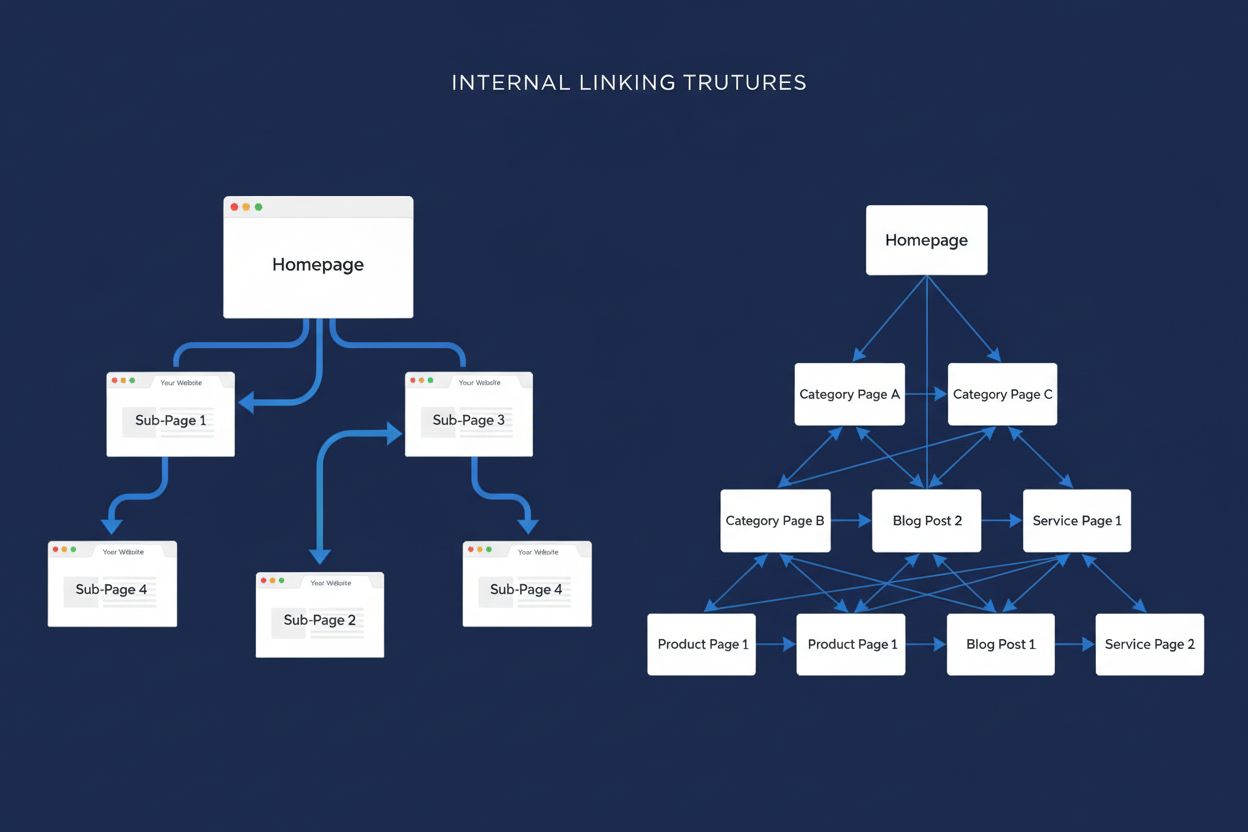
Internal linking connects pages within the same domain to improve crawlability, distribute authority, and enhance user navigation. Learn how strategic internal ...
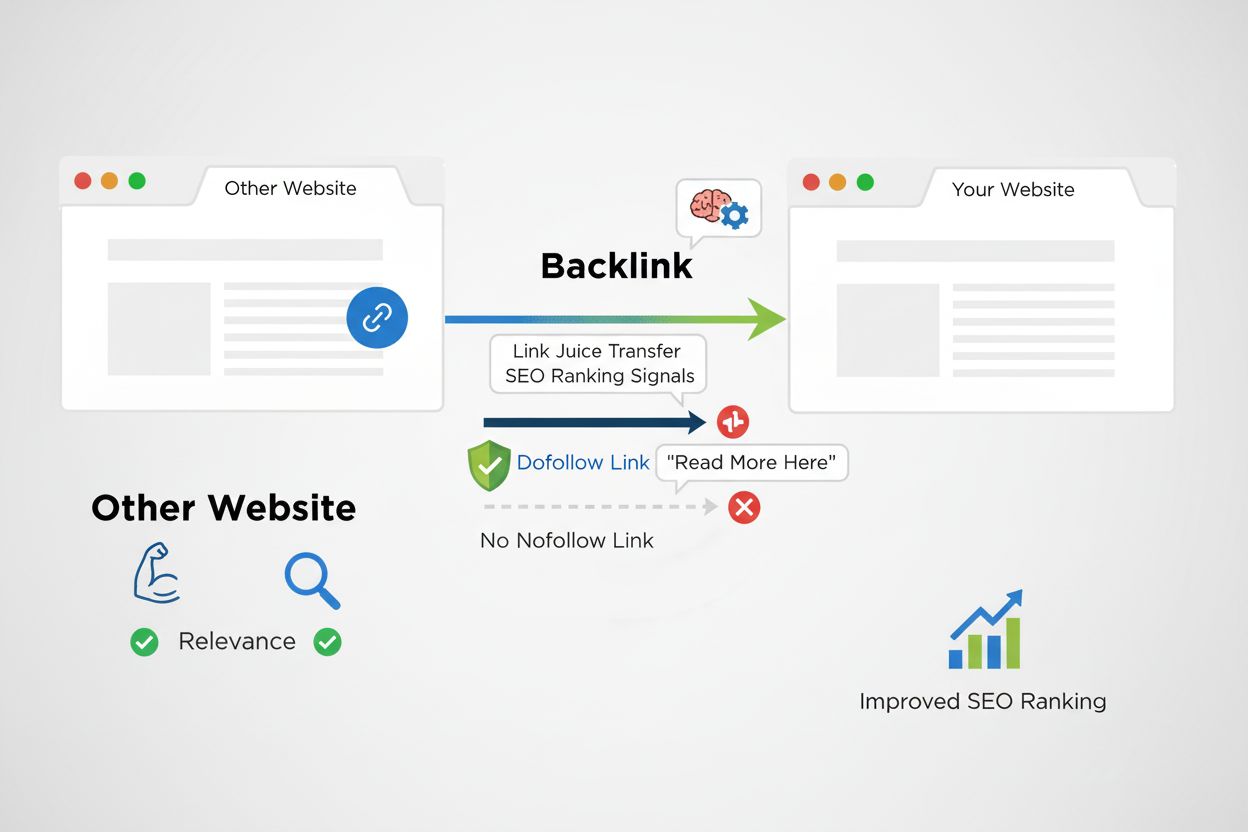
Learn what backlinks are, why they matter for SEO, and how they influence search rankings. Comprehensive guide to backlink quality, types, and monitoring for AI...
Cookie Consent
We use cookies to enhance your browsing experience and analyze our traffic. See our privacy policy.