

Spam Update
Learn what Google Spam Updates are, how they target spam tactics like expired domain abuse and scaled content, and their impact on SEO and search rankings.
11 min read
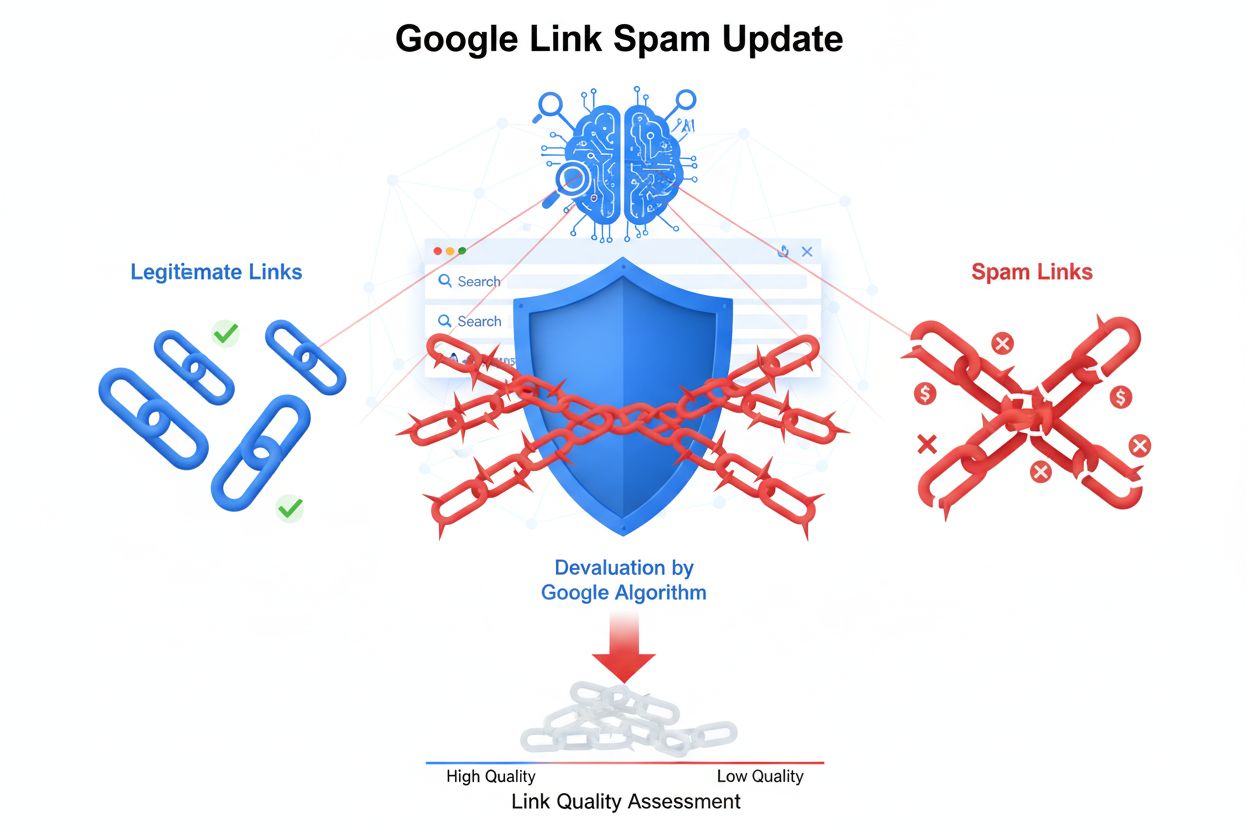
A Google algorithm update designed to identify and devalue manipulative backlinks that violate search quality guidelines. The Link Spam Update uses advanced AI systems like SpamBrain to detect unnatural linking patterns and reduce the ranking benefits of artificially created links, including untagged affiliate links, link schemes, and paid link networks.
A Google algorithm update designed to identify and devalue manipulative backlinks that violate search quality guidelines. The Link Spam Update uses advanced AI systems like SpamBrain to detect unnatural linking patterns and reduce the ranking benefits of artificially created links, including untagged affiliate links, link schemes, and paid link networks.
The Link Spam Update is a Google search algorithm enhancement specifically designed to identify, devalue, and neutralize manipulative backlinks that violate search quality guidelines. Rather than a single event, the Link Spam Update represents an ongoing series of algorithmic improvements that Google deploys to combat artificial link building schemes. The most notable dedicated link spam updates occurred in July 2021, December 2022, June 2024, and August 2025, though Google continuously refines its spam detection systems. The primary objective of the Link Spam Update is to reduce the ranking benefits that websites gain from artificially created links, ensuring that search results reflect genuine editorial authority rather than manipulative linking tactics. This update is powered by SpamBrain, Google’s advanced AI-based spam-prevention system that uses machine learning to detect patterns of unnatural linking behavior across the web.
Google’s battle against link spam dates back to the early 2000s when search engines first became vulnerable to artificial link manipulation. The Penguin algorithm update launched in April 2012 marked a watershed moment in Google’s spam-fighting efforts, introducing granular penalties for websites engaged in manipulative link-building practices. However, Penguin was a broad algorithm update affecting multiple ranking factors. The introduction of dedicated link spam updates represented a strategic shift toward more targeted interventions. Google recognized that as linking tactics became increasingly sophisticated, a specialized approach was needed. The July 2021 link spam update was particularly significant because it introduced enhanced detection capabilities for untagged affiliate links, sponsored content without proper rel attributes, and coordinated link schemes. According to Google’s official announcements, over 78% of enterprises now use some form of AI-driven content monitoring, making understanding link spam policies increasingly critical for maintaining search visibility. The evolution from Penguin to modern SpamBrain demonstrates how Google’s approach has shifted from broad algorithmic penalties to precise, AI-powered detection of specific manipulation patterns.
SpamBrain is Google’s proprietary AI system that revolutionized spam detection by moving beyond simple link metrics to analyze behavioral patterns. Rather than evaluating individual links in isolation, SpamBrain examines the broader context of linking behavior to identify manipulation. The system analyzes multiple signals including: the velocity of link acquisition (sudden spikes indicate artificial campaigns), the relevance of linking domains to the target site, the anchor text patterns used across links, the geographic distribution of linking sources, and the temporal clustering of link creation. SpamBrain can identify coordinated link schemes where multiple websites link to a target site in synchronized patterns, a hallmark of artificial link networks. The AI system also detects link farms—networks of low-quality websites created primarily to generate links—by analyzing site quality metrics, content originality, and linking patterns. According to Google’s webspam reports, SpamBrain prevented millions of spam URLs from entering the search index through advanced verification techniques. The system continuously learns from new spam tactics, making it increasingly difficult for manipulators to evade detection. Unlike rule-based systems that can be circumvented through clever obfuscation, SpamBrain’s machine learning approach adapts to emerging threats, making it one of the most effective spam-fighting tools in search history.
| Link Type | Proper Tag | Treatment by Link Spam Update | Risk Level | Best Practice |
|---|---|---|---|---|
| Organic Editorial Links | None required | Passed through, counted for ranking | Low | Natural acquisition through quality content |
| Affiliate Links | rel=“sponsored” | Devalued if untagged; passed if properly tagged | High if untagged | Always tag with rel=“sponsored” |
| Sponsored Content | rel=“sponsored” | Devalued if untagged; passed if properly tagged | High if untagged | Tag all paid placements and guest posts |
| User-Generated Content | rel=“ugc” | Devalued if untagged; passed if properly tagged | Medium if untagged | Tag comments, forum posts, and user submissions |
| Link Farm Links | N/A | Completely devalued and nullified | Critical | Avoid entirely; disavow if received |
| Paid Link Networks | N/A | Devalued and penalized | Critical | Never purchase links from networks |
| Reciprocal Links | None required | Devalued if excessive and unrelated | Medium | Only exchange with topically relevant sites |
| Comment Spam | N/A | Completely devalued | Critical | Implement comment moderation and nofollow |
The Link Spam Update operates through multiple technical mechanisms to reduce the ranking impact of manipulative links. When Google’s systems identify link spam, they don’t simply remove the links from the index; instead, they devalue them, meaning the links no longer pass ranking authority or “link juice” to the target website. This devaluation is applied algorithmically through SpamBrain’s pattern recognition, which can affect individual links, entire link profiles, or in severe cases, entire websites. The update specifically targets untagged affiliate links that lack the rel=“sponsored” attribute, which Google introduced in September 2019 as a way for sites to voluntarily qualify commercial links. When Google detects affiliate links without proper tags, it may issue manual actions visible in Google Search Console, or apply algorithmic penalties that reduce the site’s visibility across multiple keywords. The Link Spam Update also addresses site reputation abuse, where low-quality third-party content is hosted on high-authority domains to gain ranking benefits. For example, a payday loan review published on a trusted educational website’s subdomain would be flagged as site reputation abuse. Additionally, the update targets expired domain abuse, where old domains with established authority are repurposed with new, low-quality content designed to rank quickly. The technical implementation involves analyzing link patterns across billions of URLs, comparing them against known spam signatures, and applying algorithmic adjustments to ranking calculations in real-time.
The Link Spam Update affects different types of websites with varying severity depending on their link acquisition practices. E-commerce and affiliate sites are particularly impacted because they frequently use affiliate links to monetize traffic. Sites that failed to properly tag affiliate links with rel=“sponsored” saw significant ranking drops following the July 2021 update, with some reporting 30-50% visibility losses. Content publishers and blogs that accept sponsored posts and guest articles also experienced notable impacts if they didn’t properly tag outbound links. SaaS companies and B2B websites that participate in link exchange programs or purchase links from networks faced algorithmic penalties. Conversely, high-quality editorial sites that focus on organic link acquisition through exceptional content saw minimal negative impact and often benefited from reduced competition from spammy sites. According to SISTRIX analysis of the June 2024 Link Spam Update, the rollout showed relatively calm SERP movements, suggesting that most sites had already adapted to link tagging requirements. However, sites that continued manipulative practices experienced targeted devaluation. The update’s impact is not uniform—Google’s systems are sophisticated enough to distinguish between a single untagged affiliate link on an otherwise legitimate site and a coordinated link scheme involving hundreds of manipulated links.
Website owners should focus on ethical link building strategies that align with Google’s guidelines and are resilient to future spam updates. The foundation of ethical link building is creating exceptional, original content that naturally attracts links from other websites. This content-first approach ensures that links are earned through genuine editorial value rather than manipulation. When monetizing through affiliate programs, always use the rel=“sponsored” attribute on all affiliate links, regardless of whether they’re created manually or dynamically. For sponsored content and guest posts, apply the same rel=“sponsored” tag to all outbound links within the article. Implement proper link governance by maintaining a documented policy for link acquisition, ensuring all team members understand which links require tagging. Conduct regular backlink audits using tools like Google Search Console, Ahrefs, or SEMrush to identify potentially problematic links. If you discover untagged affiliate links or links from questionable sources, take immediate action to either tag them appropriately or remove them. Build relationships with topically relevant websites for potential link opportunities, as links from related domains carry more weight than links from unrelated sites. Avoid link schemes including link exchanges with unrelated sites, purchasing links from networks, and participating in coordinated link campaigns. Instead, focus on public relations and outreach to earn links through media coverage, industry recognition, and genuine partnerships. Document your link building efforts to demonstrate to Google that your links are earned through legitimate means.
The Link Spam Update represents Google’s commitment to maintaining search quality as linking tactics continue to evolve. Future iterations of the Link Spam Update will likely incorporate even more sophisticated AI capabilities to detect emerging manipulation techniques. As AI-generated content becomes more prevalent, Google will need to distinguish between legitimate AI-assisted content with natural links and artificially generated content designed purely for ranking manipulation. The rise of AI-powered link building tools that can generate thousands of low-quality links at scale will require increasingly advanced detection mechanisms. Google has indicated that SpamBrain will continue to improve, potentially incorporating signals from user behavior, click patterns, and content quality assessments to better evaluate link authenticity. The integration of link spam detection with other ranking systems suggests that future updates may consider link quality as part of broader E-E-A-T (Experience, Expertise, Authoritativeness, Trustworthiness) assessments. Website owners should anticipate that link tagging requirements may expand beyond affiliate and sponsored links to include other commercial relationships. The strategic implication for businesses is clear: invest in content quality and earned links rather than attempting to manipulate rankings through artificial linking. Organizations that build sustainable, ethical link profiles will be resilient to future updates, while those relying on manipulation will face increasing penalties. The Link Spam Update ultimately reinforces Google’s core principle that search results should reflect genuine authority and relevance, not artificial manipulation.
The Link Spam Update is a Google algorithm enhancement designed to identify and neutralize manipulative backlinks that violate search quality guidelines. Google first introduced a dedicated link spam update in July 2021, with subsequent updates in December 2022, June 2024, and August 2025. These updates specifically target unnatural linking patterns, including untagged affiliate links, link schemes, and paid link networks that attempt to artificially boost search rankings.
SpamBrain is Google's AI-based spam-prevention system that uses advanced machine learning algorithms to identify suspicious linking patterns and behavior. It analyzes linking behavior to detect manipulation rather than relying solely on individual link characteristics. SpamBrain can pinpoint patterns indicating artificial link building, such as sudden spikes in link acquisition, links from unrelated domains, and coordinated linking campaigns designed to manipulate rankings.
The Link Spam Update targets multiple categories of manipulative links including: untagged affiliate links without proper rel='sponsored' tags, low-quality paid links from link farms, link exchanges between unrelated sites, links from hacked or compromised websites, links in comment spam, and coordinated link schemes. The update also addresses sponsored and guest posts that lack appropriate link qualification tags and links designed primarily for ranking manipulation rather than genuine editorial value.
Websites violating link spam policies may face manual actions or algorithmic penalties that can significantly impact search visibility. Penalties range from reduced rankings for specific pages to site-wide visibility loss or complete de-indexing in severe cases. Google may issue manual actions visible in Search Console, and algorithmic actions may be applied automatically. Recovery requires identifying and removing or disavowing spammy links, then waiting for Google's systems to reassess the site over weeks or months.
Website owners should use the rel='sponsored' attribute for affiliate links, paid links, and sponsored content. For user-generated content like comments, the rel='ugc' tag should be used. These tags signal to Google that links are commercial in nature and should not pass ranking authority. Proper tagging applies whether links are created manually or dynamically, and applies to all affiliate programs, sponsored posts, and guest posts that involve payment or commercial relationships.
Link Spam Updates specifically target manipulative linking practices and are separate from core algorithm updates. While core updates refine overall ranking systems and content quality assessment, link spam updates focus exclusively on identifying and neutralizing artificial link building schemes. Link spam updates typically have more targeted effects on sites engaged in link manipulation, whereas core updates affect broader ranking factors and can impact any site's visibility based on content quality and relevance.
The effectiveness of link spam has been greatly reduced over the past two decades due to constant improvements in Google's ranking systems and spam detection capabilities. Early search engines were highly vulnerable to link manipulation, but modern systems like SpamBrain have made artificial link building largely ineffective. According to Google, the combination of algorithmic improvements and manual spam fighting has reduced the impact of link spam to minimal levels, though new manipulation tactics continue to emerge requiring ongoing refinement.
Start tracking how AI chatbots mention your brand across ChatGPT, Perplexity, and other platforms. Get actionable insights to improve your AI presence.
Learn what Google Spam Updates are, how they target spam tactics like expired domain abuse and scaled content, and their impact on SEO and search rankings.
Learn what Google Algorithm Updates are, how they work, and their impact on SEO. Understand core updates, spam updates, and ranking changes.
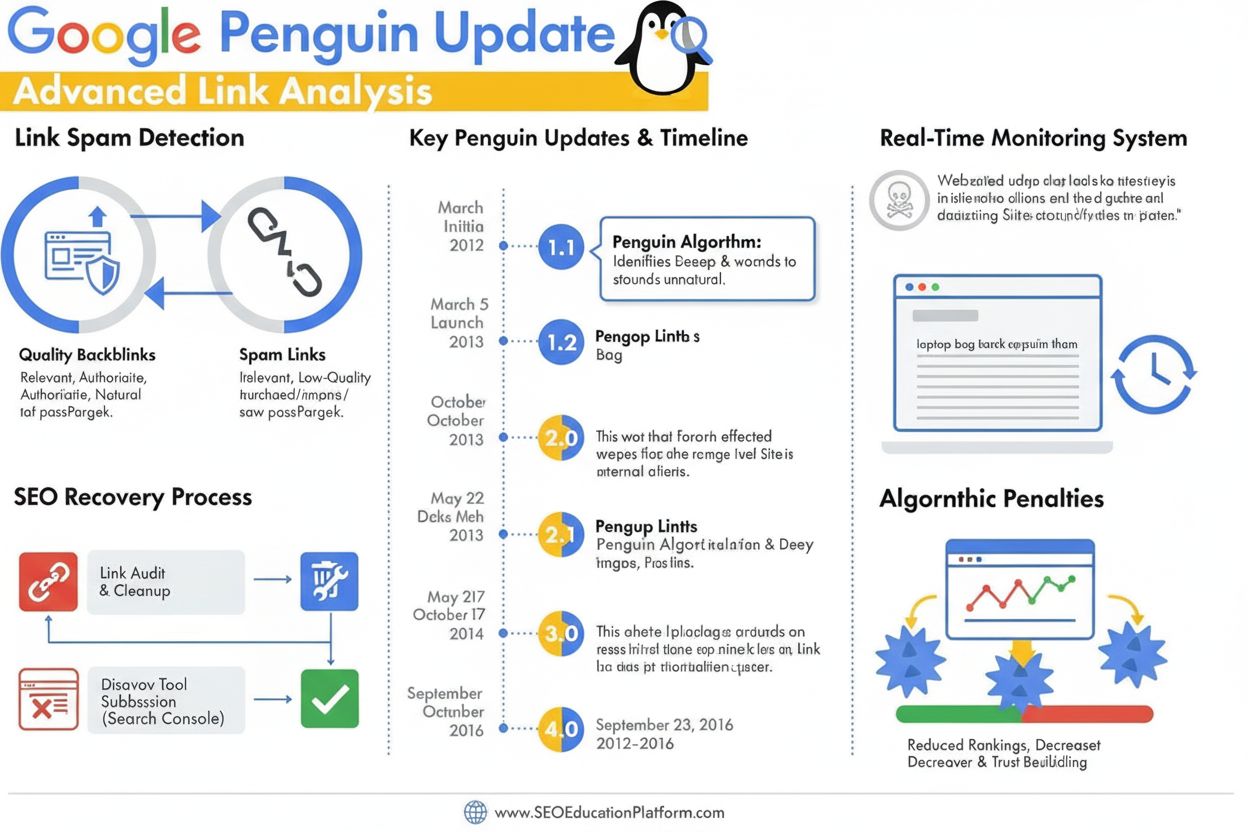
Learn what the Google Penguin Update is, how it detects link spam, and strategies for recovery. Comprehensive guide to understanding Google's backlink quality a...
Cookie Consent
We use cookies to enhance your browsing experience and analyze our traffic. See our privacy policy.