

Do AI Search Engines Prefer Listicles? Complete Guide to AI-Optimized Content
Discover whether AI search engines like ChatGPT and Perplexity prefer listicles. Learn how to optimize list-based content for AI citations and visibility.
11 min read
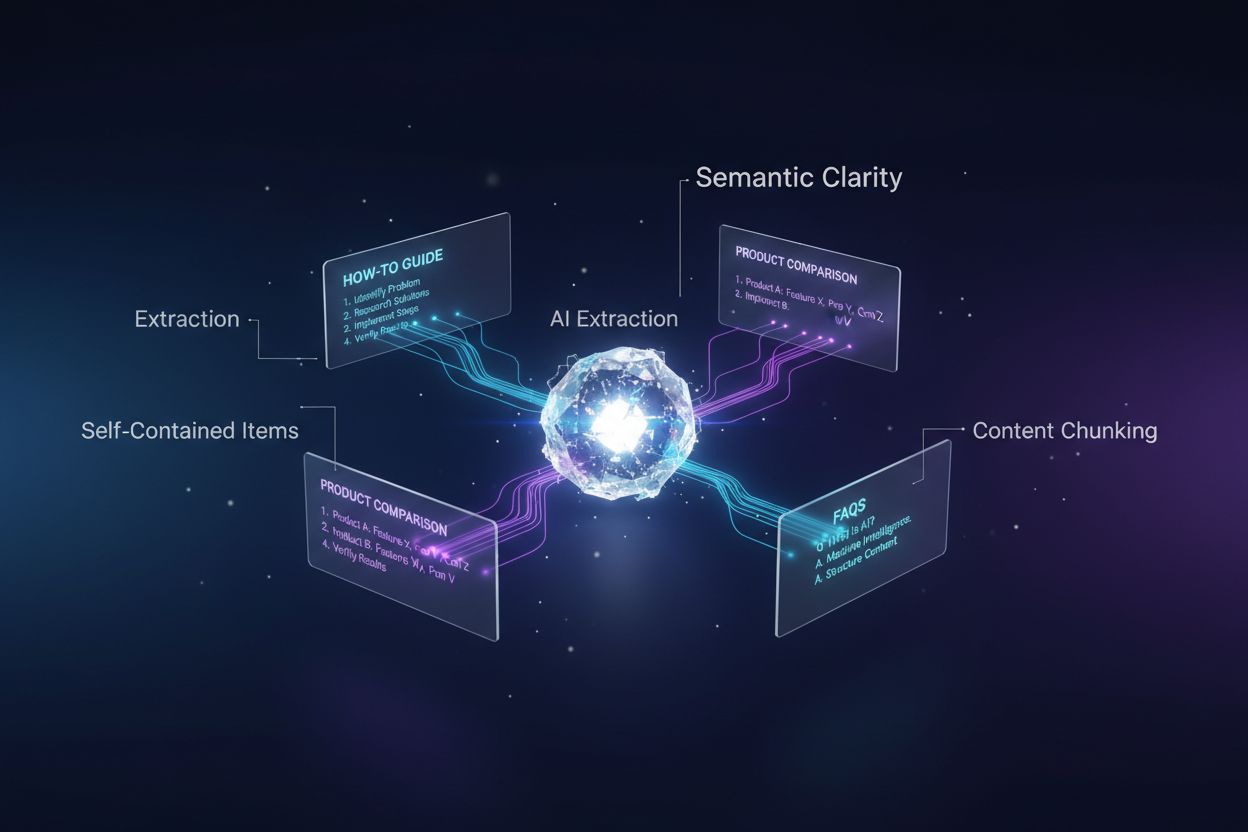
Listicle optimization is the practice of structuring list-based content with clear numbering, self-contained items, and semantic clarity to make it easily extractable by AI systems. This approach increases the likelihood that content will be selected for inclusion in AI-generated answers and search overviews. By formatting lists for AI parsing, publishers improve both visibility in AI search results and human readability. It’s a critical strategy for content optimization in the era of AI-powered search.
Listicle optimization is the practice of structuring list-based content with clear numbering, self-contained items, and semantic clarity to make it easily extractable by AI systems. This approach increases the likelihood that content will be selected for inclusion in AI-generated answers and search overviews. By formatting lists for AI parsing, publishers improve both visibility in AI search results and human readability. It's a critical strategy for content optimization in the era of AI-powered search.
Listicle optimization is the practice of structuring list-based content with clear numbering, self-contained items, and semantic clarity to make it easily extractable by AI systems. This approach goes beyond simple formatting—it involves designing content specifically so that AI models can parse, understand, and cite individual list items without needing to process entire pages or dense paragraphs. By optimizing listicles for AI extraction, publishers significantly increase the likelihood that their content will be selected for inclusion in AI-generated answers, search overviews, and AI assistant responses.

AI systems don’t process content the way humans do; they parse web pages into discrete chunks and semantic units rather than reading full articles from start to finish. Numbered and bulleted lists are inherently easier for AI to extract because each item functions as a self-contained unit with clear boundaries and distinct information. When content is presented as dense paragraphs, AI models must work harder to identify where one concept ends and another begins, making extraction less reliable and less likely to occur. Lists enable query fan-out, where AI systems can explore multiple user intents and surface different list items based on what the user is actually searching for. This modular approach to content also facilitates content synthesis, allowing AI to combine information from multiple sources more effectively when each source presents information in clear, structured formats.
| Aspect | Traditional Format | Listicle Optimized |
|---|---|---|
| Structure | Dense paragraphs with mixed concepts | Clear numbered or bulleted items |
| AI Extraction | Difficult to identify item boundaries | Easy to extract individual items |
| Citation Likelihood | Lower—requires full paragraph citation | Higher—can cite specific items |
| Query Matching | Requires processing entire section | Can match specific items to queries |
| Readability | Requires full reading for understanding | Scannable and quick to understand |
Effective listicle optimization requires several critical components working together. Clear numbering or bullet points form the foundation, making it immediately obvious to both humans and AI where each item begins and ends. Self-contained items are essential—each list entry should be able to stand alone and deliver complete information without requiring readers to reference other items or surrounding paragraphs. Descriptive headings for each list item help AI systems understand the topic and relevance of that specific entry. Proper HTML structure using semantic tags like <ol>, <li>, and heading tags signals to AI crawlers that content is intentionally organized as a list. Schema markup, particularly the ListItem schema, provides explicit metadata that tells AI systems exactly how your content is structured. Finally, semantic clarity throughout the list ensures that AI can accurately understand the relationship between items and the overall list purpose.
Key optimization elements:
Listicle optimization applies across virtually every content category, though the implementation varies by format. How-to guides and tutorials benefit enormously from numbered lists that break processes into sequential steps, making it easy for AI to extract specific instructions for user queries. Product comparisons and reviews use listicles to present features, pros, and cons in a way that AI can quickly identify and cite when answering comparative questions. FAQ sections structured as lists allow AI to match user questions with relevant answers more accurately than paragraph-based FAQs. Step-by-step processes in any domain—from cooking to software installation—are naturally suited to listicle optimization because each step is inherently self-contained. Feature lists for products or services become highly citable when properly formatted, as AI can extract specific features to answer user queries about capabilities. Best practices lists across industries gain visibility in AI answers when structured with clear numbering and descriptive item titles that signal expertise and authority.
Creating optimized listicles requires attention to several key practices that improve both AI extraction and human readability. Keep items concise but complete—each list item should deliver its full message without forcing readers to hunt for context elsewhere in the article. Use consistent formatting throughout your lists, maintaining the same structure, length, and style for all items so AI systems can reliably parse the pattern. Add context before the list with an introductory sentence or paragraph that explains what the list covers and why it matters, helping AI understand the list’s purpose and relevance. Include descriptive headings for each item that clearly signal its content, making it easier for AI to match list items to specific user queries. Avoid mixing list types within a single section—don’t alternate between numbered and bulleted lists, as this inconsistency can confuse AI parsing. Ensure semantic clarity by using precise language and avoiding ambiguous phrasing that might cause AI systems to misinterpret item meaning or relevance.
Properly optimized listicles dramatically improve your chances of being cited in AI-generated answers and search overviews. When content is structured as clear, self-contained list items, AI systems can extract specific items to answer targeted user queries without needing to cite your entire article, increasing the likelihood of citation. Snippet extraction from lists is more reliable than from paragraphs because AI can identify exact boundaries and present individual items as discrete answers. This optimization is particularly valuable for AI Overviews and AI assistant responses like those from Copilot, where structured information is preferred for direct citation. With AI referrals increasing 357% year-over-year as of June 2025, the visibility advantage of listicle optimization has become substantial—publishers who structure content for AI extraction are capturing a growing share of AI-driven traffic. Tools like AmICited.com allow you to monitor exactly which of your listicles are being cited in AI answers, providing data-driven insights into what formats and structures perform best. Structured lists help AI understand content authority by making it clear that information is organized intentionally and presented with confidence, which AI systems interpret as a signal of expertise.
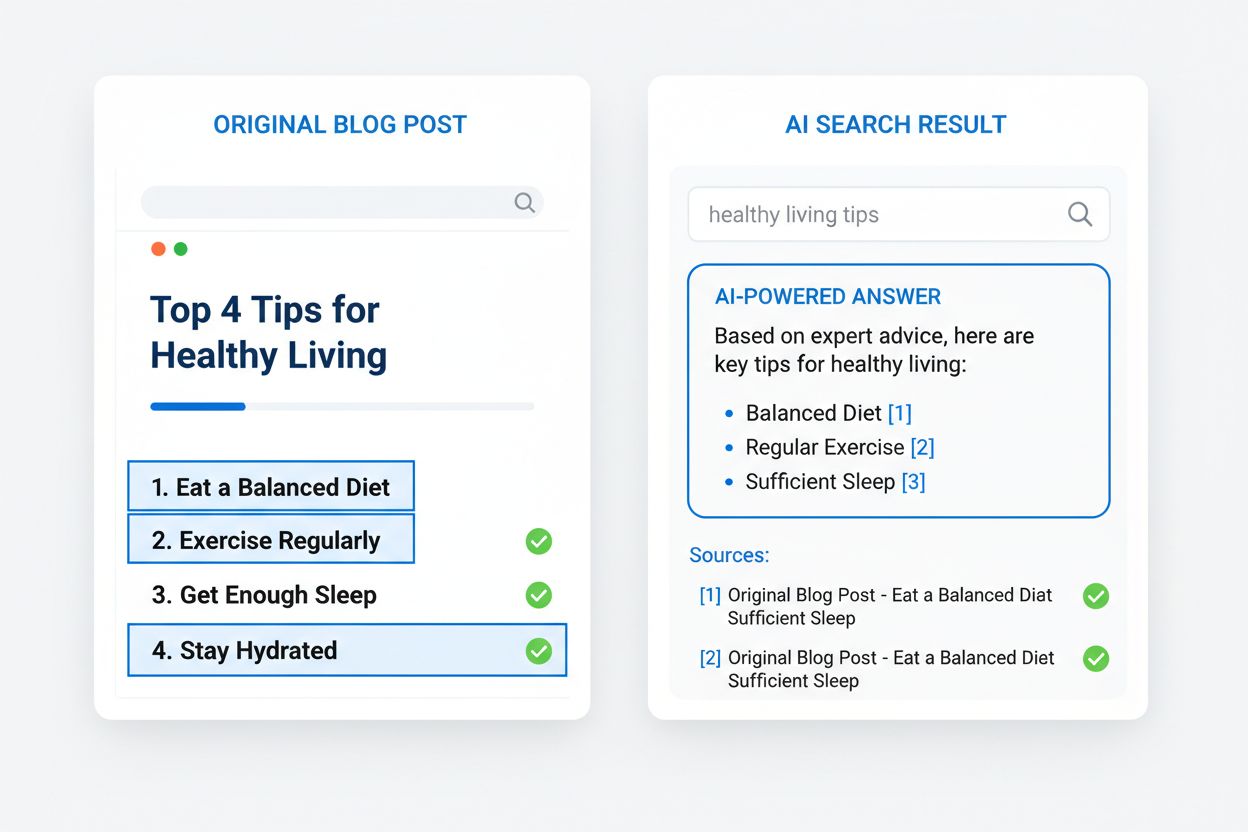
Many publishers inadvertently reduce their listicles’ AI-extractability through common formatting and structural errors. Mixing numbered and bulleted lists within the same section creates ambiguity about list hierarchy and can cause AI systems to misparse the content structure. Items that aren’t self-contained force AI to reference surrounding text to understand meaning, reducing the likelihood of extraction and citation. Vague list titles like “Item 1” or “Point A” provide no semantic information to AI systems, making it impossible for them to match list items to relevant queries. Lists without introductory context leave AI uncertain about the list’s purpose and relevance, reducing confidence in extraction. Inconsistent formatting across list items—varying lengths, different heading styles, or mixed punctuation—signals to AI that the content may not be intentionally structured, reducing extraction reliability. Lists hidden in expandable menus or behind JavaScript are invisible to many AI crawlers, meaning your carefully optimized content never gets indexed or considered for citation.
Optimizing listicles is only half the battle; monitoring their performance in AI answers is equally important for continuous improvement. AmICited.com provides specialized monitoring for tracking which of your listicles appear in AI-generated answers, showing you exactly how often and in what context your content is being cited. By tracking listicle performance in AI answers over time, you can identify which formats, topics, and structures generate the most AI citations and adjust your content strategy accordingly. Tools for content structure analysis can audit your existing listicles to identify optimization opportunities, checking for proper HTML markup, schema implementation, and semantic clarity. Monitoring AI referral traffic separately from traditional search traffic reveals the true impact of listicle optimization on your overall traffic growth, especially important given the 357% year-over-year increase in AI referrals. A/B testing different list formats—such as comparing numbered versus bulleted lists, varying item length, or testing different heading styles—provides empirical data about what works best for your specific audience and content type. Combining these monitoring approaches with tools like FlowHunt.io for broader content optimization creates a comprehensive system for maximizing both AI visibility and human engagement.
A listicle is simply a list-based article format. Listicle optimization, however, is the deliberate structuring of that list with AI extraction in mind—using clear numbering, self-contained items, descriptive headings, proper HTML markup, and schema data. While a basic listicle might work for human readers, an optimized listicle is designed to be easily parsed and cited by AI systems.
AI systems can extract both numbered and bulleted lists effectively, but numbered lists are often preferred for sequential content like how-to guides and step-by-step processes because they signal order and hierarchy. Bulleted lists work better for non-sequential information like features or benefits. The key is consistency and clarity—whichever format you choose should be used consistently throughout your content.
Yes, significantly. Properly optimized listicles are more likely to be extracted and cited in AI-generated answers because they're easier for AI systems to parse and understand. With AI referrals increasing 357% year-over-year, listicle optimization has become a critical strategy for capturing visibility in AI search results like Google AI Overviews and Microsoft Copilot.
Each list item should be self-contained and complete, delivering its full message without requiring readers to reference other items or surrounding text. Use descriptive headings for each item, keep items concise but comprehensive, maintain consistent formatting throughout the list, and add introductory context before the list explaining its purpose. This structure makes it easy for AI to extract individual items for citation.
List items should be long enough to deliver complete information (typically 1-3 sentences) but short enough to remain scannable and extractable. The ideal length depends on your content type—how-to steps might be shorter, while feature descriptions might be longer. The key is consistency: all items in a single list should follow the same length and structure pattern.
Listicle optimization complements traditional SEO rather than replacing it. Traditional SEO fundamentals like crawlability, metadata, internal linking, and backlinks remain essential. Listicle optimization adds an additional layer focused specifically on AI extraction and citation. Together, they create a comprehensive content strategy that works for both traditional search engines and AI systems.
Listicle optimization works best for content that naturally fits a list format: how-to guides, tutorials, comparisons, FAQs, step-by-step processes, feature lists, and best practices. While you can apply optimization principles to other content types, forcing non-list content into a list format typically reduces quality and readability. Use listicle optimization where it genuinely serves your content and audience.
Tools like AmICited.com provide specialized monitoring to track which of your listicles appear in AI-generated answers, showing you exactly how often and in what context your content is cited. You can also monitor AI referral traffic separately from traditional search traffic in your analytics platform, and use content structure analysis tools to audit your listicles for optimization opportunities.
Track how your optimized listicles are being cited and extracted by AI systems like ChatGPT, Copilot, and Google AI Overviews. Get real-time insights into your AI search visibility.
Discover whether AI search engines like ChatGPT and Perplexity prefer listicles. Learn how to optimize list-based content for AI citations and visibility.
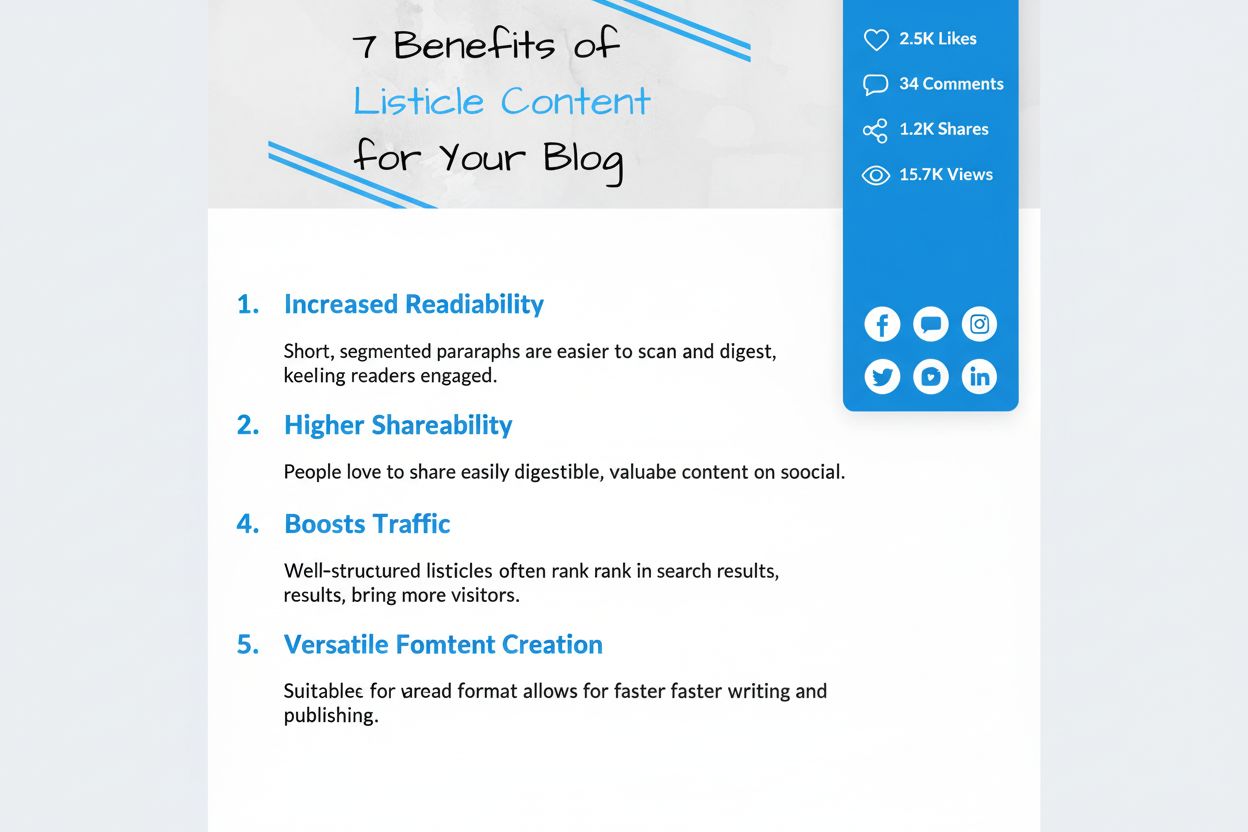
Learn what a listicle is, why it's the #1 cited content format by AI systems (50% of top citations), and how to optimize listicles for AI visibility and engagem...
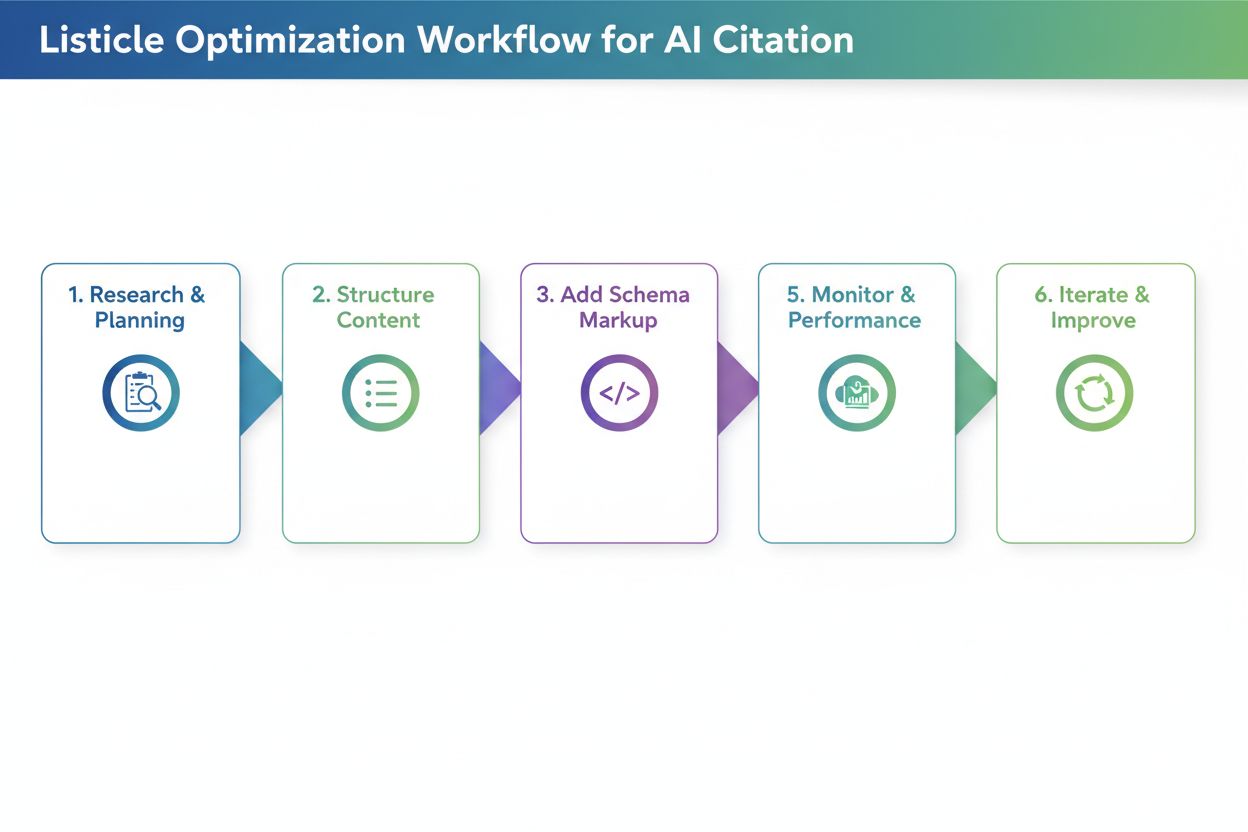
Discover why AI models prefer listicles and numbered lists. Learn how to optimize list-based content for ChatGPT, Gemini, and Perplexity citations with proven s...