


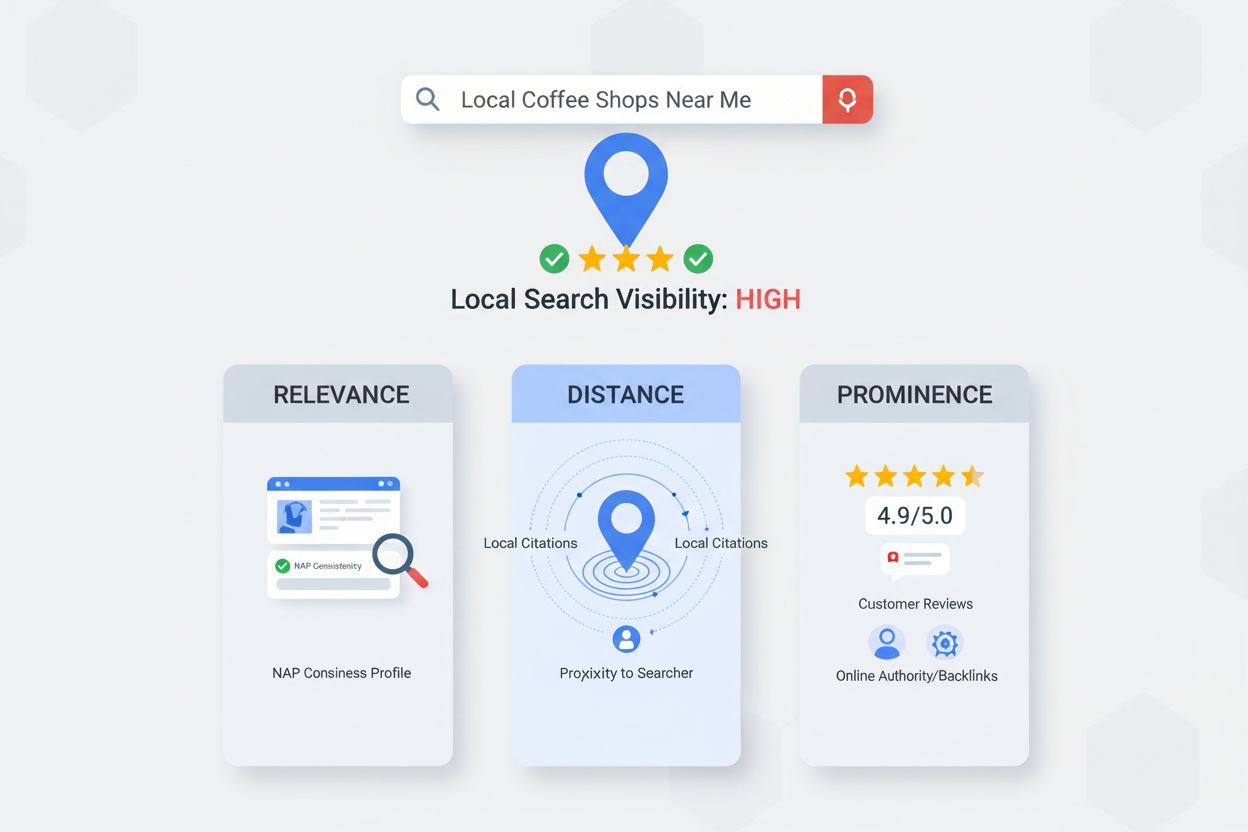
Google Maps SEO
Learn what Google Maps SEO is, how it works, and why it's critical for local business visibility. Discover ranking factors, optimization strategies, and best pr...
15 min read
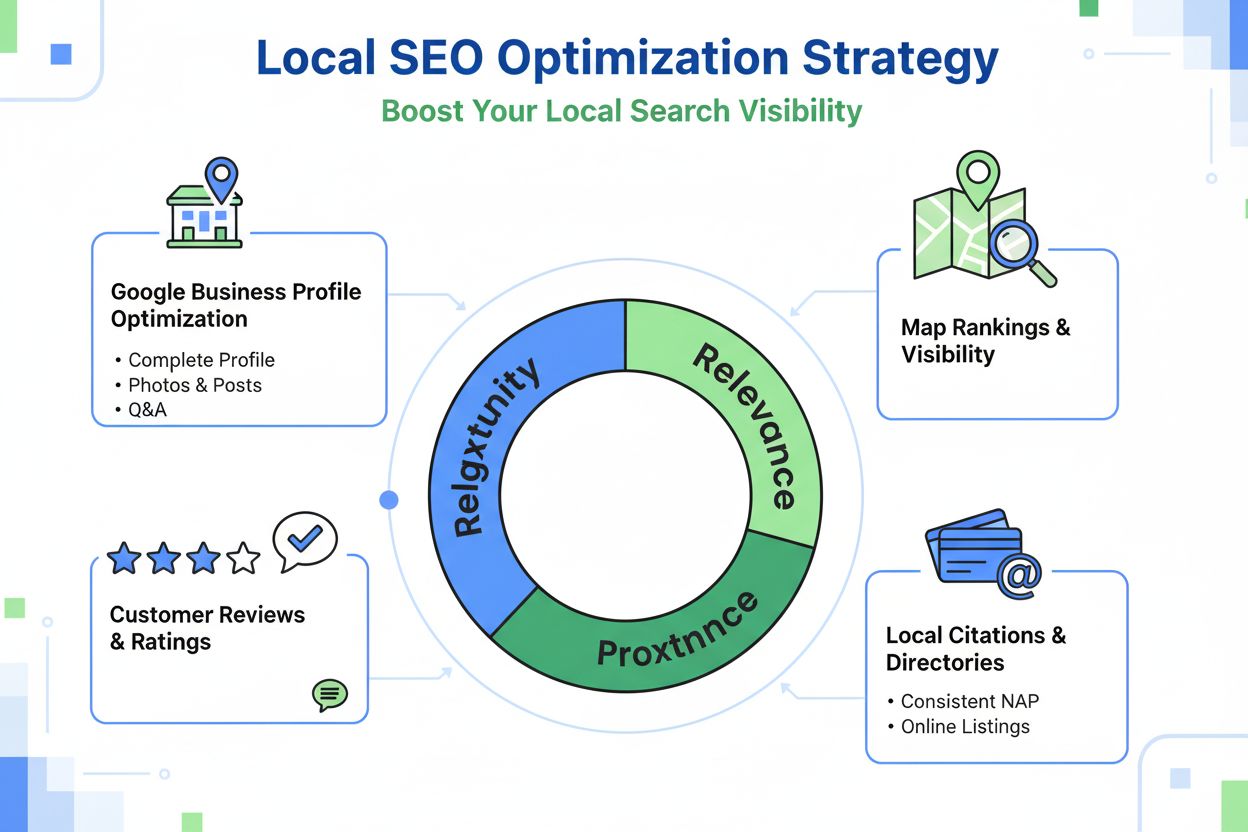
Local SEO is the practice of optimizing a business’s online presence to rank higher in location-based search results on Google Search, Google Maps, and other search engines. It involves optimizing Google Business Profiles, building local citations, managing reviews, and implementing location-specific keywords to attract nearby customers and improve visibility in local search results.
Local SEO is the practice of optimizing a business's online presence to rank higher in location-based search results on Google Search, Google Maps, and other search engines. It involves optimizing Google Business Profiles, building local citations, managing reviews, and implementing location-specific keywords to attract nearby customers and improve visibility in local search results.
Local SEO (Local Search Engine Optimization) is the practice of optimizing a business’s online presence to rank higher in location-based search results on Google Search, Google Maps, and other search engines. Unlike traditional SEO, which targets national or global audiences, Local SEO focuses on attracting customers in specific geographic areas by optimizing digital assets such as Google Business Profiles, local citations, website content, and customer reviews. The primary goal is to increase visibility when potential customers search for products or services near their location using phrases like “plumber near me” or “best restaurants in Denver.” Local SEO is essential for businesses with physical locations or defined service areas, including restaurants, dental offices, plumbing services, retail stores, and local service providers. According to recent data, 8 in 10 US consumers search for a local business online at least once a week, and 46% of all Google searches have local intent, demonstrating the critical importance of Local SEO for business visibility and customer acquisition.
Local SEO emerged as a distinct discipline in the early 2000s when search engines began recognizing the importance of location-based results. Initially, local search optimization was relatively simple, relying primarily on keyword usage, directory listings, and basic business information. However, the landscape transformed dramatically with the introduction of Google Local Business Center (now Google Business Profile) and the subsequent development of Google Maps as a dominant local search platform. Over the past two decades, Local SEO has evolved from a niche practice into a critical component of digital marketing strategy. The rise of mobile search has accelerated this evolution—88% of individuals who use a smartphone for a local search visit a related store within a week, according to Google research. Today, Local SEO encompasses a sophisticated ecosystem of ranking factors, including Google Business Profile optimization, local citations, review management, on-page SEO, link building, and increasingly, AI search visibility. The 2026 Local Search Ranking Factors survey identified over 180 possible local ranking factors, with the most impactful being Google Business Profile signals (32% importance for local pack rankings), reviews (20%), and on-page optimization (15%). This evolution reflects Google’s commitment to delivering highly relevant, location-specific results that match user intent and provide genuine value to local searchers.

Track how AI chatbots mention your brand across ChatGPT, Perplexity, and other platforms.
Google’s local search algorithm operates on three foundational pillars that determine which businesses appear in local search results. Proximity measures the physical distance between a searcher’s location and a business, making it one of the most critical factors for local visibility. When a user searches for a service without specifying a location, Google uses their device’s location data to prioritize nearby businesses. Relevance evaluates how well a business matches the search query, considering factors like business categories, keywords in the Google Business Profile, website content, and user-generated content such as reviews. A business that aligns closely with what a user is searching for will rank higher than one with poor relevance signals. Prominence reflects how well-known and trusted a business is within its community or industry, influenced by external signals such as online reviews, backlinks, social media mentions, and how frequently the business is mentioned across the web. Businesses with strong prominence signals—evidenced by high review ratings, authoritative backlinks, and consistent citations—are more likely to appear prominently in local search results. Together, these three pillars create a balanced ranking system that prioritizes businesses that are geographically close, topically relevant, and genuinely trusted by their communities. Understanding and optimizing for these pillars is fundamental to any successful Local SEO strategy.
| Factor | Local SEO | Traditional SEO | AI Search Visibility |
|---|---|---|---|
| Primary Focus | Location-based rankings in Google Maps, local pack, and localized organic results | National/global organic search rankings | Brand citations and recommendations in AI-powered search platforms |
| Key Ranking Factors | Google Business Profile (32%), Reviews (20%), On-page (15%), Proximity | On-page (33%), Links (24%), Behavioral (10%) | On-page (24%), Reviews (16%), Citations (13%), Links (13%) |
| Target Audience | Customers searching within specific geographic areas | Broad, national, or international audiences | Users querying AI systems for local business recommendations |
| Optimization Elements | GBP optimization, local citations, NAP consistency, local keywords, reviews | Technical SEO, content, backlinks, site architecture | Content quality, citations, reviews, structured data, authority |
| Search Platforms | Google Search, Google Maps, Apple Maps, Bing Places | Google, Bing, DuckDuckGo, other search engines | ChatGPT, Perplexity, Google AI Overviews, Claude, Gemini |
| Citation Importance | Critical (6% direct impact, higher for AI) | Minimal | Very High (13% direct impact) |
| Review Impact | Very High (20% for local pack) | Low (6% for organic) | High (16% for AI visibility) |
| Measurement | Local pack rankings, map rankings, local organic positions | Organic search rankings, traffic | Brand mentions in AI responses, citation frequency |
Get the latest insights on AI mentions, brand monitoring, and optimization strategies.
The Google Business Profile (GBP) is the cornerstone of any Local SEO strategy and represents the single most important ranking factor for local pack visibility. According to the 2026 Local Search Ranking Factors survey, Google Business Profile signals account for 32% of local pack ranking importance, making it the dominant factor in local search rankings. A Google Business Profile is a free listing that allows businesses to manage how they appear in Google Search and Google Maps, providing potential customers with essential information such as business name, address, phone number, hours of operation, photos, videos, and customer reviews. Creating and optimizing a GBP involves several critical steps: first, claiming or creating your listing through Google Business Profile, then verifying your business ownership through Google’s verification process. Once verified, you must complete all available fields with accurate information, select the correct primary business category (the most important GBP ranking factor), and add relevant additional categories. Businesses using four additional categories have been shown to achieve higher average map rankings. Beyond basic information, successful GBP optimization includes uploading high-quality photos and videos that showcase your business, maintaining accurate hours of operation (including seasonal variations), and regularly posting updates about promotions, events, and news. The Google Business Profile also serves as a platform for managing customer reviews and responding to customer inquiries through the Q&A feature. Businesses with complete Google Business Profiles are 50% more likely to be considered by customers for potential purchases, and customers are 2.7x more likely to view a business as reputable when the profile is fully optimized. Regular maintenance and updates to your GBP signal to Google that you’re an engaged business owner, which can positively impact your rankings.
Local citations are online mentions of your business’s Name, Address, and Phone Number (NAP) on directories, review sites, and other web properties. These citations serve as digital references that establish your business’s legitimacy and local prominence. Citations come in two forms: structured citations appear on formal business directories like Yelp, Yellow Pages, Google Business Profile, and industry-specific directories, while unstructured citations are mentions of your business on blogs, news sites, local publications, and other third-party websites. The importance of citations has grown significantly, particularly with the rise of AI search—citations now account for 13% of AI search visibility factors, up from their traditional local SEO importance. One of the most critical aspects of citation management is NAP consistency. Discrepancies in how your business name, address, or phone number appear across different directories can confuse Google’s algorithm and harm your rankings. Research shows that businesses with consistent NAP data across major citation sources are 40% more likely to appear in the local pack. This consistency signals to Google that your business information is reliable and trustworthy. Building citations involves identifying relevant directories in your industry and geographic area, then submitting your business information to each one. Major citation sources include Google Business Profile, Yelp, Apple Maps, Facebook, Bing Places, Yellow Pages, and industry-specific directories. Beyond quantity, the quality and relevance of citations matter significantly. A citation from a local chamber of commerce or industry association carries more weight than a citation from an unrelated directory. Additionally, unstructured citations from reputable local news outlets, industry publications, and authoritative websites contribute to your business’s prominence and are increasingly important for AI search visibility. Monitoring and maintaining citations requires ongoing effort—you should regularly audit your citations to ensure accuracy and consistency, remove duplicate or incorrect listings, and identify opportunities to build new citations on high-authority sites.
Online reviews have become the second most important ranking factor for local pack visibility and AI search, accounting for 20% of local pack ranking importance and 16% of AI search visibility factors. Beyond rankings, reviews are fundamental to customer decision-making—75% of consumers read online reviews when researching local businesses, and 99% of consumers read reviews before visiting a business. This makes review management a critical component of Local SEO strategy. The impact of reviews on rankings is multifaceted. Star ratings influence how prominently your business appears in search results, with higher-rated businesses typically ranking better than lower-rated competitors. Review quantity also matters—businesses with more reviews generally have stronger ranking signals than those with few reviews. Review recency is another important factor; fresh, recent reviews signal to Google that your business is active and engaged. Additionally, the language and keywords used in reviews can reinforce your business’s relevance for specific search terms. For example, if customers frequently mention your services or location in their reviews, this reinforces your business’s connection to those keywords and geographic areas. Implementing an effective review management strategy involves several key practices. First, actively solicit reviews from satisfied customers through multiple channels—in-person requests at the time of service, follow-up emails, SMS messages, and QR codes that make it easy for customers to leave reviews. Second, respond to all reviews, both positive and negative, in a timely manner. Responding to positive reviews thanks customers and shows engagement, while responding to negative reviews demonstrates your commitment to customer satisfaction and provides an opportunity to address concerns. Research shows that 73% of unhappy customers will give a business a second chance if the owner’s response to their negative review resolves their complaint. Third, monitor your reviews across multiple platforms including Google Business Profile, Yelp, Facebook, TripAdvisor, and industry-specific review sites. Finally, analyze review sentiment to identify trends, common complaints, and opportunities for improvement. This feedback provides valuable business intelligence that can drive operational improvements and customer satisfaction.
On-page SEO is the most important ranking factor for local organic search results (33% importance) and remains critical for AI search visibility (24% importance). On-page optimization involves strategically incorporating local keywords throughout your website to signal relevance to both search engines and users. Local keywords are search terms that include geographic modifiers, such as “plumber in Denver,” “best restaurants near me,” or “dental services in Austin.” Effective local keyword research involves identifying the specific terms your target customers use when searching for your products or services in your geographic area. This research should include both explicit geographic modifiers (city names, neighborhood names, zip codes) and implicit location signals (phrases like “near me,” “local,” “nearby”). Once you’ve identified your target local keywords, you should optimize your website’s on-page elements. Your title tags should include your primary local keyword and business name, such as “Best Plumbing Services in Denver | ABC Plumbing.” Meta descriptions should expand on the title and include local keywords while compelling users to click. Your H1 heading (the main page heading) should incorporate your primary keyword, and H2 and H3 subheadings should include related local keywords and topics. The body content should naturally incorporate local keywords while providing genuine value to readers—keyword stuffing or unnatural keyword placement can harm your rankings. Internal linking is another critical on-page element; linking from your homepage and other high-authority pages to location-specific pages helps establish hierarchy and distributes link equity throughout your site. Additionally, creating dedicated pages for each service or location significantly improves local rankings. For multi-location businesses, creating individual pages for each location with unique content, local keywords, and location-specific information is essential. Schema markup, particularly local business schema, helps search engines understand your business information and can enhance how your business appears in search results. Finally, ensure your website is mobile-friendly and fast-loading, as mobile usability is a ranking factor and most local searches occur on mobile devices.
Backlinks (links from other websites to your site) remain an important ranking factor, accounting for 8% of local pack rankings and 13% of AI search visibility. While backlinks are less dominant in local search than in traditional SEO, they still contribute significantly to your business’s prominence and authority. High-quality backlinks from relevant, authoritative websites signal to Google that your business is trustworthy and valuable. In the local context, backlinks from local or industry-relevant sources are particularly valuable. For example, a plumbing company would benefit more from a link on a local home improvement blog or from a local chamber of commerce than from a generic directory. Building local backlinks involves several strategies. Local partnerships and cross-promotions with complementary businesses can generate natural backlinks. For example, a yoga studio might partner with a local health food store, with each business linking to the other. Sponsoring local events, teams, or organizations often results in backlinks from the sponsoring organization’s website. Being featured in local news outlets, blogs, and publications generates both backlinks and unstructured citations. Joining local business associations and industry organizations that list their members creates additional citation and linking opportunities. Creating valuable, shareable content that addresses local topics or serves your community can naturally attract backlinks. Finally, local link building outreach involves identifying relevant local websites and reaching out to propose linking opportunities, such as guest posts or resource pages. The key to successful local link building is focusing on quality over quantity—a few high-quality links from authoritative local sources are more valuable than numerous low-quality links.
Implementing a comprehensive Local SEO strategy requires a systematic approach that addresses all key ranking factors. The first step is conducting local market research to understand your competitive landscape, identify your target keywords, and assess your current visibility. This involves analyzing your top local competitors, identifying the keywords they rank for, and understanding what makes them successful. Next, claim and optimize your Google Business Profile by ensuring all information is accurate, complete, and optimized with relevant keywords and high-quality images. Simultaneously, conduct local keyword research to identify the specific terms your target customers use when searching for your products or services in your geographic area. Then, optimize your website’s on-page elements by incorporating local keywords naturally throughout your site, creating dedicated pages for each service or location, and implementing schema markup. Build local citations by submitting your business information to relevant directories and ensuring NAP consistency across all listings. Implement a review generation strategy by actively soliciting reviews from satisfied customers and responding to all reviews promptly. Build local backlinks through partnerships, sponsorships, and outreach to local media and websites. Finally, monitor your performance using tools like rank trackers, citation auditors, and review management platforms to track your progress and identify areas for improvement. This systematic approach ensures that you’re addressing all critical Local SEO factors and continuously improving your local visibility.
The future of Local SEO is being shaped by the rapid growth of AI-powered search platforms like ChatGPT, Google AI Overviews, Perplexity, and Claude. As these platforms become increasingly important for local business discovery, Local SEO strategies must evolve to address AI search visibility. Research shows that LLMs use local citations, reviews, and social media channels when answering local business queries, meaning that traditional Local SEO optimization directly impacts AI visibility. The 2026 Local Search Ranking Factors survey identified AI search visibility factors for the first time, revealing that on-page optimization (24%), reviews (16%), citations (13%), and links (13%) are the most important factors for AI search visibility. This convergence of traditional Local SEO and AI visibility creates opportunities for businesses to strengthen their presence across multiple search channels simultaneously. Additionally, social signals have re-emerged as an important ranking factor, with social media engagement and presence now accounting for 4-9% of ranking importance across different search types. Platforms like Instagram, TikTok, and Facebook are increasingly used by consumers to discover local businesses, particularly among younger demographics. For businesses wanting to maximize visibility, integrating social media strategy with Local SEO is becoming essential. Another emerging trend is the importance of structured data and schema markup for both traditional and AI search. As search engines and AI systems become more sophisticated, properly structured business information helps these systems understand and recommend your business more effectively. Finally, the rise of voice search and near me searches continues to drive the importance of Local SEO. Mobile searches with “near me” modifiers have grown exponentially, and optimizing for these conversational, location-based queries is increasingly critical. Businesses that invest in comprehensive Local SEO strategies today will be better positioned to maintain visibility as search technology continues to evolve.
Start tracking how AI chatbots mention your brand across ChatGPT, Perplexity, and other platforms. Get actionable insights to improve your AI presence.
Learn what Google Maps SEO is, how it works, and why it's critical for local business visibility. Discover ranking factors, optimization strategies, and best pr...
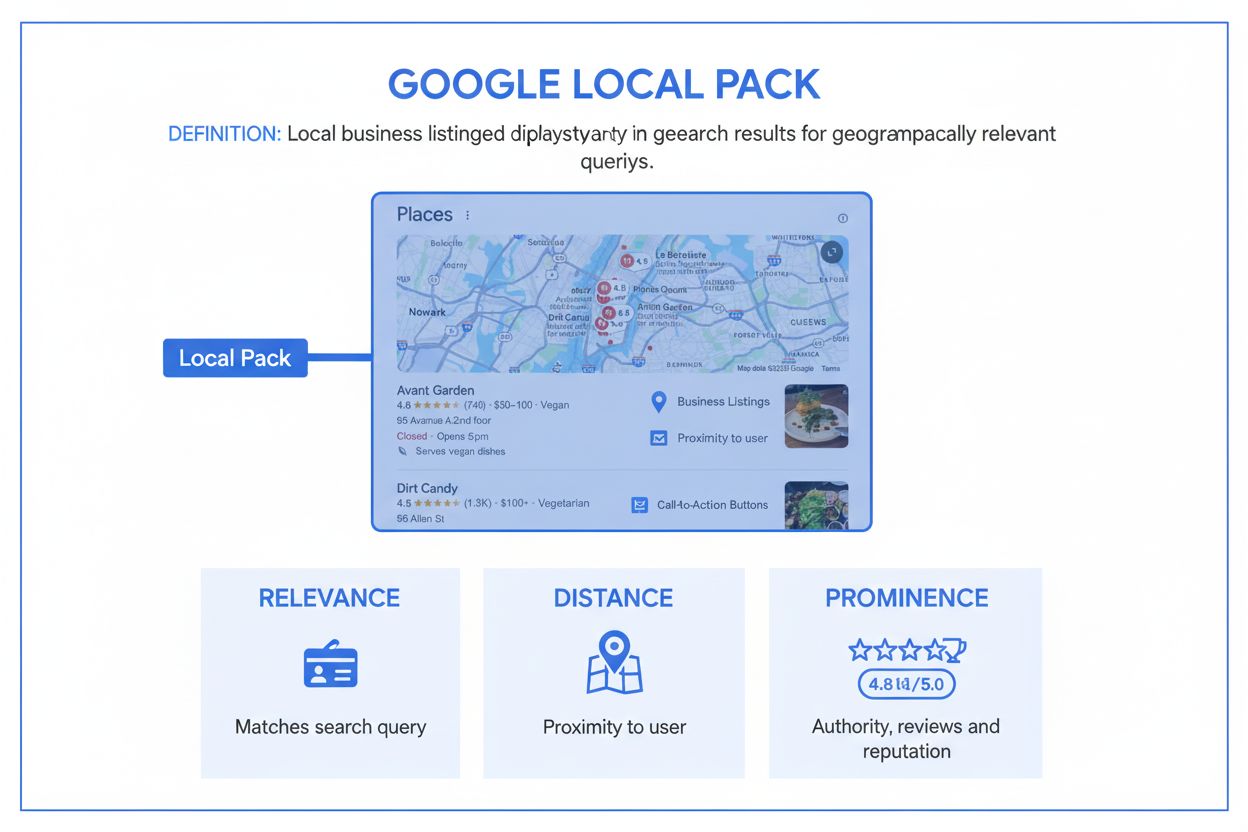
Learn what the Local Pack is, how it works, and why it's essential for local business visibility. Discover ranking factors and optimization strategies for appea...

Build a local service SEO strategy for location pages, service areas, reviews, multi-location architecture, AI visibility, and reliable booking flows.
Cookie Consent
We use cookies to enhance your browsing experience and analyze our traffic. See our privacy policy.