

How Do Startups Build AI Visibility in ChatGPT, Perplexity, and Gemini?
Learn how startups can improve their visibility in AI-generated answers across ChatGPT, Perplexity, Gemini, and other AI platforms through structured content, s...
12 min read

Manufacturing AI Visibility refers to a manufacturer’s presence and recognition within AI-powered search tools, chatbots, and generative engines used by procurement teams and engineers during industrial purchasing decisions. It encompasses optimization strategies to ensure manufacturing companies are cited, recommended, and visible across ChatGPT, Perplexity, Google AI Overviews, and other LLM platforms that now influence B2B buying journeys.
Manufacturing AI Visibility refers to a manufacturer's presence and recognition within AI-powered search tools, chatbots, and generative engines used by procurement teams and engineers during industrial purchasing decisions. It encompasses optimization strategies to ensure manufacturing companies are cited, recommended, and visible across ChatGPT, Perplexity, Google AI Overviews, and other LLM platforms that now influence B2B buying journeys.
Manufacturing AI Visibility refers to a manufacturer’s ability to be discovered, recommended, and cited by artificial intelligence platforms such as ChatGPT, Perplexity, Google Gemini, and Bing Copilot when procurement professionals and engineers search for solutions. Unlike traditional SEO, which focuses on ranking for keywords in Google’s search results, Manufacturing AI Visibility centers on whether your company appears in AI-generated answers, recommendations, and citations across multiple LLM-powered platforms. This represents a fundamental shift from a Google-centric discovery model to an AI-centric discovery model, where buyers increasingly rely on conversational AI to pre-filter vendors before visiting websites. The stakes are particularly high in B2B manufacturing, where procurement teams use AI to narrow down supplier options, meaning visibility in AI answers directly influences which manufacturers enter the consideration set. Manufacturing AI Visibility has become essential because it determines whether your company is even in the conversation when buyers ask AI platforms for supplier recommendations.
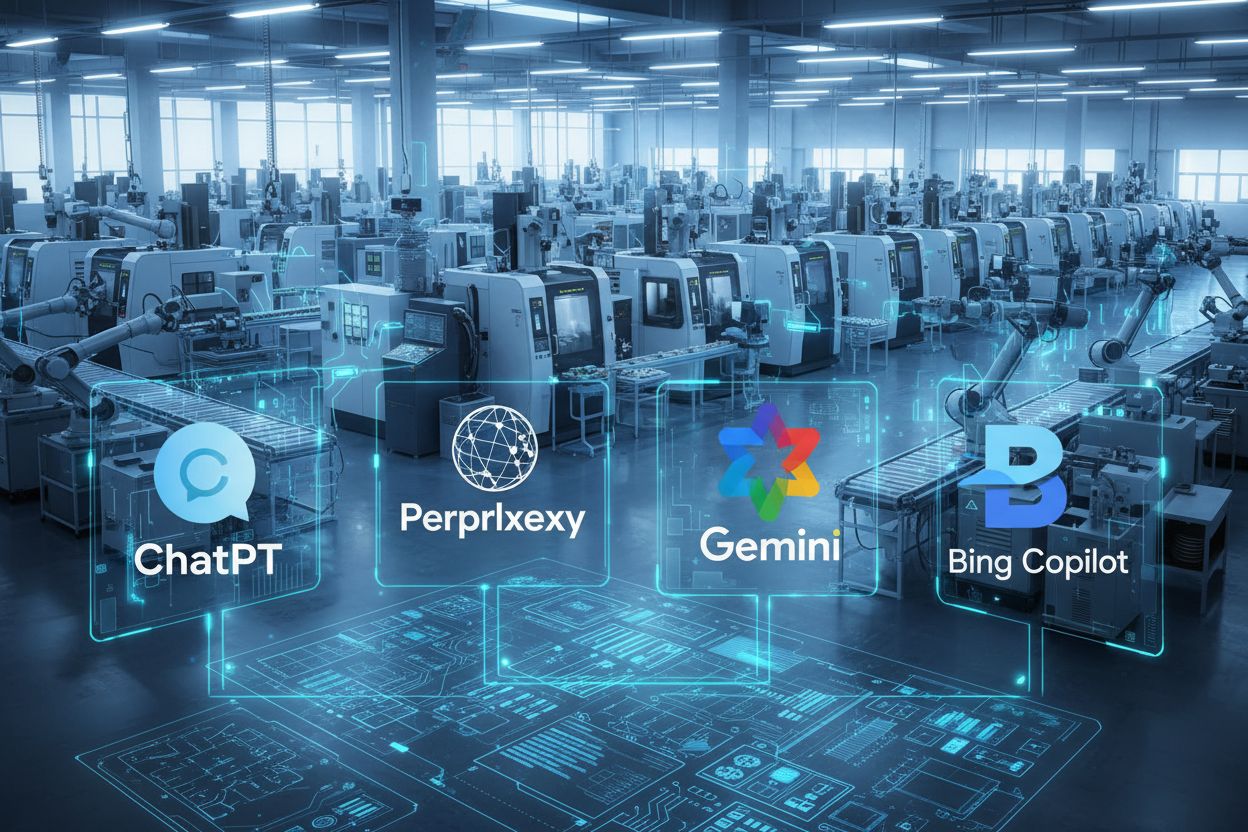
Why Manufacturing AI Visibility Matters for manufacturers cannot be overstated, given the dramatic changes in how procurement teams discover suppliers:
How AI Platforms Evaluate Manufacturing Content depends on sophisticated algorithms that assess which manufacturers deserve recommendation based on multiple trust and authority signals. Large Language Models (LLMs) analyze content across the web to identify which companies are most frequently cited, most authoritative, and most relevant to specific manufacturing queries, then synthesize this information into recommendations. AI platforms prioritize content from authoritative sources that LLMs have been trained to trust, including industry directories (such as Thomas Register and Alibaba), trade publications (like Industry Week and Modern Manufacturing), government databases (including OSHA and EPA resources), and established B2B platforms. Schema markup—structured data that explicitly tells AI systems what information means—plays a critical role in how AI platforms understand and cite your company, with proper implementation significantly increasing citation likelihood. Trust signals such as industry certifications (ISO standards, quality badges), professional memberships (industry associations), case studies, and third-party validations signal to AI systems that your company is credible and worth recommending. Entity SEO and machine-recognizability ensure that AI systems can clearly identify your company, understand its capabilities, and distinguish it from competitors with similar names or offerings. The citation-worthiness of your content—whether it contains the specific information AI systems need to answer user queries—determines whether AI platforms will reference your company when responding to procurement questions.
| Platform | Function | User Base | Unique Angle | Content Tips |
|---|---|---|---|---|
| ChatGPT | Conversational AI with web browsing | 200M+ users; enterprise adoption growing | Real-time web search integration; detailed explanations | Comprehensive guides; expert commentary; structured FAQs |
| Perplexity | AI search engine with source citations | 15M+ monthly users; research-focused | Transparent source attribution; academic rigor | Well-sourced technical content; original research; data-backed claims |
| Google Gemini | Integrated AI assistant in Google ecosystem | 1B+ potential users via Google Search | Seamless integration with Google results; local relevance | Mobile-optimized content; local business schema; featured snippets |
Key Factors Affecting Manufacturing AI Visibility operate across multiple dimensions that determine whether your company appears in AI-generated answers:
Query Length Impact: Queries with 7 or more words trigger AI Overviews at a 61.2% rate according to WebFX research, meaning longer, more specific procurement queries are more likely to surface AI recommendations—this favors manufacturers who optimize for detailed, long-tail search terms that serious buyers actually use
Search Intent Classification: Informational queries (such as “how to select a precision machining supplier”) trigger AI Overviews at a 43.1% rate, making content that educates buyers about selection criteria and industry best practices particularly valuable for visibility
Brand Modifier Effect: When queries include brand names (such as “precision machining suppliers like [Company Name]”), AI Overview rates drop to 23.9%, meaning branded searches are less likely to surface AI recommendations—this creates opportunity for manufacturers to dominate non-branded, category-level queries
Location Modifier Impact: Queries with geographic modifiers (such as “precision machining suppliers in Ohio”) trigger AI Overviews at a 21.5% rate, indicating that local manufacturing searches have lower AI recommendation rates but higher intent when they do appear
Combined Modifiers: When queries combine both brand and location modifiers (such as “precision machining suppliers like [Company Name] in Ohio”), AI Overview rates drop to just 16.8%, suggesting that highly specific, branded searches rely more on traditional search results than AI recommendations
Long-Tail Query Advantage: Manufacturers who optimize for specific, multi-word queries from serious buyers—such as “ISO 9001 certified aluminum CNC machining for aerospace applications”—capture disproportionate visibility because these queries have higher AI recommendation rates and lower competition
Informational vs. Transactional Intent: Procurement teams increasingly use informational queries to research suppliers before making transactional decisions, meaning content that answers “how to evaluate,” “what to look for,” and “industry standards” drives both AI visibility and downstream conversions
Strategies to Improve Manufacturing AI Visibility require a comprehensive approach that addresses how AI systems discover, evaluate, and recommend your company:
Implement Comprehensive Entity SEO
Deploy Strategic Schema Markup
Develop Visible Trust Signals
Optimize Content for AI Citation
Strengthen Local SEO Foundation
Create AI-Resistant Content Assets
Build Authority Through Expert Commentary
Implement Structured Data Comprehensively
Complement with Strategic PPC
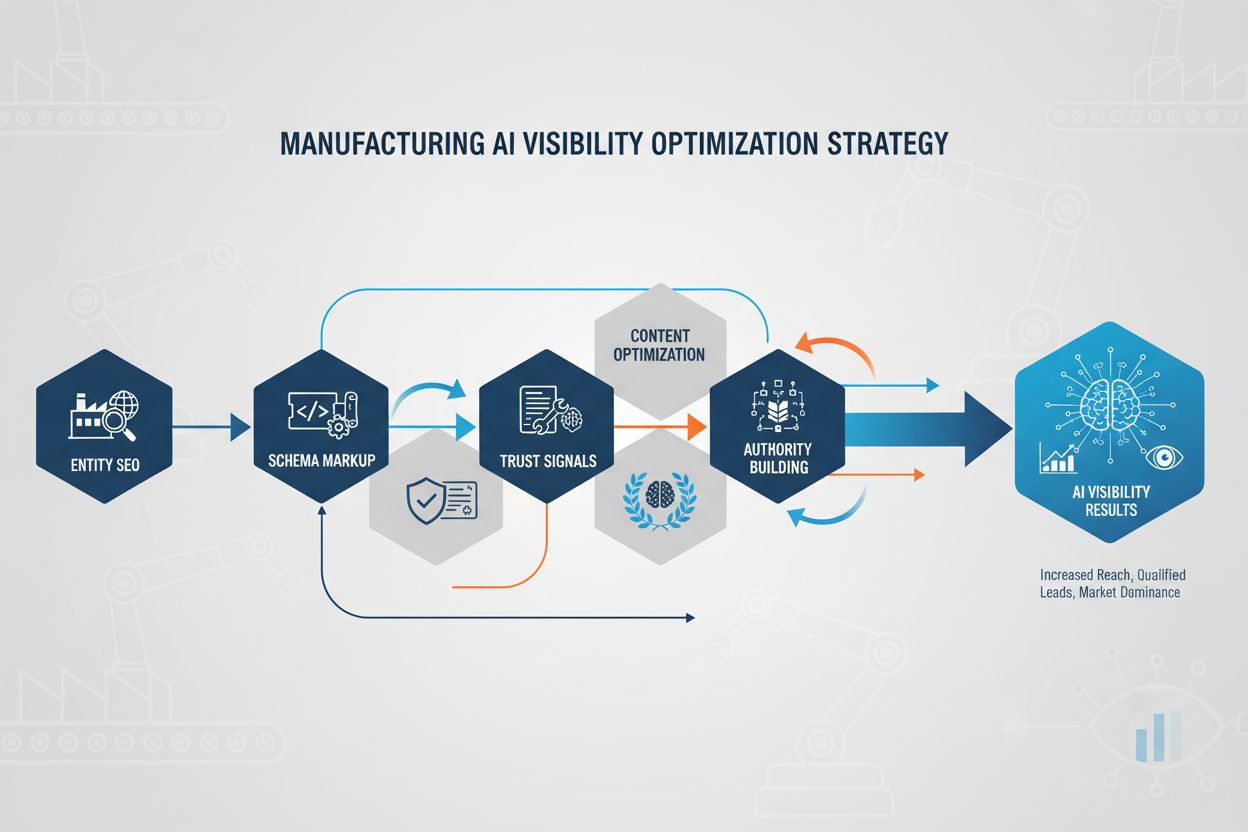
Measuring Manufacturing AI Visibility requires specialized metrics and tools that go beyond traditional SEO analytics, as standard website traffic data cannot capture AI-driven discovery:
| Metric | Definition | How to Track |
|---|---|---|
| AI Answer Visibility Rate | Percentage of target queries where your company appears in AI-generated answers | Use tools like Profound, Peec.ai, or AmICited.com to monitor queries and track appearances |
| Share of AI Answer | Your company’s prominence within AI answers (first mention, multiple mentions, detailed description) | Analyze AI answer content manually or use monitoring tools to assess positioning |
| Query Resolution Rate (QRR) | Percentage of user queries that AI answers completely without requiring additional research | Track whether AI answers resolve queries or drive users to click through to websites |
| Engaged Intent Rate (EIR) | Percentage of AI answer viewers who take action (click to website, contact company, request information) | Implement UTM parameters and conversion tracking for AI-sourced traffic |
| Conversion Velocity | Speed at which AI-sourced visitors convert compared to traditional search visitors | Compare conversion timelines between AI-referred and organic search traffic |
| Assisted Conversion Influence Score | Measurement of how AI visibility influences downstream conversions even when not the final touchpoint | Use multi-touch attribution models to assess AI’s role in conversion paths |
| Technical Trust Signals Score | Assessment of schema markup completeness, directory presence, and certification visibility | Audit schema implementation, directory listings, and trust signal visibility |
Tools for Measurement: Profound provides AI answer tracking and competitive analysis; Peec.ai monitors AI visibility across multiple platforms; SE Ranking includes AI Overview tracking features; Keyword.com offers AI answer monitoring; AmICited.com specializes in comprehensive AI visibility monitoring across ChatGPT, Perplexity, and Google Gemini with detailed citation tracking and competitive benchmarking.
Manufacturing AI Visibility and Traditional SEO represent complementary but distinct optimization approaches that serve different discovery mechanisms:
| Aspect | Traditional SEO | Manufacturing AI Visibility |
|---|---|---|
| Primary Goal | Rank in Google’s top 10 results | Appear in AI-generated answers and recommendations |
| Key Metric | Keyword ranking position | Citation frequency and prominence in AI answers |
| Content Focus | Keyword optimization and relevance | Authority, trustworthiness, and citation-worthiness |
| Trust Signals | Backlinks and domain authority | Certifications, memberships, third-party validations, schema markup |
| Discovery Mechanism | User clicks on ranked results | AI recommends your company in conversational response |
| Buyer Journey | Multiple options presented; buyer chooses | AI pre-filters to 1-2 options; buyer considers limited set |
| Optimization Timeline | 3-6 months for results | 2-4 months for initial visibility, ongoing refinement |
| Competitive Dynamics | Top 10 positions available | Winner-takes-most; limited recommendation slots |
Why Both Are Necessary: Traditional SEO remains essential because many procurement searches still rely on Google results, and ranking well provides credibility that supports AI visibility. Manufacturing AI Visibility is increasingly critical because AI platforms are becoming the primary discovery mechanism for serious buyers, and exclusion from AI answers means exclusion from consideration regardless of Google rankings. The evolution of search behavior shows that procurement teams now use AI as their first filter, then visit websites of recommended companies—meaning visibility in both channels is required for comprehensive market coverage.
Common Challenges in Manufacturing AI Visibility prevent many manufacturers from achieving the visibility they deserve despite having quality products and services:
Incomplete or Incorrect Schema Markup: Many manufacturers implement schema markup partially or incorrectly, failing to provide AI systems with the structured data needed to understand and cite their capabilities, certifications, and locations—this requires regular audits and updates as schema standards evolve
Weak or Invisible Trust Signals: Manufacturers often fail to prominently display certifications, memberships, and third-party validations on their websites, making it difficult for AI systems to recognize and cite these credibility indicators—trust signals must be machine-readable and prominently featured
Poor Content Structure for AI Parsing: Content written for human readers may not be structured in ways that AI systems can easily parse and cite, lacking clear headings, bullet points, and specific data points that LLMs need to generate accurate recommendations
Missing from Authoritative Directories: Manufacturers not listed in industry directories (Thomas Register, Alibaba, Global Sources) or with incomplete directory profiles are invisible to AI systems that rely on these sources as authoritative references for recommendations
Lack of Technical Content Depth: Manufacturers with shallow product descriptions and limited technical content provide AI systems with insufficient information to recommend them for specific applications, while competitors with detailed capability documentation dominate AI recommendations
Attribution Model Breakdown: Traditional analytics cannot track AI-driven discovery, making it impossible to measure ROI from Manufacturing AI Visibility efforts without specialized monitoring tools, leading to underinvestment in this critical channel
Difficulty Measuring AI Influence: Without tools like AmICited.com, manufacturers cannot determine which queries trigger AI recommendations, how often they appear, or how AI visibility influences downstream conversions, making optimization efforts feel speculative
Traditional SEO optimizes for Google rankings where multiple results appear on a page. Manufacturing AI Visibility optimizes for being recognized and recommended by AI assistants like ChatGPT and Perplexity, which typically recommend just one or two suppliers per query. Both are complementary strategies necessary for comprehensive market coverage.
According to WebFX's analysis of 188,713 manufacturing queries, 27.9% trigger AI Overviews. This rate jumps to 61.2% for searches with 7 or more words, meaning longer, more specific procurement queries are significantly more likely to surface AI recommendations instead of traditional search results.
Long, informational searches (definitions, process explanations, industry standards) are most likely to trigger AI Overviews at a 43.1% rate. These educational queries that help buyers understand selection criteria and industry best practices are particularly vulnerable to AI summarization.
Brand modifiers reduce AI Overview rates to 23.9%, location modifiers to 21.5%, and combined brand plus location queries to just 16.8%. These specific, commercial intent queries rely more on traditional search results and local listings than AI recommendations.
Implement schema markup to make your company machine-recognizable, build trust signals through certifications and case studies, secure authoritative citations in industry directories and trade publications, and create quotable technical content that AI systems can cite in answers.
Key metrics include AI Answer Visibility Rate (percentage of queries where you appear), Share of AI Answer (your prominence within answers), Query Resolution Rate, Engaged Intent Rate, Conversion Velocity, and Technical Trust Signals Score. Tools like AmICited.com provide comprehensive monitoring across multiple AI platforms.
Most manufacturers see early results within 3-6 months, depending on current visibility and implementation speed. Initial visibility improvements often appear within 2-4 months, with ongoing refinement needed to maintain and improve positioning as AI systems evolve.
No, both are complementary. Traditional SEO remains essential because many procurement searches still use Google, and strong Google rankings provide credibility that supports AI visibility. Manufacturing AI Visibility is increasingly critical because AI platforms are becoming the primary discovery mechanism for serious buyers.
Track how AI platforms like ChatGPT, Perplexity, and Google Gemini reference your manufacturing company in industrial and procurement queries. Get real-time insights into your AI visibility and competitive positioning.
Learn how startups can improve their visibility in AI-generated answers across ChatGPT, Perplexity, Gemini, and other AI platforms through structured content, s...
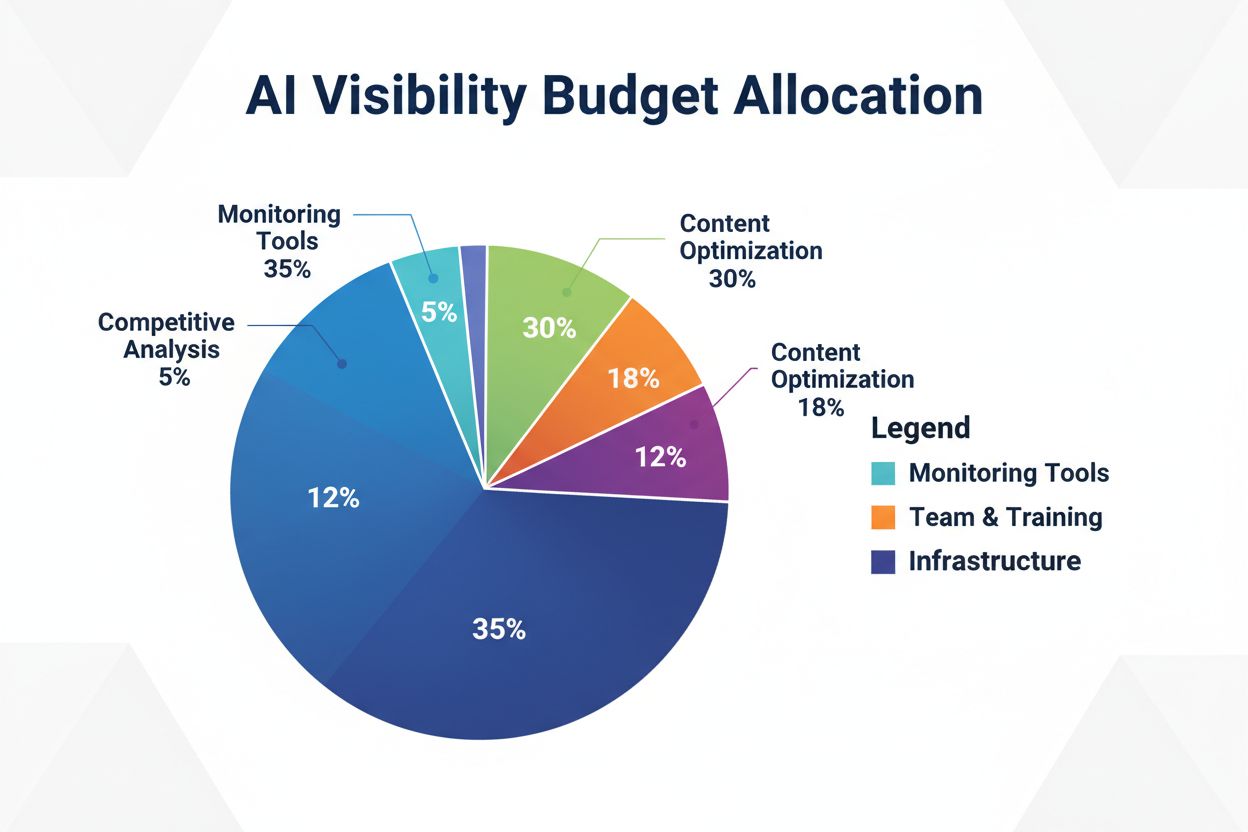
Learn how to strategically allocate your AI visibility budget across monitoring tools, content optimization, team resources, and competitive analysis to maximiz...
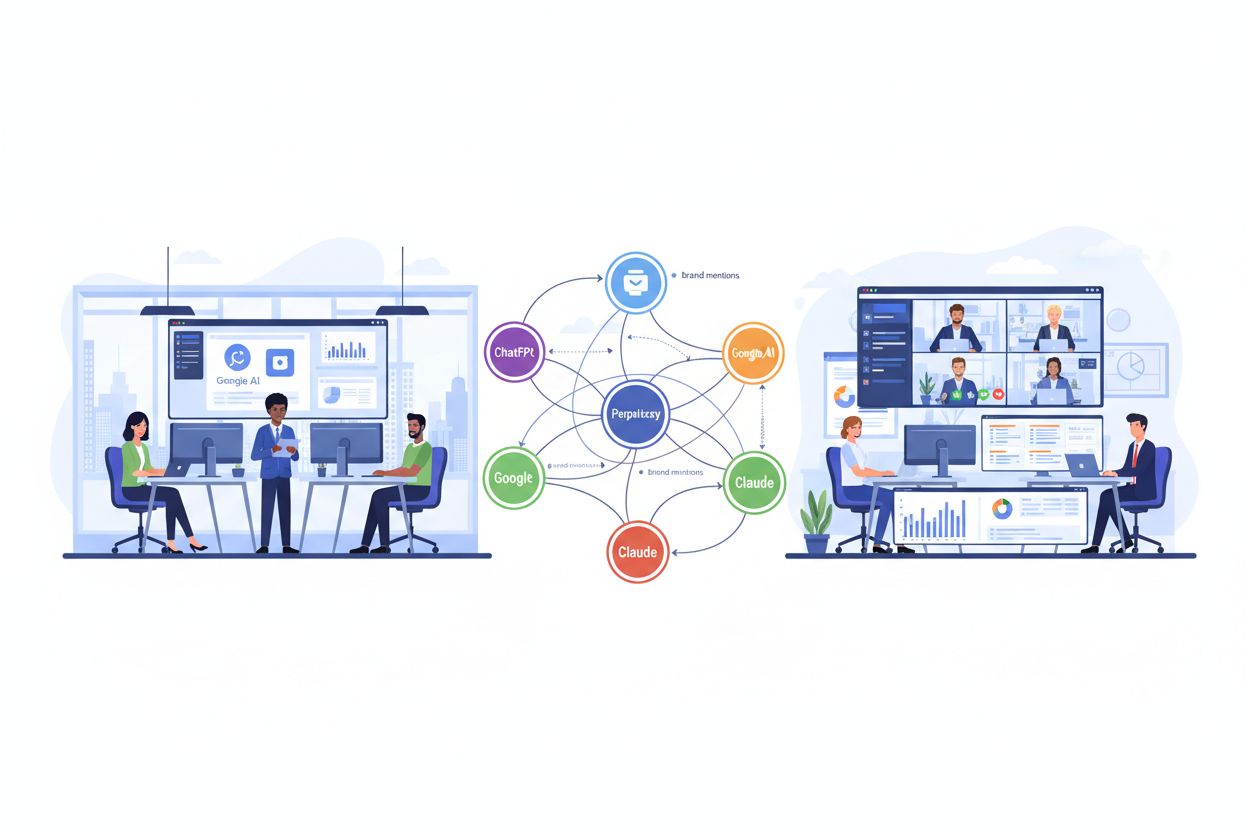
Compare agency vs in-house AI visibility monitoring. Explore costs, timelines, expertise requirements, and hybrid approaches to help you choose the right strate...