

Does Mobile Optimization Matter for AI Search? Complete Guide for 2025
Discover why mobile optimization is critical for AI search visibility. Learn how mobile-first indexing affects ChatGPT, Perplexity, and Google AI Overviews rank...
9 min read

Mobile-first indexing is Google’s practice of using the mobile version of a website as the primary basis for indexing and ranking, rather than the desktop version. This means Google crawls, indexes, and ranks websites predominantly based on how they appear and function on mobile devices, making mobile optimization critical for search visibility.
Mobile-first indexing is Google's practice of using the mobile version of a website as the primary basis for indexing and ranking, rather than the desktop version. This means Google crawls, indexes, and ranks websites predominantly based on how they appear and function on mobile devices, making mobile optimization critical for search visibility.
Mobile-first indexing is Google’s primary method of crawling, indexing, and ranking websites based on their mobile version rather than their desktop version. Introduced as a fundamental shift in how search engines evaluate web content, mobile-first indexing reflects the reality that over 64% of global web traffic now originates from mobile devices. Rather than treating the desktop site as the canonical version and mobile as an alternate, Google now reverses this relationship—the mobile version becomes the baseline for determining search rankings, content inclusion, and overall site quality assessment. This represents a paradigm shift in search engine optimization (SEO) strategy, requiring businesses to prioritize mobile user experience, performance, and content completeness as primary concerns rather than afterthoughts. For websites using responsive design, this transition is relatively seamless since the same content and structure serve both mobile and desktop users. However, for sites with separate mobile and desktop versions, ensuring content parity and technical consistency across both versions is essential to maintain search visibility and rankings.
The transition to mobile-first indexing didn’t happen overnight—it represents years of strategic evolution by Google in response to changing user behavior. In 2015, Google recognized the explosive growth of mobile internet usage and introduced the “Mobilegeddon” update, which made mobile-friendliness an official ranking factor. This initial move signaled that mobile optimization mattered, but it still treated desktop as the primary index. By 2016, Google began experimenting with mobile-first indexing on select websites, testing whether using the mobile version as the primary crawl source would improve search results. The gradual rollout began in 2018, with Google cautiously transitioning websites deemed “ready” for this change. The timeline extended longer than initially expected—originally scheduled for completion by September 2020, the deadline was pushed back due to the COVID-19 pandemic and the need to ensure websites were properly optimized. Google officially announced the completion of mobile-first indexing in October 2023, making it the default for all websites. As of 2025, over 70% of websites have been transitioned to mobile-first indexing, with the remaining sites following as Google evaluates their readiness. This evolution reflects a fundamental recognition that mobile devices are now the primary way users access the internet, and search engines must adapt their infrastructure accordingly.
Mobile-first indexing operates through a sophisticated crawling and indexing process that prioritizes the Smartphone Googlebot over the traditional desktop crawler. When Google’s crawlers visit your website, they now primarily use the mobile user agent to render and analyze your pages. The content, metadata, structured data, and performance metrics observed on the mobile version become the basis for indexing decisions. This means that if your mobile site lacks content visible on desktop, uses different metadata, or has missing schema markup, Google’s index will reflect these limitations. The mobile version’s Core Web Vitals—including Largest Contentful Paint (LCP), Interaction to Next Paint (INP), and Cumulative Layout Shift (CLS)—directly influence rankings, making mobile performance optimization critical. For websites using responsive design, this process is straightforward since the same HTML serves both mobile and desktop, with CSS media queries adapting the layout. For sites with separate mobile URLs (m.example.com), Google uses canonical tags and alternate link elements to understand the relationship between versions, but the mobile version still becomes the primary index source. The indexing process also evaluates whether resources like CSS, JavaScript, and images are accessible and renderable on mobile—if these resources are blocked by robots.txt or fail to load properly, Google may not fully understand your content. This technical foundation means that every aspect of your mobile site—from load speed to content structure to resource availability—directly impacts how Google indexes and ranks your website.
| Aspect | Mobile-First Indexing (Current) | Desktop-First Indexing (Legacy) |
|---|---|---|
| Primary Crawl Source | Mobile version (Smartphone Googlebot) | Desktop version (Desktop Googlebot) |
| Ranking Basis | Mobile site content, performance, and structure | Desktop site content, performance, and structure |
| Content Parity Requirement | Mobile must match desktop; missing mobile content = lower rankings | Desktop prioritized; mobile treated as alternate |
| Performance Metrics | Mobile Core Web Vitals (LCP, INP, CLS) | Desktop performance metrics |
| Structured Data | Mobile schema markup is primary index source | Desktop schema markup is primary index source |
| Metadata Evaluation | Mobile titles, meta descriptions, headers indexed first | Desktop metadata indexed first |
| Resource Crawling | Mobile-accessible resources prioritized | Desktop-accessible resources prioritized |
| Separate URL Strategy | Mobile URLs must have equivalent content to desktop | Desktop URLs treated as canonical |
| Impact on Rankings | Mobile optimization directly boosts rankings | Mobile optimization improves mobile search results only |
| Adoption Timeline | Default for all sites as of October 2023 | Phased out; no longer primary method |
Mobile-first indexing fundamentally reshapes how SEO professionals approach website optimization and content strategy. Previously, teams could prioritize desktop optimization and treat mobile as a secondary concern, often stripping content or functionality to fit smaller screens. Now, the mobile experience must be considered first, with desktop as the extended version. This shift affects keyword targeting, as mobile users often search differently than desktop users—voice searches and conversational queries are more common on mobile, requiring content optimization around natural language patterns. Content strategy must now account for how information appears on smaller screens; lengthy paragraphs that work on desktop may need restructuring into scannable sections, bullet points, and concise answers for mobile users. Technical SEO becomes more critical, as mobile-specific issues like lazy loading, JavaScript rendering, and resource blocking can prevent Google from fully understanding your content. Page speed optimization takes on heightened importance—a one-second delay in mobile load time can result in a 20% drop in conversion rates, and Google factors speed into rankings. Structured data implementation must be consistent across mobile and desktop versions, with schema markup properly implemented on mobile pages to help Google understand content context. For e-commerce sites, mobile-first indexing means product pages, pricing, reviews, and checkout processes must be fully optimized on mobile, as these elements now determine rankings. Local SEO is similarly affected, with mobile-first indexing prioritizing how local business information, hours, and contact details appear on mobile devices. The strategic implication is clear: mobile optimization is no longer optional or secondary—it’s the foundation of modern SEO.
The relationship between mobile-first indexing and AI search platforms like ChatGPT, Perplexity, Google AI Overviews, and Claude is increasingly important for brand visibility. While these AI tools don’t crawl the web in real-time like Google, they’re trained on data that search engines have indexed. Since Google now indexes primarily from mobile versions, the quality and completeness of your mobile site directly influences what information AI systems can extract and present to users. Answer Engine Optimization (AEO) relies heavily on mobile-first principles—AI tools favor websites with clear, structured, mobile-optimized content that directly answers user questions. If your mobile site lacks schema markup, buries answers in dense paragraphs, or has incomplete content compared to desktop, AI systems will have less information to work with when generating responses. This means that optimizing for mobile-first indexing simultaneously optimizes for AI search visibility. Websites with strong mobile optimization, comprehensive FAQ schema, clear how-to structured data, and fast load times are more likely to be cited by AI tools. The convergence of mobile-first indexing and AI search means that brands must think beyond traditional Google rankings—they must ensure their mobile content is discoverable, understandable, and citable by both search engines and generative AI systems. For AmICited users monitoring brand appearances across AI platforms, understanding mobile-first indexing is essential, as it determines what content is available for AI systems to cite and reference.
Implementing mobile-first indexing best practices requires a comprehensive approach spanning design, content, technical optimization, and performance. Responsive web design is Google’s recommended approach, serving the same HTML on the same URL while adapting layout through CSS media queries—this ensures content parity and simplifies maintenance. If you maintain separate mobile and desktop URLs, ensure your mobile version contains all primary content, metadata, and structured data as the desktop version, with proper canonical tags pointing to desktop URLs as the primary version. Content parity is non-negotiable: all valuable information, images, videos, and interactive elements visible on desktop should be accessible on mobile, even if hidden in accordions or tabs to save space. Metadata consistency requires that title tags, meta descriptions, and header tags be equivalent across mobile and desktop versions, optimized for each device’s display constraints but conveying the same information. Structured data implementation must include schema markup on mobile pages—prioritize FAQ schema, Product schema, Organization schema, and Breadcrumb schema to help Google understand your content. Performance optimization is critical: compress images, minimize CSS and JavaScript, leverage browser caching, and aim for mobile load times under 2.5 seconds. Resource accessibility requires ensuring CSS, JavaScript, and images aren’t blocked by robots.txt or fail to load on mobile—use Google Search Console’s URL Inspection tool to verify crawlability. Mobile usability demands thumb-friendly navigation with tap targets at least 48 pixels wide, readable font sizes (minimum 16px for body text), and adequate spacing between clickable elements. Testing and monitoring should be ongoing, using tools like Google PageSpeed Insights, Google Mobile-Friendly Test, and Google Search Console to identify and fix issues proactively. Regular audits using mobile-specific crawlers help catch issues before they impact rankings.
The adoption and impact of mobile-first indexing is reflected in compelling statistics that underscore its importance. Over 70% of websites have been transitioned to mobile-first indexing, demonstrating Google’s commitment to this approach and the widespread industry shift. Mobile devices drive 64% of global web traffic, with some regions seeing mobile traffic exceed 70%, making mobile optimization essential for reaching the majority of users. Mobile-optimized sites are 67% more likely to rank on Google’s first page, providing clear evidence that mobile optimization directly correlates with search visibility. Mobile traffic accounts for nearly 60% of global website visits, emphasizing that ignoring mobile users means losing access to the majority of potential visitors. A one-second delay in mobile load time can result in a 20% drop in conversion rates, highlighting the business impact of mobile performance optimization. Mobile commerce is projected to account for 73% of the global eCommerce market, making mobile-first optimization critical for online retailers. Over 60% of global web traffic originates from mobile devices, a trend that continues to accelerate as smartphone adoption increases worldwide. These statistics collectively demonstrate that mobile-first indexing isn’t just a technical requirement—it’s a business imperative that directly affects search visibility, user engagement, and conversion rates. For organizations tracking their presence across search platforms and AI systems, understanding these statistics helps contextualize why mobile optimization is foundational to digital visibility.
Different website configurations require tailored approaches to mobile-first indexing. Responsive design sites have the simplest implementation path, as the same content serves both mobile and desktop users through CSS-based layout adaptation. For these sites, the primary focus should be ensuring mobile performance optimization and verifying that all content is accessible without requiring user interaction to load. Dynamic serving sites that use the same URL but serve different HTML based on user agent must ensure the mobile HTML contains all primary content and metadata, with proper Vary: User-Agent headers to signal to Google that different content is served. Separate URL sites (m.example.com) face the most complex requirements: they must maintain content parity, implement proper canonical and alternate link elements, ensure both versions are verified in Google Search Console, and manage crawl budget across both versions. For e-commerce platforms, mobile-first indexing means product pages must include complete product information, pricing, reviews, and images on mobile—any content missing from mobile will affect rankings for product-related queries. SaaS and service-based websites must ensure service descriptions, pricing, and call-to-action elements are prominent and complete on mobile versions. News and publishing sites should prioritize article content accessibility on mobile, with proper headline hierarchy and readable text formatting. Local business websites must ensure NAP (Name, Address, Phone) information, hours, and service areas are clearly displayed on mobile with proper schema markup. Multilingual sites must implement hreflang tags correctly, with mobile URLs pointing to mobile language variants and desktop URLs pointing to desktop variants. Each platform type requires specific attention to ensure mobile-first indexing success while maintaining the unique requirements of that business model.
Mobile-first indexing represents not just a current state but an ongoing evolution in how search engines evaluate and rank content. As mobile usage continues to dominate and new technologies emerge, mobile-first principles will likely become even more central to search algorithms. Voice search and smart speakers are driving increased demand for conversational, mobile-optimized content that directly answers user questions—this trend will likely accelerate as voice assistants become more prevalent. Artificial intelligence and machine learning are increasingly influencing how search engines understand and rank content, with mobile-first indexing providing the foundation for AI systems to learn from and cite web content. Progressive Web Apps (PWAs) and Web Components represent emerging technologies that blur the line between web and native app experiences, and mobile-first indexing will likely evolve to accommodate these new formats. Core Web Vitals will continue to be refined and updated, with Google potentially introducing new performance metrics that further emphasize mobile user experience. Structured data and semantic search will likely become even more important, as search engines move toward understanding entities and relationships rather than just keywords—mobile-first indexing will drive adoption of richer schema markup. Privacy and first-party data are becoming increasingly important as third-party cookies phase out, and mobile-first indexing will likely play a role in how search engines evaluate site quality and user trust signals. Internationalization and localization will continue to be important, with mobile-first indexing requiring careful management of hreflang tags and language-specific content. The strategic implication is that organizations should view mobile-first indexing not as a one-time optimization project but as a foundational principle that will guide digital strategy for years to come. Staying ahead of these trends requires continuous monitoring of search algorithm updates, regular audits of mobile performance, and a commitment to providing excellent mobile user experiences that serve both human users and search engine algorithms.
For organizations concerned with how their brand appears across search platforms and AI systems, AmICited provides critical insights into mobile-first indexing impact. By tracking where your domain, brand, and URLs appear in Google Search results, Google AI Overviews, Perplexity, ChatGPT, and Claude, you can understand how mobile-first optimization affects your visibility across these platforms. Since mobile-first indexing determines what content Google indexes and makes available to AI systems, monitoring your presence across these platforms reveals whether your mobile optimization efforts are translating into actual visibility. AmICited’s monitoring capabilities help you identify which pages are being cited by AI systems, whether your mobile content is being properly indexed and understood, and how your mobile optimization compares to competitors. This data-driven approach to mobile-first indexing ensures that your optimization efforts directly contribute to increased visibility where your audience is searching—whether in traditional Google results or emerging AI search platforms. By understanding the relationship between mobile-first indexing and AI search visibility, organizations can make informed decisions about where to invest optimization resources for maximum impact.
Google began testing mobile-first indexing in 2016 and gradually rolled it out starting in 2018. The transition was initially scheduled for completion by September 2020 but was delayed due to the COVID-19 pandemic. Google officially announced that mobile-first indexing was complete in October 2023, making it the default indexing method for all websites. As of 2025, over 70% of websites have been transitioned to mobile-first indexing, with the remainder following as Google evaluates their readiness.
Mobile-first indexing directly impacts rankings because Google now evaluates your site based on its mobile version rather than desktop. If your mobile site lacks content, has slower load times, or missing structured data compared to desktop, your rankings may suffer. Conversely, websites optimized for mobile with fast load times, responsive design, and complete content are more likely to rank higher. Mobile-optimized sites are 67% more likely to appear on Google's first page of search results.
Mobile-friendly refers to a website's design and usability on mobile devices—ensuring it displays properly and functions well on smartphones. Mobile-first indexing, however, is about how Google crawls and ranks your site. A site can be mobile-friendly but still have mobile-first indexing issues if the mobile version lacks content or structured data. Mobile-first indexing requires not just good design, but content parity and technical optimization on the mobile version.
No, you don't need separate versions. Google recommends responsive web design, which serves the same HTML on the same URL but adapts the layout for different screen sizes. This is the easiest approach for mobile-first indexing. However, if you do have separate URLs (like m.example.com), ensure your mobile version contains all the content, metadata, and structured data as your desktop version, with proper canonical tags pointing to the desktop version as primary.
Mobile-first indexing is foundational for AI search visibility because AI tools like ChatGPT, Perplexity, and Google's AI Overviews rely on Google's index to source information. Since Google now indexes primarily from mobile versions, your mobile site's content, structure, and schema markup determine what AI systems can extract and present. Voice assistants also depend on mobile-optimized, structured content to provide accurate answers, making mobile-first optimization essential for Answer Engine Optimization (AEO).
If your mobile site has significantly less content than desktop, Google will index and rank based on the limited mobile content. This can result in lower rankings and reduced visibility for keywords that depend on the missing information. Google's guidance recommends moving content into accordions or tabs rather than removing it entirely, ensuring all valuable information is accessible on mobile. Content parity between mobile and desktop is critical for maintaining search rankings.
You can check your mobile-first indexing status through Google Search Console by examining the URL Inspection tool—it shows which version Google crawled and indexed. Look for the 'Smartphone Googlebot' in your crawl statistics; increased traffic from this bot indicates mobile-first indexing is active. You can also use Google's Mobile-Friendly Test tool to verify your site's mobile optimization and identify any issues that might affect indexing.
Start tracking how AI chatbots mention your brand across ChatGPT, Perplexity, and other platforms. Get actionable insights to improve your AI presence.
Discover why mobile optimization is critical for AI search visibility. Learn how mobile-first indexing affects ChatGPT, Perplexity, and Google AI Overviews rank...
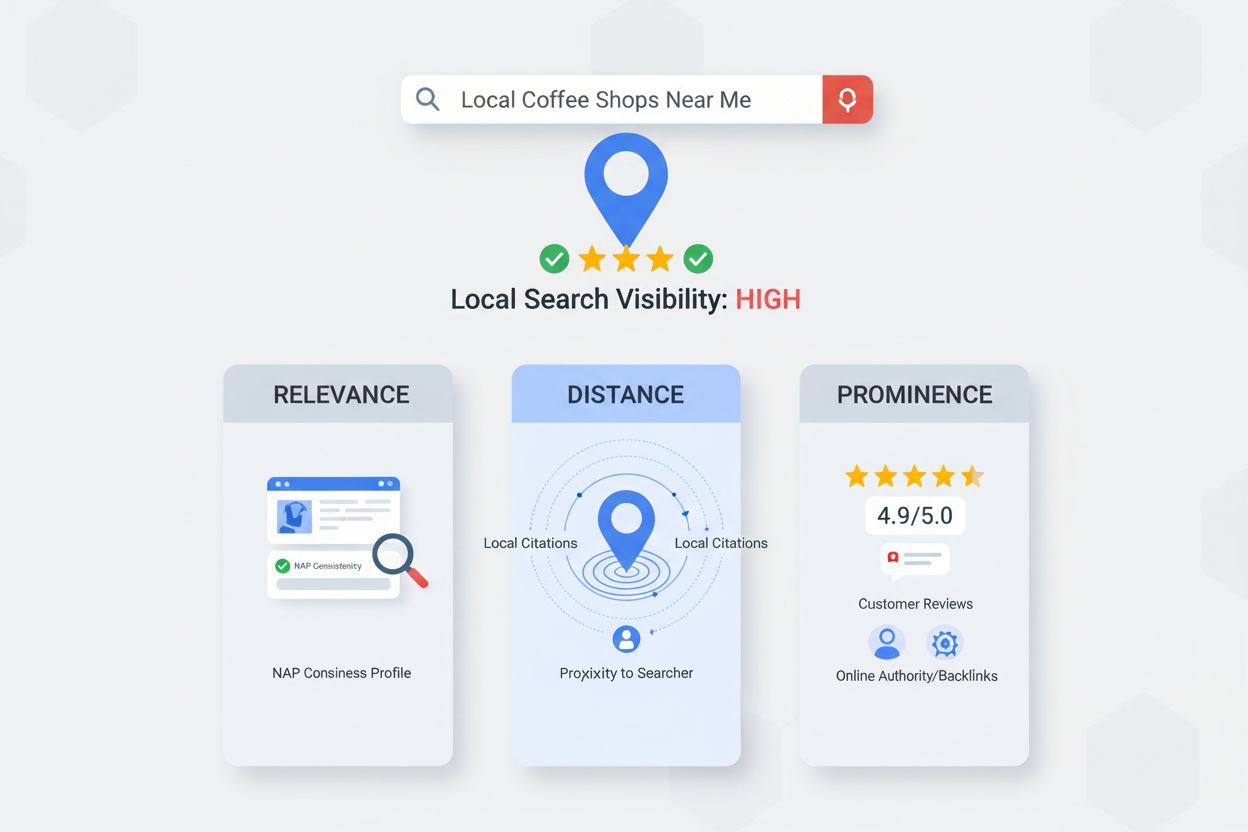
Learn what Google Maps SEO is, how it works, and why it's critical for local business visibility. Discover ranking factors, optimization strategies, and best pr...
Community discussion on whether mobile optimization matters for AI search visibility. Real experiences from SEO professionals testing mobile factors impact on A...
Cookie Consent
We use cookies to enhance your browsing experience and analyze our traffic. See our privacy policy.