
Topical Authority
Topical authority is a website's proven expertise in a specific subject area through comprehensive content coverage. Learn how it impacts AI search visibility a...
10 min read
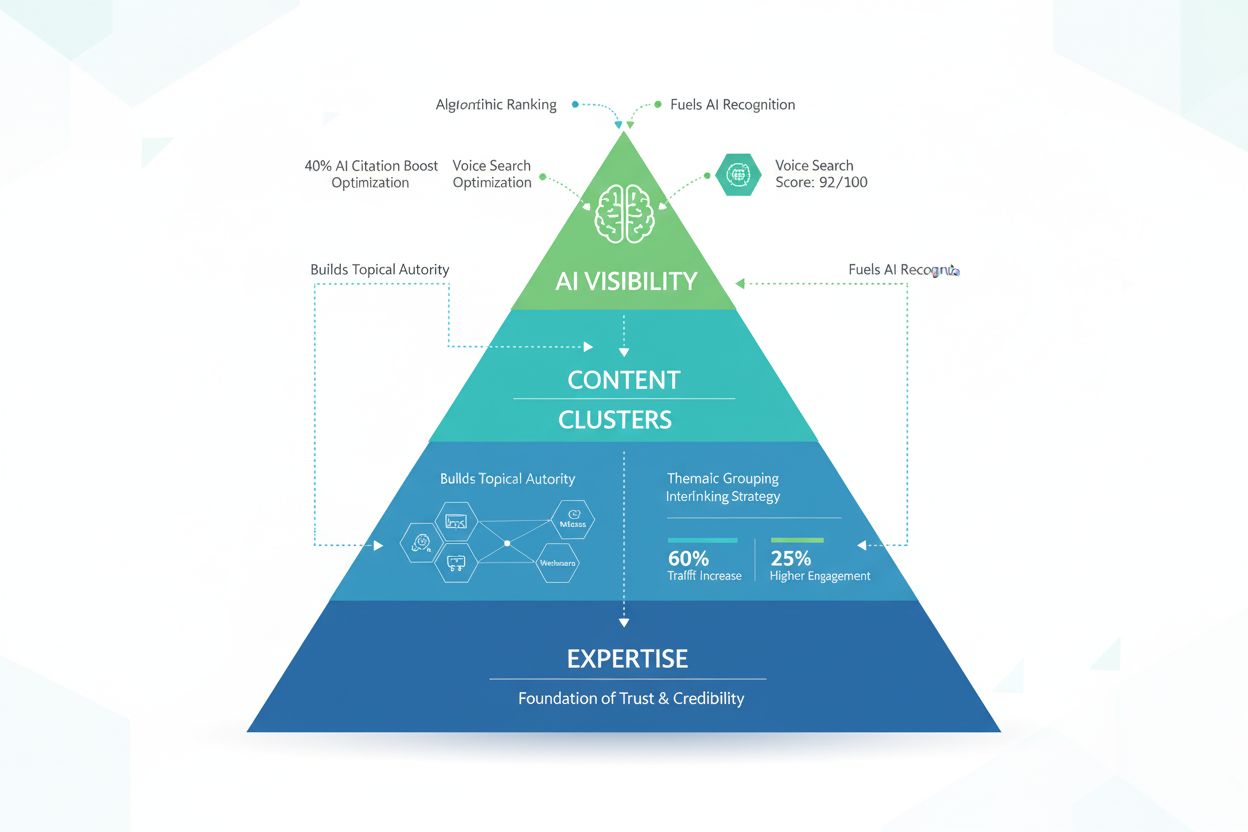
Niche authority is the deep, specialized expertise and credibility a domain establishes within a specific topic area, demonstrated through comprehensive content coverage, strategic internal linking, and recognition by search engines and AI systems. It differs from broader domain authority by focusing on topical depth rather than overall site strength, making it a critical factor for AI citations and search visibility.
Niche authority is the deep, specialized expertise and credibility a domain establishes within a specific topic area, demonstrated through comprehensive content coverage, strategic internal linking, and recognition by search engines and AI systems. It differs from broader domain authority by focusing on topical depth rather than overall site strength, making it a critical factor for AI citations and search visibility.
Niche authority is the deep, specialized expertise and credibility a domain establishes within a specific topic area through comprehensive content coverage, strategic internal linking, and consistent demonstration of subject-matter knowledge. Unlike domain authority, which measures overall site trustworthiness based primarily on backlink profiles, niche authority focuses specifically on how thoroughly and expertly a website covers a defined topic and its related subtopics. This distinction has become increasingly important in the era of AI-driven search, where systems like ChatGPT, Perplexity, and Google AI Overviews prioritize sources that demonstrate genuine expertise over generalist sites. When a domain establishes strong niche authority, it signals to both search engines and AI systems that it is a go-to resource for information within that specific knowledge area, resulting in higher rankings, more AI citations, and greater visibility across multiple discovery channels.
The concept of niche authority emerged from the broader SEO principle of topical authority, which gained prominence following Google’s algorithm updates emphasizing relevance and expertise. The Hummingbird update in 2013 shifted focus toward semantic relevance and user intent, while the Helpful Content Update in 2023 and its integration into Google’s ranking system in 2024 further elevated the importance of demonstrating genuine expertise and depth. Historically, SEO professionals focused on keyword rankings and domain authority metrics, but the evolution of search algorithms revealed that search engines increasingly reward sites that cover topics comprehensively rather than those that simply target high-volume keywords. This shift accelerated with the rise of AI-powered search engines, which analyze content differently than traditional search algorithms. Research from Yext analyzing over 6.8 million AI citations found that different AI systems have distinct sourcing preferences, with niche sources comprising 24% of all citations in subjective queries on Perplexity—the highest proportion of any source category. This data underscores that niche authority is no longer a nice-to-have SEO tactic; it’s a fundamental requirement for visibility in AI-driven discovery channels.
| Concept | Focus | Measurement | Scope | AI Relevance |
|---|---|---|---|---|
| Niche Authority | Deep expertise in specific topic | Content depth, internal linking, citations within niche | Single topic area and subtopics | Very High—AI systems prioritize specialized expertise |
| Domain Authority | Overall site trustworthiness | Backlink profile, site age, general credibility | Entire domain across all topics | Medium—Foundational but not topic-specific |
| Brand Authority | Reputation and recognition | Branded search volume, mentions, reviews | Broad brand perception across markets | High—Influences whether AI systems cite the brand |
| Topical Authority | Comprehensive topic coverage | Content clusters, semantic relevance, internal structure | Core topic and related subtopics | Very High—Directly impacts AI citations |
| E-E-A-T | Content quality signals | Experience, expertise, authoritativeness, trustworthiness | Individual content pieces and author credentials | Very High—Google and AI systems use as ranking factor |
| Website Authority | Technical and structural credibility | Site speed, mobile optimization, security, UX | Entire website infrastructure | Medium—Supports but doesn’t guarantee niche authority |
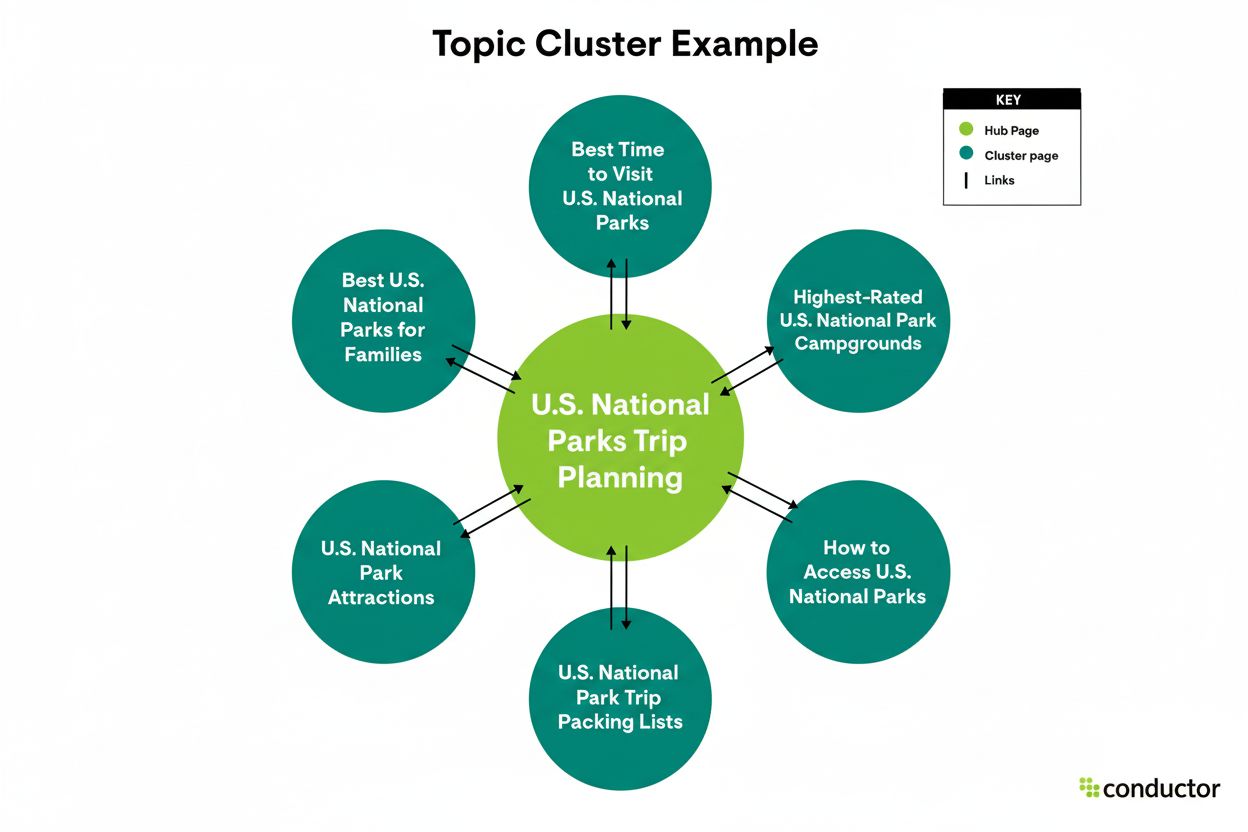
Niche authority operates through a combination of content architecture, semantic relationships, and external validation signals. At its core, niche authority is built through a pillar-and-cluster content strategy, where a comprehensive pillar page covers a broad topic, supported by cluster articles that explore specific subtopics in depth. These pieces are interconnected through strategic internal linking using descriptive anchor text, creating a semantic network that helps search engines and AI systems understand the relationships between topics. For example, a pillar page on “Digital Marketing for Small Businesses” might link to cluster articles on “Email Marketing Best Practices,” “SEO for Small Businesses,” and “Social Media Strategy,” with each cluster article linking back to the pillar and to related clusters. This structure signals to algorithms that your site comprehensively covers the topic ecosystem. Additionally, semantic relevance plays a crucial role—using consistent terminology, related entities, and supporting concepts throughout your content helps AI systems recognize your expertise. The technical implementation includes proper schema markup (such as FAQ, HowTo, and Article schemas), clean URL structures that reflect topic hierarchies, and organized categories and tags that reinforce topical relationships. When these elements work together, they create what search engines and AI systems perceive as a knowledge hub rather than a collection of isolated articles.
Building niche authority requires a deliberate, multi-layered strategy that extends beyond simply publishing more content. The first step is comprehensive topic mapping—identifying all subtopics, questions, and angles within your niche that your target audience cares about. Tools like AlsoAsked, ChatGPT, and keyword research platforms help uncover the full spectrum of user intent within your topic area. Rather than targeting individual keywords, you’re mapping an entire knowledge domain. Once mapped, the strategy shifts to content depth over volume. Research shows that 72% of successful bloggers attribute their success to focusing on a specific niche, and articles with 1,500+ words rank 68% better in search engines. However, length alone isn’t sufficient—the content must provide genuine value, original insights, or unique perspectives. This is where original research becomes powerful; publishing proprietary data, surveys, or case studies positions your site as a source rather than a repeater of information. For instance, Backlinko’s SEO Ranking Factors Study, which analyzed over 11 million search results, has earned thousands of citations and continues to drive visibility years after publication. Beyond content creation, author credibility matters significantly. Including author bios with credentials, linking to author profiles, and having content reviewed by recognized experts strengthens authority signals. Finally, regular content updates and refreshes signal to search engines that your information remains current and relevant, which is particularly important in fast-moving niches where information becomes outdated quickly.
While internal content structure forms the foundation of niche authority, external validation through backlinks and citations amplifies these signals. However, not all backlinks carry equal weight—topically relevant backlinks from sites within your niche are significantly more valuable than random high-authority links. When a specialized finance blog links to your financial planning content, that endorsement signals to search engines that your expertise is recognized within the financial community. This is why niche-specific link building is more effective than generic outreach. Strategies include guest posting on industry publications, broken link outreach where you offer your content as a replacement for outdated resources, and digital PR targeting journalists and influencers within your niche. Research from Yext found that different AI systems weight citations differently: Gemini prioritizes brand-owned content (52.15% of citations), ChatGPT relies on third-party directories (48.73% of citations), and Perplexity favors niche-specific sources (24% of subjective query citations). This means your link-building strategy should include presence in industry-specific directories, review platforms relevant to your niche, and authoritative publications that AI systems recognize as trustworthy. Additionally, social proof through reviews, testimonials, and user-generated content strengthens authority signals, particularly for platforms like Perplexity that incorporate sentiment analysis into their citation decisions.
The relationship between niche authority and AI visibility has become one of the most critical factors for online discoverability. Research analyzing tens of thousands of AI prompts reveals that each AI platform has distinct citation preferences, and niche authority directly influences whether your content appears in AI-generated responses. ChatGPT mentions brands in 99.3% of eCommerce responses but relies heavily on established retail giants and marketplace domains, making it crucial for niche brands to establish authority through multiple channels. Google AI Overview, by contrast, mentions brands in only 6.2% of responses, instead prioritizing educational content and YouTube videos, suggesting that niche authority in educational content is particularly valuable for Google’s AI systems. Perplexity, which cites the most diverse set of sources with 8,027 unique domains, shows the strongest preference for niche expertise—with niche sources comprising 24% of citations in subjective queries. This platform rewards specialized knowledge and industry-specific resources. For brands seeking AI visibility, this means niche authority isn’t just about ranking in traditional search—it’s about being recognized as a trustworthy source by multiple AI systems with different evaluation criteria. The data shows that brand search volume has the strongest correlation with AI chatbot mentions (correlation of 0.334-0.392), meaning that building niche authority also requires building brand awareness within your specific community. This creates a reinforcing cycle: as your niche authority grows, more people search for your brand, which increases your visibility in AI systems, which drives more traffic and further establishes your authority.
Measuring niche authority requires looking beyond traditional SEO metrics to understand how your domain is perceived as an expert resource. Keyword universe growth is one indicator—tracking whether you’re ranking for an expanding set of semantically related queries within your niche suggests growing authority. Tools like Google Search Console, Ahrefs, and Semrush help visualize this expansion. Cluster ranking trends provide another signal; when multiple pages within your content cluster move up in rankings simultaneously, it indicates that Google recognizes your ecosystem as authoritative. Internal link coverage analysis using tools like Screaming Frog reveals whether your content is properly interconnected and whether orphaned pages exist that should be linked into your authority structure. External recognition through mentions, citations, and backlinks from niche-relevant sites demonstrates that your authority is recognized beyond your own domain. For AI-specific measurement, platforms like AmICited, Profound, Scrunch, and Semrush track where your brand appears in AI-generated responses across ChatGPT, Perplexity, Google AI Overviews, and Claude. This direct measurement of AI citations is increasingly important because it shows whether your niche authority translates to actual visibility in the platforms where users discover information. Additionally, brand lift surveys measuring unaided and aided brand recall within your niche, and social listening tracking sentiment and share of voice in topical conversations, provide qualitative measures of how your niche authority is perceived by your target audience.
The future of niche authority is inextricably linked to the evolution of AI-powered search and discovery. As AI systems become more sophisticated in evaluating source credibility, the importance of niche authority will likely increase rather than diminish. By 2025, niche websites are projected to make up 40% of new online businesses, and user engagement on niche websites is predicted to be 30% higher than on broader-topic websites, suggesting that market forces are already pushing toward specialization. The rise of generative AI and large language models has created new opportunities for niche authority because these systems are trained to recognize and prioritize authoritative sources within specific domains. However, this also creates new challenges—as AI systems become better at identifying authoritative content, the bar for what constitutes “authority” will rise. Sites that merely compile existing information will struggle, while those that provide original insights, unique data, and genuine expertise will thrive. The integration of AI Overviews into Google Search and the emergence of specialized AI search engines like Perplexity and Claude mean that niche authority is no longer confined to traditional search rankings. Brands must now optimize for visibility across multiple AI platforms, each with different citation preferences and evaluation criteria. Additionally, the increasing importance of brand authority alongside niche authority suggests that future success will require both deep topical expertise and broad brand recognition. This means niche authority strategies must include thought leadership activities, media appearances, and community engagement that build brand awareness beyond just content optimization. Finally, as AI systems incorporate real-time data, user sentiment, and community feedback into their evaluation algorithms, maintaining niche authority will require not just publishing great content but actively engaging with your audience and responding to emerging trends within your niche.
The application of niche authority strategies varies significantly depending on market maturity and competition level. In established, competitive niches like finance, health, and technology, building niche authority requires exceptional depth and originality because large, well-funded competitors already have significant authority. In these markets, success often comes from finding micro-niches—narrower segments within broader categories where you can establish dominance more quickly. For example, rather than competing for general “personal finance” authority, a site might focus specifically on “personal finance for freelancers” or “investment strategies for women over 50.” Research shows that niche websites rank on the first page of search results 40% faster than broader sites, suggesting that narrower focus accelerates authority building. In emerging niches where authority hasn’t yet been established, the opportunity is different—early movers can establish themselves as foundational authorities more quickly. However, emerging niches also present challenges because there’s less existing content to link to, fewer established directories to be listed in, and less search volume to validate demand. In these situations, thought leadership becomes particularly important; publishing original research, speaking at industry events, and contributing to industry conversations helps establish authority even when traditional SEO metrics are limited. The 72% of successful bloggers who attribute their success to niche focus often started in emerging or underserved niches where they could establish authority before major competitors arrived. This suggests that niche authority strategies should include regular assessment of market dynamics—identifying whether your niche is emerging, growing, mature, or declining, and adjusting your strategy accordingly.
Niche authority has evolved from a nice-to-have SEO tactic to a fundamental requirement for visibility in modern search and AI-driven discovery. By establishing deep expertise within a specific topic area through comprehensive content, strategic linking, and external validation, brands can achieve rankings and AI citations that would be impossible to earn through generic, broad-based content strategies. The data is clear: 72% of successful bloggers focus on specific niches, niche websites experience 53% more user engagement than general sites, and niche sources comprise 24% of AI citations on platforms like Perplexity. For organizations seeking to build lasting online authority and visibility, the path forward is specialization—not as a limitation, but as a strategic advantage. In an era where AI systems are becoming the primary discovery mechanism for information, niche authority ensures that your expertise is recognized, your content is cited, and your brand becomes the go-to resource within your domain. The investment in building niche authority compounds over time, creating a sustainable competitive advantage that’s difficult for generalist competitors to replicate.
Domain authority measures overall site credibility based primarily on backlink profiles and general trustworthiness, while niche authority focuses specifically on expertise within a defined topic area. A site can have high domain authority but low niche authority in specific subjects. Niche authority is built through comprehensive, interconnected content on a particular topic, whereas domain authority reflects broader site strength. For AI systems like ChatGPT and Perplexity, niche authority is increasingly important because these platforms prioritize specialized expertise over general site reputation.
AI systems like ChatGPT, Perplexity, and Google AI Overviews prioritize sources that demonstrate deep expertise in specific topics. Research shows that niche sources make up 24% of all citations in subjective queries on Perplexity, the highest of any source category. When your domain establishes niche authority through comprehensive topic coverage, AI systems are more likely to cite your content as a trusted source. This visibility in AI responses drives referral traffic and establishes your brand as an authoritative voice in your field.
Building niche authority requires four main components: comprehensive content coverage of all subtopics within your niche, strategic internal linking that connects related content, external validation through quality backlinks from relevant sources, and consistent demonstration of expertise through original research or unique insights. Additionally, maintaining accurate information, updating content regularly, and establishing author credentials strengthen your authority signals. These elements work together to signal to both search engines and AI systems that your domain is a go-to resource for that specific topic.
Building niche authority typically takes 3-12 months to show measurable results, though this varies significantly based on competition level and content quality. Sites with established brand authority or domain authority may see results in 3 months or less, especially for newer adjacent topics. New sites or those starting from scratch may require 6-12 months of consistent, high-quality content production before achieving strong niche authority signals. The key is consistency—regular publication of in-depth, interconnected content accelerates the process more than sporadic high-volume publishing.
Yes, absolutely. Niche authority is one of the few SEO factors where smaller sites can outcompete larger brands because it's based on topical depth rather than overall site size or budget. A focused, specialized site covering a niche comprehensively can rank higher than a large generalist site that only touches the surface. Research shows that 72% of successful bloggers attribute their success to focusing on a specific niche, and niche websites experience 53% more user engagement than general topic sites. This demonstrates that specialization can overcome size disadvantages.
Different AI systems have distinct evaluation methods: Gemini prioritizes brand-owned, structured content directly from your domain (52.15% of citations); ChatGPT relies more on third-party directories and listings (48.73% of citations); Perplexity favors niche-specific directories and industry expertise (24% of subjective query citations from niche sources). This means optimizing for niche authority requires ensuring your content is discoverable across multiple source types—your website, industry directories, and specialized platforms relevant to your niche.
Niche authority directly supports E-E-A-T (Experience, Expertise, Authoritativeness, Trustworthiness) signals that Google and AI systems use to evaluate content quality. By building niche authority through comprehensive topic coverage, you demonstrate expertise and authoritativeness. Including author credentials, original research, and expert reviews strengthens the experience and trustworthiness components. Together, niche authority and E-E-A-T create a reinforcing cycle where deeper topical expertise leads to better E-E-A-T signals, which improves rankings and AI citations.
Start tracking how AI chatbots mention your brand across ChatGPT, Perplexity, and other platforms. Get actionable insights to improve your AI presence.
Topical authority is a website's proven expertise in a specific subject area through comprehensive content coverage. Learn how it impacts AI search visibility a...

Learn how topical authority impacts AI search visibility, citations in ChatGPT and Perplexity, and how to build expertise that AI systems recognize and cite.
Learn how page authority works in AI search engines like ChatGPT and Perplexity. Discover what signals AI systems use to evaluate page credibility and how to op...
Cookie Consent
We use cookies to enhance your browsing experience and analyze our traffic. See our privacy policy.