

News Content
News content is factual, timely information about current events distributed across media platforms. Learn how AI systems monitor news mentions and why it matte...
11 min read

Opinion content refers to perspective and viewpoint pieces that express an author’s personal stance, analysis, or interpretation of a topic, issue, or event. Unlike factual news reporting, opinion content is designed to persuade, inform, and engage audiences by presenting subjective viewpoints backed by reasoning, evidence, and expertise.
Opinion content refers to perspective and viewpoint pieces that express an author's personal stance, analysis, or interpretation of a topic, issue, or event. Unlike factual news reporting, opinion content is designed to persuade, inform, and engage audiences by presenting subjective viewpoints backed by reasoning, evidence, and expertise.
Opinion content is written material that explicitly presents an author’s personal viewpoint, perspective, or interpretation of a topic, issue, event, or trend. Unlike factual news reporting that aims for objectivity, opinion pieces are intentionally subjective, designed to persuade, inform, and engage audiences through reasoned argument, evidence, and expert analysis. Opinion content serves as a bridge between pure information and entertainment, offering readers not just what happened, but what it means and why it matters. This content category has become increasingly important in digital publishing, where audiences seek not only facts but also context, analysis, and diverse perspectives that help them understand complex issues more deeply.
The significance of opinion content extends beyond traditional journalism into corporate communications, thought leadership, and brand building. Organizations and individuals use opinion content to establish authority, influence industry conversations, and shape public discourse around topics relevant to their expertise. In the context of AI monitoring and citations, opinion content represents a particularly valuable asset—generative engines like ChatGPT, Perplexity, and Claude frequently cite well-structured opinion pieces when synthesizing answers to complex questions, making opinion content a strategic tool for ensuring brand visibility in AI-generated responses.
Opinion content has deep roots in journalism history, evolving from the partisan newspapers of the 18th and 19th centuries where editorial voice was inseparable from news reporting. As journalism professionalized in the 20th century, the industry developed clearer distinctions between news (objective reporting) and opinion (subjective analysis), creating dedicated sections for editorials, columns, and commentary. This separation served important functions: it allowed readers to distinguish between facts and interpretation, and it established professional standards for news gathering while preserving space for expert analysis and public discourse.
The digital revolution transformed opinion content’s reach and accessibility. Traditional newspapers once limited opinion content to a few pages in print editions; digital platforms removed these constraints, allowing publications to publish unlimited opinion pieces. This democratization meant that not only established journalists and columnists could publish opinion content—anyone with expertise and a platform could share perspectives. According to research from the Content Marketing Institute, 81% of content marketers now incorporate opinion-based content into their strategies, recognizing its power to build audience engagement and establish authority. The rise of blogging, Medium, Substack, and independent publishing platforms further accelerated this trend, enabling individual experts to build audiences around their unique perspectives without relying on traditional media gatekeepers.
Today, opinion content exists across multiple formats and platforms. Traditional outlets like The New York Times, The Wall Street Journal, and The Economist maintain robust opinion sections with staff columnists and guest contributors. Digital-native publications like Vox, The Verge, and industry-specific blogs publish opinion content alongside news and analysis. Professional networks like LinkedIn have become major opinion platforms, with executives and experts publishing thought leadership pieces directly to their networks. Podcasts, YouTube channels, and social media platforms all feature opinion-driven content. This proliferation reflects a fundamental shift in how audiences consume information—they increasingly seek not just facts, but interpretation, context, and diverse perspectives that help them make sense of complex issues.
| Content Type | Primary Purpose | Typical Length | Author | Tone | Key Characteristics |
|---|---|---|---|---|---|
| Editorial | Express organizational stance on issues | 600-1,200 words | Editorial board (unsigned) | Authoritative, institutional | Represents publication’s official position; carries institutional credibility; addresses timely issues |
| Op-Ed | Present individual expert perspective | 700-1,500 words | Individual contributor (signed) | Personal, conversational | Signed by author; showcases individual expertise; often responds to news events; builds personal brand |
| Column | Regular commentary on recurring topics | 800-1,200 words | Established columnist | Distinctive voice | Recurring series; develops author’s unique perspective over time; builds loyal readership |
| Perspective Article | Analyze trends and future directions | 2,000-4,000 words | Subject matter expert | Analytical, forward-thinking | Longer form; includes original data; focuses on implications and future directions; academic tone |
| Commentary | Respond to specific articles or events | 1,000-1,500 words | Expert or invited contributor | Critical, analytical | Commissioned response; often paired with original article; fosters debate; shorter than perspective pieces |
| Review | Evaluate products, services, or works | 800-2,000 words | Reviewer/critic | Evaluative, subjective | Assesses quality and value; provides recommendations; combines opinion with descriptive analysis |
| Essay | Explore ideas through personal reflection | 1,500-3,000 words | Individual author | Reflective, narrative | Personal voice; explores themes deeply; may combine memoir with analysis; literary quality |
Creating opinion content that resonates with audiences and performs well in AI citations requires understanding the essential structural elements that make perspectives compelling and extractable. The most effective opinion pieces follow a deliberate architecture that guides readers through the author’s thinking while making key arguments immediately accessible to both human readers and AI systems.
The opening hook serves as the critical first element, establishing why the topic matters and why readers should care about this particular perspective. Rather than beginning with background information, effective opinion content opens with a compelling observation, surprising statistic, or provocative question that captures attention. For example, instead of “Email marketing has been around for decades,” a stronger opening might be “Despite predictions of its demise, email marketing generates $42 for every dollar spent—outperforming every other digital channel.” This approach immediately signals that the piece offers valuable insights worth the reader’s time.
The thesis statement follows quickly, typically within the first 150-200 words, explicitly stating the author’s main viewpoint or argument. This clarity serves multiple purposes: it helps readers immediately understand the piece’s central claim, it allows AI systems to quickly identify the core perspective for extraction, and it sets expectations for the arguments that follow. Effective thesis statements are specific and debatable—they present a clear position rather than a universally accepted fact. “Remote work is the future of employment” is a stronger thesis than “Remote work has become more common,” because it presents an arguable perspective rather than a factual observation.
Supporting arguments form the body of opinion content, with each major argument typically receiving its own section with a descriptive heading. The strongest opinion pieces present 3-5 major arguments, each developed with evidence, examples, or reasoning that supports the central thesis. Rather than simply asserting claims, effective opinion content shows why the perspective is valid through concrete examples, research citations, expert quotes, or logical reasoning. For instance, an argument supporting remote work might include statistics about productivity, examples of successful remote companies, and research on employee satisfaction—not just assertions that remote work is better.
Counterargument acknowledgment demonstrates intellectual honesty and strengthens credibility. The most persuasive opinion pieces don’t ignore opposing viewpoints; they acknowledge legitimate concerns and explain why the author’s perspective remains valid despite these counterarguments. This approach signals that the author has thought deeply about the issue and isn’t simply dismissing alternative views. For example, acknowledging that “remote work creates challenges for company culture and onboarding” before explaining how these challenges can be addressed shows more sophisticated thinking than ignoring these concerns entirely.
Implications and calls to action conclude effective opinion pieces by explaining what the perspective means for readers and what actions they might consider. Rather than simply restating the thesis, strong conclusions explore the broader significance of the viewpoint and suggest next steps. This might involve recommending policy changes, suggesting individual actions readers can take, or proposing how organizations should adapt their practices based on the perspective presented.
Research into how AI systems cite opinion content reveals important patterns that content creators can leverage for improved visibility. Analysis of over 129,000 ChatGPT citations shows that opinion content receives citations at rates 30-40% higher than generic informational content when addressing complex, subjective topics. This advantage stems from how generative AI engines approach synthesis: when answering questions about trends, strategies, or interpretations, AI systems recognize that expert opinions provide valuable context and diverse perspectives that pure factual information cannot supply.
Perplexity AI shows particularly strong preference for opinion content, with perspective articles and expert commentary appearing in approximately 45% of responses to questions about industry trends, future directions, and strategic decisions. This preference reflects Perplexity’s positioning as an “answer engine” that synthesizes information into comprehensive responses—opinion content from recognized experts provides exactly the kind of authoritative perspective that makes synthesized answers more valuable. The platform’s aggressive content freshness requirements (visibility decay after 2-3 days without updates) create particular opportunities for opinion content, since timely perspectives on emerging issues naturally receive frequent updates.
Google’s AI Overviews cite opinion content more selectively than other platforms, typically including expert perspectives only when addressing subjective topics or when seeking diverse viewpoints on controversial issues. However, when opinion content does appear in Google AI Overviews, it carries significant weight—the inclusion signals that Google’s systems recognize the content as authoritative and valuable. Opinion pieces from recognized experts, published on established platforms, and addressing topics where multiple perspectives are valuable show the highest probability of inclusion.
The citation advantage for opinion content creates strategic opportunities for brands and thought leaders. Rather than competing primarily on informational content where countless sources provide similar information, organizations can differentiate through distinctive perspectives on industry trends, emerging challenges, and future directions. AmICited users monitoring brand visibility should recognize that opinion content represents a critical channel for ensuring their perspectives appear in AI-generated responses about industry topics—when competitors’ viewpoints dominate AI responses, it signals an opportunity to publish distinctive perspectives that capture AI citations.
Opinion content serves as one of the most powerful tools for establishing E-E-A-T signals (Experience, Expertise, Authoritativeness, Trustworthiness) that both AI systems and human audiences use to evaluate credibility. Each element of E-E-A-T can be demonstrated through well-crafted opinion content.
Experience emerges when opinion content draws on real-world application and practical knowledge. Rather than theoretical arguments, the strongest opinion pieces include specific examples from the author’s experience: “In my 15 years managing remote teams…” or “When we implemented this strategy at our company…” These experiential references signal that the author isn’t simply theorizing but drawing from genuine practice. AI systems recognize experiential language patterns and weight such content more heavily when evaluating source credibility.
Expertise requires demonstrating deep subject-matter knowledge that goes beyond surface-level understanding. Opinion content demonstrates expertise through nuanced arguments that acknowledge complexity, reference relevant research and frameworks, and explore implications that only someone deeply familiar with a topic would recognize. An expert’s opinion on remote work policy, for instance, would reference specific research on productivity metrics, discuss various implementation approaches and their tradeoffs, and address industry-specific considerations—not just general assertions about remote work being good or bad.
Authoritativeness builds through consistent recognition as a leading voice in a field. Opinion content contributes to authoritativeness when it’s published on respected platforms, cited by other experts, and referenced in media coverage. Authors can strengthen authoritativeness signals by including detailed author bios highlighting relevant credentials, linking to previous published work, and demonstrating ongoing engagement with their field through speaking engagements, research, or professional roles.
Trustworthiness encompasses accuracy, transparency, and reliability. Opinion content demonstrates trustworthiness by citing sources accurately, acknowledging limitations or uncertainties, disclosing potential conflicts of interest, and correcting errors promptly when they’re identified. The most trusted opinion content distinguishes between facts (which should be verified and sourced) and interpretations (which represent the author’s analysis of those facts). This distinction helps readers understand what’s established fact versus what’s the author’s perspective on those facts.
The effectiveness of opinion content varies significantly across platforms, each with distinct audience expectations and algorithmic preferences. Understanding these platform-specific characteristics helps content creators optimize their opinion pieces for maximum reach and impact.
Traditional media platforms like The New York Times, Wall Street Journal, and industry-specific publications maintain editorial standards and fact-checking processes that lend credibility to opinion content. Opinion pieces published in these outlets carry institutional authority that independent publications cannot match. However, these platforms have limited space and highly competitive submission processes, making publication difficult for new voices. The advantage of traditional media publication is substantial—pieces published in recognized outlets receive significantly more citations from AI systems and more backlinks from other websites.
LinkedIn has emerged as the dominant platform for professional opinion content, with executives and experts publishing thought leadership pieces directly to their networks. LinkedIn’s algorithm favors engagement-generating content, and opinion pieces that spark discussion perform exceptionally well. The platform’s professional context means audiences expect substantive, business-focused perspectives rather than casual commentary. LinkedIn opinion content performs particularly well for B2B brands and professional services, with pieces regularly generating thousands of views and comments that signal engagement to AI systems monitoring social signals.
Medium and Substack provide accessible platforms for independent opinion writers to build audiences around their perspectives. These platforms offer built-in distribution mechanisms and reader communities, making them valuable for establishing thought leadership without relying on traditional media gatekeepers. Opinion content on these platforms often performs well in AI citations because the platforms are well-indexed and the content is easily accessible to AI crawlers. However, the abundance of content on these platforms means standing out requires exceptional quality and distinctive perspectives.
YouTube and podcasts represent growing channels for opinion content, with video essays and podcast discussions providing in-depth exploration of perspectives. These formats allow for more nuanced, conversational presentation of viewpoints than written text alone. AI systems increasingly cite video content (through transcripts) and podcast episodes (through published transcripts), making these formats valuable for opinion content distribution. The key to success is ensuring transcripts are available and properly formatted so AI systems can access and cite the content.
Social media platforms like Twitter/X, Reddit, and industry-specific forums serve as spaces for opinion sharing and discussion. While individual social posts rarely receive direct AI citations, the discussions and engagement they generate contribute to brand mentions and co-citations that strengthen overall authority. Reddit, in particular, has become a valuable source for AI systems seeking authentic user perspectives and discussions—genuine Reddit discussions about products, services, or industry trends frequently appear in AI responses.
Publishing consistent, high-quality opinion content represents one of the most effective strategies for establishing thought leadership in competitive industries. Thought leaders are recognized as experts whose perspectives shape industry conversations and influence how others think about important issues. Opinion content serves as the primary vehicle for building this recognition.
Individual thought leadership develops when experts publish distinctive perspectives on industry trends, emerging challenges, and future directions. Over time, consistent publication of insightful opinion content builds recognition and authority. Individuals who regularly publish opinion pieces receive more speaking invitations, media interview requests, and professional opportunities. For AI monitoring purposes, thought leaders who publish opinion content see their names and perspectives appearing frequently in AI-generated responses about their areas of expertise, creating a compounding effect where visibility leads to more opportunities for visibility.
Organizational thought leadership emerges when companies publish opinion content that reflects their distinctive perspective on industry issues. Rather than simply promoting products or services, thought leadership content explores how the organization thinks about broader industry challenges and opportunities. This approach positions the organization as a forward-thinking leader rather than a vendor seeking sales. Companies like HubSpot, Salesforce, and McKinsey have built significant authority partly through consistent publication of opinion content that shapes how industries think about marketing, sales, and business strategy.
Distinctive perspective development requires moving beyond conventional wisdom to offer genuinely novel insights. The most valuable opinion content presents perspectives that challenge prevailing assumptions, introduce new frameworks for thinking about problems, or synthesize existing ideas in novel ways. This distinctiveness is what makes opinion content valuable to AI systems—when synthesizing answers to complex questions, AI platforms seek diverse perspectives that offer different angles on issues. Conventional opinions that simply echo what everyone else says provide little value; distinctive perspectives that offer fresh thinking are what AI systems prioritize for citation.
Measuring the impact of opinion content requires tracking metrics beyond traditional engagement measures. While page views, shares, and comments indicate audience interest, they don’t capture the full value of opinion content for brand building and authority establishment.
Citation frequency represents the most direct measure of opinion content impact for AI visibility. Tracking how often your opinion pieces appear in AI-generated responses across ChatGPT, Perplexity, Google AI, and Claude provides concrete data about whether your perspectives are being recognized as authoritative. Tools like Semrush’s AI SEO Toolkit and Profound enable systematic tracking of AI citations, allowing you to measure which opinion pieces receive citations and identify patterns in what makes content citation-worthy.
Brand mention growth indicates whether opinion content is building recognition and authority. Monitoring unlinked brand mentions across the web—places where your company or personal brand is referenced without hyperlinks—shows whether opinion content is expanding your visibility beyond direct citations. Increased brand mentions correlate with improved AI visibility, as AI systems recognize brands mentioned frequently across diverse sources as authoritative.
Media coverage and backlinks generated by opinion content signal its impact on industry conversations. Opinion pieces that spark discussion often receive media coverage, citations from other publications, and backlinks from websites discussing your perspective. These signals strengthen domain authority and improve both traditional SEO and AI visibility.
Engagement metrics including comments, shares, and discussion generated by opinion content indicate whether it’s resonating with audiences and sparking the kind of engagement that signals quality to AI systems. Opinion pieces that generate substantive discussion and debate perform better in AI citations than those that receive passive consumption.
Referral traffic and conversions from opinion content help demonstrate business impact. While opinion content’s primary purpose is thought leadership rather than direct sales, tracking whether opinion content readers convert to customers or leads helps justify continued investment in this content type.
As AI systems become increasingly sophisticated and prevalent, opinion content’s role in digital strategy will likely expand. Several emerging trends suggest how opinion content will evolve in the coming years.
Personalized opinion synthesis will become more sophisticated, with AI systems tailoring which perspectives they cite based on user preferences and context. This means opinion content creators will need to develop content serving diverse audience segments and perspectives, rather than assuming a single audience. Comprehensive coverage of topics from multiple angles will become increasingly valuable.
Real-time opinion integration will accelerate, with AI systems incorporating breaking news and emerging perspectives into responses more quickly. This creates opportunities for opinion content addressing current events and emerging issues to achieve rapid visibility in AI responses. The ability to publish timely perspectives on trending topics will become a competitive advantage.
Multimodal opinion content will expand beyond text to include video essays, podcast discussions, and visual presentations of perspectives. As AI systems become better at processing multiple content types, opinion content in diverse formats will achieve greater visibility and citation.
Verification and fact-checking of opinion content will become more rigorous, with AI systems increasingly cross-referencing claims made in opinion pieces against factual sources. Opinion content that clearly distinguishes between facts and interpretations, and that accurately represents factual claims, will perform better than content that blurs these distinctions.
Diverse perspective prioritization will likely increase, with AI systems recognizing value in presenting multiple viewpoints on controversial or complex issues. This creates opportunities for organizations to ensure their perspectives appear alongside competitors’ viewpoints in AI responses, rather than being excluded entirely.
Organizations seeking to build thought leadership and improve AI visibility through opinion content should consider several strategic approaches. First, establish a consistent publishing schedule that signals ongoing engagement with industry issues—sporadic opinion content fails to build the recognition that regular publication creates. Second, develop distinctive perspectives that reflect your organization’s unique viewpoint rather than echoing conventional wisdom. Third, ensure opinion content is properly structured with clear headings, answer capsules, and schema markup that makes it easily extractable by AI systems. Fourth, distribute opinion content across multiple platforms rather than limiting it to owned channels, maximizing the opportunities for AI discovery. Fifth, track AI citations and brand mentions to understand which perspectives resonate and which topics deserve deeper exploration. Finally, build opinion content into a broader content strategy that includes foundational educational content, timely news responses, and practical how-to guides—opinion content works best as part of a comprehensive content ecosystem rather than in isolation.
+++
Opinion content explicitly presents an author's subjective viewpoint, analysis, or interpretation of events, while news reporting aims for objectivity and factual accuracy without personal bias. Opinion pieces are designed to persuade and engage readers with a particular perspective, whereas news articles inform readers about what happened. Both serve important roles in journalism—news provides facts, while opinion content provides context, analysis, and diverse viewpoints that help audiences understand complex issues more deeply.
Opinion content performs exceptionally well in AI citations because generative engines like ChatGPT and Perplexity value authoritative perspectives when synthesizing answers to complex questions. Well-structured opinion pieces with clear viewpoints, supporting evidence, and expert credentials receive higher citation rates than generic informational content. AI platforms recognize opinion content as valuable when it provides original insights, expert analysis, or unique perspectives unavailable elsewhere, making it particularly effective for establishing thought leadership and brand authority in AI search results.
Effective opinion content combines several essential elements: a clear, compelling thesis or viewpoint stated early; supporting evidence, examples, and reasoning that justify the perspective; authentic voice reflecting the author's expertise and personality; acknowledgment of counterarguments or alternative viewpoints; and actionable insights or implications for readers. The best opinion pieces balance conviction with intellectual honesty, presenting strong viewpoints while remaining open to dialogue. Effective opinion content also demonstrates deep subject-matter knowledge, making arguments that go beyond surface-level observations to provide genuine value and fresh perspectives.
Perspective articles typically focus on emerging trends, future directions, or new interpretations of existing research, often including original data or early-stage research. Editorials represent an organization's official stance on issues and are typically unsigned or attributed to editorial boards. Op-eds (opinion-editorials) are signed pieces by individual contributors expressing personal viewpoints on current issues. While all three are opinion-based content, perspective articles emphasize forward-thinking analysis, editorials carry institutional authority, and op-eds showcase individual expertise and voice. Understanding these distinctions helps content creators choose the appropriate format for their message and audience.
Opinion content establishes thought leadership by demonstrating deep expertise, original thinking, and willingness to take positions on important issues. When industry leaders publish well-reasoned perspectives on emerging trends, controversial topics, or novel approaches, they position themselves as forward-thinking experts rather than passive observers. This visibility in opinion content generates media mentions, speaking invitations, and industry recognition that build personal and organizational authority. For AI monitoring purposes, thought leaders who regularly publish opinion content receive more citations and brand mentions, creating a compounding effect where visibility leads to more opportunities for visibility.
Effective opinion content follows a clear structure: an engaging introduction that establishes the topic and stakes, a clear thesis statement presenting the main viewpoint, body paragraphs that develop arguments with supporting evidence and examples, acknowledgment of counterarguments or limitations, and a conclusion that reinforces the perspective while suggesting implications or next steps. For AI optimization, structure should include descriptive headings, scannable formatting with short paragraphs, and answer capsules that state the core perspective immediately. This structure serves both human readers seeking quick understanding and AI systems extracting key arguments for synthesis into generated responses.
Opinion content serves multiple strategic functions in content marketing: it differentiates brands by showcasing unique perspectives and expertise, builds audience trust through authentic voice and transparent viewpoints, generates engagement through discussion and debate, attracts media coverage and backlinks through newsworthy perspectives, and establishes authority in competitive markets. Brands that publish consistent, high-quality opinion content position themselves as industry leaders rather than commodity providers. For AmICited users monitoring brand visibility, opinion content represents a critical channel where brands can control their narrative and ensure their perspectives appear in AI-generated responses about industry topics.
Start tracking how AI chatbots mention your brand across ChatGPT, Perplexity, and other platforms. Get actionable insights to improve your AI presence.
News content is factual, timely information about current events distributed across media platforms. Learn how AI systems monitor news mentions and why it matte...
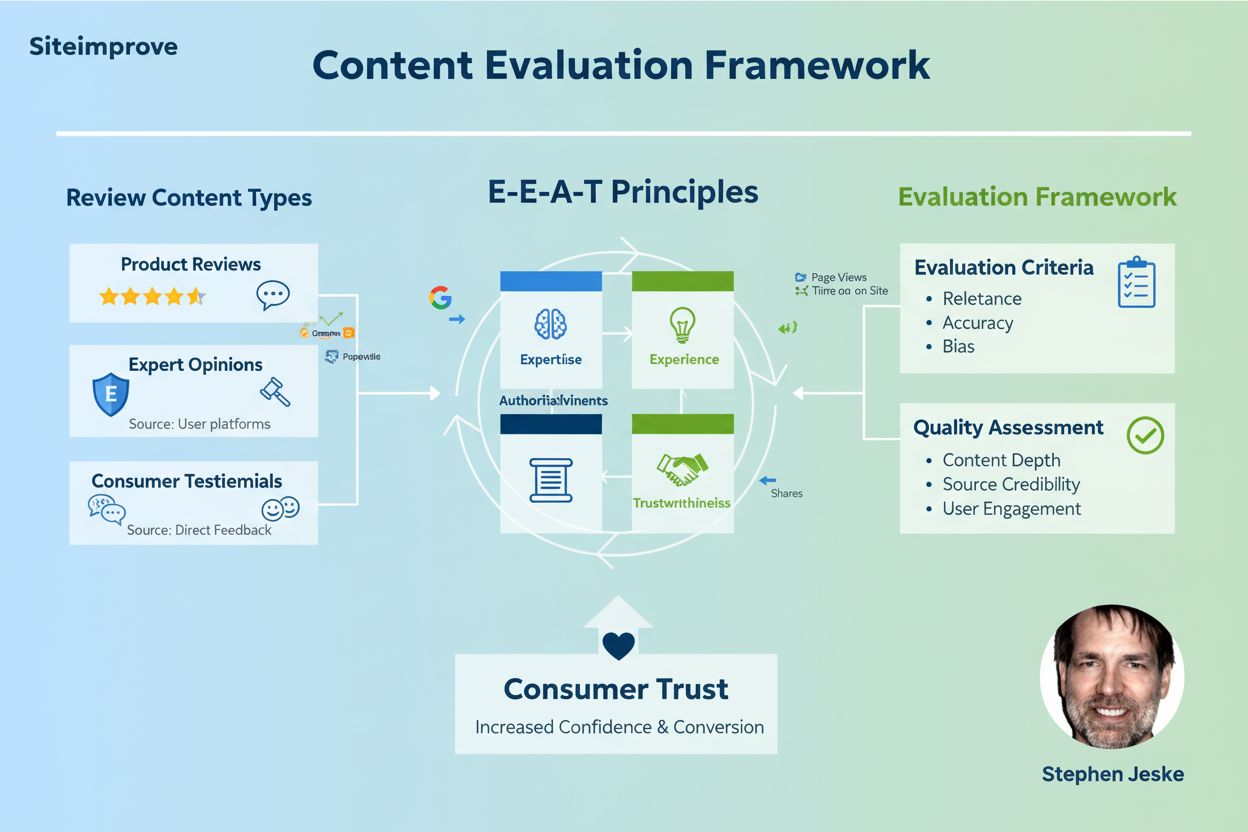
Review content is evaluative material combining expert opinions, consumer feedback, and firsthand experience. Learn how review content impacts E-E-A-T, consumer...

Research content is evidence-based material created through data analysis and expert insights. Learn how data-driven analytical content builds authority, influe...
Cookie Consent
We use cookies to enhance your browsing experience and analyze our traffic. See our privacy policy.