

Quality Rater Guidelines
Learn about Google's Quality Rater Guidelines, the evaluation framework used by 16,000+ raters to assess search quality, E-E-A-T signals, and how they influence...
11 min read

Page Quality Rating is Google’s systematic assessment of overall webpage quality based on content originality, expertise, trustworthiness, and user satisfaction. It evaluates how well a page achieves its purpose using a sliding scale from Lowest to Highest quality, considering factors like E-E-A-T (Experience, Expertise, Authoritativeness, Trustworthiness), main content quality, website reputation, and potential to cause harm.
Page Quality Rating is Google's systematic assessment of overall webpage quality based on content originality, expertise, trustworthiness, and user satisfaction. It evaluates how well a page achieves its purpose using a sliding scale from Lowest to Highest quality, considering factors like E-E-A-T (Experience, Expertise, Authoritativeness, Trustworthiness), main content quality, website reputation, and potential to cause harm.
Page Quality Rating is Google’s comprehensive assessment framework for evaluating the overall quality of webpages based on how well they achieve their intended purpose while demonstrating trustworthiness, expertise, and user value. Conducted by thousands of trained Search Quality Raters, this systematic evaluation uses a sliding scale ranging from Lowest to Highest quality to assess pages across multiple dimensions including content originality, expertise demonstration, website reputation, and potential to cause harm. The Page Quality Rating system serves as a critical quality control mechanism that helps Google’s automated ranking systems prioritize helpful, people-first content over pages designed primarily to manipulate search engine rankings. Rather than directly determining individual page rankings, these ratings provide aggregate feedback that validates and refines Google’s core ranking algorithms, ensuring they continue to surface the most relevant and trustworthy information for users.
The concept of systematic page quality evaluation emerged as search engines recognized that relevance alone was insufficient for delivering optimal user experiences. As the web expanded exponentially, Google developed increasingly sophisticated methods to distinguish between genuinely helpful content and pages created solely for search engine manipulation. The formalization of Page Quality Rating guidelines began in earnest following major algorithm updates, particularly the Helpful Content Update of 2023 and subsequent core updates in 2024. According to Google’s own data, the March 2024 core update—described as the largest core update ever—successfully reduced low-quality, unoriginal content in search results by 40%, demonstrating the tangible impact of rigorous quality assessment. The evolution of these guidelines reflects Google’s ongoing commitment to combating spam, AI-generated content abuse, and deceptive practices. Over 78% of enterprises now recognize the importance of content quality monitoring, as demonstrated by increased adoption of SEO and content quality tools. The guidelines have expanded to address emerging challenges, including the proliferation of AI-generated content, scaled content abuse, and site reputation abuse—all of which represent modern threats to search result quality that didn’t exist in earlier iterations of the framework.
Page Quality Rating assessment encompasses five primary dimensions that raters evaluate systematically. The quality of main content represents the most critical factor, examining whether content demonstrates adequate effort, originality, talent, and skill necessary to achieve the page’s stated purpose. Raters assess whether content is satisfying, comprehensive, and provides genuine value compared to competing pages on the same topic. The reputation of the website and content creator involves independent research into how external sources, experts, and users perceive the site and its authors. This includes analyzing customer reviews, expert recommendations, news coverage, and citations from authoritative sources. E-E-A-T assessment—evaluating Experience, Expertise, Authoritativeness, and Trustworthiness—has become increasingly central to quality evaluation, with Trust identified as the most critical component. Raters examine whether content creators demonstrate first-hand knowledge, possess relevant expertise, are recognized as authoritative sources, and present information honestly and accurately. The potential for harm evaluation specifically addresses YMYL (Your Money or Your Life) topics where inaccurate information could significantly impact health, financial stability, safety, or societal welfare. Finally, raters assess page structure and user experience, including how effectively supplementary content supports the main content, whether advertisements are appropriately placed, and whether the page design facilitates or obstructs user access to valuable information.
| Rating Level | Content Quality | E-E-A-T | Reputation | User Satisfaction | Key Characteristics |
|---|---|---|---|---|---|
| Lowest | Little to no effort, copied/spammy, no value | Highly untrustworthy, lacks expertise | Very negative or malicious | Fails to meet needs | Harmful, deceptive, or spam content; violates policies |
| Low | Low effort, low originality, limited value | Inadequate expertise for topic | Mildly negative | Unsatisfying experience | Lacks depth, contains inaccuracies, poor UX |
| Medium | Adequate effort, some originality, meets purpose | Adequate for purpose | Neutral or slightly positive | Satisfactory | Achieves purpose but nothing exceptional |
| High | High effort, original, valuable content | High E-E-A-T demonstrated | Positive reputation | Very satisfying | Comprehensive, well-researched, expert-created |
| Highest | Exceptional effort, highly original, outstanding value | Very high E-E-A-T, authoritative | Very positive, widely recognized | Extremely satisfying | Best available content, industry-leading expertise |
The Page Quality Rating system operates through a structured evaluation process involving thousands of human raters distributed globally. Each rater receives comprehensive training on Google’s Search Quality Rater Guidelines, which provide detailed criteria, examples, and edge cases for assessing pages across diverse topics and content types. When evaluating a page, raters follow a systematic methodology: first, they determine the page’s true purpose and assess whether that purpose is beneficial or harmful; second, they evaluate the potential for the page to cause harm, particularly for YMYL topics; third, they examine the quality of main content by considering effort, originality, talent, and skill invested in its creation; fourth, they research the website and content creator’s reputation using independent sources; and finally, they assess E-E-A-T signals visible on the page and through external research. The rating process emphasizes that raters must represent users in their specific locale and cultural context, ensuring that quality assessments reflect real user needs and expectations rather than rater personal preferences. Importantly, raters may spend only seconds on a page initially to determine if it meets basic quality standards, making first impressions critical. The guidelines explicitly state that there is no single “correct” rating—raters must use judgment to apply principles to diverse content types, from academic papers to social media posts to video content. Google’s systems then aggregate these individual rater assessments to identify patterns and validate algorithmic improvements, creating a feedback loop that continuously refines automated ranking systems.
Understanding Page Quality Rating has profound implications for content creators, digital marketers, and businesses seeking visibility in search results. Organizations that align their content with high Page Quality standards experience measurable benefits including improved search rankings, increased organic traffic, and enhanced brand credibility. The practical impact extends beyond search visibility—high-quality content that demonstrates strong E-E-A-T builds user trust, increases engagement, and improves conversion rates. For YMYL topics particularly, Page Quality Rating directly influences whether content reaches users seeking critical information about health, finances, or safety. Research indicates that pages receiving Highest quality ratings receive significantly more search impressions and clicks compared to Medium or Low quality pages on identical topics. The business case for quality content creation is compelling: while producing high-quality, original content requires greater investment in research, expertise, and editing, the long-term returns through sustained search visibility and user trust far exceed the costs of creating low-quality, spammy content. Additionally, understanding Page Quality Rating criteria helps organizations identify and eliminate content that violates Google’s spam policies, protecting them from algorithmic penalties. For agencies and SEO professionals, Page Quality Rating knowledge enables more effective client counseling, allowing them to explain why certain content strategies succeed or fail and to develop content roadmaps aligned with Google’s quality expectations.
As AI systems like ChatGPT, Perplexity, Claude, and Google’s own AI Overviews increasingly influence how users discover information, Page Quality Rating takes on new significance in the context of AI citation and visibility. High-quality pages with strong E-E-A-T signals are more likely to be cited by AI systems when generating responses, making Page Quality Rating indirectly relevant to AI visibility strategy. Platforms like AmICited now enable organizations to monitor whether their content appears in AI-generated responses, providing insights into how AI systems evaluate and cite their pages. The relationship between Page Quality Rating and AI citation is bidirectional: pages that achieve high Page Quality ratings through demonstrated expertise and trustworthiness are more likely to be selected as sources by AI systems, while AI systems’ reliance on high-quality sources creates additional incentive for content creators to meet rigorous quality standards. For organizations operating across multiple platforms—maintaining websites, social media presence, and content distributed through various channels—understanding how Page Quality Rating applies to each platform is essential. Social media posts, forum discussions, and user-generated content are evaluated using the same E-E-A-T framework as traditional web pages, though the standards may be calibrated differently based on content type and user expectations. The emergence of AI-generated content has prompted Google to explicitly address automation in Page Quality guidelines, clarifying that AI-generated content can receive high ratings if it provides original value and demonstrates expertise, but content created with little effort and no added value using AI tools receives Lowest ratings.
Organizations seeking to achieve high Page Quality ratings should implement a comprehensive content strategy addressing multiple quality dimensions simultaneously. Content creation best practices include conducting thorough research, demonstrating first-hand expertise or experience, providing original insights beyond what competitors offer, and ensuring comprehensive coverage of topics. For product reviews and recommendations, this means actually testing products, documenting the testing process, and providing detailed evidence of the work involved. Expertise demonstration requires clearly identifying content creators, providing author biographies that establish credentials and background, and linking to author pages or organizational About pages that build credibility. For YMYL topics particularly, involving recognized experts and including citations to authoritative sources is essential. Reputation building involves earning positive reviews, securing expert recommendations, generating news coverage, and building citations from reputable sources in your field. This requires consistent delivery of high-quality content over time and active engagement with your audience and industry. User experience optimization ensures that main content is prominently displayed, supplementary content supports rather than distracts from the primary message, and advertisements are appropriately placed and easily distinguishable from content. Trustworthiness establishment requires transparent disclosure of authorship, clear sourcing of information, accurate representation of credentials and expertise, and honest communication about limitations or uncertainties in your content.
The Page Quality Rating framework continues evolving in response to emerging challenges and technological changes in the digital landscape. Google’s January 2025 update to Search Quality Rater Guidelines introduced three new spam categories—expired domain abuse, site reputation abuse, and scaled content abuse—reflecting the platform’s intensifying focus on combating sophisticated manipulation tactics. The proliferation of AI-generated content represents perhaps the most significant challenge to quality assessment frameworks, requiring guidelines to distinguish between beneficial AI-assisted content creation and abusive scaled content generation. Future iterations of Page Quality Rating will likely place even greater emphasis on demonstrating how content was created, particularly regarding automation and AI usage, as transparency becomes increasingly important for user trust. The integration of Page Quality Rating concepts with emerging AI citation systems suggests that quality assessment frameworks will expand beyond traditional search rankings to encompass AI visibility and citation patterns. Organizations that proactively align their content with rigorous quality standards today will be best positioned to maintain visibility as search and AI systems continue evolving. The strategic implication is clear: investing in genuine expertise, original research, and authentic user value creation represents the most sustainable approach to long-term search visibility and digital authority. As Google continues refining its ability to identify and reward people-first content while penalizing search-engine-first content, the distinction between these approaches will become increasingly consequential for digital success.
Google's Page Quality Rating uses a sliding scale with five main levels: Lowest (pages that are harmful, deceptive, or spammy), Low (pages lacking adequate effort or expertise), Medium (pages that achieve their purpose adequately), High (pages with strong E-E-A-T and satisfying content), and Highest (pages representing exceptional quality with very high expertise and positive reputation). Each level can also have intermediate ratings like Low+ or High+.
E-E-A-T (Experience, Expertise, Authoritativeness, Trustworthiness) is central to Page Quality assessment. Experience refers to first-hand knowledge, Expertise means demonstrated skill or knowledge, Authoritativeness indicates recognition as a go-to source, and Trustworthiness is paramount—ensuring content is accurate, honest, and reliable. Trust is the most critical component, as untrustworthy pages receive low ratings regardless of other qualities.
YMYL stands for 'Your Money or Your Life'—topics that could significantly impact health, financial stability, safety, or societal welfare. Pages on YMYL topics receive stricter Page Quality standards because inaccurate information could cause real harm. Medical advice, financial guidance, legal information, and civic topics are common YMYL categories requiring higher expertise and trustworthiness.
Google employs thousands of Search Quality Raters who manually evaluate webpages using Page Quality Rating guidelines. These raters assess pages on criteria like content quality, E-E-A-T, reputation, and potential harm. Their feedback helps Google validate and improve its automated ranking systems, though individual rater assessments don't directly impact rankings—they serve as quality control signals.
Pages receive Lowest ratings if they are harmful (inciting violence or containing dangerous misinformation), deceptive (impersonating other sites or misleading users), untrustworthy (lacking credibility or containing factual errors), or spammy (auto-generated, copied without value, or deliberately obscuring main content). Lowest-rated pages fail to achieve their purpose and may violate Google's spam policies.
Originality is a key quality factor. Pages that copy, paraphrase, or repost content from other sources without adding substantial value receive lower ratings. High-quality pages demonstrate original research, unique insights, first-hand experience, or creative work. The effort invested in creating unique, valuable content significantly influences whether a page achieves Medium, High, or Highest quality ratings.
Yes, AI-generated content can receive high ratings if it provides original value, demonstrates expertise, and is trustworthy. However, content created with little effort, no originality, and no added value using AI tools receives Lowest ratings. Google's guidelines emphasize that the method of creation matters less than whether the content genuinely helps users and demonstrates E-E-A-T principles.
Website and content creator reputation significantly impacts Page Quality assessment. Positive reputation—evidenced by expert recognition, awards, positive reviews, and credible citations—supports higher ratings. Negative reputation, including fraud allegations, malicious behavior, or poor customer service, results in lower ratings. Raters research independent sources to verify reputation claims made by websites.
Start tracking how AI chatbots mention your brand across ChatGPT, Perplexity, and other platforms. Get actionable insights to improve your AI presence.
Learn about Google's Quality Rater Guidelines, the evaluation framework used by 16,000+ raters to assess search quality, E-E-A-T signals, and how they influence...
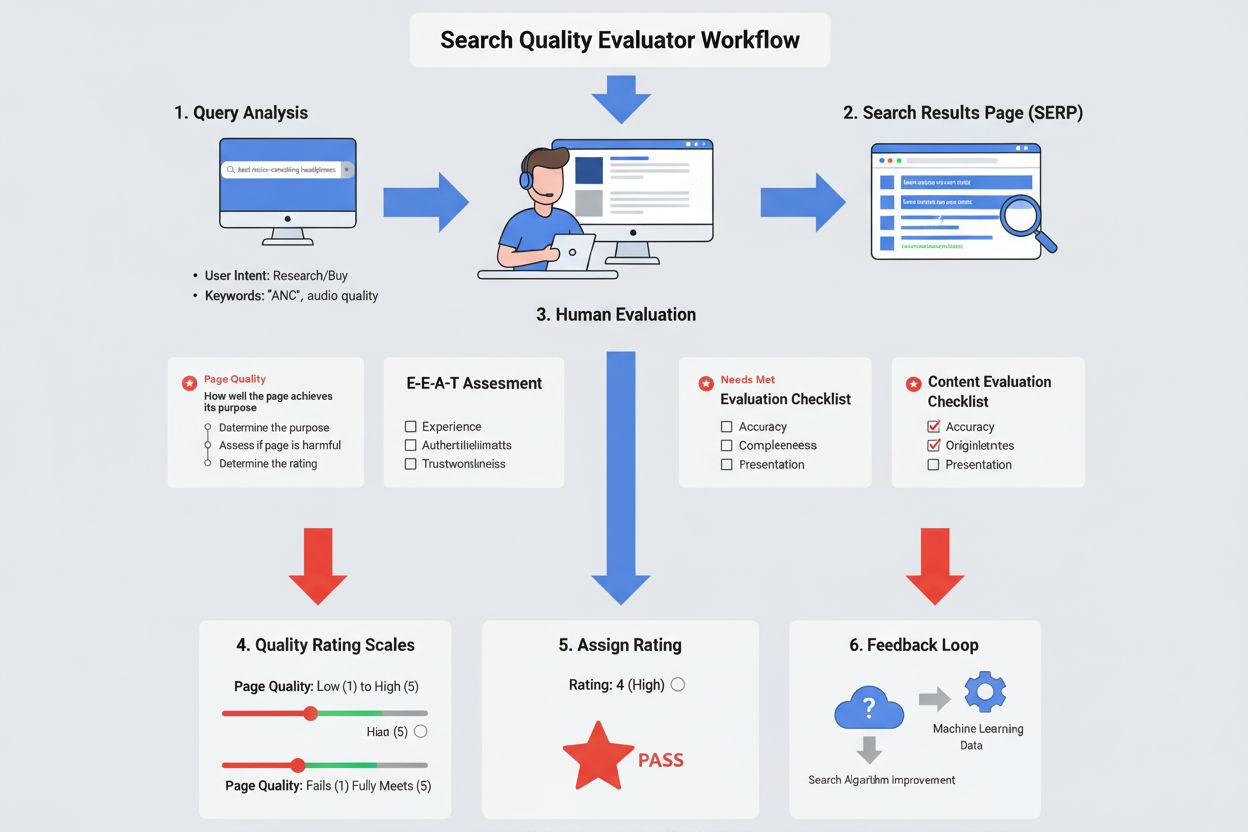
Learn what Search Quality Evaluators do, how they assess search results, and their role in improving Google Search. Understand E-E-A-T, rating scales, and quali...
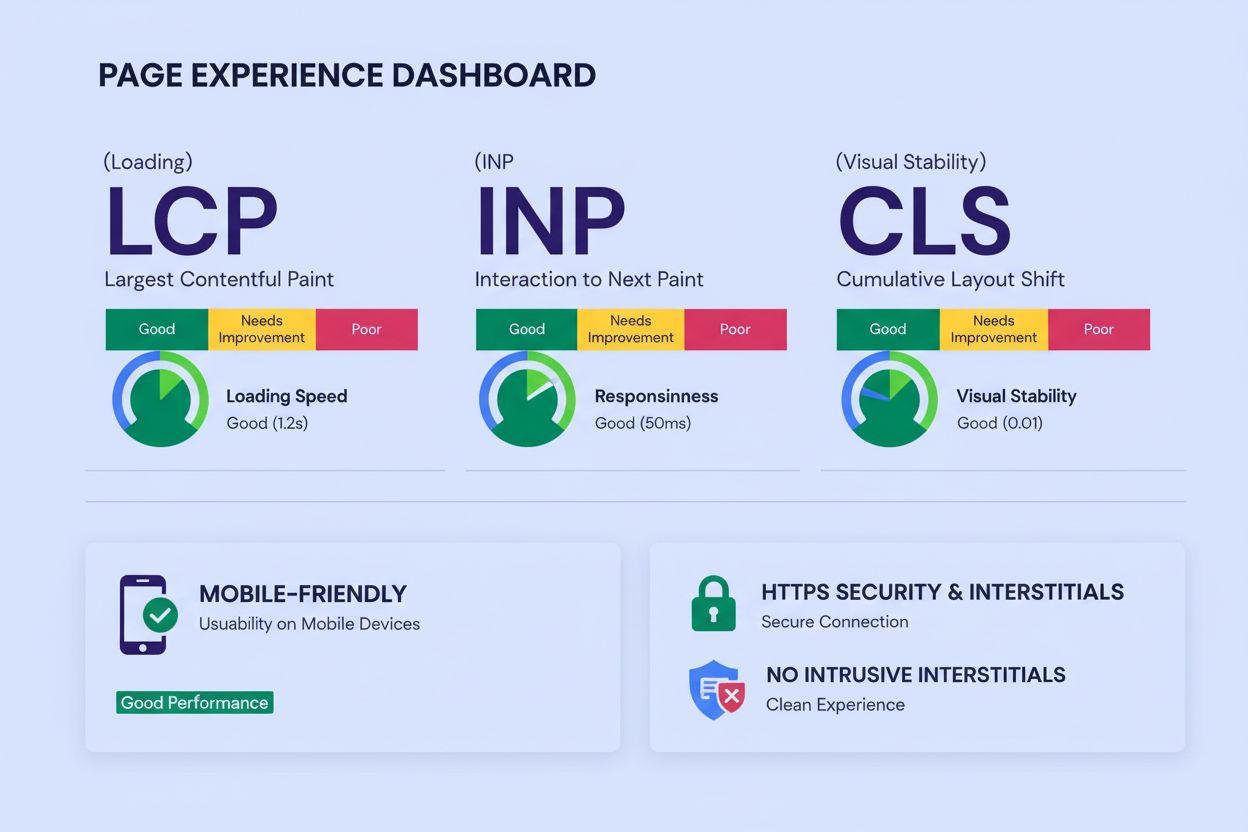
Page Experience measures user interaction quality through Core Web Vitals, mobile-friendliness, HTTPS security, and intrusive interstitials. Learn how it impact...