

Largest Contentful Paint (LCP)
Largest Contentful Paint (LCP) is a Core Web Vital measuring when the largest page element renders. Learn how LCP impacts SEO, user experience, and conversion r...
12 min read

Page speed refers to the time it takes for a webpage to fully load and display its content in a web browser, measured in seconds. It encompasses multiple metrics including Time to First Byte (TTFB), First Contentful Paint (FCP), Largest Contentful Paint (LCP), and Cumulative Layout Shift (CLS), collectively known as Core Web Vitals. Page speed is a critical factor for user experience, SEO rankings, and conversion rates.
Page speed refers to the time it takes for a webpage to fully load and display its content in a web browser, measured in seconds. It encompasses multiple metrics including Time to First Byte (TTFB), First Contentful Paint (FCP), Largest Contentful Paint (LCP), and Cumulative Layout Shift (CLS), collectively known as Core Web Vitals. Page speed is a critical factor for user experience, SEO rankings, and conversion rates.
Page speed is the time it takes for a webpage to fully load and display its content in a web browser, measured in seconds from the moment a user initiates a request until the page becomes fully interactive and visually complete. Unlike a single metric, page speed is an umbrella term encompassing multiple measurements that capture different stages of the loading process. These stages include Time to First Byte (TTFB), which measures how long the server takes to respond; First Contentful Paint (FCP), which marks when the first visual element appears; Largest Contentful Paint (LCP), which measures when the main content finishes loading; and Cumulative Layout Shift (CLS), which tracks unexpected visual changes during loading. Understanding page speed is essential because it directly influences user experience, search engine rankings, conversion rates, and increasingly, visibility in AI-generated search results across platforms like ChatGPT, Perplexity, and Google AI Overviews.
Page speed has been a concern for web developers and site owners since the early days of the internet, but its importance has grown exponentially with the rise of mobile browsing and AI-powered search. Google first announced in April 2010 that it would incorporate site speed into its search ranking algorithm, recognizing that users value fast-loading websites. This initial change applied only to desktop search results. Nearly a decade later, in July 2018, Google extended page speed as a ranking factor to mobile search results, acknowledging that mobile users have even less patience for slow-loading pages. The evolution of page speed metrics has become increasingly sophisticated, moving from simple load time measurements to comprehensive user-centric metrics that capture the entire loading experience. In 2020, Google introduced Core Web Vitals, a standardized set of metrics designed to quantify the most important aspects of user experience. These metrics have become the gold standard for measuring page speed and are now integrated into all major Google tools, including PageSpeed Insights, Search Console, and Chrome DevTools. The shift toward AI search platforms has further elevated the importance of page speed, as these systems prioritize fast, high-quality content when generating responses and citations.
The three Core Web Vitals represent the most critical aspects of page speed and user experience. Largest Contentful Paint (LCP) measures loading performance by tracking when the largest visible element on the page finishes rendering, with a good threshold of 2.5 seconds or less. This metric is crucial because it reflects when users perceive the page as functionally complete. Interaction to Next Paint (INP), which replaced First Input Delay (FID) in 2024, measures interactivity by tracking the time between a user’s input and the browser’s response, with a good threshold of 200 milliseconds or less. This metric captures how responsive the page feels when users interact with it. Cumulative Layout Shift (CLS) measures visual stability by quantifying unexpected layout changes during page loading, with a good threshold of 0.1 or less. A high CLS score indicates that elements are shifting around as the page loads, which frustrates users and can lead to accidental clicks. Together, these three metrics provide a comprehensive picture of page speed and user experience quality. Google classifies performance into three categories: “Good” (all three metrics meet thresholds), “Needs Improvement” (one or more metrics fall short), and “Poor” (significant issues with one or more metrics). Achieving a “Good” rating at the 75th percentile of page loads is the target that site owners should strive for to ensure optimal page speed for most users.
The relationship between page speed and user behavior is well-documented and dramatic. Research from Google shows that the probability of a visitor bouncing increases 32% as page load time increases from 1 to 3 seconds, and up to 123% when load time increases from 1 to 10 seconds. On mobile devices, 53% of users abandon pages that take longer than 3 seconds to load, representing a massive loss of potential engagement. Beyond bounce rates, page speed directly impacts conversion rates and revenue. Studies across multiple industries show that websites loading in 1 second have conversion rates 2.5 to 3 times higher than sites loading in 5 seconds, and 5 times higher than sites loading in 10 seconds. For B2B websites specifically, the impact is even more pronounced. A one-second delay in mobile load times can reduce conversion rates by up to 20%, while a two-second delay increases shopping cart abandonment rates to 87%. Major companies have documented the business impact of page speed improvements: Amazon found that every 100 milliseconds of latency reduced sales by 1%, Walmart discovered that a 1-second speed improvement boosted incremental revenue by 1%, and BBC’s website loses 10% of its visitors for every additional second of load time. These statistics underscore why page speed optimization is not merely a technical concern but a critical business priority that directly affects revenue and customer satisfaction.
| Metric/Tool | Measurement Type | Primary Focus | Threshold (Good) | Best Use Case |
|---|---|---|---|---|
| Largest Contentful Paint (LCP) | Field & Lab | Loading Performance | ≤ 2.5 seconds | Measures when main content loads |
| Interaction to Next Paint (INP) | Field & Lab | Interactivity | ≤ 200 milliseconds | Measures responsiveness to user input |
| Cumulative Layout Shift (CLS) | Field & Lab | Visual Stability | ≤ 0.1 | Measures unexpected layout changes |
| Time to First Byte (TTFB) | Field & Lab | Server Response | ≤ 800 milliseconds | Measures server performance |
| First Contentful Paint (FCP) | Field & Lab | Initial Rendering | ≤ 1.8 seconds | Measures when first element appears |
| Google PageSpeed Insights | Both | Comprehensive Analysis | Scores 0-100 | Single page analysis with recommendations |
| Semrush Site Audit | Lab | Full Site Analysis | Scores per page | Entire website performance tracking |
| GTmetrix | Lab | Detailed Diagnostics | Scores 0-100 | In-depth performance breakdown |
| StatusCake | Field | Continuous Monitoring | Real-time alerts | Ongoing performance tracking |
| Chrome DevTools | Lab | Developer Debugging | Real-time metrics | Development and testing environment |
Page speed is influenced by numerous technical factors that developers and site owners can optimize. Server response time, measured as Time to First Byte (TTFB), is the foundation of page speed—if the server is slow to respond, everything downstream suffers. Optimizing server response time involves upgrading hosting infrastructure, implementing caching strategies, optimizing database queries, and using Content Delivery Networks (CDNs) to serve content from geographically distributed servers closer to users. Image optimization is another critical factor, as images typically comprise the largest portion of page file sizes. Compressing images, using modern formats like WebP, and serving appropriately sized images for different devices can dramatically reduce page speed. JavaScript and CSS optimization involves minifying code to remove unnecessary characters, deferring non-critical JavaScript to load after the page renders, and inlining critical CSS needed for above-the-fold content. HTTP requests also impact page speed—each request adds latency, so reducing the number of requests through techniques like bundling and sprite sheets improves performance. Browser caching allows returning visitors to load pages faster by storing static assets locally, while render-blocking resources like unoptimized fonts and scripts can delay the rendering of visible content. Understanding and optimizing these technical factors is essential for achieving fast page speed and meeting Core Web Vitals thresholds.
Page speed remains a confirmed ranking factor for Google’s search algorithm, though its weight relative to content quality has evolved. Google initially announced page speed as a ranking factor in 2010 for desktop searches and extended it to mobile in 2018, recognizing that users prioritize fast-loading websites. While Google has emphasized that relevance and content quality remain the top ranking factors, page speed continues to influence rankings as part of the broader “page experience” signal. In April 2023, Google reorganized its ranking systems documentation and removed “page experience” as a standalone ranking system, but clarified that page experience signals, including page speed, are still evaluated by algorithms. This change reflected a shift in emphasis toward content quality and helpfulness rather than technical metrics alone. However, page speed remains important because it affects user experience—slow pages lead to higher bounce rates and lower engagement, which indirectly impact rankings. Additionally, page speed is particularly important for mobile search, where users have less patience and slower network connections are more common. Sites that appear on the first page of Google search results typically load in about 1.65 seconds, suggesting that page speed optimization contributes to better search visibility. For AI search platforms like Perplexity, ChatGPT, and Google AI Overviews, page speed is increasingly important because these systems prioritize fast, high-quality content when generating responses and citations, making page speed optimization essential for visibility in AI-generated search results.
Improving page speed requires a systematic approach addressing multiple factors simultaneously. Image optimization should be the first priority, as images typically account for 50-60% of page weight. This involves compressing images without losing quality, using modern formats like WebP that are 25-35% smaller than JPEG, and implementing responsive images that serve appropriately sized versions for different devices. Minification of JavaScript, CSS, and HTML removes unnecessary characters and can reduce file sizes by 20-30%. Browser caching should be configured to store static assets locally, reducing load times for returning visitors by 40-60%. Content Delivery Networks (CDNs) distribute content across geographically dispersed servers, reducing latency for users far from the origin server by 30-50%. Server response time optimization involves upgrading hosting infrastructure, implementing server-side caching, optimizing database queries, and using technologies like HTTP/2 that allow multiple requests over a single connection. Reducing HTTP requests through techniques like bundling CSS and JavaScript files, using CSS sprites for icons, and eliminating unnecessary third-party scripts can improve page speed by 20-40%. Lazy loading defers the loading of images and content below the fold until users scroll to them, improving initial page speed metrics. Critical rendering path optimization involves identifying and prioritizing the resources needed to render above-the-fold content, deferring non-critical resources. These optimization strategies, when implemented comprehensively, can typically improve page speed by 30-60%, resulting in significant improvements in user experience, conversion rates, and search visibility.
Effective page speed management requires continuous monitoring and measurement using appropriate tools and methodologies. Google PageSpeed Insights is the most widely used free tool, providing both lab data (simulated page loads) and field data (real user measurements from the Chrome User Experience Report). Lab data helps identify specific performance issues during development, while field data reflects actual user experiences and is more representative of real-world conditions. Semrush Site Audit and similar tools analyze entire websites rather than individual pages, providing comprehensive page speed reports across all pages and identifying patterns and issues. Real User Monitoring (RUM) tools like StatusCake and Datadog track actual user experiences across different devices, browsers, and network conditions, providing insights that lab tools cannot capture. Synthetic monitoring tools simulate user interactions and page loads from multiple geographic locations, helping identify performance issues before they affect real users. Best practices for page speed monitoring include establishing baseline metrics, setting performance budgets (maximum acceptable file sizes and load times), monitoring both desktop and mobile performance separately, tracking performance over time to identify regressions, and prioritizing optimization efforts based on impact and effort. Organizations should monitor page speed metrics at the 75th percentile rather than averages, as this reflects the experience of users with slower devices and connections. Additionally, monitoring page speed across different geographic regions and network conditions helps identify location-specific issues. For AI search visibility, monitoring how page speed affects citations in platforms like ChatGPT, Perplexity, and Google AI Overviews is increasingly important, as these systems may deprioritize slow-loading content when generating responses.
Page speed standards and metrics continue to evolve as web technologies advance and user expectations change. The shift from First Input Delay (FID) to Interaction to Next Paint (INP) in 2024 reflects a more comprehensive approach to measuring interactivity, capturing the full duration of user interactions rather than just the initial delay. Future Core Web Vitals may include additional metrics addressing emerging concerns like responsiveness to complex interactions, performance on low-end devices, and energy efficiency. The rise of AI search platforms is creating new dimensions for page speed optimization, as these systems may develop their own performance requirements and prioritization algorithms. Web performance is becoming increasingly important for environmental sustainability, as faster pages consume less energy and reduce carbon footprints. The adoption of new web technologies like HTTP/3, WebAssembly, and edge computing will continue to improve page speed capabilities and create new optimization opportunities. Page speed optimization is also becoming more automated, with tools using machine learning to identify optimization opportunities and predict performance impacts. The integration of page speed metrics into business intelligence and analytics platforms is making it easier for non-technical stakeholders to understand the business impact of performance optimization. As mobile browsing continues to dominate (accounting for nearly 70% of web traffic), page speed optimization for mobile devices will remain a top priority. The increasing complexity of modern web applications, with heavy JavaScript frameworks and real-time data updates, presents ongoing challenges for maintaining fast page speed. Organizations that prioritize page speed optimization and stay current with evolving standards will maintain competitive advantages in search visibility, user engagement, and conversion rates.
Page speed has evolved from a technical optimization concern to a critical business metric that directly impacts user experience, search visibility, conversion rates, and revenue. The standardization of Core Web Vitals by Google has provided clear, measurable targets for page speed optimization, making it easier for organizations to prioritize efforts and track progress. The dramatic statistics around bounce rates, conversion rates, and user satisfaction demonstrate that page speed is not a luxury but a necessity in today’s competitive digital landscape. With 47% of users expecting pages to load in under 2 seconds and 53% of mobile users abandoning pages that take longer than 3 seconds, the business case for page speed optimization is compelling. The emergence of AI search platforms like ChatGPT, Perplexity, and Google AI Overviews has added a new dimension to page speed importance, as these systems prioritize fast-loading, high-quality content when generating responses and citations. Organizations that invest in page speed optimization through image optimization, code minification, caching strategies, CDN implementation, and continuous monitoring will see measurable improvements in user engagement, search rankings, and business metrics. As web technologies continue to evolve and user expectations increase, page speed will remain a fundamental requirement for digital success, making it essential for all website owners and developers to prioritize performance optimization as a core business strategy.
Core Web Vitals are three key metrics that Google uses to measure page experience: Largest Contentful Paint (LCP) measuring loading performance with a threshold of 2.5 seconds, Interaction to Next Paint (INP) measuring interactivity at 200 milliseconds, and Cumulative Layout Shift (CLS) measuring visual stability at 0.1 or less. These metrics directly impact page speed assessment and are critical ranking factors for search engines. Meeting these thresholds at the 75th percentile ensures a good user experience for most visitors.
Research shows that bounce rates increase significantly with slower page speeds. When page load time increases from 1 to 3 seconds, bounce rates increase by 32%, and from 1 to 10 seconds, bounce rates increase by up to 123%. Additionally, 53% of mobile users abandon pages that take longer than 3 seconds to load, and every 1-second delay reduces user satisfaction by 16%. Fast-loading pages create better user experiences and encourage visitors to stay longer and engage with content.
Page speed has a direct correlation with conversion rates. Studies show that websites loading in 1 second have conversion rates 2.5 to 3 times higher than sites loading in 5 seconds, and 5 times higher than sites loading in 10 seconds. A one-second delay in mobile load times can reduce conversion rates by up to 20%, while a two-second delay increases shopping cart abandonment to 87%. For B2B websites, the impact is even more pronounced, making page speed optimization essential for revenue generation.
Yes, page speed remains a confirmed Google ranking factor as of 2024, though its impact may vary depending on content quality and relevance. Google removed 'page experience' from its main ranking systems documentation in April 2023, but clarified that page experience signals, including speed, are still evaluated by algorithms. While relevance remains the top ranking factor, page speed continues to influence rankings and is particularly important for mobile search results.
Google PageSpeed Insights is the most popular free tool for measuring page speed, providing both lab and field data on Core Web Vitals performance. Other tools include GTmetrix, Pingdom Website Speed Testing, and Semrush Site Audit, which analyze entire websites rather than individual pages. These tools measure metrics like TTFB, FCP, LCP, CLS, and provide specific recommendations for optimization. For real-world monitoring, tools like StatusCake and DebugBear offer continuous performance tracking.
Key factors affecting page speed include server response time (TTFB), image file sizes and optimization, number of HTTP requests, unminified JavaScript and CSS code, browser caching configuration, content delivery network (CDN) usage, render-blocking resources, and the user's device and network connection. Large unoptimized images, excessive third-party scripts, and poor server infrastructure are among the most common culprits for slow page speeds. Addressing these factors systematically can significantly improve loading performance.
Page speed is increasingly important for AI search visibility as platforms like ChatGPT, Perplexity, and Google AI Overviews prioritize fast-loading, high-quality content when generating responses. Slow pages may be deprioritized in AI citations and recommendations, affecting brand visibility in AI-generated search results. Tools like AmICited help monitor how your domain appears in AI responses, and maintaining optimal page speed ensures your content is more likely to be cited and recommended by AI systems.
Start tracking how AI chatbots mention your brand across ChatGPT, Perplexity, and other platforms. Get actionable insights to improve your AI presence.
Largest Contentful Paint (LCP) is a Core Web Vital measuring when the largest page element renders. Learn how LCP impacts SEO, user experience, and conversion r...
Discover the critical factors affecting AI indexing speed including site performance, crawl budget, content structure, and technical optimization. Learn how to ...
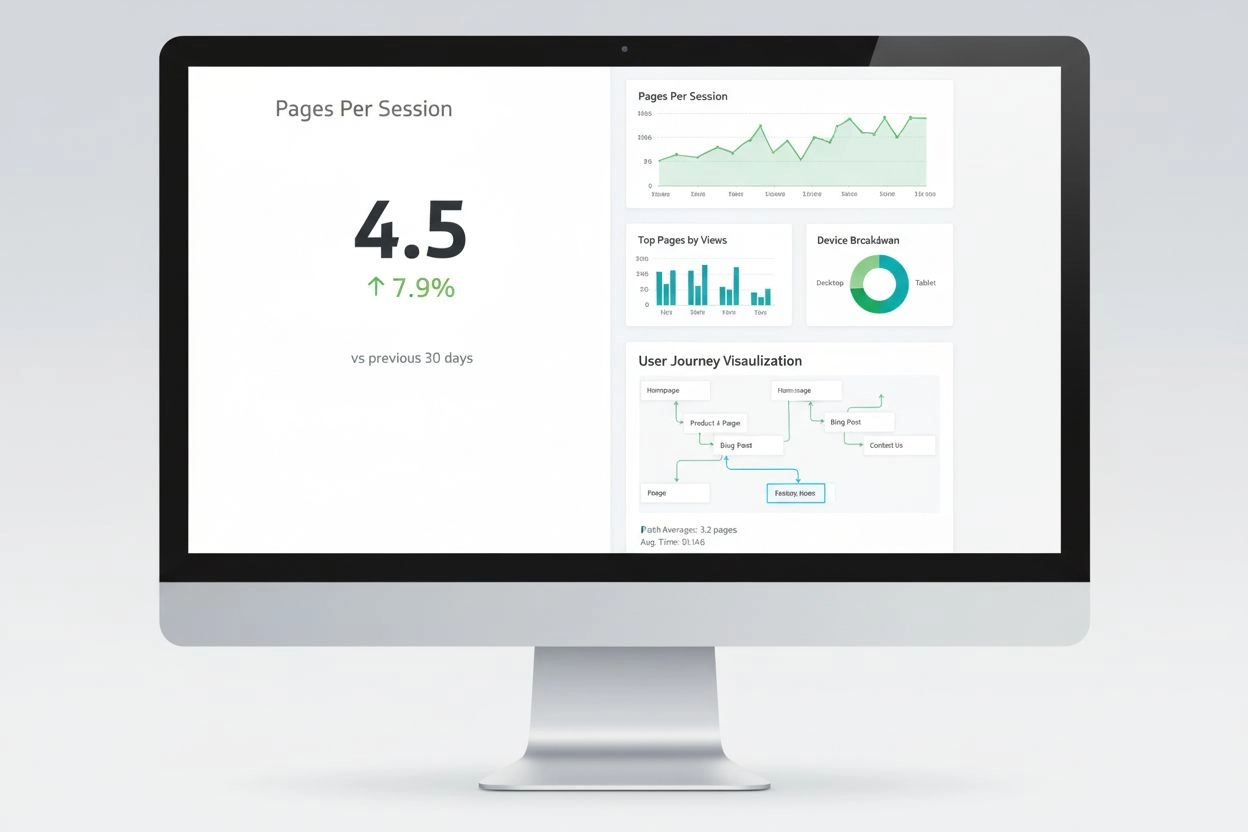
Pages Per Session measures average pages viewed per visit. Learn how this engagement metric impacts user behavior, conversion rates, and SEO performance with in...
Cookie Consent
We use cookies to enhance your browsing experience and analyze our traffic. See our privacy policy.