

How to Use People Also Ask for AI Content Strategy
Learn how to leverage Google's People Also Ask feature to create AI-optimized content that ranks in AI search engines and improves brand visibility in AI answer...
9 min read

People Also Ask (PAA) is a Google SERP feature that displays expandable question boxes containing related queries and answers relevant to a user’s initial search. These interactive boxes appear dynamically on search results pages and help users discover additional information without performing new searches.
People Also Ask (PAA) is a Google SERP feature that displays expandable question boxes containing related queries and answers relevant to a user's initial search. These interactive boxes appear dynamically on search results pages and help users discover additional information without performing new searches.
People Also Ask (PAA) is a Google SERP feature that displays expandable question boxes containing related queries and answers relevant to a user’s initial search query. These interactive accordion-style boxes appear dynamically on search engine results pages, typically in the upper portion of results, and help users discover additional information without performing new searches. When users click on a question, the box expands to reveal a brief answer snippet (usually 40-50 words) along with a clickable link to the source page. As users interact with the PAA box by expanding questions, new related questions automatically populate below, creating an endless flow of discovery opportunities. This machine learning-powered feature represents one of Google’s most prominent SERP innovations, fundamentally changing how users explore topics and how search engines present information.
The People Also Ask feature emerged as part of Google’s broader initiative to improve user experience by reducing the number of searches needed to satisfy information needs. Google introduced PAA to address a fundamental challenge: users often don’t know exactly what they’re looking for or how to phrase their queries. By surfacing related questions that other users have asked, Google helps searchers refine their research and discover relevant information more efficiently. The feature has evolved significantly since its introduction, becoming increasingly sophisticated in understanding user intent and predicting which questions will be most valuable. According to seoClarity’s research, PAA visibility has exploded dramatically, with a 34.7% increase in mobile PAA prevalence from February 2024 to January 2025, and a 37.5% increase on desktop during the same period. In the United Kingdom, the growth has been even more pronounced, with PAA prevalence more than doubling year-over-year. This explosive growth reflects Google’s strategic shift toward making PAA a primary discovery mechanism, especially as the search landscape evolves with AI integration and changing user behaviors.
Google’s PAA algorithm operates through sophisticated machine learning that analyzes billions of search queries to identify patterns in user behavior and information needs. The system doesn’t rely on keyword matching alone; instead, it uses natural language processing to understand the semantic relationships between queries and the contextual intent behind them. When a user enters a search query, Google’s algorithms immediately analyze whether that query would benefit from related questions. The system considers multiple factors: the query’s ambiguity level, whether multiple interpretations exist, historical search patterns for similar queries, and real-time trending topics. Google then pulls answers from its indexed web pages, prioritizing content that directly addresses the identified questions with clarity and authority. Importantly, PAA answers don’t require top-ranking positions to be selected—Google evaluates content quality, relevance, and answer clarity regardless of traditional ranking position. The algorithm continuously learns from user interactions, tracking which questions users expand, how long they spend reading answers, and whether they click through to source pages. This behavioral data feeds back into the system, allowing Google to refine which questions appear and which answers get featured for future searches.
| Characteristic | People Also Ask (PAA) | Featured Snippets | Traditional Organic Results |
|---|---|---|---|
| Source Ranking Requirement | Page 2-3 or lower acceptable | Top 3 positions typically | Top 10 positions required |
| Number of Answers Shown | Multiple (4+ questions with different sources) | Single answer from one source | Multiple results from different pages |
| Answer Format | Paragraph, list, table, image, or video | Typically paragraph or list | Full page content |
| Average Answer Length | 40-50 words | 40-60 words | Variable (full page) |
| User Interaction | Expandable/collapsible accordion | Static display | Click-through required |
| Dynamic Updates | Multiple times daily based on trends | Periodic updates | Periodic updates |
| Mobile Prevalence | 63% of PAA interactions on mobile | Lower mobile engagement | Standard mobile display |
| Visibility Growth (2024-2025) | +34.7% mobile, +37.5% desktop | Declining trend | Stable with feature competition |
| Click-Through Likelihood | Lower (answer visible in box) | Moderate (snippet visible) | Higher (full content needed) |
| Schema Markup Impact | Helpful but not required | Beneficial for selection | Not directly applicable |
The rise of People Also Ask represents a fundamental shift in how search engines present information and how users consume search results. Unlike traditional organic rankings where position one receives the most visibility, PAA creates a more democratic SERP landscape where pages from lower rankings can achieve first-page prominence. This democratization is particularly significant for newer domains, smaller publishers, and niche websites that struggle to compete with established authority sites for traditional rankings. When your content appears in a PAA box, you’re not just gaining a single SERP position—you’re potentially appearing multiple times on the same results page if your domain answers multiple related questions. This multiplier effect can dramatically increase your SERP real estate and brand visibility. Furthermore, PAA serves as a powerful keyword research tool, revealing the actual questions your target audience is asking rather than relying on historical search volume data. These questions often have zero search volume in traditional keyword tools, representing untapped opportunities for content creation. The feature also signals topical authority to Google’s algorithms; when your content consistently appears in PAA boxes across related questions, you establish yourself as a trusted source for that topic cluster, which can improve your overall domain authority and ranking potential.
Successfully optimizing for People Also Ask requires a multi-layered technical approach that goes beyond simple content creation. The foundation begins with FAQ schema markup, which explicitly tells Google that your page contains question-answer pairs. Proper implementation uses the FAQPage schema type with clearly defined Question and Answer properties, ensuring that the content marked up is actually visible on the page (not hidden behind tabs or JavaScript). However, schema alone isn’t sufficient—Google prioritizes content clarity and structure above all else. Your questions should appear as actual headings (H2 or H3 tags) on the page, followed immediately by concise, direct answers. The answer paragraph should be self-contained and answerable in 40-50 words, allowing Google to extract it as a PAA snippet while still providing comprehensive information in the surrounding content. Mobile optimization is non-negotiable, given that 63% of PAA interactions occur on mobile devices. This means ensuring your answer sections load quickly, render properly on small screens, and don’t require horizontal scrolling or complex interactions. Core Web Vitals become critical here—pages with poor Largest Contentful Paint (LCP) scores, high Cumulative Layout Shift (CLS), or slow First Input Delay (FID) are less likely to be selected for PAA boxes. Additionally, content freshness signals significantly influence PAA selection. Google’s algorithms favor recently updated content, so regularly refreshing your PAA-targeted pages with new examples, updated statistics, and current information keeps them competitive. This doesn’t require complete rewrites; strategic updates to specific sections, modification of publication dates, and addition of new internal links all signal freshness to Google’s crawlers.
Creating content that ranks in People Also Ask requires understanding the paradox of being both concise and comprehensive. Your immediate answer paragraph must be self-contained and answerable in roughly 40-50 words, yet the surrounding content must demonstrate genuine expertise and authority. The most effective approach involves layered content structure: the first paragraph provides the direct answer to the PAA question, the second layer adds context and nuance, the third layer includes specific examples or applications, and subsequent sections provide deeper exploration. This structure allows Google to extract the concise answer for the PAA box while rewarding users who click through with comprehensive information. When researching which questions to target, use tools like AlsoAsked or AnswerThePublic to identify actual PAA questions in your niche. These tools reveal not just the questions themselves but also the relationships between questions, helping you understand topic clusters and content gaps. Once you’ve identified target questions, analyze the current PAA answers to understand formatting preferences. Some questions are answered best with paragraphs, others with bullet lists, and still others with tables or images. Match your content format to what’s currently winning for that question. Additionally, pay attention to answer tone and language. Healthcare questions often include disclaimers and cautious language. Technical questions may use more jargon. Consumer questions tend toward simpler, more conversational language. Matching the expected tone increases your chances of selection. Finally, ensure your answers directly address the question without unnecessary preamble. Avoid phrases like “Great question!” or “Before we answer that…” and jump straight into the substantive response.
While Google’s People Also Ask dominates the SERP feature landscape, understanding how PAA relates to other search platforms and AI systems is increasingly important for comprehensive visibility. Mobile search has become the primary PAA interaction point, with mobile users engaging with PAA boxes at significantly higher rates than desktop users. This mobile-first reality means your PAA optimization must prioritize mobile user experience above all else. The questions that appear on mobile often differ slightly from desktop, reflecting different search behaviors and contexts. Desktop users might search “how to optimize for People Also Ask” while mobile users search “PAA optimization tips”—subtle differences that affect which questions appear. For AI search platforms like ChatGPT, Perplexity, and Google’s AI Overviews, PAA optimization becomes even more critical. These systems increasingly reference and cite content that appears in PAA boxes, treating PAA presence as a signal of authority and relevance. When your content appears in PAA boxes, you’re essentially pre-positioning it for citation by AI systems that scan Google’s SERP features for authoritative sources. This creates a compounding visibility effect: strong PAA presence leads to AI citations, which drives brand awareness and authority signals that further improve your traditional rankings. For local search, PAA optimization takes on additional dimensions. Local businesses can optimize their Google Business Profile FAQs to appear in PAA boxes for location-specific queries. A plumber in Denver optimizing for “emergency plumber near me” can use their GBP FAQ section to answer common questions, potentially appearing in PAA boxes for both branded and non-branded local queries. Understanding these platform-specific nuances ensures your PAA strategy integrates seamlessly with your broader search visibility goals.
Implementing effective People Also Ask optimization requires a systematic approach that combines research, content creation, and ongoing monitoring. Here are the critical strategies that drive results:
The People Also Ask feature continues to evolve in response to changing user behaviors, technological advances, and Google’s strategic priorities. The June 2025 Core Update demonstrated Google’s commitment to filtering AI-generated filler content, which has actually benefited PAA optimization efforts. Content that demonstrates genuine expertise, real-world experience, and authentic insights now has a competitive advantage over generic, AI-generated answers. This shift means that E-E-A-T signals (Experience, Expertise, Authoritativeness, Trustworthiness) have become even more critical for PAA success. Pages that clearly demonstrate the author’s experience and expertise, cite credible sources, and provide verifiable information are more likely to be selected for PAA boxes. Looking forward, personalization will likely play an increasingly important role in PAA selection. Google’s algorithms are moving toward showing different PAA questions to different users based on their search history, location, device type, and other contextual signals. This means that a single query might trigger different PAA questions for different users, creating new optimization challenges and opportunities. Additionally, the integration of AI Overviews with PAA boxes suggests that Google is moving toward a more unified answer ecosystem where PAA questions and AI-generated summaries work together to satisfy user information needs. For SEOs, this means optimizing for PAA isn’t just about appearing in question boxes—it’s about positioning your content to be cited by AI systems that increasingly reference PAA sources. The convergence of voice search, mobile search, and AI search is also reshaping PAA optimization requirements. Voice search queries tend to be more conversational and question-based, triggering PAA boxes more frequently. This means that content optimized for natural language and conversational queries will have a competitive advantage in the evolving search landscape.
Effectively measuring People Also Ask performance requires moving beyond traditional SEO metrics to capture the unique value that PAA provides. Unlike organic rankings where position and click-through rates are straightforward to measure, PAA visibility requires more sophisticated tracking approaches. Enterprise SEO platforms like seoClarity, Semrush, and Rank Intelligence now offer dedicated PAA tracking features that automatically monitor which of your pages appear in PAA boxes for your target keywords. These platforms show not just whether you rank in PAA, but also how frequently, for which questions, and how your PAA presence changes over time. This data reveals which optimization efforts are working and where additional focus is needed. Beyond platform-specific tracking, custom UTM parameters can be added to URLs within FAQ schema markup to identify traffic specifically coming from PAA box clicks. This allows you to see not just impressions but actual traffic and conversion data from PAA sources. Additionally, monitoring brand mentions and citations in AI search results provides indirect evidence of PAA impact, since AI systems increasingly cite content that appears in PAA boxes. For local businesses, tracking PAA appearances for location-specific queries helps measure local SEO effectiveness. A business appearing in PAA boxes for “services near me” queries is capturing valuable local visibility even if they’re not ranking in the local pack. The key to effective PAA measurement is understanding that PAA optimization plays a long game. You’re building brand awareness, establishing topical authority, and positioning your content for citation by AI systems. These benefits compound over time, creating visibility multipliers that traditional metrics might miss. By combining platform-specific PAA tracking with broader brand visibility monitoring, you get a complete picture of how PAA optimization contributes to your overall search strategy.
People Also Ask has evolved from a minor SERP feature to one of the most important opportunities in modern SEO. With PAA prevalence increasing by over 34% year-over-year and 63% of interactions occurring on mobile, ignoring PAA optimization means leaving significant visibility on the table. The feature’s unique advantage—allowing pages from lower rankings to achieve first-page prominence—creates genuine opportunities for websites of all sizes to compete for SERP real estate. By implementing the technical foundations (schema markup, mobile optimization, content freshness), creating strategically targeted content that answers real user questions, and continuously monitoring your PAA performance, you can build a sustainable competitive advantage in search results. As search continues to evolve with AI integration and changing user behaviors, PAA optimization becomes even more critical. The content that appears in PAA boxes today is the content that AI systems will cite tomorrow, making PAA presence a leading indicator of future visibility across the entire search ecosystem. For brands using platforms like AmICited to monitor their visibility across search and AI systems, understanding and optimizing for PAA is essential to maintaining comprehensive brand visibility in an increasingly complex search landscape.
While both PAA and featured snippets pull content from web pages to display answers, they operate differently. Featured snippets typically come from pages ranking in the top three positions, whereas PAA answers can come from pages ranking on page two or even page three. Additionally, PAA displays multiple answers from different sources in an interactive format, while featured snippets show a single answer. According to Search Engine Land analysis, PAA appears approximately 10 times more frequently than featured snippets in search results.
People Also Ask answers typically average between 40-50 words, though this varies depending on the question's complexity. Research from Semrush indicates that 86% of queries triggering PAA boxes are question-based, and answers are optimized for brevity and clarity. Longer explanations can follow the initial concise answer, allowing Google to extract the most relevant snippet while providing comprehensive content for users who click through.
Yes, one of the most significant advantages of PAA is that pages don't need to rank in the top 10 organic results to appear in PAA boxes. Content from page two, page three, or even lower-ranking pages can be featured if it provides a clear, relevant answer to a PAA question. This creates unique opportunities for websites struggling with traditional rankings to gain first-page SERP visibility through PAA optimization.
People Also Ask questions update dynamically based on real-time user search behavior and trending topics. Unlike traditional organic rankings that update periodically, PAA boxes can change multiple times per day for trending queries. Google's machine learning algorithms continuously monitor search patterns and user interactions with PAA boxes to determine which questions remain visible and which get replaced with more relevant alternatives.
FAQ schema markup helps Google understand that your page contains question-answer pairs, which can improve your chances of appearing in PAA boxes. While schema markup isn't a requirement for PAA inclusion, it signals to search engines that your content is structured for question-based queries. Proper implementation of FAQ schema, combined with visible, well-formatted questions and answers on your page, strengthens your PAA optimization efforts.
Mobile search significantly influences PAA visibility, with approximately 63% of PAA engagements occurring on mobile devices according to BoomCycle research. Mobile users interact with PAA boxes differently than desktop users, often tapping through multiple questions rapidly. This mobile-first behavior has led Google to prioritize mobile optimization signals when selecting content for PAA boxes, making responsive design and fast loading times critical for PAA success.
Yes, a single page can appear in multiple PAA boxes for different related questions. Once your content is selected to answer a specific PAA question, it becomes associated with that question across all relevant search results. Your page may also appear in PAA boxes for related queries and variations, multiplying your SERP visibility. This creates compounding benefits where strong PAA optimization can result in your domain appearing multiple times on a single search results page.
For platforms like AmICited that monitor brand appearances in AI responses, understanding PAA is crucial because these question-answer patterns influence how AI systems extract and present information. When your content appears in PAA boxes, it signals authority to AI systems that may cite your content. Tracking PAA appearances helps brands understand their visibility in search features that AI systems increasingly reference when generating responses, making PAA monitoring essential for comprehensive brand visibility tracking.
Start tracking how AI chatbots mention your brand across ChatGPT, Perplexity, and other platforms. Get actionable insights to improve your AI presence.
Learn how to leverage Google's People Also Ask feature to create AI-optimized content that ranks in AI search engines and improves brand visibility in AI answer...
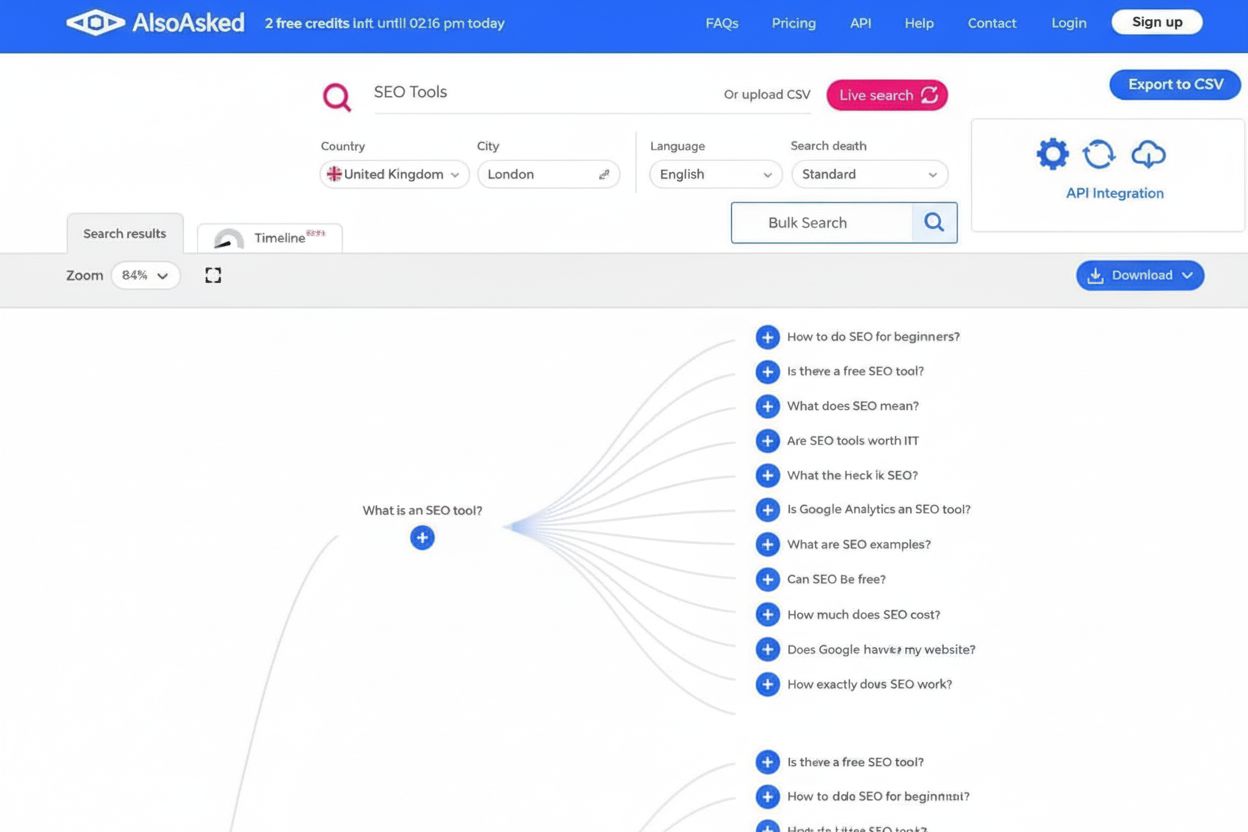
AlsoAsked is a People Also Ask data extraction tool that maps hierarchical question structures from Google search results. Learn how it enables content strategy...
Community discussion on using Google's People Also Ask feature for AI content optimization. Strategies for leveraging PAA data to improve visibility in AI-gener...
Cookie Consent
We use cookies to enhance your browsing experience and analyze our traffic. See our privacy policy.