
Corporate Brand
Learn what a corporate brand is, how it differs from product brands, its key components, and why it's critical for business success, employee engagement, and AI...
11 min read
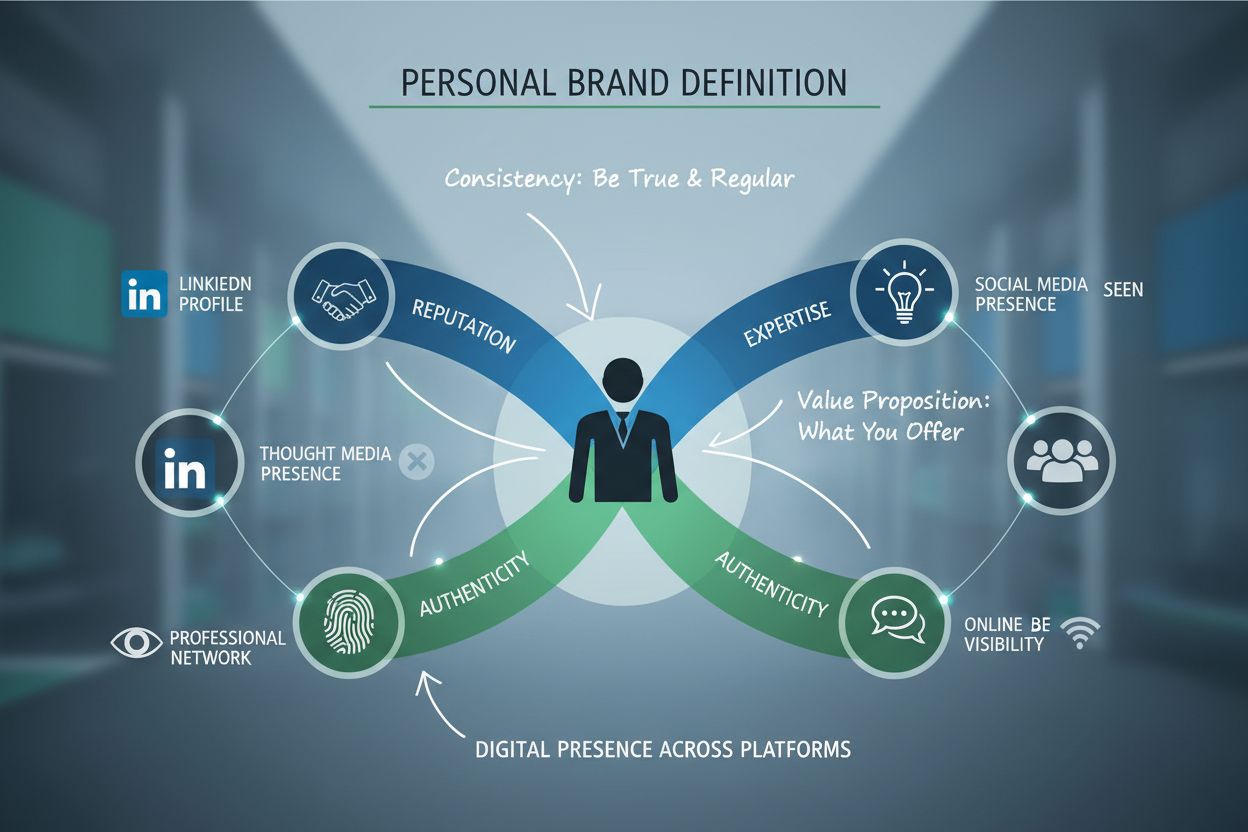
A personal brand is the intentional, strategic practice of defining and expressing an individual’s professional reputation, expertise, and unique value proposition to their target audience. It encompasses how a person is perceived online and offline, shaped through consistent communication, authentic storytelling, and visible expertise across professional platforms and networks.
A personal brand is the intentional, strategic practice of defining and expressing an individual's professional reputation, expertise, and unique value proposition to their target audience. It encompasses how a person is perceived online and offline, shaped through consistent communication, authentic storytelling, and visible expertise across professional platforms and networks.
A personal brand is the intentional, strategic practice of defining and expressing an individual’s professional reputation, expertise, and unique value proposition to their target audience. It represents how a person is perceived both online and offline, shaped through consistent communication, authentic storytelling, and visible expertise across professional platforms and networks. Unlike corporate branding, which focuses on organizational identity, personal branding centers on an individual’s unique attributes, values, and professional promise. Your personal brand is not something you create once and forget—it is an ongoing practice of managing how others perceive you, what they associate with your name, and the value you bring to your professional community. In essence, your personal brand is your professional reputation made visible and intentional.
The concept of personal branding gained mainstream recognition in 1997 when Tom Peters published his influential Fast Company article, “The Brand Called You,” which introduced the idea that every professional should think of themselves as a brand. However, the practice has evolved dramatically with the rise of social media, digital platforms, and most recently, AI-driven search and recommendation systems. Today, personal branding is no longer optional—it is a critical component of professional success. Google searches for the term “personal brand” have increased over 400% in recent years, reflecting growing awareness of its importance. The digital transformation has fundamentally changed how professionals build and maintain their reputations, shifting from passive word-of-mouth to active, intentional online presence management. This evolution is particularly significant in the context of AI monitoring, where individuals must now consider how their professional identity appears not just to human audiences, but to AI systems that increasingly influence professional visibility and opportunity discovery.
The data supporting personal branding investment is compelling and multifaceted. 70% of employers say that a personal brand is more important than a resume or CV, fundamentally shifting how hiring decisions are made. Furthermore, 98% of employers conduct online research about candidates before making hiring decisions, and 47% of employers are less likely to interview candidates they cannot find online. This creates a clear professional imperative: without a visible personal brand, talented professionals risk being overlooked entirely. On the compensation side, research from Hinge Marketing reveals that professionals in the “global superstar” category of visible expertise command 13 times more pay than equally skilled experts without visibility. For business leaders, the impact is even more pronounced—82% of people are more likely to trust a company when its senior executives are active on social media, and executives estimate that 44% of their company’s market value is directly attributable to their CEO’s reputation. These statistics demonstrate that personal branding is not a vanity exercise but a strategic investment with measurable returns on career advancement, compensation, and organizational value.
A robust personal brand comprises several interconnected elements that work together to create a compelling professional identity. Authenticity forms the foundation—your personal brand must reflect your genuine values, expertise, and personality rather than a fabricated persona. Differentiation involves identifying what uniquely sets you apart from others in your field, whether through specialized expertise, unique perspective, or distinctive approach to problem-solving. Consistency ensures that your messaging, tone, and visual identity remain unified across all platforms and touchpoints, from LinkedIn to email signatures to professional websites. Visibility requires active engagement in professional spaces—sharing insights, contributing to industry conversations, and making your expertise accessible to your target audience. Finally, your value proposition clearly articulates the specific benefits and expertise you offer, answering the fundamental question: “Why should someone trust, hire, or work with me?” These components are not static; they evolve as your career progresses, your expertise deepens, and your professional goals shift. The most successful personal brands continuously refine these elements while maintaining core authenticity.
While personal and corporate brands serve different purposes, they are deeply interconnected in modern business environments. A personal brand focuses on an individual’s unique traits, expertise, values, and professional reputation, emphasizing the person behind the professional role. A corporate brand, by contrast, represents an entire organization’s identity, values, and market positioning, focusing on company-wide messaging and organizational culture. However, these are not competing entities—they are complementary. Strong personal brands of executives and employees significantly enhance corporate brand perception. Research shows that 90% of employees agree that when a company’s leadership is active on social media, brand image is enhanced. Additionally, 67% of Americans would be willing to spend more money on products and services from companies whose founders’ personal brands align with their own values. This demonstrates that in today’s market, the most successful organizations leverage both personal and corporate branding strategies, recognizing that individual expertise and authenticity amplify organizational credibility. For professionals, building a strong personal brand often strengthens the organizations they represent, creating a virtuous cycle of mutual benefit.
| Aspect | Personal Brand | Corporate Brand | Relationship |
|---|---|---|---|
| Focus | Individual expertise, values, and reputation | Organizational identity and market positioning | Complementary and mutually reinforcing |
| Audience | Professional networks, peers, potential employers/clients | Market segments, customers, investors | Overlapping but distinct |
| Communication | Authentic storytelling, thought leadership, personal voice | Unified messaging, organizational values, brand guidelines | Personal brands amplify corporate messaging |
| Portability | Moves with the individual across organizations | Tied to the organization | Personal brand equity is individual asset |
| Impact on Trust | 74% of Americans trust individuals with established personal brands | 82% trust companies with active executive leadership | Combined effect increases overall credibility |
| Measurement | Visibility, engagement, career opportunities, compensation | Market share, customer loyalty, brand value | Both contribute to organizational success |
Constructing an effective personal brand requires a strategic, multi-layered approach that begins with deep self-awareness and extends across multiple professional channels. The first step is defining your core positioning—identifying what you want to be known for, who your target audience is, and what unique value you bring. This requires honest reflection on your strengths, passions, and the problems you solve better than most. Once you have clarity on your positioning, you must audit your current digital presence to understand how you are currently perceived online. This includes reviewing your LinkedIn profile, website, social media presence, and online mentions. The gap between your desired brand and current perception reveals where you need to focus your efforts. Consistent content creation is essential—sharing insights, expertise, and perspectives through blog posts, social media updates, speaking engagements, or industry contributions. However, consistency does not mean constant posting; it means showing up regularly with valuable, authentic content that demonstrates your expertise. Relationship building is equally important; personal brands are strengthened through genuine professional connections, networking, and engagement with your community. Finally, reputation management requires actively monitoring how you are discussed online, responding to feedback professionally, and addressing any misperceptions. This ongoing practice ensures your personal brand remains aligned with your professional goals and market perception.
Digital platforms have become the primary stage for personal brand expression, with LinkedIn serving as the dominant professional platform where 89% of B2B professionals maintain active profiles. LinkedIn’s importance is underscored by the fact that users with complete profiles are 40 times more likely to receive job opportunities through the platform. Beyond LinkedIn, professionals leverage multiple platforms strategically—Twitter for thought leadership and industry engagement, personal websites or blogs for deep expertise demonstration, and increasingly, platforms like TikTok and YouTube for reaching broader audiences. The key to effective multi-platform presence is platform-specific adaptation—tailoring content and messaging to each platform’s unique audience and format while maintaining core brand consistency. For example, a professional might share detailed insights on LinkedIn, quick tips on Twitter, long-form content on a personal blog, and video content on YouTube. Email signatures and professional communications also contribute to personal brand visibility, with research showing that consistent, professional email signatures reinforce brand identity across thousands of daily touchpoints. The most successful personal brands recognize that different platforms serve different purposes and audiences, and they strategically allocate effort to platforms where their target audience is most active and engaged.
The emergence of AI systems like ChatGPT, Perplexity, Google AI Overviews, and Claude has introduced a new dimension to personal brand management that professionals must now navigate. These AI systems increasingly influence how information is discovered and presented, making visibility within AI responses a critical component of professional reputation. When someone asks an AI system for recommendations, expert opinions, or information about a professional topic, the individuals and organizations that appear in those responses gain significant visibility and credibility. This creates a new imperative: monitoring how your personal brand appears in AI-generated responses. Tools like AmICited specifically address this need by tracking brand mentions and appearances across major AI platforms, allowing professionals to understand their AI visibility and optimize their online presence accordingly. The challenge is that AI visibility is not automatic—it requires a strong, well-documented online presence, consistent thought leadership, and strategic content that AI systems can reference and cite. Professionals who understand this dynamic and actively manage their AI visibility gain a competitive advantage in an increasingly AI-mediated professional landscape. This represents a fundamental shift from traditional SEO and social media visibility to what might be called “AI visibility optimization”—ensuring your expertise is discoverable and citable by the AI systems that increasingly influence professional opportunities.
Implementing a personal brand strategy requires moving from conceptual understanding to concrete action. Step one is clarity: Define your unique value proposition in a single, clear statement that captures what you do, who you serve, and why it matters. This statement becomes your north star, guiding all subsequent branding decisions. Step two is audit: Assess your current digital presence across all platforms, identifying gaps and inconsistencies. This includes reviewing your LinkedIn profile completeness, website quality, social media activity, and online mentions. Step three is content strategy: Develop a plan for sharing your expertise consistently. This might include monthly blog posts, weekly social media updates, quarterly speaking engagements, or regular contributions to industry publications. The key is consistency and relevance—your content should demonstrate expertise while providing genuine value to your audience. Step four is relationship building: Actively engage with your professional community through commenting on others’ content, participating in industry discussions, attending conferences, and building genuine relationships. Personal brands are strengthened through authentic human connection, not just broadcasting. Step five is monitoring and optimization: Regularly assess how your brand is being perceived, track your visibility across platforms, and adjust your strategy based on what is working. This includes monitoring mentions, tracking engagement metrics, and gathering feedback from your network.
The personal branding landscape is evolving rapidly, driven by technological advancement, changing professional expectations, and the increasing importance of AI systems in professional discovery. AI-powered personalization is becoming central to personal branding strategy, with professionals needing to optimize not just for human audiences but for AI systems that increasingly mediate professional visibility. This represents a fundamental shift from traditional personal branding, which focused primarily on human perception and social media algorithms. Authenticity and vulnerability are becoming increasingly valued, with audiences preferring genuine, relatable professionals over polished, perfect personas. This trend suggests that future personal brands will emphasize real expertise, honest storytelling, and transparent communication about both successes and challenges. Niche expertise and specialization are gaining importance as generalist professionals face increasing competition; the future favors those who can clearly articulate deep expertise in specific domains. Video and multimedia content will continue to dominate personal branding, with professionals needing to develop skills in video creation, podcasting, and other multimedia formats to remain visible. Cross-platform integration will become more sophisticated, with personal brands seamlessly connecting LinkedIn, personal websites, email, social media, and emerging platforms. Most significantly, AI visibility management will become as important as SEO and social media optimization, requiring professionals to understand how AI systems discover, evaluate, and cite their expertise. Organizations like AmICited are pioneering this space, helping professionals monitor and optimize their appearance in AI responses. The professionals who thrive in this evolving landscape will be those who combine authentic expertise with strategic visibility management across both human and AI audiences, recognizing that personal branding is no longer just about reputation—it is about ensuring your expertise is discoverable wherever professional decisions are made.
Personal branding is critical because 98% of employers conduct online research about candidates before hiring, and 47% are less likely to interview candidates they cannot find online. A strong personal brand increases visibility, establishes credibility, and accelerates career opportunities. In the AI-driven era, personal brands also influence how individuals appear in AI-generated responses across platforms like ChatGPT, Perplexity, and Google AI Overviews, making online reputation management essential for professional success.
A personal brand focuses on an individual's unique traits, expertise, values, and professional reputation, while a corporate brand represents an entire organization's identity and market positioning. Personal brands are built on authenticity and individual influence, whereas corporate brands emphasize company-wide messaging and organizational values. However, they are complementary—strong personal brands of executives and employees enhance corporate brand perception, with 82% of people trusting companies more when senior executives are active on social media.
An effective personal brand includes: authenticity (being true to your values and expertise), differentiation (identifying what sets you apart), consistency (maintaining unified messaging across platforms), visibility (actively engaging in professional spaces), and a clear value proposition (communicating your unique expertise). Additionally, reputation management—monitoring how others perceive you and addressing feedback—is essential. These elements work together to create a cohesive professional identity that resonates with your target audience.
Individuals can monitor their personal brand using AI-powered tools like Brand24, Mentions.so, and AmICited, which track brand mentions across social media, blogs, news sites, and increasingly, AI platforms like ChatGPT, Perplexity, and Claude. These tools use sentiment analysis to categorize mentions and analyze audience perception. Regular monitoring helps professionals understand how they are being discussed online, identify opportunities for visibility, and address potential reputation issues before they escalate.
Social media is fundamental to personal branding, with 89% of B2B professionals using LinkedIn for professional purposes. Platforms like LinkedIn, Twitter, and industry-specific networks allow individuals to share expertise, build networks, and demonstrate thought leadership. Consistent, valuable content on social media increases visibility, establishes authority, and creates opportunities for professional connections. LinkedIn users with complete profiles are 40 times more likely to receive job opportunities, demonstrating the direct career impact of social media presence.
Personal brand equity directly influences career progression and earning potential. Research shows that professionals in the 'global superstar' category of visible expertise command 13 times more pay than experts without visibility. Additionally, 70% of employers say personal brand is more important than a resume or CV, and 74% of Americans are more likely to trust someone with an established personal brand. This visibility advantage translates to better job opportunities, higher negotiating power, and increased business prospects.
Yes, AI tools significantly enhance personal branding efforts by automating content creation, optimizing posting schedules, analyzing audience data, and managing reputation monitoring. Tools like ChatGPT assist with writing, Semrush's Content Toolkit optimizes SEO, and Brand24 tracks mentions across platforms. However, AI should support rather than replace authentic human voice—the most effective personal brands combine AI efficiency with genuine expertise, authentic storytelling, and consistent human engagement with audiences.
Start tracking how AI chatbots mention your brand across ChatGPT, Perplexity, and other platforms. Get actionable insights to improve your AI presence.
Learn what a corporate brand is, how it differs from product brands, its key components, and why it's critical for business success, employee engagement, and AI...
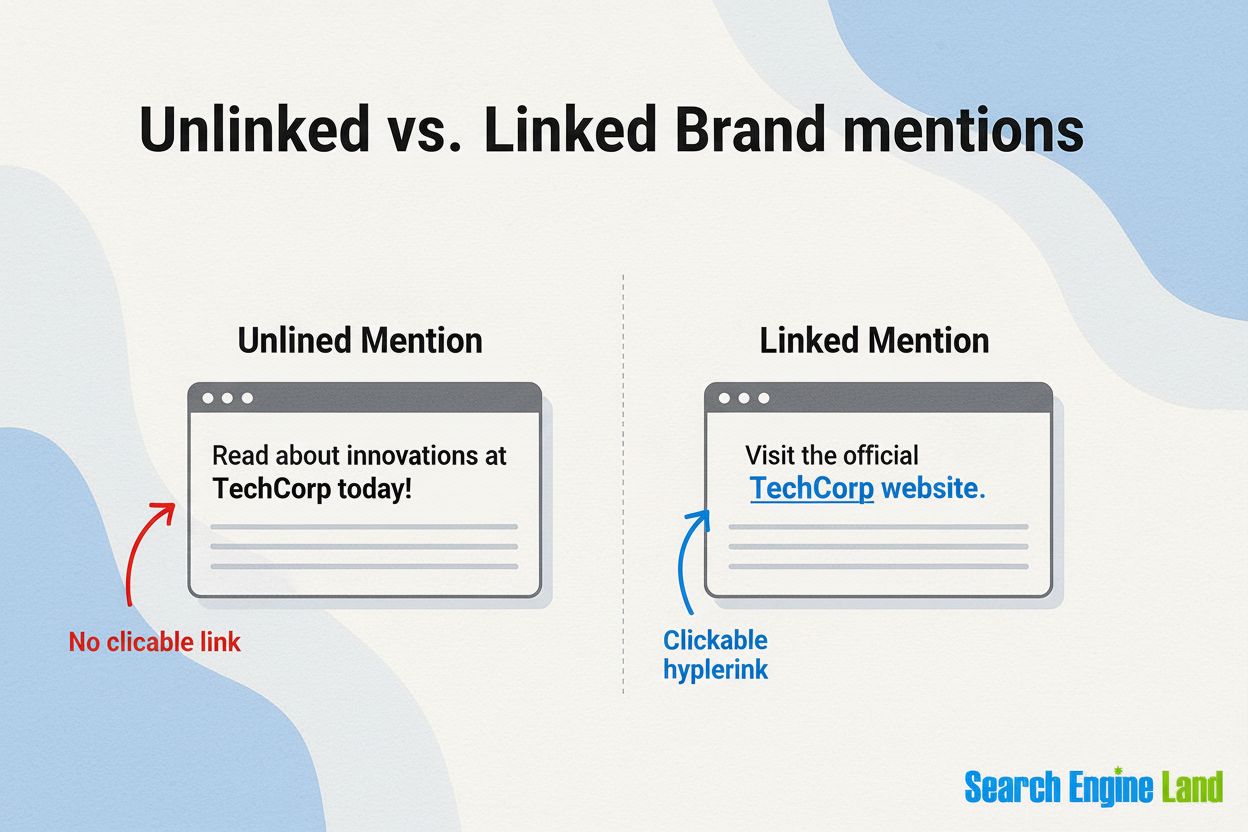
Learn what brand mentions are, why they matter for SEO and AI visibility, and how they differ from citations. Discover how unlinked brand references influence s...

Brand signals are ranking indicators search engines use to measure brand authority and credibility. Learn how branded searches, citations, and trust signals imp...