

How to Create Pillar Pages for AI Search Visibility
Learn how to create pillar pages optimized for AI search engines like ChatGPT, Perplexity, and Google AI Overviews. Comprehensive guide to building topical auth...
13 min read
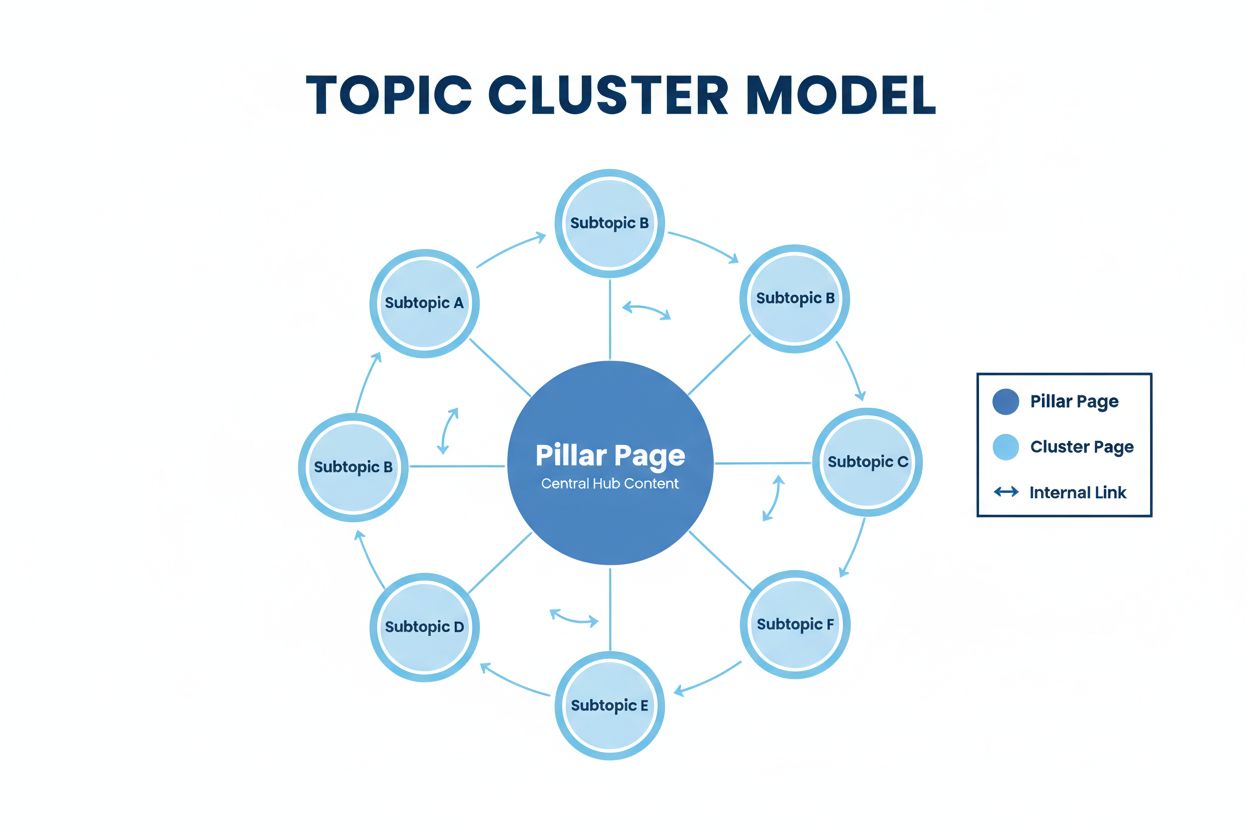
A pillar page is a comprehensive, standalone webpage that covers a broad topic in depth, serving as the central hub of a topic cluster by linking to and from related cluster pages. It establishes topical authority, improves internal linking structure, and helps search engines understand the depth and breadth of content on a specific subject.
A pillar page is a comprehensive, standalone webpage that covers a broad topic in depth, serving as the central hub of a topic cluster by linking to and from related cluster pages. It establishes topical authority, improves internal linking structure, and helps search engines understand the depth and breadth of content on a specific subject.
A pillar page is a comprehensive, standalone webpage that provides an in-depth overview of a broad topic, serving as the central hub within a topic cluster content strategy. Unlike traditional blog posts that target specific long-tail keywords, pillar pages are designed to cover a subject exhaustively on a single page, establishing topical authority and creating a foundation for related cluster content. These pages function as content hubs that link to more specialized articles (cluster pages) addressing specific subtopics, while those cluster pages link back to the pillar page, creating an interconnected content ecosystem. The primary goal of a pillar page is to provide readers with comprehensive information that answers their questions while signaling to search engines that your website is an authoritative resource on the topic.
The concept of pillar pages emerged as search engine algorithms evolved to prioritize topic-based content over keyword-based content. Historically, SEO strategies focused on creating individual blog posts targeting specific keywords, which often resulted in fragmented content and keyword cannibalization—where multiple pages competed for the same search terms. HubSpot’s research team introduced the topic cluster model in 2017, demonstrating that organizing content around pillar pages and cluster content significantly improved search rankings and user experience. This shift reflected a fundamental change in how search engines like Google interpret user intent and evaluate website authority. Over the past seven years, pillar pages have become a cornerstone of modern content marketing strategies, with studies showing that websites implementing topic clusters experience measurable improvements in organic traffic and keyword rankings. The evolution continues as AI-powered search systems now prioritize comprehensive, authoritative content, making pillar pages even more valuable for establishing visibility across both traditional search and emerging AI platforms.
| Aspect | Pillar Page | Hub Page | Cluster Page | Traditional Blog Post |
|---|---|---|---|---|
| Primary Function | Comprehensive standalone resource covering one topic in depth | Navigational hub linking to multiple cluster pages | Focused article on a specific subtopic | Individual article targeting a single keyword |
| Content Length | 2,000–10,000+ words | 1,000–3,000 words | 1,500–3,000 words | 800–2,000 words |
| Linking Strategy | Natural internal links to valuable resources | Links to all cluster pages; cluster pages link back | Links to pillar page and related cluster pages | Minimal internal linking structure |
| Search Intent | Broad, informational intent | Navigational intent | Specific, long-tail intent | Single keyword intent |
| Goal | Establish authority and keep users on page | Guide users to detailed content | Rank for long-tail keywords | Rank for specific keyword |
| Backlink Potential | High (comprehensive resource) | Medium | Low to medium | Low |
| User Experience | Complete information on one page | Directory-style navigation | Deep-dive into specific topic | Single-topic focus |
| SEO Impact | Establishes topical authority | Distributes authority to cluster pages | Improves cluster rankings | Limited authority building |
The technical structure of a pillar page is fundamental to its effectiveness in both traditional search and AI-powered systems. A well-designed pillar page includes a hyperlinked table of contents at the beginning, allowing users to navigate directly to sections relevant to their needs—this improves user experience and helps search engine crawlers understand the page’s organization. The page should be organized with clear H2 and H3 headings that reflect the subtopics covered, with each section providing comprehensive information before linking to related cluster pages. Internal linking is critical; the pillar page should link to all associated cluster pages using descriptive anchor text that includes relevant keywords, signaling to search engines the relationship between pages. Additionally, pillar pages should incorporate semantic HTML markup, schema.org structured data, and meta tags that clearly define the page’s topic and purpose. The URL structure should be clean and descriptive, typically using the primary keyword or topic name. From an AI monitoring perspective, platforms like AmICited track how pillar pages appear in AI-generated responses, as comprehensive pillar pages are more likely to be cited by AI systems like Perplexity, ChatGPT, and Google AI Overviews due to their authoritative nature.
Topical authority is one of the most significant benefits of implementing pillar pages, and it directly impacts how search engines and AI systems evaluate your website’s credibility. When you create a pillar page that comprehensively covers a topic, you demonstrate to search engines that your website has deep expertise in that subject area. This is reinforced when cluster pages link back to the pillar page, creating a web of interconnected content that collectively signals authority. Research indicates that websites with strong topical authority experience 40-50% higher click-through rates from search results compared to websites with scattered, unrelated content. The pillar page serves as the authoritative reference point, and as more cluster pages link to it and rank for related keywords, the entire topic cluster gains visibility and authority. This is particularly important for AI systems, which increasingly rely on topical authority signals to determine which sources to cite. By establishing clear topical authority through pillar pages, you increase the likelihood that your content will be referenced in AI-generated responses, providing valuable brand visibility across emerging search platforms.
The internal linking structure created by pillar pages is essential for both SEO and user navigation. A pillar page should link to all relevant cluster pages using keyword-rich anchor text, typically one internal link per 150 words of content. These links should feel natural within the context of the content, providing genuine value to readers rather than appearing forced or excessive. Cluster pages, in turn, should link back to the pillar page, often in the introduction or conclusion, establishing the relationship between the specific subtopic and the broader topic. Some cluster pages may also link to other related cluster pages, creating a more interconnected structure. This linking strategy serves multiple purposes: it distributes page authority throughout the site, helping cluster pages rank for their target keywords; it improves crawlability, making it easier for search engines to discover and index all content within the cluster; and it enhances user experience by guiding readers to related information. From an AmICited perspective, this interconnected structure demonstrates content comprehensiveness to AI systems, which may increase the likelihood of your content being cited in AI responses.
Guide pillar pages are comprehensive overviews suitable for beginners or advanced users, covering everything from foundational concepts to advanced strategies. These pages work well for topics like “The Complete Guide to SEO” or “Ultimate Guide to Email Marketing,” providing readers with a complete learning resource. What-is pillar pages target informational search intent and often secure featured snippets on search engine results pages, making them highly visible. These pages answer questions like “What is artificial intelligence?” or “What is a pillar page?” and typically include definitions, explanations of how the concept works, and why it matters. How-to pillar pages provide step-by-step guidance and practical solutions, targeting action-oriented search intent. Examples include “How to Start an Online Store” or “How to Implement a Topic Cluster Strategy.” Each type serves a different user need and search intent, but all share the characteristic of being comprehensive, authoritative, and serving as the central hub of a topic cluster. The choice of pillar page type should align with your audience’s primary questions and your business objectives.
The SEO benefits of pillar pages are well-documented and significant. Studies show that websites implementing topic clusters with pillar pages experience an average increase of 40-50% in organic traffic within 6-12 months of implementation. Keyword ranking improvements are particularly notable; pillar pages often rank for 100+ related keywords, while cluster pages rank for long-tail variations. This is because the interconnected structure and topical authority signal to search engines that your site comprehensively covers the topic. Pillar pages also reduce keyword cannibalization, a common problem where multiple pages compete for the same search terms. By consolidating related content into a pillar page and cluster structure, you eliminate this competition and allow each page to rank for its intended keywords. Additionally, pillar pages attract more backlinks than traditional blog posts because they are comprehensive resources that other websites want to reference and link to. The improved internal linking structure also helps distribute domain authority more effectively across your site. Furthermore, pillar pages improve user engagement metrics like time on page and pages per session, which are positive signals to search engines that your content is valuable and relevant.
As AI-powered search systems become increasingly important, pillar pages are emerging as critical assets for maintaining visibility in AI-generated responses. Platforms like Perplexity, ChatGPT, Google AI Overviews, and Claude prioritize comprehensive, authoritative content when generating responses to user queries. Pillar pages, by their nature, provide the kind of in-depth, well-organized information that AI systems rely on for accurate citations. When an AI system encounters a pillar page that thoroughly covers a topic, it is more likely to cite that page as a source in its response. This is where tools like AmICited become valuable—they monitor how your pillar pages and other content appear in AI-generated responses across multiple platforms, providing insights into your AI visibility. Organizations that invest in pillar page creation are positioning themselves to benefit from the shift toward AI-powered search, as these pages are inherently more likely to be cited by AI systems. The comprehensive nature of pillar pages, combined with their clear topical authority signals, makes them ideal for capturing visibility in both traditional search results and emerging AI search platforms.
Creating an effective pillar page requires strategic planning and execution. First, identify a core topic that is broad enough to support 10-20 cluster pages but specific enough to maintain focus and relevance to your business. Conduct thorough keyword research to understand search volume, competition, and related subtopics. Next, outline the pillar page structure by identifying the main sections and subtopics you’ll cover, ensuring each section could potentially become a standalone cluster page. When writing the content, prioritize comprehensiveness and clarity; use clear headings, bullet points, and visual elements to improve readability. Include a hyperlinked table of contents at the beginning to improve navigation and user experience. Incorporate internal links naturally throughout the content, linking to cluster pages and other relevant resources. Ensure the page is optimized for SEO by including the primary keyword in the title, URL, H1 tag, and throughout the content naturally. Finally, set up internal linking from cluster pages back to the pillar page, creating the interconnected structure that defines the topic cluster model. Monitor performance using analytics tools and update the pillar page regularly to maintain its relevance and authority.
Measuring the success of pillar pages requires tracking multiple metrics across different platforms. Organic traffic is the primary metric, showing how many users are finding your pillar page through search engines. Keyword rankings should be monitored for both the primary keyword and related long-tail keywords, as pillar pages often rank for 100+ variations. Backlink acquisition is another important metric, as pillar pages should attract more external links than traditional blog posts due to their comprehensive nature. User engagement metrics like average time on page, bounce rate, and pages per session indicate whether visitors find the content valuable. Conversion metrics such as form submissions, email signups, or product purchases show the business impact of the pillar page. Additionally, with the rise of AI search, tracking AI visibility through platforms like AmICited provides insights into how often your pillar page is cited in AI-generated responses. This metric is increasingly important as AI search becomes a significant traffic driver. By monitoring these metrics, you can assess the ROI of your pillar page investment and make data-driven decisions about future content strategy.
The importance of pillar pages is expected to increase as search engine algorithms continue to evolve and AI-powered search systems become more prevalent. Google’s recent algorithm updates emphasize topical authority and content comprehensiveness, making pillar pages more valuable than ever. The shift toward semantic search and natural language processing means that search engines are increasingly evaluating content based on how thoroughly it covers a topic, rather than just keyword matching. This plays directly into the strengths of pillar pages. Additionally, as AI search platforms like Perplexity and ChatGPT gain market share, the ability to be cited in AI-generated responses becomes a critical competitive advantage. Pillar pages, with their comprehensive coverage and clear authority signals, are ideally positioned to capture this visibility. Organizations that invest in pillar page creation now are building a sustainable competitive advantage that will benefit them across both traditional search and emerging AI search platforms. The future of content strategy is increasingly topic-focused rather than keyword-focused, and pillar pages are the foundational element of this shift. As AmICited and similar AI monitoring platforms become standard tools for tracking brand visibility, the strategic importance of pillar pages in maintaining visibility across all search channels will only grow.
A pillar page is a comprehensive, standalone resource that covers a broad topic in depth on a single page, while cluster pages are more focused articles that dive deeper into specific subtopics within that broader subject. Pillar pages serve as navigational hubs that link to cluster pages, whereas cluster pages link back to the pillar page. The pillar page aims to keep users on one page with complete information, while cluster pages target long-tail keywords and provide specialized insights on individual aspects of the main topic.
Pillar pages improve SEO by establishing topical authority, which signals to search engines that your website comprehensively covers a subject. They create a logical internal linking structure that distributes page authority throughout your site, helping cluster pages rank better for long-tail keywords. Additionally, pillar pages often attract high-quality backlinks due to their comprehensive nature, and they improve user experience by providing complete information, which search engines reward with higher rankings.
There is no fixed word count requirement for pillar pages, as length should be determined by how comprehensively you can cover the topic. Most pillar pages range from 2,000 to 10,000+ words, depending on topic complexity and depth. The key is ensuring you cover all relevant aspects of the topic thoroughly enough to answer user questions and establish authority. Quality and comprehensiveness matter more than hitting a specific word count target.
The most effective pillar page types include ultimate guides (comprehensive overviews), 'what-is' pages (definitional content), and 'how-to' pages (step-by-step tutorials). Guide pillar pages work well for beginners or advanced users, what-is pages target informational search intent and often secure featured snippets, and how-to pages provide practical solutions. Each type should include a hyperlinked table of contents, internal links to cluster pages, and external links to authoritative resources that add value for readers.
Pillar pages are the central component of topic clusters, also known as the hub-and-spoke model. A topic cluster consists of one pillar page (the hub) surrounded by multiple cluster pages (the spokes) that address subtopics. The pillar page links to all cluster pages, and cluster pages link back to the pillar page and to each other, creating an interconnected web of content. This structure helps search engines understand topical relationships and improves the ranking potential of all pages within the cluster.
Yes, pillar pages can improve visibility in AI-powered search systems like ChatGPT, Perplexity, and Google AI Overviews. These AI systems prioritize comprehensive, authoritative content that thoroughly covers topics. By creating pillar pages that establish clear topical authority and provide complete information, you increase the likelihood that AI systems will cite your content as a source. This is particularly important for brands using AI monitoring platforms like AmICited to track their visibility across AI responses.
Key benefits include establishing topical authority, improving internal linking structure, reducing keyword cannibalization, enhancing user experience, generating backlinks, and increasing organic traffic. Pillar pages also help identify content gaps, provide a foundation for long-term SEO success, and align with modern search engine algorithms that prioritize topic-based content. Additionally, they create opportunities to rank for rich result types like featured snippets and knowledge panels.
Start tracking how AI chatbots mention your brand across ChatGPT, Perplexity, and other platforms. Get actionable insights to improve your AI presence.
Learn how to create pillar pages optimized for AI search engines like ChatGPT, Perplexity, and Google AI Overviews. Comprehensive guide to building topical auth...
Learn what content clusters are, how they work, and why they're essential for SEO and AI search visibility. Discover pillar pages, internal linking strategies, ...
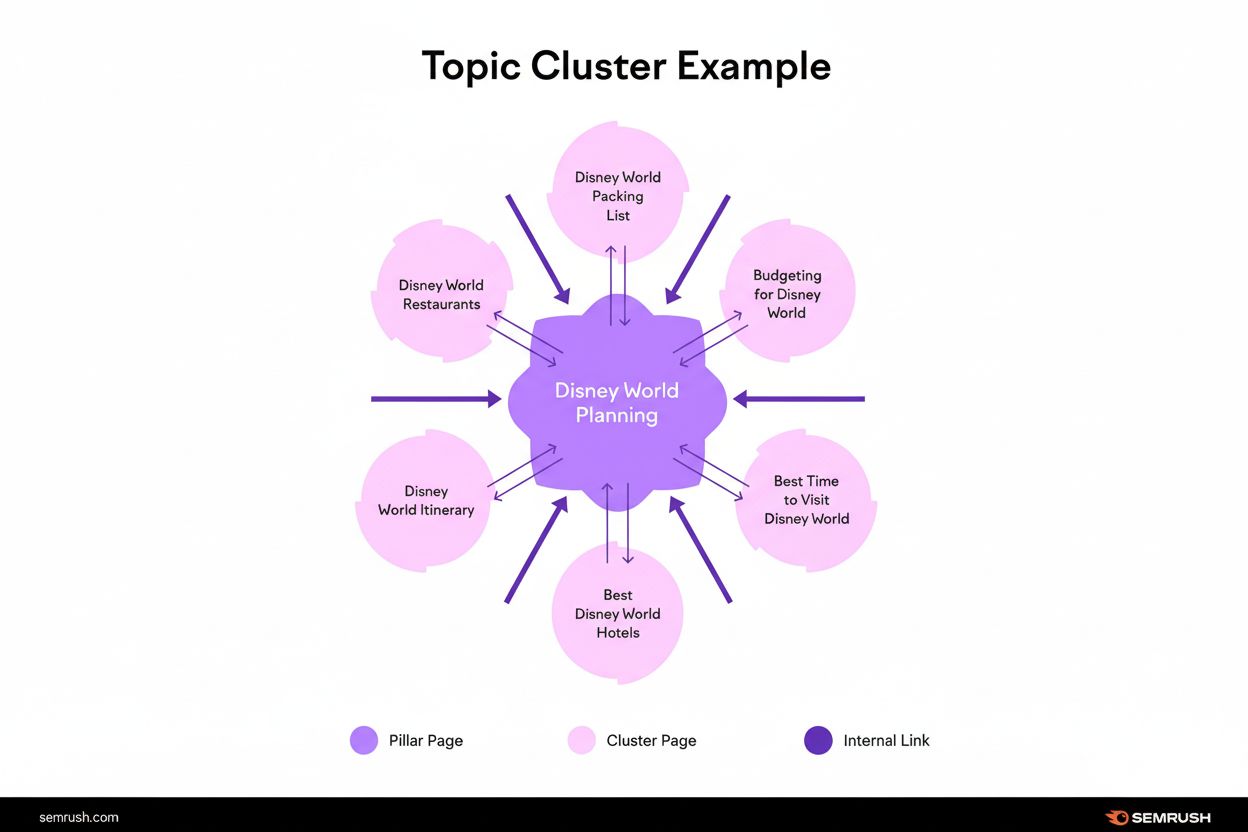
Learn what the Topic Cluster Model is, how it works for SEO, and why it matters for ranking in Google, ChatGPT, Perplexity, and other AI search platforms. Compl...