
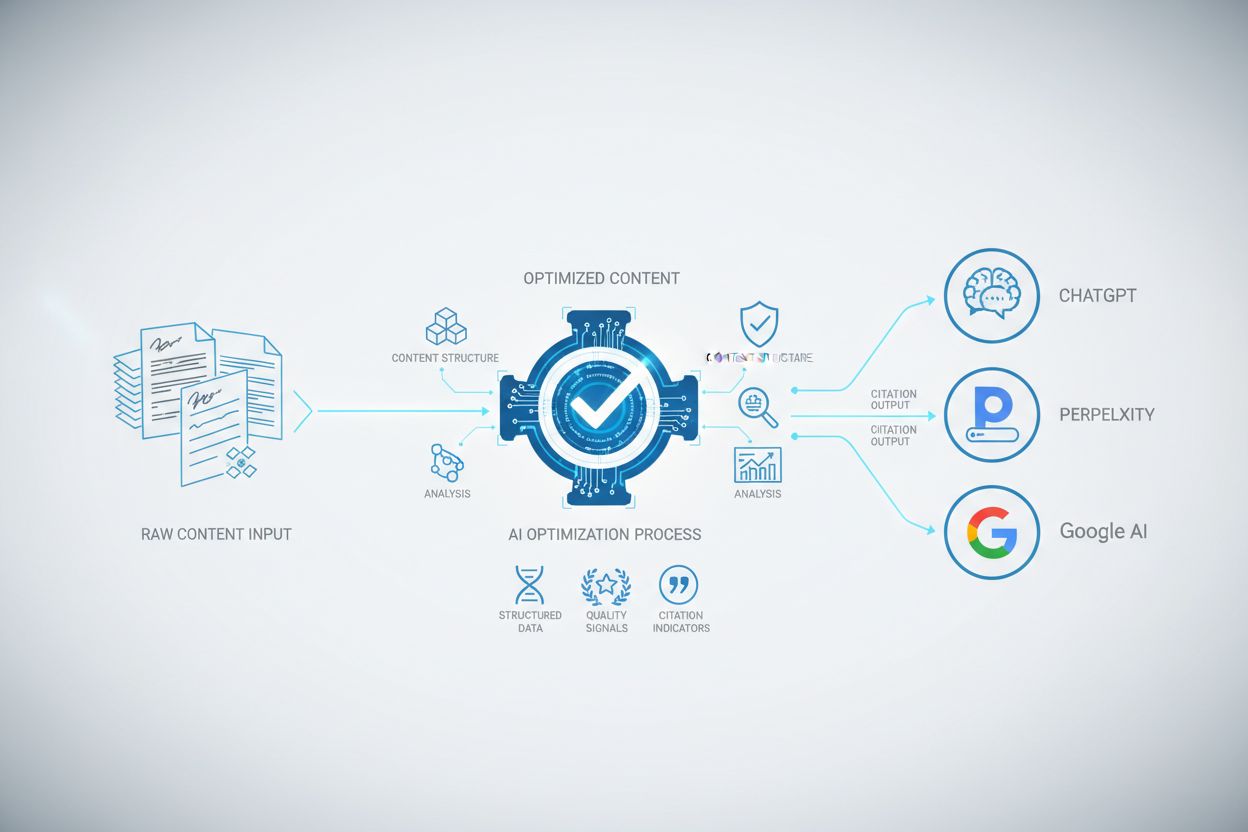
AI Content Optimization Platform
Learn what AI Content Optimization Platforms are, how they work, and why they're essential for visibility in ChatGPT, Perplexity, and Google AI Overviews. Disco...
8 min read
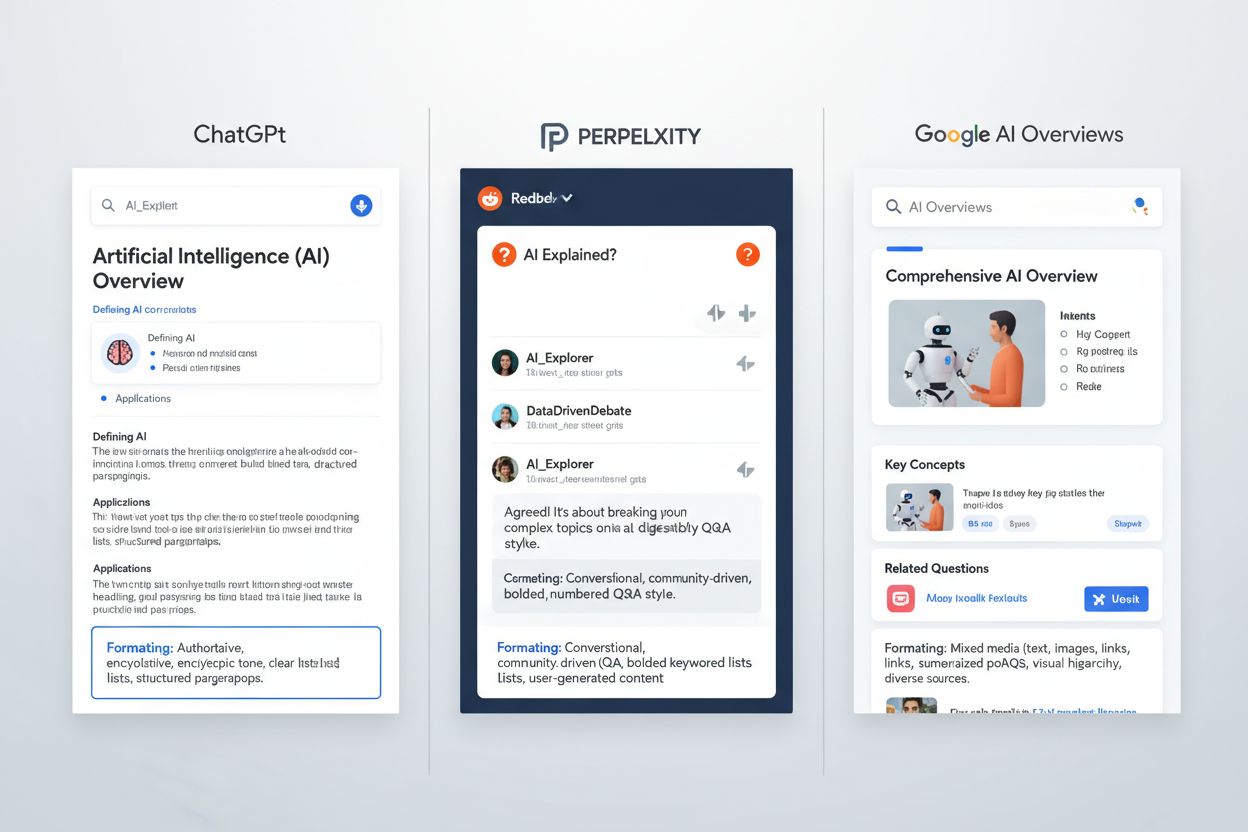
Platform-specific AI formatting refers to adapting content structure and presentation to align with how different AI systems (ChatGPT, Perplexity, Google AI Overviews) retrieve, process, and cite information. Each platform has distinct algorithms and citation preferences that reward different content structures, semantic signals, and formatting approaches. Optimizing for these platform-specific requirements increases visibility and citation likelihood across multiple AI-powered search channels without requiring entirely separate content creation.
Platform-specific AI formatting refers to adapting content structure and presentation to align with how different AI systems (ChatGPT, Perplexity, Google AI Overviews) retrieve, process, and cite information. Each platform has distinct algorithms and citation preferences that reward different content structures, semantic signals, and formatting approaches. Optimizing for these platform-specific requirements increases visibility and citation likelihood across multiple AI-powered search channels without requiring entirely separate content creation.
Platform-specific AI formatting refers to the practice of structuring and presenting content in ways that align with how different AI systems retrieve, process, and present information to users. Each major AI platform—ChatGPT, Perplexity, and Google AI Overviews—has distinct algorithms, training data, and citation preferences that reward different content structures and formatting approaches. Understanding these differences is crucial for content creators, SEO professionals, and organizations seeking visibility across multiple AI-powered search and discovery channels. Optimizing for platform-specific requirements doesn’t mean creating entirely separate content; rather, it means implementing strategic formatting choices that enhance discoverability and citation likelihood across all platforms simultaneously. This approach represents the evolution of content strategy beyond traditional search engine optimization into the era of AI-driven information retrieval.
ChatGPT, Perplexity, and Google AI Overviews employ fundamentally different methodologies when retrieving and processing information for user queries. ChatGPT relies heavily on its training data (with a knowledge cutoff) and emphasizes authoritative, well-established sources with strong semantic signals and comprehensive coverage. Perplexity operates as a real-time search engine that actively crawls the web, showing a marked preference for community-driven platforms, detailed explanations, and sources that provide nuanced perspectives on topics. Google AI Overviews integrates with Google’s existing search infrastructure, balancing diverse source types while prioritizing pages with strong technical SEO signals, E-E-A-T indicators, and answer-focused content structures. The processing differences extend to how each platform weights recency, source diversity, and content depth when generating responses.
| Platform | Primary Focus | Citation Preference | Content Structure Preference |
|---|---|---|---|
| ChatGPT | Authoritative knowledge, semantic richness | Wikipedia, academic sources, established publications | Comprehensive, well-organized, semantically dense |
| Perplexity | Real-time information, community insights | Reddit, YouTube, niche forums, detailed blogs | Question-answer format, diverse perspectives, detailed explanations |
| Google AI Overviews | Balanced authority and diversity | Mixed sources, YouTube, Reddit, established sites | Answer-first, featured snippet format, structured data |
Content optimized for ChatGPT should emphasize authoritative sourcing and demonstrate deep topical expertise through comprehensive coverage and semantic richness. ChatGPT’s training data heavily favors well-established publications, academic sources, and Wikipedia, with research showing 7.8% of citations coming from Wikipedia alone. The platform rewards content with clear hierarchical structure, logical flow between concepts, and explicit definitions of key terms and entities. Semantic consistency across content is critical—using the same terminology throughout and establishing clear relationships between concepts helps ChatGPT understand and cite your content more effectively. Content should be written with depth and completeness, addressing not just surface-level answers but providing context, nuance, and comprehensive explanations that demonstrate authority.
Perplexity’s real-time search capabilities create a distinct preference for community-driven content and platforms like Reddit and YouTube, with Reddit accounting for 6.6% of Perplexity’s citations. The platform favors content that provides detailed explanations, multiple perspectives, and practical examples that go beyond basic answers to explore nuance and complexity. Topical depth and specificity are rewarded—Perplexity users often seek detailed information, and content that thoroughly explores a subject from multiple angles is more likely to be cited. The platform shows strong preference for conversational, accessible writing that explains concepts clearly without assuming extensive prior knowledge. Engagement signals from community platforms matter significantly, as Perplexity’s algorithm recognizes that highly-discussed topics on Reddit or popular YouTube videos indicate valuable, user-validated information.
Google AI Overviews employ a balanced approach that values both authoritative sources and diverse content types, including YouTube (1.9% of citations), Reddit (2.2%), and Quora (1.5%). The platform prioritizes answer-first content structures that directly address user intent, often favoring content formatted similarly to featured snippets with clear, concise answers followed by supporting detail. Technical SEO signals remain important—Core Web Vitals, mobile optimization, schema markup, and page speed all influence whether Google AI Overviews select your content for citation. Google rewards E-E-A-T signals (Experience, Expertise, Authoritativeness, Trustworthiness) through author credentials, publication history, and topical authority indicators. The platform shows preference for diverse content formats, including text, video, images, and structured data, recognizing that different content types serve different user needs.
Implementing schema markup and structured data is foundational for multi-platform AI optimization, with JSON-LD format providing the clearest signals to AI systems about content meaning and relationships. FAQ schema helps AI platforms understand question-answer relationships within your content, while Article schema provides metadata about publication date, author, and content structure. Core Web Vitals optimization—focusing on Largest Contentful Paint, First Input Delay, and Cumulative Layout Shift—directly impacts how AI systems crawl and process your content. Mobile optimization is non-negotiable, as all major AI platforms prioritize mobile-friendly content in their processing pipelines. Implementing breadcrumb schema helps establish topical relationships and content hierarchy, while entity markup clarifies the people, places, and concepts discussed in your content.
| Technical Element | Implementation Priority | AI Platform Impact |
|---|---|---|
| JSON-LD Schema Markup | Critical | All platforms benefit from structured data signals |
| FAQ Schema | High | Improves question-answer matching across platforms |
| Article Schema | High | Enhances metadata recognition and citation likelihood |
| Core Web Vitals | Critical | Affects crawl efficiency and content processing |
| Mobile Optimization | Critical | Required for all major AI platforms |
| Entity Markup | Medium | Improves semantic understanding and entity recognition |
| Breadcrumb Schema | Medium | Clarifies topical relationships and hierarchy |
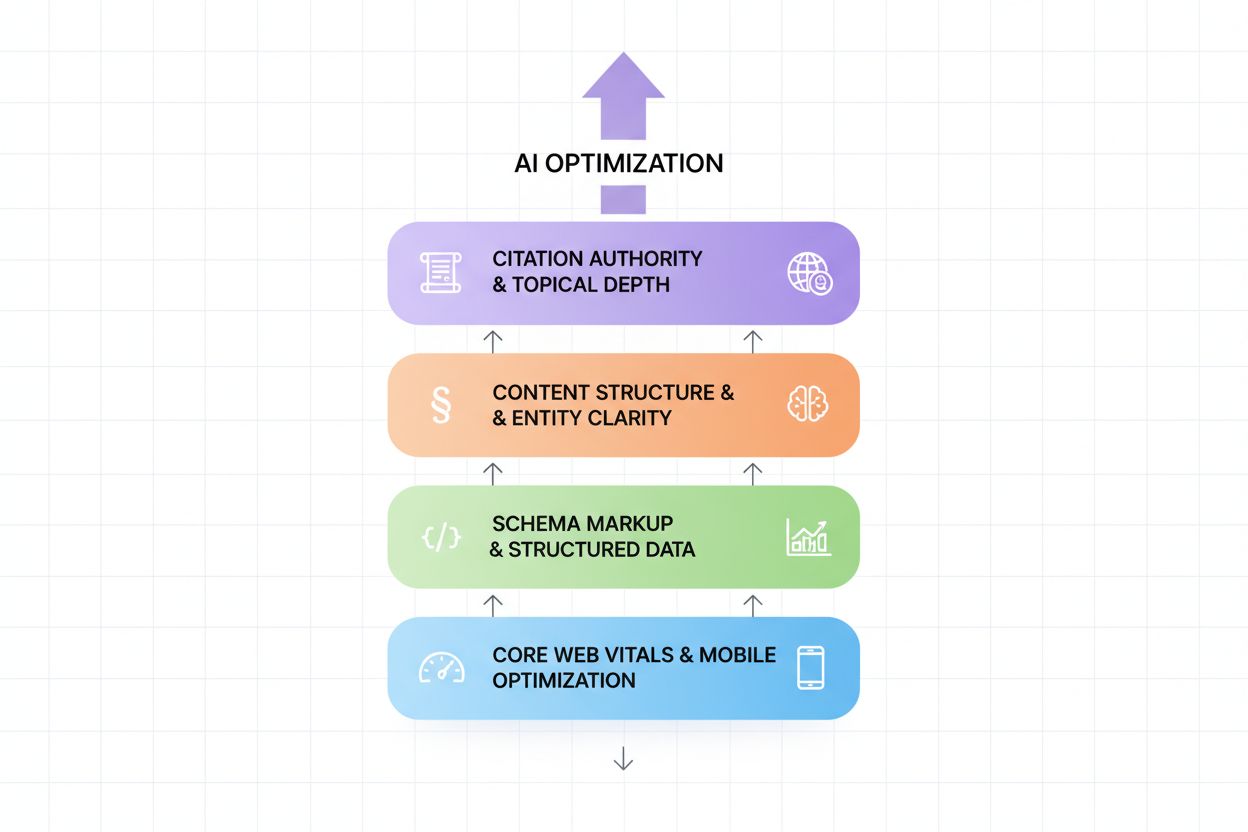
Adopting an answer-first structure ensures that AI systems can immediately identify and extract the core response to user queries, increasing citation likelihood across all platforms. Question-based headers that mirror actual user search queries help AI systems match content to user intent more effectively. Clear entity definitions at the first mention of important concepts—defining what something is before discussing its properties or applications—improve semantic understanding. Consistent terminology throughout your content prevents confusion and helps AI systems recognize that you’re discussing the same concept across multiple sections. Modular content organization allows AI systems to extract relevant sections independently, increasing the likelihood that different parts of your content get cited for different queries.
Different AI platforms exhibit distinct citation patterns that reflect their underlying algorithms and data sources, with ChatGPT favoring Wikipedia and academic sources while Perplexity emphasizes Reddit and community platforms. Cross-platform mentions—appearing in multiple authoritative sources across different platforms—significantly increase your likelihood of being cited by AI systems, as this signals broad topical authority. Building topical authority requires consistent, comprehensive coverage of related topics, helping AI systems recognize you as a reliable source for an entire subject area rather than isolated articles. Wikipedia mentions carry particular weight for ChatGPT citations, making Wikipedia inclusion a strategic priority for brands and creators seeking ChatGPT visibility. Reddit engagement directly impacts Perplexity citation likelihood, as the platform actively monitors community discussions and recognizes highly-discussed topics as valuable information sources. YouTube presence influences Google AI Overviews, with video content receiving preferential treatment in Google’s AI-powered search results.
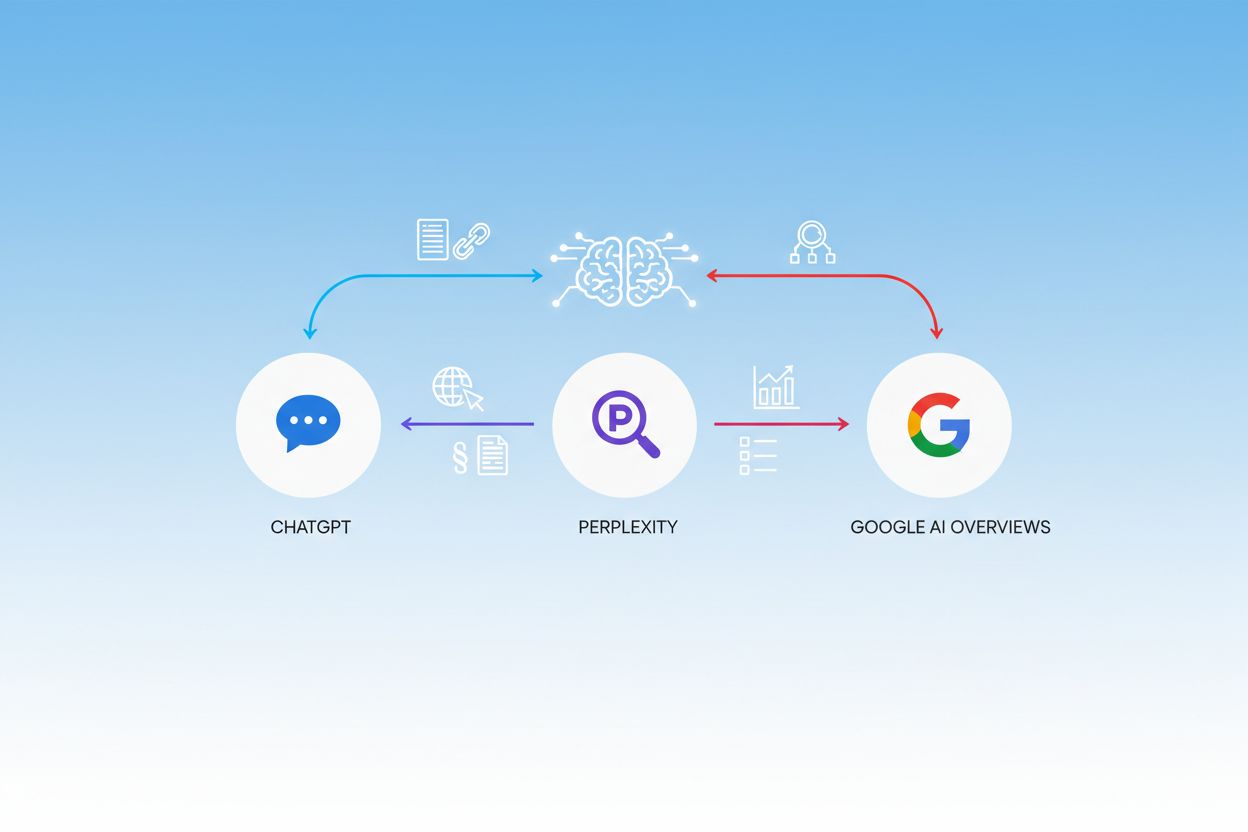
AI systems understand content through entity recognition—identifying and understanding the people, places, organizations, and concepts discussed in your text. Clear entity definitions that explicitly state what something is, its properties, and its relationships to other entities dramatically improve how AI systems process and cite your content. Relationship mapping through explicit statements about how concepts connect—“X influences Y” or “A is a type of B”—helps AI systems build accurate knowledge graphs from your content. Semantic richness comes from using varied but consistent language that explores concepts from multiple angles while maintaining clarity about what you’re discussing. Avoiding ambiguity through precise language, clear pronoun references, and explicit entity markers prevents AI systems from misinterpreting your content or failing to recognize important concepts.
Tracking AI citations requires dedicated tools and monitoring strategies, as traditional analytics don’t capture mentions in AI-generated responses. AmICited.com provides a specialized platform for monitoring how often your content appears in AI-generated responses across ChatGPT, Perplexity, and other AI systems, offering crucial visibility into your AI citation performance. Brand mention monitoring across AI platforms helps you understand how your organization is being discussed and cited in AI-generated content, revealing gaps in your AI optimization strategy. Analytics integration through UTM parameters and referral tracking helps quantify the traffic impact of AI citations, though direct attribution remains challenging. A/B testing different content structures, formatting approaches, and semantic signals allows you to identify which optimization strategies most effectively increase AI citations for your specific content and industry. Measuring visibility across platforms requires monitoring multiple channels simultaneously, as success on ChatGPT may differ significantly from success on Perplexity or Google AI Overviews.
Different AI platforms use distinct algorithms, training data, and citation preferences. ChatGPT prioritizes authoritative sources like Wikipedia, Perplexity emphasizes community discussions on Reddit, and Google AI Overviews balance multiple source types. Understanding these preferences allows you to optimize content for maximum visibility across all platforms simultaneously.
Schema markup implementation, particularly JSON-LD structured data, is foundational for AI optimization. It helps AI systems understand your content's context, purpose, and relationships. Combined with Core Web Vitals optimization and mobile responsiveness, schema markup forms the technical foundation of AI visibility.
ChatGPT favors clear, authoritative content with strong semantic richness. Use answer-first structure, implement FAQ schema, maintain consistent terminology, and provide comprehensive explanations. Building presence on authoritative platforms like Wikipedia or industry-specific knowledge bases significantly improves ChatGPT citations.
Perplexity heavily cites Reddit and YouTube content. Focus on creating detailed, practical content that answers specific questions. Engage authentically in relevant Reddit communities, create comprehensive YouTube videos with transcripts, and ensure your content demonstrates genuine expertise and topical depth.
Track brand mentions and citations across ChatGPT, Perplexity, and Google AI Overviews by regularly querying these platforms with industry-relevant questions. Use tools like AmICited.com to monitor AI visibility, track referral traffic from AI sources through analytics, and analyze citation frequency and positioning.
While core content can remain consistent, formatting and distribution should be platform-specific. Optimize the same content for different platforms by adjusting structure, adding platform-specific schema markup, and distributing through channels each platform prioritizes (Wikipedia for ChatGPT, Reddit for Perplexity, YouTube for Google).
Topical authority signals to AI systems that your website comprehensively covers a subject area. Create interconnected content across multiple pages addressing different aspects of your topic, maintain consistent terminology, and build external citations from authoritative sources to establish topical authority.
Update content regularly to maintain AI visibility. Refresh information when industry standards change, add new examples and case studies, update publication dates using dateModified schema, and monitor how AI platforms cite your content to identify improvement opportunities.
Track how your content appears in ChatGPT, Perplexity, and Google AI Overviews with AmICited.com. Get real-time insights into your AI visibility and optimize your content strategy based on actual citation data.
Learn what AI Content Optimization Platforms are, how they work, and why they're essential for visibility in ChatGPT, Perplexity, and Google AI Overviews. Disco...

Learn how to repurpose and optimize content for AI platforms like ChatGPT, Perplexity, and Claude. Discover strategies for AI visibility, content structuring, a...
Discover the best content formats for AI search engines like ChatGPT, Perplexity, and Google AI Overviews. Learn how to optimize your content for AI visibility ...