
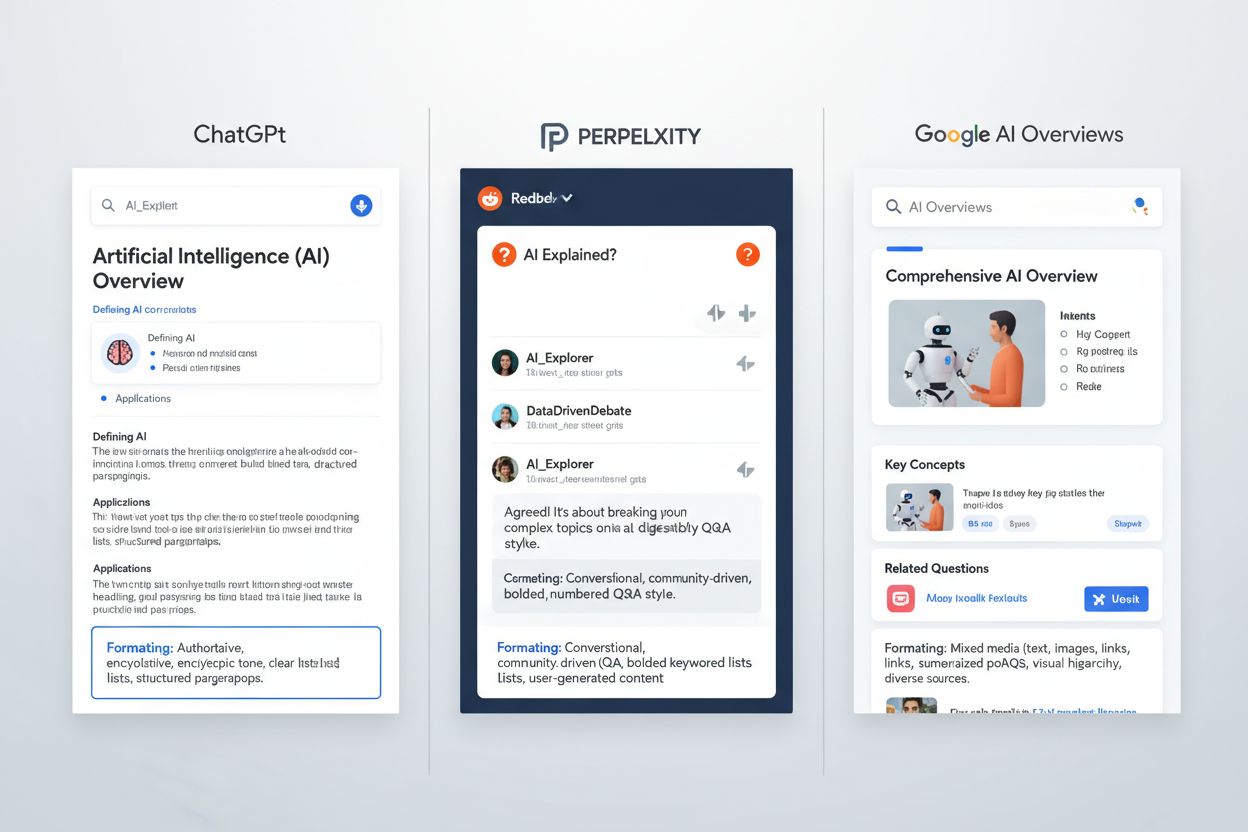
Platform-Specific AI Formatting
Learn how to adapt content structure for optimal performance on ChatGPT, Perplexity, and Google AI Overviews. Discover platform-specific formatting requirements...
8 min read

Platform-specific content refers to tailored messaging, formats, and strategies designed to align with the unique characteristics, audience demographics, algorithms, and user behaviors of individual social media platforms. Rather than distributing identical content across all channels, platform-specific content adapts brand messaging to resonate with each platform’s community and technical specifications.
Platform-specific content refers to tailored messaging, formats, and strategies designed to align with the unique characteristics, audience demographics, algorithms, and user behaviors of individual social media platforms. Rather than distributing identical content across all channels, platform-specific content adapts brand messaging to resonate with each platform's community and technical specifications.
Platform-specific content is strategically tailored messaging, formats, and creative approaches designed to align with the unique characteristics, audience demographics, algorithms, and user behaviors of individual social media platforms. Rather than adopting a one-size-fits-all approach where identical content is distributed across all channels, platform-specific content recognizes that each social platform—whether Instagram, TikTok, LinkedIn, Facebook, or X—operates with distinct technical specifications, user expectations, and engagement mechanisms. This approach ensures that brand messaging resonates authentically with each platform’s community while maximizing algorithmic visibility and audience engagement. The practice has become essential in modern digital marketing, as research demonstrates that 67% of marketers with custom content strategies for every platform saw improvements in ROI, compared to those using generic, cross-platform distribution. Platform-specific content is not about abandoning brand consistency; rather, it’s about expressing consistent brand values through formats, tones, and messaging styles that each platform’s audience expects and the algorithm rewards.
The concept of platform-specific content emerged as social media platforms evolved from simple content distribution channels into sophisticated ecosystems with distinct algorithmic rules and user cultures. In the early 2010s, brands treated social media as a broadcast medium, posting identical content across Facebook, Twitter, and LinkedIn. However, as platforms introduced algorithmic feeds, unique content formats (Stories, Reels, TikTok videos), and increasingly sophisticated audience targeting, the limitations of this approach became apparent. By 2015-2016, forward-thinking marketers began recognizing that Instagram’s visual-first audience required different content than LinkedIn’s professional demographic. The rise of TikTok in 2018-2019 further accelerated this shift, as the platform’s algorithm heavily favored authentic, trend-driven, short-form video content that differed dramatically from traditional social media formats. Today, the average person uses 6.83 different social networks per month, making platform-specific strategies not just beneficial but essential for reaching fragmented audiences. The evolution has been driven by platform competition, changing user demographics, and the increasing sophistication of social algorithms that penalize generic, repurposed content in favor of platform-native formats.
Effective platform-specific content strategy rests on several foundational principles. First, audience segmentation requires understanding that each platform attracts different demographic groups with distinct motivations. Instagram’s user base skews younger, with 28.3% of US Instagram users between 25-34 years old, while LinkedIn’s professional focus means 50.6% of worldwide users are between ages 25-34, but with entirely different professional contexts and content expectations. Second, format optimization acknowledges that platforms reward native content types: Instagram prioritizes Reels and Stories, LinkedIn favors long-form text and articles, TikTok demands short-form video, and X (Twitter) emphasizes concise, text-based updates with links. Third, algorithmic alignment recognizes that each platform’s algorithm has distinct ranking factors. Instagram’s algorithm prioritizes engagement and time spent, LinkedIn’s algorithm favors meaningful interactions and professional relevance, and TikTok’s algorithm emphasizes watch time and completion rates. Fourth, tone and voice adaptation ensures that while brand identity remains consistent, the communication style matches platform norms—professional and authoritative on LinkedIn, casual and entertaining on TikTok, visually-driven on Instagram. Finally, performance measurement requires tracking platform-specific metrics rather than applying universal KPIs, as engagement rates, conversion patterns, and audience behaviors differ significantly across platforms.
| Platform | Primary Audience | Best Content Format | Average Engagement Rate | Optimal Posting Frequency | Key Strategy |
|---|---|---|---|---|---|
| Ages 25-34, visual-focused, lifestyle-oriented | Reels, Stories, carousel posts, high-quality images | 3.5% | 3-5 posts/week | Visual storytelling, authenticity, trending audio | |
| TikTok | Gen Z, entertainment-seeking, trend-driven | Short-form video (15-60 seconds), trending sounds, challenges | 1.5% | 3-7 posts/week | Authenticity, trend participation, entertainment value |
| Professionals, B2B decision-makers, thought leaders | Long-form articles, text posts, professional videos | 3.4% | 2-3 posts/week | Industry insights, thought leadership, professional value | |
| Ages 35+, community-focused, diverse interests | Long-form video, community posts, groups, events | 1.3% | 1-2 posts/day | Community building, connection, evergreen content | |
| X (Twitter) | News-focused, real-time conversation seekers, professionals | Text updates, links, images, real-time commentary | 1.8% | 5-10 posts/day | Real-time engagement, news sharing, thought leadership |
| YouTube | Long-form content consumers, learners, entertainment seekers | Long-form video (10+ minutes), tutorials, vlogs | Varies by niche | 1-2 videos/week | Educational value, production quality, audience retention |
Understanding the technical specifications of each platform is fundamental to creating effective platform-specific content. Instagram operates with a visual-first algorithm that prioritizes Reels (short-form video), Stories (ephemeral content), and carousel posts (multiple images). The platform’s algorithm measures engagement through likes, comments, shares, and saves, with Reels receiving preferential algorithmic distribution. Instagram’s image dimensions (1080x1350 for feed posts, 1080x1920 for Stories) and video specifications (up to 60 minutes for Reels) directly influence content creation decisions. TikTok’s algorithm is notoriously sophisticated, prioritizing watch time, completion rate, and user interaction signals. The platform favors native video content (15 seconds to 10 minutes), trending sounds, and hashtags. TikTok’s algorithm is less influenced by follower count than other platforms, meaning new creators can achieve viral reach if content resonates with the algorithm’s quality signals. LinkedIn prioritizes engagement through comments and shares, with its algorithm favoring content that sparks professional conversations. The platform supports long-form articles (up to 3,000 characters in posts), native documents, and video content. LinkedIn’s algorithm also considers the professional relevance of the content and the credibility of the poster. Facebook operates with a complex algorithm that prioritizes content from friends and family over brand content, making community engagement and group participation crucial. The platform supports diverse content types: long-form video, carousel ads, collections, and community posts. X (Twitter) uses a chronological feed combined with algorithmic recommendations, prioritizing recency, engagement, and relevance. The platform’s 280-character limit (increased from 140) shapes content strategy toward concise, impactful messaging. Understanding these technical mechanics directly influences how brands structure, format, and distribute platform-specific content.
Instagram’s evolution from a photo-sharing app to a video-first platform requires brands to prioritize visual storytelling and authentic engagement. The platform’s algorithm heavily favors Reels, with Instagram actively reducing the visibility of reposted content from other platforms. Successful Instagram strategies involve creating original, high-quality visual content that tells a brand story. Instagram Reels should leverage trending audio, incorporate captions and text overlays, and maintain a consistent aesthetic that reflects brand identity. Stories provide opportunities for behind-the-scenes content, product launches, and interactive elements like polls and questions. The platform’s engagement rate of 3.5% is the highest among major social networks, making it ideal for brands seeking strong engagement. Hashtag strategy on Instagram differs from other platforms—using 20-30 targeted, niche hashtags performs better than generic, high-volume hashtags. Influencer partnerships and user-generated content amplify reach and credibility. Brands should post 3-5 times per week, with optimal posting times varying by audience but typically during evening hours when users are most active.
TikTok’s algorithm rewards trend participation, authenticity, and entertainment value over production quality. Unlike Instagram, TikTok’s algorithm doesn’t prioritize follower count; instead, it distributes content to the “For You Page” based on watch time, completion rate, and user interaction signals. Successful TikTok strategies involve participating in trending sounds and challenges, creating relatable content that feels unpolished and genuine, and maintaining consistent posting (3-7 times per week). The platform’s average engagement rate of 1.5% is lower than Instagram or LinkedIn, but TikTok users are highly engaged with brand content, with 54% of TikTok users engaging with brand content daily. Brands should avoid overly promotional content; instead, they should entertain, educate, or inspire. Hashtag strategy on TikTok involves using a mix of trending hashtags (for discoverability) and niche hashtags (for targeting specific audiences). Captions should be concise and engaging, often using trending phrases or questions. Collaborations with TikTok creators and participation in platform-specific trends significantly amplify reach.
LinkedIn’s platform-specific strategy centers on thought leadership, professional insights, and meaningful engagement. The platform’s algorithm prioritizes content that sparks professional conversations, with comments and shares weighted more heavily than likes. Successful LinkedIn strategies involve sharing long-form articles (using LinkedIn’s native article feature), posting professional insights and industry commentary, and engaging authentically with others’ content. Text posts and static images drive the most engagement on LinkedIn, with an average engagement rate of 3.4%. Brands should post 2-3 times per week, focusing on content that provides value to professionals in their industry. Employee advocacy amplifies reach—when employees share and engage with company content, it extends visibility to their networks. LinkedIn’s algorithm also considers the credibility and professional relevance of the poster, making it important for company leaders and subject matter experts to contribute content. Video content on LinkedIn should be professional and informative, such as interviews, webinars, or industry commentary. Hashtags on LinkedIn are less critical than on other platforms but should still be used strategically to increase discoverability.
Facebook’s platform-specific strategy emphasizes community building, authentic engagement, and long-form content. With 3.065 billion monthly active users, Facebook remains the largest social network, though its algorithm increasingly prioritizes content from friends and family over brand content. Successful Facebook strategies involve creating engaging community posts that encourage comments and shares, hosting Facebook Live events, and building active Facebook Groups. The platform’s average engagement rate of 1.3% is lower than Instagram or LinkedIn, but Facebook remains effective for reaching older demographics and driving direct purchases (39% of consumers turn to Facebook when ready to buy). Brands should post 1-2 times daily, with content that sparks conversation and community interaction. Long-form video performs well on Facebook, as does user-generated content and customer testimonials. Facebook Groups provide opportunities for deeper community engagement and brand loyalty building. The platform’s advertising capabilities are sophisticated, allowing precise audience targeting based on demographics, interests, and behaviors.
X’s platform-specific strategy focuses on real-time engagement, timely commentary, and thought leadership. With 611 million monthly active users, X remains a critical platform for news, industry commentary, and customer service. The platform’s algorithm prioritizes recency and engagement, making real-time participation in trending topics crucial. Successful X strategies involve sharing timely industry news, participating in relevant conversations, responding quickly to customer inquiries, and maintaining a strong brand voice. The platform’s average engagement rate of 1.8% reflects its real-time, conversation-focused nature. Brands should post 5-10 times per day, with content that is concise, engaging, and often includes links to longer-form content. Tweets with links receive 86% more retweets than tweets without links, making strategic link sharing important. Hashtags on X should be used sparingly and strategically, as overuse can appear spammy. Engagement with other accounts’ content, through replies and retweets, is crucial for building visibility and community on the platform.
Creating platform-specific content doesn’t require starting from scratch for each platform. Strategic repurposing allows brands to maximize content investment while maintaining platform-specific optimization. A single core message or piece of content can be adapted across platforms: a long-form blog post can become a LinkedIn article, a series of Instagram carousel posts, a TikTok video series, and a Twitter thread. However, repurposing requires more than simply copying and pasting; it requires thoughtful adaptation to each platform’s format, audience, and algorithmic preferences. For example, a product launch announcement might be a detailed LinkedIn article for professionals, a visually-driven Instagram Reel for consumers, a behind-the-scenes TikTok video for Gen Z, a community post on Facebook, and a series of real-time updates on X. Each version maintains the core message while adapting format, tone, and emphasis to match platform norms. Brands should develop a content hub strategy where core content is created once and then adapted for multiple platforms, reducing production burden while ensuring platform-specific optimization. This approach requires clear workflows, content calendars, and team coordination to ensure consistency while maintaining platform-specific quality.
Effective platform-specific content strategy requires platform-specific measurement and analytics. Each platform has distinct metrics that matter: Instagram prioritizes engagement rate, reach, and saves; TikTok emphasizes watch time and completion rate; LinkedIn values engagement and click-through rates; Facebook tracks reach and conversion; X measures impressions and engagement. Brands should establish platform-specific KPIs rather than applying universal metrics across all channels. For example, a 2% engagement rate on Facebook might be excellent, while the same rate on Instagram would be below average. Platform-native analytics tools (Instagram Insights, TikTok Analytics, LinkedIn Analytics) provide detailed performance data, but many brands use social media management platforms like Hootsuite, Sprout Social, or Sprinklr to consolidate analytics across platforms. A/B testing is crucial for platform-specific optimization—testing different content formats, posting times, captions, and hashtags on each platform reveals what resonates with each audience. Brands should track not just engagement metrics but also conversion metrics (clicks, sign-ups, purchases) to understand which platform-specific strategies drive business results. Regular analysis and optimization based on platform-specific data ensures continuous improvement and ROI maximization.
In the emerging landscape of Generative Engine Optimization (GEO), platform-specific content strategy extends beyond traditional social media to include visibility in AI-generated responses. Tools like AmICited monitor how platform-specific content and brand mentions appear across AI search engines including ChatGPT, Perplexity, Google AI Overviews, Claude, and Microsoft Copilot. This monitoring reveals which platform-specific content strategies generate citations and brand visibility in AI responses. For example, a well-optimized LinkedIn article might generate more AI citations than a TikTok video, or vice versa, depending on the AI platform and query type. Understanding this relationship helps brands refine their platform-specific strategies to maximize both traditional social engagement and AI search visibility. Brands can use AI monitoring data to identify which content formats, topics, and messaging approaches drive the most AI citations, then adjust their platform-specific content strategy accordingly. This integration of traditional social media strategy with AI visibility monitoring represents the next evolution of platform-specific content optimization, ensuring brands remain visible across both human-facing social platforms and AI-driven search experiences.
The landscape of platform-specific content continues to evolve rapidly, driven by algorithmic changes, emerging platforms, and shifting user behaviors. Short-form video dominance is expected to continue, with platforms increasingly prioritizing video content across all networks. Authenticity and transparency are becoming more valued, with audiences preferring genuine, unpolished content over highly produced brand messaging. AI-generated content presents both opportunities and challenges for platform-specific strategies; while AI tools can help create platform-specific variations at scale, audiences increasingly demand authentic human-created content. Niche platforms and communities are fragmenting audiences further, requiring brands to develop strategies for emerging platforms like Threads, Bluesky, and others. Privacy changes and data restrictions (such as iOS privacy updates) are making audience targeting more challenging, increasing the importance of understanding organic platform-specific audience behaviors. Integration with e-commerce is deepening on platforms like Instagram, TikTok, and Pinterest, requiring platform-specific strategies that blend content and commerce. Regulatory scrutiny of social platforms may lead to algorithmic changes that further differentiate platform-specific best practices. Brands that stay ahead of these trends by continuously monitoring platform changes, testing new features, and adapting their platform-specific strategies will maintain competitive advantage in an increasingly fragmented social media landscape.
Platform-specific content performs better because each social platform has distinct algorithms, user expectations, and content formats. Research shows that 67% of marketers with custom content strategies for every platform saw improvements in ROI. For example, Instagram prioritizes visual content and Reels, while LinkedIn favors long-form professional insights. Tailoring content to each platform's strengths ensures higher engagement rates, better algorithmic visibility, and stronger connections with platform-specific audiences.
Instagram is a visual-first platform where Reels, Stories, and high-quality imagery drive engagement, with an average engagement rate of 3.5%. LinkedIn is a professional network where text posts, long-form articles, and industry insights perform best, with an average engagement rate of 3.4%. Instagram audiences are primarily younger demographics seeking entertainment and inspiration, while LinkedIn users are professionals seeking thought leadership and industry knowledge. Content on Instagram should be authentic and visually appealing, while LinkedIn content should establish expertise and provide actionable value.
TikTok thrives on short-form, trend-driven, and authentic video content that feels unpolished and entertaining, with an average engagement rate of 1.5%. Facebook performs better with longer-form videos, community-driven content, and posts that encourage interaction, with an average engagement rate of 1.3%. TikTok audiences are predominantly Gen Z seeking entertainment and relatability, while Facebook users span multiple generations and prefer informative, connection-focused content. Brands should create snappy, trend-aware content for TikTok and more polished, narrative-driven content for Facebook.
AI monitoring tools like AmICited track how platform-specific content performs across different AI search engines (ChatGPT, Perplexity, Google AI Overviews, Claude). These tools help brands understand which content formats and messaging strategies generate citations and brand mentions in AI-generated responses. By monitoring platform-specific content visibility across AI platforms, brands can identify which tailored content strategies drive the most AI visibility and adjust their approach accordingly to maximize both traditional social engagement and AI search presence.
Engagement rates vary significantly by platform and industry. Instagram Reels average 2.8% engagement, while LinkedIn text posts average 3.4%. X (Twitter) averages 1.8%, and TikTok averages 1.5%. The same brand message posted identically across platforms will underperform because each platform's algorithm and audience expect different formats. For instance, a product announcement as a static image might achieve 0.5% engagement on Facebook but 3.2% on Instagram if reformatted as a Reel. Platform-specific adaptation ensures content matches audience expectations and algorithmic preferences.
Best practices include: (1) Define distinct audience personas for each platform based on demographics and behavior; (2) Create a content calendar that allocates different content types to each platform; (3) Use platform-native features (Instagram Reels, LinkedIn articles, TikTok trends); (4) Maintain consistent brand voice while adapting tone and format; (5) Test and measure performance using platform-specific analytics; (6) Repurpose core messaging into platform-appropriate formats rather than creating entirely new content. Tools like Sprinklr and Hootsuite enable teams to manage multi-platform strategies efficiently while maintaining platform-specific optimization.
Platform-specific content that performs well on social platforms generates more engagement, shares, and citations, which increases the likelihood of that content being referenced in AI-generated responses. When brands tailor content for platforms like LinkedIn (professional insights) or Twitter (timely commentary), they create more shareable, citable content that AI systems recognize as authoritative. Monitoring tools track which platform-specific content gets cited in AI responses, helping brands understand which tailored strategies drive AI visibility and adjust their content strategy to maximize both social engagement and AI search presence.
Start tracking how AI chatbots mention your brand across ChatGPT, Perplexity, and other platforms. Get actionable insights to improve your AI presence.
Learn how to adapt content structure for optimal performance on ChatGPT, Perplexity, and Google AI Overviews. Discover platform-specific formatting requirements...
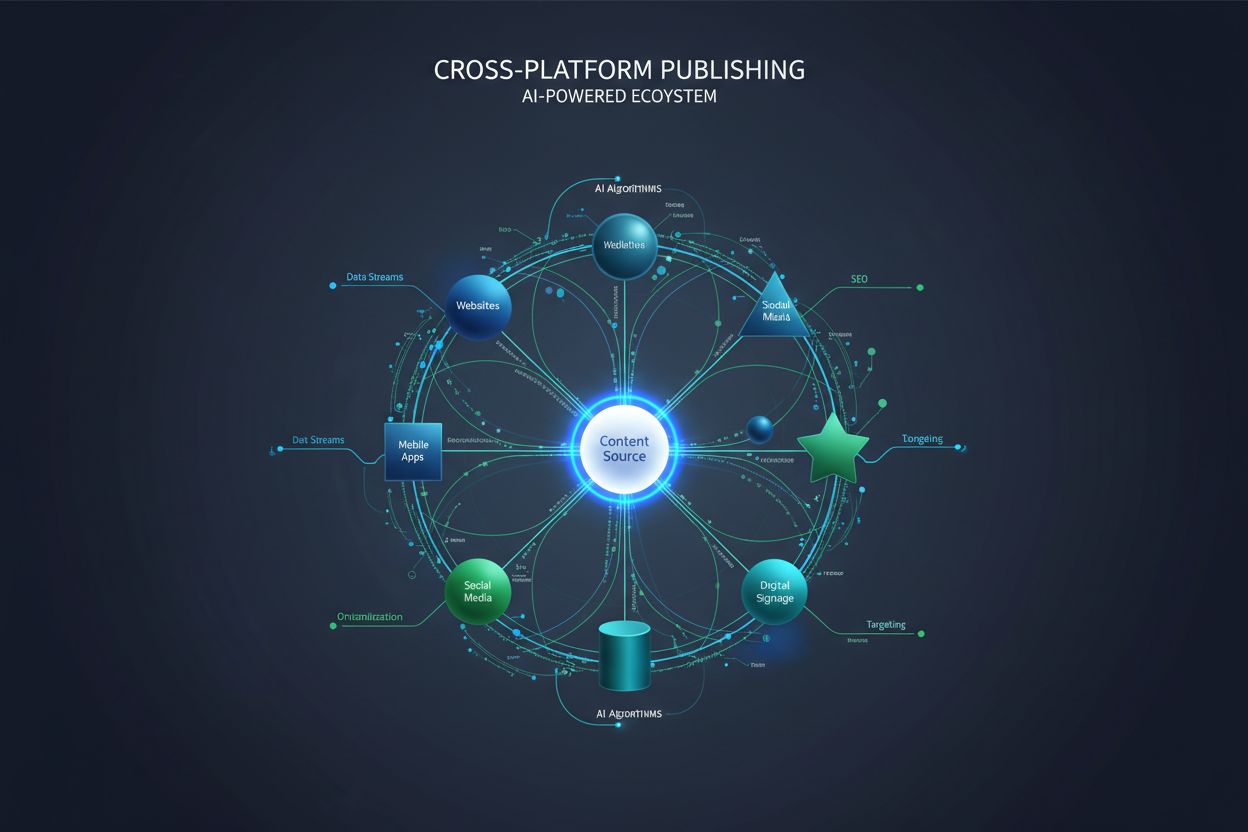
Learn how cross-platform AI publishing distributes content across multiple channels optimized for AI discovery. Understand PESO channels, automation benefits, a...

Omnichannel content delivers unified brand messaging across all customer touchpoints. Learn how consistent content across channels drives engagement, loyalty, a...
Cookie Consent
We use cookies to enhance your browsing experience and analyze our traffic. See our privacy policy.