
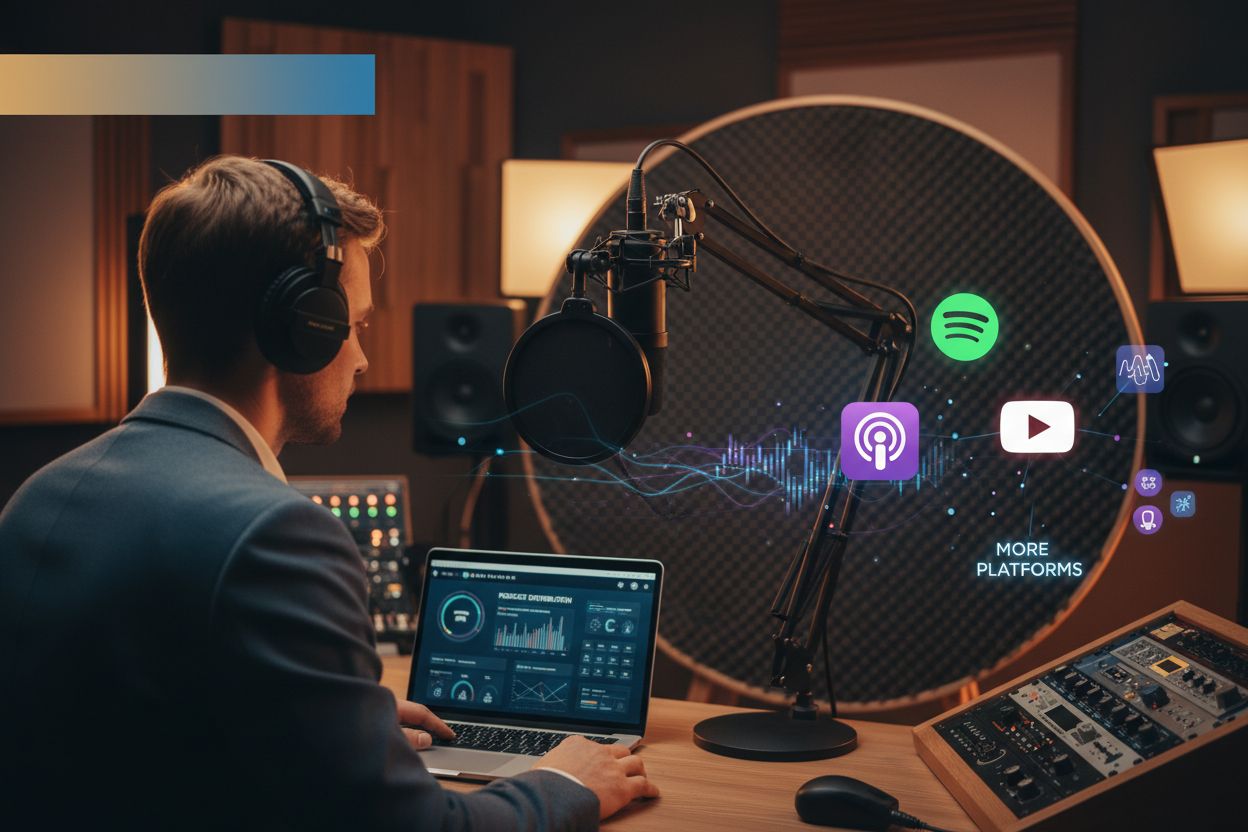
Podcast Distribution for AI Citation Potential
Learn how to distribute your podcast across multiple platforms to maximize AI citation potential and brand visibility in AI-generated answers and search results...
9 min read
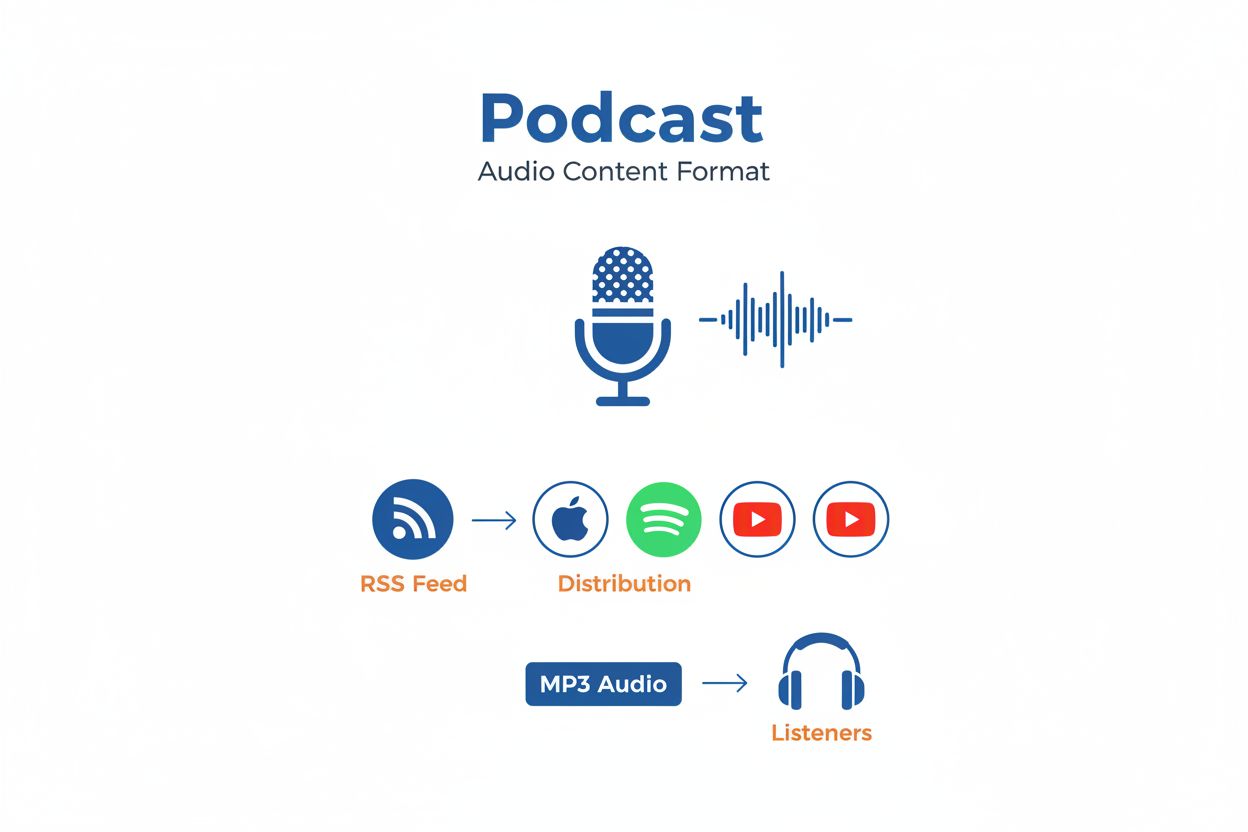
A podcast is a digital audio content format distributed via RSS feeds to multiple platforms, enabling listeners to subscribe to episodic series on topics ranging from entertainment to education. Podcasts are typically consumed on-demand through dedicated apps or platforms like Apple Podcasts, Spotify, and YouTube, making them a flexible medium for both creators and audiences.
A podcast is a digital audio content format distributed via RSS feeds to multiple platforms, enabling listeners to subscribe to episodic series on topics ranging from entertainment to education. Podcasts are typically consumed on-demand through dedicated apps or platforms like Apple Podcasts, Spotify, and YouTube, making them a flexible medium for both creators and audiences.
A podcast is a digital audio content format consisting of episodic series distributed via RSS feeds to multiple platforms, enabling listeners to subscribe to and consume on-demand audio content. The term “podcast” emerged in 2004, combining “iPod” and “broadcast,” though podcasts are no longer limited to Apple devices. Podcasts represent a fundamental shift in how audiences consume audio content, moving from passive, scheduled radio listening to active, personalized consumption patterns. Unlike traditional radio, podcasts are typically produced by individual creators, media companies, or organizations and distributed through dedicated platforms where listeners can subscribe, download, or stream episodes at their convenience. The format encompasses diverse content types including interviews, storytelling, educational series, comedy, true crime, and industry-specific discussions, making it one of the most versatile audio mediums available today.
Podcasting emerged in the early 2000s as a niche format but has evolved into a multi-billion-dollar industry. The term “podcast” was officially coined in 2004, and the format gained mainstream recognition when Apple integrated podcasting into iTunes in 2005. This integration proved transformative, as it provided a centralized distribution mechanism and legitimized podcasting as a serious content medium. By 2008, podcasting had already established itself as a viable platform for creators and brands, though adoption remained relatively limited. The real explosion occurred in the 2010s, with the rise of smartphones and improved mobile connectivity making podcast consumption seamless. According to Edison Research, only 9% of the US population listened to podcasts in 2008, but this figure skyrocketed to 55% by 2025—representing a 511% increase in adoption over 17 years. The introduction of video podcasts (vodcasts) in recent years has further expanded the format’s appeal, with 42% of US weekly podcast listeners now preferring watchable content as of 2025, up from just 30% in 2022.
The technical foundation of podcasting relies on RSS (Really Simple Syndication) feeds, which are XML-based files containing all metadata necessary for podcast distribution. When a creator uploads an episode to their hosting platform, the RSS feed automatically updates with episode audio files, titles, descriptions, artwork (typically 1400x1400 pixels), publication dates, and duration information. This automated system ensures that distribution platforms like Apple Podcasts, Spotify, YouTube, and Amazon Music can instantly access new content without manual intervention. The RSS feed acts as a bridge between the creator’s hosting infrastructure and listener-facing platforms, enabling real-time synchronization across multiple channels. Podcast hosting platforms generate and maintain these RSS feeds, while distribution platforms consume them to populate their catalogs. The standardization of RSS feeds has been crucial to podcasting’s success, as it allows creators to publish once and distribute everywhere—a principle that has democratized audio content creation and enabled independent creators to reach global audiences without requiring relationships with traditional media companies.
Podcasts utilize various audio formats, each with distinct advantages and trade-offs. MP3 (MPEG-1 Audio Layer III) remains the industry standard, accounting for the vast majority of podcast distribution due to its universal compatibility across all devices and platforms. MP3 is a lossy compression format that reduces file size by removing audio data imperceptible to human ears, typically resulting in files 10-20% of their original size. Most podcasters record in WAV (Waveform Audio File Format), an uncompressed format that preserves all audio detail for editing and post-production work, then convert to MP3 for distribution. AAC (Advanced Audio Codec) offers superior compression efficiency compared to MP3, delivering better audio quality at equivalent file sizes, making it an attractive option for music-heavy or sound design-intensive podcasts. FLAC (Free Lossless Audio Codec) provides lossless compression, maintaining original audio quality while reducing file size compared to WAV, though it remains less compatible with mainstream podcast platforms. Spotify requires MP3 files under 200 MB with specific metadata tags, while Apple Podcasts enforces strict RSS feed requirements including proper episode numbering, explicit content flagging, and artwork specifications. These technical requirements ensure consistent playback quality and discoverability across platforms.
| Platform | Listener Base | Primary Strength | Monetization Options | Geographic Availability |
|---|---|---|---|---|
| YouTube Podcasts | 1 billion | Search visibility & video integration | Ads, channel memberships | Global |
| Spotify | 615 million | Hosting + distribution combined | Subscriptions, ads, listener support | Global |
| Apple Podcasts | 28.5 million | Established ecosystem & reach | Paid subscriptions (70-85% revenue) | Global |
| Amazon Music | 80 million | Audible integration & ecosystem | Ads, sponsorships | Global |
| iHeartRadio | 128 million | Multi-device support (2,000+ devices) | None | US, Canada, Mexico, Australia, NZ |
| Overcast | 28.5 million | Apple ecosystem optimization | None (supports Apple subscriptions) | Global |
| Pocket Casts | 1 million | Cross-platform features & curation | Sponsored placements ($124-$5,000/week) | Global |
Podcasts have fundamentally transformed audio content consumption patterns, now accounting for 11% of daily time spent with audio according to 2024 data. The format’s flexibility enables consumption during activities where visual media is impractical—commuting, exercising, cooking, or working. Smartphones dominate podcast consumption, with 70% of weekly podcast listeners using mobile devices, followed by computers (12%), televisions (8%), tablets (5%), and smart speakers (4%). This device diversity reflects podcasting’s integration into everyday life across multiple contexts. The demographic reach of podcasts spans all age groups, though younger audiences show higher engagement: 66% of Americans aged 12-34 listen to podcasts monthly, compared to 38% of those over 55. Gender distribution is relatively balanced, with 51% male and 48% female monthly listeners. Geographically, podcast consumption varies significantly, with South Africa leading at 66% of adults listening 1+ hour weekly, followed by Saudi Arabia (60%), Indonesia (59%), and the UAE (57%). The US remains the largest market by absolute numbers with 129.9 million monthly listeners, followed by China (117.1 million) and Brazil (51.8 million).
The podcast landscape encompasses remarkable content diversity, with comedy dominating by listening hours at 30% of total consumption, followed by society and culture (18%), lifestyle and health (15%), true crime (10%), and educational content (7%). This genre distribution reflects audience preferences for entertainment-focused content, though niche categories continue to grow. The most popular individual podcasts demonstrate the format’s broad appeal: “The Joe Rogan Experience” consistently ranks as the top podcast globally, while shows like “Crime Junkie,” “This Past Weekend,” and “The Diary of a CEO” maintain strong listener bases. The proliferation of podcast genres has created opportunities for hyper-targeted advertising and brand partnerships, as advertisers can identify shows whose audiences align precisely with their target demographics. Educational podcasts have emerged as particularly valuable for B2B marketing, professional development, and thought leadership positioning. The diversity of content has also attracted significant investment from traditional media companies, with major networks like iHeartMedia, SiriusXM, and Spotify investing heavily in original podcast production and exclusive content deals.
The podcast advertising industry has experienced explosive growth, with US podcast ad spending reaching $2.55 billion in 2025, representing an 11.84% year-over-year increase. Global podcast advertising spending hit $4.46 billion in 2025, with projections reaching $5.03 billion by 2027. Host-read advertisements generate the highest engagement and revenue, accounting for approximately 55% of podcast advertising revenue, as listeners perceive host recommendations as trusted endorsements from friends rather than traditional advertisements. Announcer-read ads contribute 40% of revenue, while brand-produced ads represent only 3%, indicating that authentic host delivery significantly impacts advertising effectiveness. Monetization strategies vary by platform: Apple Podcasts offers paid subscriptions where creators retain 70-85% of revenue; Spotify provides subscriptions, ads, and listener support with a 50% revenue share; YouTube offers ads and channel memberships; and Amazon Music supports ads and sponsorships. Alternative revenue streams include affiliate marketing, premium content subscriptions via Patreon, and video monetization through YouTube. The diversity of monetization options has enabled podcasters to build sustainable businesses, with successful shows generating six-figure annual revenues through combined advertising, sponsorships, and subscription models.
As podcasts have grown in cultural significance, brand monitoring across podcast content has become essential for comprehensive media tracking. AI-powered monitoring tools now analyze podcast transcripts and metadata to identify brand mentions, competitor references, and industry discussions. Platforms like Brand24, Mentionlytics, and Media Watcher integrate podcast monitoring alongside social media, news, and blog tracking to provide holistic brand visibility insights. AmICited specifically extends podcast monitoring to AI-generated responses, tracking how brands appear in ChatGPT, Perplexity, Google AI Overviews, and Claude—creating a unified view of brand presence across both traditional podcasts and AI systems. This integration is particularly valuable as AI systems increasingly cite podcast content as authoritative sources, and podcast hosts frequently discuss brands, products, and services. Real-time podcast monitoring enables brands to identify sponsorship opportunities, track competitor activities, measure advertising effectiveness, and respond to brand mentions or crises. The combination of podcast content analysis with AI response monitoring provides marketers with unprecedented visibility into how their brands are discussed across audio and AI-generated content channels.
The podcast industry continues evolving rapidly, with several significant trends shaping its future trajectory. Video podcasts (vodcasts) represent the fastest-growing segment, with Spotify’s video podcast library expanding from 100,000 titles in 2023 to over 330,000 by 2025, and 270 million users having watched video podcasts on the platform. This shift reflects broader audience preferences for multi-sensory content consumption and the blurring of boundaries between podcasts and video content. AI-powered personalization is increasingly influencing podcast discovery and recommendation algorithms, with platforms using machine learning to match listeners with shows aligned to their interests and listening history. Interactive podcasts featuring real-time listener engagement, polls, and community features are emerging as differentiation strategies. The integration of podcasts into broader audio ecosystems—including music streaming, audiobooks, and voice-activated AI assistants—suggests future convergence of audio content formats. Podcast advertising is expected to continue growing at double-digit rates through 2027, driven by improved targeting capabilities and demonstrated ROI. Additionally, the rise of AI-generated podcast content and AI-powered podcast editing tools will likely democratize production further, enabling even more creators to enter the market. The strategic importance of podcasts for brand visibility will intensify as AI systems increasingly cite podcast content, making podcast monitoring and optimization critical components of comprehensive digital marketing strategies.
Podcasts are on-demand, episodic audio content distributed digitally via RSS feeds, while traditional radio broadcasts content in real-time on scheduled frequencies. Podcasts allow listeners to consume content whenever they want, pause and resume episodes, and subscribe to specific shows. Additionally, podcasts are typically hosted on multiple platforms simultaneously, whereas radio is limited to specific broadcast frequencies. This flexibility and accessibility have made podcasts a preferred medium for modern audiences seeking personalized audio experiences.
RSS (Really Simple Syndication) feeds are XML files containing all podcast metadata—including episode audio, titles, descriptions, artwork, and publication dates. When a creator uploads an episode to their hosting platform, the RSS feed automatically updates in real-time. Distribution platforms like Apple Podcasts and Spotify read this RSS feed and display new episodes to subscribers. This automated system ensures listeners receive new content instantly across all platforms without manual uploads to each service.
MP3 is the industry standard for podcast distribution due to its universal compatibility, good balance of quality and file size, and support across all major platforms. WAV and FLAC formats preserve higher audio quality but create larger files unsuitable for distribution. AAC offers better compression efficiency than MP3 at similar file sizes. Most podcasters record in WAV or FLAC for editing, then convert to MP3 for final distribution to ensure maximum listener accessibility.
YouTube leads with 1 billion active users, followed by Spotify with 615 million users and Apple Podcasts with 28.5 million dedicated podcast listeners. Amazon Music reaches 80 million users, while iHeartRadio serves 128 million listeners. As of 2025, there are 584.1 million podcast listeners worldwide, with 55% of the US population aged 12+ listening to podcasts at least monthly. YouTube's dominance reflects the growing trend of video podcasts, with 42% of US listeners preferring watchable content.
Brands can use AI-powered media monitoring tools like Brand24, Mentionlytics, and Media Watcher to track mentions across podcasts in real-time. These platforms analyze podcast transcripts and metadata to identify brand references, competitor mentions, and industry discussions. AmICited specifically monitors podcast appearances alongside other AI platforms like ChatGPT, Perplexity, and Google AI Overviews, providing comprehensive brand visibility tracking. This monitoring helps companies understand their presence in audio content and measure podcast advertising effectiveness.
Podcast hosting platforms store audio files, generate RSS feeds, and provide creator analytics and episode management tools (backend infrastructure). Distribution platforms are listener-facing directories and apps like Apple Podcasts and Spotify that read RSS feeds and display podcasts for discovery and playback (frontend). Some platforms like Spotify for Creators combine both functions. Creators typically need a hosting platform to generate their RSS feed, then submit that feed to multiple distribution platforms to maximize audience reach.
Podcast ad revenue varies by format: host-read ads generate approximately 55% of podcast advertising revenue, announcer-read ads account for 40%, and brand-produced ads represent only 3%. The US podcast advertising market reached $2.55 billion in 2025, with global spending hitting $4.46 billion. Revenue depends on listener count, engagement rates, and niche audience value. Monetization options include direct ads, sponsorships, listener support, and premium subscriptions, with platforms like Spotify taking 50% revenue share while Apple takes 30-35%.
Start tracking how AI chatbots mention your brand across ChatGPT, Perplexity, and other platforms. Get actionable insights to improve your AI presence.
Learn how to distribute your podcast across multiple platforms to maximize AI citation potential and brand visibility in AI-generated answers and search results...

Learn how AI systems like ChatGPT and Perplexity discover, index, and cite podcast content. Understand the technical mechanisms behind podcast citations in AI-g...
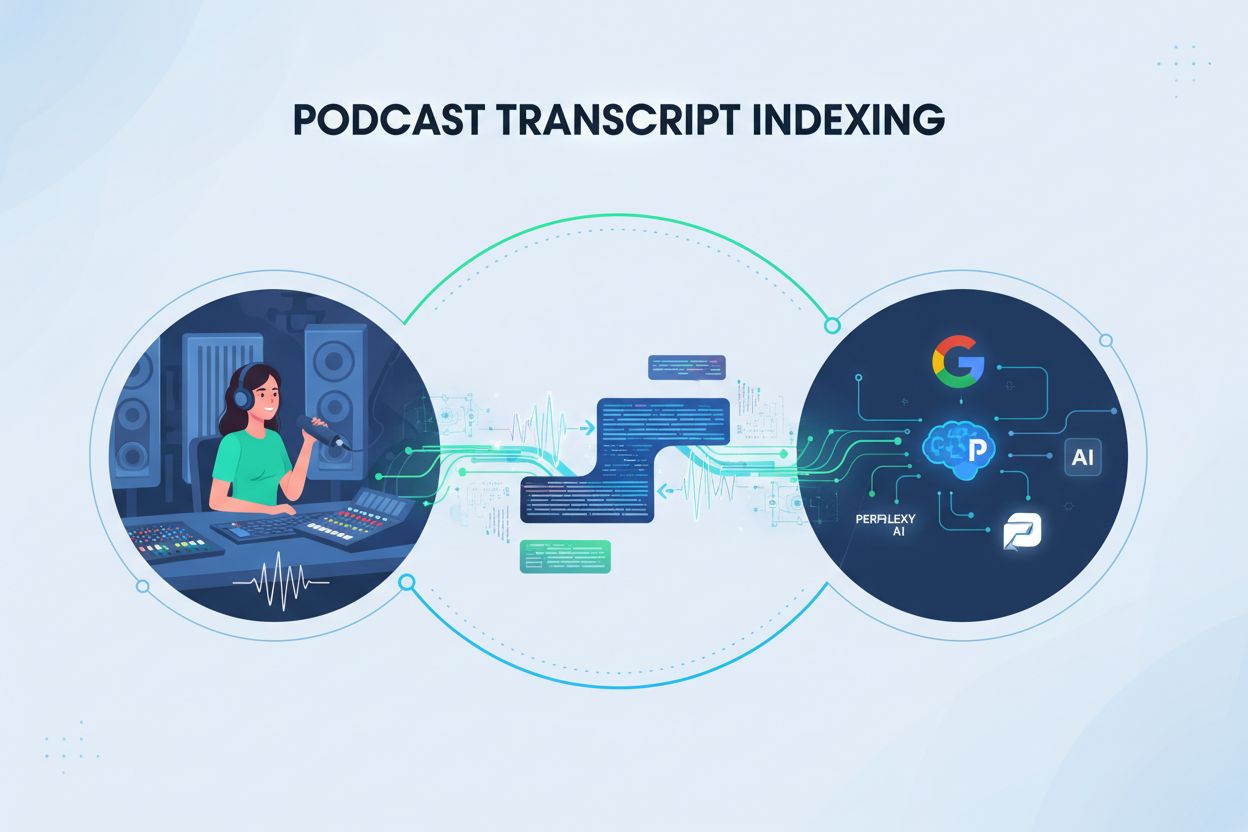
Learn how podcast transcript indexing enables AI discovery and citation. Understand the process of converting audio to searchable text, its impact on SEO, acces...
Cookie Consent
We use cookies to enhance your browsing experience and analyze our traffic. See our privacy policy.