

How Do Podcasts Get Cited by AI Search Engines and Chatbots
Learn how AI systems like ChatGPT and Perplexity discover, index, and cite podcast content. Understand the technical mechanisms behind podcast citations in AI-g...
7 min read
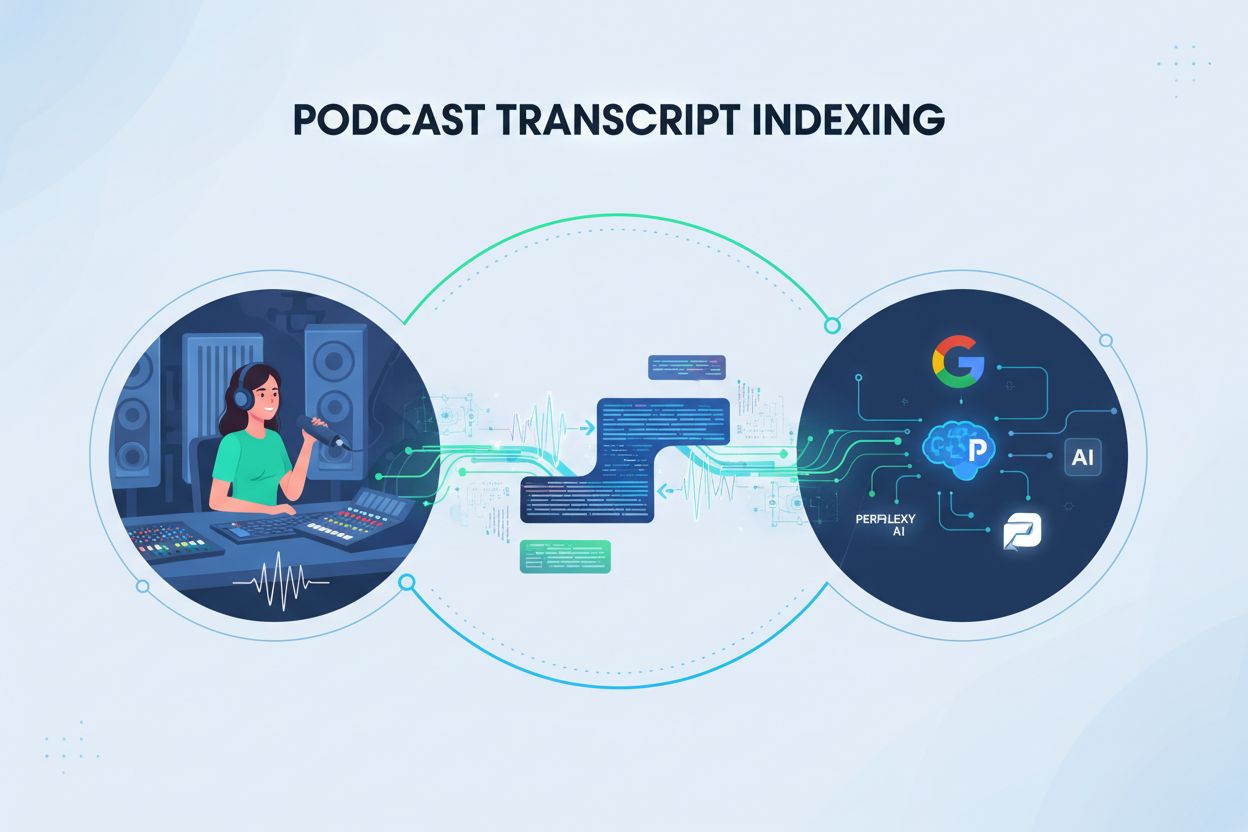
Podcast transcript indexing is the process of converting audio podcast content into searchable, organized text that can be discovered and analyzed by search engines and AI systems. This practice enables granular content-level searching, improves accessibility for all audiences, and allows AI platforms to identify, analyze, and cite podcast content accurately. Indexed transcripts serve as the bridge between audio-first content and text-based search algorithms, making podcasts discoverable through traditional search engines and AI-powered discovery systems.
Podcast transcript indexing is the process of converting audio podcast content into searchable, organized text that can be discovered and analyzed by search engines and AI systems. This practice enables granular content-level searching, improves accessibility for all audiences, and allows AI platforms to identify, analyze, and cite podcast content accurately. Indexed transcripts serve as the bridge between audio-first content and text-based search algorithms, making podcasts discoverable through traditional search engines and AI-powered discovery systems.
Podcast transcript indexing is the process of converting audio content from podcasts into searchable, organized text that can be discovered and analyzed by search engines, AI systems, and content platforms. This practice involves transcribing spoken words from podcast episodes into written format and then structuring that text in a way that makes it easily retrievable through search queries and algorithmic analysis. Unlike traditional podcast discovery methods that rely solely on episode titles, descriptions, and metadata, transcript indexing enables granular, content-level searching where listeners and AI systems can find specific moments, topics, or discussions within episodes. The indexing process typically involves automatic speech recognition (ASR) technology, manual review for accuracy, and strategic placement of keywords and timestamps that connect the text back to the original audio. This creates a comprehensive digital footprint for podcast content that extends far beyond what’s visible in podcast directories.
The significance of podcast transcript indexing has grown exponentially as podcasting has become a dominant media format. With over 500 million podcast listeners worldwide and millions of hours of content produced annually, the ability to index and search this vast repository of information has become critical for content discovery, research, and knowledge management. Transcripts serve as the bridge between audio-first content and text-based search algorithms, making podcasts accessible to search engines that traditionally struggle with audio content. Organizations, creators, and platforms that implement robust transcript indexing strategies gain competitive advantages in discoverability, audience reach, and content monetization. The practice also addresses fundamental accessibility needs, ensuring that deaf and hard-of-hearing audiences can engage with podcast content while simultaneously improving SEO performance and enabling AI systems to analyze and cite podcast content accurately.
| Aspect | Audio-Only Podcasts | Indexed Transcripts |
|---|---|---|
| Search Engine Visibility | Limited to metadata | Full content searchable |
| Accessibility | Requires manual listening | Text-based access available |
| Citation Capability | Difficult to reference | Precise timestamps and quotes |
| Content Analysis | Requires human review | AI-powered analysis possible |
| Discoverability | Title/description dependent | Keyword and topic-based |
| Time Investment | Hours per episode | Minutes with automation |
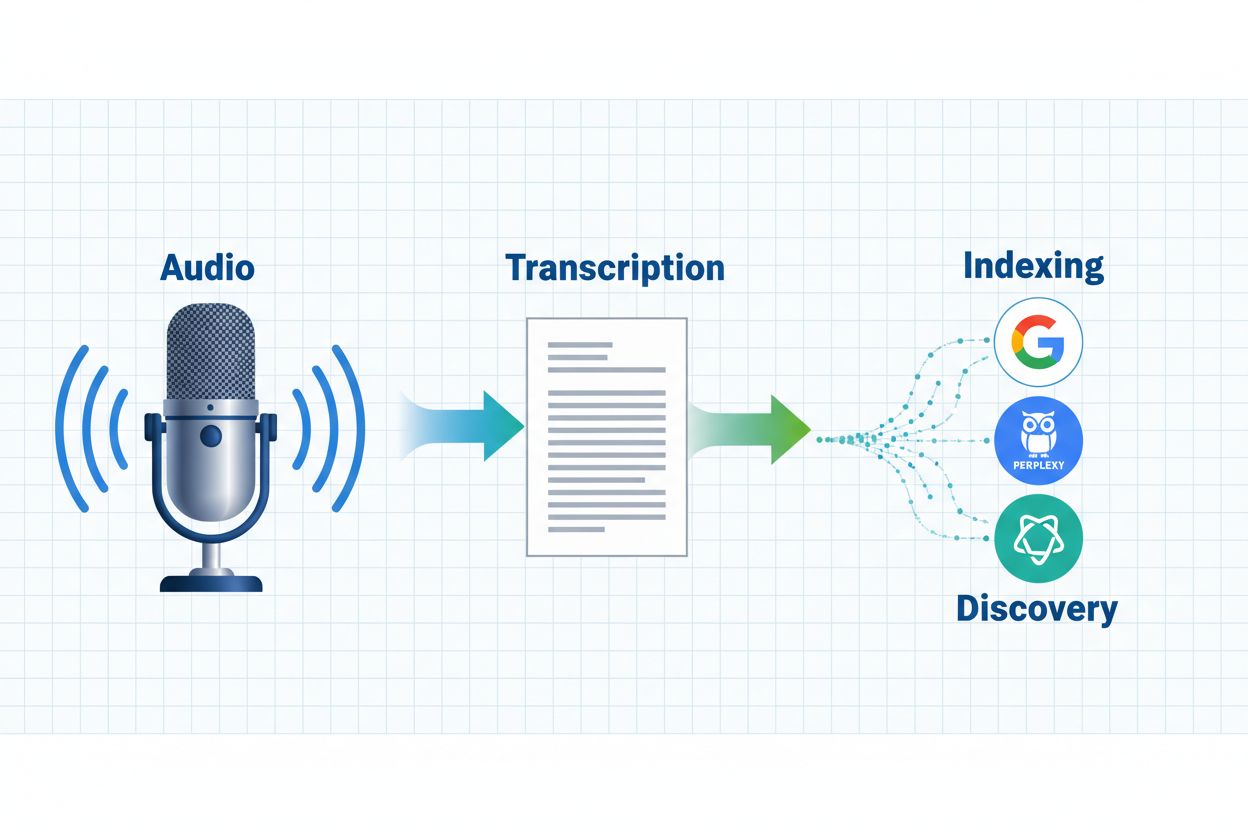
Artificial intelligence systems fundamentally depend on text-based data to perform analysis, pattern recognition, and content understanding. When podcasts remain in audio format, they exist in a blind spot for most AI applications—machine learning models cannot effectively analyze, categorize, or extract insights from raw audio without first converting it to text. Podcast transcription removes this barrier, enabling AI systems to perform sophisticated tasks such as topic modeling, sentiment analysis, entity recognition, and content classification. This transformation is particularly important for research applications, competitive intelligence, and brand monitoring, where AI needs to scan vast amounts of content to identify mentions, analyze context, and extract meaningful insights. The availability of indexed transcripts has democratized access to podcast content for AI-driven analysis, allowing smaller organizations and researchers to leverage the same analytical capabilities that were previously available only to large media companies with dedicated transcription teams.
The practical applications of AI-enabled podcast discovery are extensive and continue to expand:
These capabilities transform podcasts from isolated audio files into integrated components of the broader information ecosystem, where they can be discovered, analyzed, and cited alongside traditional text-based content.
Search engines like Google, Bing, and DuckDuckGo have made significant investments in understanding and indexing podcast content, but their ability to do so effectively depends almost entirely on the availability of transcripts. When podcast episodes include full transcripts, search engines can crawl and index the complete content, making episodes discoverable through organic search queries. This dramatically expands the potential audience for podcast content beyond dedicated podcast apps and directories. A podcast episode about “sustainable business practices” with a full transcript can rank in search results when someone searches for that topic, driving traffic from search engines to the podcast platform. Without transcripts, that same episode would only be discoverable through podcast-specific searches and would miss the vast audience using general search engines to find information.
The SEO benefits of podcast transcript indexing extend beyond simple discoverability. Transcripts enable the creation of rich snippets and featured snippets in search results, where Google can display relevant excerpts from podcast episodes directly in search results. This increases click-through rates and establishes podcasts as authoritative sources for specific topics. For example, a podcast episode featuring an expert discussing “AI ethics in healthcare” can appear in search results when users query that topic, with a relevant quote from the transcript displayed prominently. Additionally, transcripts provide opportunities for internal linking and cross-referencing, where podcast platforms can link transcript content to related articles, blog posts, and other resources, improving overall site authority and user engagement. The presence of transcripts also increases average time on page and reduces bounce rates, as users can quickly scan transcripts to find relevant sections rather than listening through entire episodes. Search engines reward these engagement metrics with higher rankings, creating a virtuous cycle where indexed podcasts receive more visibility, more traffic, and higher search authority.
Podcast transcript indexing is fundamentally an accessibility issue that extends far beyond SEO optimization or AI analysis. Approximately 1.5 billion people worldwide experience some degree of hearing loss, and for these individuals, podcasts without transcripts are completely inaccessible. By providing full transcripts, podcast creators ensure that deaf and hard-of-hearing audiences can engage with content on equal terms with hearing listeners. This commitment to accessibility is not merely a moral imperative—it’s increasingly a legal requirement in many jurisdictions. The Americans with Disabilities Act (ADA) and similar legislation in other countries require that digital content be accessible to people with disabilities, and courts have increasingly ruled that podcast content without transcripts violates these accessibility standards. Beyond legal compliance, accessible podcasts reach larger audiences, generate more engagement, and build stronger communities that include people of all abilities.
The accessibility benefits of transcripts extend beyond hearing accessibility to include broader inclusive discovery. Non-native English speakers often find it easier to understand content by reading transcripts while listening, improving comprehension and retention. Users in noisy environments or situations where audio isn’t practical can access podcast content through text. People with cognitive disabilities or processing differences may benefit from the ability to read, re-read, and process information at their own pace rather than following the real-time pace of audio. Additionally, transcripts enable better searchability for users with specific information needs—someone looking for a particular statistic or quote can search the transcript rather than listening through an entire episode. Research indicates that 72% of podcast listeners would be more likely to engage with podcasts if transcripts were available, and 85% of podcast listeners use transcripts to find specific information within episodes. These statistics demonstrate that transcript indexing isn’t a niche accessibility feature—it’s a fundamental expectation that significantly impacts audience size and engagement.
The podcast transcription landscape has evolved dramatically with the emergence of specialized platforms and AI-powered tools designed specifically for podcast creators and networks. Deepgram’s Tapesearch represents a leading solution in this space, offering automated transcription with speaker identification, timestamp accuracy, and integration with major podcast hosting platforms. Tapesearch uses advanced AI models to deliver transcripts with industry-leading accuracy rates while maintaining cost-effectiveness at scale. Ausha provides an all-in-one podcast management platform that includes transcription services, SEO optimization, and distribution across multiple platforms, making it particularly valuable for creators who want to manage their entire podcast operation from a single dashboard. Spreaker combines podcast hosting with built-in transcription and SEO tools, enabling creators to automatically generate transcripts and optimize them for search engine visibility. Ditto Transcripts specializes in high-quality, human-reviewed transcription services with options for automatic or manual transcription, catering to creators who prioritize accuracy over speed.
| Platform | Transcription Method | Accuracy Rate | Key Features | Best For |
|---|---|---|---|---|
| Deepgram Tapesearch | AI-powered ASR | 95%+ | Speaker ID, timestamps, API access | Scale and automation |
| Ausha | AI with optional review | 94%+ | Full podcast management, SEO tools | All-in-one solution |
| Spreaker | AI-powered ASR | 93%+ | Hosting + transcription, distribution | Creator-focused workflows |
| Ditto Transcripts | Human + AI hybrid | 99%+ | Premium quality, editing services | Quality-critical content |
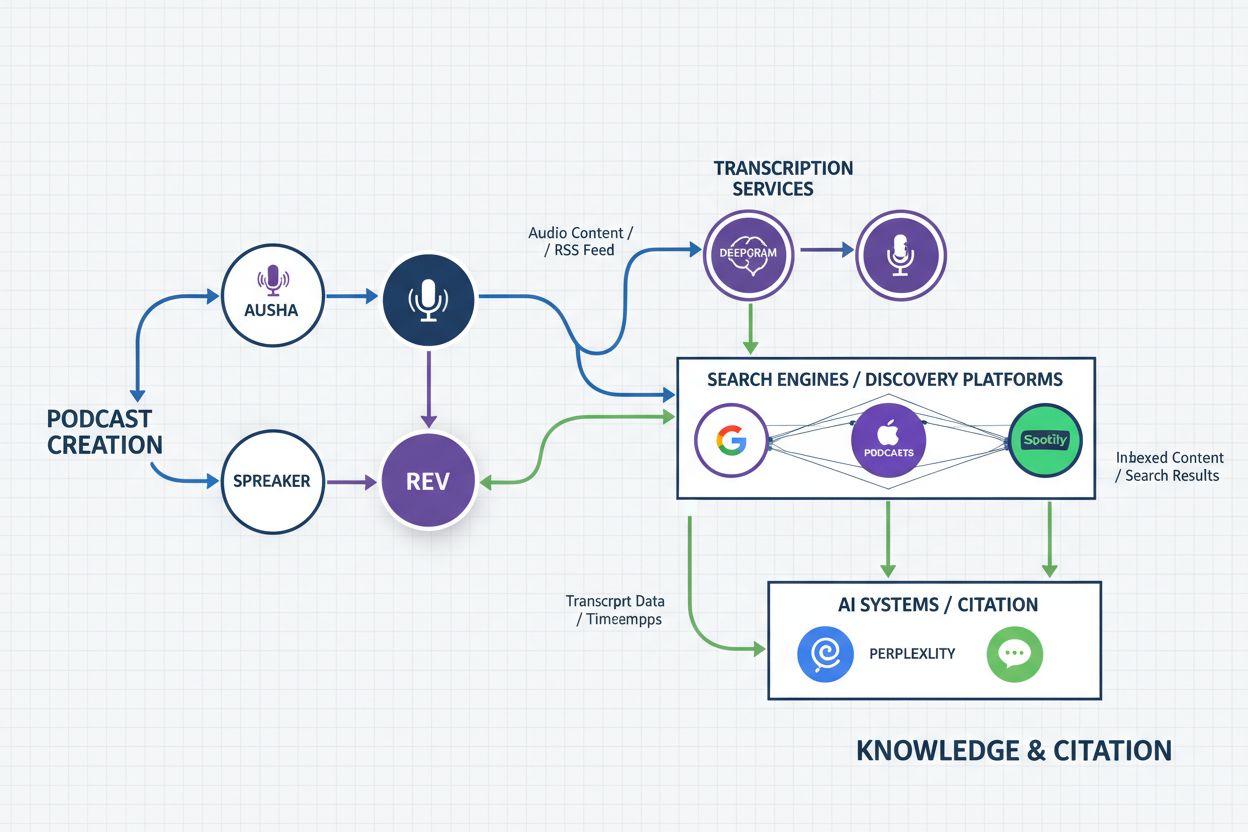
The choice between these platforms depends on specific organizational needs, budget constraints, and desired level of automation versus human review. Organizations prioritizing speed and cost-effectiveness typically favor AI-powered solutions like Deepgram and Ausha, while those handling sensitive content or requiring publication-quality transcripts may prefer hybrid approaches that combine AI efficiency with human review. Many successful podcast operations use multiple tools in combination—for example, using Deepgram for rapid initial transcription and then employing Ditto Transcripts for final review and optimization. The competitive landscape continues to evolve, with new entrants regularly introducing innovative features such as real-time transcription, multilingual support, and advanced speaker identification capabilities.
Implementing effective podcast transcript indexing requires more than simply converting audio to text—it demands a strategic approach that maximizes discoverability, accuracy, and usability. The following practices represent industry standards that successful podcast operations employ:
Beyond these technical practices, successful transcript indexing requires organizational commitment to treating transcripts as first-class content rather than supplementary materials. This means allocating adequate resources for transcription, establishing clear ownership and accountability for transcript quality, and regularly reviewing performance metrics to identify improvement opportunities. Podcasters should also consider the user experience of transcript readers—formatting transcripts for readability, breaking up long sections with headers and visual elements, and ensuring that transcripts are easily discoverable from episode pages. Finally, organizations should leverage transcripts across their entire content ecosystem by repurposing transcript content into blog posts, social media snippets, and other formats that extend the value and reach of podcast content.
The emergence of podcast transcript indexing has fundamentally transformed how AI systems can monitor, analyze, and cite podcast content. Previously, podcasts existed in a citation blind spot—researchers, journalists, and analysts could reference podcast content, but doing so required manual listening and note-taking, making it impractical to systematically track mentions, citations, and references across the podcast ecosystem. With indexed transcripts, AI-powered citation monitoring platforms can now scan thousands of podcasts in real-time, identifying when specific topics, research, products, or brands are mentioned, discussed, or cited. This capability is particularly valuable for organizations that need to understand how their work, products, or brand are being discussed in the podcast space—a medium that reaches hundreds of millions of listeners monthly but has historically been invisible to traditional media monitoring tools.
AmICited.com represents the next generation of AI citation monitoring, specifically designed to address the unique challenges of tracking citations and mentions across diverse media formats, including podcasts. By leveraging indexed podcast transcripts, AmICited.com enables organizations to monitor how their research, publications, products, and brand are being referenced and discussed across the entire podcast ecosystem. The platform uses advanced AI to understand context and sentiment, distinguishing between casual mentions and substantive citations, and providing detailed analytics about which podcasts are discussing your work, what aspects are being highlighted, and how the discussion is framed. This capability is invaluable for researchers seeking to understand the real-world impact of their work, companies monitoring competitive intelligence and brand perception, and organizations tracking how their thought leadership is being amplified through podcast discussions.
The integration of podcast transcripts into AI citation monitoring systems creates several critical advantages. First, it enables comprehensive coverage of the podcast ecosystem, ensuring that organizations don’t miss important mentions or discussions happening in this increasingly influential medium. Second, it provides precise citation tracking with timestamps and context, allowing organizations to understand exactly how their work is being discussed and to engage with podcast audiences through targeted outreach or content creation. Third, it enables trend analysis and insight generation, helping organizations identify emerging topics, understand audience interests, and position themselves as thought leaders in their fields. As podcasting continues to grow in influence and reach, the ability to monitor and analyze podcast content through indexed transcripts becomes increasingly critical for organizations seeking to understand their impact, monitor their reputation, and engage with audiences across all media channels. AmICited.com’s specialized focus on citation monitoring ensures that organizations can leverage podcast transcript indexing to its fullest potential, transforming podcast content from an invisible medium into a measurable, analyzable component of their overall media and citation strategy.
Podcast transcript indexing is the process of converting audio podcast episodes into searchable, organized text that can be discovered by search engines and AI systems. This enables granular content-level searching, improves accessibility, and allows AI platforms to analyze and cite podcast content accurately. Indexed transcripts serve as the bridge between audio content and text-based search algorithms.
Transcript indexing dramatically improves podcast discoverability through search engines, makes content accessible to deaf and hard-of-hearing audiences, enables AI systems to analyze and cite your content, and provides opportunities for content repurposing. Podcasts with indexed transcripts receive significantly more traffic from search engines and reach broader audiences across multiple platforms.
Search engines like Google crawl and index podcast transcripts published on websites or in RSS feeds, treating them similarly to blog post content. When transcripts are properly formatted with headers, keywords, and timestamps, search engines can understand the content structure and rank episodes for relevant search queries. This makes podcasts discoverable through organic search results alongside traditional text-based content.
AI-powered transcription services like Deepgram and Ausha offer speed and cost-effectiveness, typically achieving 93-95% accuracy in minutes. Manual transcription by professional services like Ditto Transcripts provides higher accuracy (99%+) but requires more time and investment. Many organizations use hybrid approaches, combining AI for initial transcription with human review for final quality assurance.
Indexed transcripts enable AI-powered citation monitoring platforms like AmICited to scan thousands of podcasts in real-time, identifying when your research, products, or brand are mentioned and discussed. This capability transforms podcasts from an invisible medium into a measurable component of your overall citation and media strategy, allowing you to understand your real-world impact.
Popular podcast transcription platforms include Deepgram Tapesearch (AI-powered, 95%+ accuracy), Ausha (all-in-one podcast management), Spreaker (hosting with built-in transcription), and Ditto Transcripts (human-reviewed, 99%+ accuracy). The best choice depends on your priorities regarding speed, cost, accuracy, and desired level of automation versus human review.
Optimize transcripts by including relevant keywords naturally throughout the text, adding timestamps that link to specific moments, creating descriptive headers, implementing speaker identification, and publishing transcripts in multiple formats (HTML, plain text, structured data). Ensure transcripts are easily discoverable from episode pages and consider repurposing content into blog posts and social media snippets.
Yes, significantly. Indexed transcripts make your podcast discoverable through search engines, reaching audiences beyond podcast apps. They improve accessibility for diverse audiences, increase engagement through searchability, and enable content repurposing across multiple platforms. Research shows that 72% of podcast listeners would be more likely to engage with podcasts if transcripts were available.
Discover how your podcast content is being cited and discussed across AI platforms like Google AI Overviews, Perplexity, and ChatGPT. Track mentions, analyze sentiment, and understand your real-world impact with AmICited.
Learn how AI systems like ChatGPT and Perplexity discover, index, and cite podcast content. Understand the technical mechanisms behind podcast citations in AI-g...
Learn how to optimize podcast transcripts for AI systems like ChatGPT, Perplexity, and Claude. Master semantic keywords, schema markup, and structured data for ...
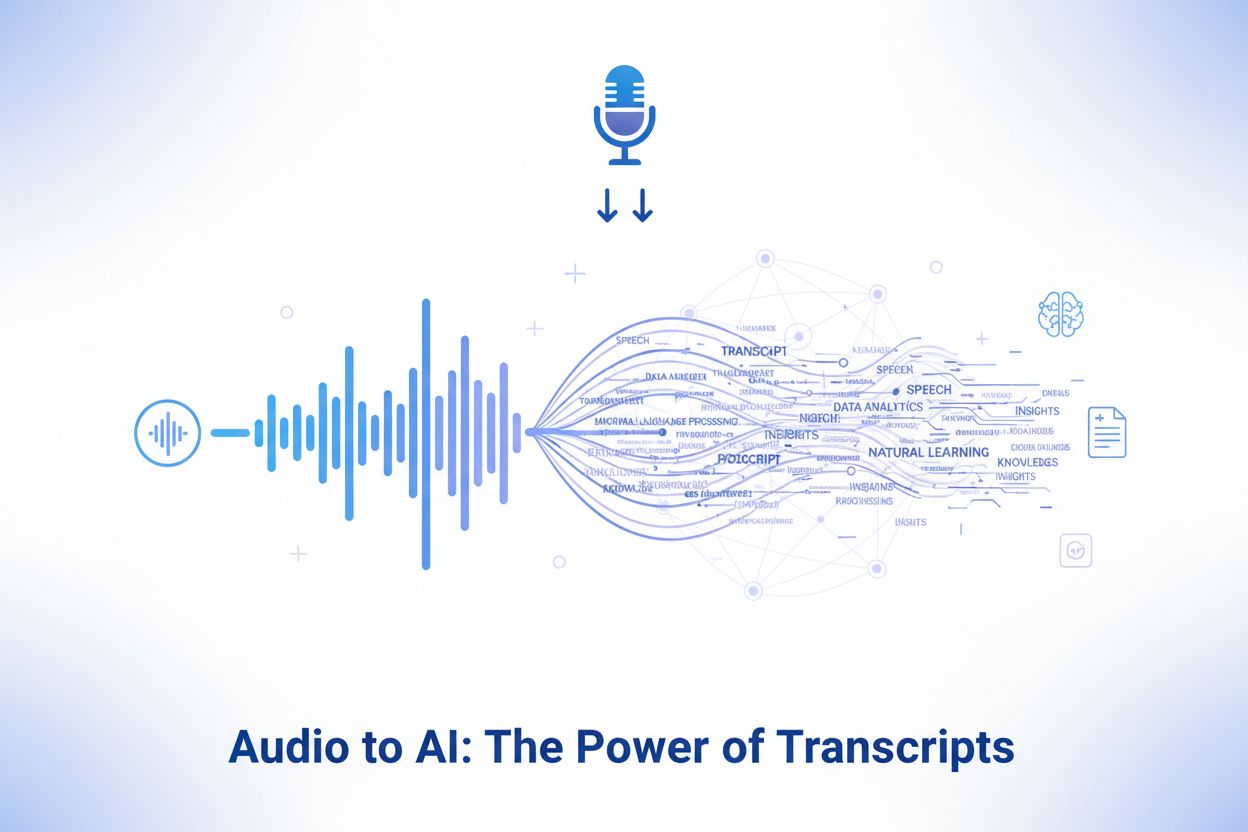
Learn how podcast transcripts unlock AI visibility, boost citations, and transform audio content into discoverable assets for ChatGPT, Perplexity, and Google AI...