

How to Optimize for Position Zero: Featured Snippet Strategy
Learn proven strategies to optimize for position zero (featured snippets) on Google. Discover content structure, schema markup, keyword research, and technical ...
8 min read

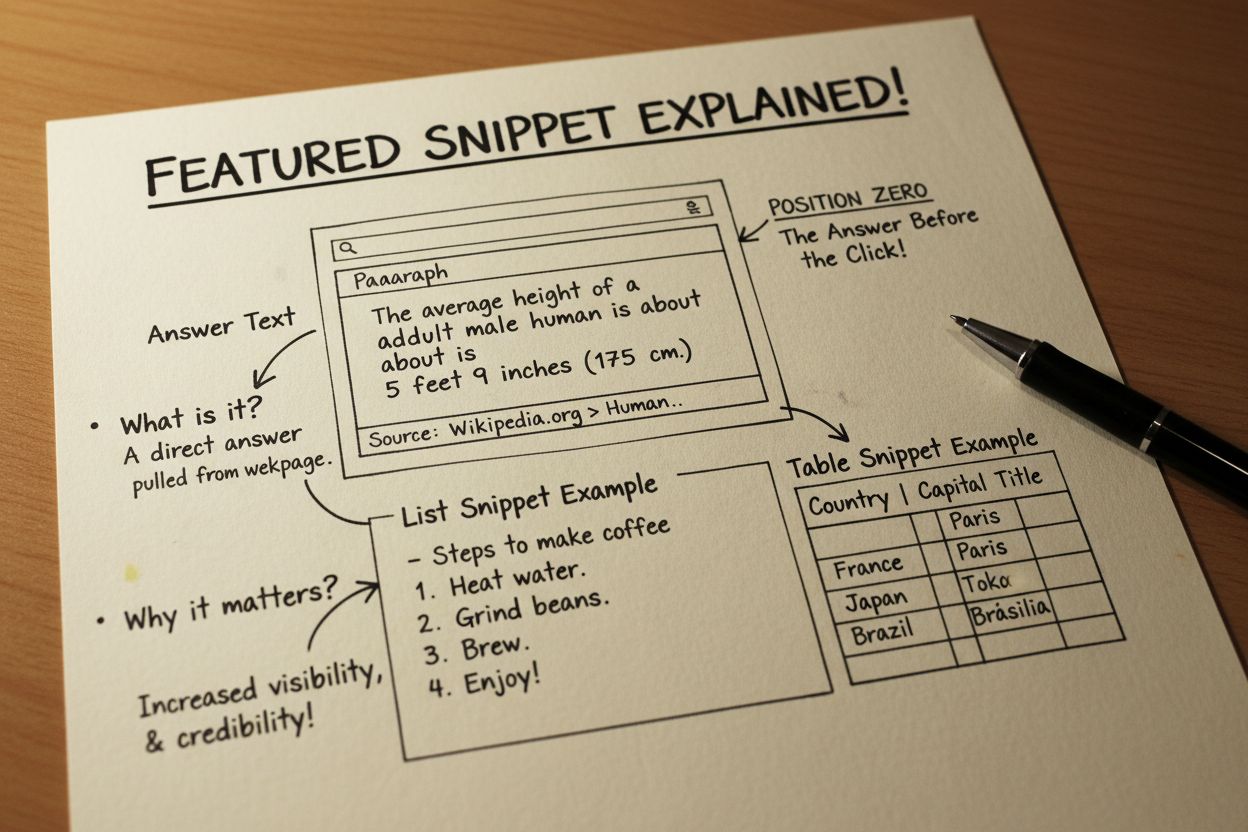
Position Zero, also known as a featured snippet, is a special search result that appears above traditional organic listings on Google’s search results page, displaying a direct answer to a user’s query in formats such as paragraphs, lists, tables, or videos. This premium SERP placement is highly sought after because it increases brand visibility, click-through rates, and is essential for voice search optimization and AI-powered search platforms.
Position Zero, also known as a featured snippet, is a special search result that appears above traditional organic listings on Google's search results page, displaying a direct answer to a user's query in formats such as paragraphs, lists, tables, or videos. This premium SERP placement is highly sought after because it increases brand visibility, click-through rates, and is essential for voice search optimization and AI-powered search platforms.
Position Zero, also referred to as a featured snippet or rank zero, is a special search result that appears at the very top of Google’s search results page, positioned above the traditional #1 organic listing. This premium SERP placement displays a direct, concise answer to a user’s search query, extracted automatically from relevant web pages. Position Zero serves as Google’s way of providing immediate answers to searchers without requiring them to click through to a website. The term “position zero” exists because it literally occupies a position above the first organic result, creating a hierarchical advantage that makes it one of the most coveted placements in search engine optimization. Unlike traditional organic results that simply link to web pages, featured snippets present formatted content—whether text, lists, tables, or videos—that directly addresses the user’s intent. This distinction makes Position Zero fundamentally different from standard search rankings and represents a critical evolution in how search engines deliver information to users.
Position Zero has a relatively recent history in the search landscape. Google introduced featured snippets in January 2014 as part of its broader effort to provide users with instant answers to their queries. Before this innovation, Google relied primarily on the Knowledge Graph, which displayed curated information from structured databases like Freebase and Wikidata. The introduction of featured snippets marked a significant shift because it allowed Google to extract answers directly from website content rather than relying solely on pre-curated databases. This democratized the ability for any website to appear in this premium position, provided their content was well-structured and authoritative. Over the past decade, Position Zero has become increasingly important as search behavior has evolved. The rise of voice search, mobile queries, and conversational search has made direct answers more valuable than ever. More recently, Google’s aggressive rollout of AI Overviews beginning in 2024 has further transformed how Position Zero content is utilized. Rather than simply displaying extracted snippets, Google now uses AI Overviews to synthesize information from multiple sources, including featured snippets, to generate comprehensive answers. This evolution means that Position Zero is no longer just about appearing in a featured snippet box—it’s about being a trusted source that AI systems cite when generating their responses.
Position Zero content comes from Google’s sophisticated algorithms that analyze web pages to determine which content best answers a specific search query. When a user enters a search query, Google’s systems evaluate whether a featured snippet would enhance the search experience. If Google determines that a direct answer would be valuable, it automatically extracts relevant content from pages that rank on the first page of results. Importantly, Google does not allow websites to nominate themselves for featured snippets—the selection process is entirely algorithmic and based on content quality, relevance, and structure. The content displayed in Position Zero must come from pages that already rank within Google’s top 10 results for that keyword, as research shows that 99% of featured snippets originate from page 1 rankings. This requirement means that achieving Position Zero requires both strong SEO fundamentals and content optimization. With the emergence of Google AI Overviews, the sources for Position Zero content have expanded. AI Overviews pull information from multiple websites, including those with featured snippets, to generate synthesized answers. This means that appearing in Position Zero increases your chances of being cited by AI systems, making it essential for visibility across both traditional search and AI-powered platforms. The content extraction process is automatic, meaning Google’s algorithms identify the most relevant, well-formatted content and display it without manual intervention.
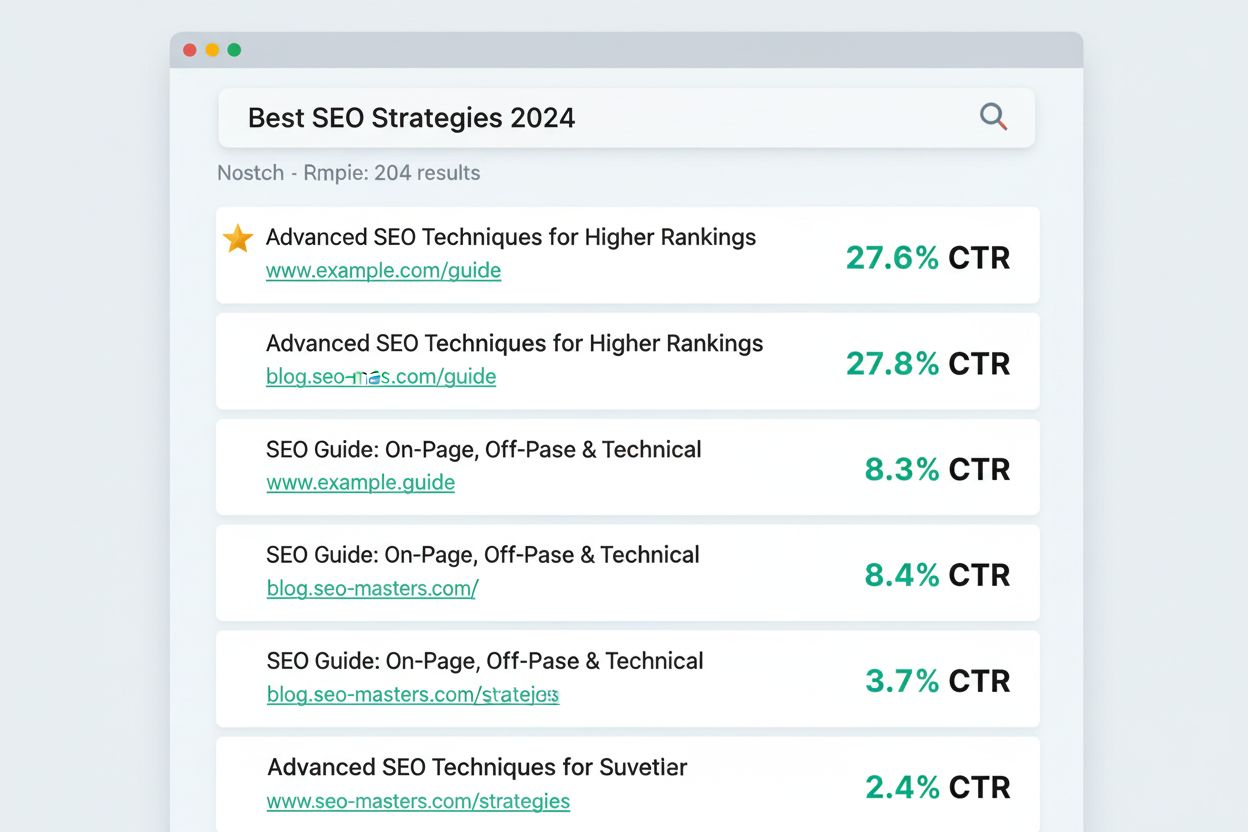
Position Zero has become strategically critical for modern SEO because it offers multiple competitive advantages that traditional rankings cannot match. First, featured snippets occupy significantly more SERP real estate than standard organic results, pushing competitors further down the page and increasing your brand’s visibility. Research indicates that Position Zero results receive approximately 8% of all clicks from search results, which is substantial considering that the first organic result typically receives around 30% of clicks. This means that by capturing Position Zero, you can achieve significant traffic gains without necessarily ranking #1. Second, Position Zero serves as a powerful authority signal. When Google selects your content to display as the direct answer to a user’s query, it’s essentially endorsing your expertise and trustworthiness. This is particularly important in competitive niches where establishing authority is difficult. Third, Position Zero is essential for voice search optimization. Voice assistants like Alexa, Google Assistant, and Siri frequently pull their answers directly from featured snippets, meaning that appearing in Position Zero can drive traffic from voice search queries. As voice search continues to grow, this advantage becomes increasingly valuable. Finally, Position Zero is critical for AI search visibility. With over 25% of Google searches now triggering AI Overviews, and with platforms like ChatGPT, Perplexity, and Claude citing authoritative sources, appearing in Position Zero increases your chances of being cited by these AI systems. This makes Position Zero optimization essential for maintaining brand visibility in the evolving AI search landscape.
| Feature | Position Zero (Featured Snippet) | Position 1 (Organic) | Knowledge Panel | AI Overviews |
|---|---|---|---|---|
| Location on SERP | Above all organic results | First organic listing | Right sidebar | Top of results (replacing some snippets) |
| Content Source | Extracted from website copy | Website link and meta description | Curated databases (Knowledge Graph) | Synthesized from multiple sources |
| Format Options | Paragraph, list, table, video, image | Link and description only | Structured data box | Generated text with citations |
| Click-Through Impact | Increases CTR and brand visibility | Highest CTR for organic results | Varies; often reduces clicks | May reduce clicks but increases citations |
| Nomination Process | Automatic (no nomination possible) | Earned through SEO | Manual curation by Google | Algorithmic selection |
| AI Platform Usage | Frequently cited by ChatGPT, Perplexity | Sometimes cited | Rarely cited | Primary source for citations |
| Optimization Difficulty | Moderate (requires structure + ranking) | High (requires authority + relevance) | Very high (requires structured data) | Very high (requires authority + comprehensiveness) |
| Percentage of Queries | ~4.77% of all queries | 100% of queries | ~20% of queries | ~25% of queries (growing) |
Capturing Position Zero requires a multi-layered approach that combines strong SEO fundamentals with specific content formatting strategies. The first step is identifying keywords that already have featured snippets in the search results. Using tools like Semrush, Ahrefs, or Google Search Console, you can filter for keywords with existing featured snippets, which indicates that Google wants to display a snippet for that query. This is crucial because it means you’re not trying to create a new snippet format—you’re competing for an existing one. Once you’ve identified these opportunities, you need to ensure your page ranks on page 1 for that keyword. Research shows that 99% of featured snippets come from pages already ranking in the top 10, so strong SEO fundamentals are non-negotiable. This includes building quality backlinks, optimizing on-page elements, improving technical SEO, and ensuring your content is comprehensive and authoritative. Beyond basic SEO, you must structure your content specifically for snippet extraction. For paragraph snippets, provide a concise answer of 40-60 words that directly addresses the query, ideally positioned near the top of your content. For list snippets, use properly formatted HTML lists with clear numbering or bullet points. For table snippets, create well-organized tables with clear headers and labeled columns. The key is making it easy for Google’s algorithms to identify and extract your content. Additionally, use clear heading hierarchies (H1, H2, H3) to help Google understand your content structure. Include the target keyword naturally in your headings and the first paragraph. Use schema markup where appropriate to provide additional context about your content. Finally, optimize for long-tail keywords and variations, as research shows that most featured snippets appear for longer, more specific queries. By targeting these variations with dedicated sections or FAQ-style content, you can capture multiple Position Zero spots from a single page.
Position Zero content appears in several distinct formats, each optimized for different types of queries and user intent. Understanding these formats is essential for effective optimization. Paragraph snippets are the most common type, typically appearing for definition queries (“what is”), explanation queries, and factual questions. These snippets display 40-60 words of text extracted from your content, making conciseness critical. To optimize for paragraph snippets, write a clear, objective definition or answer in your opening paragraph, avoiding opinions or promotional language. Numbered list snippets appear for procedural queries like “how to” guides and step-by-step instructions. Google extracts your numbered list and displays it directly in the SERP. To optimize, use consistent formatting (Step 1, Step 2, etc.), wrap each step in H2 or H3 tags, and keep each step concise and actionable. Bulleted list snippets appear for queries where items don’t need to be in a specific order, such as “best practices” or “benefits of.” Format these as unordered lists with clear, parallel structure. Table snippets are ideal for comparative data, pricing information, or statistics. Create well-organized tables with clear headers and descriptive titles. Google can easily extract and display properly formatted HTML tables. Video snippets appear for visual queries and how-to content. Optimize videos with clear titles, detailed descriptions, timestamps for key moments, and relevant keywords. Image snippets appear for visual queries and can include infographics or diagrams. Ensure images are high-quality, properly labeled, and relevant to the query. The most effective Position Zero strategy involves creating content that naturally fits one of these formats while maintaining high quality and relevance. Rather than forcing content into a snippet format, identify what format best serves your audience and optimize accordingly.
The landscape of Position Zero is rapidly evolving due to the rise of AI Overviews and AI-powered search platforms. Google’s aggressive rollout of AI Overviews in 2024 has fundamentally changed how Position Zero content is utilized. Rather than simply displaying extracted snippets, AI Overviews synthesize information from multiple sources to generate comprehensive answers. This shift has important implications for SEO strategy. First, appearing in Position Zero is now more important than ever because AI systems use featured snippets as primary sources when generating their responses. Research shows that ChatGPT prioritizes Wikipedia (48% of citations) while Perplexity favors Reddit (46.7%), but all AI platforms cite authoritative sources. By optimizing for Position Zero, you increase your chances of being cited by these systems. Second, the definition of “visibility” is changing. With over 25% of Google searches now triggering AI Overviews, and with many of these searches resulting in zero-click outcomes, traditional click-through rate metrics no longer fully capture your search visibility. Brands must now track brand mentions and citations in AI responses, not just clicks. This is where platforms like AmICited become essential—they monitor where your brand appears across AI search platforms and featured snippets. Third, the competition for Position Zero is intensifying. As more brands recognize the importance of featured snippets for AI visibility, optimization will become more competitive. This means that simply having good content won’t be enough; you’ll need to actively monitor your Position Zero performance and continuously optimize. Finally, the future likely holds further integration between traditional search, featured snippets, and AI-generated answers. Google may continue to evolve how it displays information, potentially creating new SERP features or formats. Brands that invest in understanding and optimizing for Position Zero now will be better positioned to adapt to these future changes. The key takeaway is that Position Zero is no longer just an SEO tactic—it’s a fundamental component of modern search visibility and brand authority in an AI-driven search landscape.
Position Zero (featured snippet) appears above the traditional #1 organic result on Google's search results page, occupying premium SERP real estate. While position 1 is the first standard organic listing, Position Zero provides a direct answer extracted from a website and can significantly increase visibility and click-through rates. According to research, featured snippets receive approximately 8% of all clicks from search results, often outperforming traditional position 1 results in terms of brand exposure and authority signaling.
Position Zero can boost click-through rates (CTR) by appearing above all organic results, giving your content premium visibility. While some worry that direct answers reduce clicks (zero-click searches), research shows the opposite: websites earning featured snippets often see increased CTR compared to standard top-ranking results. The snippet acts as a trust signal and introduction to your content, encouraging users to click through for more detailed information. This is particularly valuable for voice search and mobile users seeking quick answers.
Featured snippets appear in several formats: paragraph snippets (40-60 word text answers), numbered lists (step-by-step instructions), bulleted lists (unordered items), tables (data comparisons), videos (visual demonstrations), and images (visual answers). Google automatically selects the format that best answers the user's query. Paragraph snippets are most common, appearing for definition and 'what is' queries, while lists dominate how-to searches and tables excel for comparisons and pricing information.
Google does not allow websites to nominate themselves for featured snippets, and there's no guaranteed formula for achieving Position Zero. However, you can significantly improve your chances by creating well-structured, concise content that directly answers common questions related to your topic. Focus on using clear headings, formatting answers in 40-60 words for paragraphs, organizing information in lists and tables, and targeting long-tail keywords. The key is providing authoritative, relevant answers that Google's algorithm determines would serve searchers best.
Position Zero and featured snippets have become increasingly important as AI search platforms like ChatGPT, Perplexity, and Google AI Overviews gain prominence. These AI systems often pull information from featured snippets and highly-ranked content to generate their responses. Research shows that ChatGPT prioritizes Wikipedia (48% of citations) while Perplexity favors Reddit (46.7%), but all AI platforms cite authoritative sources. Appearing in Position Zero increases your chances of being cited by AI systems, making it essential for brand visibility in the evolving AI search landscape.
Zero-click searches occur when users find their answer directly in search results without clicking through to a website. Featured snippets can contribute to zero-click searches because they provide direct answers on the SERP. However, research indicates that websites earning featured snippets still benefit from increased visibility and brand authority, even if some users don't click. The key is that Position Zero establishes your brand as an authoritative source, leading to long-term benefits beyond immediate click attribution.
Google AI Overviews, powered by Gemini technology, now appear in over 25% of search queries, representing a significant evolution in how Position Zero content is used. While traditional featured snippets extract text directly from websites, AI Overviews generate synthesized answers from multiple sources. This shift means that appearing in featured snippets and ranking on page 1 increases your chances of being cited in AI Overviews. Brands must now optimize for both traditional featured snippets and AI-driven search results to maintain visibility in this evolving landscape.
Start tracking how AI chatbots mention your brand across ChatGPT, Perplexity, and other platforms. Get actionable insights to improve your AI presence.
Learn proven strategies to optimize for position zero (featured snippets) on Google. Discover content structure, schema markup, keyword research, and technical ...
Learn what featured snippets are, how they work in Google search results, their impact on CTR, and strategies to optimize your content for position zero visibil...
Ranking position is the location of a webpage in search results (1-10 on page 1). Position 1 gets 39.8% CTR. Learn how ranking position affects traffic and visi...
Cookie Consent
We use cookies to enhance your browsing experience and analyze our traffic. See our privacy policy.