
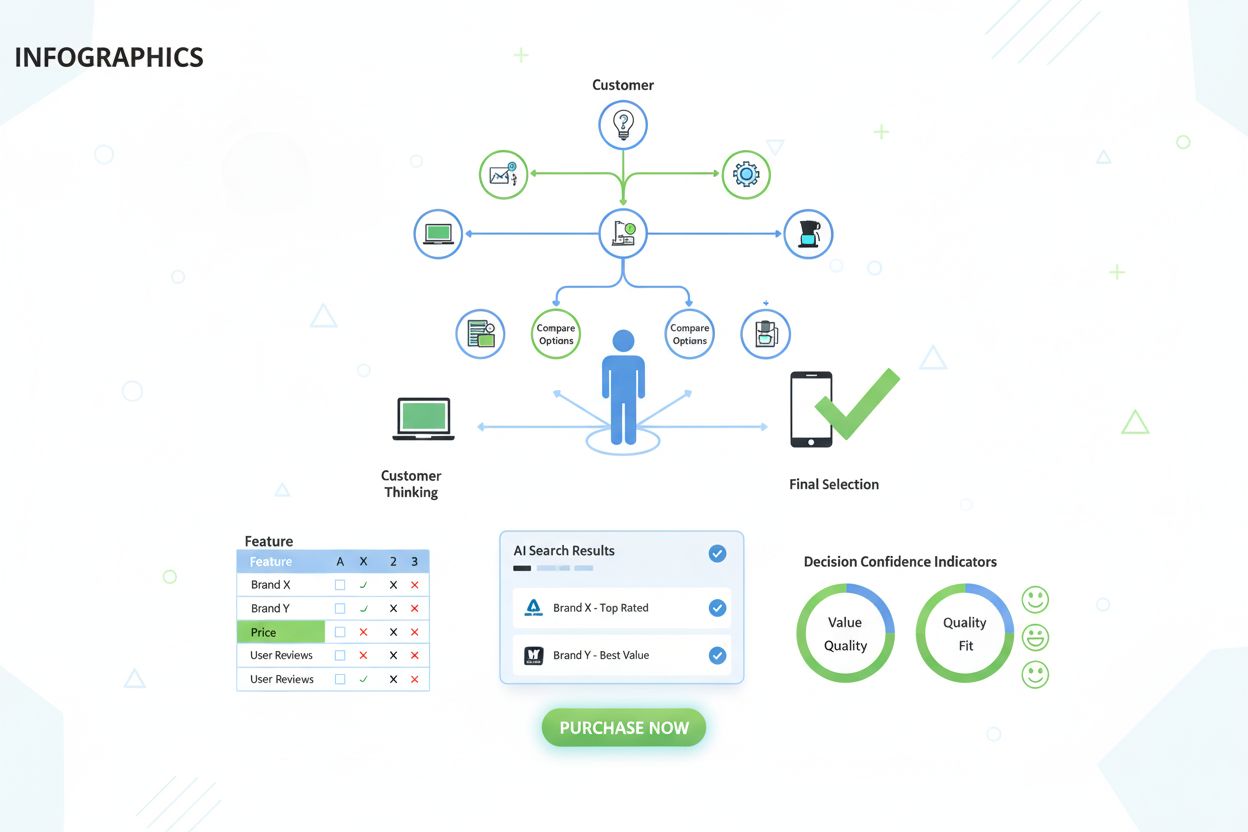
Decision Phase - Final Choice Stage
Learn what the decision phase is in the consumer buying journey. Understand how final choice stage impacts brand visibility, AI search results, and conversion r...
11 min read
The post-purchase phase is the critical stage in the customer journey that begins immediately after a customer completes a transaction and extends through delivery, product experience, and ongoing engagement. This phase encompasses all interactions and touchpoints that occur after conversion, including order confirmation, shipment tracking, delivery, returns management, feedback collection, and loyalty building—directly impacting customer satisfaction, retention, and lifetime value.
The post-purchase phase is the critical stage in the customer journey that begins immediately after a customer completes a transaction and extends through delivery, product experience, and ongoing engagement. This phase encompasses all interactions and touchpoints that occur after conversion, including order confirmation, shipment tracking, delivery, returns management, feedback collection, and loyalty building—directly impacting customer satisfaction, retention, and lifetime value.
The post-purchase phase is the critical stage in the customer journey that begins immediately after a customer completes a transaction and extends through delivery, product experience, and ongoing engagement. Unlike the conversion stage—which is the singular moment of purchase completion—the post-purchase phase encompasses all interactions, touchpoints, and experiences that occur after the sale. This phase includes order confirmation, shipment tracking, delivery management, product experience evaluation, customer support interactions, returns and exchanges, feedback collection, and loyalty program engagement. The post-purchase phase is not merely a transactional endpoint but rather a strategic opportunity to transform one-time buyers into loyal, repeat customers and brand advocates. Understanding and optimizing this phase is essential for modern e-commerce businesses, as it directly impacts customer satisfaction, retention rates, repeat purchase behavior, and ultimately, customer lifetime value.
The concept of the post-purchase phase has evolved significantly with the rise of e-commerce and digital customer engagement. Historically, the customer journey was viewed as ending at the point of sale, with minimal focus on what happened after the transaction. However, research and industry practice have fundamentally shifted this perspective. Today, leading organizations recognize that the post-purchase phase is where competitive differentiation occurs and where the most valuable customer relationships are built. The emergence of sophisticated logistics networks, real-time tracking technologies, and customer relationship management (CRM) systems has transformed the post-purchase experience from a logistical necessity into a strategic marketing and retention opportunity. According to industry data, 88% of consumers expect order progress notifications, and the open rate of post-purchase communications is 21% higher than other retail emails, demonstrating the heightened engagement and attention customers give to post-purchase interactions. This shift reflects a broader understanding that customer loyalty is not determined by the purchase itself but by the experiences and interactions that follow it.
To fully understand the post-purchase phase, it’s important to contextualize it within the broader customer lifecycle. The customer lifecycle typically consists of four primary stages: awareness, consideration, conversion, and retention/loyalty. The post-purchase phase operates primarily within the retention and loyalty stage, though it also influences the potential for re-engagement and win-back activities. The awareness stage focuses on attracting potential customers through marketing and brand visibility. The consideration stage involves educating prospects about products and building trust. The conversion stage is the transaction moment itself. However, the post-purchase phase—which falls within the retention and loyalty stage—is where businesses invest in deepening relationships, encouraging repeat purchases, and transforming customers into advocates. This positioning is crucial because it highlights that the post-purchase phase is not a conclusion but rather the beginning of a new relationship cycle. Companies that excel in the post-purchase phase see revenue growth 80% faster than competitors, demonstrating the tangible business impact of this often-underestimated stage.
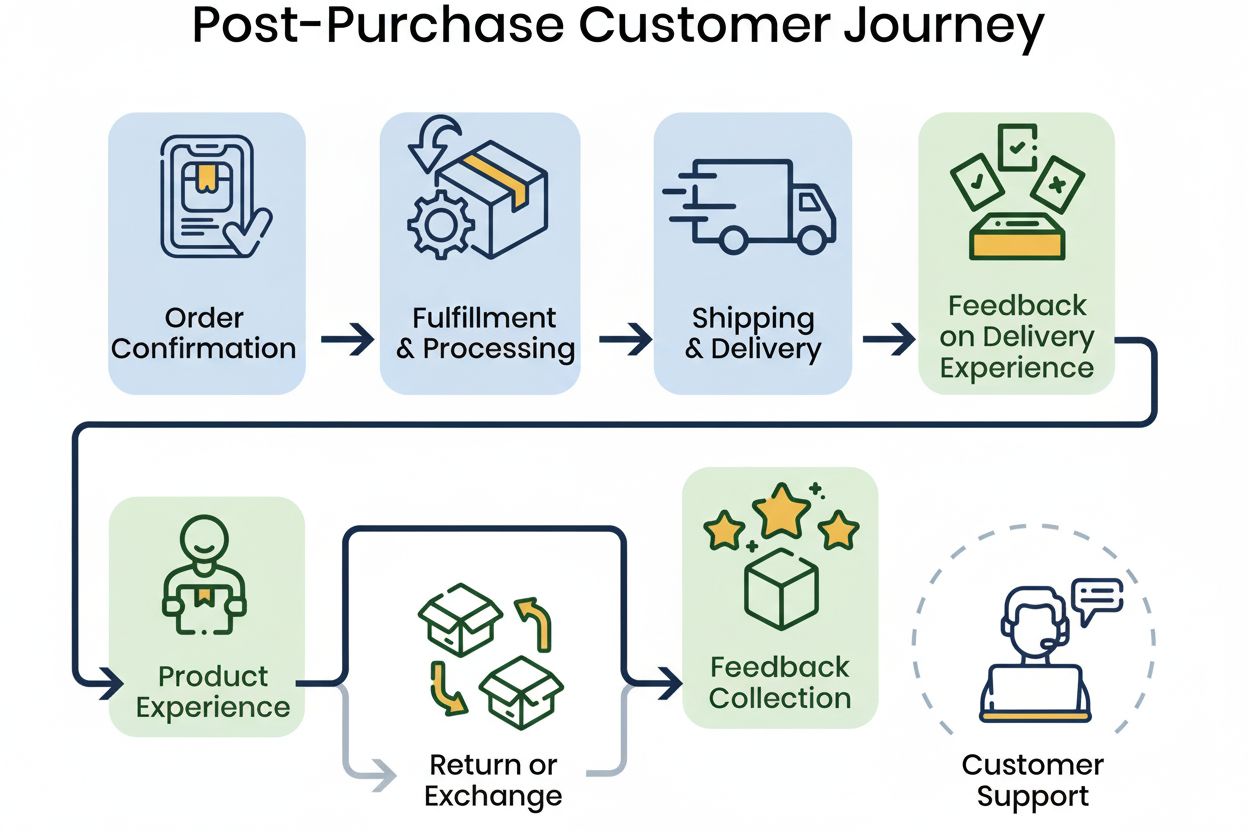
The post-purchase phase comprises multiple interconnected components, each serving a distinct purpose in the customer journey. Order confirmation is the first touchpoint, where customers receive immediate acknowledgment of their purchase, setting expectations for what comes next. Order processing and fulfillment follows, during which the product is prepared for shipment. Shipping and delivery tracking represents a critical engagement opportunity, where customers can monitor their order’s progress in real-time. This stage includes several sub-stages: label creation, in-transit status, out-for-delivery notifications, and final delivery confirmation. Product experience begins once the customer receives the item and evaluates whether it meets expectations. Customer support becomes essential if issues arise, such as damaged goods or incorrect items. Returns and exchanges management provides a safety net for dissatisfied customers, and the ease of this process significantly impacts retention. Feedback collection through surveys and reviews provides valuable insights and demonstrates that the business values customer opinions. Finally, loyalty program engagement and personalized follow-up communications encourage repeat purchases and foster long-term relationships. Each of these components represents an opportunity to either delight customers or disappoint them, making the orchestration of the entire post-purchase experience critical to business success.
| Aspect | Post-Purchase Phase | Conversion Stage | Retention/Loyalty Stage | Win-Back Stage |
|---|---|---|---|---|
| Timing | Immediately after purchase through ongoing engagement | Single transaction moment | Ongoing after post-purchase | After customer inactivity |
| Primary Goal | Ensure satisfaction, reduce support costs, encourage repeat purchases | Complete the sale transaction | Build long-term loyalty and advocacy | Re-engage inactive customers |
| Key Activities | Order tracking, delivery, feedback, support, returns | Payment processing, order confirmation | Loyalty programs, personalized offers, community building | Targeted re-engagement campaigns |
| Customer Touchpoints | Notifications, tracking pages, support channels, surveys | Checkout page, confirmation email | Email campaigns, loyalty apps, exclusive offers | Reactivation emails, special promotions |
| Success Metrics | CSAT, NPS, repeat purchase rate, retention rate | Conversion rate, average order value | Customer lifetime value, repeat purchase rate, advocacy | Reactivation rate, return customer rate |
| Business Impact | Reduces churn, increases CLV, improves NPS | Generates immediate revenue | Maximizes customer value over time | Recovers lost revenue |
| Duration | Days to months (ongoing) | Minutes to hours | Months to years | Variable, triggered by inactivity |
The financial implications of optimizing the post-purchase phase are substantial and well-documented. A 5% increase in customer retention can boost profitability by 25%, according to Bain & Company research, demonstrating the leverage effect of retention investments. Repeat customers spend three times more than one-time shoppers, making the post-purchase phase a critical lever for revenue growth. Additionally, boosting customer retention by just 2% is as profitable as cutting costs by 10%, highlighting the efficiency of retention-focused strategies. The average customer retention rate in e-commerce is approximately 38%, but companies that excel in post-purchase experiences significantly exceed this benchmark. For subscription-based services, retention rates average 40-45%, with post-purchase engagement being a primary differentiator. The cost of customer churn is equally striking: customer churn annually costs U.S. providers $168 billion, underscoring the importance of retention strategies. Furthermore, customers referred by others exhibit a 37% higher retention rate, suggesting that excellent post-purchase experiences drive word-of-mouth advocacy. These statistics collectively demonstrate that the post-purchase phase is not a cost center but rather a revenue-generating engine that directly impacts profitability, growth, and competitive positioning.
Effective communication during the post-purchase phase is foundational to customer satisfaction and retention. The data reveals that 88% of consumers desire notifications regarding order progress, and these notifications achieve 21% higher open rates than standard retail emails, indicating that customers actively engage with post-purchase communications. This presents a significant opportunity for businesses to maintain engagement and reduce support inquiries through proactive, transparent communication. Automated notifications during the post-purchase phase can reduce “Where is my order?” inquiries by up to 90%, demonstrating the power of strategic communication to deflect support costs while simultaneously enhancing customer experience. The most effective post-purchase communication strategies include real-time order confirmation emails that set clear expectations, shipment tracking notifications that provide transparency and reduce anxiety, delivery time windows that help customers plan their availability, and proactive alerts about potential delays that demonstrate care and manage expectations. Additionally, branded tracking portals serve as high-engagement touchpoints where customers can access detailed shipment information while being exposed to personalized offers and product recommendations. The average customer tracks their package 3-6 times throughout the post-purchase journey, making these tracking pages valuable real estate for engagement and upselling. By investing in sophisticated communication infrastructure, businesses can transform the post-purchase phase from a logistical necessity into a strategic engagement opportunity that builds trust, reduces friction, and encourages repeat business.
The returns and exchanges component of the post-purchase phase deserves particular attention, as it represents both a risk and an opportunity for customer retention. Buyer’s remorse—the regret customers feel after making a purchase—is a common trigger for returns and can significantly impact retention if not handled effectively. A straightforward, transparent, and customer-friendly returns process can actually strengthen customer relationships by demonstrating confidence in product quality and commitment to customer satisfaction. Conversely, a cumbersome or unclear returns process can drive customers away permanently, as it signals that the business prioritizes profit over customer satisfaction. The ease of the returns process directly influences whether a dissatisfied customer becomes a retained customer or a lost one. When businesses make returns effortless—through clear instructions, prepaid return labels, and quick refunds—they often convert a negative experience into a positive one, as customers appreciate the hassle-free resolution. Furthermore, returns data provides valuable insights into product quality, sizing accuracy, and customer expectations, enabling businesses to improve their offerings and reduce future returns. The post-purchase phase’s returns management component is therefore not merely a cost of doing business but rather a critical touchpoint for demonstrating customer-centricity and building long-term loyalty.
Once a customer receives their product, the post-purchase phase enters the product experience stage, where the actual product must deliver on the promises made during marketing and the purchase process. This stage is critical because it determines whether the customer’s expectations are met, exceeded, or disappointed. 73% of consumers say experience is a key factor in purchasing decisions, second only to price and product quality, indicating that the overall experience—including the post-purchase product experience—is a primary driver of satisfaction and loyalty. If the product fails to meet expectations due to quality issues, inaccurate descriptions, or sizing problems, the customer’s entire perception of the brand is negatively impacted. Conversely, when products exceed expectations or arrive in excellent condition with thoughtful packaging, customers are more likely to become repeat buyers and advocates. The post-purchase product experience is also an opportunity for businesses to provide value-added content, such as usage guides, care instructions, or complementary product recommendations, that enhance the customer’s satisfaction and engagement with the purchase. Additionally, this stage is where customers form opinions that they will later share in reviews, social media posts, and AI-generated responses, making the product experience a critical factor in how brands are discussed and recommended in digital spaces.
Feedback collection represents a crucial yet often underutilized component of the post-purchase phase. By systematically soliciting customer feedback through surveys, reviews, and direct communication, businesses gain invaluable insights into what is working well and where improvements are needed. Only 42% of companies can measure customer lifetime value (CLV) accurately, suggesting that many businesses lack the data infrastructure to understand the full impact of their post-purchase strategies. Feedback collection addresses this gap by providing qualitative and quantitative data that informs decision-making. Furthermore, 53% of consumers say that discounts and loyalty points encourage longer brand loyalty, indicating that customers appreciate recognition and rewards for their business. By collecting feedback and demonstrating that the business is acting on customer input, companies foster a sense of community and engagement that strengthens loyalty. The post-purchase feedback stage also provides an opportunity to identify and resolve issues before they escalate into negative reviews or social media complaints. Additionally, feedback collected during the post-purchase phase can be analyzed and synthesized to understand how customers discuss their experiences, which is particularly relevant for brands monitoring their mentions in AI-generated responses and customer conversations.
Loyalty programs and repeat purchase incentives are strategic tools that extend the post-purchase phase and encourage customers to return. It takes at least three purchases for most customers to establish brand loyalty, according to Yotpo research, highlighting the importance of encouraging multiple interactions and transactions. Loyalty programs that reward repeat purchases, referrals, and engagement create a structured incentive system that keeps customers engaged long after their initial purchase. Businesses that implement customer loyalty programs see a 5% increase in retention rates, demonstrating the measurable impact of well-designed loyalty initiatives. Effective loyalty programs go beyond simple discounts; they create a sense of belonging and recognition that makes customers feel valued. Personalized offers based on purchase history, exclusive early access to new products, and tiered rewards that increase with engagement are all strategies that enhance the perceived value of loyalty. Additionally, loyalty programs generate valuable data about customer preferences and behavior, enabling businesses to deliver increasingly personalized post-purchase experiences. The integration of loyalty programs into the post-purchase phase transforms the relationship from transactional to relational, encouraging customers to view the brand as a partner in meeting their needs rather than simply a vendor.
The post-purchase phase is evolving rapidly in response to technological advances, changing customer expectations, and the rise of AI-driven personalization. Over half of customers favor brands that engage via social media, with this number rising to 74% among millennials, indicating that post-purchase engagement is increasingly expected to occur across multiple channels and platforms. The integration of artificial intelligence and machine learning into post-purchase operations is enabling businesses to deliver hyper-personalized experiences at scale, predicting customer needs and proactively addressing potential issues before they become problems. 79% of millennials favor brands that provide mobile-responsive customer support portals, highlighting the importance of seamless, omnichannel post-purchase experiences. The future of the post-purchase phase will likely involve even greater integration of AI-driven chatbots, predictive analytics, and personalized recommendations that anticipate customer needs and preferences. Additionally, the rise of sustainability consciousness among consumers is creating new expectations around post-purchase experiences, such as easy returns and recycling options, which forward-thinking brands are beginning to incorporate. The post-purchase phase is also becoming increasingly important for brand monitoring and reputation management, as customer feedback and experiences are more visible than ever through reviews, social media, and AI-generated responses. Brands that invest in optimizing the post-purchase phase today will be better positioned to meet evolving customer expectations and maintain competitive advantage in an increasingly customer-centric marketplace.
The post-purchase phase has become increasingly relevant to AI monitoring and brand tracking platforms like AmICited. As customers discuss their post-purchase experiences in AI-generated responses, reviews, and conversations, these mentions provide valuable data about brand perception, customer satisfaction, and service quality. Word-of-mouth drives $6 trillion of annual consumer spending, accounting for 13% of consumer sales, and in the digital age, much of this word-of-mouth occurs in AI responses and online discussions. Monitoring how brands are mentioned in AI responses during the post-purchase phase provides insights into customer sentiment, common pain points, and areas for improvement. For example, if customers frequently mention delivery delays or poor customer support in AI responses, this signals that the post-purchase experience needs optimization. Conversely, positive mentions of excellent packaging, fast delivery, or responsive support indicate that the post-purchase phase is delivering value and building brand loyalty. AI monitoring platforms enable brands to track these mentions in real-time across multiple AI systems, including ChatGPT, Perplexity, Google AI Overviews, and Claude, providing a comprehensive view of how their post-purchase experiences are being discussed and perceived. This data is invaluable for continuous improvement, competitive benchmarking, and understanding the true impact of post-purchase investments on brand reputation and customer advocacy.
The post-purchase phase represents far more than the logistics of order fulfillment and delivery. It is a strategic opportunity to build lasting customer relationships, drive repeat business, and create brand advocates who generate organic growth through word-of-mouth and positive recommendations. The data is unequivocal: companies that excel in the post-purchase phase see significantly higher retention rates, increased customer lifetime value, and faster revenue growth compared to competitors. With 61% of customers willing to switch to a competitor after just one bad experience, the stakes of post-purchase excellence are high. Conversely, customers who rate their post-purchase experience 10/10 are 6x more likely to repurchase and significantly more likely to recommend the brand to others. As customer expectations continue to rise and competition intensifies, the post-purchase phase has become a critical differentiator. Businesses that invest in optimizing every touchpoint—from order confirmation through feedback collection and loyalty engagement—will capture disproportionate value from their customer base. The integration of AI monitoring platforms enables brands to understand how their post-purchase experiences are being discussed and perceived in real-time, providing actionable insights for continuous improvement. In the modern customer economy, the post-purchase phase is not an afterthought but rather the foundation upon which sustainable, profitable business growth is built.
The post-purchase phase is the period after a customer completes a purchase, encompassing order confirmation, delivery, product experience, and ongoing engagement. It matters because it directly influences customer satisfaction, repeat purchase rates, and lifetime value. Research shows that 88% of consumers expect order progress notifications, and companies that excel in post-purchase experiences see significantly higher retention and advocacy rates compared to competitors.
The conversion stage is the moment when a customer completes the purchase transaction, while the post-purchase phase begins immediately after and extends through delivery, returns, feedback, and loyalty engagement. Conversion is a single event; the post-purchase phase is an extended journey with multiple touchpoints. The post-purchase phase is where brands build lasting relationships and drive repeat business, whereas conversion is simply the transaction completion.
The post-purchase phase includes several critical stages: order confirmation and communication, order processing and fulfillment, shipping and delivery tracking, delivery completion or failed delivery attempts, product experience evaluation, customer support interactions, returns and exchanges management, feedback collection, and loyalty program engagement. Each stage presents opportunities to enhance customer satisfaction and gather valuable data for future interactions.
Businesses can reduce support inquiries by implementing proactive communication strategies, such as automated order confirmation emails, real-time shipment tracking notifications, and branded tracking portals. Research indicates that automated notifications during the post-purchase phase can reduce 'Where is my order?' inquiries by up to 90%. Providing transparent delivery timelines, self-service tracking options, and clear communication about potential delays significantly decreases customer anxiety and support tickets.
Feedback collection is essential for understanding customer satisfaction, identifying improvement areas, and building community engagement. Post-purchase feedback reveals insights about product quality, delivery experience, and customer expectations. Companies that actively solicit and act on feedback demonstrate customer-centricity, which fosters loyalty and encourages repeat purchases. Feedback also provides valuable data for AI monitoring platforms to track brand mentions and sentiment across customer interactions.
The post-purchase phase directly influences customer lifetime value (CLV) by determining whether customers become repeat buyers or advocates. A 5% increase in customer retention can boost profitability by 25%, and repeat customers spend three times more than one-time shoppers. Excellent post-purchase experiences lead to higher repeat purchase rates, increased average order value, and positive word-of-mouth referrals, all of which compound to significantly increase CLV over time.
Post-purchase experience is a primary driver of customer retention. Companies that deliver seamless post-purchase experiences see higher retention rates and lower churn. The data shows that 61% of customers will switch to a competitor after just one bad experience, while customers who rate their experience 10/10 are 6x more likely to repurchase. Retention rates for subscription-based services average 40-45%, with post-purchase engagement being a critical factor in maintaining these rates.
AI monitoring platforms like AmICited track how brands are mentioned in AI-generated responses during the post-purchase phase by monitoring customer interactions, reviews, feedback, and support conversations. These platforms capture mentions across ChatGPT, Perplexity, Google AI Overviews, and Claude, providing insights into how customers discuss their post-purchase experiences. This data helps brands understand sentiment, identify service gaps, and optimize their post-purchase strategies based on real customer feedback appearing in AI responses.
Start tracking how AI chatbots mention your brand across ChatGPT, Perplexity, and other platforms. Get actionable insights to improve your AI presence.
Learn what the decision phase is in the consumer buying journey. Understand how final choice stage impacts brand visibility, AI search results, and conversion r...
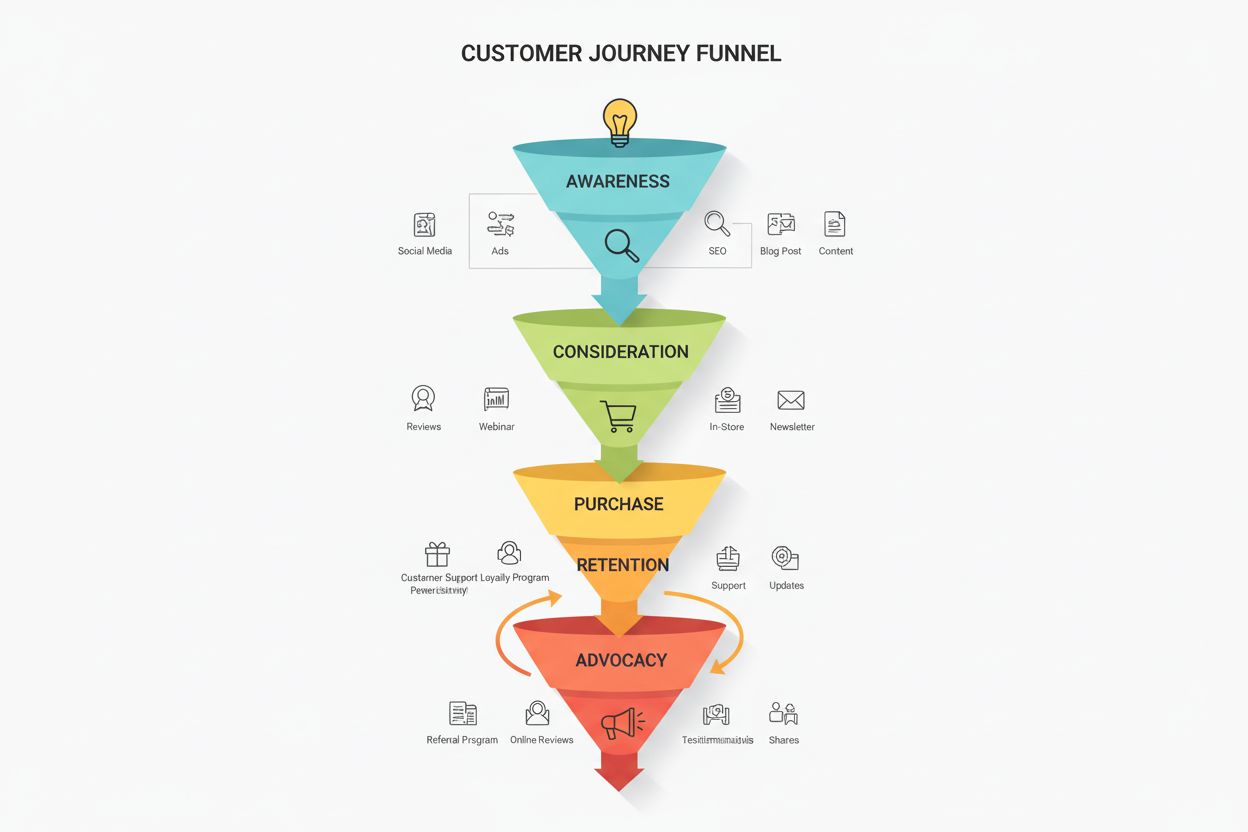
Learn what a customer journey is, explore its five key stages from awareness to advocacy, and discover how to map and optimize touchpoints for better customer e...

Learn what the comparison phase is in consumer decision-making. Understand how buyers evaluate alternatives, compare features, and make informed purchasing deci...