
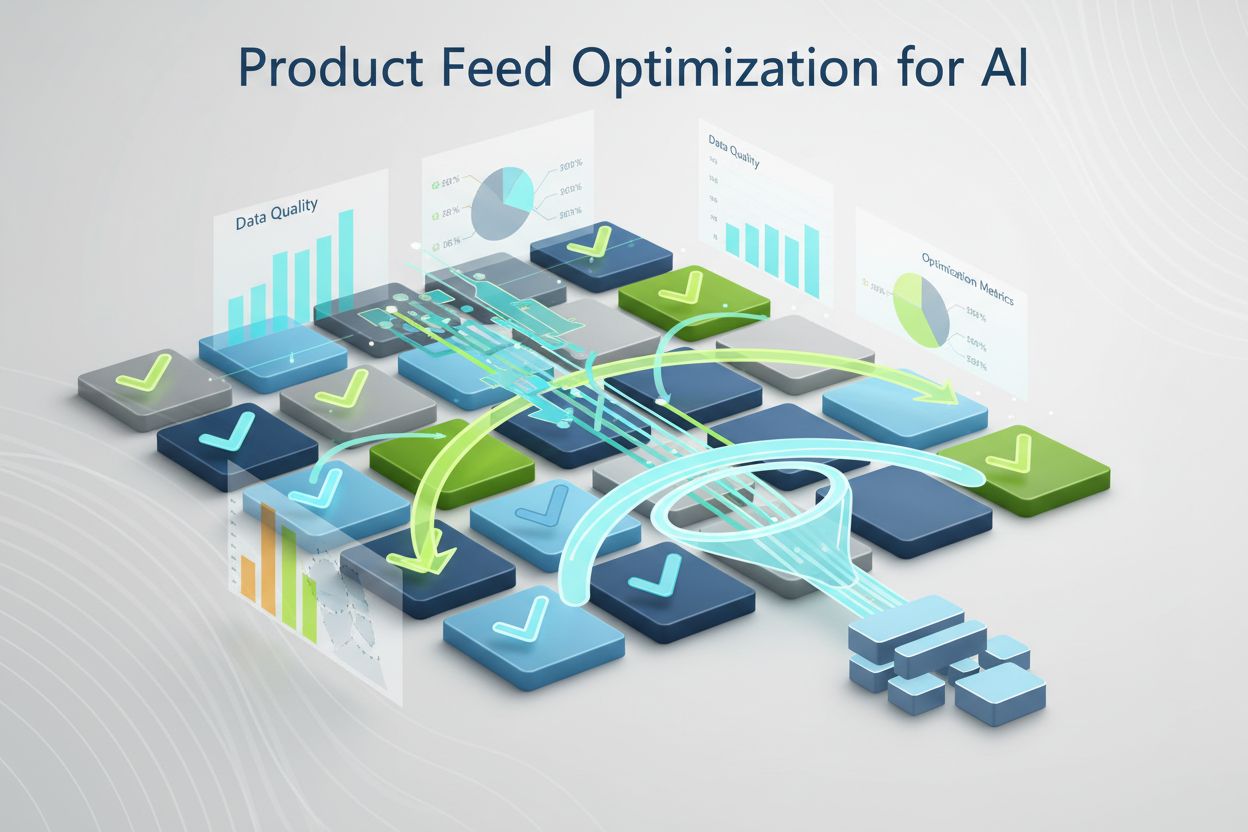
Product Feed Optimization for AI Shopping Engines
Learn how to optimize product feeds for AI shopping engines like Google AI Overviews, Perplexity, and ChatGPT. Master feed attributes, data quality, and real-ti...
10 min read
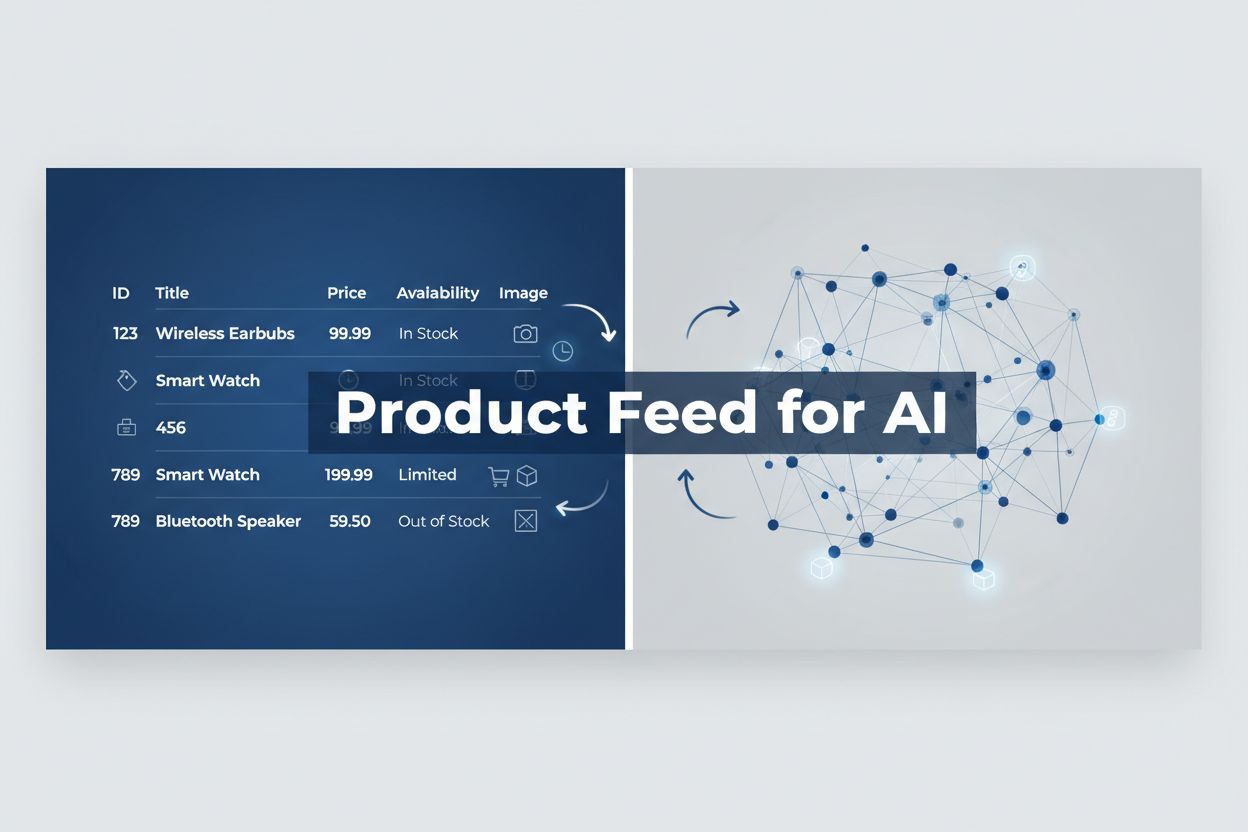
A structured product data file formatted specifically for AI platform consumption, containing essential product information like titles, descriptions, prices, availability, and attributes. These feeds power AI-driven shopping experiences in ChatGPT, Google AI Overviews, and other LLM-based discovery platforms, enabling AI systems to accurately match products to user queries and provide real-time recommendations.
A structured product data file formatted specifically for AI platform consumption, containing essential product information like titles, descriptions, prices, availability, and attributes. These feeds power AI-driven shopping experiences in ChatGPT, Google AI Overviews, and other LLM-based discovery platforms, enabling AI systems to accurately match products to user queries and provide real-time recommendations.
A product feed for AI is a structured data file that merchants and retailers submit to AI-powered platforms to make their products discoverable and purchasable through conversational AI interfaces. Unlike traditional product feeds designed primarily for search engines and shopping comparison sites, AI product feeds are optimized for large language models (LLMs) and generative AI systems that interpret natural language queries and provide product recommendations within chat interfaces. These feeds power shopping experiences on ChatGPT, Google AI Overviews, Perplexity, and other AI platforms that have moved beyond traditional search results to provide direct product answers and purchasing capabilities. The key difference lies in how AI systems process and rank products—they require richer semantic context, real-time data accuracy, and structured information that helps LLMs understand product relevance to user queries rather than just keyword matching.

A properly structured product feed for AI contains both mandatory and optional fields that provide AI systems with comprehensive product information. The required fields defined in the OpenAI Product Feed Specification include: ID (unique product identifier), title (product name), description (detailed product information), link (URL to product page), image_link (product image URL), price (current cost), availability (in stock/out of stock status), enable_search (whether product appears in search results), and enable_checkout (whether product can be purchased directly). Beyond these essentials, optional fields such as GTIN (Global Trade Item Number), MPN (Manufacturer Part Number), brand, condition, color, size, weight, shipping information, and return_policy provide additional context that helps AI systems better understand and rank products. The more complete your feed data, the better AI platforms can match products to user queries and provide accurate, relevant recommendations.
| Field Name | Type | Required | Example | Purpose |
|---|---|---|---|---|
| ID | String | Yes | SKU-12345 | Unique product identifier for tracking |
| Title | String | Yes | Premium Wireless Headphones | Product name for AI understanding |
| Description | String | Yes | High-quality audio with noise cancellation, 30-hour battery life | Rich context for semantic matching |
| Link | URL | Yes | https://example.com/product/headphones | Direct product page access |
| Image Link | URL | Yes | https://example.com/images/headphones.jpg | Visual product representation |
| Price | Decimal | Yes | 199.99 | Current product cost |
| Availability | String | Yes | in stock | Stock status for AI recommendations |
| GTIN | String | No | 5901234123457 | Global product identifier |
| Brand | String | No | AudioTech Pro | Manufacturer name for filtering |
| Color | String | No | Black, Silver, Gold | Product variant information |
| Size | String | No | One Size, M, L, XL | Size variant options |
| Condition | String | No | New, Refurbished, Used | Product condition status |
ChatGPT, Google AI Overviews, and other LLM-based shopping assistants process product feed data through sophisticated semantic understanding algorithms that go far beyond simple keyword matching. When a user asks a natural language question like “What’s the best budget laptop for video editing?”, these AI systems analyze the product descriptions, specifications, and metadata from feeds to identify relevant matches, evaluate product quality based on brand reputation and availability, and rank results by relevance and user intent. The AI systems reward feeds with clear, descriptive language, consistent formatting, and semantic richness—meaning descriptions that naturally explain what makes a product valuable rather than keyword-stuffed text. Real-time availability data is particularly critical because AI systems must provide accurate stock information to avoid recommending out-of-stock products, which damages user trust and conversion rates. Additionally, AI platforms use variant data (colors, sizes, materials) to provide more specific recommendations when users have particular preferences, and they leverage schema markup and structured data to better understand product relationships and categories.
Product feeds for AI platforms are delivered in specific compressed formats that balance data completeness with file size efficiency. The primary formats supported include:
Feeds must be refreshed every 15 minutes to ensure AI systems have current pricing, availability, and inventory information—this frequent update cycle is essential because AI shopping assistants make real-time recommendations and users expect accurate stock status before attempting purchase. Delivery methods typically use SFTP, HTTP/HTTPS, or cloud storage integration (AWS S3, Google Cloud Storage) to securely transmit feeds to AI platforms. The gzip compression reduces file size by 70-90%, making transmission faster and more cost-effective while maintaining data integrity. Merchants should implement automated feed generation systems that pull current product data from their inventory management systems and push updates on schedule to avoid manual errors and ensure consistency.
To maximize product visibility and conversion through AI shopping platforms, merchants must optimize their product feeds with AI-specific best practices that go beyond traditional SEO. Rich, keyword-inclusive descriptions should naturally incorporate relevant search terms while explaining product benefits, features, and use cases—AI systems understand context and reward descriptions that read naturally rather than stuffed with keywords. Implementing schema markup (structured data using JSON-LD or microdata) helps AI systems parse and understand product information more accurately, improving matching accuracy for complex queries. Real-time inventory synchronization is non-negotiable; feeds must reflect actual stock levels because AI systems will lose credibility if they recommend products that are unavailable. Including comprehensive variant data (all available colors, sizes, materials, configurations) allows AI systems to provide more specific recommendations matching user preferences, increasing conversion likelihood. Semantic keyword optimization means using language that describes what problems your products solve rather than just listing features—for example, “perfect for remote workers needing ergonomic support” rather than just “ergonomic chair.” Additionally, maintaining consistent product categorization, accurate pricing across all channels, and high-quality product images ensures AI systems can confidently recommend your products without confusion or hesitation.
Different AI platforms handle product feeds with varying requirements and capabilities, creating distinct opportunities and challenges for merchants. The following table compares how major platforms process and utilize product feed data:
| Platform | Feed Format | Update Frequency | Key Requirements | Unique Features |
|---|---|---|---|---|
| ChatGPT Shopping | JSONL.gz, CSV.gz | Every 15 minutes | OpenAI Product Feed Spec compliance, enable_checkout field | Direct checkout within chat, conversational product discovery |
| Google AI Overviews | XML, CSV, JSONL | Real-time to hourly | Google Merchant Center integration, structured data markup | Integrated with Google Search, shows product summaries in SERPs |
| Perplexity Shopping | JSONL.gz, CSV.gz | Every 15-30 minutes | Detailed descriptions, availability data, image links | Citation-based recommendations, source transparency |
| Traditional Google Shopping | XML, CSV | Daily to hourly | Google Merchant Center feed, basic product attributes | Comparison shopping, price tracking, review integration |
ChatGPT Shopping prioritizes conversational context and direct purchasing, allowing users to complete transactions without leaving the chat interface—this requires feeds with complete checkout-enabling data and high-quality product descriptions that help the AI understand nuanced user preferences. Google AI Overviews integrates product feed data directly into search results, showing AI-generated summaries that compare multiple products and highlight key differences, requiring feeds with rich comparative data and clear differentiators. Perplexity emphasizes source attribution and transparency, showing users which merchants provided product information, making feed accuracy and brand reputation particularly important. Traditional Google Shopping remains the most established platform but operates differently from AI-native systems—it relies on price competitiveness and review signals rather than semantic understanding, making feed optimization strategies distinct from AI platforms.
Many merchants underestimate the importance of feed data quality, leading to poor AI visibility and lost sales opportunities. Incomplete product data is the most common issue—missing descriptions, images, or availability information forces AI systems to make assumptions or skip products entirely, reducing discoverability. Inconsistent information across fields creates confusion; for example, listing a product as “in stock” while showing zero inventory, or providing conflicting prices between the feed and product page, damages AI confidence in your data and may result in products being deprioritized or excluded. Poor product descriptions that lack context, use vague language, or fail to explain product benefits make it difficult for AI systems to match products to relevant queries—descriptions like “blue shirt” provide minimal value compared to “premium cotton dress shirt with wrinkle-resistant finish, perfect for business casual environments.” Outdated inventory data is particularly damaging because AI systems will recommend products that are actually unavailable, creating negative user experiences and eroding trust in the AI platform itself. Missing or incorrect attributes (brand, GTIN, color, size) prevent AI systems from understanding product variants and relationships, limiting their ability to provide specific recommendations. Additionally, duplicate products in feeds, broken image links, and incorrect pricing all signal poor data quality to AI systems and result in reduced visibility and conversion rates.
Successful AI shopping presence requires ongoing feed maintenance and performance monitoring rather than one-time setup and deployment. Merchants should implement automated feed validation systems that check for common errors including missing required fields, broken links, inconsistent data types, and pricing anomalies before feeds are submitted to AI platforms. Regular feed audits (weekly or bi-weekly) should compare feed data against actual inventory, pricing, and product information to catch discrepancies before they impact AI recommendations and user experience. Performance tracking through tools like AmICited.com allows merchants to monitor how often their products appear in AI-generated answers, which queries trigger their products, and how frequently users click through to their sites from AI platforms—this data reveals optimization opportunities and helps identify underperforming products. Feed health monitoring should track metrics including submission success rates, data completeness percentages, and error logs from AI platforms, alerting merchants to issues before they significantly impact visibility. Real-time inventory synchronization systems ensure that feed data stays current with actual stock levels, preventing the embarrassing scenario where AI recommends out-of-stock products. Merchants should also monitor competitor feeds to understand how similar products are being presented and identify opportunities to differentiate through superior descriptions, richer data, or unique attributes that AI systems can leverage for better recommendations.
The evolution of product feeds for AI is moving toward increasingly sophisticated, real-time, and personalized experiences that will fundamentally reshape e-commerce. Voice search integration will make product feeds essential for voice-activated shopping assistants, requiring feeds optimized for natural language understanding and conversational context rather than just text matching. Multimodal AI systems that combine text, image, and video understanding will demand richer feed data including product videos, 360-degree images, and visual attribute information that helps AI systems understand products the way humans do. Real-time personalization powered by AI will use feed data combined with user behavior, preferences, and context to deliver hyper-specific product recommendations—feeds will need to include rich variant data, compatibility information, and contextual attributes that enable this level of customization. Predictive inventory management will allow AI systems to recommend products based on anticipated availability and upcoming restocks, requiring feeds with forward-looking data and supply chain information. The integration of user-generated content (reviews, ratings, usage photos) directly into feeds will enhance AI understanding of product quality and real-world applications. Merchants who invest in high-quality, comprehensive product feeds today will have significant competitive advantages as AI shopping becomes the dominant discovery and purchase channel, making feed optimization a critical business priority rather than a technical afterthought.
Traditional product feeds were designed primarily for Google Shopping and comparison shopping sites, focusing on basic product information and keyword matching. Product feeds for AI are optimized for large language models and generative AI systems that require richer semantic context, real-time data accuracy, and structured information that helps AI understand product relevance to natural language queries rather than just keyword matching.
The essential required fields include: ID (unique product identifier), title, description, link (product page URL), image_link, price, availability status, enable_search, and enable_checkout. While optional fields like GTIN, brand, color, and size enhance AI understanding, these nine fields are the minimum needed for products to be discoverable and purchasable through AI platforms.
AI platforms like ChatGPT accept feed updates every 15 minutes, while Google AI Overviews can process updates in real-time to hourly intervals. For optimal performance, especially regarding pricing and inventory accuracy, merchants should implement automated feed updates that sync with their inventory management systems at least daily, or more frequently if products sell quickly or prices change regularly.
While there is significant overlap in required fields, each platform has specific requirements and optimizations. Google Shopping feeds can be adapted for ChatGPT by adding the enable_search and enable_checkout fields and ensuring descriptions are rich enough for semantic AI understanding. However, creating platform-specific feeds optimized for each system's unique requirements will yield better results and visibility.
The primary formats are JSONL.gz (JSON Lines compressed with gzip), CSV.gz (Comma-Separated Values compressed with gzip), and XML.gz (Extensible Markup Language compressed with gzip). JSONL.gz is ideal for complex variant data, CSV.gz works well for straightforward catalogs, and XML.gz is commonly used for Google Shopping feeds. All formats must be gzip-compressed for efficient transmission.
Feed data quality directly affects AI visibility and conversion rates. Incomplete data, inconsistent information, poor descriptions, and outdated inventory force AI systems to deprioritize or skip products entirely. High-quality feeds with rich descriptions, accurate pricing, real-time availability, and complete variant data signal reliability to AI systems, resulting in higher ranking, more frequent recommendations, and better conversion rates.
Schema markup is structured data using JSON-LD or microdata that explicitly defines product information in a machine-readable format. It helps AI systems parse and understand product details more accurately, improving matching accuracy for complex queries. Implementing schema markup on your website and including structured data in your feeds enhances AI comprehension and can significantly improve product visibility in AI shopping results.
Tools like AmICited.com allow you to track how AI platforms reference your products, which queries trigger your products in AI responses, and how frequently users click through from AI platforms to your site. Additionally, you can manually test by asking AI assistants product-related questions in your category and noting whether your products appear, then comparing your visibility to competitors.
Track how AI platforms like ChatGPT, Google AI Overviews, and Perplexity reference your products. Get insights into your AI shopping performance and optimize your product feeds for maximum visibility.
Learn how to optimize product feeds for AI shopping engines like Google AI Overviews, Perplexity, and ChatGPT. Master feed attributes, data quality, and real-ti...

Learn how AI product recommendations work, the algorithms behind them, and how to optimize your visibility in AI-powered recommendation systems across ChatGPT, ...
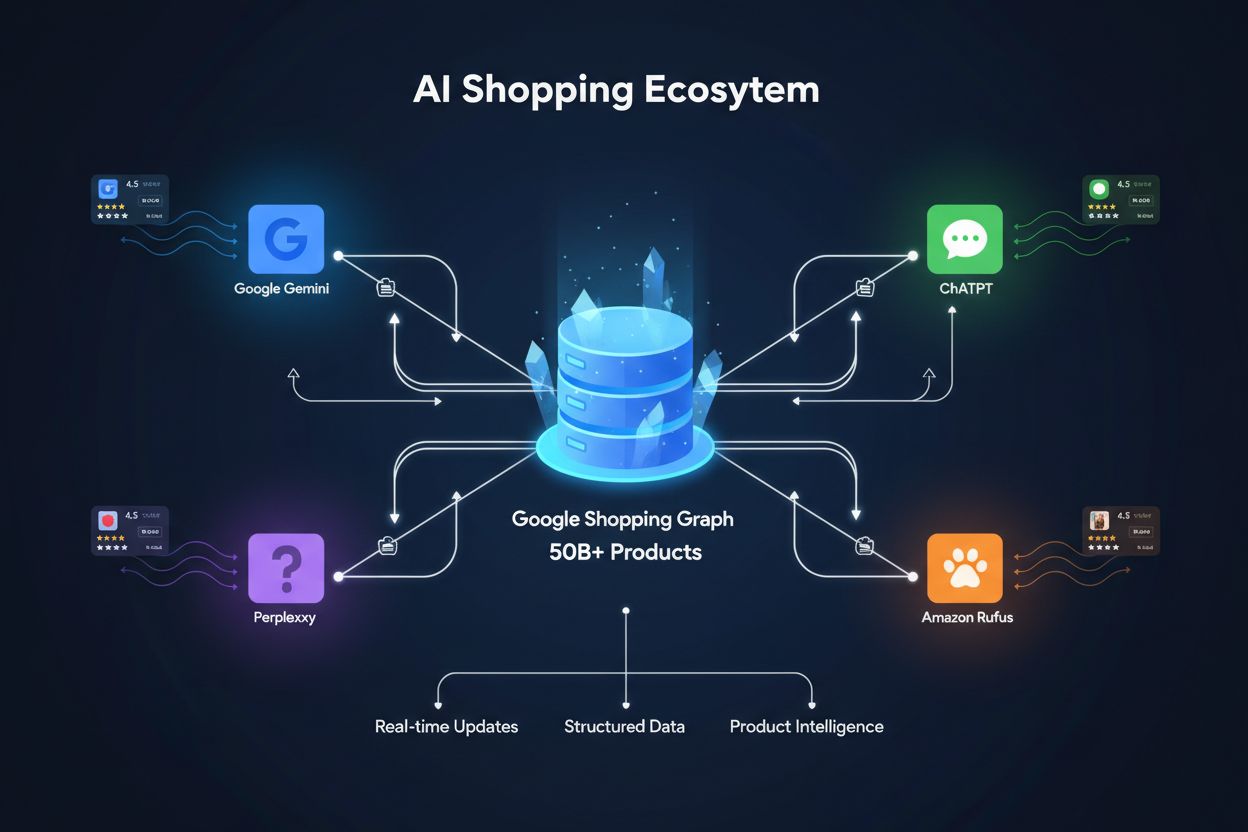
Learn about AI Product Cards - dynamic structured product displays in AI shopping interfaces. Discover how they work, their components, benefits for consumers a...