


- Programmatic SEO builds many landing pages from one template and a dataset, one page per variation of a search pattern such as “[tool] alternatives” or “[service] in [city]”.
- Each page needs its own useful data, like prices, specs or listings. Pages where only the keyword changes fall under Google’s scaled content abuse policy.
- Publish only variations people search for, launch in waves, and noindex or remove pages that never earn impressions.
Where AmICited fits
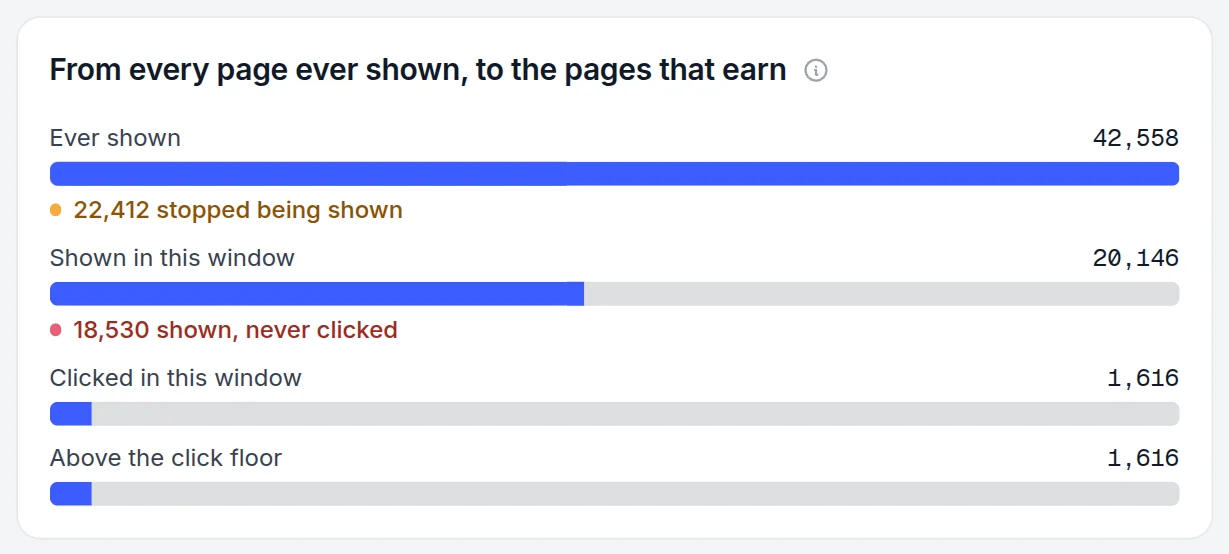
AmICited’s Index bloat report splits every page search has shown into pages earning clicks, pages shown without clicks and pages no longer shown, by site section, which is where weak programmatic pages pile up.
See the index bloat report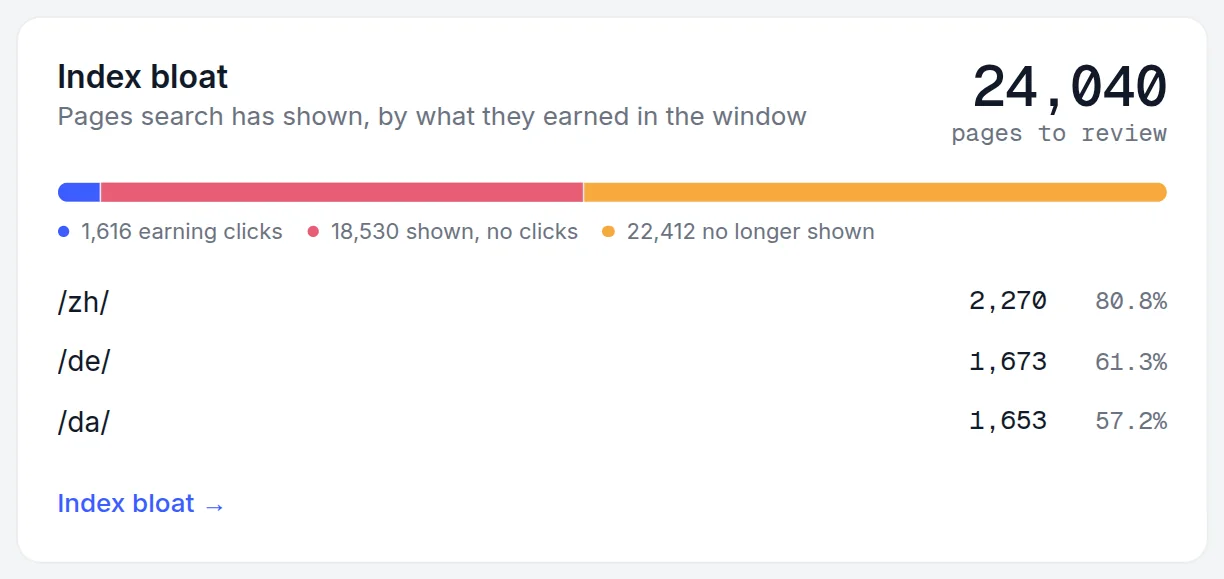
What Is Programmatic SEO?
Programmatic SEO is creating large numbers of search landing pages from a single template and a structured dataset. Each page targets one variation of a repeatable search pattern, such as “[software] alternatives”, “[city] weather in [month]” or “[currency] to [currency]”. Instead of writing 2,000 pages by hand, you build one strong template and fill it with 2,000 rows of data.
Travel sites, marketplaces, SaaS companies and comparison sites use programmatic SEO because their audience searches in patterns with thousands of long-tail variations. Each variation has small search volume on its own, but together they can add up to a large share of a site’s organic traffic. Some well-known patterns: app integration pages, job listings by title and city, real estate listings by neighborhood and product comparison pages.
How Programmatic SEO Works
- Find a pattern. Look for a head term plus a modifier that changes: “[tool] integrations”, “best [product] for [use case]”. Check that individual variations get searches and have consistent intent.
- Build the dataset. Each row is one page: the variable values plus the unique data that makes the page useful (prices, specs, counts, reviews, availability).
- Design the template. Fixed layout with dynamic title, H1, intro, data tables, FAQs and internal links. Plan what makes each page different, not just the name in the heading.
- Generate and link. Publish pages with clean URL structure, add them to an XML sitemap and link them from hub pages so crawlers can reach them.
- Monitor and prune. Track indexing and clicks per page. Improve or remove pages that never earn impressions.
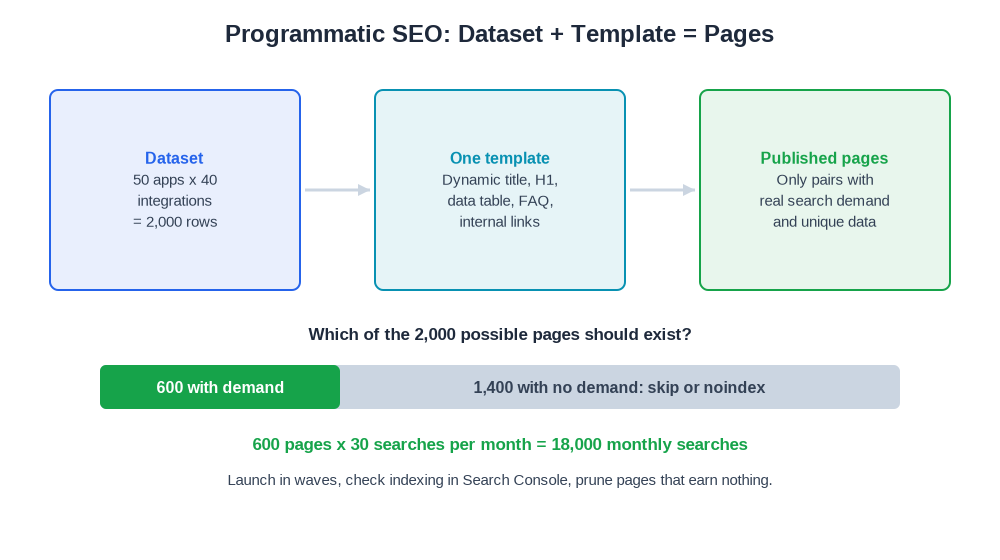
Here is the math that makes it attractive. Say you have 50 apps that each integrate with 40 others: 50 × 40 = 2,000 possible integration pages. If 600 of those pairs have real search demand at an average of 30 searches a month, that’s 18,000 monthly searches you can target with one template. The other 1,400 pages probably shouldn’t exist, at least not as indexable pages.
Programmatic SEO vs Scaled Content Abuse
Google added “scaled content abuse” to its spam policies in March 2024. The policy is about intent and value, not about how pages are produced. This table shows where the line usually falls.
| Useful programmatic pages | Scaled content abuse | |
|---|---|---|
| Unique value per page | Real data: prices, specs, reviews, stats, availability | Only the keyword or city name changes |
| Search demand | Each page matches queries people actually type | Every possible combination published |
| Content | Data explained clearly, written to help | Spun or generated filler to look different |
| Index status | Most pages indexed and earning impressions | Large share “Crawled, currently not indexed” |
| Internal linking | Logical hubs and related pages | Orphan pages reachable only via sitemap |
| Typical outcome | Steady long-tail traffic | Pages ignored, or a manual action for the site |
See also doorway pages, an older spam pattern that bad programmatic SEO often recreates.
Programmatic SEO Page Patterns
Most successful programmatic projects reuse a handful of patterns:
- Integrations: “[App A] + [App B] integration”, backed by real data on what the integration does.
- Locations: “[service] in [city]”, backed by local listings, prices or availability.
- Comparisons: “[product A] vs [product B]”, backed by spec tables and pricing.
- Alternatives: “[tool] alternatives”, backed by feature and price data for each option.
- Conversions and calculations: “[unit] to [unit]”, backed by a working calculator.
The pattern only works when the data behind it is good. A location template with real local inventory is useful. The same template with nothing but the city name is a doorway page.

Stay Updated on AI Visibility Trends
Get the latest insights on AI mentions, brand monitoring, and optimization strategies.
Programmatic SEO and AI Search
AI engines answer many of the long-tail questions programmatic pages used to target: “what’s 50 USD in euros” or “does Notion integrate with Slack”. When the answer is a simple fact, fewer people click through. Programmatic pages still get cited when they hold structured, specific data that an engine can quote, such as a comparison table or a spec list.
Thin template pages rarely get cited, because AI engines pick a few sources per answer and prefer ones with substance. If you run programmatic pages, it is worth checking which ones ChatGPT, Perplexity or Google AI Overviews actually cite with an AI citation tracker.
Best Practices for Programmatic SEO
- Validate demand per variation before publishing. Don’t create a page for a combination nobody searches.
- Give every page at least one unique data element that answers the query: a number, a list, a table or a review set.
- Write title tags and H1s from the template, but check a sample of 20 pages by eye for awkward phrasing.
- Launch in waves and wait for indexing data in Google Search Console before scaling.
- Link programmatic pages from hub pages and between related pages, not only from the sitemap.
- Noindex or remove pages with empty or near-empty data, such as a city with zero listings.
- Recheck data freshness. Stale prices or availability turn useful pages into misleading ones.
Common Programmatic SEO Mistakes
The most common mistake is publishing every combination in the database. Tens of thousands of pages for combinations with no demand and no data waste crawl budget and make the whole section look low quality. Google often responds by indexing only a fraction of the pages, and the good ones get caught in that filter too.
Other mistakes include templates where 95% of the text is identical across pages, empty-state pages (“0 results found for X”) left indexable, generated intros that say nothing, and no plan for updates. A programmatic section also needs an owner. Without one, broken data feeds and outdated pages pile up quietly.