
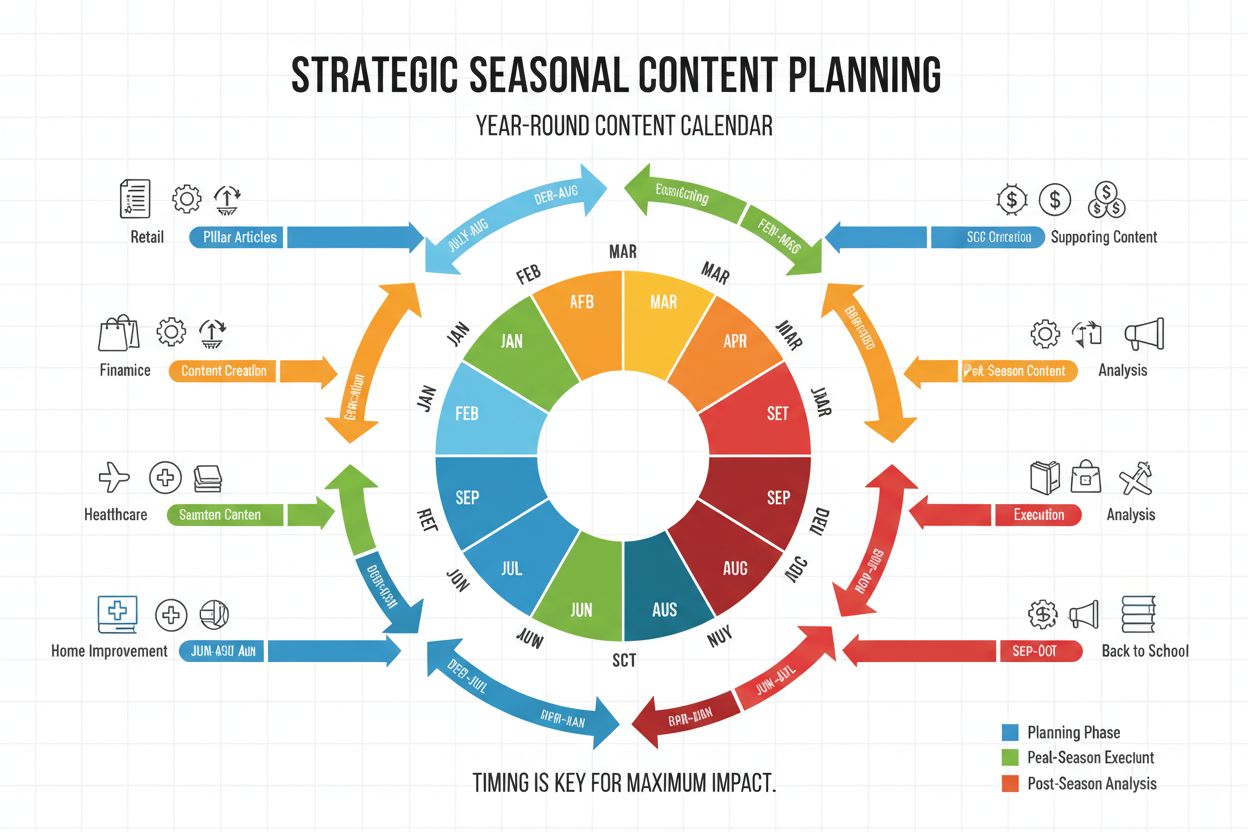
Seasonal AI Visibility: Timing Content for Maximum Citation Potential
Master seasonal AI visibility strategies to maximize content citations. Learn when to publish, how to optimize for peak seasons, and track AI mentions with AmIC...
8 min read
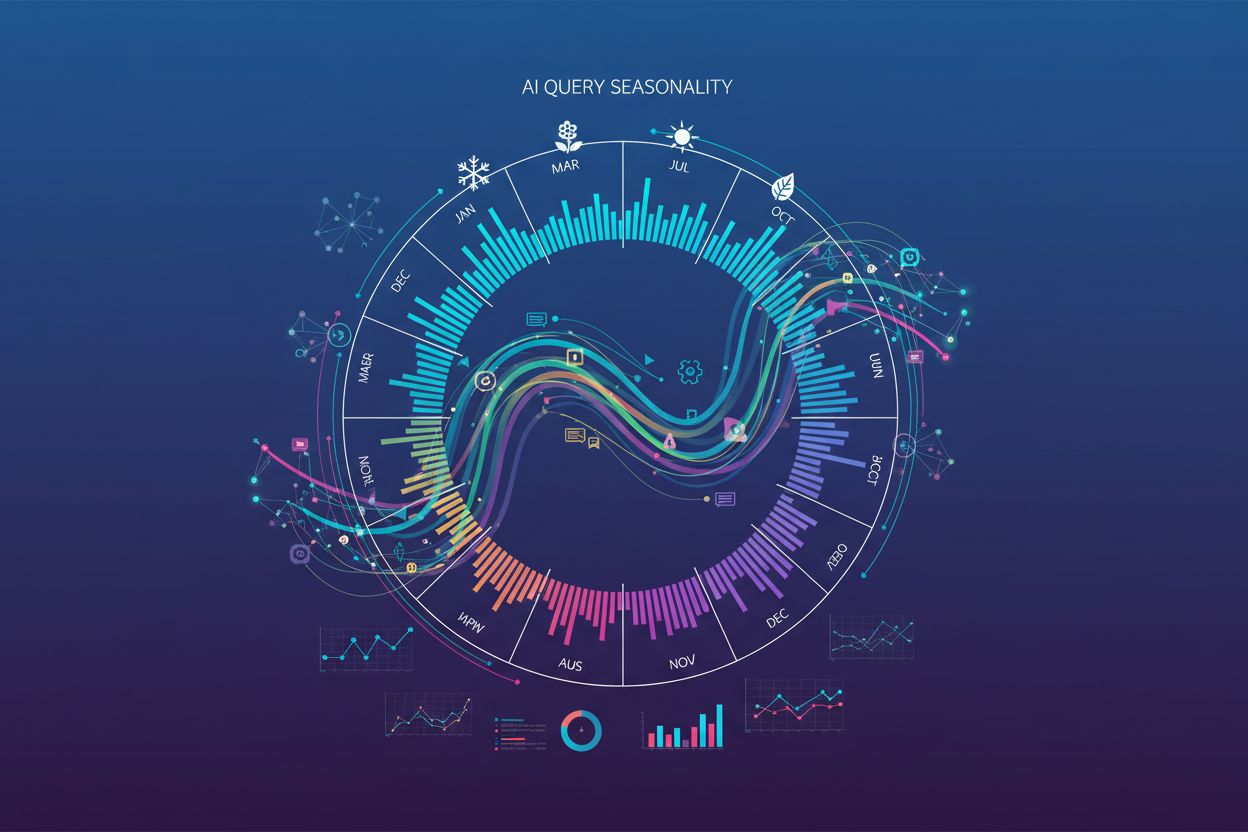
Query seasonality for AI refers to recurring, predictable fluctuations in the volume, type, and nature of queries submitted to artificial intelligence systems across specific time periods. These patterns are influenced by holidays, cultural events, product launches, trending topics, and consumer behavior cycles. Understanding seasonality enables proactive system optimization, accurate capacity planning, and improved user experience management. It differs from general search seasonality by encompassing broader patterns of how users interact with AI-powered platforms.
Query seasonality for AI refers to recurring, predictable fluctuations in the volume, type, and nature of queries submitted to artificial intelligence systems across specific time periods. These patterns are influenced by holidays, cultural events, product launches, trending topics, and consumer behavior cycles. Understanding seasonality enables proactive system optimization, accurate capacity planning, and improved user experience management. It differs from general search seasonality by encompassing broader patterns of how users interact with AI-powered platforms.
Query seasonality in AI refers to the recurring, predictable fluctuations in the volume, type, and nature of queries submitted to artificial intelligence systems across specific time periods. Unlike general search seasonality, which focuses on user search behavior, AI query seasonality encompasses the broader patterns of how users interact with language models, chatbots, and AI-powered platforms based on temporal factors. These patterns are influenced by holidays, cultural events, product launches, trending topics, weather conditions, and consumer behavior cycles that create cyclical demand waves. Understanding these patterns is critical because they directly impact the performance, resource allocation, and response quality of AI systems. For AI monitoring professionals, recognizing and predicting query seasonality enables proactive system optimization, accurate capacity planning, and improved user experience management.
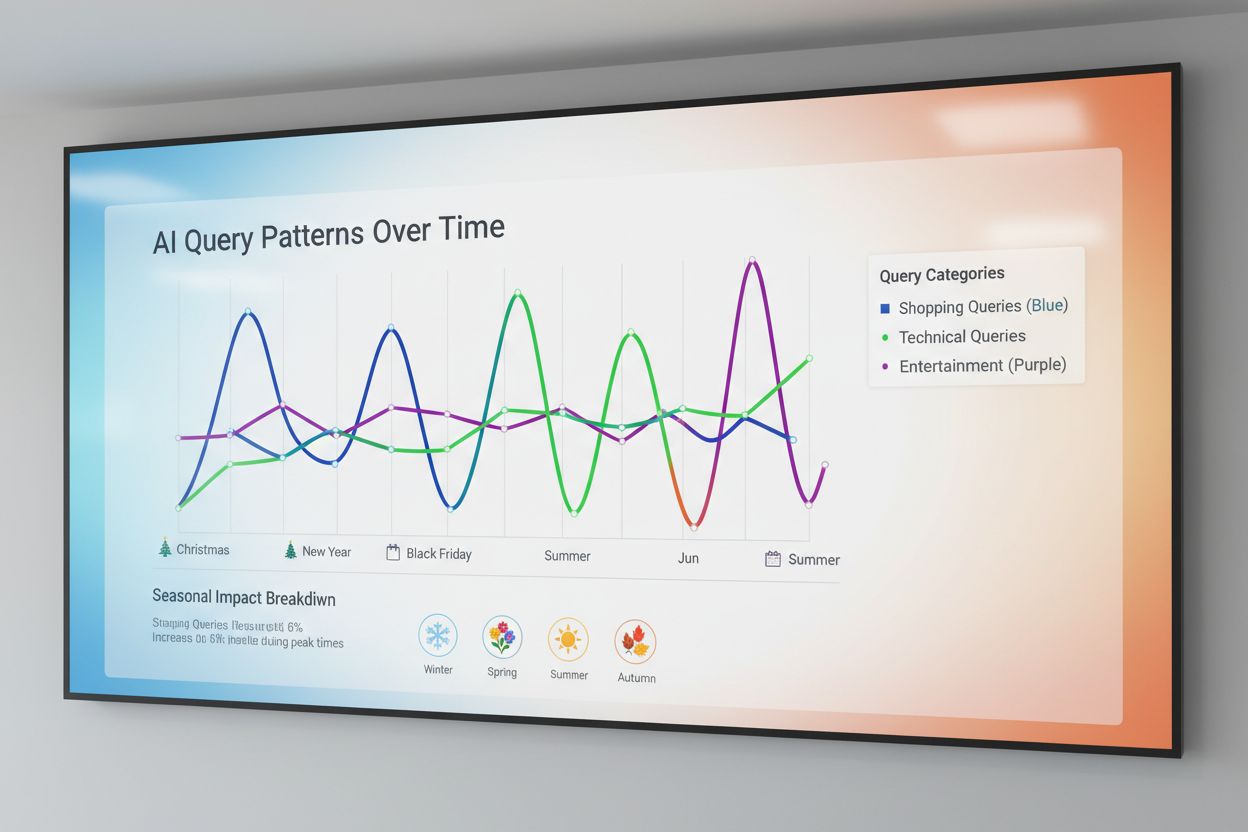
Query seasonality is shaped by multiple interconnected factors that create predictable and recurring patterns in user behavior. Understanding these factors enables organizations to anticipate demand shifts and optimize their AI systems accordingly. The following table outlines the primary drivers of query seasonality and their impact on AI systems:
| Factor Type | Examples | Impact on AI Queries |
|---|---|---|
| Calendar-Based | New Year resolutions, holiday shopping, back-to-school season, tax season | Predictable spikes in specific query categories; increased volume during major holidays |
| Event-Driven | Product launches, conferences, major news events, sports championships, award shows | Sudden surges in queries related to specific topics; unpredictable timing but identifiable patterns |
| Trend-Based | Viral social media topics, celebrity news, emerging technologies, cultural moments | Rapid fluctuations in query diversity; shifts in user intent and question types |
| Weather & Geographic | Seasonal weather changes, regional climate patterns, location-specific events | Variations in query topics by region; seasonal product interest (winter clothing, summer activities) |
| Industry-Specific | Earnings reports, industry conferences, regulatory changes, supply chain events | B2B platforms show different seasonality than B2C; professional queries peak during business cycles |
| Consumer Behavior | Payday cycles, school schedules, vacation planning, gift-giving seasons | Recurring patterns in purchasing intent, research queries, and decision-making timelines |
Query seasonality significantly impacts AI systems and large language models in ways that extend beyond simple traffic volume changes. The training data composition of LLMs reflects historical query distributions, which means models may be optimized for certain seasonal patterns while underperforming during atypical periods. Response quality variations occur when AI systems encounter query types that deviate from their training distribution—for example, holiday-specific questions may receive less accurate responses if the training data underrepresented such queries. The diversity of queries changes seasonally, with some periods showing concentrated interest in narrow topics while others display broad, scattered query patterns. AI monitoring platforms face unique challenges during seasonal transitions because traditional baseline metrics become unreliable, and anomaly detection systems may flag normal seasonal behavior as suspicious. Real-world examples include the dramatic spike in AI queries about tax preparation during tax season, or the surge in creative writing and coding assistance requests at the beginning of academic years, both of which require systems to handle concentrated demand in specific capability areas.
Detecting and monitoring query seasonality requires sophisticated time-series analysis techniques that can distinguish between genuine seasonal patterns and random fluctuations. Statistical methods such as seasonal decomposition, autocorrelation analysis, and Fourier transforms enable analysts to isolate seasonal components from trend and noise in query data. Modern AI monitoring platforms employ machine learning algorithms to automatically identify recurring patterns across multiple dimensions—time of day, day of week, month, and year—while accounting for anomalies and structural breaks. Data collection best practices emphasize maintaining granular, timestamped query logs that capture not just volume but also query type, user segment, response latency, and quality metrics. Tools like moving averages, exponential smoothing, and ARIMA models help establish baseline expectations for different seasonal periods, enabling more accurate performance assessment. Advanced platforms integrate real-time anomaly detection with historical seasonal patterns, allowing teams to distinguish between expected seasonal variations and genuine system issues that require intervention.
Query seasonality directly influences business strategy and competitive positioning for organizations leveraging AI systems. Content strategy optimization becomes data-driven when teams understand which topics will trend during specific periods, allowing them to prepare comprehensive, high-quality responses in advance. Marketing campaign timing can be synchronized with predicted query peaks—for instance, launching educational content about holiday gift guides before the shopping season when relevant queries surge. Product launch planning benefits from seasonality analysis by identifying optimal windows when target audiences are most actively searching for solutions in that category. Resource allocation becomes more efficient when organizations can predict demand spikes and pre-position computational resources, customer support staff, and content teams accordingly. Dynamic pricing models in AI-powered platforms can adjust service costs based on demand predictions, optimizing revenue while managing user experience. Real-world applications include e-commerce platforms using seasonal query analysis to stock AI-powered recommendation engines with relevant products, and SaaS companies timing feature announcements to coincide with periods when users actively search for those capabilities, thereby maximizing visibility and adoption rates.
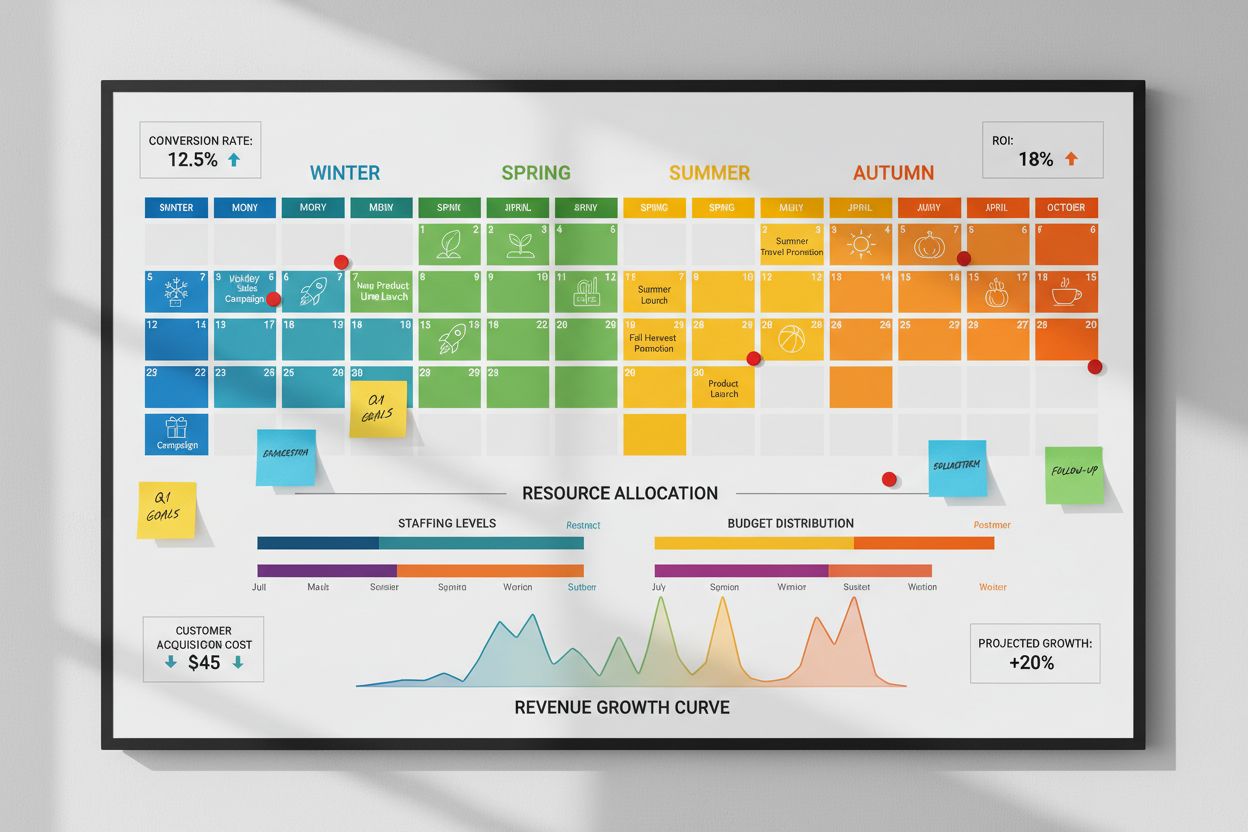
Unpredictable events present fundamental challenges to seasonality-based forecasting, as black swan events—pandemics, natural disasters, geopolitical crises—can completely disrupt established patterns and render historical data temporarily irrelevant. Data quality issues complicate seasonality detection, particularly when query logs contain incomplete information, duplicates, or biased sampling that misrepresents actual user behavior. Changing consumer behavior means that seasonal patterns identified in historical data may not persist indefinitely; generational shifts, technological adoption, and cultural changes gradually reshape when and how users query AI systems. Model drift occurs when the relationship between seasonal factors and query patterns shifts over time, requiring continuous retraining and adaptation of predictive models. Regional variations introduce complexity because the same calendar date may trigger different query patterns across geographic markets due to local holidays, cultural practices, and business cycles. Additionally, seasonal pattern shifts can occur gradually or suddenly—what was once a reliable peak in March queries might flatten or move to February due to changing consumer preferences or market dynamics, necessitating ongoing monitoring and model recalibration.
Advanced predictive models leveraging deep learning and ensemble methods are emerging to capture complex, multi-dimensional seasonality patterns that traditional statistical approaches miss. Real-time seasonality detection systems now integrate streaming data processing with machine learning, enabling organizations to identify emerging seasonal patterns within days rather than waiting for complete seasonal cycles to conclude. Transformer-based architectures and attention mechanisms allow AI systems to weight different temporal factors appropriately, recognizing that some seasonal influences are more predictive than others depending on context. Integration with broader AI monitoring ecosystems means seasonality analysis is no longer isolated but connected to performance metrics, cost tracking, and user satisfaction data, creating holistic views of system behavior. Emerging seasonality types are being discovered as AI adoption expands—for example, “prompt engineering seasonality” where certain query formulation patterns peak during specific periods, or “capability-specific seasonality” where demand for particular AI features follows distinct temporal patterns. The evolution of federated learning and privacy-preserving analytics will enable organizations to identify global seasonality patterns while maintaining data privacy, creating industry-wide benchmarks that individual organizations can compare against.
Implement comprehensive data collection infrastructure that captures timestamped queries with full context including user segment, query type, response metrics, and outcome data, ensuring sufficient granularity for multi-dimensional seasonality analysis
Establish baseline metrics for each seasonal period by analyzing historical data across multiple years, accounting for anomalies and structural breaks, then use these baselines to set realistic performance expectations and alert thresholds
Integrate seasonality insights into monitoring dashboards by creating separate views for different seasonal periods, enabling teams to quickly assess whether current performance aligns with historical patterns or indicates genuine issues
Develop actionable response frameworks that specify how to adjust resource allocation, content strategies, and system configurations in response to predicted seasonal changes, with clear ownership and decision-making authority
Conduct continuous pattern validation through regular reviews of seasonality predictions versus actual outcomes, updating models quarterly or when significant deviations occur, and documenting lessons learned from forecast misses
Cross-platform analysis and benchmarking by comparing seasonality patterns across different AI systems, user segments, and geographic regions to identify universal patterns, platform-specific quirks, and emerging trends that might indicate market shifts
Query seasonality for AI refers to recurring, predictable fluctuations in the volume, type, and nature of queries submitted to AI systems across specific time periods. These patterns are influenced by holidays, events, trends, and consumer behavior cycles. Unlike general search seasonality, AI query seasonality encompasses broader patterns of how users interact with language models, chatbots, and AI-powered platforms.
Seasonality impacts AI systems through training data composition, response quality variations, and query diversity changes. During seasonal peaks, systems may encounter query types that deviate from their training distribution, potentially reducing response accuracy. Additionally, seasonal transitions challenge baseline metrics and anomaly detection systems, requiring continuous monitoring and adaptation.
Modern AI monitoring platforms use time-series analysis techniques including seasonal decomposition, autocorrelation analysis, and Fourier transforms. Statistical methods like moving averages, exponential smoothing, and ARIMA models help establish baseline expectations. Advanced platforms integrate real-time anomaly detection with historical seasonal patterns to distinguish expected variations from genuine system issues.
Businesses can optimize content strategy, time marketing campaigns, plan product launches, and allocate resources more effectively by understanding seasonal query patterns. Dynamic pricing models can adjust based on demand predictions, and personalized marketing strategies can target users during peak interest periods, maximizing ROI and competitive advantage.
Black swan events are unpredictable occurrences like pandemics, natural disasters, or geopolitical crises that completely disrupt established seasonal patterns. These events render historical data temporarily irrelevant and challenge forecasting models, requiring organizations to maintain flexibility and continuous monitoring to adapt to unexpected query pattern shifts.
B2B and B2C platforms experience seasonality differently. B2C businesses show seasonality in consumer demand tied to holidays and shopping seasons, while B2B companies face seasonality in industry events, budget cycles, and professional calendars. Industry-specific factors like earnings reports, conferences, and regulatory changes create unique seasonal patterns for different sectors.
Yes, advanced predictive models using deep learning and ensemble methods can forecast seasonal patterns with increasing accuracy. However, predictions become less reliable during unprecedented events or when consumer behavior fundamentally shifts. Continuous model retraining and validation against actual outcomes are essential for maintaining prediction accuracy.
AmICited tracks how your brand appears in AI responses across different seasons and events, providing insights into seasonal query patterns and trends. The platform helps you understand when your brand is mentioned in AI systems, how seasonal events affect visibility, and enables proactive optimization for peak periods.
Track how your brand appears in AI responses across different seasons and events. AmICited helps you understand and optimize for seasonal query patterns in AI systems.
Master seasonal AI visibility strategies to maximize content citations. Learn when to publish, how to optimize for peak seasons, and track AI mentions with AmIC...
Learn about AI Query Patterns - recurring structures and formulations users employ when asking AI assistants questions. Discover how these patterns improve accu...
Learn what predictive AI queries are, how they work, and why they're transforming customer experience and business intelligence. Discover the technologies, bene...
Cookie Consent
We use cookies to enhance your browsing experience and analyze our traffic. See our privacy policy.