

Prompts Without Good Answers: AI Content Opportunities
Discover unanswered prompts in AI search and turn them into content opportunities. Learn how to identify gaps where competitors are cited but you're not.
10 min read
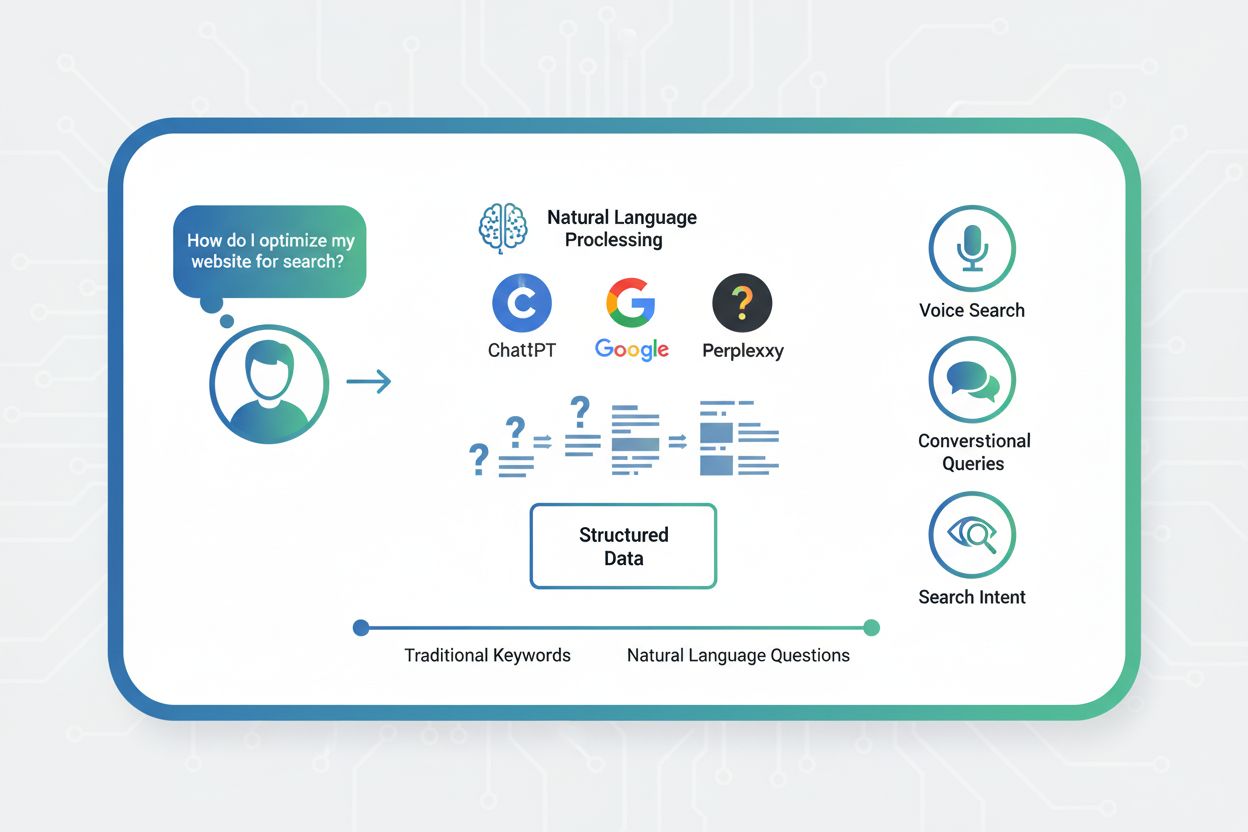
Question-based search refers to searches phrased as natural language questions rather than keyword phrases, where users ask complete questions to search engines and AI platforms. This approach reflects how people naturally communicate and has become increasingly prevalent with the rise of conversational AI, voice search, and AI-powered search engines like ChatGPT, Google AI Overviews, and Perplexity.
Question-based search refers to searches phrased as natural language questions rather than keyword phrases, where users ask complete questions to search engines and AI platforms. This approach reflects how people naturally communicate and has become increasingly prevalent with the rise of conversational AI, voice search, and AI-powered search engines like ChatGPT, Google AI Overviews, and Perplexity.
Question-based search refers to searches phrased as complete, natural language questions rather than fragmented keyword phrases. Instead of typing “best SEO tools,” users ask “What are the best SEO tools for small businesses in 2025?” This fundamental shift in how people interact with search engines reflects the evolution of both user behavior and search technology. Question-based search has become the dominant search pattern across AI-powered platforms, voice assistants, and conversational search interfaces. The term encompasses not just the phrasing of queries, but the underlying intent, context, and semantic meaning that users express when they formulate complete questions. This approach is fundamentally different from traditional keyword-based search, which focused on extracting and matching individual terms rather than understanding the full scope of user needs.
The shift from keyword-centric to question-based search represents one of the most significant transformations in search engine optimization and information retrieval over the past decade. For years, SEO professionals focused on identifying high-volume keywords and building content around specific word combinations, often prioritizing keyword density and placement. However, this approach proved limited because it emphasized words over actual user intent. Google’s Hummingbird algorithm (introduced in 2013) marked the beginning of this transition by introducing semantic search capabilities that understood context rather than just keywords. Later, RankBrain further refined Google’s ability to interpret complex queries and understand search intent, moving the industry closer to a more holistic view of user behavior.
Today, this evolution has accelerated dramatically. According to 2025 data, searches containing 5 or more words are growing 1.5x faster than short keyword searches, and queries with 8 or more words are increasingly likely to trigger AI Overviews. This growth reflects a fundamental change in user expectations: people no longer need to guess what keywords to include in their searches. Instead, they can ask complete questions and expect AI systems to understand their full intent. The rise of voice search, which now accounts for 20.1% of all Google queries (up from 18.3% in 2024), has accelerated this trend, as voice queries are inherently more conversational and question-based than typed searches.
Question-based search operates fundamentally differently in AI-powered environments compared to traditional search engines. When a user submits a question to ChatGPT, Google Gemini, or Perplexity AI, the system doesn’t simply match keywords to indexed pages. Instead, it uses natural language processing (NLP) and machine learning algorithms to understand the semantic meaning, context, and underlying intent of the question. The AI system then synthesizes information from multiple sources, rewriting and reorganizing that information to provide a comprehensive, direct answer. This process is called semantic search, and it prioritizes relevance and contextual accuracy over keyword matching.
A critical aspect of how AI systems handle question-based queries is that they often don’t include the exact search query in their response. According to research from Writesonic’s GEO tool, out of every 100 AI Overview results that Google shows, only about 16 actually include the searcher’s exact phrasing. The other 84 generate answers using different words, even though they’re still intended to answer the original question. This happens because AI systems are designed to synthesize information intelligently, rewriting it based on context, relevance, and search intent. For brands and content creators, this means that traditional SEO tactics focused on keyword density and exact-match optimization are significantly less effective in the AI search era.
The adoption of question-based search has reached critical mass across multiple platforms and user demographics. 71.5% of people now use AI tools for search, and 80% of users rely on AI-written answers for at least 40% of their queries. This represents a fundamental shift in how people discover information. Voice search, which is inherently question-based, has grown to represent 20.1% of all Google queries, with even higher adoption among younger users—Gen Z reaches 34% voice search usage. Additionally, Google AI Overviews now appear for 13.14% of all searches (as of March 2025), and this figure is expected to rise to more than 75% by 2028 according to McKinsey research.
The impact on search behavior is profound. Searches with 4 or more words trigger Google AI Overviews 60% of the time, and question-based keywords account for approximately 20.09% of AI Overview results. This data demonstrates that question-based search is not a niche phenomenon—it’s becoming the default way people interact with search systems. For businesses and content creators, these statistics underscore the urgency of optimizing for question-based search. The platforms where question-based search dominates—ChatGPT (with over 400 million monthly active users), Google AI Overviews (reaching over 1 billion users), and Perplexity AI (processing 780 million queries in May 2025)—represent the future of search visibility.
| Aspect | Question-Based Search | Traditional Keyword Search |
|---|---|---|
| Query Format | Complete natural language questions (e.g., “How do I optimize my website for SEO?”) | Short keyword phrases (e.g., “SEO optimization”) |
| Processing Method | Semantic understanding, context analysis, intent recognition | Keyword matching, relevance scoring, link authority |
| Primary Platforms | ChatGPT, Google AI Overviews, Perplexity, Gemini, voice assistants | Google Search, Bing, traditional search engines |
| User Behavior | Conversational, multi-step queries, follow-up questions | Single-query searches, multiple separate searches |
| Content Optimization | Direct answers, comprehensive coverage, FAQ sections, semantic clarity | Keyword density, meta tags, backlinks, keyword placement |
| Click-Through Impact | 15-25% drop in organic clicks when AI summaries present | Higher click-through rates to individual results |
| Search Intent Clarity | Explicit and detailed in question phrasing | Implicit, requires interpretation |
| Growth Rate | 1.5x faster growth for 5+ word queries | Declining as users shift to longer queries |
| AI Visibility | Critical for appearing in AI-generated responses | Less relevant for AI citation and visibility |
| Voice Search Compatibility | Native and natural (20.1% of all queries) | Requires keyword extraction from spoken language |
The rise of question-based search has fundamentally changed how brands achieve visibility in search results. In the traditional search era, appearing on the first page of Google for a specific keyword was the primary goal. Today, with AI Overviews and conversational AI platforms dominating search, the goal has shifted to being cited as a source in AI-generated answers. This represents a critical distinction for brand monitoring and visibility tracking. When a user asks ChatGPT or Google Gemini a question, the AI system may synthesize information from multiple sources and provide a direct answer without requiring the user to click through to any website. However, some AI systems (like Perplexity AI and Google AI Overviews) include citations, making it possible for brands to track when they’re being referenced.
AmICited and similar AI monitoring platforms have emerged specifically to address this new visibility challenge. These tools track how often a brand, domain, or URL appears in AI-generated responses across multiple platforms. This is fundamentally different from traditional SEO monitoring, which focuses on search rankings. With question-based search, a brand might not rank for a specific keyword but could still be cited in AI responses to related questions. For example, a company might not rank for “best project management tools,” but could be cited in an AI response to “What project management tools do remote teams use?” This shift requires a new approach to content strategy, keyword research, and visibility monitoring.
Search intent is the underlying reason why a user performs a search, and question-based search makes search intent explicit and measurable. When someone asks “How do I improve my website’s organic traffic?” they’re clearly expressing informational intent. When they ask “Where can I buy affordable web hosting?” they’re expressing commercial intent. This clarity is invaluable for content creators and marketers because it allows them to create highly targeted content that directly addresses specific user needs. Traditional keyword research often required inferring intent from keyword phrases, but question-based search removes this ambiguity.
Understanding question-based search also reveals the layered nature of user intent. A single question often contains multiple micro-intents. For example, “What’s the best men’s running shoe for high arches and daily walking?” contains informational intent (learning about shoe types), commercial intent (considering a purchase), and specific attribute requirements (high arch support, daily wear durability). Content that addresses all these layers is more likely to be selected by AI systems as a source for synthesized answers. This is why FAQ sections, comprehensive guides, and structured content have become essential components of modern SEO strategy. They allow content creators to address multiple questions and intents within a single piece of content, increasing the likelihood of AI citation.
Optimizing content for question-based search requires a fundamentally different approach than traditional SEO. The first step is to identify the actual questions your target audience is asking. Tools like AnswerThePublic, SEMrush, Ahrefs, and Google’s People Also Ask feature reveal the specific questions users search for. These questions often differ significantly from the keywords marketers traditionally targeted. For example, instead of targeting the keyword “email marketing,” you might discover that users are asking “How do I build an email list from scratch?” or “What’s the best email marketing platform for beginners?”
Once you’ve identified question-based keywords, the next step is to structure your content to directly answer these questions. This means using question-based keywords in your H2 and H3 headers, creating dedicated FAQ sections, and organizing your content hierarchically so that AI systems can easily extract answers. The content should be comprehensive and address follow-up questions that users might have. For example, if your main question is “How do I optimize my website for SEO?”, your content should address sub-questions like “What are the most important SEO factors?”, “How do I conduct keyword research?”, and “What tools should I use?” This approach improves both traditional search rankings and visibility in AI-generated responses.
Another critical aspect of optimization is maintaining semantic clarity. This means using consistent terminology, defining technical terms, and providing context that helps AI systems understand your content. Avoid keyword stuffing and focus instead on providing clear, well-organized information that directly answers user questions. Use structured data markup (like schema.org) to help search engines and AI systems understand the content structure. Include author credentials, publication dates, and other E-E-A-T signals (Expertise, Experience, Authoritativeness, Trustworthiness) that help AI systems evaluate content quality and relevance.
Different AI platforms handle question-based search with varying approaches, and understanding these differences is essential for comprehensive visibility monitoring. Google AI Overviews integrate directly into Google Search results and synthesize information from multiple sources, often including citations. ChatGPT generates answers based on its training data and doesn’t always include citations, though it can be prompted to do so. Perplexity AI is specifically designed for question-answering and includes citations by default, making it particularly important for brand monitoring. Google Gemini combines Google’s search capabilities with generative AI, providing cited answers similar to AI Overviews. Claude (by Anthropic) handles question-based queries with a focus on nuance and accuracy, often providing more detailed explanations than other platforms.
Each platform has different citation practices and visibility opportunities. Perplexity AI, for example, has become increasingly important for brand monitoring because it consistently cites sources and is growing rapidly (780 million queries in May 2025). Google AI Overviews are critical because they reach over 1 billion users and are expected to expand significantly. ChatGPT is important for brand awareness because it has over 400 million monthly active users, even though citation practices are less consistent. For comprehensive AI monitoring, brands need to track their visibility across all these platforms, not just Google. This is where tools like AmICited become essential—they provide unified tracking of brand mentions and citations across multiple AI search engines.
The trajectory of question-based search is clear: it will continue to grow and become the dominant search paradigm. As AI technology improves and more users adopt conversational search interfaces, the percentage of question-based queries will increase. This has profound implications for SEO strategy, content creation, and brand visibility. Traditional SEO, which focuses on ranking for specific keywords, will become increasingly less effective. Instead, Generative Engine Optimization (GEO) and Answer Engine Optimization (AEO) will become essential skills for digital marketers.
The future of question-based search also involves greater integration of AI across all search platforms. Google is expanding AI Overviews to more queries and more countries. SearchGPT (OpenAI’s search product) is bringing conversational search to a broader audience. Perplexity AI continues to grow rapidly and is attracting users who prefer citation-based, question-answering interfaces. This proliferation of AI search platforms means that brands need to optimize for multiple systems simultaneously, not just Google. Additionally, the rise of voice search and visual search will further accelerate the adoption of question-based search, as these modalities are inherently more conversational and question-oriented than traditional typed searches.
The rise of question-based search represents both a challenge and an opportunity for content creators and marketers. The challenge is that traditional SEO tactics—keyword density, exact-match optimization, and link-building focused on keyword relevance—are becoming less effective. The opportunity is that question-based search creates new pathways for visibility and brand awareness. By understanding the specific questions your audience is asking and creating comprehensive content that answers those questions, you can achieve visibility in AI-generated responses, voice search results, and conversational search interfaces.
For brands using AmICited and similar monitoring tools, the strategic implication is clear: you need to track your visibility across multiple AI platforms and understand which questions are driving citations of your content. This data should inform your content strategy, helping you identify gaps in your coverage and opportunities to expand into new question-based keywords. Additionally, you should monitor how your brand appears in AI-generated responses—not just whether you’re cited, but how you’re described and what context is provided. This information helps you understand how AI systems perceive your brand and content, allowing you to optimize for better representation in future AI responses.
The future of search is question-based, conversational, and AI-driven. Brands that adapt their content strategy to this new paradigm will maintain visibility and relevance. Those that continue to focus exclusively on traditional keyword-based SEO will find their visibility declining as users increasingly rely on AI systems to answer their questions. The time to optimize for question-based search is now, before the shift becomes even more pronounced and competition for AI visibility intensifies.
Traditional keyword search relies on users entering short phrases or individual words (e.g., 'best laptops'), while question-based search involves complete, natural language questions (e.g., 'What are the best laptops under $1000 for video editing?'). Question-based search captures user intent more comprehensively and works better with AI systems that understand context and semantic meaning rather than just keyword matching.
According to 2025 data, searches with 4 or more words trigger Google AI Overviews 60% of the time, and longer queries (5+ words) are growing 1.5x faster than short keyword searches. Voice search, which is inherently question-based, now accounts for 20.1% of all Google queries, with Gen Z users reaching 34% voice search adoption. Additionally, 71.5% of people now use AI tools for search, which predominantly rely on question-based queries.
Question-based search is critical for AI monitoring because AI systems like ChatGPT, Google Gemini, and Perplexity prioritize sources that directly answer complete questions rather than matching keywords. When your brand appears in AI-generated responses, it's because your content answered a specific question well. AmICited tracks how often your domain appears in AI responses to question-based queries, helping you understand your visibility in this new search paradigm.
AI search engines use natural language processing (NLP) to understand the context, intent, and semantic meaning behind questions rather than just extracting keywords. They synthesize answers from multiple sources, rewrite information in their own words, and often don't include the exact search query in their response. This means traditional SEO tactics focused on keyword density are less effective; instead, content must directly and comprehensively answer the underlying user need.
Question-based search is fundamentally an expression of search intent. When users phrase searches as questions, they explicitly reveal what they want to know or accomplish. For example, 'How do I fix a leaky faucet?' reveals informational intent, while 'Where can I buy a kitchen faucet?' reveals commercial intent. Understanding question-based search means understanding the specific, layered needs behind each query, which is essential for creating content that ranks in AI responses.
Content should be structured to directly answer complete questions with clear, comprehensive responses. Use question-based keywords in headers and subheadings, create FAQ sections that address common questions, maintain semantic clarity, and organize information hierarchically. Avoid keyword stuffing and focus on providing detailed, contextual answers that address follow-up questions users might have. This approach improves both traditional SEO and visibility in AI-generated responses.
All major search and AI platforms are affected: Google (through AI Overviews and voice search), ChatGPT, Perplexity AI, Google Gemini, Bing Copilot, and voice assistants like Siri and Alexa. Each platform processes question-based queries and generates answers, making question-based search optimization essential across all channels. For brand monitoring, this means tracking your visibility across multiple AI platforms, not just Google.
Question-based search has contributed to a 15-25% drop in organic clicks when AI-generated summaries are present, particularly for informational queries. This is because AI systems provide direct answers without requiring users to click through to websites. However, brands that optimize for question-based search and appear in AI responses gain visibility to users who might not have clicked traditional search results, creating new opportunities for brand awareness and citation.
Start tracking how AI chatbots mention your brand across ChatGPT, Perplexity, and other platforms. Get actionable insights to improve your AI presence.
Discover unanswered prompts in AI search and turn them into content opportunities. Learn how to identify gaps where competitors are cited but you're not.

Understand how conversational queries differ from traditional keyword queries. Learn why AI search engines prioritize natural language, user intent, and context...
Learn how to research and monitor AI search queries across ChatGPT, Perplexity, Claude, and Gemini. Discover methods to track brand mentions and optimize for AI...